Diacetyl is the compound that makes a beer smell like butter, butterscotch, or fresh movie theater popcorn, and it leaves a slick, oily film on the palate. It is not added to beer. It is a natural by-product of what yeast does while it ferments sugar, and whether you notice it depends almost entirely on how clean the fermentation was.
Every beer contains a trace of it. In pale ales and lagers, even a small amount stands out, which is why a buttery note in a crisp pilsner is a genuine problem and the same note in an English bitter might be exactly what the brewer intended.
Homebrewers run into it more often than drinkers expect, and the fix is almost never mysterious once you know which stage of fermentation went wrong. Let me walk through what it is, where it comes from, how to find it, and what to do about it.
Table of Contents
- What Is Diacetyl in Beer?
- Why Does Diacetyl Taste or Smell Like Butter?
- Why Does Beer Contain Diacetyl?
- Alpha-acetolactate: the precursor that leaks out
- Yeast cleanup and the warm window that triggers it
- What Beer Styles Traditionally Use Diacetyl?
- Why light beers show what is diacetyl in beer at the lowest level
- Is Diacetyl in Beer Safe or Harmful?
- How Can You Detect Diacetyl in Beer?
- The forced diacetyl test, step by step
- What Causes Excess Diacetyl in Homebrew?
- How Do You Prevent or Remove Diacetyl from Beer?
- Before fermentation
- During fermentation
- After fermentation
- Diacetyl and Oxidation: How to Tell Them Apart
- Frequently Asked Questions
- How much diacetyl is too much in beer?
- Does diacetyl disappear during lagering?
- Is diacetyl the same as acetoin?
- Why does my British ale smell buttery?
- Can diacetyl make beer unsafe to drink?
- What Should a Brewer Do First?
What Is Diacetyl in Beer?
Diacetyl is a ketone, specifically the vicinal diketone 2,3-butanedione (C4H6O2), produced as a by-product of yeast valine metabolism during fermentation. It is the compound behind the butter, butterscotch, and artificial popcorn flavor in beer, and it adds a slick, oily mouthfeel.
There are two vicinal diketones, or VDKs, that matter to brewers. Diacetyl is the buttery one. Its close relative pentane-2,3-dione reads more as honey or warm caramel. Both are present in nearly every beer ever made, usually sitting comfortably below the point where a human nose can pick them out.
The useful way to think about it: diacetyl is not a contamination and not a spoilage product. It is a normal piece of yeast metabolism that becomes a problem only when it accumulates. A finished beer with a trace has not gone bad. A finished beer with a noticeable slick butteriness has told you something about the fermentation, and that something is usually worth chasing.
For drinkers, the aroma is the giveaway rather than the taste. Diacetyl is volatile and hits the nose hard, which is why a beer can taste simply clean and still smell like a stick of butter.
Why Does Diacetyl Taste or Smell Like Butter?
Diacetyl smells like butter because its aroma lands in the same sensory neighborhood as the fats in real butter and cream, even though it is not a fat and has no calories. The association is neurological, not chemical: your brain learned decades ago that this particular set of volatile molecules means dairy.
It is mostly an aroma compound, not a taste compound. At low concentrations you get a faint butterscotch or vanilla warmth on the finish; push it higher and the sweetness turns cloying, like melted plastic caramel or yogurt left out too long.
Two other compounds get mistaken for it constantly, so here is the quick disambiguation:
- Diacetyl — butter, butterscotch, movie theater popcorn, slick or oily mouthfeel.
- Pentane-2,3-dione — honey, warm caramel, sometimes described as marzipan. Softer and less aggressive than diacetyl.
- Acetaldehyde — green apple, bruised apple, raw apple, sometimes described as cheap cider or acetone. A fermentation intermediate, not a VDK.
- Isoamyl acetate — banana, pear, bubblegum. An ester, not a VDK, and a sign of stressed or too-warm fermentation.
So when someone says their beer tastes buttery and they also smell green apple, they are almost certainly looking at two separate problems, not one.
Why Does Beer Contain Diacetyl?
Diacetyl appears because yeast is making an amino acid, not because anything is going wrong. It only becomes a beer fault when the yeast fails to clean up what it made.
Alpha-acetolactate: the precursor that leaks out
During early fermentation, as yeast converts valine, one of the amino acids in wort, it produces alpha-acetolactate as an intermediate step. Alpha-acetolactate is not smelly on its own, but it is unstable. It drifts out of the yeast cell and into the surrounding beer, where the dissolved oxygen present during active fermentation oxidizes it into diacetyl.
This is the step that makes diacetyl an oxidation product in practice, even though it starts as pure yeast metabolism. Krogerus and colleagues’ review of diacetyl control in brewery fermentation lays out this pathway in detail, and it is the standard reference if you want the chemistry behind the flavor.
Yeast cleanup and the warm window that triggers it
Here is the good part. Near the end of fermentation, healthy yeast actively reabsorbs the diacetyl that leaked out, converts it back into a compound it can use as a nutrient, and excretes something essentially flavorless. Diacetyl drops. This is yeast cleanup, and it is why almost every well-made beer tastes clean despite containing the compound.
Cleanup needs two things: healthy yeast, and a little warmth. Cold, or a crash to temperature, and the yeast slows down or drops out of suspension at exactly the moment it should be finishing the job. That is the single most common reason a beer tastes buttery.
A healthy fermentation therefore produces more diacetyl early on and less of it at the end. The compound is a byproduct of growth, not of neglect. Poorly made beer smells buttery; well-made beer just finishes the job.
What Beer Styles Traditionally Use Diacetyl?
Some beer styles deliberately keep visible diacetyl because it adds richness that modern brewing usually strips out. If you drink an Extra Special Bitter or a classic Bohemian pilsner and get a low butterscotch warmth, that is often the style working as designed rather than a mistake.
- English bitters and ESBs — a soft butterscotch roundness is a classic feature, especially with the older Ringwood-style English ale strains.
- Scottish ales and heavy Scottish ales — traditionally rich with a distinctly buttery malt character.
- British and Irish session ales — moderate amounts, usually alongside caramel and toffee malt notes.
- Classic Bohemian pilsners — the true original used a lager strain that leaves a faint butterscotch note. Many drinkers treat that as correct.
- Certain Belgian ales — the richer abbey and tripel styles lean on full body and warm spice, where a low buttery note reads as richness.
The trend has moved the other way. Most American ales, IPAs, pilsners, and German lagers on shelves today are judged on a clean fermentation profile, and in those styles a perceptible buttery note is a defect, not a feature. Budweiser and Miller have historically sat at or just above the perceptible level in pale lager, and Redhook ESB is frequently used as a deliberate teaching example.
What is diacetyl in beer, from a drinker’s side, then? It is a question of context. A buttery note in an English bitter is the style. A buttery note in a pilsner or a clean American IPA means the brewery took a shortcut somewhere, and at a DC taproom you are entitled to your opinion about it.
Why light beers show what is diacetyl in beer at the lowest level
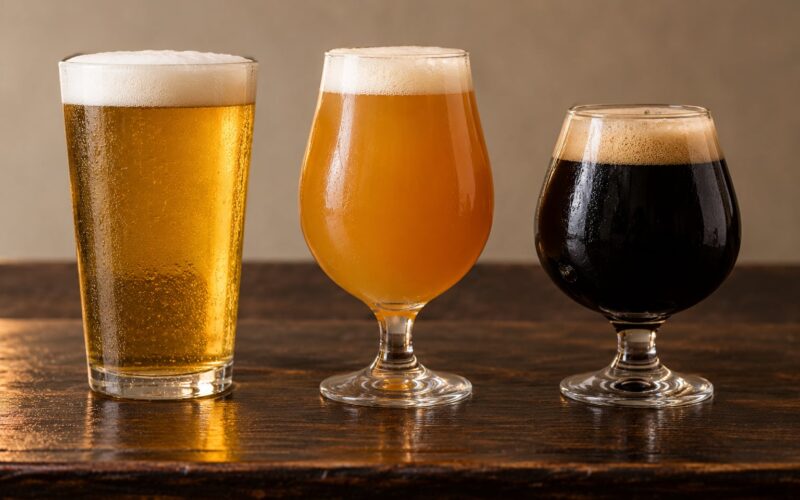
Diacetyl has a high flavor threshold in strong, dark, hoppy, or heavily roasted beer. Stouts, porters, and imperial styles bury it. A pale pilsner or a light-bodied ale has almost nothing to hide behind, so a concentration that would be invisible in a porter becomes obvious.
Published guidance puts the perceptual threshold in pale beer at roughly 0.05 to 0.1 parts per million, with the homebrew range often cited as 0.05 to 1 ppm depending on beer strength. Stronger and darker beers tolerate more before a taster notices. Those are thresholds for trained panels, not for a casual glass, but they explain why your pilsner can taste buttery at a level your porter would never register.
Is Diacetyl in Beer Safe or Harmful?
Diacetyl at the concentrations found in beer is not considered a health hazard. It is naturally present in butter, yogurt, aged cheese, and Chardonnay, and beer levels sit far below anything discussed as a dietary exposure concern.
The distinction that matters is between an aroma compound and a contaminant. Diacetyl is the first. Pediococcus damnosus and Lactobacillus are the second, and a beer infected with either can be genuinely unpleasant and, in the case of an unrefrigerated infected package, genuinely unsafe. Treating a buttery aroma as “the beer is spoiled” leads you to the wrong conclusion.
So a buttery beer is a quality problem, not a safety problem. If a beer smells off in a way that is sour, vinegary, or rotten rather than buttery, that is a different conversation and you should not drink it.
How Can You Detect Diacetyl in Beer?
Use your nose, not your tongue, and taste the beer at two temperatures. Diacetyl is far easier to find in a pale beer poured straight from a cold fridge than in the same beer warmed up, and it is more obvious at the moment the glass first hits your nose.
A few things make detection much easier. Pour into a clean, ungreased glass with a narrow opening, because the aroma needs to be swirled and concentrated. Keep oxidation out of the picture by not leaving the bottle open, and compare against a fresh reference sample from the same beer when you can. Trust a consistent result across a second session over a single strong impression.
Smell alone has limits, which is why brewers use a forced test that converts a hidden amount into a visible one.
The forced diacetyl test, step by step
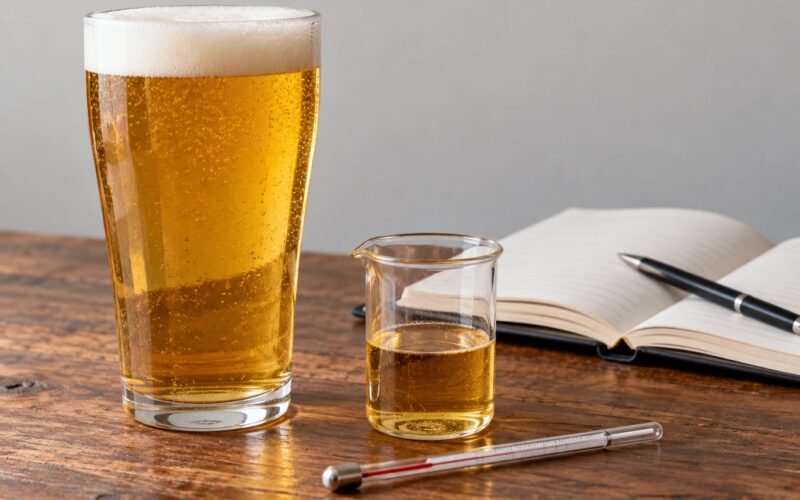
This is the standard two-sample method. Heat oxidizes the alpha-acetolactate still hiding in the beer into diacetyl, so a sample that smells clean at room temperature can smell buttery after twenty minutes in a warm water bath.
- Pour two samples of the same beer into similar small containers or test tubes, one for each test.
- Place one sample in a refrigerator as an unheated control.
- Heat the second sample in a water bath to 140 to 150 F, which is 60 to 66 C. Keep the water moving and do not let the sample boil.
- Hold the heated sample at that temperature for at least 20 minutes.
- Cool the heated sample to the temperature of the refrigerated control.
- Smell both samples side by side, control first, in a clean glass.
- If the heated sample shows butter or butterscotch and the cold control does not, the beer carries diacetyl below its sensory threshold that will likely not stay below it as the beer ages.
Homebrew Talk and r/Homebrewing threads on buttery batches come back to the same question every year: can the taste still go away after bottling. The honest answer is that it depends entirely on whether active yeast remains to do the cleanup, which is why the timing of packaging matters more than anything you do afterward.
What Causes Excess Diacetyl in Homebrew?
Work through these in diagnosis order. The first two account for most homebrew cases, and the rest are quick to rule out once you have the first two covered.
- Unhealthy or under-pitched yeast. Stressed yeast slows down before it finishes cleanup. An old packet, a stale dry yeast cake, no yeast nutrient in a grist heavy in adjuncts, or a pitch rate that is too small all produce the same result. A grist heavy in rice or flaked corn carries less available amino acid, which ties directly to the valine pathway that creates the precursor in the first place.
- Runaway or crashed fermentation temperature. Fermenting warm speeds up growth but not cleanup. A lager that finishes at upper 60s F, or one that hits 80 F in a warm garage, usually leaves diacetyl behind. Dropping the temperature to crash too early is the mirror image of the same mistake: yeast goes dormant or flocs out of suspension before the job is done.
- Packaging too soon. If you bottle or keg while the beer still has active yeast and a couple of degrees of headroom, cleanup can finish. If the yeast is already flocculated and cold, the buttery note locks in and ages slowly or never.
- Bacterial contamination. Pediococcus damnosus and Lactobacillus both produce diacetyl along with the sourness and haziness that usually give them away. Pediococcus character arrives late, often in the package, sometimes weeks after bottling. A beer that is buttery and also tastes sour, thin, or vinegar-like is not a diacetyl problem.
- Dirty tap and keg lines. This is the commercial-beer version of the problem and the most under-suspected. Old beer residue in a draft line, a badly cleaned coupler, or a keg that sat warm through a festival can all deliver a buttery pour from a brewery that brews it clean. If a draft beer tastes buttery at a bar and the bottled version from the same brewery does not, the lines are the first place to look.
There is one more diagnostic trap worth naming. In a r/Homebrewing thread, a brewer pitching a mostly rice lager with kveik at 72 F, fermenting in four days, cold crashing at six days, and bottling after, described the result as jellybeans and buttered popcorn. Multiple people pointed at the temperature and the crash, not the yeast.
How Do You Prevent or Remove Diacetyl from Beer?
You cannot cook diacetyl out of a finished beer or filter it out at home. Time with healthy yeast is the lever, plus sanitation. Everything below is about protecting that window.
Before fermentation
- Pick the strain for the beer. English ale strains and older Ringwood-type strains produce and retain more; clean American ale strains and many lager strains are lower. A Bohemian pilsner wants the classic strain, not the silence of a German one.
- Pitch healthy yeast. Fresh yeast, a proper pitch rate, and a nutrient when your grist is adjunct-heavy or your yeast is old.
- Sanitize everything the beer touches, and mean it. Pediococcus survives a lot of carelessness.
During fermentation
- Hold a steady temperature. For most ales, letting the beer settle just after high krausen and before packaging is what lets cleanup finish. A lager diacetyl rest typically means raising the beer into the mid-to-upper 60s F and holding it there for two or three days.
- Do not cold crash until gravity is stable and the beer has had that warm window. Cold crash cleans up beer, not the butter note.
- Watch the gravity, not the calendar. Once it has been flat for a few days and the yeast is still in suspension, you are in the right place.
After fermentation
- Leave the yeast in. Bottle conditioning with a bit of sugar gives you the active yeast cleanup that force-carbonating removes entirely.
- If the beer is already packaged and still buttery, a repitch of healthy yeast is the usual rescue, and scrubbing the headspace with carbon dioxide helps push the compound out of solution.
- If a packaged beer is both buttery and sour, no amount of yeast will save it. That one is a contamination loss.
- For a commercial operation, keep the draft lines on a cleaning schedule. For a home brewer, replace the beer lines rather than reusing them.
The Brewers Association makes a fair point worth repeating: a diacetyl rest adds little for ales, because ale yeast is already sitting in the active range and simply needs time. The classic warm rest is really a lager-side technique.
Diacetyl and Oxidation: How to Tell Them Apart
Both diacetyl and oxidation can make a beer feel wrong, and they get confused constantly. Oxidation tends to strip aroma and flatten a beer; diacetyl adds an aggressive sweet note on top of a beer that is otherwise exhausted.
| Signal | Diacetyl | Oxidation |
|---|---|---|
| Aroma | Butter, butterscotch, movie theater popcorn, vanilla | Cardboard, wet paper, bruised apple, sherry, wet hay |
| Where you notice it | On the nose the moment the glass arrives, and on the finish | After the first sip, as the aroma fades and the beer seems empty |
| Appearance | Normally clear, no visual change | Often a deep brown or dull color, sometimes a broken-looking haze |
| Timing | Often first noticed young, days to weeks after packaging | Grows steadily with time in the package or on the tap |
| Likely cause | Stressed yeast, warm or crashed fermentation, early packaging, dirty lines, Pediococcus | Oxygen at packaging, headspace, warm storage, or a faulty gas line |
| Fix | Time with healthy yeast, manage temperature, package later | Limit oxygen exposure, store cold, fill the headspace with carbon dioxide |
If the beer smells like a wet cardboard box, the answer is oxygen, not yeast, and no amount of warm conditioning will touch it. If it smells like butter and nothing else, start with fermentation.
Frequently Asked Questions
How much diacetyl is too much in beer?
For pale beers, tasters start noticing diacetyl at roughly 0.05 to 0.1 parts per million, and homebrew guidance commonly cites 0.05 to 1 ppm as the workable home range. Dark, strong, or hoppy beers mask it far better than pilsners or light ales. There is no official legal limit, so acceptability is set by the style you are brewing. If a trained panel can pick it out, most modern ales and lagers consider it a defect.
Does diacetyl disappear during lagering?
It can, but only while active yeast is still around to reabsorb it. Lagering works as a cleanup window when the yeast is healthy and the beer is not yet cold. Once a beer is force-carbonated with no yeast in suspension, or has flocculated out and been packaged, diacetyl mostly stays where it is. Cold conditioning alone will not remove a buttery note that is already locked in.
Is diacetyl the same as acetoin?
No. Acetoin is a related diketone with a much milder creamy character, and it is a normal part of fermentation. Diacetyl, 2,3-butanedione, is the one people describe as butter or butterscotch, and it sits a step further along the same metabolic pathway. Both belong to the diketone family, and both are common in beer, but only diacetyl drives the flavor conversations.
Why does my British ale smell buttery?
Usually because that is the style working as designed. English ale strains, particularly the older Ringwood-type strains, both produce and retain more diacetyl than clean American ale strains, so bitters, Scottish ales, and British brown ales were built around a low butterscotch warmth. If the note is stronger than a hint, check for a warm or crashed fermentation. If it is a hint, you probably brewed a good example of the style.
Can diacetyl make beer unsafe to drink?
No. At the concentrations found in beer, diacetyl is not treated as a health hazard, and it occurs naturally in butter, yogurt, aged cheese, and Chardonnay. What does matter is contamination, which is a separate problem. A beer that smells buttery alongside sourness, vinegar, or rotten-fruit notes may be infected with Pediococcus damnosus or Lactobacillus, and that one is genuinely worth dumping.
What Should a Brewer Do First?
Start with the gravity. If it has not been stable for a few days, the beer is not finished and the yeast has not had its cleanup window, so the fix is time and temperature rather than anything else.
Next, taste it twice, once warm straight from the fermenter and once cold from the package. Warm reveals what the yeast left behind; cold reveals what the drinker will actually get. Compare against a known-clean reference if you have one.
Then name the aroma honestly. Butter and butterscotch with a slick finish is diacetyl. Cardboard and bruised apple is oxidation. Sour and thin alongside the butter is contamination, and that batch is already lost.
Once you know which one it is, the sequence is short. Healthy yeast, a steady and cool-enough fermentation, a warm window before you crash, and packaging late with the yeast still in suspension. Get that right and the butter never shows up.