A brown ale flavor profile is malty, caramel-forward and toasted, with nutty, biscuity and lightly chocolatey notes, a medium roast edge, and just enough bitterness to keep it from turning cloying. The details swing a long way, though. Sweetness, roast, fruit and hop presence vary hugely between an English nut brown and an American imperial brown aged in bourbon barrels.
That variation is exactly why the style confuses people. Most drinkers assume brown ale means stout, order one, and either love it or write it off as too heavy. It isn’t a heavy beer by default. Most examples sit in the 4.2% to 8.8% ABV range with a medium body and a finish that is usually drier than the aroma suggests.
So let’s break the profile into the pieces you can actually identify in a glass: which malt gives you caramel, which gives you the nut note, where chocolate comes from, how bitter is too bitter, and how to tell a deliberate roast flavor from a burnt one.
Table of Contents
- What Is a Brown Ale Flavor Profile?
- What Flavors Should You Taste in a Brown Ale?
- How the Brewing Ingredients Create the Flavor
- How Do You Taste a Brown Ale?
- Which Brown Ale Styles Taste Different?
- Why Does My Brown Ale Taste More Sweet, Roasty, or Bitter?
- How to Serve Brown Ale and What to Pair It With
- Frequently Asked Questions
- What does brown ale taste like?
- Is brown ale supposed to taste sweet?
- What is the difference between brown ale, porter, and stout?
- Is brown ale stronger than an amber ale?
- What food pairs best with brown ale?
- Conclusion: Identify the Balance You Prefer
What Is a Brown Ale Flavor Profile?
A brown ale flavor profile is a dark, malt-led combination of caramelized, nutty, toasted and biscuity flavors, usually with a gentle chocolate-roast undertone and moderate hop bitterness for balance. The category is defined by its malt backbone rather than by any single required hop or roast level, which is why two beers both labeled brown ale can feel like different drinks.
The numbers behind the style are useful for orientation, though no single beer hits every one of them at once.
| Characteristic | Typical range or expectation |
|---|---|
| Alcohol (ABV) | 4.2% to 8.8% for American brown ale; English browns often run 4% to 6.5% |
| Bitterness (IBU) | 25 to 45 IBU is the style range, though brewers often land between 40 and 60 to balance the malt |
| Color | Amber-brown to deep mahogany, roughly 20 to 50 SRM |
| Body | Medium to medium-full, occasionally fuller on imperial versions |
| Carbonation | Medium, softer than a pale ale |
| Finish | Usually dry or drying despite a sweet aroma |
| Glassware | Nonic pint, tulip or a small tumbler |
One thing worth saying plainly: ale is top-fermented. Bread yeast, Saccharomyces cerevisiae, works at warmer temperatures than lager yeast and leaves fruitier esters behind. Those esters are part of why brown ale can read as nutty, raisin-like or dried-fig rather than purely bready, even though no fruit is added.
What Flavors Should You Taste in a Brown Ale?
The customary notes are caramel, toffee, toasted bread crust, roasted nuts and a medium-intensity roast that often suggests cocoa nibs or dark coffee without becoming sharp. Dried fruit, particularly raisin, plum or fig, shows up in stronger English examples, and a light pine or earthy hop aroma is common in American versions. Brittle or paper-like character at the very end is not typical and usually signals age or oxidation rather than style.
Which notes are optional? Everything beyond caramel, toast and nut is. A brewer who pulls back the chocolate malt and leans on caramel gets a sweeter, smoother beer. One who adds roasted barley, coffee or cocoa nibs pushes toward stout territory. A barrel-aged brown picks up vanilla, oak and bourbon character on top of the malt base. None of those versions is wrong; they are just different destinations inside a broad style.
How the Brewing Ingredients Create the Flavor
The brown ale flavor profile is mostly a malt bill in disguise. Pale malt gives bready base character, and everything else adjusts color, sweetness and roast from there. Understanding which specialty malt does what is the fastest way to understand the finished beer.
| Ingredient or technique | Typical sensory effect in a brown ale |
|---|---|
| Pale malt | Bready, biscuit-like base; carries the light portion of the grain bill |
| Caramel or crystal malt, 40 to 60L | Mellow caramel sweetness, honeyed finish; 40L is safer than 80L for a brown ale |
| Specialty caramel malt, 60 to 80L | Stronger toffee, molasses and burnt-sugar character; easy to overdo |
| Chocolate malt | Deep cocoa and dark-chocolate note plus a dry, papery edge; contributes much of the color |
| Roasted barley | Ashy, coffee-like roast; a small amount sharpens the finish, too much reads as burnt |
| Melanoidin or Munich-style malts | Deep amber color, extra bread and dried fruit depth |
| Flaked oats or wheat | Nutty, creamy body; oats add silkiness, wheat adds a grainy chew |
| English ale yeast | Darker fruit esters of raisin, plum and treacle; drier finish |
| American ale yeast | Cleaner, lighter fruit; cleaner finish |
| Hops | Bitterness to cut malt weight; American versions add pine, resin or citrus aroma |
| Higher mash temperature | More unfermented sugar, fuller body, sweeter and more rounded finish |
| Longer fermentation or lower attenuation | Boost ester fruitiness and leave a fuller body |
| Barrel aging | Oak, vanilla, bourbon or wine character layered over the malt base |
| Water profile | Moderate sulfate accentuates hop bitterness and dryness; carbonate-heavy water rounds the malt |
That last row surprises people. Brown ale is a malt beer, but the water sulfate content is often what makes the finish dry enough to keep the style from tasting sugary. A brew with very soft, carbonate-forward water can feel syrupy even at a proper bitterness level.
The point of all this variation is balance. Sweetness is perceived against bitterness, and roast is perceived against residual sugar. A beer needs enough of one to keep the other from dominating.
How Do You Taste a Brown Ale?
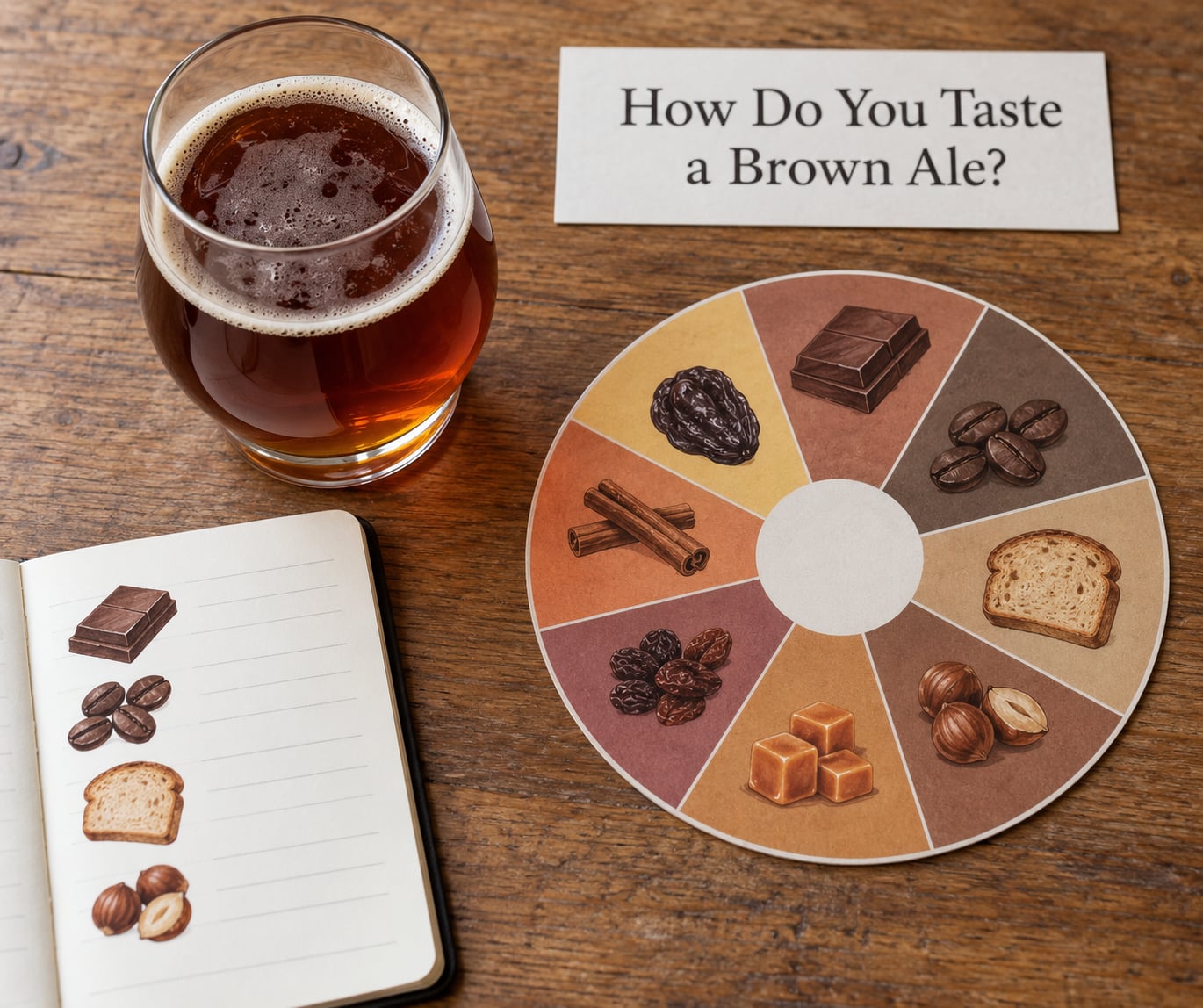
Taste a brown ale in five passes rather than one. You are looking for a specific structure: sweet and malty at the front, roast and bitterness in the middle, and a finish that dries out rather than staying sugary.
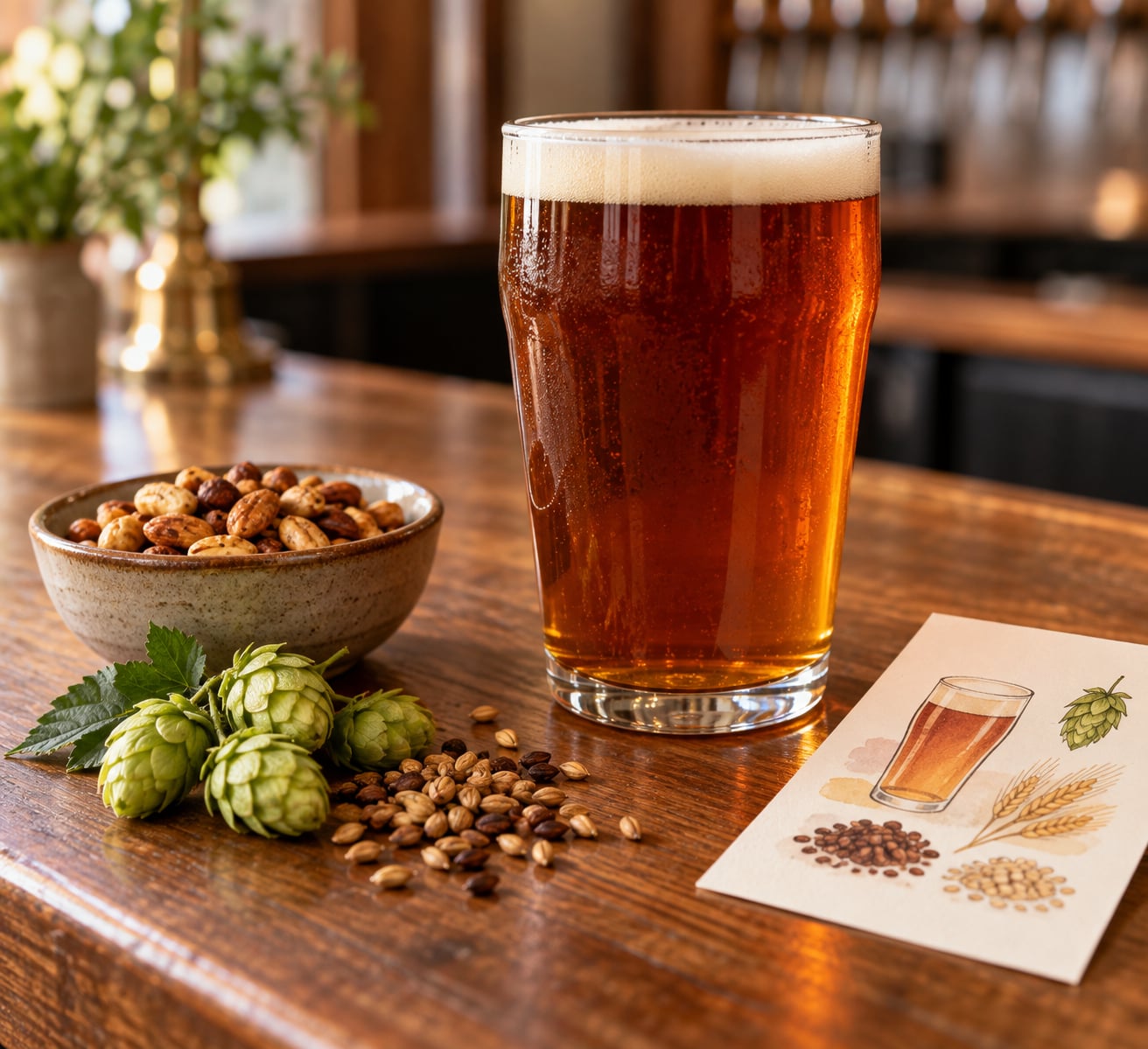
- Appearance. Hold the glass to the light. Expect amber to mahogany with a tan to off-white head that often fades to a thin ring quickly. A reddish-brown tint points toward English yeast character rather than a heavy American roast bill.
- Aroma. Swirl and smell before sipping. You are checking for caramel, toast, nuts and roast, plus any fruit esters. If the aroma is overwhelmingly sweet with almost no dry or roasted edge, the beer is likely to taste cloying once the first sip wears off.
- First taste. The entry is where caramel and toffee show up most strongly. This is the part of the brown ale flavor profile most people describe as “sweet,” even in beers that finish dry.
- Mid-palate. Sip, let it sit, then take a second sip. Roast, chocolate, nuts and bitterness develop here. If the second sip is dramatically sweeter and heavier than the first, you are likely tasting a beer that has not finished fermenting or one brewed with a heavy dose of high-Lovibond crystal malt.
- Finish. After swallowing, notice what lingers. A well-made example leaves dry toast, nutty residue and moderate bitterness. Sourness, harsh coffee bitterness, vinegar, or a papery, cardboard note are the warning signs, not style.
Perceived sweetness is not sugar content. A brown ale at 5% ABV can taste sweeter than a 9% imperial brown because the stronger beer carries more roast and more bitterness, both of which cut sweetness. When someone asks why their beer tastes too sweet, the answer is usually not “add less crystal malt” but “the bitterness is too low or the roast is not doing any work.”
Separating roast from caramel is a matter of where you notice it. Caramel arrives on the tongue at the front and reads as sugary and buttery. Roast arrives at the back of the palate and reads as dry and earthy. If the sweetness fades and a dry, coffee-like character takes over, that is roast, and that is what makes the finish work.
A simple template to copy into a notes app: malt sweetness (low/med/high), roast (low/med/high), hop aroma, hop bitterness, body, carbonation, fruit esters, finish (dry/neutral/sweet), overall score out of 10. Writing the same nine fields for every beer is what turns “it was fine” into something you can actually compare later.
Which Brown Ale Styles Taste Different?
Most brown ales fall into one of five broad families, and the differences show up in sweetness, roast, fruit and strength rather than in a single defining ingredient.
| Style | Sweetness | Roast | Body and fruit | Hop presence | Strength |
|---|---|---|---|---|---|
| American brown ale | Moderate; malt sweetness up front, drier finish | Medium, cocoa and coffee notes | Medium body, low fruit | Moderate bitterness, light pine or citrus aroma | About 5% to 6.5% ABV |
| American brown ale with adjuncts (coffee, cocoa, maple, chili) | Often a little higher with syrupy additions | Roast amplified by the adjunct | Creamier; adjuncts can add sweetness or heat | Usually unchanged | Often 6% to 8% |
| English brown ale, northern (nut brown) | Low to moderate, drier | Low; roast is barely there | Light to medium, raisin and treacle notes | Low bitterness and aroma | About 4% to 5.5% |
| English brown ale, southern (rich brown) | Moderate to high, brown sugar and molasses forward | Low to medium | Medium body, deep fruit esters | Low, earthy noble-type aroma | About 4.5% to 6.5% |
| Imperial or strong brown | Moderate, but perceived drier due to strength | Medium to high | Full body, warming alcohol, bold esters | Noticeable bitterness for balance | About 8% to 12% |
| Barrel-aged brown | Varies; often drier from extended aging | Varies, sometimes softened by oak | Vanilla, oak, bourbon or wine over the malt base | Often low | Depends on the barrel |
The northern versus southern English split is the one drinkers argue about most. Northern English browns, the direct descendants of the old mild and nut brown tradition, are drier and lean on nutty, biscuity malt. Southern English browns follow the richer brown sugar and treacle model, closer to an old ale. Forum debate about which is the “true” brown ale misses the point slightly: they are two regional interpretations of a style that has never been as tightly defined as, say, a pale ale.
Modern variants push further still. A brown IPA layers heavy American hop flavor over a brown malt backbone, and the bitterness can be startling next to a traditional brown. Oatmeal brown ales add body and a creamy texture. Barrel-aged and bourbon-barrel versions add oak, vanilla and spirit character, and the extended aging often rounds off any harsh roast.
None of these fit neatly inside the style boundaries. Treat the table as a set of reference points, not a set of rules.
Why Does My Brown Ale Taste More Sweet, Roasty, or Bitter?
When a brown ale does not match what you expected, the cause is usually one of five things: residual sugar, malt selection, bitterness level, roast level, or how the beer was handled after packaging.
If it tastes cloying. Two common causes. First, a heavy dose of high-Lovibond caramel malt such as 80L or 120L, which brings molasses and candy sugar character that never fully dries out. Second, a low bitterness level that leaves nothing to cut the malt. Homebrewers consistently land above the style range for this reason, often using 40 to 60 IBU rather than the 25 to 45 that appears in the guidelines.
If it tastes burnt rather than roasty. Roast has a narrow window. A small amount of chocolate malt and roasted barley reads as coffee and cocoa; too much of either turns acrid and papery, and the bitterness becomes aggressive rather than balanced. If the roast character is aggressive on the first sip and lingers harshly, the roast bill is heavy. If it only appears after the beer has sat warm for an hour, the beer is likely too warm rather than over-roasted.
If it tastes bitter. Bitterness gets amplified by roast, by carbonate-heavy water, and by serving the beer warm. A 50 IBU beer tastes like a 70 IBU beer at 65F. If bitterness dominates and the malt tastes thin, the beer was probably brewed lean on crystal malt with an assertive roast bill to compensate, which pushes it toward porter territory.
If it tastes flat, papery or dull. That is almost always oxidation. Brown ales have enough malt character to fall apart quickly once exposed to oxygen, so freshness matters more here than in a pale ale.
If it tastes thin and watery. Check the fermentation. An English brown that finished too dry, or a high mash temperature that produced a beer fermenting out further than intended, loses the body that should carry the caramel and nut notes.
Important caveat: some of what looks like a flaw is regional or brewery variation. A very dry northern English brown will seem underexposed to someone expecting southern English brown sugar, and that is a preference, not a defect.
How to Serve Brown Ale and What to Pair It With
Serve brown ale cool but not cold, between 45 and 55F, and pour it into a nonic pint or a small tulip. Too cold and the caramel and nut aromas lock up; too warm and the alcohol and roast take over. A nonic pint bowl collects the head and directs the aroma back toward your nose, which matters more for this style than for a pale ale.
Clean glassware is not fussy detail here. Brown malt sticks to plastic and hides aromatics, so a rinsed pint glass or a tumbler beats a plastic cup every time.
Food pairing works because brown ale is built from the same flavors found in caramelized, roasted and baked cooking. The reasoning is simple: match the intensity and match the sweetness direction.
- Burgers and grilled sandwiches. The toast and caramel in the beer echo the browned beef and toasted bun. Medium-bodied versions pair best; an imperial brown can overwhelm a thin patty.
- Sausages, bratwurst and smoked meats. Spice and fat cut against the dry finish, and the malt echoes the caramelization on the grill.
- Roast chicken, pork shoulder and holiday dinners. Brown ale is a fixture at Thanksgiving tables for a reason. The nutty character handles gravy and roasted onions, and moderate carbonation refreshes a heavy plate.
- Steak and roasted meats. A slightly bitter brown ale works as a built-in palate cleanser against char and fat.
- Mushrooms and nutty cheeses. Cheddar, Gouda and aged alpine styles share the beer’s toasty-nut register. Mushroom risotto or a roasted mushroom tart is a strong match.
- Pizza. A malty brown ale handles a heavy, meat-topped slice better than a hoppy pale ale, particularly one with caramelized onions.
- Nuts and charcuterie. A drier English nut brown mirrors cured and smoked flavors with less sweetness to compete.
- Desserts. Sweet potato, pecan pie, gingerbread and bread pudding all pick up the toffee and spice. A stout handles these better; a brown ale needs the dessert to be spiced or nutty rather than purely sugary.
To compare brown ale against the styles people confuse it with: a porter shares the roasted malt backbone but leans harder into coffee and chocolate, and a stout pushes roast and alcohol further still. Amber ale sits lighter, hoppier and less roasty on the same malt foundation.
Frequently Asked Questions
What does brown ale taste like?
Brown ale tastes malty and caramel-forward, with toasty bread crust, roasted nut, toffee and a mild cocoa or coffee roast. Expect a medium body, a sweet aroma, and a finish that dries out because of moderate bitterness and roast. Fruit notes like raisin or plum appear more in English versions. In short, the brown ale flavor profile balances sweet malt against dry roast, and that balance is what keeps the beer from tasting sugary.
Is brown ale supposed to taste sweet?
Yes, a malty sweetness is part of the style, but it should not be cloying. Sweetness shows up most in the aroma and the front of the palate, while the finish is usually dry. If the beer stays sweet all the way through, it may have too little bitterness or too much high-Lovibond caramel malt. Northern English browns are drier and nuttier; southern English browns are sweeter and more brown sugar forward.
What is the difference between brown ale, porter, and stout?
All three are dark, top-fermented beers built on roasted malt. Brown ale emphasizes caramel, toast and nuts with only a medium roast, usually at 4.2% to 8.8% ABV. Porter pushes the roasted and coffee character further and is often drier and more bitter. Stout goes furthest, with heavier roast, more body, and higher alcohol, including imperial stouts well above 8%.
Is brown ale stronger than an amber ale?
Usually, yes. Amber ale sits around 4% to 6% ABV with a lighter body and less roast, so it reads as more crisp and drinkable. Brown ale commonly falls between 5% and 6.5% for English versions and 6% to 8% for stronger American ones. That said, an amber ale brewed with extra crystal malt can taste sweeter and heavier than a light brown, so strength and flavor intensity do not always line up.
What food pairs best with brown ale?
Brown ale pairs well with anything caramelized, roasted or nutty: burgers, grilled sausages, roast chicken, steak, roasted mushrooms, pizza and Thanksgiving dinner. Aged cheddar and Gouda echo the beer’s own toast and nut notes. For dessert, choose spiced or nutty flavors such as pecan pie or gingerbread rather than something purely sugary, which will make a moderately sweet brown ale seem flat.
Conclusion: Identify the Balance You Prefer
The brown ale flavor profile in one line: caramel and toast up front, nuts and a medium cocoa roast through the middle, moderate bitterness, and a dry finish. Everything else is variation on that theme, and the variation is genuinely wide.
Your first move is simple. Pour a clean American brown ale alongside a northern English nut brown or a barrel-aged version, and taste for where the sweetness sits and where it dries out. Once you know whether you lean toward drier nuttiness or rich brown sugar, the rest of the style opens up fast, and ordering on a beer menu stops being guesswork.