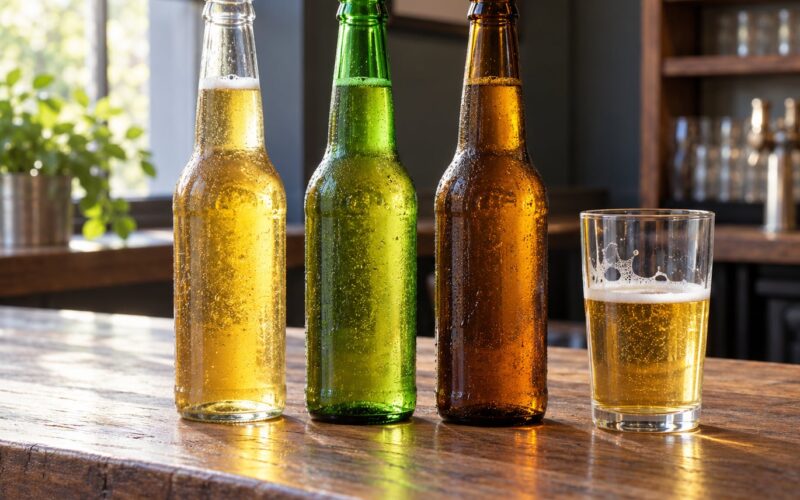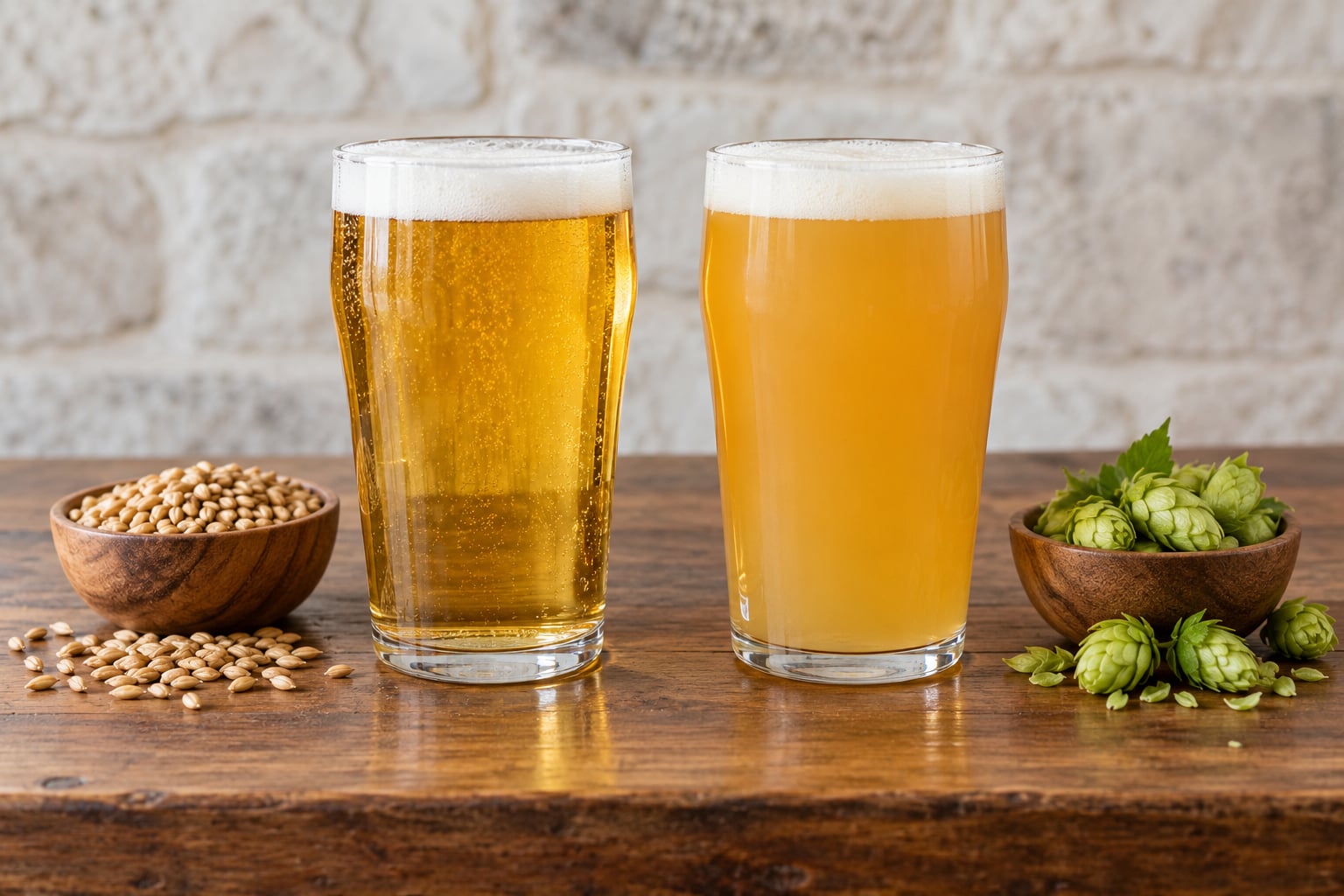
If you only remember one thing about lager vs ale explained for beginners, make it this: beer type is decided by the yeast. Lager uses a bottom-fermenting yeast that works cool, ale uses a top-fermenting yeast that works warm, and nearly every other difference follows from that single choice. Same water, same malt, same hops, two very different results in the glass.
That is the whole story, and it is worth ten minutes of your attention because it changes how you order for the rest of your life. Most people who say they do not like beer have simply met one kind and never the other.
Table of Contents
- Lager vs Ale Explained for Beginners at a Glance
- What Is the Difference Between Lager and Ale?
- What lager vs ale explained for beginners usually gets wrong
- How Fermentation Changes Flavor and Aroma
- Lager vs Ale: How Taste, Aroma, and Body Compare
- Lager vs Ale: Which Styles Are Easiest for Beginners?
- Lager vs Ale: How to Choose for a Bar Crawl or Night Out
- Frequently Asked Questions
- Are all ales stronger than lagers?
- Is pilsner a lager or an ale?
- Do lagers and ales need to be served at different temperatures?
- What is the easiest lager for a beginner to try?
- What is the easiest ale for a beginner to try?
- Does dark beer mean stronger beer?
- Start With a Lager or Ale and Taste Side by Side
Lager vs Ale Explained for Beginners at a Glance
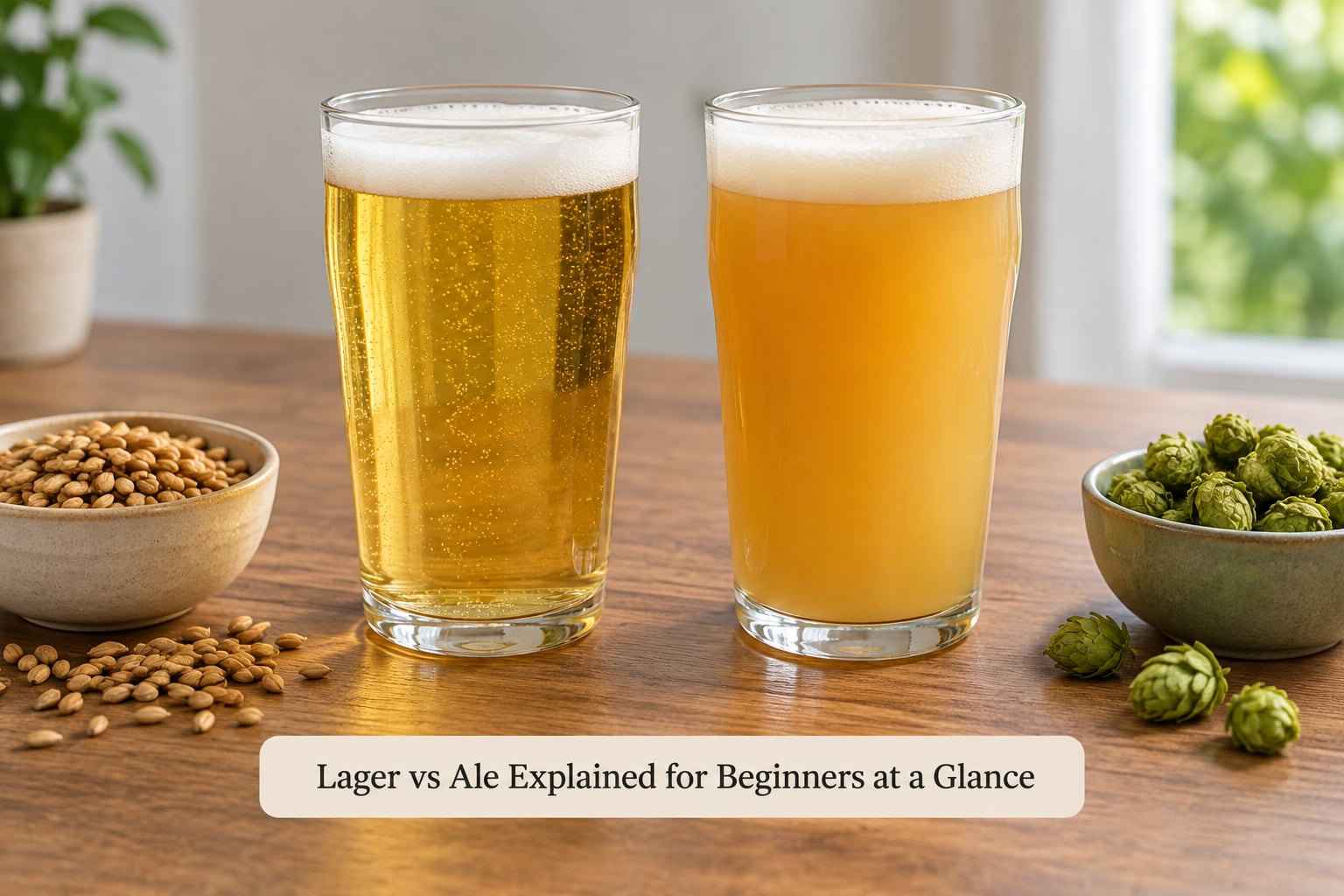
| What changes | Lager | Ale |
|---|---|---|
| Yeast | Saccharomyces pastorianus, bottom-fermenting | Saccharomyces cerevisiae, top-fermenting |
| Fermentation temperature | Cool, roughly 7-13°C (45-55°F) | Warm, roughly 15-25°C (59-77°F) |
| Where the yeast sits | Low in the fermenter, then cold-conditioned | Rises to the top with the foam head |
| Time after fermentation | Weeks or months of cold conditioning | Usually a few days |
| Flavor | Clean, crisp, malt and hop lead | Fruity, spicy, fuller character |
| Aroma | Bread crust, cracker, faint sulfur early on | Banana, mango, pepper, clove, citrus |
| Body | Light to medium, smooth on the palate | Medium to full, sometimes soft and creamy |
| Clarity | Bright and filtered | Clear or hazy, depending on the style |
| Typical ABV | About 3-5% for pale lagers, higher for bocks | About 4-6% for pale ales, higher for IPAs |
| Familiar styles | Pilsner, Helles, pale lager, bock, dunkel | Blonde ale, pale ale, IPA, porter, stout |
What Is the Difference Between Lager and Ale?
The short answer: ale is fermented warm with top-fermenting yeast, lager is fermented cool with bottom-fermenting yeast, and temperature plus yeast is where all the flavor difference is created. A lager then gets cold-conditioned, which is where it gets its name.
An ale is beer fermented at a temperature high enough that the yeast gets busy. It works around 59-77°F (15-25°C), it finishes fermentation in days, and it keeps a bit of yeast character in the cup. A lager ferments slowly and cold, around 45-55°F (7-13°C), then sits cold for weeks so the yeast drops out and the edges soften.
What lager vs ale explained for beginners usually gets wrong
Three myths do most of the damage. None of them survive contact with an actual shelf.
Darker does not mean ale. A dunkel or Schwarzbier is a dark lager. A Newcastle Brown Ale is dark, and so is a stout. Meanwhile Blue Moon, a Belgian-style witbier, is a pale gold lager despite the word ale sitting right in its name.
Ale does not automatically mean stronger. Alcohol comes from how much fermentable sugar the recipe had and how far the yeast was allowed to work. You can find a 3% blonde ale and a 5% pale lager on the same tap list, and neither is cheating.
Lager is not the plain option. Pilsner, Helles, bock and doppelbock are all lagers, and doppelbock is a seven-percent beer that tastes like dark bread and dried fruit. Buy a mainstream pale lager and assume all lagers taste that way and you’ll be wrong about most of the category.
There is also a status myth baked into the words themselves. Ales are not craft and lagers are not mass-market. Large breweries make excellent ales, and craft breweries have spent the last twenty years making lagers, including crisp pilsners and smooth Helles that beat most macro beer without trying.
How Fermentation Changes Flavor and Aroma
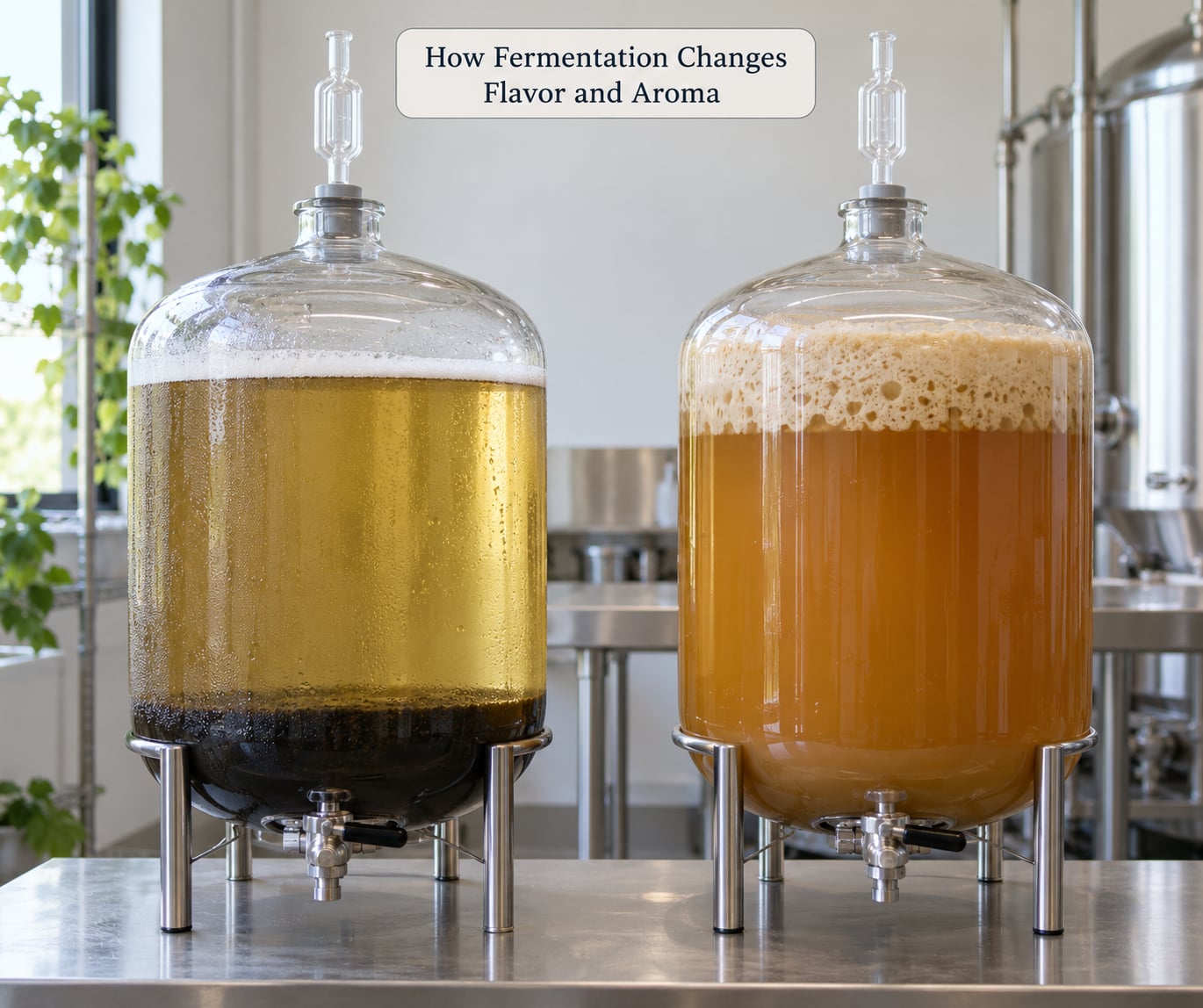
Yeast eats sugar and makes alcohol, carbon dioxide, and a set of aroma compounds as it goes. The temperature decides how loud those aroma compounds get. That is the whole mechanism, and it explains why lager vs ale explained for beginners reduces to a thermostat.
Warm fermentation gives the yeast room to produce fruity esters. Those are the banana, mango, pear and pineapple notes you smell in a blonde ale or a hefeweizen. Some yeast strains also make spicy phenols, which read as clove, pepper or vanilla in a saison or a Belgian wheat beer. A cool ferment suppresses almost all of it, which is why a lager smells like bread and crackers instead of fruit salad.
Temperature also changes what happens early. Cool lager fermentations are slow, so yeast has time to reabsorb the diacetyl it produces. Too little reabsorption and you get a buttery, slick note that beer people call diacetyl, and it is the reason many beginner ales get mistaken for something spoiled. Warm ferments finish fast, so the same compound often stays in the beer on purpose.
On the other side, a new lager can carry a faint sulfur or rotten-egg note right out of the fermenter. It fades during cold conditioning, which takes weeks instead of days. So lagers are not faster to make, they are just built to hide the awkward phase.
Conditioning is the last step and it deserves more credit than it gets. Cold conditioning at near-freezing temperatures lets proteins and resins drop out of solution, which is why lagers pour bright and feel smooth. Hazy ales deliberately skip that step and leave the proteins in, which is where the soft, juicy mouthfeel comes from.
Lager vs Ale: How Taste, Aroma, and Body Compare
Style matters more than the ale or lager label when you are deciding what you actually like. Two people can both be right about preferring lager and still want completely different glasses.
| Style | Family | What you taste |
|---|---|---|
| Pilsner | Lager | Crisp, spicy hop bite, cracker-dry finish |
| Pale lager | Lager | Very light, mild malt, quick and clean finish |
| Blonde ale | Ale | Soft grain, light fruit, gentle carbonation |
| Amber ale | Ale | Toasty caramel malt, low bitterness, medium body |
| IPA | Ale | Grapefruit, pine or citrus, firm bitterness, dry finish |
| Saison | Ale | Pepper and citrus, very dry, highly carbonated |
On aroma alone, a lager gives you malt: fresh bread, hay, sometimes a hint of green apple that comes from the yeast breaking down complex sugars during its slow cold work. An ale gives you fruit and spice first, malt second.
Body is where the difference becomes obvious in your mouth. Lagers tend to be thinner and more carbonated, so they feel sharper and finish faster. Ales carry more of the yeast in suspension, so they feel wider and rounder, and a hazy one can feel almost juice-like at the end of the swallow.
Bitterness is often mistaken for an ale trait. It is really a hop choice that any brewery can make in either family. An aggressively bitter lager exists. So do extraordinarily low-bitterness IPAs.
Lager vs Ale: Which Styles Are Easiest for Beginners?
Start where your palate already has a reference point. Most people have drunk some kind of lager, so a pilsner or a Helles is the lowest-effort starting point in beer. Nothing about it tastes surprising, and once you have it as a baseline you have something to compare every other glass against.
A blonde ale or a wheat beer is the easy first ale. Both are pale, softly carbonated and mostly soft grain, so they read to a beginner as a lager with a little more texture and a hint of fruit. Witbiers like Blue Moon belong in the same bucket despite the name, which makes them a useful way to test whether you like yeast character at all.
Amber ales and mild pale ales are the next step up for most people. Roast-adjacent malt arrives without the coffee-and-ash heaviness of a porter, and the bitterness stays polite.
Save IPAs, sours and anything barrel-aged for your second or third visit. They are all excellent, but they taste like a deliberate decision rather than a safe bet, and a first-timer who gets handed a double IPA has no idea whether they dislike the beer or the advice.
One honest caveat. Friendly does not mean weak, and low ABV does not mean light in the glass. Several of the most welcoming ales on any menu are stronger than the lager next to them.
Lager vs Ale: How to Choose for a Bar Crawl or Night Out
A night out is the easiest place to learn this, because the only thing that matters is whether the next beer is fun to drink. Keep it simple and pace yourself across categories rather than across ABV.
Pick one style that is familiar and one that is new, then alternate. A pilsner with a pale ale, a Helles with an amber ale. Alternating means no two pints in a row taste identical, which is what makes tasting flights feel easy rather than punishing.
Serve temperature changes the first impression more than most people expect. Cold lagers are meant to be cold, around 35-45°F (2-7°C), and they go flat and dull if warmed up. Take a full-bodied ale or a stout out of the fridge and let it sit for ten or fifteen minutes before the first sip. Serving a stout ice-cold is the most common way to convince yourself you do not like dark beer.
Let food carry some of the weight. Burgers, barbecue and fried chicken handle hop bitterness and char better than anything else. A lager is the safer choice with a salad, grilled seafood or sharp cheese, because bitterness and acidity fight each other.
Keep one genuinely recognisable option in the order. If you are drinking with people who are not following this guide, one familiar pint in the mix stops the evening from becoming homework.
Three beers is enough to learn something. One clean lager, one approachable ale, and one style outside your habits, ideally the maltiest or hoppiest thing on the list. That is a useful night without ending up unable to taste by the third stop.
Frequently Asked Questions
Are all ales stronger than lagers?
No. Alcohol comes from fermentable sugar in the recipe and how completely the yeast worked through it, not from the ale or lager label. You will find blonde ales in the low 4s sitting next to 5% pale lagers on the same tap list. Style matters more than family here: a bock lager or a double IPA will out-strength most ales easily.
Is pilsner a lager or an ale?
A lager, and a pure one. Czech pilsner is the style that named lager in the first place: bottom-fermenting Saccharomyces pastorianus, fermented cool and then cold-conditioned. What makes it taste like pilsner is the noble hop addition, which gives you that grassy, spicy bitterness rather than the citrus or pine you get in an IPA.
Do lagers and ales need to be served at different temperatures?
Yes, and this is where most first impressions get ruined. Lagers taste flat and dull served warm, so keep them cold at about 35-45°F. Full-bodied ales, stouts and porters taste thin and watery straight from the fridge, so let them warm up for ten to fifteen minutes before you judge them. Session ales are fine cold.
What is the easiest lager for a beginner to try?
A pilsner or a Helles is the safest entry point because the profile is close to mainstream lager but with more character in the hop finish. A pale lager is the gentlest of all, closer to nothing, which makes it useful if you are not sure you like beer yet. Start there and use it as your baseline for everything that follows.
What is the easiest ale for a beginner to try?
A blonde ale or a wheat beer. Both are pale, soft, lightly carbonated and dominated by gentle grain, so they are easy to read even with no tasting vocabulary. If you want slightly more, go with an amber ale for toastier malt and low bitterness. Hold off on IPAs and sours until you know how you feel about yeast character.
Does dark beer mean stronger beer?
No, and colour tells you nothing about the ale or lager split either. Dark lagers like dunkel and Schwarzbier exist, and pale ales like blonde ales and Belgian witbiers exist. Strength comes from the recipe and the original gravity, not from colour. A 9% doppelbock and a 4% pale lager can sit right next to each other on a menu.
Start With a Lager or Ale and Taste Side by Side
Lager vs ale explained for beginners ends where it should, with two glasses and one instruction: pick one clean lager and one approachable ale, drink them within the same hour, and compare them honestly.
Smell each one before you sip. The lager will smell like bread or cracker; the ale will smell like fruit or pepper. Then drink and note three things: the body (thin or full), the finish (quick and dry or long and warm), and how much you want a second sip before you have decided anything.
Most people discover they actually prefer ale and had no idea, because they had only ever been served lager by default. The reverse happens just as often. Either way, an hour of comparing two glasses teaches more than a year of guessing from a menu.