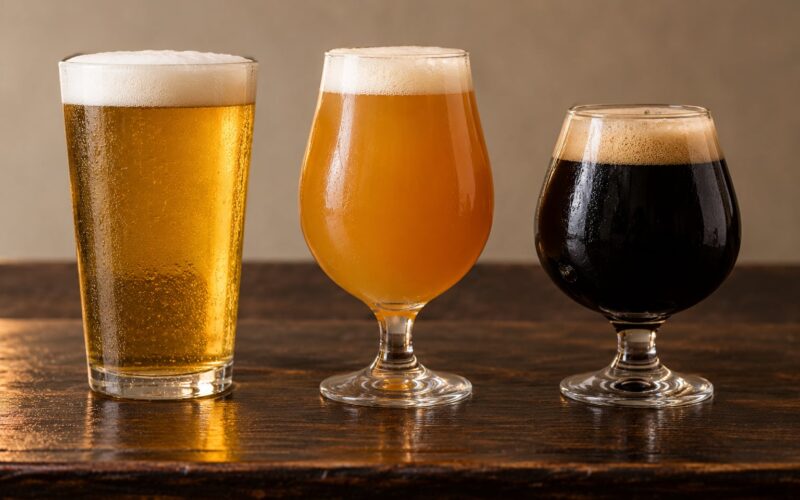
Kölsch is a pale gold, top-fermented beer from Cologne, Germany: brewed with ale yeast at warm temperatures, then cold-conditioned for weeks like a lager. That combination is why the style sits somewhere in the middle. It drinks clean and crisp, lighter on the tongue than a Pilsner, with a faint, elegant fruitiness underneath.
The short answer to the question everybody asks first: a Kölsch is an ale that is handled like a lager. That single distinction explains almost everything else about the style, from its brightness to its serving ritual. Below is what a Kölsch beer actually is, how it gets there, and what to do with the glass once it is in your hand.
Table of Contents
- What Is a Kölsch Beer?
- Where Does Kölsch Come From?
- What Does Kölsch Beer Taste Like?
- How Is Kölsch Beer Brewed?
- Is Kölsch an Ale or a Lager?
- Kölsch vs. Other German Beer Styles
- How to Choose and Serve a Kölsch
- Which Kölsch Beers Are Worth Trying?
- Frequently Asked Questions
- Is Kölsch an ale or a lager?
- What is the difference between a Kölsch and a Pilsner?
- What does a Kölsch beer taste like?
- Is a Kölsch similar to a sour beer?
- How is Kölsch served in Cologne?
- What is the difference between Kölsch and Kölsch-style?
- Conclusion
What Is a Kölsch Beer?
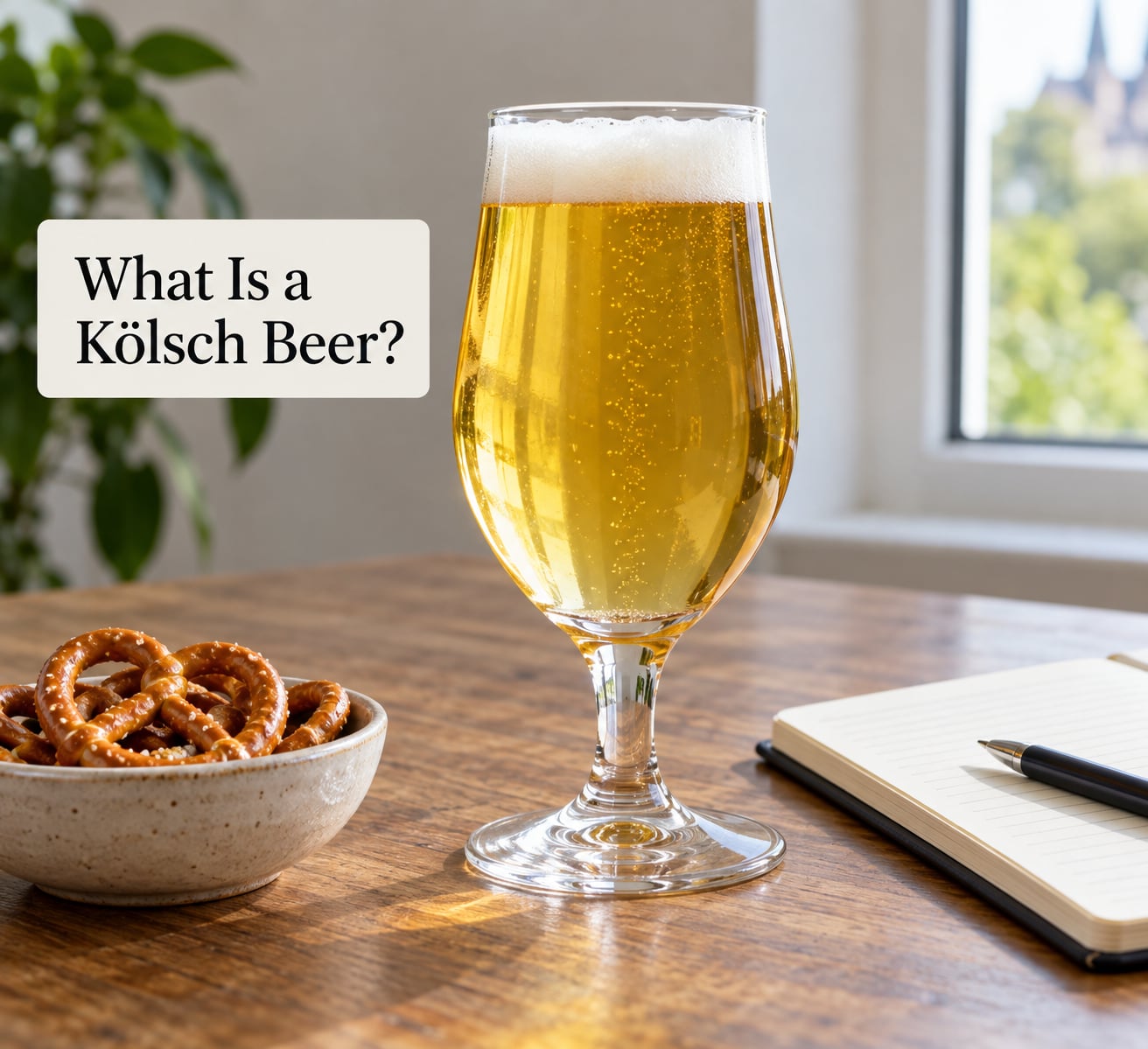
Kölsch is a bright, clear, pale-gold beer brewed in the Cologne area of Germany. It is fermented warm with top-fermenting ale yeast, then held cold for weeks so it drops bright and dry. The result is a lager-like drinking experience with a whisper of ale fruitiness, usually between 4.8% and 5.3% ABV.
Here are the key characteristics at a glance, in the same order most beer references list them:
- Flavor profile: bready, cracker-like malt, faint honey, restrained German noble hops, dry finish
- Alcohol content (ABV): 4.8% to 5.3%
- Ingredients: pale malted barley, German noble hops, water, ale yeast
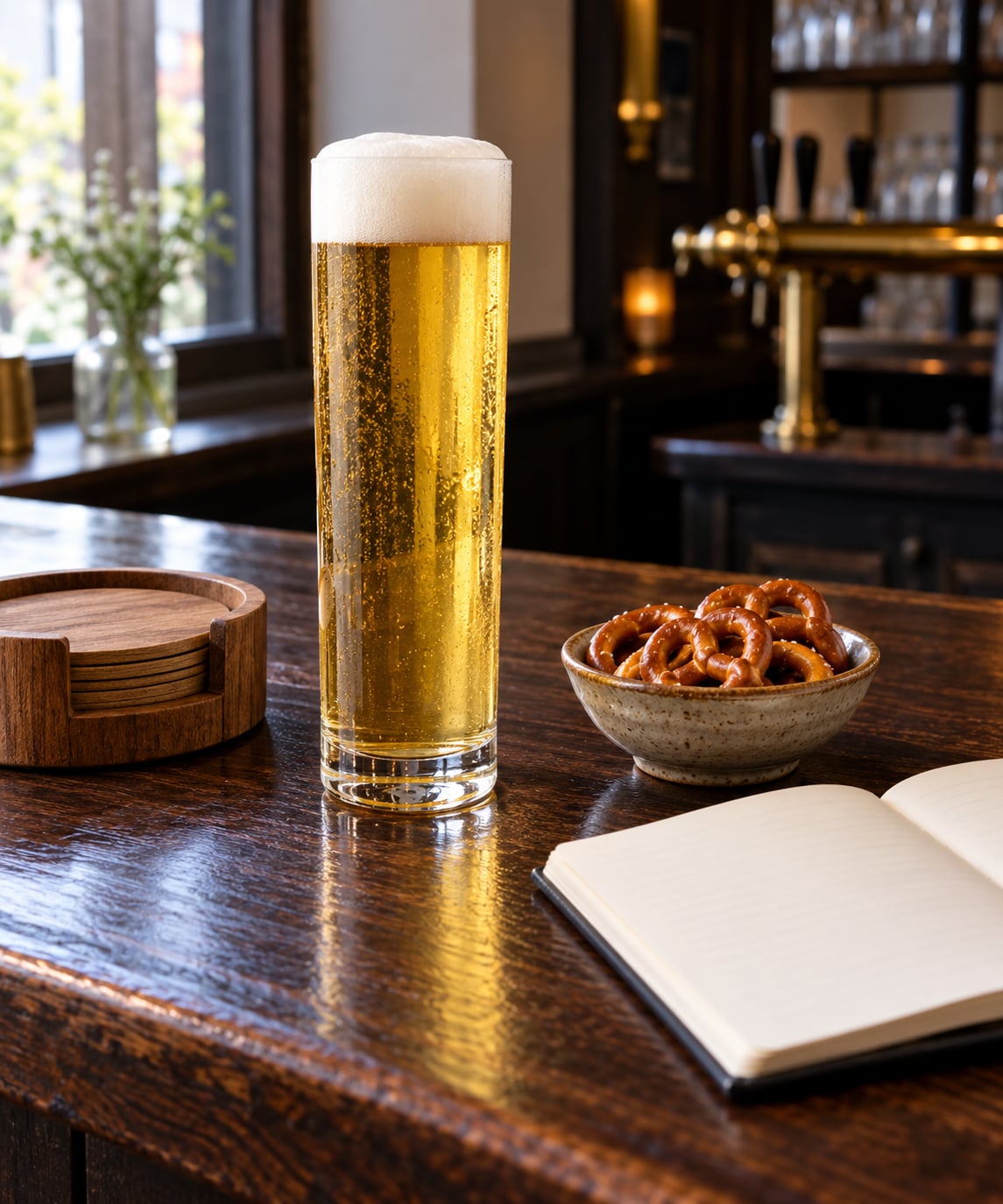
- Traditional serving: a 200 ml Stange in a Cologne corner bar, brought on a Kranz tray
The quick spec sheet matters because Kölsch sits inside tight boundaries. Brewers who work outside Cologne cannot legally call their beer Kölsch, so anything you buy outside Germany labeled simply Kölsch is almost certainly a Kölsch-style ale, not the protected original.
| Specification | Kölsch |
|---|---|
| Origin | Cologne (Köln), Germany |
| Classification | Top-fermented ale, cold-conditioned |
| ABV | 4.8% to 5.3% |
| Bitterness | About 20 to 30 IBU |
| Original gravity | 1.044 to 1.050 |
| Color | Straw to pale gold, brilliant and clear |
| Body | Light to medium-light |
| Glassware | Stange, a slim 200 ml cylinder |
Where Does Kölsch Come From?
Kölsch belongs to Cologne, in the same way that Altbier belongs to Düsseldorf. For centuries the city had no dominant lager tradition, and the beer it built instead was shaped by local politics. In 1603 the city council took an oath committing Cologne brewers to top-fermenting yeast only, refusing the bottom-fermented lager that was spreading through Germany.
That ban held for roughly a century and a half. By the 1700s brewers had learned to make top-fermented beer that was pale, bright and almost lager-clean: warm fermentation for the character, cold storage for the polish. The hybrid that resulted is what we now call Kölsch, and the style was formally named in 1918.
The name is legally protected. Since 1997 it has carried a protected geographical indication, and a 1986 agreement among Cologne-area brewers called the Kölsch-Konvention set the production rules: pale malts, no caramel character, German noble hops, and a 200 ml bottle. The law restricts the name to breweries within roughly 50 km of Cologne, with two grandfathered exceptions outside the city.
That legal detail explains something US drinkers notice constantly. A bottle of genuine Kölsch has to have traveled from the Rhineland, which is part of why it is scarce and commands a premium. Most Kölsch sold in American bottle shops is a Kölsch-style ale brewed locally and unconstrained by the rules.
What Does Kölsch Beer Taste Like?
Kölsch should taste clean, dry and pale, with the malt doing the work rather than the hops. Served cold, it starts with a soft bready character, tightens into something closer to a plain cracker, and finishes dry with a faint bitterness that lingers politely rather than biting.
Here is how the beer presents itself, stage by stage:
- Appearance: straw to pale gold, brilliantly clear, with a dense white head that sticks to the glass
- Aroma: light bread crust, a touch of honey, and restrained grassy or herbal hop notes
- Malt: bready and cracker-like, never caramel or toffee, with a soft sweetness in the middle
- Hops: noble hops used for spice rather than aroma, around 20 to 30 IBU of firm bitterness
- Mouthfeel: light to medium-light, lively carbonation, never slick or heavy
- Finish: dry and crisp, the classic sessionable ending
No two brewers hit that target identically, and regional water plays a role. Cologne’s water is relatively hard, which pushes a little crunch into the malt and helps the beer stay sharp.
It also helps to know what a bad Kölsch tastes like. Cloudiness that will not clear, a sour or vinegary edge, obvious banana or apple esters, or a syrupy body all mean something went wrong in the tank. Acidity in particular is a fault, not a feature. A style this pale has nowhere to hide behind bitterness.
Sour-leaning Kölsch variants do exist, often fruit-infused, and newcomers regularly mistake them for the base style. They are a separate invention entirely.
How Is Kölsch Beer Brewed?
The process is what separates Kölsch from an ordinary pale ale, and it comes down to four decisions that a brewer has to get right together.
1. A pale grist. Nearly all malt, mostly Pilsner malt with a little Vienna malt for a shade of depth. Anything dark or crystal pushes the beer toward caramel, which is exactly the fault the Kölsch-Konvention forbids.
2. Restrained hopping. German noble hops such as Hallertau, added early for firm bitterness. Hop aroma stays low; the beer should not smell like a hop field.
3. Warm ale fermentation. Top-fermenting yeast works near 60°F, typically starting a little warmer and being brought down slowly. This is where the faint fruity note is created, and it is also where homebrewers most often go wrong: push the temperature too high too fast and you brew a Belgian blonde instead.
4. Extended cold conditioning. The beer is held near freezing for several weeks, often filtered bright at the end. This cold phase strips out the heavier esters, clarifies the beer and gives the clean, dry finish that makes Kölsch feel like a lager in the glass.
Homebrewers aiming at the style typically mash low, around 146 to 148°F for a thin, highly fermentable wort, ferment with a German Kölsch ale strain near 60°F, and cold crash in the last week. Sulfur off-aromas during fermentation usually mean the yeast is stressed, and they usually fade with time and a cold rest. If they do not, the beer gets swamped.
Is Kölsch an Ale or a Lager?
Kölsch is an ale, fermented warm with top-fermenting yeast. It only looks and drinks like a lager because of the cold conditioning that follows fermentation.
That answer settles the argument that runs forever in beer forums, where drinkers describe it as an oddity that is almost a hybrid. Both camps are describing the same beer. The yeast puts it on the ale side of the line, the cold conditioning puts it on the lager side, and neither half cancels out the other.
If you were handed a Kölsch and had to place it on a shelf, it belongs next to the pale ales. If you were drinking it blind next to a Helles, you would have a hard time telling the two apart.
Kölsch vs. Other German Beer Styles
Kölsch is frequently confused with its nearest German neighbors, usually because they share a city, a region or a color. The table below separates them.
| Style | Yeast and fermentation | Body | Hop profile | Color | Overall impression |
|---|---|---|---|---|---|
| Kölsch (Cologne) | Ale yeast, warm, then cold-conditioned | Light to medium-light | Noble hops, 20 to 30 IBU, firm bitterness | Pale gold, clear | Dry, crisp, faintly fruity |
| Pilsner (Pils, Bohemia) | Lager yeast, cool, long conditioning | Medium | Sausaz, 25 to 45 IBU, more aromatic | Pale gold | Bready with a spicier hop snap |
| Munich Helles | Lager yeast, cool | Medium-light | Noble hops, 16 to 22 IBU, soft | Pale gold | Soft, bready, gently sweet finish |
| Düsseldorf Altbier | Ale yeast, warm, cold-conditioned | Medium-light | Noble hops, moderate bitterness | Copper to deep brown | Malty, caramel, toasty, earthy |
| Hefeweizen | Ale yeast, warm, no cold conditioning | Medium-full, unfiltered | Low bitterness | Pale straw, cloudy | Bready, banana and clove, creamy |
The takeaway for a lager drinker’s palate: Kölsch is drier and lighter than a Pilsner, less sweet and more bitter than a Helles, and nothing like an Altbier, which is to say a dark beer. Altbier shares the warm-ferment, cold-condition technique, so the confusion there is understandable.
Drinking Kölsch alongside a Pilsner, the difference shows up in two places. The Kölsch finishes drier and a touch more bitter, and it carries a light fruitiness that lager yeast never produces.
How to Choose and Serve a Kölsch

Choosing one is mostly about reading the label honestly. In the United States, Kölsch means a Kölsch-style ale brewed by a local craft brewery, and it can range from careful to careless. Look for a listed ABV in the 4.8% to 5.3% range, check the IBU if it is printed, and be suspicious of anything describing itself as fruity.
Freshness matters more here than in most pale ales because the whole style rests on a clean fermentation. A Kölsch that tastes dull or papery has been sitting too long. Buy singles before committing to a case.
For serving, keep it simple:
- Glass: a Stange if you have one, otherwise any narrow straight-sided glass. A tulip works too.
- Temperature: 40 to 45°F. Too cold and the malt vanishes entirely.
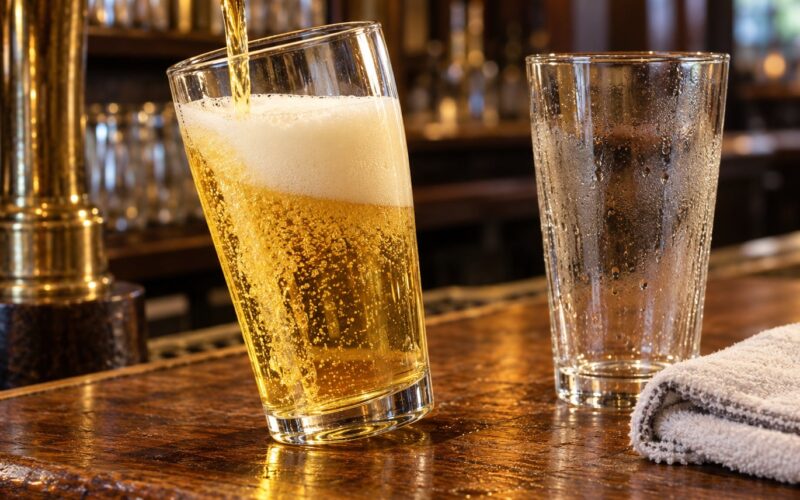
- Pour: down the side of the glass to protect the head, then fill gently.
- Rinse the glass: a rinse or a faint beer rinse keeps the lace behind.
In Cologne the ritual is a whole system worth knowing about, even if you never travel there. A server called a Köbes carries a round tray called a Kranz holding eleven or twelve Stangen. You sit down, he sets one glass beside you, and from then on a refill is one tick on your coaster. When you leave, the number of ticks on the coaster is the bill. The Köbes marks each tick on your coaster as he pours.
On food, Kölsch has enough bitterness to cut fat and enough malt to hold up against starch. Pretzels, salted crackers and mild cheeses are the easy starting points. In Cologne it is commonly drunk alongside halibut, smoked herring, and hearty meat dishes such as Rheinischer Sauerbraten or a plate of sausages. If you are cooking fish for the pairing, take it to 145°F internal temperature before serving. Nothing too spicy or too sweet; this beer does not need to shout over dinner.
Which Kölsch Beers Are Worth Trying?
No ranking survives contact with a good Kölsch, because the protected Cologne breweries each lean slightly different ways. What follows is a set of starting points rather than a verdict.
For the genuine protected article, the Cologne names are the reference point: Früh, Gaffel, Reissdorf, Sünner and Päffgen. They are the benchmarks every Kölsch-style brewer is measuring against, and tasting them side by side makes the differences in malt weight and hop bitterness obvious. Availability outside Germany is the obstacle, and it is the most common complaint from drinkers who want the real thing.
In the US market, look for Kölsch-style ales that are brewed cold after a warm fermentation and stay under 5.5%. Breweries working in the style have generally followed the German yeast strains rather than improvising, which means the beer tends to land close to the benchmark. Watch the label for bitterness additions, since a heavier hop bill is the fastest way for a Kölsch-style ale to drift away from the original.
A practical test: taste two in the same session, one traditional and one modern American interpretation. The differences are small enough that you can taste them side by side, which is not true of most styles.
Frequently Asked Questions
Is Kölsch an ale or a lager?
Kölsch is an ale. It is fermented warm with top-fermenting ale yeast near 60°F, then held cold for weeks, a step usually called lagering. The warm phase gives it faint fruitiness and the cold phase gives it the clean, dry finish. That two-stage process is why drinkers call it a lagered ale or a hybrid beer.
What is the difference between a Kölsch and a Pilsner?
A Pilsner is brewed entirely with lager yeast at cool temperatures, so it is bready with a spicier, more aromatic hop snap and a slightly fuller body. A Kölsch is lighter on the tongue, drier on the finish, and carries a faint fruitiness from warm ale fermentation. Pilsners also usually sit higher in bitterness, commonly 25 to 45 IBU against Kölsch’s 20 to 30.
What does a Kölsch beer taste like?
It should taste clean, pale and dry. Expect soft bread crust up front, a touch of honey in the middle, then a tight cracker-like malt character and a dry, gently bitter finish. Hop aroma stays deliberately low. A sour, cloudy or banana-scented glass is a fault, not a variation, because the style has no bitterness to hide behind.
Is a Kölsch similar to a sour beer?
No. A classic Kölsch is neutral and clean, with acidity treated as a defect rather than a feature. Sour and fruit-infused Kölsch variants exist and are popular, but they are a separate invention and they say nothing about how the base style is supposed to taste. If a Kölsch tastes vinegary, something went wrong in the tank.
How is Kölsch served in Cologne?
A server called a Köbes brings a round tray, the Kranz, holding eleven or twelve 200 ml Stangen. He sets one beside you and refills on your signal, marking a tick on your coaster for each pour. The ticks on the coaster become the bill when you leave. Traditionally you do not move the glass, and it is not a shared drink.
What is the difference between Kölsch and Kölsch-style?
Kölsch is a protected geographical indication granted in 1997, so the name legally belongs to breweries within roughly 50 km of Cologne, with two grandfathered exceptions. Kölsch-style describes any beer made in the style anywhere else, which covers most Kölsch sold in the United States. Style brewers follow the general profile but are not bound by the ingredient or bottle-size rules.
Conclusion
Kölsch is a pale gold Cologne beer fermented warm with ale yeast and then cold-conditioned for weeks, which is why it drinks crisp and lager-like while keeping a faint ale fruitiness in the background. Bready malt, restrained noble hops and a dry finish are the benchmarks worth judging any example against.
Start with one fresh traditional example, served at 40 to 45°F in a narrow glass. Then pour a Kölsch-style ale next to it and see where the two part ways.