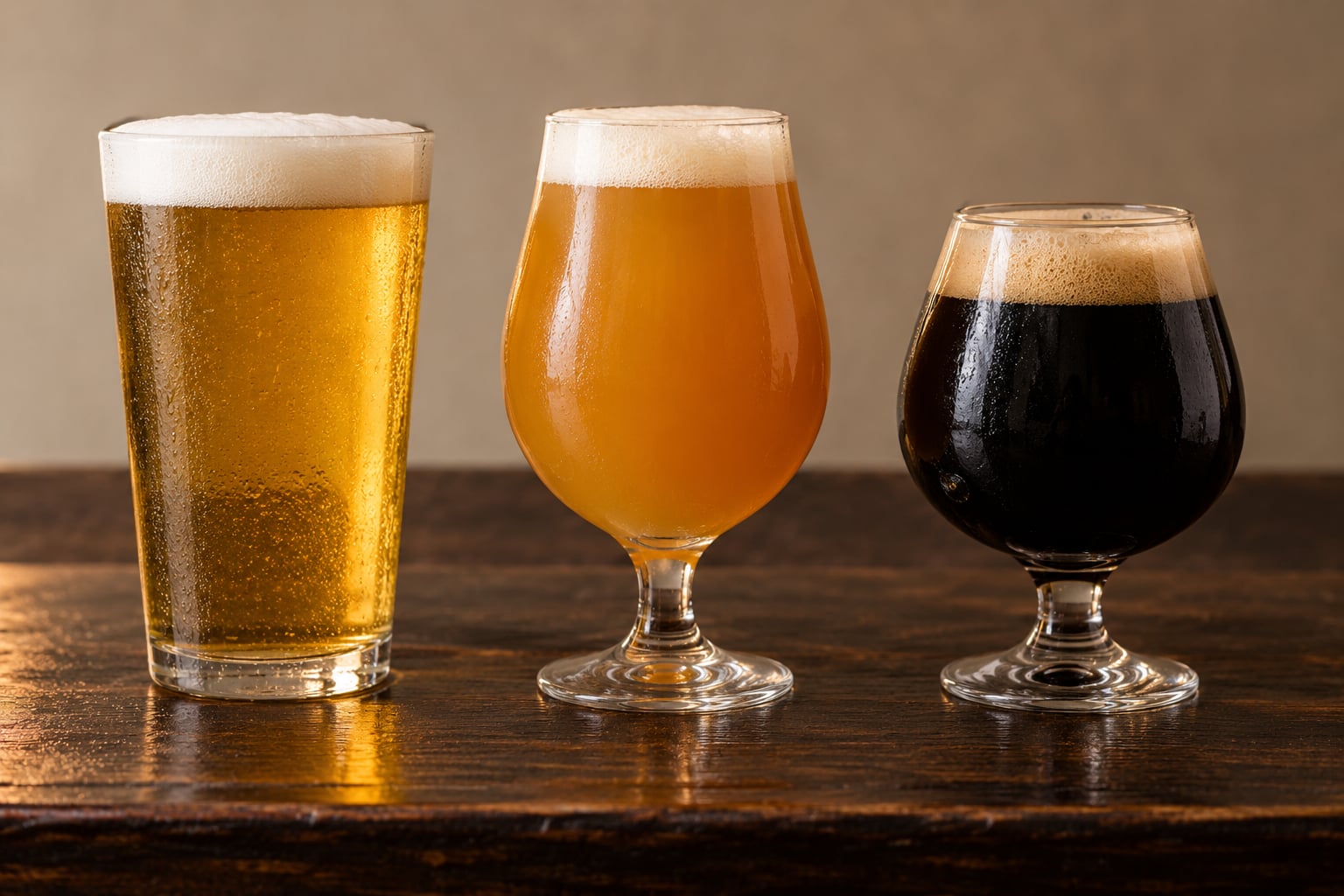
If you only buy one shape, get a tulip glass. It handles the widest range of beer better than the other two: the pint glass wins on volume and durability, and the snifter wins for swirling and warming big beers. In a pint glass vs tulip glass vs snifter standoff, the tulip is the sensible middle, and the other two earn their place in specific situations.
The reason is simple. Glass shape controls how aroma reaches your nose, how long carbonation stays lively, how a head holds together, and where the beer lands on your tongue. Different beers need different amounts of each. This guide breaks down the three most compared beer glass types, the styles they suit, and how to pick the right one for 2026.
Table of Contents
- Pint Glass vs Tulip Glass vs Snifter at a Glance
- How Beer Glass Shape Changes the Drinking Experience
- Aroma delivery decides how much beer you smell
- Headspace controls carbonation and foam
- Palate targeting decides where the beer lands
- Temperature is a shape decision too
- Pint Glass: Best for Volume, Simplicity, and Highballs
- Tulip Glass: Best for Aroma, Head Retention, and Balanced Beer
- Snifter: Best for Aromatic, Strong, or Slow-Sipped Beer
- Pint Glass vs Tulip Glass vs Snifter by Beer Style
- Which Should You Choose?
- Frequently Asked Questions
- Is a tulip glass better than a pint glass for IPA?
- What size should a pint glass be for serving beer?
- Do you need a snifter for beer, or is it only for whiskey?
- Does a snifter keep beer cold better than a tulip glass?
- Are stemmed beer glasses necessary at home?
- Which glass should I use for a beer tasting flight?
- Conclusion
Pint Glass vs Tulip Glass vs Snifter at a Glance
The fastest way to see the difference is to compare the shapes side by side. The pint is a straight-sided volume vessel, the tulip adds a bowl and a narrowed rim, and the snifter shrinks the volume while opening the bowl up.
| Criterion | Pint Glass | Tulip Glass | Snifter Glass |
|---|---|---|---|
| Shape | Straight or gently tapered walls | Bulbous bowl, short stem, flared rim | Wide bowl, narrow tapered mouth, short stem |
| Typical capacity | 16 oz US pint, 20 oz imperial pint | 12 to 16 oz | 6 to 10 oz |
| Aroma capture | Open, so aromas spread thin | Strong, concentrates volatiles above the rim | Strong, best of the three for swirling |
| Head retention | Decent, large head area | Excellent, bowl cradles the foam | Good, though foam collapses as you swirl |
| Warming effect | Warms fast in the hand | Held by the stem, stays cool | Designed to warm in the palm |
| Best styles | Lager, pale ale, session beer, beer and highballs | IPA, pale ale, Belgian ale, amber, most craft beer | Barleywine, imperial stout, aged strong ale |
| Main drawback | Aromas escape through the open top | Fingerprints and slippery stems | Small volume, easily overfilled |
How Beer Glass Shape Changes the Drinking Experience
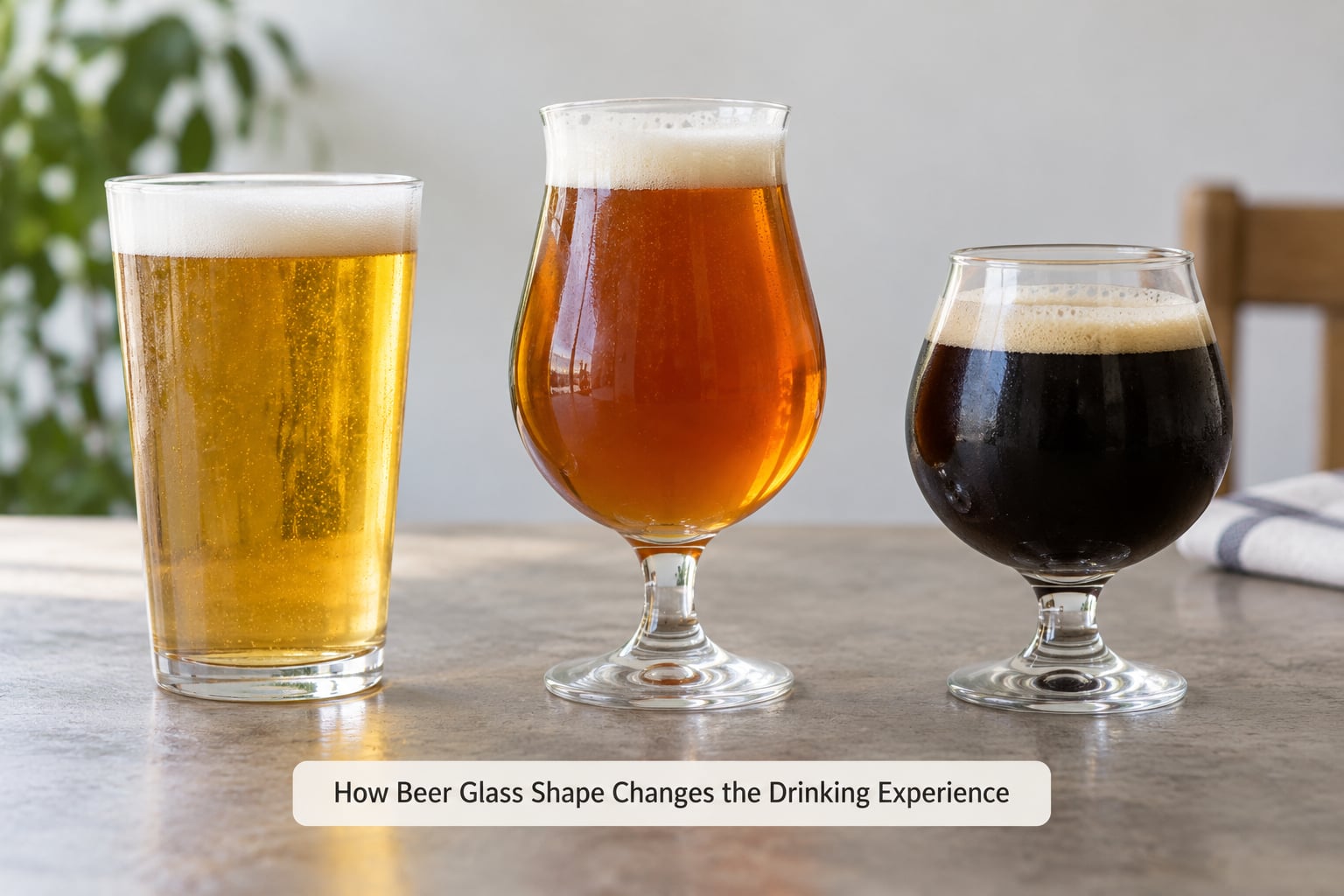
Shape matters because it changes four things at once: aroma delivery, carbonation perception, head stability, and where the beer touches your palate. Ignore any of them and you are just drinking liquid out of a tube.
Aroma delivery decides how much beer you smell
Aroma molecules are volatile, and they escape upward. A straight pint glass has a wide open top, so those compounds disperse into the room air before your nose gets near them. A tulip’s bulbous bowl pools them in a narrow column above the beer, and a snifter’s tapered mouth traps them hardest of all. This is why a hazy IPA smells dramatically different in a tulip than in a shaker pint.
Headspace controls carbonation and foam
The foam is not decoration. It is a lid that holds carbonation in the liquid and carries aroma compounds toward the rim with every sip. A glass with a wide bowl and a curved bottom gives the head room to sit without sliding off, which is exactly what the tulip bowl is built for.
Palate targeting decides where the beer lands
Rim width and angle put the beer on a specific part of your tongue. A narrow rim aims a concentrated, warm sip at the centre of your palate, which suits strong and complex beer. A wider rim spreads the pour thin and cools it slightly, which suits lagers.
Temperature is a shape decision too
A stem keeps your hand away from the bowl so the beer stays cold. A short, wide bowl is meant to be cupped, so it warms in your palm over a slow evening. Neither is a gimmick; both are deliberate. If a beer is below 40 degrees Fahrenheit, warmth in a snifter will not rescue it, it will just make it flat faster.
Pint Glass: Best for Volume, Simplicity, and Highballs
The pint glass is the honest workhorse. It holds the most beer, it is the cheapest shape to make in quantity, and it survives a bar. For everyday drinking it is genuinely enough.
Two styles of pint matter. The American shaker pint is a straight-sided 16 oz glass, thick, stackable, and standard for lagers and pale ales in most taprooms. The nonic, or pub pint, has a bulge near the top and holds 20 imperial ounces in the UK, which is why British bitter and cask ale come in one.
What you give up is aroma concentration. That matters less for a crisp pilsner or a lager than it does for a hop-heavy IPA, because lagers lean on malt and hop balance rather than on layered aromatics you need to hunt for. A shaker pint also doubles as a highball or a cocktail glass, which no stemmed beer glass does.
The bottom line: choose a pint glass when you are drinking volume lagers, session beers, or mixing drinks, and when durability and stackability matter.
Tulip Glass: Best for Aroma, Head Retention, and Balanced Beer
The tulip glass is the best all-around beer glass for home drinkers, and it is the first one most homebrewers reach for. The bulbous bowl gathers aromatics, the narrowed top returns them to your nose, and the stem keeps the beer cold while your hand stays clean.
Pour into the widest part of the bowl and leave the top third empty. That headspace is where the aroma collects, and it is also where the foam has room to grow. A tulip that is filled to the rim will taste flat because there is nowhere for the head to go.
This shape suits the widest range of craft beer: IPAs and double IPAs, pale ales, ambers, porters, saisons, Belgian ales and most taproom releases. Where a snifter is built for one job, the tulip handles a mixed flight without feeling wrong in your hand.
The bottom line: choose a tulip glass when you drink a range of craft beer, want your hand kept off the beer, or want to be able to swirl without overfilling.
Snifter: Best for Aromatic, Strong, or Slow-Sipped Beer
A snifter is a small, wide-bowled stemmed glass borrowed from brandy and whisky service. The narrow mouth traps aroma, and the short, broad bowl is meant to warm in your palm over a long drink.
Pour about a third to half full. The most common mistake is filling it to the brim and then swirling, which produces a sudsy eruption that runs down the outside of the glass and across the table. Pour low, swirl gently, and nose it before you sip.
It earns its place with barleywines, imperial stouts, old ales, aged barleywine, and anything barrel-aged where oak, vanilla and oxidation notes open up as the beer warms. Used with a pale lager, a snifter just makes the beer look small and taste warmer than you want.
The bottom line: choose a snifter for high-ABV and aged beer you intend to sip slowly and warm deliberately.
Pint Glass vs Tulip Glass vs Snifter by Beer Style
Matching the glass to the style is the whole trick. Here is the short version for the beers people actually order.
| Beer style | Typical ABV | Best glass | Why |
|---|---|---|---|
| Pilsner, light lager | 4 to 5 percent | Pint or pilsner glass | Clean, cold, served in volume; aroma matters less |
| Amber lager, bock | 4.5 to 6 percent | Tulip or mug | Toasty malt aromatics benefit from a narrow top |
| Pale ale | 4.5 to 6 percent | Tulip | Balanced hops and malt, easy drinking with a head |
| IPA or double IPA | 6 to 10 percent | Tulip | Concentrates pine, citrus and resin |
| Saison, Belgian ale | 5 to 9 percent | Tulip | Esters and pepper need a bowl and headspace |
| Porter and dry stout | 4.5 to 7 percent | Tulip or nonic pint | Creamy head and roast, served in volume |
| Imperial stout, barleywine | 8 to 15 percent | Snifter | Swirl, warm and sip the layered aromas |
| Barrel-aged or imperial sour | 7 to 12 percent | Tulip or snifter | Oxidation and oak notes need concentration |
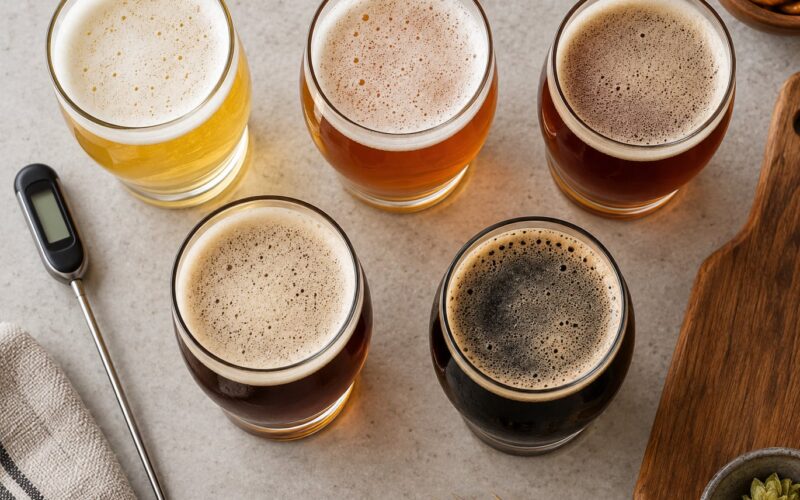
| Tasting flight | Varies | Tulip or tasting glass | Consistent shape keeps the comparison honest |
| Backyard barbecue | Varies | Pint or handled mug | Durable, stackable, easy to wash |
Which Should You Choose?
Choose the pint glass when you are drinking lagers and pale ales in volume, hosting a group, or mixing drinks. It is the only one of the three you can hand to someone without a tutorial.
Choose the tulip glass when you want one glass that handles almost any craft beer. If you drink hoppy beer at all, this is the purchase that changes the most about how it tastes.
Choose the snifter when you regularly buy 9 percent and up releases, barrel-aged bottles, or big seasonal pours that deserve attention rather than speed.
If you are starting from nothing, buy four tulips and a pair of pints first. Add a snifter or two when you decide you want to sit with a barrel-aged stout instead of drinking it. Many homebrewers keep their tulips and snifters reserved for beer and use plain pints for water and soda, which keeps the good glassware for the job it does best.
Frequently Asked Questions
Is a tulip glass better than a pint glass for IPA?
Yes, for hop-forward beers. The tulip’s bulbous bowl gathers pine, citrus and tropical aromatics in a narrow column that a straight pint glass lets dissipate through its open top. If you only drink lagers in volume, the pint is the better glass for the job.
What size should a pint glass be for serving beer?
A US pint glass holds 16 ounces, and an imperial or nonic pub pint holds 20 ounces. Ask which one you are getting when it is poured, since the difference is four ounces. Most US taprooms serve 16 ounces unless you request otherwise.
Do you need a snifter for beer, or is it only for whiskey?
It is not only for spirits, but it is specialised. The small size, wide bowl and narrow mouth are built for swirling and warming high-ABV and aged beer such as barleywine, imperial stout and old ale. For most everyday beer a tulip glass serves you better.
Does a snifter keep beer cold better than a tulip glass?
No, it is designed to do the opposite. The snifter’s short stem and broad bowl are meant to be cupped so the beer warms in your palm and opens up. A tulip glass keeps your hand off the bowl, so the beer stays colder for longer.
Are stemmed beer glasses necessary at home?
They are not necessary, but they are useful. A stem keeps your hand off the beer, stops fingerprints on the bowl, and lets you swirl without warming the pour. Stemless tumblers work fine, they just lose some of the aroma and temperature control.
Which glass should I use for a beer tasting flight?
Use the same glass for every pour in the flight. A tulip or small tasting glass is the usual choice because the shape stays consistent and you can smell each pour without the glass changing between samples. Rinse between pours so the rim does not carry over.
Conclusion
Start with tulip glasses for general craft beer, add a pair of pints for casual volume drinking and lagers, then pick up a snifter when you want to sit with a strong or aged pour. The glass changes how a beer is presented and perceived, not what is in the glass, but the right one makes a noticeable difference on anything worth paying attention to.