If your homebrew tastes sour or vinegary, the most common cause is acetic acid produced by bacteria such as Acetobacter or Lactobacillus getting into the wort or fermenter. The second most common cause is not bacteria at all — it is acetaldehyde from a ferment that has not finished, which smells like green apple and fades as the yeast clean up. Work out which one you have before you decide whether the batch is salvageable.
The difference matters more than it sounds. Acetaldehyde disappears on its own if you give the yeast time, while acetic acid never does. Dumping a beer that only needed another week is the most common expensive mistake in homebrewing.
Table of Contents
- What Does Sour or Vinegary Beer Taste Like?
- Why Does My Homebrew Taste Sour or Vinegary?
- The Most Common Causes of Sour or Vinegary Beer
- Acetobacter: the bacteria that actually makes vinegar
- Lactobacillus: creamy, curdled sourness
- Acetaldehyde from an unfinished ferment
- Old liquid malt extract and stale ingredients
- Oxygen, hot ferments and over-carbonation
- How to Tell Each Off-Flavor Apart
- Quick Diagnosis: Sour or Vinegary Homebrew
- How to Fix Sour or Vinegary Homebrew
- Prevent Sour and Vinegary Flavors in the Next Batch
- Frequently Asked Questions
- Can you let beer ferment too long?
- What type of bacteria is used to produce vinegar?
- Is sour or vinegary homebrew safe to drink?
- My beer tastes sour but the hydrometer says fermentation is done. What now?
- Can I rescue a batch that tastes like vinegar?
- Why does my beer get sour after bottling?
- Conclusion: Start With the Source of the Acidity
What Does Sour or Vinegary Beer Taste Like?
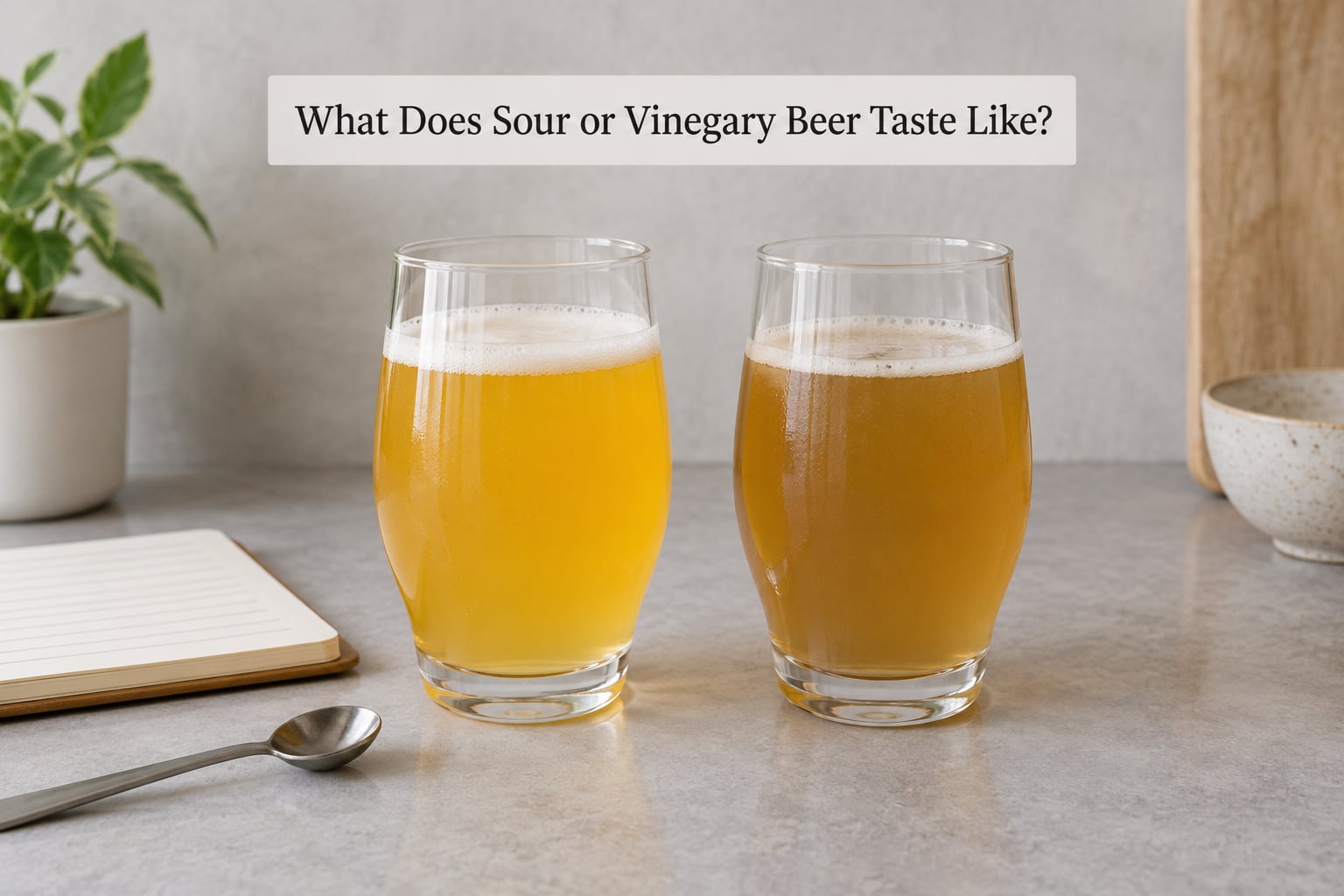
“Sour” covers several very different flavors, and mixing them up is what sends brewers down the wrong path. Start by naming what you actually taste before you start guessing at causes.
- Clean lactic sourness — a smooth, yogurt-like tartness with no harsh edge. This is what a kettle sour or a Berliner Weisse is supposed to taste like. It is bright rather than punishing.
- Vinegar sharpness — a hot, stinging, straight-up acetic bite. It hits the front of the palate, makes your mouth water, and often smells of solvent or nail polish remover. This is the taste most people mean when they say “vinegary.”
- Green apple sourness — a crisp tart edge with a raw apple or pear note, often with no smell at all once the beer warms. That is acetaldehyde, an unfinished ferment byproduct.
- Curdled, silky sourness — a thicker, almost yoghurt-like texture with a sour-cream character, sometimes with a faint haze that refuses to drop out.
None of these are the same as the flavors people mistake for sour: buttery diacetyl, corn-like dimethyl sulfide, hot nail-polish fusel alcohols, or chlorine-sharp phenolics. More on those in a moment.
Why Does My Homebrew Taste Sour or Vinegary?
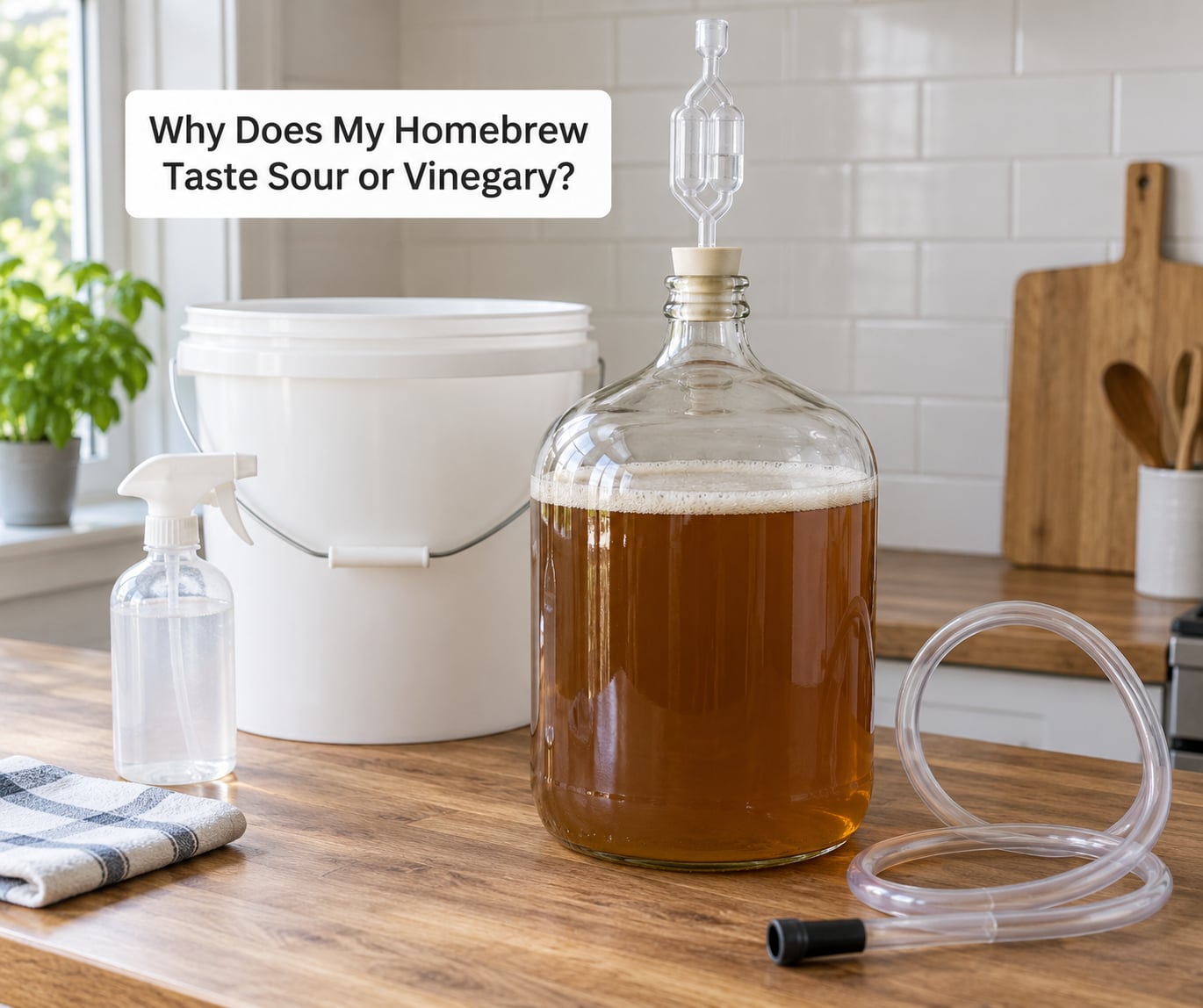
The direct answer: sour and vinegary flavors come from one of three places — bacteria that produce acid, a ferment that has stalled before cleaning up its own byproducts, or chemistry that happens in the bottle after oxygen gets in.
Bacteria are the ones people worry about, and they are the most likely culprit for a genuinely vinegary beer. Acetobacter oxidizes ethanol into acetic acid, which is literally the same reaction used to make vinegar, and Lactobacillus turns sugars into lactic acid. Both get in through unsanitized equipment, a blow-off or airlock that let air through, or an oxygen-heavy transfer.
Then there is the ferment that simply has not finished. Yeast makes acetaldehyde on the way to ethanol, and while the beer is still converting sugar the balance tips toward that raw green-apple note. A beer at six days can taste genuinely sour and turn out excellent in a month.
And sometimes the sourness was there before you ever pitched yeast. Old liquid malt extract, a wort that sat too long, or chlorinated water all carry acidity that nothing downstream will remove. If you are brewing deliberately sour — a kettle sour, or a mixed fermentation with a wild culture — then this flavor is the plan, not the problem. You can read how that works in our guide to what sour beer is and how it is made.
The Most Common Causes of Sour or Vinegary Beer
Acetobacter: the bacteria that actually makes vinegar
This is the big one, and it is a sanitation failure. Acetobacter is an obligate aerobe — it needs oxygen to work — so it thrives in anything where beer met air: an unsealed fermenter, a badly gunked airlock, a siphon hose that was rinsed but not sanitised, or a blow-off setup with an air gap.
Tell-tale signs are a sharp vinegar bite in both taste and aroma, a pellicle or skin forming on the surface of the wort, and sometimes a ropy or stringy feel in the beer. Once this bacteria has converted a meaningful amount of ethanol to acetic acid, there is no way to reverse it.
Lactobacillus: creamy, curdled sourness
Lactobacillus works slightly differently. It converts sugars into lactic acid rather than oxidizing ethanol, and it produces that thicker, silkier, yoghurt-associated character instead of solvent heat. It shows up for the same reason Acetobacter does — dirty gear, a leaky airlock, a transfer with too much splash.
Kettle souring works by deliberately introducing lacto bacteria into hot wort before the boil, so their acids get boiled away. The same bacteria in a fermenter after the boil produces the same acids with nothing to remove them.
Acetaldehyde from an unfinished ferment
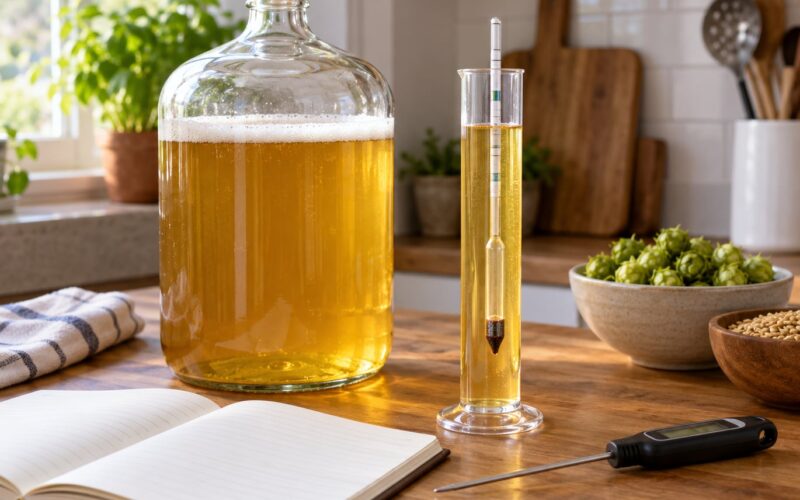
This one is a false alarm far more often than people expect. If final gravity is still moving down, or your hydrometer is sitting at 1.020 when you expected something nearer 1.010, the yeast is still working and acetaldehyde is still in the beer.
It usually presents as a green apple, raw grape, or bruised-pear sharpness. It is most obvious when the beer is cold, which is a good clue in itself: chilling suppresses your ability to perceive it. Warm the sample to room temperature and taste again before you reach for the bucket.
Our explainer on what yeast does in beer goes into the fermentation chemistry if you want the detail.
Old liquid malt extract and stale ingredients
This one gets missed almost every time because it happens before fermentation starts. Liquid malt extract is not a shelf-stable product, and once it ages it develops a sour twang that no amount of yeast will remove — the beer ferests cleanly and then tastes wrong.
If your wort tasted sharp before you pitched anything, that is your answer. Check the best-before date on the extract, and if it has been open in a warm cupboard for months, replace it.
Oxygen, hot ferments and over-carbonation
Oxidation does not create acetic acid on its own, but it strips the protective compounds that keep bacteria out and stales the beer in ways that read as sour-ish cardboard or bruised apple.
Rushing a warm ferment does something different. Above roughly 22°C (72°F), yeast produces fusel alcohols that taste like hot solvent, and a stuck or blown-off ferment that never clears can leave a sharp edge that reads as vinegar to a beginner. Neither is fixable once the beer is packaged.
How to Tell Each Off-Flavor Apart
Use three things together: what it tastes and smells like, when it showed up, and whether it changes over time.
| What you notice | Most likely cause | Fix | Saveable? |
|---|---|---|---|
| Sharp vinegar, both taste and smell; any age | Acetobacter | Dump; rebuild sanitation | No |
| Silky, yoghurt-curdled sour; haze that will not drop | Lactobacillus | Dump; sanitise fermenter and hose | No |
| Green apple or raw pear; disappears when warm; beer under 14 days old | Acetaldehyde, ferment unfinished | Wait until gravity is stable, then condition | Usually |
| Sour twang in the wort before pitching | Old liquid malt extract or stale grain | Fresh ingredients next batch | No |
| Sour that shows up only after bottling or kegging | Package not sealed, or over-priming and oxygen through the cap | Check seals; leave time | Sometimes |
| Buttery, slick, curry-like | Diacetyl from an unfinished ferment or a warm blow-off | Let it finish, then drop to 18–20°C (64–68°F) for a diacetyl rest | Usually |
| Hot nail-polish or grappa | Fusel alcohols from a hot ferment | Cool the fermenter now; be patient | Partly |
The single most useful test costs you nothing. Take a sample, hold it at room temperature for an hour, then taste it again. If the green apple note has softened, you are looking at acetaldehyde and a young beer. If it is exactly as harsh as before — and harsher than the cold sample — you are tasting acid, and time will not help.
Quick Diagnosis: Sour or Vinegary Homebrew
Work down this list in order. Most answers come at question two.
- Did the beer sour immediately or gradually? Sour from the first glass suggests bacteria or old extract. Sour that built up over weeks in the package suggests oxygen and a bad seal.
- Is your gravity stable? Take two readings three days apart. Still moving means the ferment is unfinished and acetaldehyde is a strong suspect. Stable above 1.012 means it will not drop much further on its own.
- What is the temperature? Above 22°C (72°F) during fermentation produces harsh fusel alcohols that read as sour.
- Was anything open to the air? Uncovered fermenter, airlock that dried out, blow-off with an air gap, or a transfer that splashed hard.
- Was your equipment clean and then sanitised? Two separate steps. A rinse is neither.
- Did the wort already taste sharp before pitching? If so, the problem started before the yeast did.
How to Fix Sour or Vinegary Homebrew
Being straight with you: real vinegar flavor cannot be fixed. Acid does not evaporate at cellar temperature, does not get neutralised by anything you can safely add, and does not care how long you wait.
Acetaldehyde, on the other hand, is fixable by doing nothing clever. Make sure the ferment has actually finished — stable final gravity between about 1.007 and 1.012 for most styles — then give it a few weeks cold before you judge it.
There is no amount of priming sugar, soda bicarbonate, or vodka that rescues an infected batch. Anything you add to a sour beer to cover the taste also changes it into something that is no longer the beer you made, and masking a bacterial fault in a bottle risks gushing or over-carbonation.
If the beer is borderline, the sensible move is to let it condition another two weeks and taste again. If it is unambiguously vinegary, dump it — and keep the fermenter for a quick read on where things went wrong. Our practical guide to fixing off-flavors in homebrew covers the salvageable cases in more detail.
On safety: beer spoiled by bacteria is generally not dangerous to drink, it simply tastes bad. The exception is anything that smells of nail polish remover in a warm, alcoholic funk — that is higher alcohol produced by contaminant organisms, and I would not drink it.
Prevent Sour and Vinegary Flavors in the Next Batch
Sanitation is the whole game, and it comes in two steps that beginners routinely collapse into one.
- Clean. A cleaning agent such as sodium percarbonate loosens protein and wort residue. You cannot sanitise a dirty surface — the film is what bacteria live on.
- Sanitise. Then use a sanitiser: a no-rinse solution such as dilute bleach, or a no-rinse sanitiser applied after the rinse and left to dry. Rinsing sanitiser off with unsanitised water undoes the step.
- Airlock properly. Fill the trap with a little sanitiser solution, seat it in a scarred ring if you have one, and check it daily in the first week.
- Use a blow-off for anything above 1.030 OG. Better to lose a little wort to a bucket than to have the blow-off double as an air inlet.
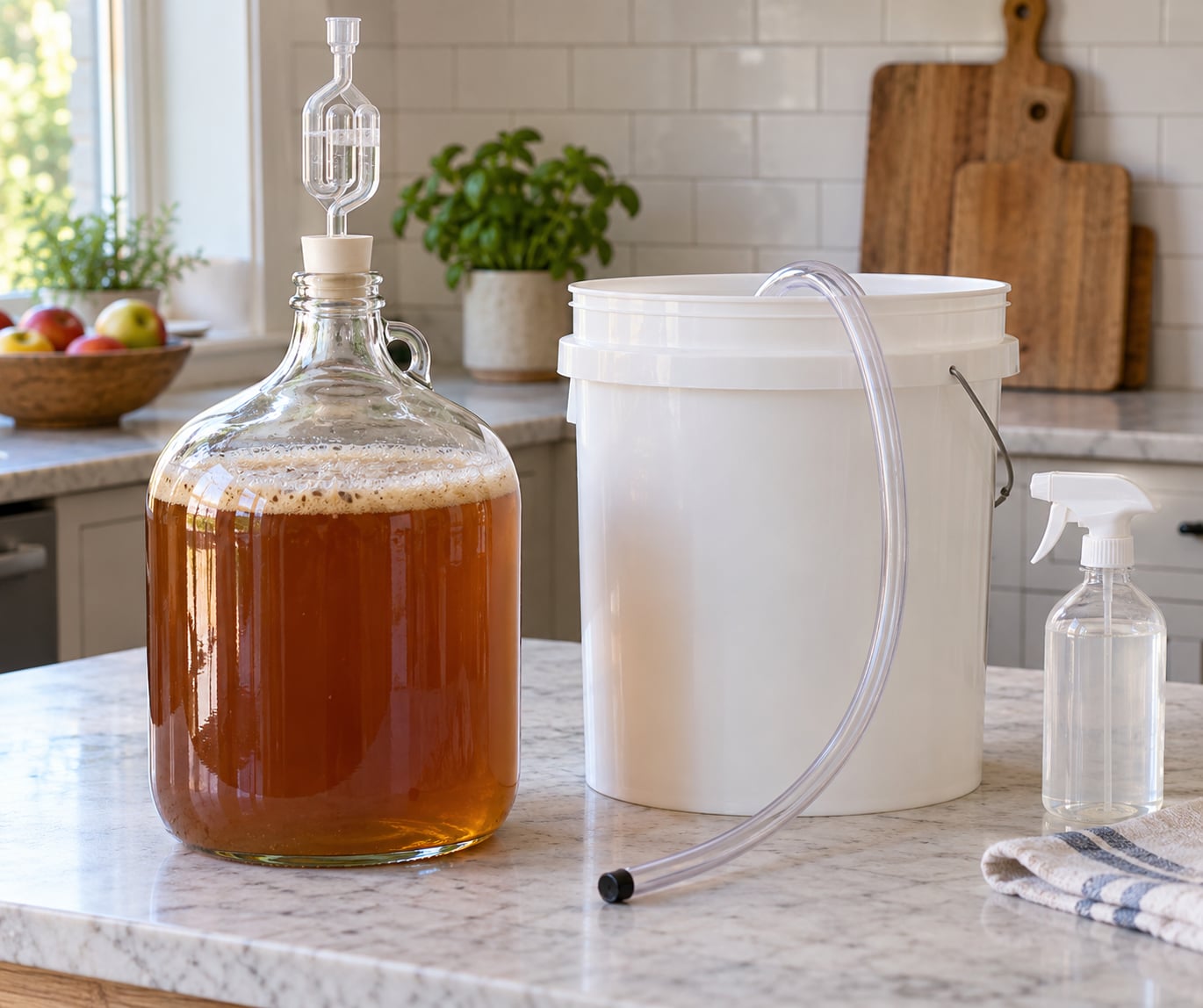
- Transfer cold, with a hose. Splash and slosh are oxygen entry points. Low siphon, slow fill.
- Keep the ferment temperature in range. Under 22°C (72°F), and lower toward the end if you want clean beer.
- Check your extract date. Liquid malt extract goes off. Old extract sours the wort before yeast ever touches it.
- Seal your packages properly. Cap at the correct torque, use bottles rated for carbonation, and let the beer settle before serving.
Frequently Asked Questions
Can you let beer ferment too long?
Not usually, in the sense people mean it. Yeast stops when it runs out of fermentable sugar, and a finished beer left sealed simply sits there. The sour flavor people blame on over-fermentation is almost always bacteria, a stalled ferment that never cleaned up its acetaldehyde, or oxygen entering through a bad seal. Leave a finished beer for a few months and it will improve, not spoil.
What type of bacteria is used to produce vinegar?
Acetobacter and Acetomonas are the classic vinegar bacteria. Both oxidize ethanol into acetic acid, which is exactly the same reaction that turns a cider barrel sour or produces commercial vinegar. Homebrewers talk about Acetobacter as the enemy because it needs oxygen, so it blooms wherever beer has been exposed to air.
Is sour or vinegary homebrew safe to drink?
Usually it is a flavor failure rather than a safety one. Sour beer from Acetobacter or Lactobacillus is unpleasant but not normally hazardous. The exception is a hot, solvent-like smell that gets stronger as the beer warms, which points to higher alcohol made by contaminating organisms. If you detect that, dump it rather than taste it again.
My beer tastes sour but the hydrometer says fermentation is done. What now?
Take a second reading three days later to confirm stability, then check the temperature the beer was fermented at. A hot ferment leaves sharp fusel alcohols, and a blow-off that never cleared leaves diacetyl, both of which read as sour. If the gravity is stable and it still tastes like vinegar, it is an infection and no amount of waiting will remove the acid.
Can I rescue a batch that tastes like vinegar?
No, and it is worth being blunt about that. Acetic acid does not evaporate and nothing you can add to a fermented beer safely neutralises it. Priming sugar or bicarbonate only makes a different drink. The batch you can rescue is the green-apple one from an unfinished ferment, so check stability and patience before you reach for the drain.
Why does my beer get sour after bottling?
Bottling changes the environment in three ways. If the ferment was not finished, acetaldehyde is still present and carbonation makes it more obvious on the tongue. If the caps were not sealed properly, oxygen gets in and lets bacteria work. And if you over-primed, extra carbonation stretches the gas and carries volatiles straight to the nose, sharpening every flaw in the beer.
Conclusion: Start With the Source of the Acidity
Start with two questions: when did the sourness show up, and is your gravity still moving. A green apple note in a beer under two weeks old is usually a ferment that needs finishing. A hot, stinging vinegar bite in a beer of any age is bacteria, and no amount of waiting or mixing will take it out. Sanitation, a controlled fermentation temperature and clean transfers fix almost every case before it starts.