A homebrew tastes too sweet for one of two reasons: fermentation stopped before the yeast ate all the sugar, or the recipe left sugars yeast could never touch. Measure the final gravity before you do anything else. That single reading decides whether you go back to work on this batch or fix the recipe for the next one.
This guide takes about 20 minutes of reading and a few evenings of waiting. Most brewers who followed the sequence below recovered a batch, and a few learned the beer was never broken at all.
If the sweetness arrived alongside something else strange, our guide to fixing off flavors in homebrew is worth reading first.
Table of Contents
- What You Need
- Step-by-Step: How to Fix a Homebrew That Is Too Sweet
- 1. Confirm that the beer is actually too sweet
- 2. Check the final gravity and whether fermentation actually finished
- 3. Look for fermentation or packaging problems
- 4. Choose the least disruptive correction
- 5. Adjust the next batch instead of masking the beer
- Common Mistakes
- Frequently Asked Questions
- Can I add sugar to a sweet beer to fix it?
- Does diluting sweet beer with water actually work?
- How long should I wait before deciding fermentation is stuck?
- Will aging in the bottle make a sweet beer less sweet?
- Why does my beer taste so sweet even when the gravity is on target?
- Is my beer infected or just under-attenuated?
- Conclusion: Start With Fermentation and Final Gravity
What You Need
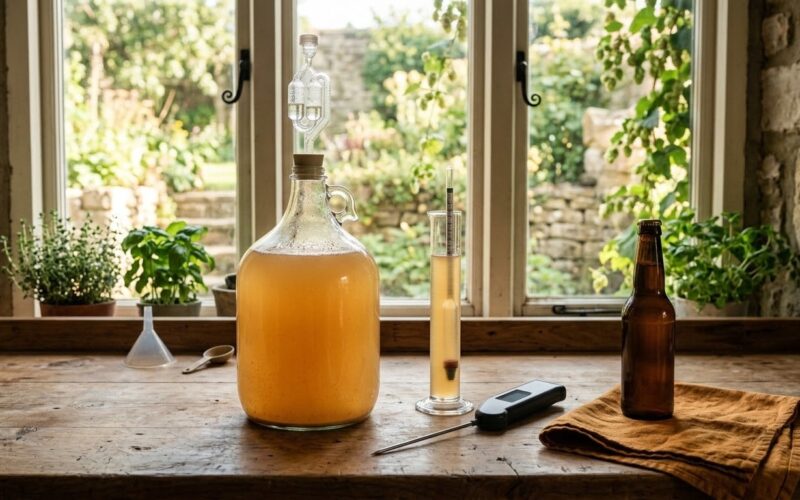
Before you crack a bottle, gather a few things. Without them you are guessing, and guessing is how five gallons end up down the drain.
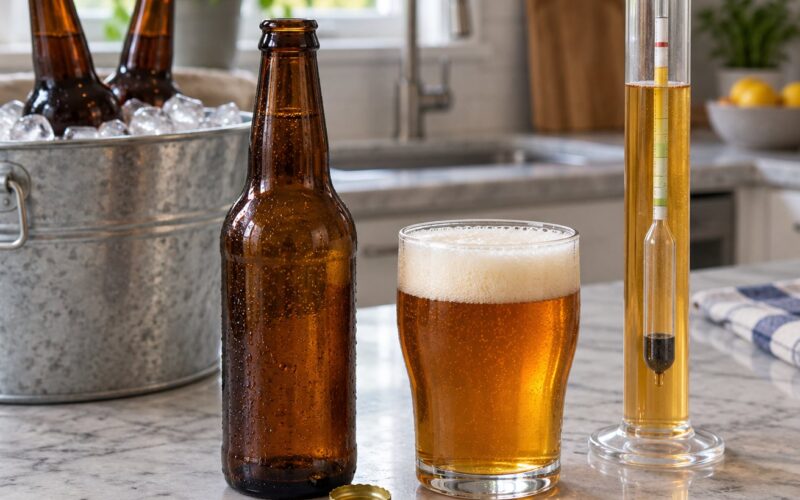
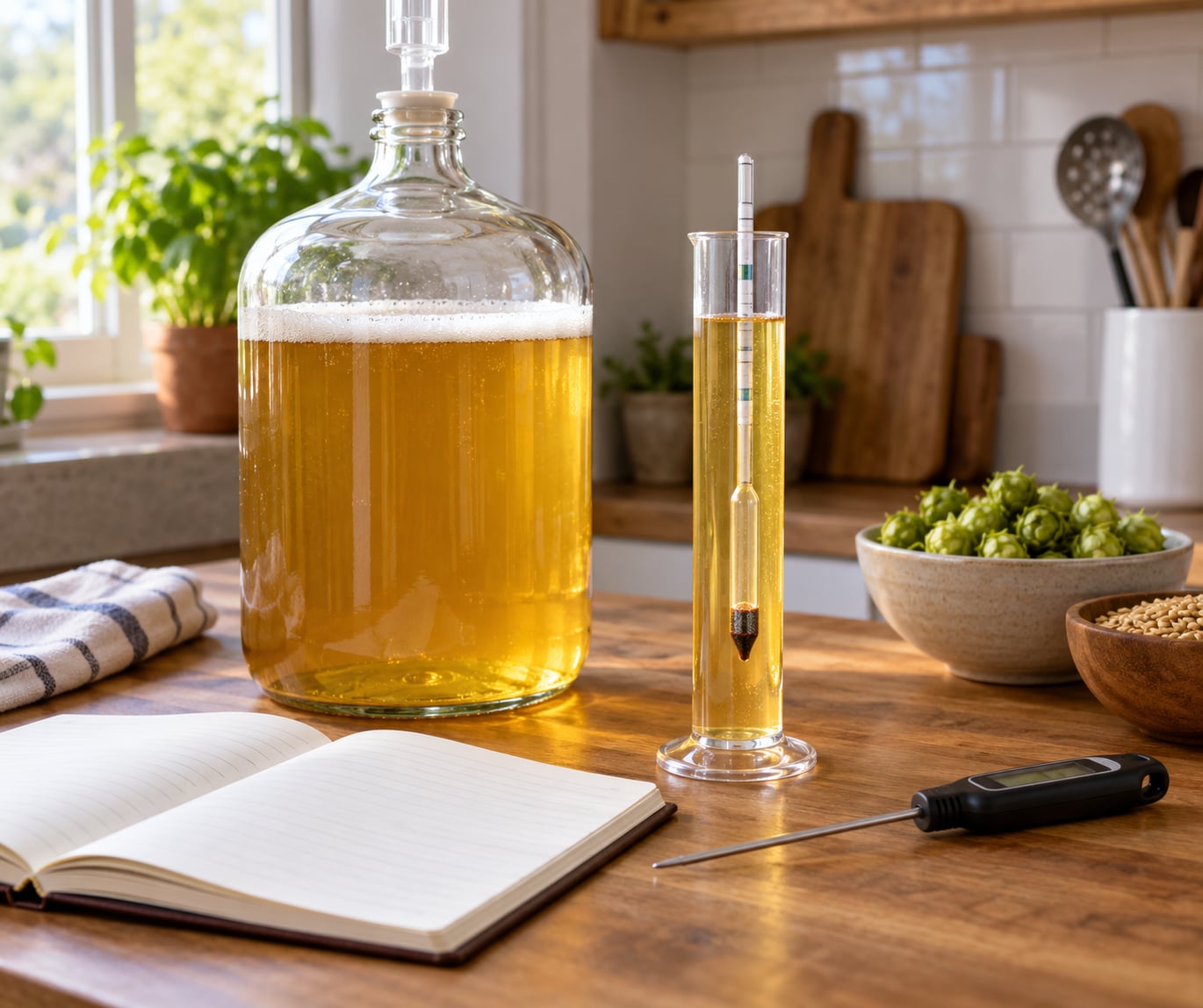
- A hydrometer, and ideally a refractometer. The hydrometer is your ground truth. A refractometer is faster, but it lies to you about three weeks after fermentation starts, and sweet-beer debugging is exactly the kind of decision that happens then. If you only have one, use the hydrometer.
- A thermometer you trust. A cheap kitchen probe off by five degrees is the single most common reason a beer comes out sweeter than the brewer intended.
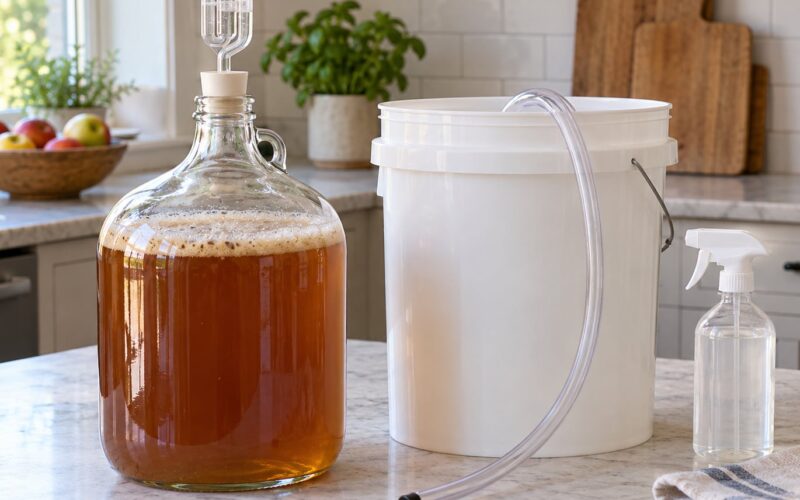
- A sanitized sampling vessel and thief. Pulling beer straight from the fermenter with a non-sanitized tool is a good way to turn a sweet beer into a ruined one.
- A brewing calculator or a phone app. You need the style’s target final gravity and the attenuation your yeast should hit, not a gut feeling.
- The original recipe. Original gravity, mash temperature, hop schedule, yeast strain, and pitching rate. Half the diagnosis lives in those numbers.
While you are at it, check whether the batch is in a keg, a bottle, or still in glass. The safe fixes differ a lot depending on where the beer is sitting.
Step-by-Step: How to Fix a Homebrew That Is Too Sweet
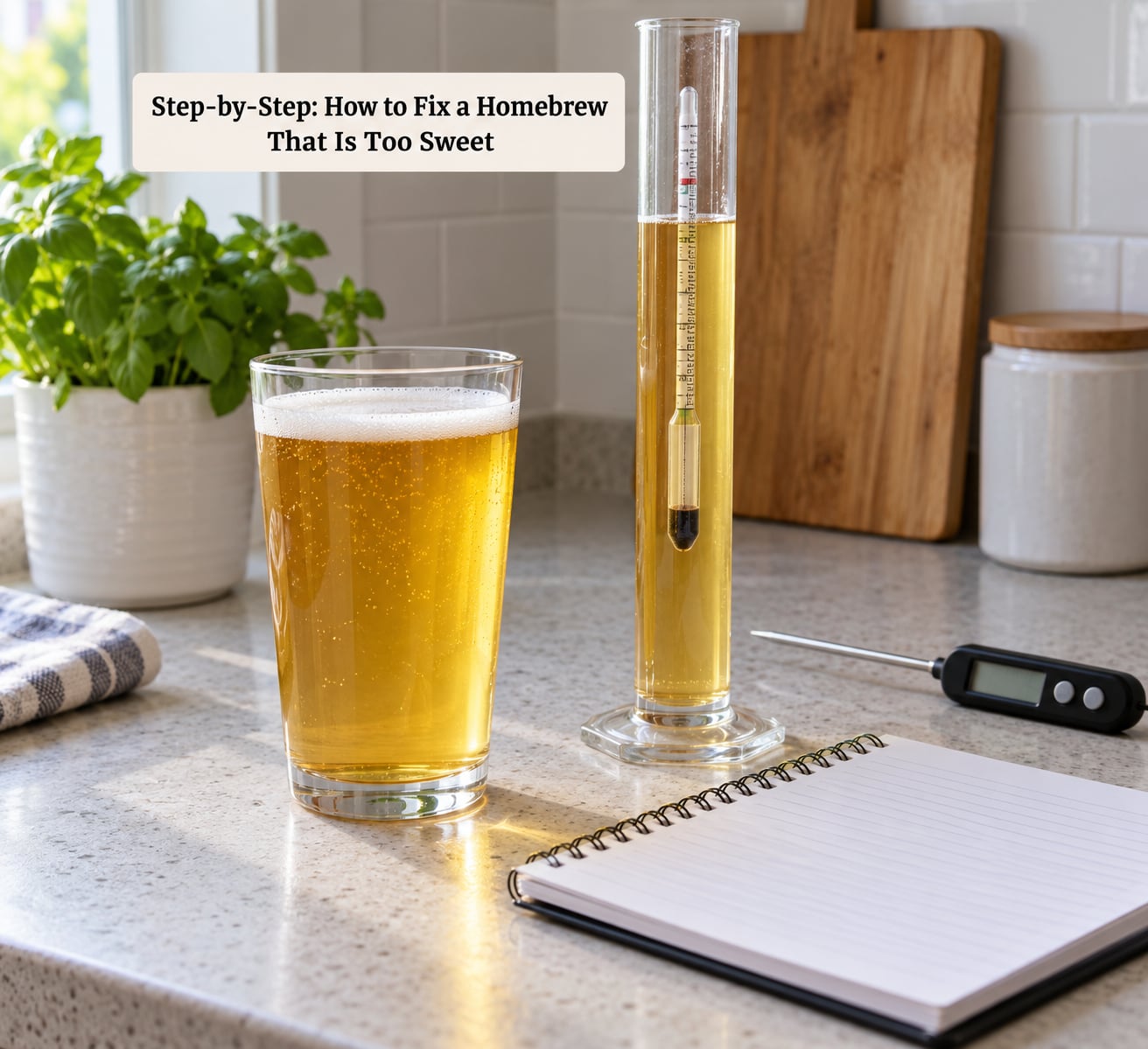
Work through these five steps in order. Skipping ahead is what turns a recoverable batch into a wasted one.
1. Confirm that the beer is actually too sweet
Taste it cold first, from a clean glass, before the beer has had a chance to warm up in your hand. Then taste it again at cellar temperature and once slightly warm. Sweetness changes shape with temperature, and warm beer reads as sweeter than it tastes cold.
Next, rule out the three things that imitate sweetness. Carbonation can add a syrupy slickness that your tongue files under sweet. So can alcohol warmth in a young beer with a high final gravity. And a sweet beer that is carbonated and served too cold sometimes just tastes blunt rather than sweet, which is a different problem with the same batch.
Compare the beer against the intended style. A 1.018 final gravity on a porter or a milk stout is normal and intended. A 1.018 on a pilsner is a problem. Our list of common causes of a flat homebrew covers the other side of this, where a beer that should be lively drinks thin and watery instead.
2. Check the final gravity and whether fermentation actually finished
Take a hydrometer reading and correct it for the temperature of the sample. A reading taken at 80 degrees and treated as a 68-degree reading can look a full gravity point off. If you read straight from the fermenter, the sample needs to cool to the temperature your hydrometer is calibrated at, usually 68 degrees.
Then read the number honestly against your recipe’s target. Apparent attenuation is the percentage of gravity points the yeast removed: (OG minus FG) divided by (OG minus 1.000), times 100. Most ale strains land somewhere around 75 to 82 percent. A heavily hopped IPA on a clean US-05 yeast might hit 80 percent. A beer sitting at 50 percent attenuation did not finish.
Do not call a fermentation stuck on a single reading. Take another reading two or three days later. Stable gravity readings 48 hours apart at the same temperature is the definition of a stall. A gravity that is still drifting down, even slowly, is a slow fermentation, and the usual answer is time and temperature rather than rescue.
3. Look for fermentation or packaging problems
If the gravity is high and flat, something stopped the yeast. These are the usual culprits, and you can usually pick which one applies from your notes.
Cold fermentation. Yeast parked below its recommended range goes dormant. One of the most common reports involves a clean ale yeast pitched into a room sitting near 60 degrees and never really starting. Warm it back to range and leave it alone.
Too little yeast. An underpitched culture can flocculate early and drop out while a lot of sugar is still in the wort. Look for a fast start followed by a sudden stall after two or three days.
A rough start. Pitching into hot wort, or into a wort that has sat exposed and picked up wild organisms, can produce a fermentation that never reaches full strength. A sour, chemical, or vinegary note alongside the sweetness points at contamination rather than a stall.
Excessive early hopping. Hops added before the yeast is established carry an antioxidant effect that can suppress a young fermentation. More common in aggressive dry-hop schedules on very hop-forward recipes.
Each of those has a different first move: warm the vessel, add a healthy pitch of yeast, or dump the batch if contamination is confirmed. If you are not sure whether you have contamination or an under-attenuated but clean beer, do not add yeast yet, because a contaminated batch will get worse.
4. Choose the least disruptive correction
Once you know whether the beer is stalled, still fermenting, or finished and simply sweet, pick the mildest fix that solves the problem.
If it is still moving, wait. Warm the fermenter into the strain’s range and give it another week. This is free and it works more often than people expect.
If it is stalled, restart it. Swirl or gently slosh the fermenter to rouse the yeast off the bottom, move the vessel somewhere warmer, and check again in 48 hours. If nothing moves, repitch a healthy packet of the same strain and add a fermentable sugar source such as dry extract or a fermentable adjuvant, in the amount a calculator suggests for the gravity gap.
If it is finished and dryable, blend. This is the salvage most people overlook and it is the best one available. Mix the sweet batch with a drier beer or with plain carbonated water, a little at a time, tasting as you go. Blending also protects body, which water alone strips out.
If the beer is already packaged, read this part carefully. Adding sugar to a force-carbonated keg invites refermentation, and extra pressure in a sealed container is how people end up with gushing kegs at best and damaged fittings at worst. If you want to try it, do it in a controlled way: chill the beer fully, add a measured amount of sugar with the yeast pitched in, keep the temperature controlled, and watch pressure. Bottles are riskier still. Never add sugar to bottled beer.
If you can dilute safely, dilute. A slow addition of cold water or soda water works, but remember that water lowers gravity, body, and hop bitterness all at once. Diluting an already thin beer gives you a weaker drink, not a better one. Blending with a dry strong beer keeps the result drinkable.
5. Adjust the next batch instead of masking the beer
Once the batch is safe to drink, the real fix lives in the next brew. Focus on attenuation rather than on removing sweetness after the fact.
Mash lower. Beta-amylase starts to denature around 150 to 154 degrees, so the last few degrees of mash temperature decide how many complex sugars the yeast never has to deal with. A mash at 148 to 150 gives a drier beer, 152 to 154 is balanced, and 158 or higher leaves enough unfermentable dextrin that the beer will read sweet no matter how healthy the fermentation is. The difference between 150 and 155 is exactly what homebrewers on the forums describe as a noticeable step in sweetness.
Pitch enough yeast and give it a good start. Use a pitching calculator rather than a packet per liter as a rule of interest. A larger pitch ferments less residual sugar, reaches higher temperatures, and finishes cleaner. Oxygenate the wort properly, and a small starter a day or two ahead makes a real difference on a big beer.
Control the fermentation temperature. A stable 66 to 68 degrees for most ale yeast produces a more complete fermentation than a warm start followed by a cold crash. Stability matters as much as the number.
Rebalance the hops. Perceived sweetness depends on bitterness as much as on sugar. The old BU:GU ratio still has legs: under 0.5 reads sweet, above 1.0 reads bitter, and between roughly 0.6 and 0.8 lands in the range most people call balanced. If hops went in bags or a spider, utilization drops, and a beer that a calculator scores correctly can still taste under-bittered. A hop spider also shifts extraction toward the harsher alpha acids late in the boil.
Watch the boil. Long hard boils push a caramel, bready character from Maillard reactions that reads as sweetness on the palate even when the gravity is fine. A taste of pre-boil wort versus post-boil wort will show you whether you have this problem.
Check your thermometer. Boil water, hold the probe at boiling, and confirm it reads near 212 degrees. Calibrate at a second known point, like ice water at 32 degrees, and correct from there.
Common Mistakes
Diluting before checking fermentation. If the gravity was still dropping, you threw away the attenuation you already had.
Adding sugar too late. Sugar added to a warm beer at high pressure is how a bottling accident happens. Cool beer, low pressure, small measured amounts.
Trusting a refractometer without calibration. A cheap model read against tap water can be off by several brix, which is a full gravity point of wrong information.
Using unsanitized sampling gear. You are putting a contamination risk into a beer you are already trying to save.
Treating a sweet beer as a fault when the style wants it. Sweet stouts, Scotch ales, doppelbocks, and barleywines are supposed to finish sweet. Check the style guideline before you go hunting for a problem.
Waiting forever on a stalled ferment. If gravity has been flat for a week at a reasonable temperature, waiting longer rarely helps. Rouse it, repitch it, or move on.
Confusing a yeast choice problem with a mash problem. A Belgian yeast will happily leave beer sweet no matter what you mash. Check the strain’s attenuation rating against your target final gravity before you blame the mash.
Frequently Asked Questions
Can I add sugar to a sweet beer to fix it?
Only with care. Sugar added to finished beer gives live yeast something to eat, but the extra fermentation makes carbon dioxide as well, and that pressure has to go somewhere. In a keg, chill the beer, add a measured amount with a fresh pitch of yeast, control the temperature, and watch the pressure closely. Never add sugar to bottled beer, because the bottle becomes a pressure vessel.
Does diluting sweet beer with water actually work?
It works on sugar, and it works fast. The cost is that water lowers gravity, mouthfeel, and hop bitterness at the same time, so a thin sweet beer becomes a thin weaker beer. Blending the sweet batch with a dry beer, or with a portion of the same style brewed drier, gives you control over sweetness without flattening everything else.
How long should I wait before deciding fermentation is stuck?
A stall means stable gravity readings 48 hours apart or more at the same temperature. Below that you only know that the beer is slow, which is common on big beers. If gravity is still creeping down, give it time and keep the temperature in range. If it has been flat for a week and the yeast is cold, rouse it and warm the vessel.
Will aging in the bottle make a sweet beer less sweet?
Time and carbon dioxide change perception, not sugar. Bottle conditioning lets hops oxidize and soften, and dissolved carbon dioxide masks flavor, so a beer can taste drier after three months. The residual sugar is still there and your gravity will not have moved. Expect masking, not correction, and adjust the next batch.
Why does my beer taste so sweet even when the gravity is on target?
Three things add sweetness without adding sugar. A mash above about 154 degrees leaves unfermentable dextrins that register as body and sweetness. A hard, long boil develops caramel character from Maillard reactions. And a hop bill that underdelivers bitterness makes the same beer read as sweeter than it is. Check your mash temperature and your hopping rate before changing anything.
Is my beer infected or just under-attenuated?
Infection usually shows up as a smell or taste that is not sweet. Look for vinegar, nail polish remover, raw bread dough, or a barnyard funk, and for a pellicle or fuzzy growth in the fermenter. Under-attenuated beer smells clean, tastes sweet, and simply has less alcohol than the recipe promised. Sweetness alone is a fermentation problem, not proof of infection.
Conclusion: Start With Fermentation and Final Gravity
Sample the beer, take a corrected hydrometer reading, and wait 48 hours for a second one. That single habit separates a stalled fermentation, which you can restart, from a finished beer that is sweet by design or by recipe, which you can only blend or dilute.
Fix this batch with the mildest option that works, and write down what you changed. Most sweet beer nexts are explained by a mash a few degrees too warm, a thermometer that drifts, or a fermentation that ran cold for a week.
If the root cause was the yeast itself, our comparison of dry yeast and liquid yeast for homebrew covers how strain choice and pitch quality affect attenuation.