To run a raffle at a beer event, lock down three things before you sell anything: whether your jurisdiction allows alcohol as a prize, an entry system whose numbers you can reconcile at the end of the night, and a drawing the room can watch from start to finish. Prep takes four to six weeks, and the legal check is the part organizers postpone longest.
Here is the honest answer on legality. There is no single US rule. Some states bar alcohol as a prize outright, some allow it with conditions, and some cities restrict it further inside licensed premises. Your state gaming control board, your state alcohol beverage control agency, and the venue’s own licensee will each tell you something the other two cannot. Rules shift, so treat this guide as written for 2026 and make that call before you print a single ticket.
Table of Contents
- What You Need
- Step-by-Step: How to Run a Raffle at a Beer Event
- 1. Define the raffle format and eligibility rules
- 2. Check local rules and confirm prize terms
- 3. Create the entry system and staff workflow
- 4. Promote the raffle without confusing guests
- 5. Collect and reconcile entries during the event
- 6. Draw the winner fairly and document the result
- 7. Notify the winner and deliver the prize
- 8. Close the raffle and archive records
- Common Mistakes
- Frequently Asked Questions
- Do I need a permit to run a raffle at a beer event?
- Can I require guests to be 21 or older to enter?
- What type of raffle is easiest to manage at a crowded beer festival?
- Are digital raffle entries and QR codes acceptable for this kind of event?
- What information should I collect from the winner?
- How should I handle taxes and reporting for a raffle prize?
- Conclusion
What You Need
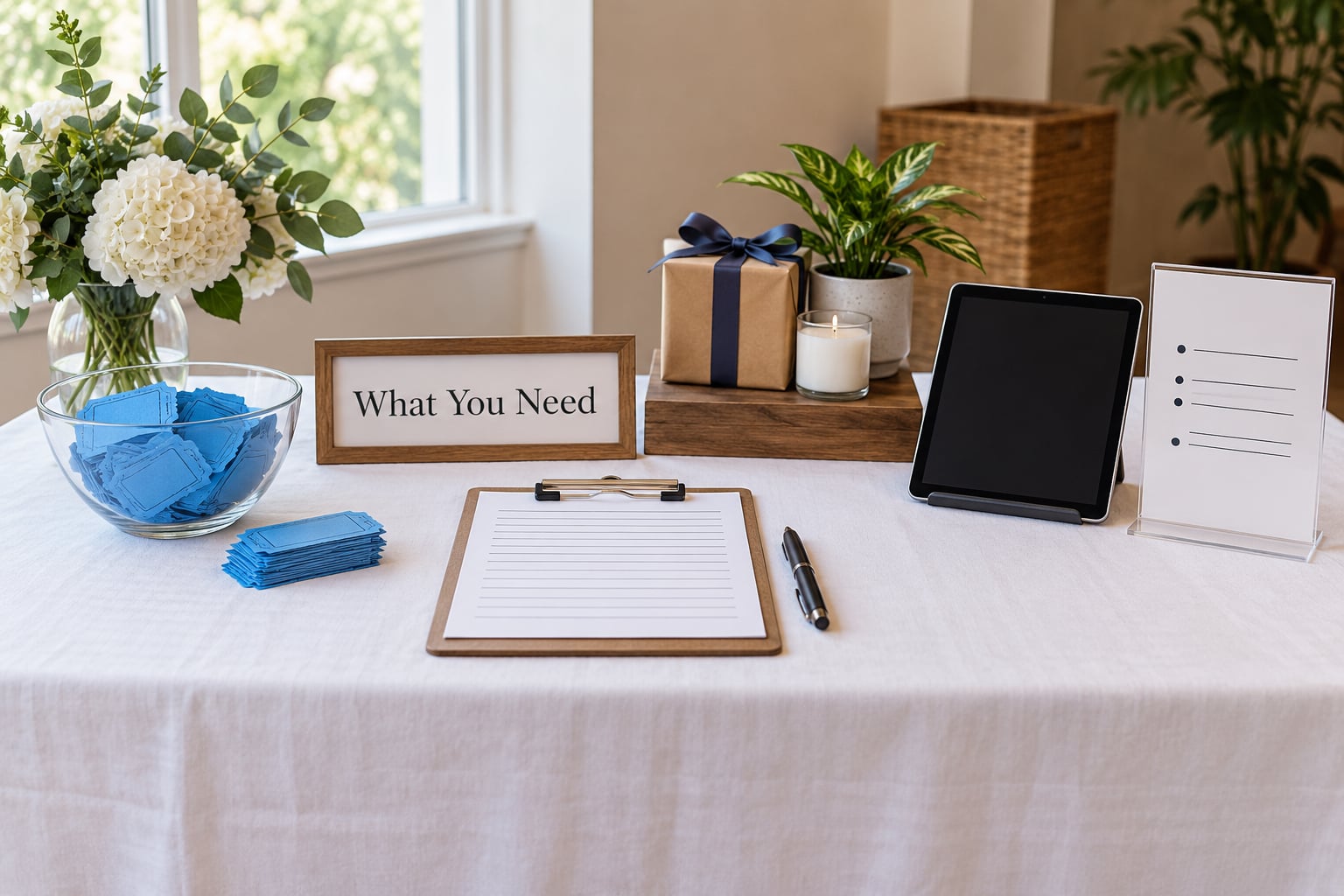
A raffle needs far less gear than a beer festival needs ice. What it needs is written down, because whoever is staffing the table at 7 p.m. will not remember what you decided at a planning meeting in August.
- Written rules, one page. Entry method, cost or free entry, limits per person, eligibility, drawing date and time, redemption deadline, and how the winner is chosen.
- Prize agreement in writing. What the prize is, what it is worth, when it can be redeemed, whether substitutions are allowed, and who absorbs a return.
- Entry materials. Sequentially numbered tickets with a detachable stub, a stamp card, or a tablet with a QR code. Print about 20 percent more paper than you think you need.
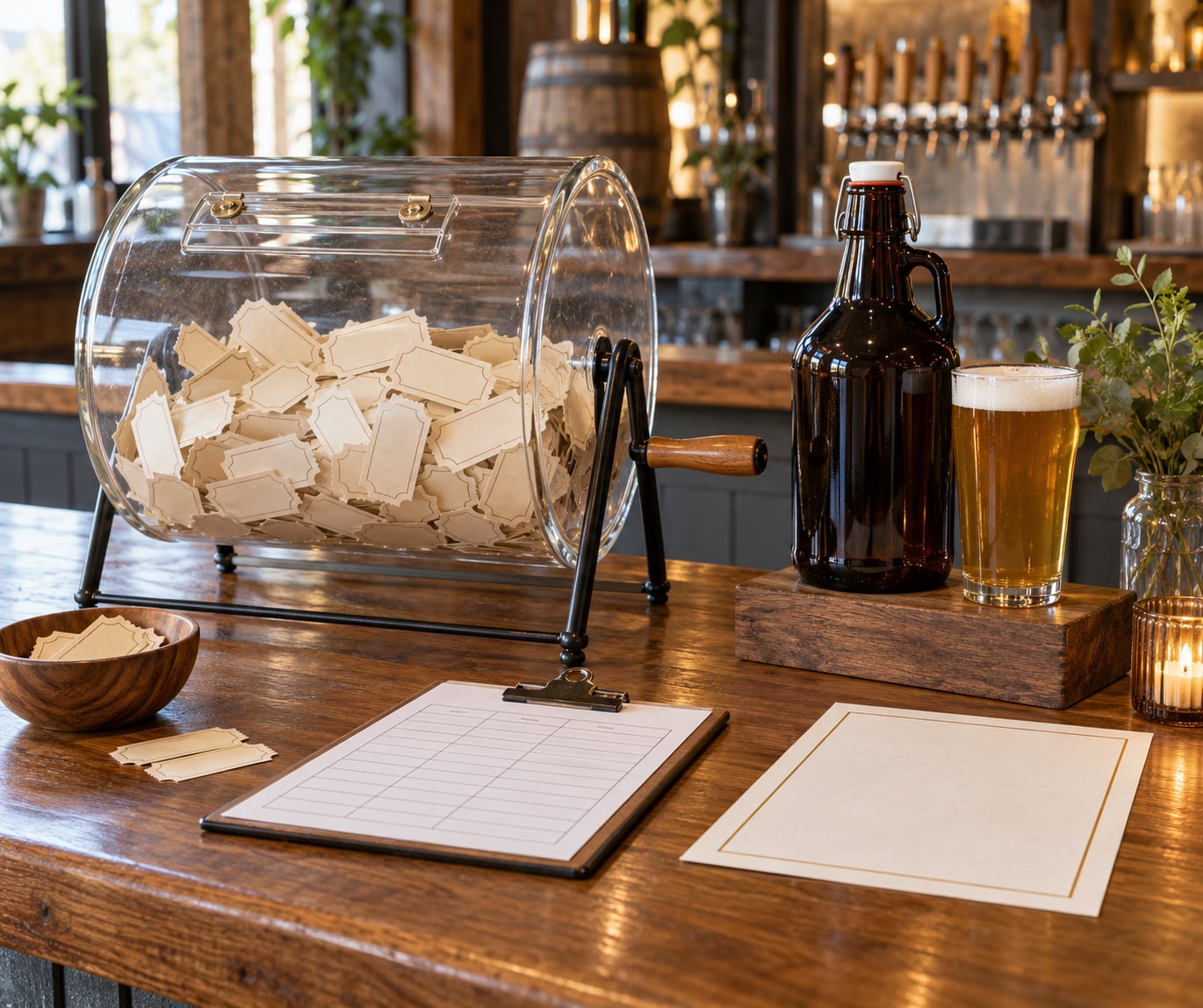
- Two visible containers. A clear drum or bowl for the draw, and a second identical one for the backup winner.
- A staffing plan. Two people minimum per sales point so one can sell while one records, plus one lead who owns the tally.
- A recording kit. Phone or camera, marker, tally sheet, and a folder for the winning ticket.
- An age-check procedure. Who is authorized to check ID, where the check happens, and what happens if the winner cannot show it.
- Venue approval and insurance confirmation, in writing, before the raffle is announced anywhere public.
Ticket ranges matter more than anything else on that list. Give each seller a numbered block, log where it starts and ends, and the end-of-night reconciliation becomes arithmetic instead of an argument.
Step-by-Step: How to Run a Raffle at a Beer Event
1. Define the raffle format and eligibility rules
How to run a raffle at a beer event starts with the format, and in a crowded tasting room the paperless options usually create more friction than they solve. A stamp card tied to a wristband, or a numbered ticket handed over at check-in, takes about four seconds to explain. A QR code needs the guest to unlock a phone, find a signal, and type a name while a queue builds behind them.
Write the eligibility rules before you design the ticket: age requirement, whether attendance alone qualifies, whether an entry requires a purchase, and how many entries one person may hold. Publish a no purchase necessary route if the rules call for one. If a first-time guest can read the rules in twenty seconds at the table, half your support questions never happen.
2. Check local rules and confirm prize terms
Call three offices, not one. Your state gaming control board covers registration, ticket limits and permitted purposes. Your state ABC covers whether beer can lawfully be given as a prize or awarded on licensed premises. The venue’s licensee, or your local event permitting office, covers the event itself. Some states treat nonprofits, for-profit businesses and individuals under different regimes, so describe who is actually running this.
Then get the prize in writing. Cover its value, the redemption window, restrictions such as age or venue-only redemption, what happens if the prize becomes unavailable, and who delivers it. That written answer is what protects you when the winner comes back three weeks later expecting a growler you no longer have.
3. Create the entry system and staff workflow
Number every ticket sequentially, use a detachable stub, and print the event name, the drawing date and time, and the redemption deadline on both halves. Run one test print first and read it the way a first-time guest would.
Assign roles on paper: sellers, a recorder at each sales point, one table lead, one person who owns the draw, and a backup for that person. Fix the entry cutoff and the draw time in the rules and on the signage. Keep a paper fallback for a dead router, and store a printed copy of the entry log somewhere staff can reach without Wi-Fi.
4. Promote the raffle without confusing guests
Announce the raffle in the event listing, on your social channels, and on the check-in screen, then repeat it on the printed program. A short staff script keeps every seller saying the same four things: how to enter, what it costs or that entry is free, who is eligible, and when the winner is chosen.
Put the deadline and the draw time on every post. A reminder at the midpoint of the event works better than one at the end, because the last thirty minutes are usually when everyone is already queuing for a pour.
5. Collect and reconcile entries during the event
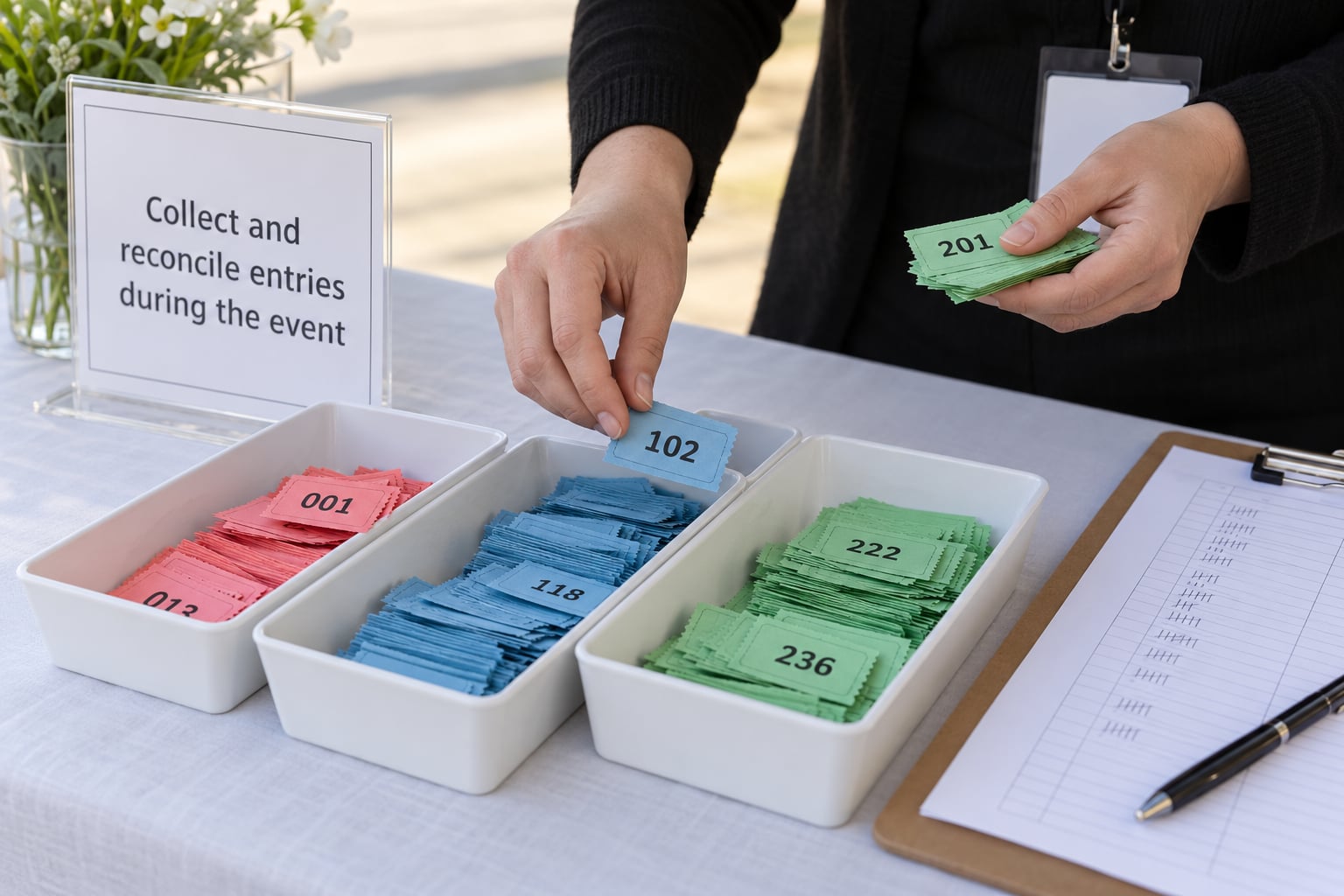
Guests should buy or receive entries in one obvious place, ideally near check-in or the main bar, rather than wherever a volunteer happens to be standing. Roaming sellers work if they wear a badge and give the buyer a marker or sticker so nobody gets asked twice.
Log every ticket as it leaves the block: range out, range in, cash collected. Void the leftovers and account for them so the numbers reconcile. Before the draw, total the ranges, subtract the voids, and write the eligible count on the tally sheet. Reconciling as you go takes minutes. Reconciling at the end with a tired crew takes an hour and produces doubt.
6. Draw the winner fairly and document the result
Put only eligible tickets in the drum, and hold up the sealed container in front of the room so everyone can see it start full. Fold every ticket the same way, one at a time, so the fold itself carries no information.
Draw with a witness who has no stake in the outcome, write the winning number on the tally sheet, and photograph the ticket and the sheet before anyone steps off the stage. Select a backup winner in the same moment and draw them in the same order, because sourcing a replacement later is where disputes start.
7. Notify the winner and deliver the prize
Read the number, confirm it against the physical ticket, and check ID before handing over anything alcohol-related. If the winner cannot show it, the rules you printed should already say what happens: the prize passes to the backup winner, with no debate at the table.
Give the winner the redemption instructions in writing, including the deadline, what to bring, and whether the prize is venue-only. Ask for photo consent as a separate yes rather than folding it into a sentence. Keep a short handoff record: ticket number, date, and who delivered it.
8. Close the raffle and archive records
Total the sales, subtract the voids, record the prize value, and file the tally sheet, winning ticket, photo and redemption record together. Take the signage down so nobody buys an entry for a draw that already happened.
Retain that package for the period your state’s charitable gaming guidance requires, often a few years. If the prize value sits above the IRS non-cash reporting threshold, the recipient may need a form and a taxpayer identification number, so collect it at redemption rather than chasing it afterward.
Common Mistakes
These are the failures that generate complaints, and every one of them has a cheap fix.
- Rules that need interpretation. Vague eligibility or an unstated deadline produces arguments at the table. Fix: publish one page, and state the deadline, the eligibility and how the winner is chosen.
- Skipping the registration or permit check. Assume it is fine because other venues do it. Fix: call the gaming control board and the ABC six weeks out and keep the reply in writing.
- No ID check at redemption. Handing alcohol to someone who cannot show it is the real exposure, not the ticket price. Fix: verify at handoff and write a forfeiture clause for a winner who cannot show ID.
- Duplicate or untraceable entries. Sellers working from unlogged blocks. Fix: numbered ranges, logged out and in, voids recorded.
- Publicly announcing the winner’s full name. Fix: announce the ticket number, and tell a winner who wants recognition to come find you.
- Unmanaged prize liability. A growler that cannot be sourced the night of the draw. Fix: written prize terms with a substitution clause and a backup prize of similar value.
- Handing out drinks during the draw. Fix: pause service or move the draw to a set time, and never mix prize redemption with service.
- No re-draw or forfeiture rule. Fix: name a redemption window, a backup winner, and what happens if the prize goes unclaimed.
Frequently Asked Questions
Do I need a permit to run a raffle at a beer event?
Usually yes, and it depends less on the raffle itself than on the prize and on who is running it. Nonprofit and charitable games are typically registered with a state gaming control board, and many states require registration or a licence even for for-profit events. If beer or spirits are the prize, your state ABC and the venue licensee are the deciding authorities. Start those calls six weeks out.
Can I require guests to be 21 or older to enter?
You set the eligibility rule, and at a 21-and-over beer event requiring 21 to enter keeps the room simple. The sharper question is the prize. Handing alcohol to someone who cannot show valid ID is where the risk sits, not the ticket price. Put the age rule in the printed rules, check ID at redemption rather than at the sales table, and write a forfeiture clause for a winner who cannot show it.
What type of raffle is easiest to manage at a crowded beer festival?
A sequentially numbered paper ticket sold from one staffed table, with a detachable stub and a logged ticket range, is the least complicated option in a loud room. Stamp cards on a wristband work well when guests move between stations. QR entries are cleanest for reporting, but only where the signal and the queue cooperate, so keep a paper backup either way.
Are digital raffle entries and QR codes acceptable for this kind of event?
Yes, provided your state permits an electronic or online draw and your registration or licence covers it. Digital entries give you cleaner records, an automatic entry cutoff and a timestamp on every submission. The trade-offs are connectivity, a shared phone, and guests who read the code as a sales pitch. Test the flow on site Wi-Fi with a real device before you build the marketing around it.
What information should I collect from the winner?
Collect the minimum: full name, winning ticket number, a contact method, the redemption date and a signature. Ask for photo consent separately rather than inside the same sentence. If the prize is alcohol, check ID at handoff and note that you did. For prizes above the federal non-cash reporting threshold, get a taxpayer identification number at that same moment and file it with the record.
How should I handle taxes and reporting for a raffle prize?
Treat it as two separate jobs. Your side is registration, reporting and record retention, which follow your state’s charitable gaming rules. The winner’s side is income tax: non-cash prizes above the IRS reporting threshold are generally taxable, and you may need to issue a form showing the value. Say so in the printed rules rather than at the microphone, so nobody is surprised later.
Conclusion
Start with three actions: call your state gaming control board and ABC before committing to an alcohol prize, pick the simplest entry method your crowd can handle, and write the rules down with a deadline and a forfeiture clause. Then rehearse the draw with two volunteers and a spare container before the doors open, and the rest of the evening takes care of itself.