So what is a gose beer? It is a pale, tart German wheat beer brewed with salt and coriander and fermented to a gentle lactic sourness, named after the River Gose near Goslar and pronounced GO-zah. If you have seen the word on a tap list and wondered whether it is going to taste like ocean water, this guide explains exactly what you are ordering.
The short version: gose is wheat, water, salt and spice, with the sharp edge coming from bacteria rather than hops. It is also one of the easiest sour beers to like, which is why it keeps showing up at summer beer festivals and taproom crawls even among people who claim they do not like beer.
Table of Contents
- What Is a Gose Beer?
- Gose at a glance
- What Does Gose Beer Taste Like?
- How Is Gose Beer Traditionally Brewed?
- How Does a Gose Beer Get Its Sourness?
- Is Gose Beer Always Sour and Salty?
- What Types of Gose Beer Should You Try?
- Classic German Gose
- Fruited Gose
- Hop-Focused Gose
- Spiced Gose
- Barrel-Aged and Blended Gose
- How Do You Taste and Choose a Gose Beer?
- Frequently Asked Questions
- Are gose and sour beers the same?
- What makes a beer a gose?
- How do you pronounce gose?
- What are the key differences between gose and gueuze?
- Why does my homebrew gose taste so salty?
- Conclusion
What Is a Gose Beer?
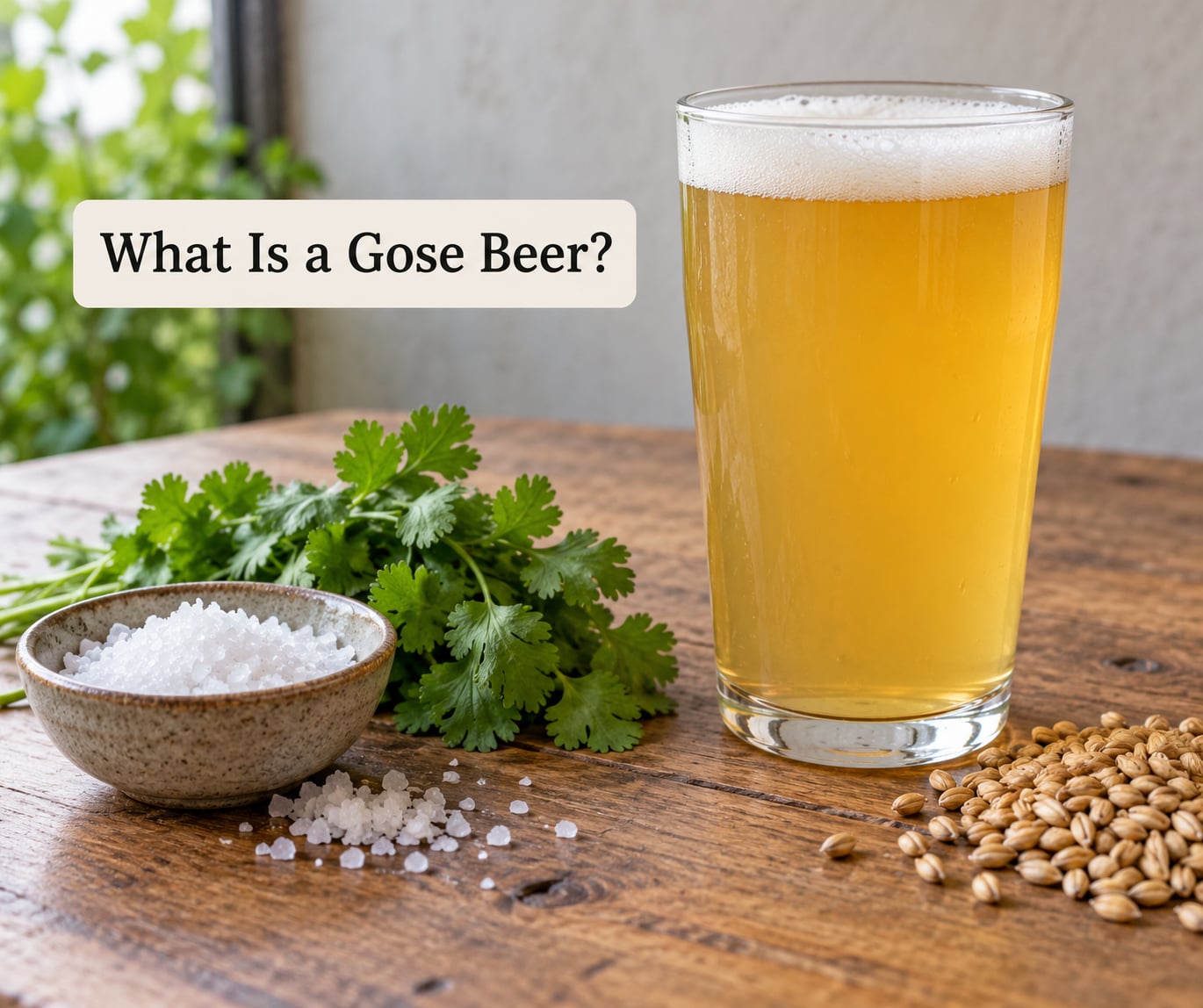
The style is one of Germany’s oldest documented beer traditions. It was brewed around Goslar in the Harz mountains and became a staple of Leipzig, where the protected name Leipziger Gose still labels the traditional version. By the middle of the 20th century it had almost vanished, then came back in the 1990s and split into two very different branches: restrained German gose and loud American fruited gose.
Here are the characteristics that define it:
- Ingredients: at least half malted wheat, plus salt and coriander. Style guides treat the salt and coriander as constitutive, not optional garnish.
- Flavor profile: lemon-like lactic tartness, a clean mineral salt edge, and a peppery citrus-peel note from coriander.
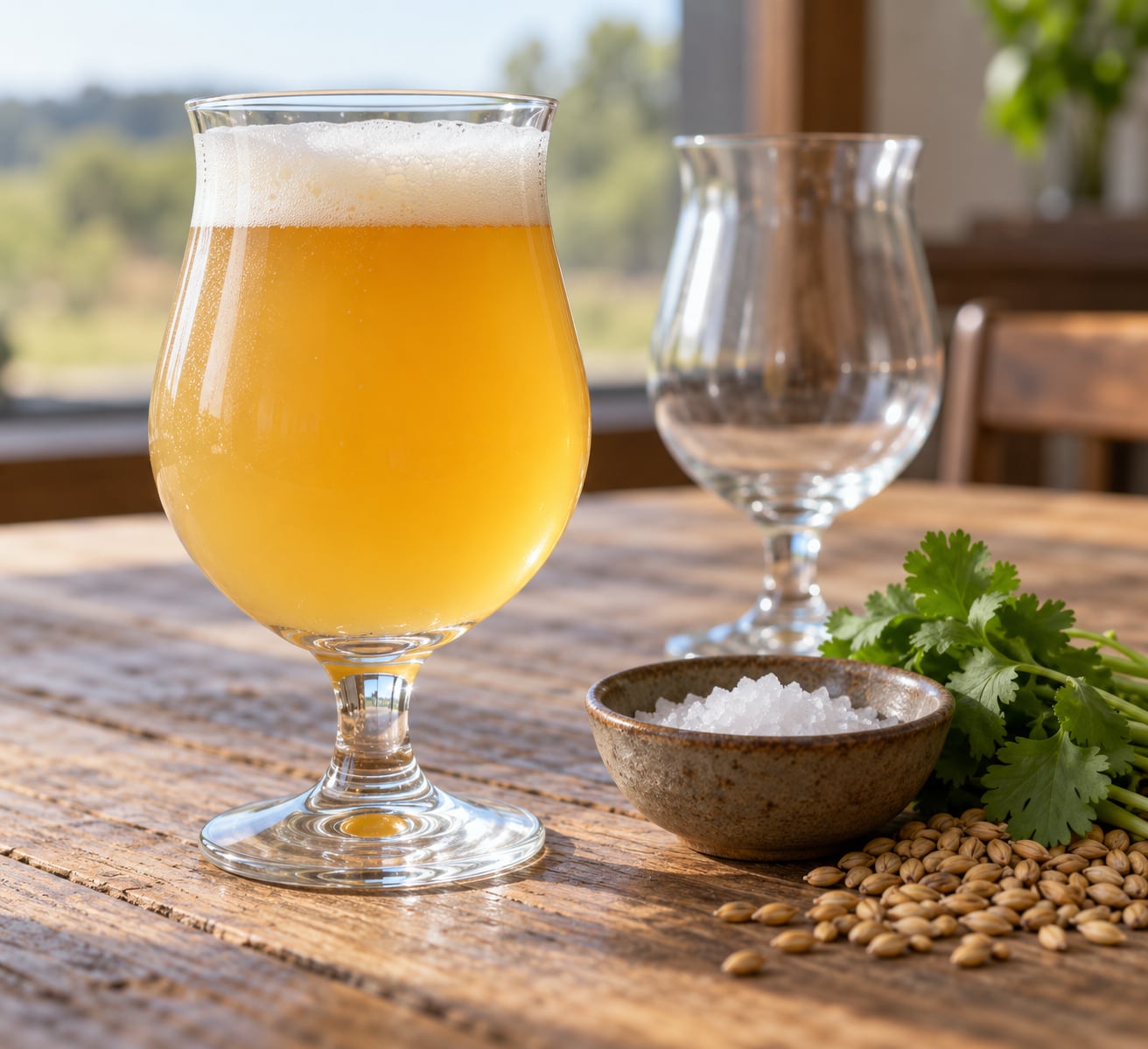
- Appearance: pale straw to gold, often hazy, and highly carbonated.
- Alcohol: session strength, usually 4.2 to 4.8 percent ABV.
- Bitterness: very low. Hops are close to background in a classic gose.
Gose at a glance
| Specification | Typical range |
|---|---|
| Original gravity | 1.036 to 1.056 |
| Final gravity | 1.006 to 1.010 |
| Bitterness | 5 to 12 IBU |
| Color | 3 to 4 SRM |
| Alcohol | 4.2 to 4.8 percent ABV |
| Grain bill | Wheat beer, 50 percent or more malted wheat |
| BJCP classification | 23G Gose, European Sour Ale |
| Brewers Association | 4D Leipzig-Style Gose and 4E Contemporary-Style Gose |
The style sits in its own European sour ale category in the current guidelines. That is why older homebrew articles still file gose under a historical German beer number while newer taproom lists use 23G.
What Does Gose Beer Taste Like?
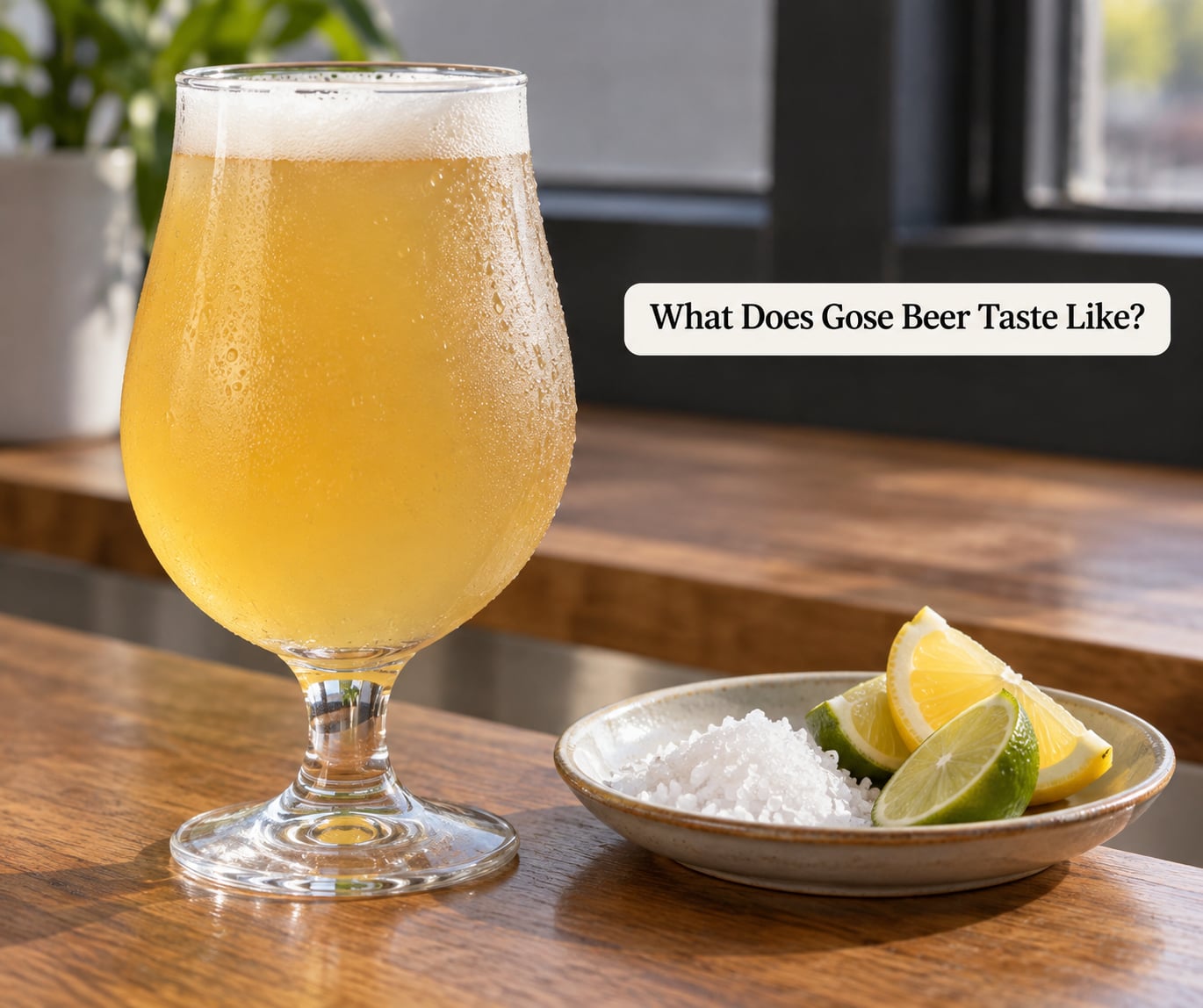
Good gose is layered rather than one-note. The first thing most drinkers meet is a light, bready dough character from the wheat, then lemon-like acidity, then the salt, which rounds the sharpness off and leaves a savory finish. Coriander lands somewhere between orange peel and cracked pepper, more aromatic than hot.
This is why gose rarely tastes aggressively sour. Salt suppresses the perception of harshness, so a well-made example reads as refreshing and quenching rather than puckering. Drinkers often compare it to a quirky cousin of Belgian witbier or Hoegaarden, and the salt is usually described as clean and mineral, closer to the sodium in a sports drink than to seawater.
| Element | What to expect |
|---|---|
| Appearance | Pale gold, hazy, foam that dissipates fast, very spritzy |
| Aroma | Lemon, fresh bread dough, orange peel, clean salt |
| Acidity | Bright lactic tartness, gentle to sharp depending on brewery |
| Salt | Mineral and clean; noticeable but not briny when balanced |
| Body | Light and quenching, with a dry finish |
| Serving temperature | Cool, around 38 to 45 F; colder flattens the aromatics |
How Is Gose Beer Traditionally Brewed?
The traditional build is a top-fermented wheat beer with a mash that runs warm enough to keep a protein rest, which is what gives the finished beer its cloudy, silky body. Fermentation is the interesting part, because the acid is not added. It is produced in the wort by lactic acid bacteria working alongside the yeast.
The sequence usually looks like this:
- Grist and mash: wheat-heavy grist mashed warm, then lautered and sparged.
- Souring: the wort is inoculated with a lactic culture, or a mixed culture of bacteria and yeast, either at the end of the mash or at the start of fermentation.
- Salt: a small measured amount goes into the water or the mash, never a pinch-and-taste approach.
- Coriander: whole seeds added late in the boil or during fermentation, because extended boiling drives off the citrus aromatics.
- Conditioning: cold conditioning settles the haze and lets the carbonation rise high.
Modern breweries split on how the acid gets there. Kettle souring means boiling wort, cooling it, pitching bacteria, then boiling again to kill them before yeast goes in. It is fast and controlled but adds no complexity. Mixed fermentation lets wild organisms live alongside the yeast for a funkier, more evolving beer.
Homebrewers hit one specific wall with this style: salt dosing. Because your water chemistry changes how much salt you perceive, the same recipe can taste neutral in one profile and aggressively salty in another. Measure by weight, taste the finished beer rather than the wort, and remember that rest and dilution change perception too.
How Does a Gose Beer Get Its Sourness?
Almost all sourness in gose comes from bacteria, not yeast. Lactobacillus is the workhorse, producing a clean, rounded lactic acid that reads as fresh yogurt or lemon rather than vinegar. If Brettanomyces gets involved, you get barnyard, leather and tropical fruit notes on top of the tartness, which pushes the beer toward complexity rather than purity.
That is the range most drinkers mean when they say gose can be everything from clean and citrusy to funky and sharp. A kettle-soured version will be tidy and one-dimensional in a good way. A barrel-aged or wild-fermented version will keep moving, adding oak and fruit as it ages. If you see a gose described as funky, that is Brett, not a fault.
One warning for first-timers: pure Lactobacillus can throw a sulfurous aroma that smells faintly rotten early in fermentation. It is a signature of the process, not spoilage, and it usually settles as the beer conditions.
Is Gose Beer Always Sour and Salty?
No. Traditional gose is both, but the intensity swings a lot by brewery, style and batch. Some modern versions are barely sour and read as a salted refresher. Others are aggressively tart and salty, and that is where the style’s reputation comes from.
Salt is the single biggest divider. Drinkers report finding gose far too salty and not their thing at all, while others describe the same beer as the perfect summer pour. The honest framing is that a well-made gose should taste seasoned, not briny. If you are picking one for the first time, ask the bartender how salty it is, or start with a brewery known for a restrained version.
Service matters too. Pour it cool but not ice cold, in a wide glass so the aromatics reach your nose. A flute or a tulip works; a heavy mug kills the delicate coriander. High carbonation is part of the style, so expect lively spritz.
For food, salt and acid do the heavy lifting. Gose handles oysters and ceviche, goat cheese, salty pretzels, fried food and grilled or barbecued meats, where its mineral edge cuts fat. It is also unusually good with citrus and herb-seasoned dishes.
What Types of Gose Beer Should You Try?
Gose has split into recognizable branches, and they taste genuinely different from one another rather than being the same beer with a label change.
Classic German Gose
The reference version: restrained, dry, cloudy and gently tart, with salt and coriander in balance. Breweries in and around Leipzig are the benchmark, including the historic Leipziger Gose producers and Ritterguts. If you want to understand the style itself, start here.
Fruited Gose
The American branch, usually a kettle-soured wheat beer dosed with fruit after fermentation. Blood orange, strawberry, raspberry and key lime are common, and the fruit can be a seasoning or a flavoring bomb depending on the brewery. Those who love it praise versions that keep genuine beer character underneath the fruit rather than tasting like carbonated juice.
Hop-Focused Gose
Dry-hopped or generously hopped gose trades the faint spice for real hop aroma. The salt makes the hop flavor seem brighter, and the result works well with spicy food. This branch is a good bridge for drinkers who arrived at sour beer through IPA.
Spiced Gose
Gose is a traditional host for herbal additions, including gruit-style herb blends. The base stays clean and light, so herbs show up as aroma and gentle flavor rather than as a heavy spice load. It is an easy style to try if you enjoy witbier with a twist.
Barrel-Aged and Blended Gose
Some breweries age gose in wood or blend it with other sour beers, adding oak, tannin and deeper fermentation character. These are the most complex versions and the least predictable. They also tend to be stronger than the style’s session range, so check the ABV before committing to a full pour.
How Do You Taste and Choose a Gose Beer?
A tap list rarely tells you what you need to know, because a fruited kettle sour wearing a gose label looks identical to a classic one. A few questions settle it fast.
- Ask whether the fruit is added or fermented. If it is dosed after fermentation, expect loud fruit. If it is fermented in, expect funk and softer character.
- Ask how salty it is. Bartenders usually know whether a gose is a restrained German pour or a heavy American interpretation.
- Check the ABV. Classic gose sits around 4 to 5 percent. Anything much higher is likely a barrel-aged or heavily fruited version.
- Look for the style name. Leipziger Gose on a German label points toward the traditional version; contemporary gose means the modern branch.
- Order a small pour first. Gose divides people harder than most styles, and a half pour lets you commit honestly instead of forcing a full glass.
For beginners, the cleanest entry point is a classic German gose with a brewery name you trust. Then try the same brewery’s fruited version so you can isolate what the fruit changed. That comparison teaches you more than any description.
Frequently Asked Questions
Are gose and sour beers the same?
Gose is a subset of sour beer, not a separate category. Sour describes any beer fermented with acidity-producing bacteria or yeast; gose narrows that down with a specific recipe: wheat, salt and coriander. So every gose is sour, but most sour beers are not gose.
What makes a beer a gose?
Three things: a wheat-based grist, a deliberate salt addition, and coriander. Style guidelines treat the salt and coriander as constitutive rather than optional. Underneath that, a low-alcohol, lightly hopped body fermented with lactic acid bacteria gives the style its characteristic tartness.
How do you pronounce gose?
Say GO-zah. It is one syllable with a soft German Z at the end, closer to zuh than to zee, and the g is a hard g as in goose. Some breweries say goes-uh, which is close enough that nobody will correct you at a bar.
What are the key differences between gose and gueuze?
Gueuze is a Belgian blend of aged lambic, which means long oak aging, very high carbonation and a sharp acetic edge. Gose is a young, wheat-based German beer whose acidity comes from controlled lactic fermentation, and it is usually light, dry and lightly salted. One is old and blended, the other fresh and seasoned.
Why does my homebrew gose taste so salty?
Salt perception depends heavily on your water profile, so the same measured dose can taste right in one profile and briny in another. Measure by weight, taste the finished beer rather than the wort, and expect both rest and dilution to shift how salty it reads. Cutting back to about half the target dose is usually the first fix.
Conclusion
Gose is a pale, salty, gently tart German wheat beer built on wheat, salt and coriander, with its sourness produced by lactic fermentation rather than hops. That combination is what makes it refreshing, savory and unusually approachable for people who think they do not like sour beer.
Start with a clean, lightly salted classic gose and take a small pour. Then try a fruited or barrel-aged version from the same brewery so you can taste exactly what the variation added, and pay attention to acidity, salt, body and finish as you compare.