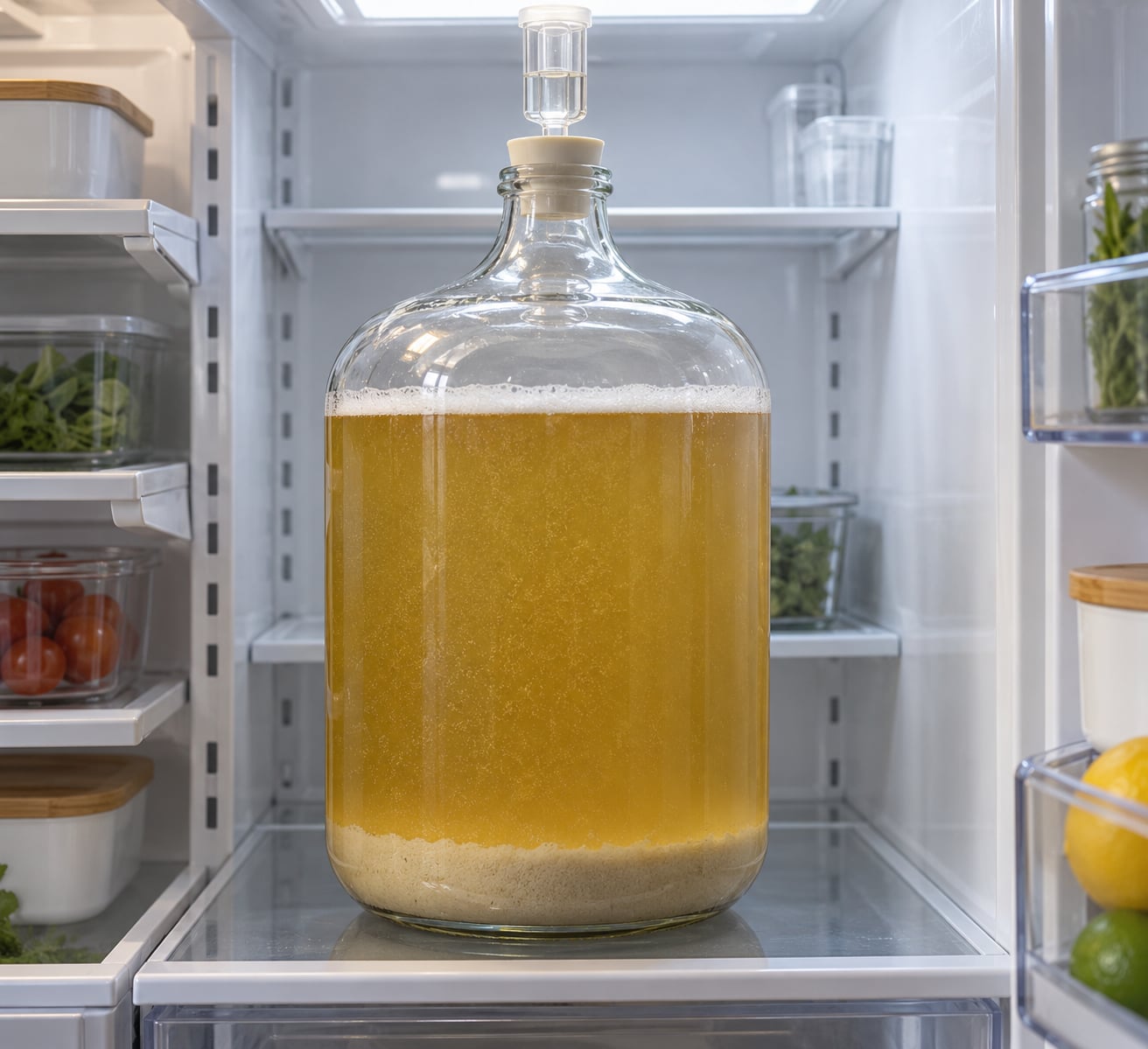
If you’re asking why your homebrew is cloudy after cold crashing, the short answer is that the crash itself can cause cloudiness instead of curing it. Chilling provokes protein and polyphenols to bind into fine particles, and a crash that never gets cold enough, or that ends before the yeast has dropped, leaves the beer looking worse than it did in the fermenter.
That sounds backwards because cold crashing gets sold as a clarity shortcut. It works most of the time. When it doesn’t, the problem is usually one of four things: yeast still in suspension, chill haze, starch haze, or a fruit-beer pectin haze. Two of those clear on their own with time or a fining agent, and two never will.
The rest of this guide walks through the timing, the diagnosis, and the fixes in the order you’d actually work through them.
Table of Contents
- Why Is My Homebrew Cloudy After Cold Crashing?
- How Long Should You Cold Crash Before Packaging?
- What Causes Cloudiness After Fermentation?
- Why Is My Homebrew Cloudy After Cold Crashing? Common Causes
- How to Tell Whether the Cloudiness Is Yeast, Haze, or Contamination
- How to Clear a Cold-Crashed Beer Before Packaging
- How to Prevent Cloudiness in the Next Batch
- Frequently Asked Questions
- How long should I cold crash beer before packaging?
- Should I cold crash beer for three days or one week?
- Why did my beer become cloudy after I packaged it?
- Can cold crashing remove protein or hop haze?
- Is sediment at the bottom of my fermenter normal after cold crashing?
- Can a cold-crashed beer clear after it is packaged?
- Conclusion
Why Is My Homebrew Cloudy After Cold Crashing?
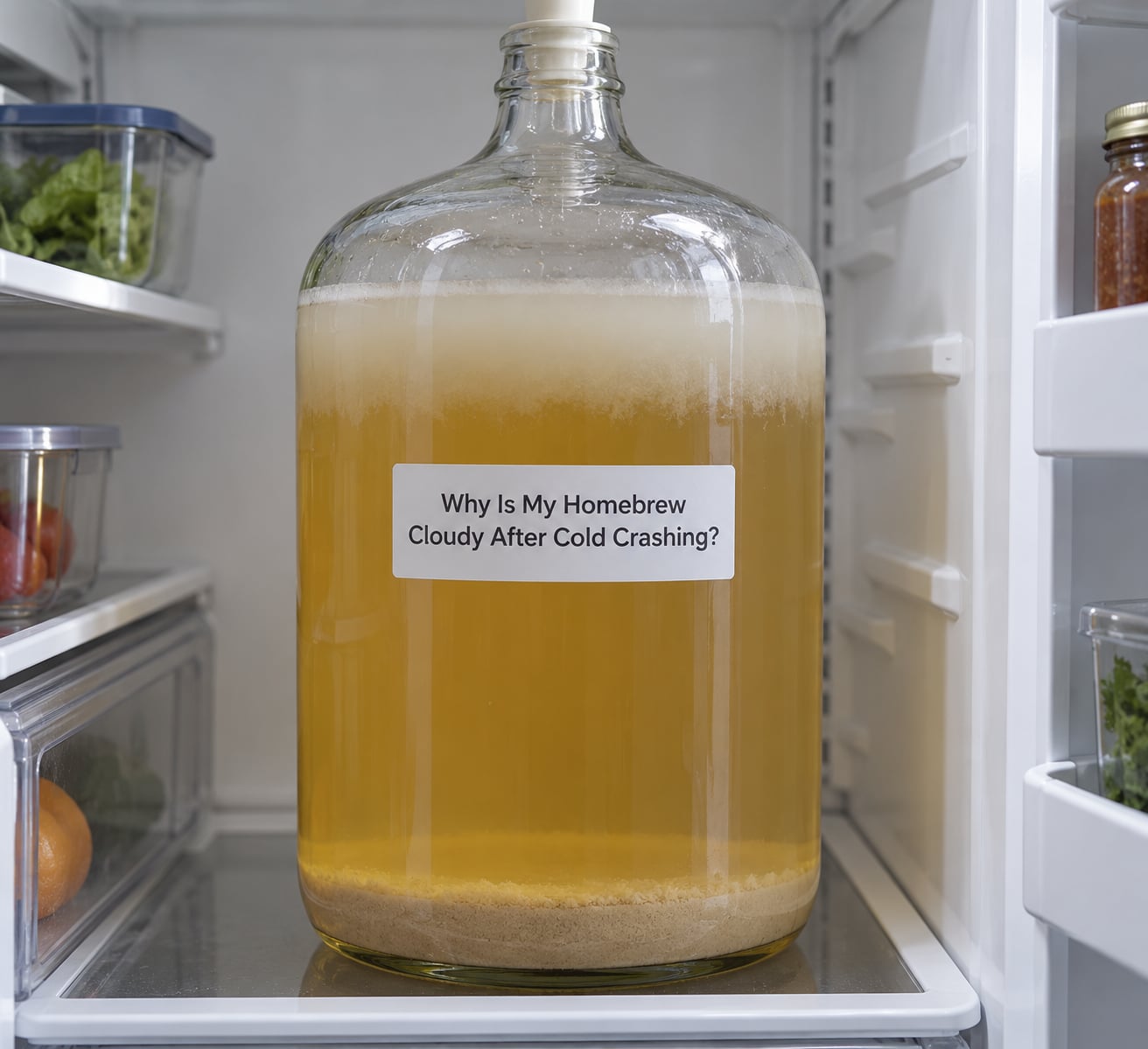
Cold crashing can cause cloudiness, not cure it, because the same chill that shocks yeast into dropping also drives dissolved proteins and polyphenols out of solution where they bind into particles that scatter light.
In practice the cloudiness you see after a crash falls into four buckets:
- Yeast suspension — cells that never flocculated or never got the time to drop. Uniformly milky, and it often sits in a darker layer on top of a clearer body below.
- Chill haze — protein-polyphenol binding triggered by the cold itself. Fades noticeably as the beer warms back up, which is the tell.
- Starch haze — a milky, permanent cloud from incomplete conversion. It does not settle, does not fade with warmth, and no fining agent touches it.
- Pectin haze — suspended pectin from fruit additions, common in berry and fruit wines.
If the beer was clearer before it went into the fridge, you are almost certainly looking at chill haze on top of yeast that hadn’t finished dropping. The cold made a problem visible rather than creating one.
How Long Should You Cold Crash Before Packaging?
Most homebrewers crash for two to three days at 33-38F (1-3C), and that is a reasonable window for a flocculent ale strain. Lager yeast and low-flocculent strains need longer, usually a week or more, because the cells themselves take time to change state before they fall.
Two timing mistakes explain most disappointing crashes:
- Stopping the clock before the beer got cold. The crash only counts once the wort is actually below about 4C (39F). A fridge set to 40F that takes 18 hours to pull the fermenter down gives you a day of nothing followed by two days of real crash.
- Dropping the temperature too fast and too far. Going from 20C straight to 0C in an hour shocks yeast into a messy partial drop that can remix into the body of the beer instead of forming a compact sediment.
Lower the fermenter into a bath or set the fridge a few degrees at a time over several hours, and give it 2-7 days. Beer is ready to package when the sediment is a firm layer on the bottom and the beer above it is clear, not when a clock says so.
While it sits, keep the fermenter sealed. Cold beer absorbs oxygen faster than warm beer, and an open crash in a fridge is a good way to trade clarity for cardboard. If the port needs venting, run a blowoff into a sanitized bucket of sanitizer-grade solution, or blanket the headspace with CO2. If your beer tastes or smells acrid or wet cardboard, that’s oxidation rather than haze, and it is covered in our guide to fixing off flavors in homebrew.
What Causes Cloudiness After Fermentation?
Every case of cloudy homebrew falls into one of a small number of causes, and the fix is completely different for each one.
Why Is My Homebrew Cloudy After Cold Crashing? Common Causes
Yeast still in suspension. Yeast that has not flocculated stays evenly distributed through the beer, so the whole vessel looks milky. A non-flocculent strain is the usual culprit, and some strains stay cloudy for weeks no matter what you do to them.
Chill haze from protein and polyphenols. Hop polyphenols and dissolved proteins have opposite charges and bind together when the beer goes cold. The complex is reversible: warm the beer back to cellar temperature and it should noticeably clear, which is the cheapest diagnostic test you have.
Starch haze from poor conversion. An inefficient mash leaves unconverted starch in the wort, and starch forms a milky haze that will not clear. Experienced brewers on HomebrewTalk point to the same conclusion repeatedly: starch haze comes from incomplete conversion, never clears on its own, and is prevented by a proper mash and a good cold break rather than by anything you add later.
Hop oils and hop particles. Dry hopping in the fermenter suspends oil residue that reads as a permanent-looking haze. A drier, resinous film rather than a milky cloud is the give-away.
Contamination. Bacterial infection gives cloudiness plus off smells, and unlike haze it comes with a bad aroma. Pectin in fruit beer behaves similarly, minus the smell.
Packaging additions. Gelatin that has not bloomed properly, or a fining dosed too heavily, can leave a fine suspended load in the package instead of a droppable one.
| Yeast strain | Flocculation | Expected clear time |
|---|---|---|
| SafAle S-04 | High | 1-2 days cold |
| Wyeast 1056 American Ale | High | 1-3 days cold |
| SafAle US-05 | Medium-low | 3 weeks or more |
| Wyeast 1388 Old Bavarian Lager | Low | Weeks; brewers report it needs near-freezing |
| Wyeast 2565 Kolsch | Low | 5-6 weeks per brewer reports |
Those clear times are why an unrealistic timeline is the most common complaint in the forums. A US-05 batch given a five-day crash is not broken. It is a strain that simply needs longer than five days to do what it can do.
How to Tell Whether the Cloudiness Is Yeast, Haze, or Contamination
Work through this in order, and stop at the first answer that fits.
First, take a sample straight from the fermenter and warm it to room temperature in a clear glass. If it clears noticeably as it warms, you are looking at chill haze, and you have a fining option. Second, look at the sediment. Compact yeast drops into a firm layer on the bottom; starch haze and chill haze stay suspended in the body of the beer with no real sediment at all. Third, check gravity. Take a reading, leave the beer a few days, and take another; a stable reading means fermentation finished.
| Symptom | Likely cause | Next check |
|---|---|---|
| Clears when warmed to room temperature | Chill haze | Add gelatin cold, or ship it |
| Uniformly milky, clears after a week cold | Yeast in suspension | Wait, or fine it |
| Milky, no sediment, never changes | Starch haze | Iodine test on a sample |
| Darker layer on top of a clear body | Yeast drop in progress | Give it 2-3 more days |
| Resinous film or dry hop haze | Hop oil and particles | Rack off the hop bag early |
| Fruity, solvent, or rotten smell | Contamination | Taste a small sample, do not package |
| Cloudy in fruit beer only | Pectin haze | Pectinase early in fermentation |
The iodine test settles the starch question in about a minute. Add a few drops of iodine solution to a sample of wort or beer in a clear glass; blue-black means starch, and no amount of waiting or fining will change it.
Above all, haze alone does not mean the beer is bad. Cloudy but drinkable is a completely normal outcome and plenty of forum brewers have posted their hazy batches as successes. If you smell nothing off and gravity is stable, you have a beer, not a problem.
How to Clear a Cold-Crashed Beer Before Packaging
Clarity is worth chasing to a point, and the fixes below are in the order you should try them.
Extend the crash. This costs nothing but time and works on yeast haze every time. Give a low-flocculent strain a full week before you decide anything is wrong.
Verify final gravity. A cold reading is unreliable because cold beer reads dense. Take the reading at cellar temperature, confirm it’s stable over several days, and don’t package a beer that is still fermenting.
Avoid extra transfers. Every transfer mixes sediment back into suspension. Rack once, from the bottom, and leave the trub behind. If clarity matters, transferring a third time to a bright tank right before packaging costs you the sediment you spent a week collecting.
Use a fining agent when the crash has done all it can. Gelatin is the common cold-side choice because it works by electrostatic attraction to the positively charged proteins and yeast in a cold beer. A workable protocol: bloom 1/2 to 1 teaspoon of unflavored culinary gelatin per 5 gallons in 1/3 cup of water for 30 minutes, warm it gently until fully dissolved, and add it to beer below 50F (10C). Buy unflavored brewing gelatin and never dessert gelatin, which is sweetened and flavored.
If the beer is already in a pressurized keg, you have to depressurize it to add gelatin through the stem, then re-seal and let it settle. It is doable, it is fiddly, and waiting is usually the better call.
| Fining agent | Side | Typical dose | Vegan friendly | Notes |
|---|---|---|---|---|
| Gelatin | Cold | 1/2-1 tsp per 5 gal | No | Fastest cold-side result; over-dosing leaves a fluffy mess |
| Irish moss | Hot | 1 tsp per 5 gal, 15 min before boil end | Yes | Coagulates protein in the kettle; helps most when used before the problem starts |
| Whirlfloc | Hot | 1 tablet per 5 gal | Yes | Single-tablet version of the Irish moss idea |
| Bio-Fine Clear | Cold | 1 tsp per 5 gal | Yes | Silicic acid; good for kegs, works over a few days |
| Kaolin clay | Cold | Per package directions | Yes | Fast protein removal, easy to over-dose into a clay taste |
| Pectinase | Early | Per package directions | Yes | For fruit batches; add early in fermentation, it has nothing to act on later |
Two things no fining agent fixes. Starch haze stays forever, and neither does contamination. If a beer is infected, clarity is the least of its problems.
Finally, decide whether to keep pushing. If the beer tastes good, has stable gravity, and reads as a hazy amber or gold instead of milk, packaging it is a legitimate choice. If you are chasing a competition medal, diatomaceous earth polish filtration is the step that actually delivers jewel clarity, and it is a different hobby from brewing.
How to Prevent Cloudiness in the Next Batch
Most haze is set before the fermenter ever gets cold.
Finish fermentation properly. An under-attenuated beer stays hazy and tastes sweet, and no amount of chilling fixes either problem.
Pick a flocculent strain. If you cold crash regularly and want fast results, S-04 and 1056 will drop in days. Choosing US-05 or a lager strain means planning for weeks, and that’s fine as long as you know it going in.
Improve mash efficiency and get a good cold break. Efficient conversion removes the starch that will never clear. A strong rolling boil, rapid chilling to pitching temperature, and a kettle whirlpool to consolidate trub all help.
Handle hops with less drama. A hop bag in the fermenter sheds oil and particles. A hop sock, or a dry hop added after active fermentation slows, keeps more of the resin out of the beer.
Keep the cold side clean. Before a crash, sanitize anything that will touch the beer. Warm a cold fermenter to packaging temperature gently rather than shocking it, and if the beer reads flat rather than just hazy, why your homebrew is flat covers the usual causes.
Worth knowing: cold crashing is optional. Brulosophy’s exBEERiment work and other blind tastings have found tasters unable to distinguish cold crashed beer from warm-packaged beer, because the beer crashes again in the package anyway. Crash for the sediment and the keg or bottle handling, not because the process demands it. And if the beer is thin and sharp rather than just cloudy, why homebrew tastes like cider is the next thing to read.
Frequently Asked Questions
How long should I cold crash beer before packaging?
Two to three days at 33-38F (1-3C) is enough for a highly flocculent ale strain. Give low-flocculent strains like SafAle US-05 or Wyeast 1388 a full week, and lager strains longer. Package when you see a firm sediment layer and clear beer above it, not when the clock runs out. Crash time only counts once the fermenter is actually below about 4C.
Should I cold crash beer for three days or one week?
Match the crash to the strain. Three days works for S-04 or Wyeast 1056. A week is the better call for US-05, Wyeast 1388, or anything lager, since those cells take longer to drop. Extending the crash costs you nothing but a week of waiting, while packaging early locks suspended yeast into the package where it can remix.
Why did my beer become cloudy after I packaged it?
Sediment that dropped in the fermenter gets disturbed by racking, and the yeast mixes back into suspension during packaging. A fining agent that was not bloomed properly can also leave a fine load in the package instead of a droppable one. Rack slowly from the bottom, leave the trub behind, and let the packaged beer sit cold for several days before moving it around.
Can cold crashing remove protein or hop haze?
Not on its own. Chilling actually provokes chill haze by binding proteins to polyphenols. Warm the beer to cellar temperature and it should clear visibly, which confirms the diagnosis. Then a cold-side fining agent like gelatin or Bio-Fine Clear will pull the complex out. Cold crashing does nothing for hop oil or starch haze.
Is sediment at the bottom of my fermenter normal after cold crashing?
Yes, a firm yeast sediment is exactly what a cold crash is supposed to produce. The concern is what happens above it. Uniform milkiness with no sediment at all points to starch or chill haze instead. Package from the top of the beer, leave the sediment behind, and do not rack it into the package if you can avoid it.
Can a cold-crashed beer clear after it is packaged?
Often, yes. Beer packaged cold keeps yeast and chill haze in suspension, then drops them over the first several days in the package. Keep the package cold and still for four or five days after packaging, and check before you move or chill it further. A keg left alone in a cold keezer for a week will usually drop noticeably. Starch haze is the exception and never clears.
Conclusion
Start with three checks: confirm gravity is stable at cellar temperature, warm a sample and see whether it clears, and look for whether there is any sediment at all. Yeast haze and chill haze are both fixable, with a longer crash and a fining agent covering most cases. Starch haze and infection are not, and the iodine test and a smell will tell you which you have. If none of that turns up anything wrong, package the beer and enjoy it, because cloudy and good beats clear and spoiled every time.