To collect feedback after an event, define what you need to learn, choose a channel that fits your audience, and send a short survey within 24 hours of the doors closing. Add one reminder about 72 hours later, then tag the responses and act on them before you plan the next event.
Most organizers do the easy part and skip the hard part. The survey goes out, a handful of people reply, and the responses land in a spreadsheet nobody opens again. That is not a data problem, it is a timing and design problem.
Organizers in event production and planning forums say the same thing repeatedly: length kills response rates, and generic copy-pasted questions produce box-ticking instead of useful detail. A five-question survey that arrives while people still remember the night beats a 25-question survey that shows up eight days late.
This guide walks through the whole process, from what to gather before the event ends to how to close the loop with the people who answered. It works for conferences, webinars, trade shows, association meetups, taproom takeovers and bar crawls.
Table of Contents
- What You Need
- Step-by-Step: How to Collect Feedback After an Event
- Step 1: Define What You Need to Learn
- Step 2: Choose Feedback Methods That Match Your Audience
- Step 3: Make It Easy to Respond
- Step 4: Ask Specific, Fair Questions
- Step 5: Capture Feedback While Details Are Fresh
- Step 6: Organize, Review, and Act on the Results
- Common Mistakes
- Frequently Asked Questions
- When should I send a post-event survey?
- How long should a post-event survey be?
- Should a post-event survey be anonymous?
- What is a good response rate for a post-event survey?
- What are some good questions to include in a post-conference survey?
- How do I get more responses to my event survey?
- What should I do with negative feedback?
- Conclusion
What You Need
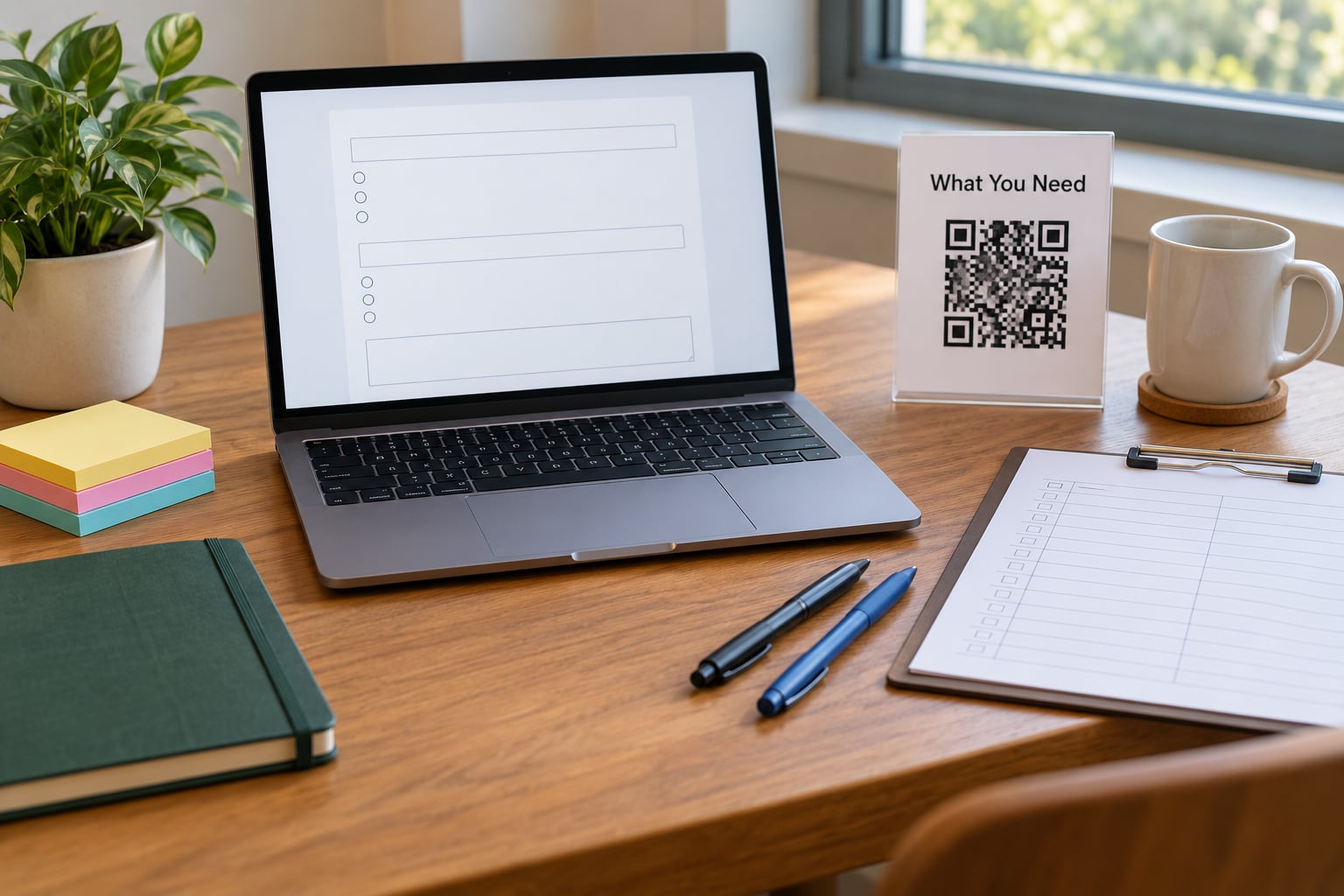
Most of the preparation happens while the event is still running, not after it ends. Here is the short list of what to have ready.
- A clean contact list. Pull the registration emails, ticket records and mailing list into one export. Add names as people check in at the door, including walk-ins, because a survey sent only to registered attendees leaves out exactly the casual people you most want to hear from.
- A survey tool you already have an account on. Google Forms and Microsoft Forms cover the basics at no cost. Typeform, Qualtrics, Momentive and SurveyMonkey add branching, logic and better response formatting.
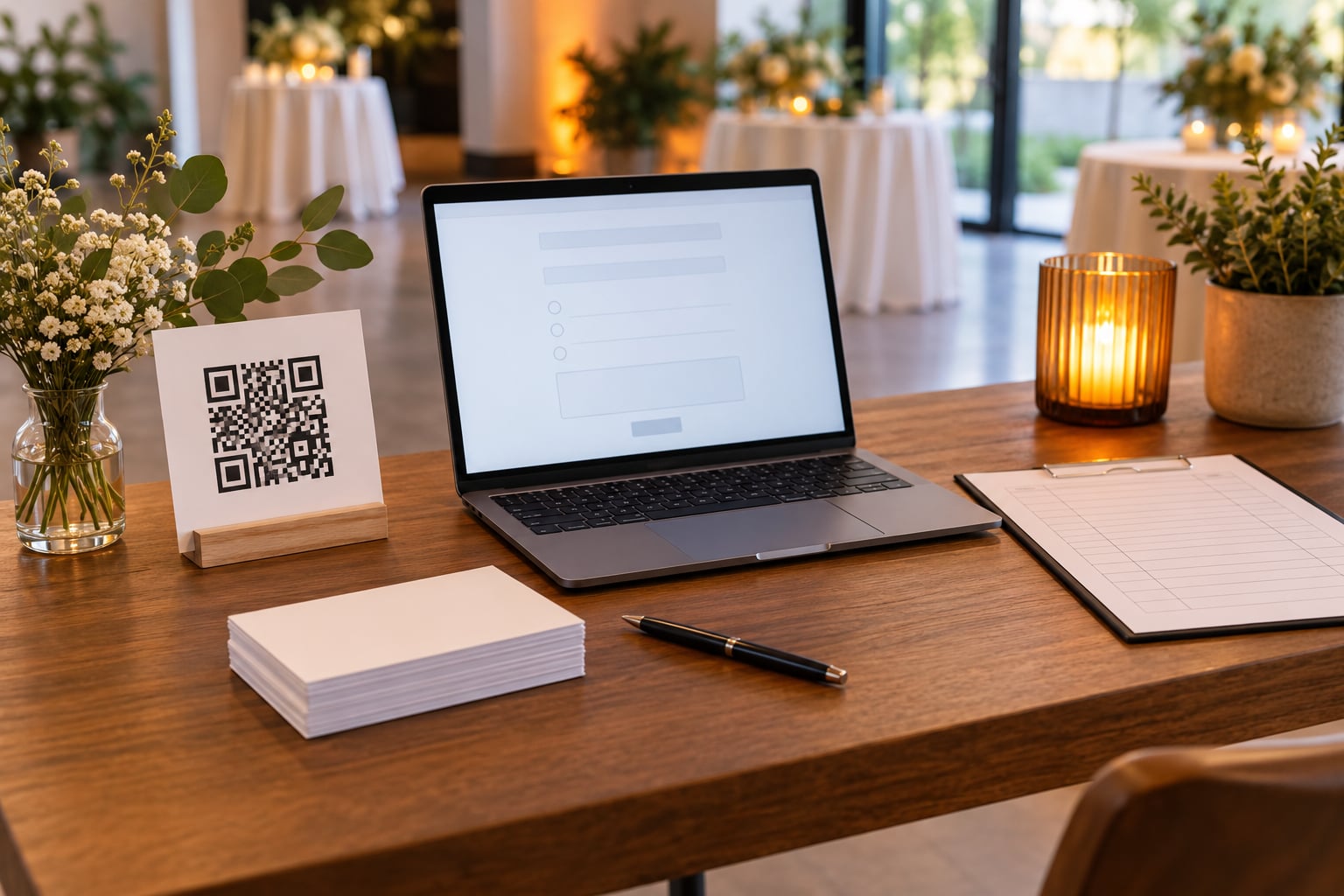
- QR codes on physical surfaces. Table tents, tap handles, lanyard cards and the exit door. Print them at a shop or generate them in your survey tool, and test each code on a real phone before the event starts.
- Named staff with assigned roles. Someone owns the door scan, someone owns the QR table, someone owns the follow-up email. Feedback gets lost when it is everybody’s job.
- A response deadline and an incentive decision. Decide both before you write a single question. Early access, a discount on the next event or a drink voucher works better than a generic raffle for most ticketed and nightlife events.
- One place to store responses. A shared spreadsheet or a tag column in your CRM. If responses have nowhere to live, they are gone.
Step-by-Step: How to Collect Feedback After an Event
Here is the full sequence. Define the outcome you need, pick a channel, lower the effort of responding, ask fair questions, capture answers while details are fresh, and then actually work through the results.
Step 1: Define What You Need to Learn
Start by writing down the three decisions this feedback has to inform. If you cannot name them, the survey will drift into asking everything and answering nothing.
For most organizers that means satisfaction, what to change, and whether people come back. From there, build questions that map directly to those decisions: how satisfied were you overall, how was the venue, was the pacing right, was the beer or food selection worth what you paid, could you access what you needed, and how likely are you to return.
Anything that does not map to a decision gets cut. That single habit is the difference between a survey people finish and one they abandon halfway.
Step 2: Choose Feedback Methods That Match Your Audience
No single channel reaches everyone. Email is the backbone, but on-site capture catches the moment while it is still fresh, and short interviews surface the detail a rating question cannot.
| Channel | Typical response rate | Effort | Best used for |
|---|---|---|---|
| Email survey, sent within 24 hours | 20 to 35 percent | Low | The full question set from your registered list |
| QR code at tables and the exit | 3 to 10 percent of scans | Low once printed | Two or three questions plus a link to the full survey |
| Live poll during the event | 30 to 60 percent of active attendees | Medium | In-the-moment reactions, session ratings, pacing checks |
| Event app notification | 10 to 25 percent of app users | Medium | Events where most guests already installed the app |
| Paper exit slip or feedback wall | 5 to 15 percent of attendees | Low | Casual crowds, walk-ins, venues with weak signal |
| Short staff interview | Nearly 100 percent of who you ask | High | Sponsors, speakers, VIPs, your own volunteers |
| Social post or hashtag prompt | 1 to 5 percent | Low | Reaching people who never gave you an email |
Treat those ranges as ballpark, not targets. Incentive, list quality and how well the event ran all move the numbers.
Match the method to the audience. Attendees answer fast questions on their phone. Speakers and sponsors respond to a direct message from a human, usually within a few days. Volunteers who worked the event will give you the bluntest operational notes you will get, and they are the only people who saw the setup at 6 a.m.
Step 3: Make It Easy to Respond
Completion rate falls off a cliff past two minutes on mobile. Five to eight questions is the working range, and one open-ended box at the end buys you more insight than three extra rating scales.
Put the survey in as many places as you reasonably can. Add the link to your ticket confirmation email, push a notification through the event app, print a QR code on the table tents, run one live poll mid-event, and repeat the link in the follow-up email. Organizers describe multi-channel collection as the only reliable way to reach different segments of the crowd.
Write the invitation in plain language and say two things: roughly how long it takes, and what you will do with the answers. If a survey took less than two minutes, say so. Anonymity matters more than most organizers expect, so offer an anonymous option and make it obvious in the interface.
One shortcut helps more than anything else. Tell people what you changed because of a previous survey. “Last time you said the queue was too long, so we moved check-in outside” is the single most reliable way to lift your next response rate.
Step 4: Ask Specific, Fair Questions
Good questions measure one thing and stay neutral. Leading questions produce the answer you already wanted, which is worse than no data because it looks like data.
| Question type | What it measures | Example |
|---|---|---|
| Rating scale | Satisfaction with one element | How satisfied were you with the venue? 1 to 5 |
| Multiple choice | A single preference | Which session did you attend most? |
| Multiple select | Priorities and reasons | What brought you out tonight? |
| Likert scale | Agreement with a statement | The pacing of the event felt right. Strongly disagree to strongly agree |
| NPS-style question | Return and referral intent | How likely are you to attend our next event? |
| Open-ended | The why behind a score | What would have made tonight better? |
Here is a copyable question bank for a general event. Eight questions, mixed types, under two minutes.
- Overall, how satisfied were you with the event? (1 to 5 rating scale)
- How likely are you to attend another event we run? (0 to 10 scale)
- What brought you out today? (multiple select: friends, venue, beer lineup, speaker, ticket price, other)
- How satisfied were you with the venue and the room conditions? (1 to 5)
- How was the beer or food selection? (1 to 5)
- Did the event feel well organized from the moment you arrived? (Likert scale)
- Was the event accessible to you, including entry, signage and facilities? (multiple choice: yes, mostly, no, did not apply)
- What would you change for next time? (open-ended)
For beer festivals, taproom takeovers and bar crawls, swap in a few event-specific ones: which beer or tap you tried and would you pour it again, how the pacing between stops felt, whether the wristband or ticket value matched what you got, and which venue on the route you would drop next time.
For sponsors, ask about foot traffic past their table, whether the activation drew the right kind of person, and how likely they are to return. For speakers, ask about the technical setup, the timing of their slot, how they were introduced, and whether they would come back. Keep those two sets short and separate; the forums are full of organizers describing the awkward, ad hoc process they fell into trying to collect them.
Step 5: Capture Feedback While Details Are Fresh
Memory fades fast, and vague answers make vague plans. A workable timeline looks like this.
- During the event: one live poll mid-event, QR codes live all day, and staff writing down anything they hear. A one-line note from a bartender beats a blank spreadsheet.
- Within 24 hours: the full survey goes out by email. This is the single most important send in the whole process.
- At 72 hours: one reminder to non-responders, short and personal, ideally from a named person rather than a no-reply address.
- At 7 days: close collection, tally the results, and pull out the themes.
- At 10 to 14 days: a thank-you note that shares what you heard and what you are changing. This is the step that builds the habit of answering next time.
If you only do one thing, do the 24-hour email. Organizers who skip the reminder lose most of their second wave; organizers who send three follow-ups get ignored by everyone.
Do not forget the people who never registered. At a bar crawl or an open taproom, walk-ins can outnumber ticketed guests, and a survey emailed to your list completely misses them. A paper slip or a QR code at the exit catches them.
Step 6: Organize, Review, and Act on the Results
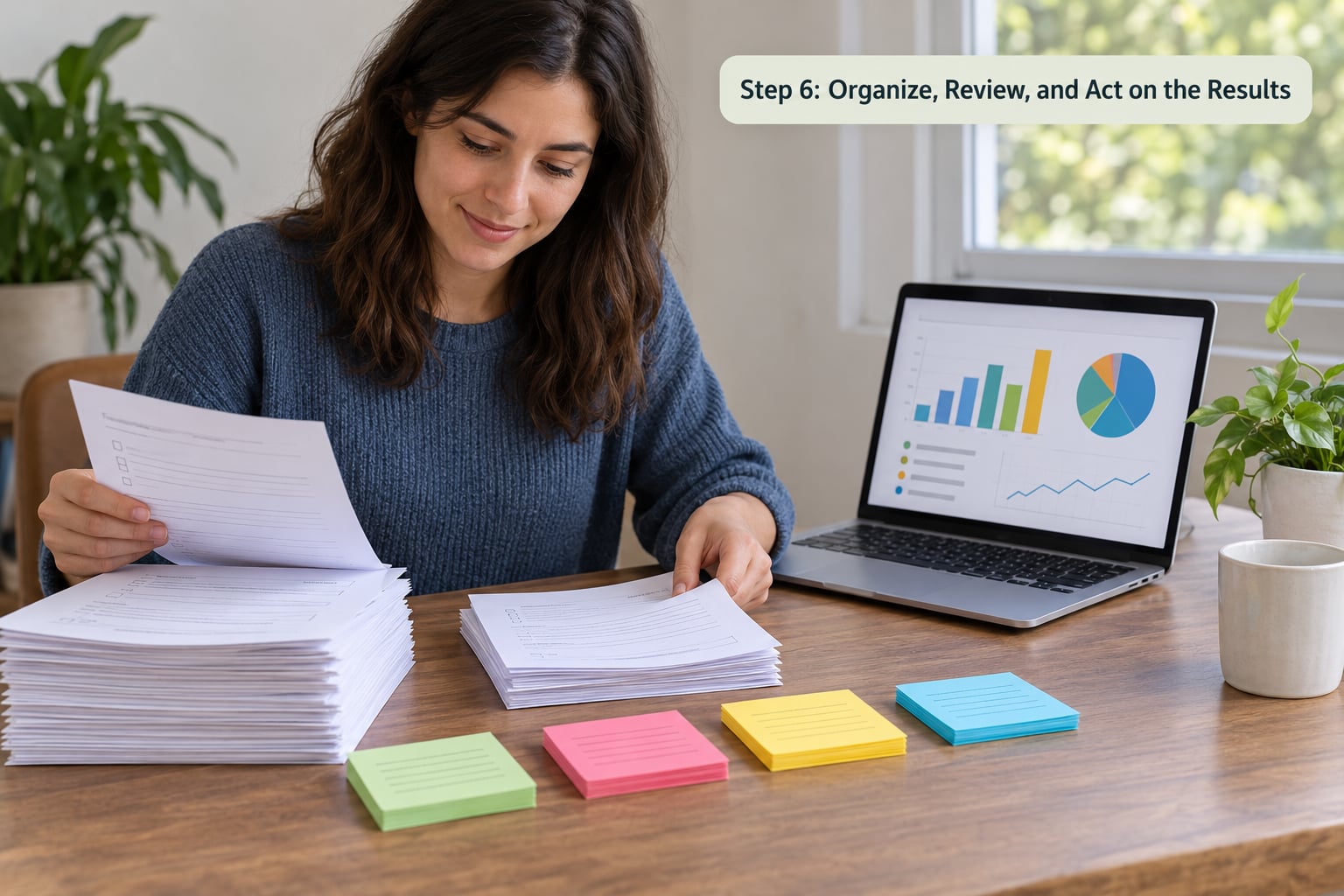
Tag every response by theme as it comes in: venue, programming, pacing, selection, value, accessibility, staff. Then pull the recurring ones. A theme that appears five times is a signal; one comment is an anecdote, useful but not a plan.
Keep the numbers and the comments separate at first. Ratings show you where the pain sits, comments tell you what to do about it. Then compare perspectives: attendees often rate the lineup lower than staff expected, and volunteers usually name problems the attendees never noticed but the next event will hit again.
Turn the top three findings into a written plan with an owner and a date. Sponsors want to see that, and attendees want proof you listened. Send both.
Common Mistakes
Sending a survey nobody finishes. Long surveys lose respondents. Cut to eight questions and let the rest go.
Asking vague questions. “How was the event?” returns noise. Name the element: the venue, the pacing, the selection.
Surveying too late. Past a week, answers get generic and you lose the complaints that would have helped most.
Ignoring the critical comments. The one-star responses are the cheapest insight you will ever get. Put them in front of the team instead of quietly deleting them.
Collecting without explaining the use. Tell people what happens to their answers, and follow through visibly.
Never closing the loop. Gathering feedback and never reporting back trains people to stop answering. Publish what changed.
Only asking registrants. Walk-ins and casual attendees are often the majority at a casual event, and they are the ones you never hear from.
Saving analysis for later. If responses have no home, tag them as they arrive. Sorting 300 answers a month later is how good feedback dies.
Frequently Asked Questions
When should I send a post-event survey?
Send it within 24 hours of the event ending, ideally the next morning. Attendees still remember the details and the response rate is at its highest. Add one reminder about 72 hours later, then close collection at seven days. Delays of a week or more reliably produce vague, polite answers instead of specific feedback.
How long should a post-event survey be?
Five to eight questions, and under two minutes on a phone. Organizers consistently name length as the biggest reason people abandon a survey. Use one overall satisfaction rating, two or three element ratings, one multiple choice, and a single open-ended box. Skip anything that will not change a decision you make about the next event.
Should a post-event survey be anonymous?
Offer anonymity, and make it visible. People give more honest feedback, especially about venue conditions, staff and value, when they are not worried about being identified. A good compromise is anonymous for the rating questions and attributed only if the attendee opts in. State plainly in the invitation that responses are not shared with named staff.
What is a good response rate for a post-event survey?
A 20 to 35 percent response rate from a well-maintained attendee list is a solid result. QR codes at tables and exits run lower, often 3 to 10 percent of scans, and live polls during the event can reach 30 to 60 percent of active attendees. If you are far below 10 percent, the usual causes are survey length, late timing or an email that reads like a sales blast.
What are some good questions to include in a post-conference survey?
Start with overall satisfaction on a 1 to 5 scale, then ask how likely attendees are to return on a 0 to 10 scale. Follow with questions on the venue, the quality of the content or sessions, the value received, and the pacing of the day. Close with one open-ended prompt: what would you change for next year. That mix covers ratings, priorities and the detail behind the numbers.
How do I get more responses to my event survey?
Shorten it, send it within 24 hours, and remind non-responders once at 72 hours. An incentive matched to the audience works well: early access or a discount for ticketed events, a drink voucher for bar crawls and festivals, a donation to a cause the audience cares about for community events. Mentioning what changed because of last year’s survey is the most reliable lever of all.
What should I do with negative feedback?
Read it the same day it arrives and separate the tone from the content. Pull out the specific, repeated problems, drop them into the planning document for the next event with an owner and a date, and reply to the person who wrote it. Organizers who dodge critical responses end up with fewer of them, not more, and the underlying issue does not go away on its own.
Conclusion
Start with the smallest version that works. If you have never run a post-event process before, the fastest way to learn how to collect feedback after an event is a five-question survey sent within 24 hours of the doors closing, one reminder at 72 hours, and a real deadline. Ask only what you would act on, offer anonymity, and keep it under two minutes on a phone.
Then tag every response by theme as it lands, separate the ratings from the comments, and pull out the three things you will actually change. Send that list back to the people who answered. Next time you run the event, you will have a short list of proven answers and an audience that already trusts you to ask.