Short answer: green glass does not put anything into the beer and does not take anything out. What makes beer in green bottles taste different is what the color does to light. Darker glass filters out more of the ultraviolet light that hops react badly to, and a pale lager that sat in a warm green bottle can absolutely taste different from the same beer kept in the dark.
That covers the sealed, properly stored case. Once light gets involved, the difference is real, chemical, and irreversible. Here is what actually happens, which styles are most at risk, and how to tell a lightstruck beer from a beer that just tastes different for other reasons.
Table of Contents
- Does a green beer bottle really change the taste?
- What Is Lightstruck Beer?
- Why Beer in Green Bottles Tastes Different
- Green vs. Brown vs. Clear Beer Bottles
- Does Beer Style Make the Bottle Color Matter More?
- How Light Exposure Creates a Different Taste and Aroma
- How long does it take beer in a green bottle to taste different?
- What Else Can Make Green-Bottled Beer Taste Different?
- Does Cold Beer Taste Better From a Green Bottle?
- Frequently Asked Questions
- Are green beer bottles better than brown bottles?
- Do beer bottles need to be covered from light?
- Can sunlight make bottled beer go bad?
- Why does beer taste skunky after sitting in the sun?
- Can you hide lightstruck flavor in a green bottle?
- Conclusion: What to Notice the Next Time You Taste Beer
Does a green beer bottle really change the taste?
Only under light. A green bottle sitting in a dark cellar holds the same beer as a brown one, because the color itself is inert. Green glass does transmit less visible and ultraviolet light than clear glass, though, so when a bottle spends time in sun or a lit cooler, the beer inside is less exposed. Less exposure means fewer lightstruck compounds, and that is a genuine flavor difference, not an illusion.
So the honest answer to why beer in green bottles tastes different comes down to storage, not the bottle’s personality.
What Is Lightstruck Beer?
Lightstruck beer, also called skunked beer, is beer that has been exposed to enough ultraviolet light to trigger a photochemical reaction. Hops contribute bitter compounds called isohumulones to the wort during the boil. Under UV-A light, those isohumulones break down and release a sulfur compound called 3-methyl-2-butene-1-thiol, usually shortened to MBT.
MBT is the same volatile sulfur compound a skunk’s spray glands produce, which is where the name comes from. The human nose detects it at concentrations in the parts-per-trillion range, so a quantity far too small to see or taste on its own still rearranges everything you smell.
It is worth separating aroma from basic taste here, because that is where most confusion starts. Lightstruck beer does not become sweeter, more bitter, or more watery. What shifts is the nose: skunk, rotten sulfur, burnt rubber bands, damp cardboard, cut grass, and sometimes a flat metallic note. Once the aroma is that loud, your perception of everything else shifts with it.
Two other faults get mistaken for it constantly. Green apple is acetaldehyde, buttery popcorn is diacetyl, and cooked cabbage or asparagus is dimethyl sulfide. None of those come from light.
Why Beer in Green Bottles Tastes Different
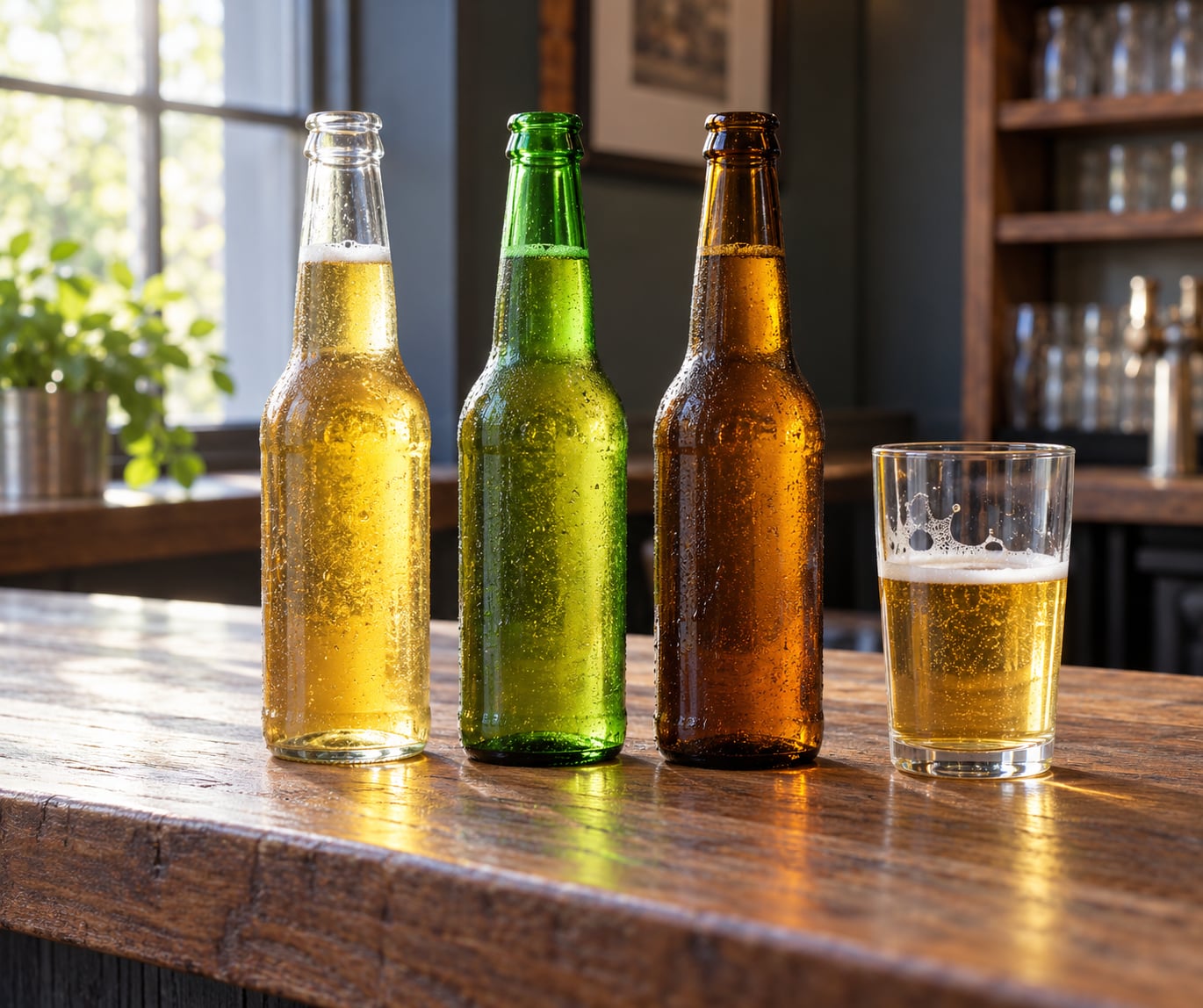
Bottle color works as a filter, and glass makers describe that filtering with transmittance, meaning the share of light that passes through instead of being absorbed. Clear glass is at one end of the scale and passes the most. Brown or amber glass, which is just clear glass with iron and other colorants added in the melt, sits at the other end and passes the least. Green sits between them.
Green is a compromise, and the compromise is about history as much as engineering. Early beer bottles were frequently clear, and breweries discovered quickly that sunlight turned their product into something customers complained about. Amber glass solved it, and for a long stretch brown was the default. Then wartime supply constraints pushed glassmakers toward green, which needed less iron and was easier to produce in volume. Green stuck, and the European lager brands that shipped green glass reinforced the idea that green meant imported, which meant better.
That history matters because it is the second reason people say green-bottle beer tastes different, and it has nothing to do with chemistry. Nobody is served a blind flight of the same beer in green and brown and reliably prefers the green. The association is learned, and expectation is a real component of how a beer reads to you.
Green glass does still block meaningfully more UV than clear glass, so a green bottle is genuinely better than a clear one for keeping beer out of trouble. It just does not beat brown, and it does not produce a house flavor of its own.
Green vs. Brown vs. Clear Beer Bottles
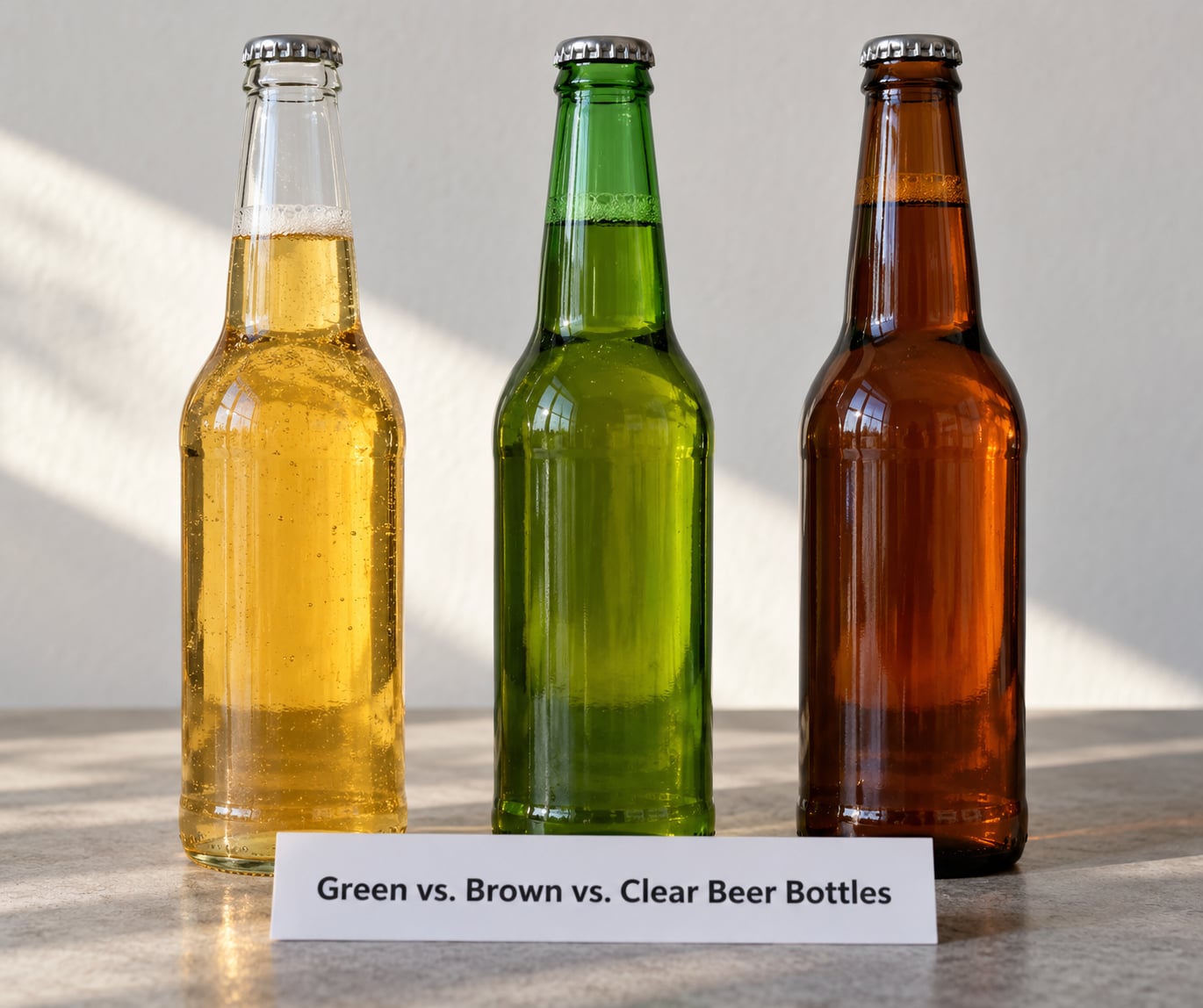
This is the comparison most write-ups skip. The differences matter, but they are narrower than the marketing implies.
| Container | Light protection | Suits best | What it cannot prevent |
|---|---|---|---|
| Clear bottle | Lowest. Most visible and UV light passes straight through. | Short-term retail display, or breweries using a UV-resistant coating on the glass. | Nothing about skunking. A few minutes of sun is enough on a hoppy beer. |
| Light green bottle | Moderate. A thin green tint filters only part of the UV range. | Imported lagers and pale ales headed straight to a cold fridge. | Warm storage. Green tint alone will not rescue a hot case. |
| Dark green bottle | Moderate to good. Deeper dye concentration filters more. | Most green-bottle imports, and short-to-medium storage. | Extended warm storage or a lit cooler shelf. |
| Amber or brown bottle | Good to very good. The standard for light protection in glass. | Pale lagers, pilsners, hop-forward ales, and anything being held. | Heat-driven oxidation, which is a separate flavor problem. |
| Can | Best. Opaque aluminum blocks essentially all light. | Light-sensitive styles, long hauls, and hop-heavy releases. | Heat and oxygen. Cans are not a shelf-life cure-all. |
| Keg or growler | Varies. Kegs are dark steel; clear plastic growlers are the worst case. | Kegs for tap service. Growlers only for same-day fills consumed quickly. | Oxidation in a headspace, and light in a clear growler. |
One note on the clear bottle. Some breweries put a UV-resistant coating or a printed wrap over clear glass, which genuinely helps. Corona, for instance, ships in clear glass and relies on that kind of protection plus fast distribution. It is a workable setup, but it is a managed risk rather than the same thing as brown glass.
Does Beer Style Make the Bottle Color Matter More?
Enormously. The hop load, the roast level, and the beer color all change how much you can lose to light. This is the table that changes behavior.
| Style | Susceptibility | Why |
|---|---|---|
| Pale lager and pilsner | High | Light color means almost no internal UV absorption, and they are usually stored warm. This is the classic skunking victim. |
| Wheat beer | High to moderate | Light body, unfiltered, and served from a chilled but sunlit glass door more often than people think. |
| American pale ale | Moderate | Enough hops to produce MBT, but the malt character holds up well when the beer skunks. |
| IPA and hop-forward ales | Moderate to high | More isohumulones and a lot of hop oil. Big dry-hop additions raise the exposure, though hop oils themselves are not the light-sensitive part. |
| Saison and farmhouse ale | Variable by intent | Brewers deliberately use light and green glass here, because the earthy and peppery character masks or plays against the sulfur note. |
| Lambic and gueuze | Low concern | Wild yeast character dominates the aroma, so any sulfur note reads as part of the style rather than a defect. |
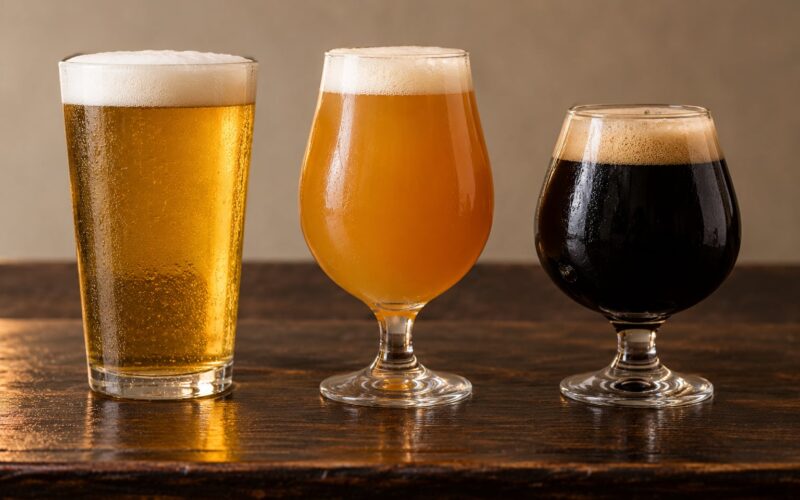
| Porter and stout | Very low | Roast malt absorbs UV before it reaches the beer. Nearly immune to lightstruck flavor. |
Hop form matters more than most people expect. Pelletized and extract hops release their oils and bittering compounds efficiently, so more of the light-reactive material ends up in the finished beer. Whole-cone dry hops add aroma and bitterness, but brewers report the resulting beer can be somewhat less skunk-prone than its heavily pelletized cousin. Homebrewers on Homebrew Talk and Brewers Friend have argued about this for years without a clean verdict, which is a fair description of the evidence.
There is also a genuine difference between hops. A 2012 Brewers Friend thread made the useful point that not every beer in green glass skunks: reports included Rho, Tetra, and San Miguel sitting on shelves without the problem. Breweries that hop lightly, or whose recipes are built around the aroma anyway, are much harder to catch.
How Light Exposure Creates a Different Taste and Aroma
The chain is short and worth walking once, because it explains every practical tip that follows.
First, light reaches the beer. Direct sun is the obvious source. So is the lit shelf in a retail cooler, which gets far less attention because the exposure is a few minutes at a time, repeatedly, over weeks. A glass-door refrigerator in a sunny kitchen is the same problem in a home.
Second, the wavelengths matter. UV-A in the 320 to 400 nanometer range is the main trigger, and it is exactly the band that clear glass passes. The reaction is not caused by heat. A beer can skunk in a cold fridge if the light is right.
Third, the isohumulones split. The reaction is fast at the molecular level, and Homebrew Talk regulars have reported skunky character after roughly three minutes of direct sunlight, which sounds absurd until you have held a pale lager in a window to watch it happen.
Fourth, MBT forms, and because the nose is that sensitive to it, the aroma changes. The reaction is irreversible. There is no step you can take to put the isohumulones back together, no amount of chilling, pouring, or resting.
Fifth, oxygen and heat layer on top. A bottle in a hot car is oxidized as well as skunked, and oxidation gives cardboard, raisin, and bruised-apple notes that people often file under the same heading.
How long does it take beer in a green bottle to taste different?
Minutes of direct sun for a hoppy beer, hours to days of warm diffuse light, and effectively never if the bottle stays sealed, dark, and cold. Time alone does nothing. Light plus warmth does.
What Else Can Make Green-Bottled Beer Taste Different?
Sometimes the bottle is innocent. Before blaming the green glass, walk through the alternatives.
Age. A beer past its window develops cardboard, wax, and dried-fruit notes that can read as skunk-adjacent to an untrained nose. Check the date code, not the dusty bottle.
Oxygen. A bad seal, a warm storage spot, or a growler headspace gives you a beer that tastes flat and dull rather than sulfurous. Different failure, similar disappointment.
Temperature. Beer served at 65 degrees tastes thin and harsh. A cold beer tastes cleaner, and the same beer can read as better with no chemistry involved.
Glassware. A dirty or detergent-flavored glass changes the beer. A large wide-rimmed glass warms it fast; a smaller tulip keeps the head and concentrates the aroma.
Expectation. Knowing a bottle cost more, or came further, changes what you look for in it. This is the effect that makes people swear green bottles taste better, and it is a real perceptual effect, not a placeable defect.
Here is the quick misdiagnosis guide.
| Aroma | Likely cause | From light? | Fixable? |
|---|---|---|---|
| Skunk, sulfur, damp cardboard, cut grass | Lightstruck, MBT present | Yes | No |
| Green apple, fresh-cut grass, solvent | Acetaldehyde, usually young beer or warm fermentation | No | Often settles with cold conditioning |
| Buttery, butterscotch, popcorn | Diacetyl, from a stressed or under-pitched ferment | No | Sometimes, with time and warmth |
| Cooked cabbage, asparagus, creamed corn | Dimethyl sulfide, from wort handling or yeast strain | No | Rarely once it is in the bottle |
| Cardboard, wet paper, bruised apple | Oxidation from oxygen or heat | No | No |
Two practical checks. Smell the glass before pouring, then smell the pour, because a skunked beer smells different in an empty glass than a clean one does. And compare the same beer in a dark bottle to rule the light out entirely.
Is a skunked beer safe to drink? Yes. Lightstruck beer is a flavor and aroma problem, not a safety or health problem. The reaction creates a volatile sulfur compound, not a toxin, and nothing about it makes the beer dangerous.
Does Cold Beer Taste Better From a Green Bottle?
No, and the reasoning is straightforward. Glass color does not insulate, chill, or change the thermal properties of the bottle. A green bottle and a brown bottle at the same temperature hold the beer at the same temperature.
What does affect cold beer is shape. Glass thickness, neck length, and surface area determine how fast the beer warms once it leaves the fridge, and the bowl of the glass shapes the head and how much aroma reaches your nose. Those things are worth thinking about. The color is not.
Most of the belief in this one comes from context. Green-bottle imports are usually served cold in a restaurant where the beer is fresh, and a fresh cold beer tastes better than a warm one that has been sitting. The bottle gets the credit.
Frequently Asked Questions
Are green beer bottles better than brown bottles?
No. Brown or amber glass blocks the most ultraviolet light, so it protects beer better than green. Green is a step up from clear, not a match for brown. For pale lagers, pilsners, and hop-heavy ales that will be stored at all, brown or a can is the safer choice. Green is fine for a short trip from the shelf to a cold fridge.
Do beer bottles need to be covered from light?
They do if the beer is hoppy, pale, or being stored for more than a few hours. Direct sunlight, a lit retail cooler shelf, and a glass-door fridge in a sunny room are the three that cause real damage. A dark closet, a cellar, or the inside of a closed box is enough. Chilling does not stop the reaction, so cold and dark is the combination worth having.
Can sunlight make bottled beer go bad?
Sunlight makes it taste different, not unsafe. Ultraviolet light splits the isohumulones from the hops and releases 3-methyl-2-butene-1-thiol, which smells like skunk or sulfur at a concentration your nose detects in the parts-per-trillion range. The beer is still perfectly safe to drink, but the aroma change is permanent and no amount of chilling will reverse it.
Why does beer taste skunky after sitting in the sun?
Because hops carry bitter compounds called isohumulones, and those compounds break apart under UV light. What forms is a sulfur compound shared with skunk spray, and it is detected in vanishingly small amounts, so a few minutes of direct sun can rearrange the whole aroma. Homebrewers have reported skunky character after roughly three minutes of sunlight on a hoppy beer.
Can you hide lightstruck flavor in a green bottle?
A green bottle reduces the amount of light that reaches the beer, which lowers the risk, but it does not reverse anything once MBT has formed. Some breweries embrace the note on purpose. Farmers market brewers in Wisconsin have bottled deliberately skunked beer in green glass as a novelty, and saison and farmhouse producers use light and green glass because the earthy character of the style absorbs the effect.
Conclusion: What to Notice the Next Time You Taste Beer
Start with the nose, because that is where the difference actually lives. Smell the pour before you taste it, and if something smells skunky, sulfurous, or like wet cardboard, ask whether the bottle saw light rather than assuming the style or the brand.
Then taste it properly. Serve the beer at the temperature its style was built for, in clean glassware, next to nothing else. A glass-bottled pilsner from a cold cellar and the same beer left in a sunlit window are not a subtle comparison, and once you have run that test yourself you will not need anyone to explain why beer in green bottles tastes different. Treat the color as light protection, not as an ingredient.