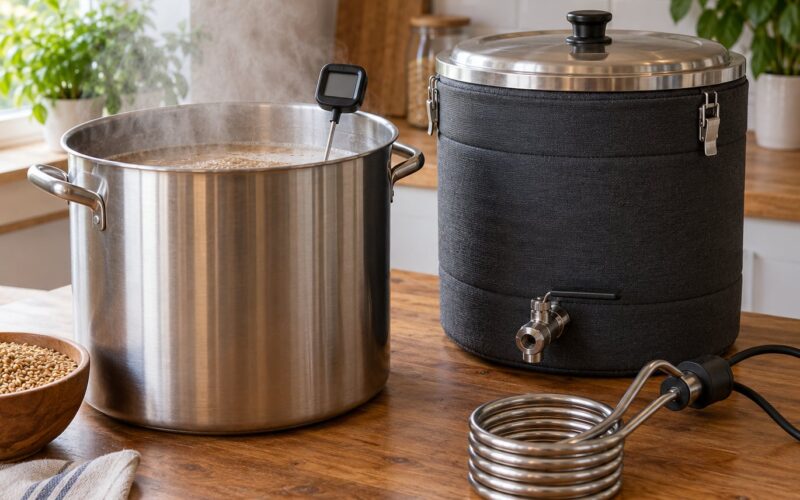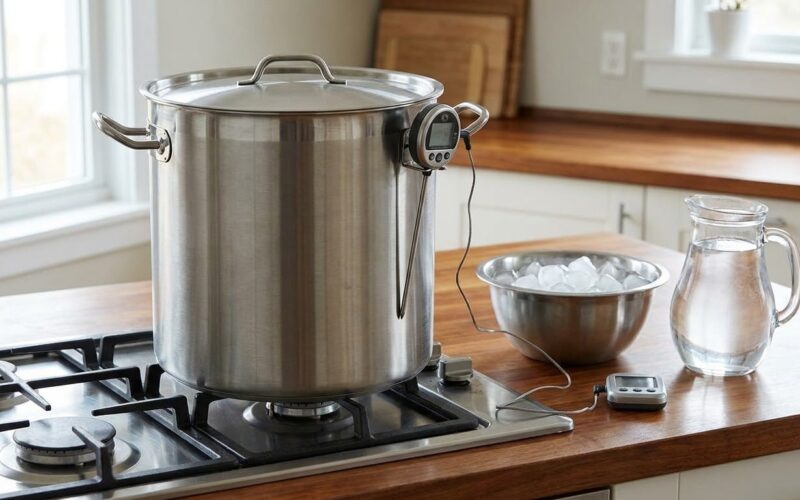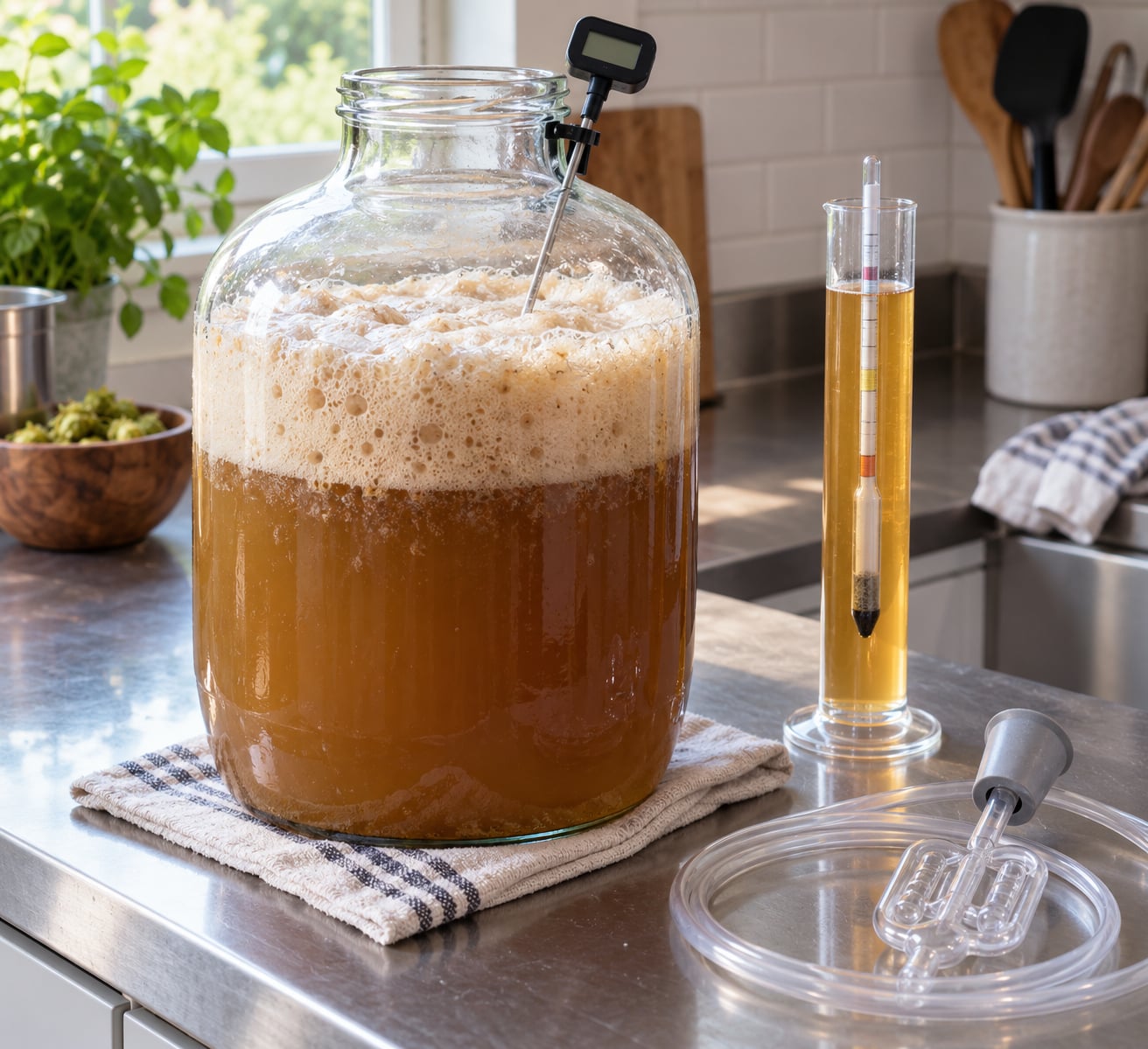
Why is my beer fermenting so fast? Usually the fermenter is running warmer than you planned for, and yeast speed tracks temperature closely. Add a warm pitch, a generous amount of yeast, and a simple wort, and a four-day fermentation becomes a two-day one. Most of the time the beer is fine, just lighter on the flavors you were hoping for.
The batch is only in trouble if the gravity says something other than your recipe target, or if the smell tells you something is wrong. Bubbles on their own prove very little, which is why a gravity reading comes before the airlock in any honest diagnosis of a ferment.
If the yeast is new to you, it helps to know what the organism is actually doing to your wort. What Yeast Does in Beer: Flavor and Fermentation breaks down how sugar becomes alcohol and where the temperature and flavor trade-offs come from.
Table of Contents
- What Is Normal Beer Fermentation Speed?
- Why Is My Beer Fermenting So Fast? Yeast, Heat, and Pitching
- Fast Fermentation vs. a Fermentation Problem
- How to Confirm Your Beer Is Fermenting Too Fast
- How to Slow Fermentation Without Ruining the Batch
- When Fast Activity Is Actually a Warning Sign
- How to Prevent the Next Batch From Fermenting Too Quickly
- Frequently Asked Questions
- Is my beer fermenting too fast if the airlock is bubbling every second?
- Why did my homebrew start fermenting overnight after pitching?
- How warm is too warm for yeast during fermentation?
- Can I stop fermentation by putting the beer in the refrigerator?
- Does fast fermentation mean my beer is contaminated?
- What Should You Do First?
What Is Normal Beer Fermentation Speed?
Fast fermentation is not measured in days. It is measured in how quickly specific gravity drops, and how quickly that happens depends on the yeast and the temperature, not on the calendar. A beer that hits its final gravity on day four and a beer that hits it on day seven can both be exactly on target.
The table below is the one I reach for when someone tells me their beer finished in a hurry. These ranges assume a healthy pitch into fermentable wort at the temperature listed for each yeast type.
| Beer or yeast type | Usual fermentation temperature | Typical days to final gravity |
|---|---|---|
| Neutral English ale yeast | 66 to 72 F | 4 to 7 days |
| High-attenuation Irish ale yeast such as WLP004 | 66 to 70 F | 2 to 4 days |
| German lager yeast | 50 to 57 F | 4 to 7 days, then weeks of cold conditioning |
| Belgian abbey or strong ale yeast | 68 to 78 F | 3 to 6 days |
| Saison or farmhouse yeast | 75 to 85 F | 2 to 4 days |
| Kveik | 86 to 100 F | 1 to 3 days |
Those numbers are homebrew ranges, not lab constants. An underattenuating English strain on a pale wort can genuinely take a week, and a saison pitched warm on a dry, simple wort can drop from 1.055 to 1.004 in a weekend.
There is also a difference between a fermentation that starts suddenly and one that finishes early. Many brewers pitch at a temperature the yeast can tolerate quickly, then drop the fermenter to the ideal range, and the beer looks explosive for the first day before settling into a steady decline. That is a normal start. A beer that starts in six hours and is finished in 36 is a different story, and that is what this guide is about.
Why Is My Beer Fermenting So Fast? Yeast, Heat, and Pitching
There are seven causes that account for nearly every unexpectedly fast batch, and they stack on top of each other more often than not.
- The fermenter is warmer than the room suggests. A glass carboy on a shelf next to a sunny window or a heating vent can sit several degrees above your thermostat reading. Measure the wort, not the room.
- The ferment heats itself. Fermentation is exothermic. Yeast releases heat as it consumes sugar, so a small batch in a glass vessel with no temperature control can climb well above ambient air temperature on its own. A rise of 3 to 5 F over ambient is ordinary, and a poorly insulated batch in warm weather can go further.
- You pitched warm and never cooled down. Pitching at 75 to 80 F to get the yeast started and then leaving the fermenter there is the single most common cause of a runaway ferment. The yeast never gets a signal to slow down.
- The pitching rate was very high. A dried packet or a big healthy slurry pitches far more cells than a homebrew needs. A yeast pitch from a well-run brewery can empty a wort in two or three days without any temperature problem at all.
- The wort was simple. A pale malt extract or a grain bill of mostly two-row barley with a single hop addition gives yeast very little to slow it down. Simple worts ferment fast, and finishing fast is not always a fault.
- The yeast is a fast strain. Some strains are simply quicker than others. Kveik is selected to ferment hot and fast, and many Belgian and saison strains outrun neutral English ale yeast by days.
- Something else is fermenting the beer. Wild yeast or bacteria in an under-sanitized fermenter, an improperly sanitized airlock that allows gas to pass, or a reused but incompletely cleaned bucket can add a second fermentation on top of the one you pitched.
Read that list in order. For most batches the answer is number one, and the fix is not a new piece of equipment. It is knowing where your wort actually is before the third day.
Fast Fermentation vs. a Fermentation Problem
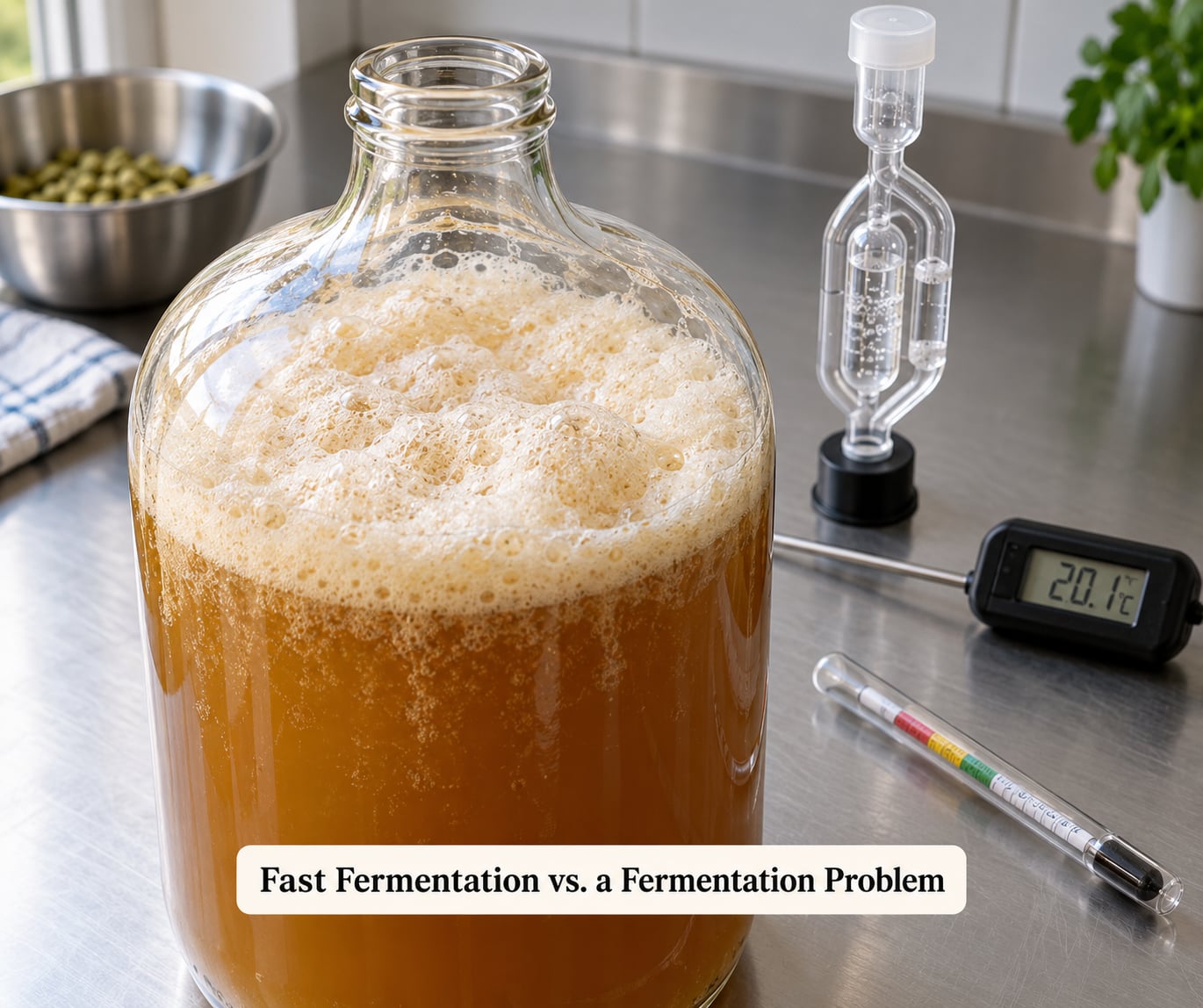
Vigorous fermentation and a broken fermentation look almost identical for the first day. The difference shows up in the readings, the aroma, and whether gravity keeps moving afterward. This table covers the checks that separate the two cases.
| Sign | Healthy fast fermentation | Something is wrong |
|---|---|---|
| Airlock | Bubbling steadily, then quieting as gravity approaches target | Constant popping with no gravity change, or total silence with unfinished wort |
| Krausen | Thick foamy head, rising then falling naturally | Thin, watery foam, or a film that reappears after washing the head down |
| Temperature | Warm, then stable or slowly falling | Climbing toward the 80s unprompted, or swinging wildly night to day |
| Aroma | Clean, fruity, yeast-like, with hops on top | Acetone, vinegar, nail polish remover, sulfur, or anything sour |
| Gravity | Falling steadily, slowing near the end | Flat for days, or dropping well past your recipe target |
| Appearance | Clarity arriving from the top down as it finishes | Rising film, ropy or gelatinous liquid, pink or orange hue, fuzzy growth at the walls |
The single most reliable signal is gravity. A stuck fermentation, which is the opposite problem, shows a stable reading across several days with sugars still obviously in the beer. Contamination shows up in smell long before it shows up in a reading.
Airlock activity is the least trustworthy number in the fermenter. The airlock can pop for days after yeast activity has slowed, and it can go quiet while yeast is still busy. Treat it as a mood ring, not a stopwatch.
How to Confirm Your Beer Is Fermenting Too Fast
Four checks, in order, will tell you whether you have a fast healthy ferment or a problem worth worrying about. None of them take more than five minutes once you have the habit.
- Put a thermometer in the wort. A cheap probe thermometer in the liquid is worth more than an infrared gun pointed at the glass, which only reads the surface. Write down the number. This is the figure you will use for the rest of the process.
- Take a gravity reading and compare it to your recipe. Know your original gravity and the final gravity you designed for. If the recipe says 1.060 to 1.012 and you are already at 1.020 on day two, something is off, and the temperature is the first place to look.
- Take a second reading 24 to 48 hours later. The rate of change is the number that matters. A gravity drop of 0.010 or more per day in an ale is brisk. A drop of 0.030 or more per day tells you the yeast is racing.
- Smell the beer through the blowoff or airlock. Fermenting wort smells sweet, fruity and yeast-like. Anything sharp, chemical or sour is a different conversation entirely.
Once you have original and final gravity, How to Calculate ABV at Home walks through the arithmetic, and the same two numbers tell you your apparent attenuation. A beer that started at 1.048 and finished at 1.008 has attenuated about 83 percent, which is high but reasonable for a clean American ale yeast and entirely abnormal for an English strain on a heavy body.
Do not skip step three. One reading tells you where the beer is, two tell you how fast it is getting there, and the rate is the whole question.
How to Slow Fermentation Without Ruining the Batch
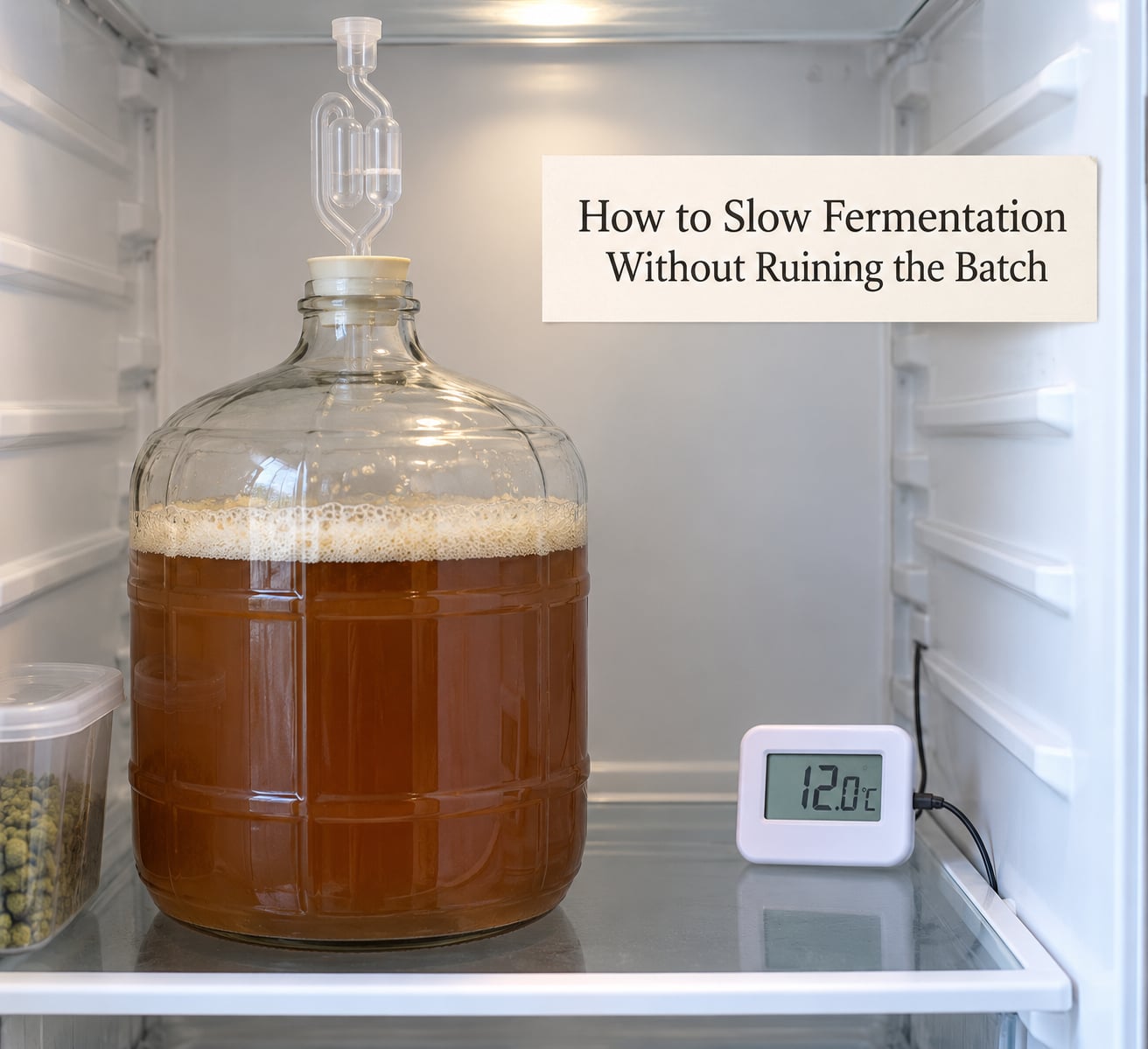
If the beer is running hot, you can usually bring it back. Do it in this order and give the yeast time to adjust at each step.
- Move the fermenter into the yeast’s recommended range. Look up the strain’s temperature range and aim for the middle of it, not its ceiling. A neutral ale yeast belongs at 66 to 72 F, and a lager belongs between 50 and 57 F.
- Change temperature gradually. A sudden drop shocks yeast that has adapted to warmer conditions and can stall a fermentation outright. Move the set point down a few degrees at a time, waiting a day or two between steps.
- Hold steady once you reach the target. Stability matters more than the number you land on. Swings of 10 F between night and day cause more problems than a constant temperature a few degrees off ideal.
- Do not cold crash before the beer is done. Dropping a ferment into a cold refrigerator before final gravity forces yeast to flocculate and stop while sugars remain. You get a thin, sweet, sometimes under-attenuated beer that will not carbonate properly.
- Do not add more yeast, nutrients, or sugar. A ferment that is already racing does not need help, and additional fermentables make the alcohol and body problems worse.
- Stop introducing oxygen. Cover the vessel and leave the airlock alone. Airing out a hot fermenter adds oxygen exactly when yeast and stressed wort can least use it.
A refrigerator on its own is not a fix. Household fridges cycle on and off, and a warm glass vessel inside one still runs warmer than the air inside. If you are using one, add a thermometer inside the fermenter and set up a controller if the swing is more than 3 or 4 F.
If the beer has already finished at a hot temperature, the damage is done and cooling it now will not remove compounds that have already formed. That is what aging is for, and the next section covers what those compounds are and which ones fade.
When Fast Activity Is Actually a Warning Sign
Some quick ferments are fine, and some quick ferments are a mistake you cannot take back. The difference is usually flavor and aroma rather than speed.
| Compound | What it tastes or smells like | Why a fast ferment creates it | Will aging fix it |
|---|---|---|---|
| Esters | Apples, pears, banana, nail polish remover | Warmer temperatures push yeast toward ester production | Only partly, and only with time in the bottle |
| Fusel alcohols | Hot, solvent-like, biting finish | Rapid metabolism at high temperature and high yeast counts | Mostly no, though time rounds off the harshest edges |
| Acetaldehyde | Green apple, raw apple, sometimes sour | An early fermentation product that should be cleaned up later in the cycle | Yes, if you give it several weeks after yeast drops out |
| Diacetyl | Butter, butterscotch, sometimes slick texture | Usually too warm or too fast a start, or packaging before yeast reabsorbs it | Only if it is diacetyl and yeast is still present to consume it |
Warning signs that go beyond flavor deserve a hard decision. Acetone or vinegar smells, a film that reforms on the surface, fuzzy growth on the walls, or a pink or orange tint in a normal amber beer all point to contamination. Discard those batches. Chilling them, filtering them, or adding more yeast will not reliably make them drinkable, and the risk of a gushy bottle or a spoiled batch outweighs the ingredients.
A second group of warnings is about timing rather than contamination. Gravity that dropped well past your target, aroma that never cleaned up, and a beer that went quiet before reaching final gravity are all signs of an over-fast, possibly underpitched ferment. Package on gravity, not on the calendar, and never on a still airlock.
One last warning: if you packaged on early readings, a fast ferment can push enough carbon dioxide into the bottles to gush or pop. Chill a bottle, open it carefully over a sink, and if it foams violently, move the whole case somewhere it cannot be opened by accident.
How to Prevent the Next Batch From Fermenting Too Quickly
Almost every fast ferment is preventable at the point where you are deciding what to brew and where to put it. If you are brewing in a small space, start with How to Make a One Gallon Batch of Beer, which is a good way to practice control before scaling up.
- Control the temperature, not the room. A fermentation chamber or an insulated box with a controller beats a refrigerator alone. A cheap probe thermometer inside the fermenter is the minimum, and a controller that reacts to the liquid temperature is the difference between consistency and luck.
- Pick the yeast for the temperature you can hold. Brewing at 68 F in a warm apartment is a good reason to choose a strain rated for 68 F, not a reason to buy a lager strain and hope. Kveik is the opposite trade, a yeast selected to finish fast in a hot room.
- Use the 3:30-300 check. Three hours after pitching, a healthy fermentation shows a wort temperature about 3 F above the pre-pitch reading, and the yeast population has roughly tripled, commonly described as at least 300 million cells per milliliter. Missing that mark usually means a weak or dying pitch, which stalls later rather than racing.
- Rehydrate dried yeast and pitch the package amount. A five gram packet in five gallons is not an underpitch. Pitching an entire brewery slurry into a homebrew batch is an overpitch, and overpitched ferments finish fast and thin.
- Review the recipe for fermentability. Large amounts of simple sugar, a light body and a clean yeast push a beer toward a fast finish. That is a style choice, but know which one you are making.
- Keep a fermentation log. Temperature each day, gravity every 24 to 48 hours, and the date each change happened. Two batches of logs will teach you more about your own kitchen than any chart.
- Consider pressure fermentation if you like a warm ferment. Fermenting under a few psi of pressure suppresses ester production, so a deliberately warm yeast does not have to taste like it. It is a legitimate tool for speed control, not a substitute for a sane temperature.
Cooling the beer or waiting longer will not correct wild yeast or bacteria once they are established. If a batch smells wrong, more time makes it worse, not better.
Frequently Asked Questions
Is my beer fermenting too fast if the airlock is bubbling every second?
Not on its own. A vigorous airlock usually means the wort is warm, the pitch was large, or the yeast is a fast strain. Take a gravity reading and compare it to your recipe, then read again in 24 to 48 hours. Bubbles tell you gas is being produced, not how fast gravity is falling.
Why did my homebrew start fermenting overnight after pitching?
Three things usually explain it. You pitched warm, often 75 to 80 F, and never brought the temperature down. You pitched a large amount of yeast. Or the wort itself was simple and fermentable, giving yeast very little to slow it. A sudden start is only a problem when the temperature keeps climbing or the gravity drops faster than your recipe planned.
How warm is too warm for yeast during fermentation?
For most ale yeast, anything above 75 F pushes the beer toward estery and hot flavors, and above 80 F many brewers consider the batch compromised. Lager yeast above 60 F will produce serious off-flavors. Belgian and saison strains are built for 75 to 85 F, and kveik is built for 90 F and above. Match the strain to the temperature you can actually hold.
Can I stop fermentation by putting the beer in the refrigerator?
Chilling slows or stops yeast activity, but it does not reverse what already happened. If you drop the beer cold before final gravity, yeast stops working while sugars remain and you get a sweet, thin beer. Esters and fusel alcohols already formed stay in the beer, and acetaldehyde is a different problem entirely. Lower the temperature gradually instead, a few degrees at a time.
Does fast fermentation mean my beer is contaminated?
No. Fast fermentation by itself is not contamination. Signs of infection are sharper and uglier: vinegar or nail polish remover smells, a film that reforms on the surface, fuzzy growth on the walls, or a pink or orange tint in a normal-colored beer. If the aroma is clean and fruity and gravity is moving toward your target, a quick ferment is usually just a warm one.
What Should You Do First?
Put a thermometer in the wort and read it, then take a gravity reading. Compare both numbers to the temperature range for your yeast and the original and final gravity from your recipe.
If the temperature is high, move the fermenter into range a few degrees at a time and hold it there. If the gravity is already at target, the batch is done, so stop chasing the airlock and let it condition. If the beer smells wrong rather than just finishing quickly, do not try to save it with more time or more yeast.