Foam happens when warm beer and warm glass meet too much moving air at once. To fill a growler from a kegerator without foam, you do four things: keep the beer and the glass cold, drop the regulator to filling pressure (2 to 4 PSI, not serving pressure), pour from the bottom of the glass through a fill tube, and cap it on a thin layer of foam. Budget about 15 minutes for a clean fill the first time, five once you have a rhythm. This is beginner-friendly, but the chilling step is the one people skip and then blame the foam.
The whole idea is that foam is dissolved carbon dioxide coming out of solution. Cold liquid holds CO2 in solution. Warm liquid cannot, so every bit of agitation turns into bubbles that rise, push beer out of the glass, and go down the drain as waste.
Table of Contents
- What You Need
- Step-by-Step: How to Fill a Growler Without Foam
- 1. Chill the Growler and Keep the Keg Cold
- 2. Clean and Sanitize the Filling Path
- 3. Connect the Keg Without Releasing Gas
- 4. Set the Right Pressure and Pour Rate
- 5. Fill Slowly From the Bottom Up
- 6. Cap on the Foam, Settle, and Chill Fast
- Common Mistakes and the Fix for Each
- Frequently Asked Questions
- What PSI should I use to fill a growler from a kegerator?
- Do I need to chill the growler before filling?
- Can I fill a growler with a picnic tap instead of special equipment?
- Why does my growler foam when filling from a keg?
- How long will a filled growler stay carbonated?
- How many 16 oz beers are in a growler?
- Conclusion
What You Need
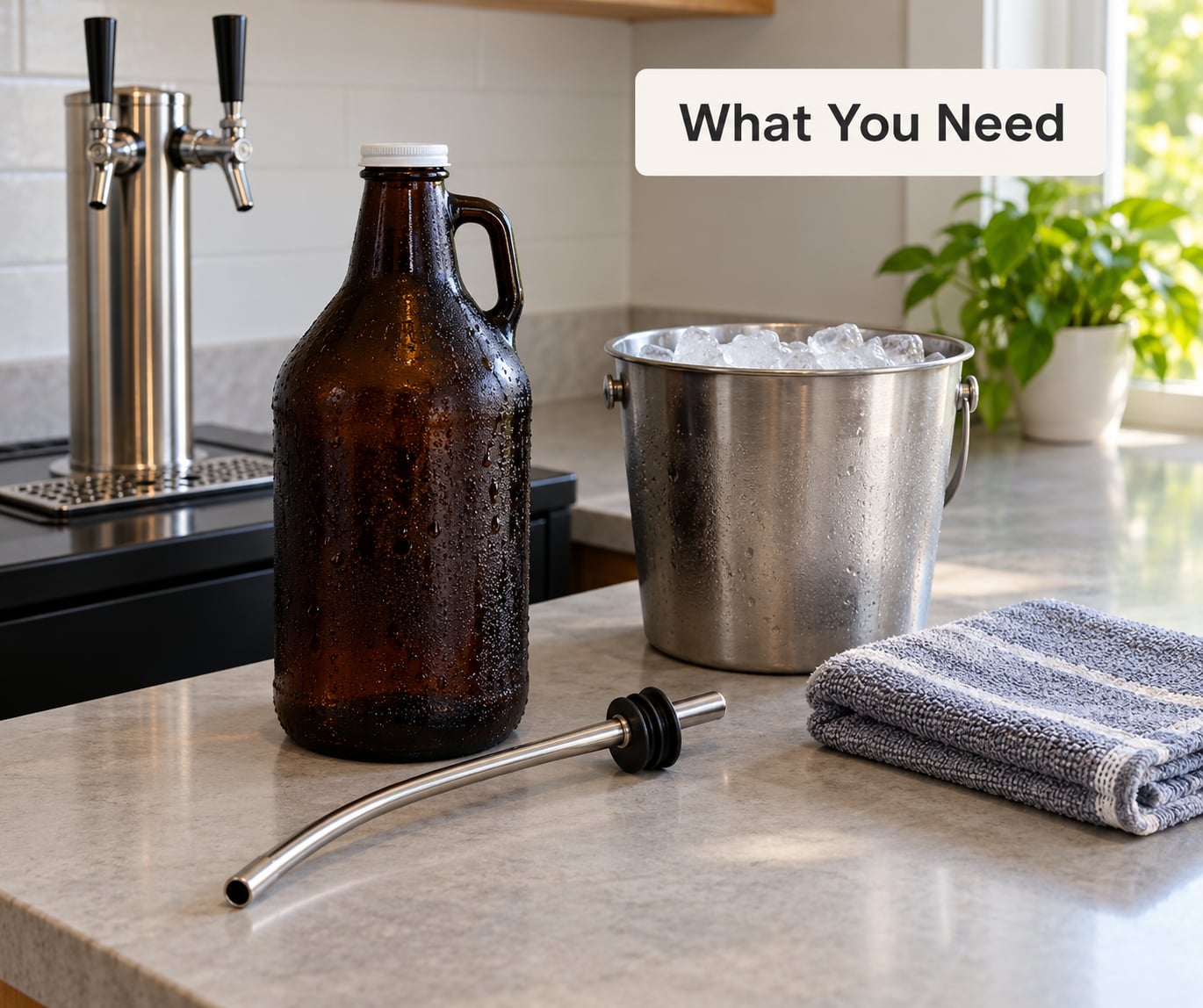
- A 64 oz glass or stainless growler, or a crowler if you plan to fill several small servings instead
- Your kegerator with a corny keg that has been cold for at least 24 hours
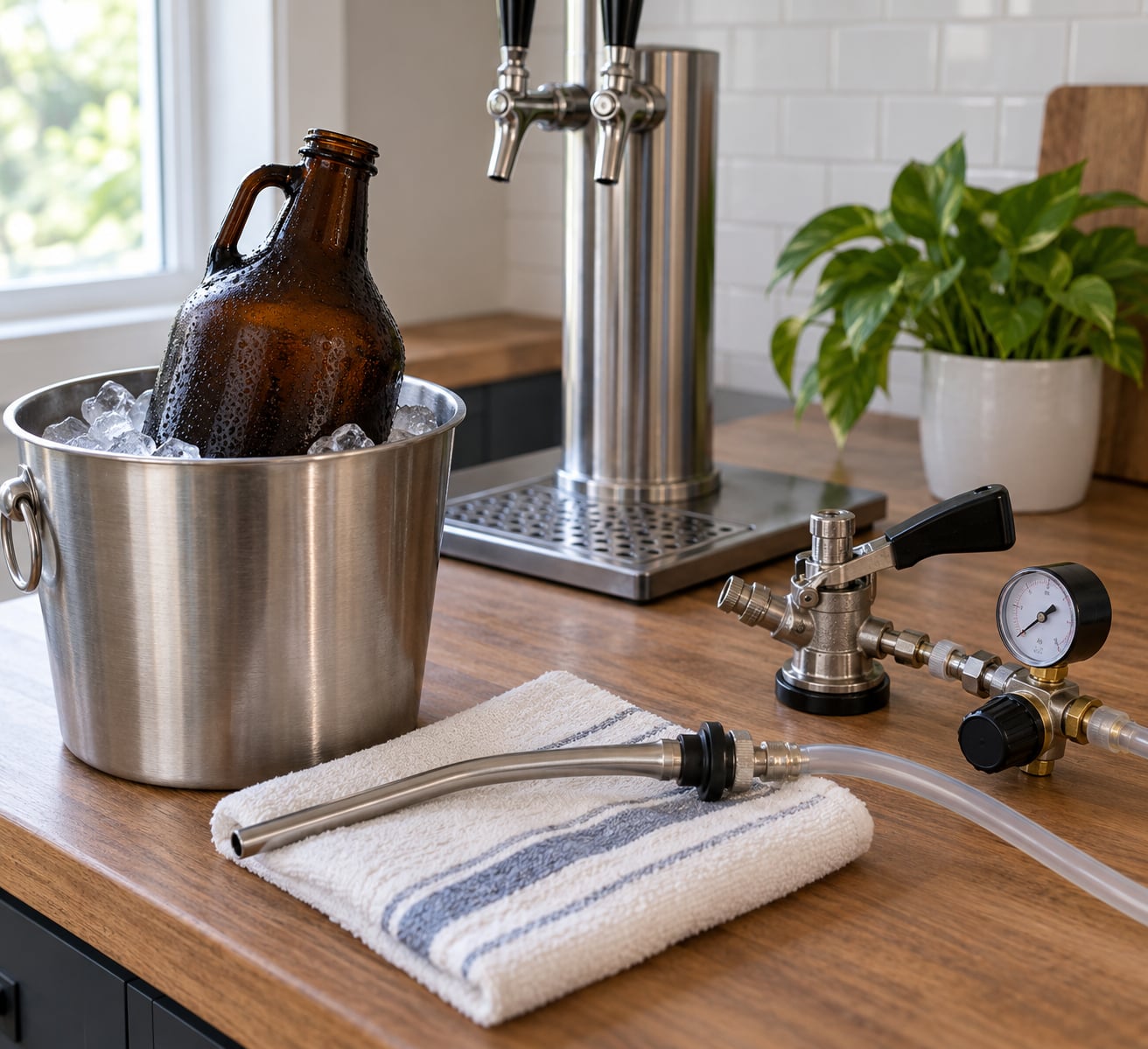
- A growler fill tube, a beer gun, or the shortest piece of food-safe tubing you own that reaches the bottom of the glass
- Food-safe sanitizer, a clean brush, and a bucket of ice or a fridge cold enough to hold a chilled glass
- Optional but helpful: a counter-pressure filler, beer-rated gloves for handling glass, and a towel to catch drips
A fill tube is the single upgrade that changes results the most. It is a rigid tube that drops into the glass so beer arrives at the bottom instead of falling through air from the neck. If you are still weighing glass versus aluminium cans, our growler vs crowler explained guide covers the trade-offs.
Step-by-Step: How to Fill a Growler Without Foam
1. Chill the Growler and Keep the Keg Cold
Cold beer, cold glass, cold tube. That is the whole trick to filling without foam, because CO2 stays dissolved in cold liquid and warm liquid cannot hold it.
Put the empty growler in the fridge or in a bucket of ice for 20 minutes before you start. Homebrewers on the forums say chilling the glass matters more than most people expect, though it is not the only thing that matters if the beer itself is already cold. You can tell it worked when the glass is cold to the touch and beads with condensation.
2. Clean and Sanitize the Filling Path
Sanitize the growler, the fill tube, the coupler connection, and anything else the beer touches. Skip this and you risk contamination, and a grimy filler can also add off flavors that people blame on the keg.
Scrub the glass first, since sanitizer works on surfaces but not on beer residue. Then soak or wipe everything in a no-rinse food-safe sanitizer solution and let it air dry. Know it worked when every part is visibly clean and smells like nothing at all.
3. Connect the Keg Without Releasing Gas
Seat the coupler fully, then check the gauge. If your needle drops when you connect, the coupler is not sealing and you are venting CO2 through the fitting instead of pushing beer through it.
Keep the keg cold the entire time. If you pull the keg out or let it sit in a warm room while filling, the beer warms, the CO2 comes out of solution, and the foam problem comes right back. Leave it in the cold zone of the kegerator if you can.
4. Set the Right Pressure and Pour Rate
Filling pressure is lower than serving pressure. A keg sitting at 12 PSI for pouring at home will produce a gusher in a growler, because the growler is not vented and all that gas has to go somewhere. Most homebrewers fill at 2 to 4 PSI, and you will see the difference within seconds.
Turn the regulator down until the beer just fills the tube. You want a steady, thin stream you can watch, not a blast you can hear. If it gurgles loudly, you are too high. Lower it a PSI and wait for the flow to settle.
5. Fill Slowly From the Bottom Up
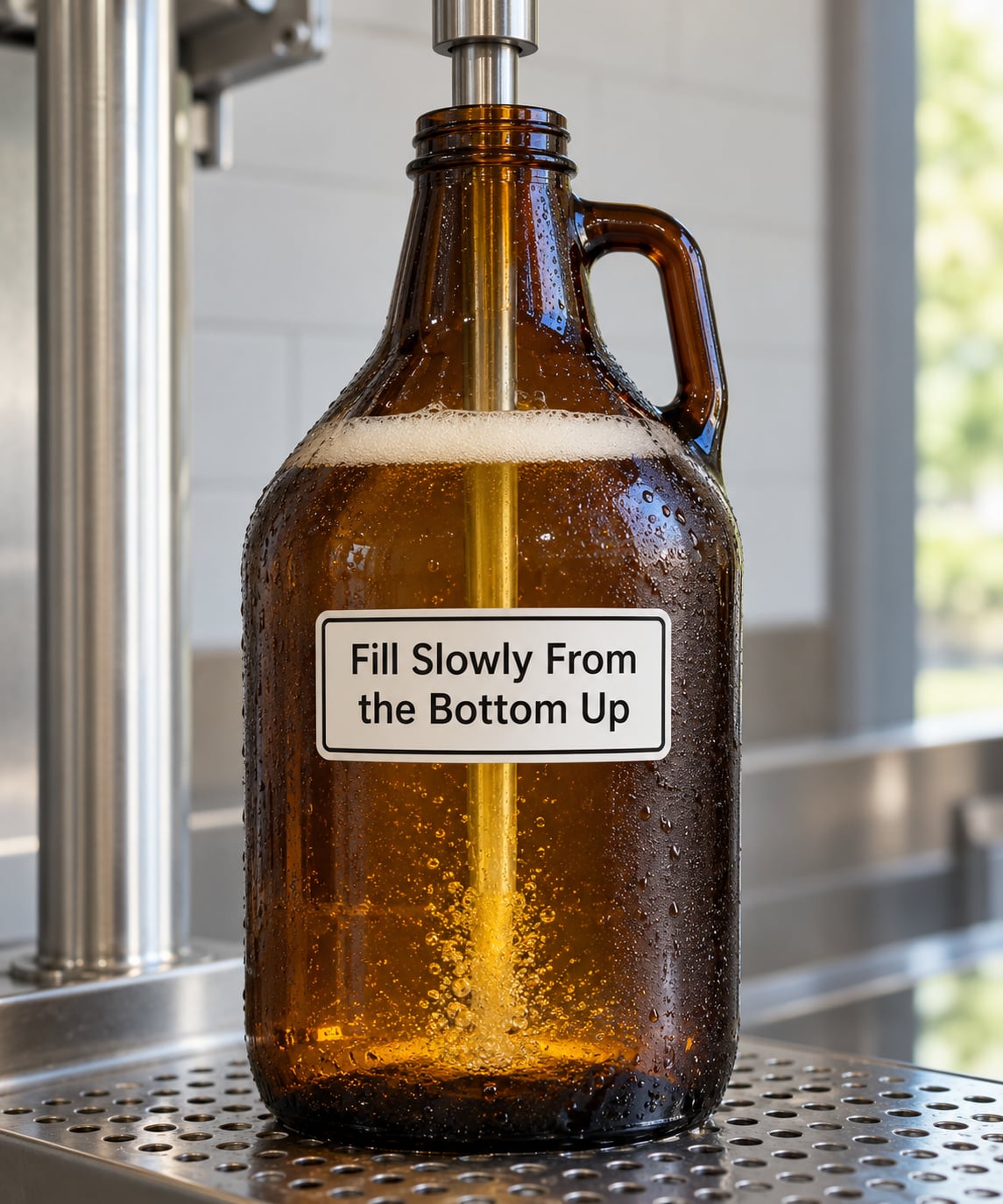
Bottom filling is the single best answer to how to fill a growler from a kegerator without foam. Put the tube in first, turn on the gas, and let the beer rise from the bottom of the glass instead of splashing down from the neck. Beer moving upward through cold liquid barely agitates it.
Keep the liquid path steady and never let the stream break into a trickle. Start-stop-start is what creates foam, because each restart pulls in a fresh slug of CO2. Stop about an inch short of the neck and shut off the gas before you worry about the last of it. You can tell it worked when the foam layer stays thin and glassy rather than growing into a frothy cap.
No tube? Some people pour slowly down the inside wall of the glass from as low a height as they can manage. It works, just not as well.
6. Cap on the Foam, Settle, and Chill Fast
Cap the growler right on top of that thin foam layer. The foam is a gas blanket, and pushing the cap down through it keeps air out. Leave two inches or so of headspace, never more, because more headspace means more oxygen for the beer to absorb.
Let the filled growler sit undisturbed for a few minutes, then get it cold fast. Homebrewers on Reddit and Homebrew Talk report carbonation holding up for 5 to 7 days sealed, and 1 to 2 days once you open it, and the specifics for different fill styles are in our guide to how long beer stays fresh in a growler. Chilling it promptly after the fill is what makes that possible. You know it worked when the cap stays put and the glass feels cold all the way through.
Common Mistakes and the Fix for Each
- Warm glass. Chill the growler for 20 minutes in the fridge or an ice bucket before filling.
- Serving pressure instead of filling pressure. Drop to 2 to 4 PSI and let the flow settle before you open the tube.
- Pouring from too high. Use a fill tube or pour down the wall with the stream touching the liquid.
- Stopping and restarting. Once you start, fill steadily until you shut off. Half-finished fills are the most common cause of gushing.
- Overfilling. Stop at the shoulder and leave an inch or two of headspace for a small foam layer.
- Dirty or incorrectly assembled filler. Sanitize every part, and check that the tube is seated at the bottom and not blocked by air.
- Keg went warm. If the keg warmed up, refill the glass with fresh cold beer rather than pouring on top of flat-tasting liquid.
Most of those fix themselves once the cold, slow, low-pressure routine is habit.
Frequently Asked Questions
What PSI should I use to fill a growler from a kegerator?
Start between 2 and 4 PSI, well below normal serving pressure. Turn the gas on with the coupler sealed and watch the flow, not the gauge. If the beer gurgles loudly or blasts into the glass, drop it a PSI and wait for a steady, thin stream. High-carbonation beers generally fill better at the low end of that range.
Do I need to chill the growler before filling?
Chilling is not strictly required if the beer itself is cold, but it makes a noticeable difference. Cold glass keeps CO2 dissolved and cuts foam, and it also means you can pour the filled growler straight into a cold serving session. A quick 20 minutes in the fridge or an ice bucket is usually enough.
Can I fill a growler with a picnic tap instead of special equipment?
Yes. A picnic tap works, but it is a top fill, so beer falls through air and foams more. Pour as slowly as you can and as low as possible, down the inside wall of the glass. A counter-pressure filler or beer gun gives you bottom filling and much better foam control for the same small amount of setup time.
Why does my growler foam when filling from a keg?
Warm glass, warm beer, too much pressure, or pouring from too high are the usual causes. Stopping and restarting mid-fill also pulls in CO2 and creates foam. Fill straight from a cold keg into a chilled glass at 2 to 4 PSI, keep the stream unbroken, and stop an inch short of the neck.
How long will a filled growler stay carbonated?
Sealed, expect 5 to 7 days before it starts losing its carbonation, and 1 to 2 days once you open it. Cap it on the foam layer to keep air out, leave minimal headspace, and refrigerate it right away. Carbonation fades faster on a warm day than a cold one.
How many 16 oz beers are in a growler?
A standard 64 oz growler holds four 16 oz beers, and a 32 oz growler holds two. Crowlers come in 16 oz, so it takes four of them to fill the same volume as one 64 oz glass. A little beer is lost in foam on every fill, so plan on serving slightly under the marked capacity.
Conclusion
Keep everything cold, sanitize the whole path, drop the regulator to filling pressure, and pour from the bottom up at a steady trickle. Cap it on the foam and get it back in the cold quickly. Start by chilling your empty growler for 20 minutes, then fill at 3 PSI with a tube in the bottom, and adjust from there.