Add most fruit after primary fermentation has finished, once the gravity has been stable for two or three days. Adding it a few days into active primary works too, and gives a more integrated, fully fermented fruit character, but it costs you aroma. The short answer to when to add fruit to homebrew primary or secondary depends on which fruit you picked and whether you want it to ferment out or stay noticeable.
I have kept a batch log for every brew since I started, and the fruit beers that impressed me were almost never the ones with the most fruit in them. They were the ones added at the right moment, in the right amount, and given enough time to settle before packaging.
Below is how the two stages actually differ, how to read your own batch, and what to do when a fruit addition goes sideways.
Table of Contents
- When to Add Fruit to Homebrew Primary or Secondary: Quick Guide
- What Does Adding Fruit Do During Fermentation?
- How Do You Decide Between Primary and Secondary?
- When to Add Fruit to Homebrew Primary
- How to Add Fruit During Secondary Fermentation
- Which Fruit Works Best for Each Addition Stage?
- How Much Fruit Should You Add?
- How to Prepare Fruit for Homebrew
- How to Tell Whether Fruit Addition Worked
- Common Mistakes When Adding Fruit to Homebrew
- Frequently Asked Questions
- Should fruit be added during primary or secondary fermentation?
- Can adding fruit in primary cause a stuck fermentation?
- Is frozen fruit better than fresh fruit for homebrewing?
- Should dried fruit be added during primary or secondary?
- How long should fruit stay in beer during secondary fermentation?
- Do I need to strain fruit out before packaging the beer?
- Conclusion
When to Add Fruit to Homebrew Primary or Secondary: Quick Guide
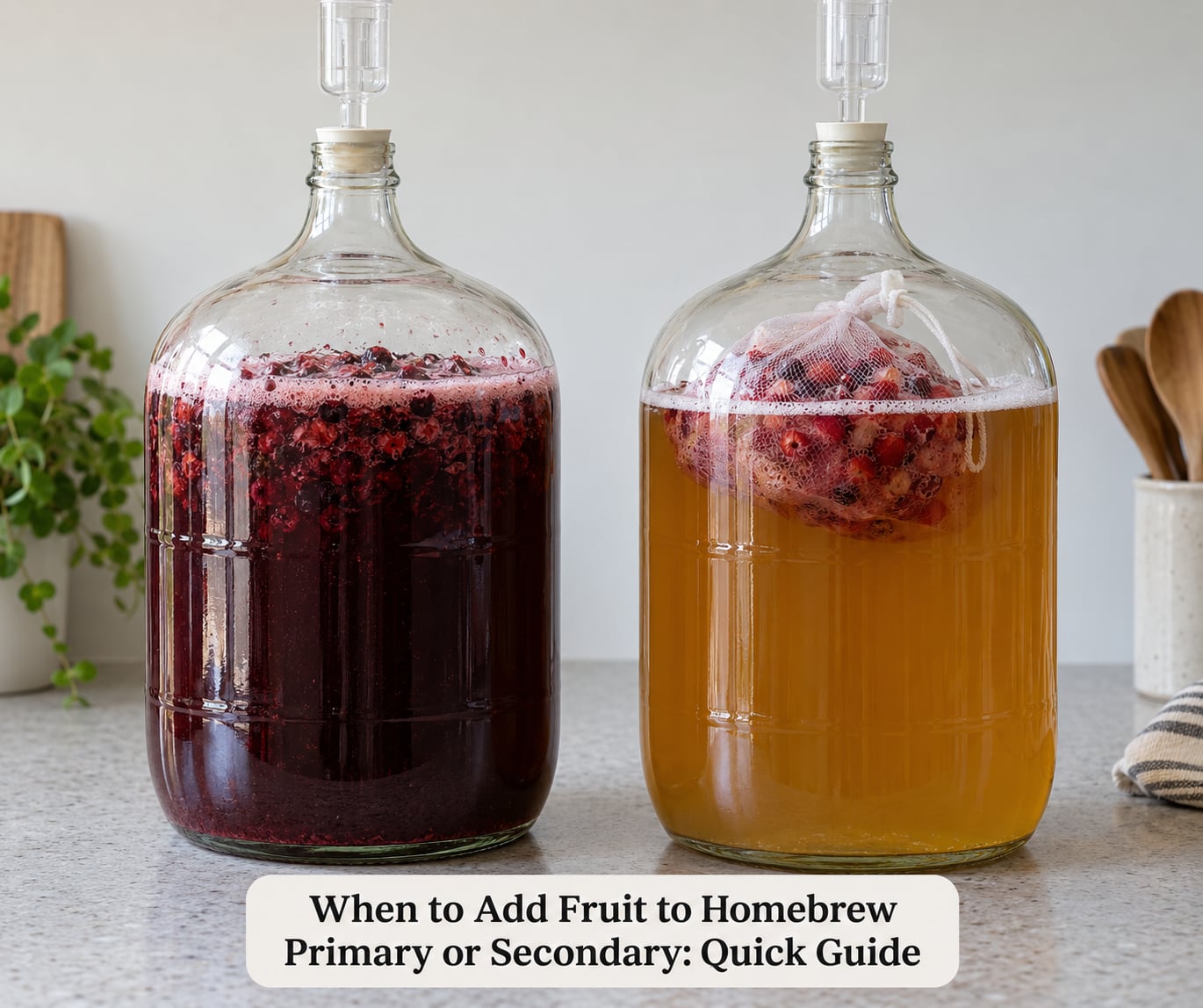
| Factor | Add during primary (day 3 to 5) | Add after primary (secondary) |
|---|---|---|
| Direct answer | Use for fruit meant to ferment out, color, and body | Use for fruit where the aroma is the point |
| Fruit aroma | Low to moderate, esters get stripped during active fermentation | High, fresh and volatile notes survive |
| Fruit flavor | Integrated and round, melds with the malt | Forward and distinct, tastes like the fruit |
| Color | Deep and fully extracted | Good, less contact time means lighter extraction |
| Fermentation risk | Moderate, added sugar can raise the temperature and stall a weak yeast | Low, yeast is already acclimated to the beer |
| Clarity | Higher haze risk from pectin and pulp | Haze risk drops if you rack fruit off before packaging |
| Best for | Berries in a sour or wild beer, melomels, high-gravity additions | Raspberries, strawberries, peaches, mango, passionfruit, citrus |
| Extra gear | None beyond a sanitized vessel or large mesh bag | A secondary vessel, or a fruit bag in the same fermenter |
Neither stage is universally correct. The forum consensus I have read across Homebrew Talk, Homebrew StackExchange, and the American Homebrewers Association boards is that primary addition is the simpler default for a first fruit batch, because the yeast is already handling the extra load and you never have to guess how much fruit the beer can handle.
Secondary addition wins on aroma, and aroma is what people remember a fruit beer by. Brewers report raspberries added after primary keeping a bright, jammy nose, while the same fruit boiled or added at the peak of fermentation came out muted.
What Does Adding Fruit Do During Fermentation?
Fruit is not a flavor additive. It is a package of fermentable sugars, volatile aroma compounds, acids, pigments, pectin, and sometimes tannins, and each one behaves differently depending on when you introduce it.
The sugars are the obvious part. Fresh fruit is roughly 8 to 15 percent sugar by weight, so a large addition can lift your gravity and restart a fermentation that had already finished. That is useful when you want more alcohol or more body, and it is a nuisance when you wanted a dry, crisp beer.
The aroma compounds are the fragile part. Yeast metabolizes them during vigorous activity, which is exactly the phase that also strips acetaldehyde and young green apple notes you do not want. Fruit added into that churn comes out fermented rather than fragrant.
Pectin is the haze driver. It is a soluble fiber found in apples, pears, peaches, and citrus pith, and it stays in suspension and gives the beer a permanent cloudy look that does not drop with time. Pectinase added at packaging clears it.
Acidity is the flavor driver most brewers underestimate. Fruit contributes malic and citric acid, which reads as tartness once the fermentable sugars are gone. Add too much at once and the beer can taste sharp enough to resemble a sour, even when nothing wild is involved.
Tannins come mostly from skins, seeds, and pits, and they are what turns a fruit beer harsh. Crushing peaches and leaving the fuzzy skins in for two weeks is the fastest way to make a beer that bites.
How Do You Decide Between Primary and Secondary?
Work through these five questions in order and the answer usually picks itself.
Is the yeast attenuation the thing you need? If your goal is a sessionable, bone-dry beer with real fruitiness that has fermented all the way through, add during primary on day 3 or 4. If you want the fruit to still taste like fruit when the beer is finished, add it after primary.
How volatile is the fruit? Passionfruit, mango, strawberry, and raspberry lose most of their aroma compounds to an active fermentation. Cherries, plums, and peaches hold more, and dried fruit holds the least of all because the drying already drove off the top notes.
What is the style? Wild and sour beers with brettanomyces or lactobacillus want their fruit late, because the microflora will happily eat the fresh aromatics over a long conditioning period. A kettle-sour gets its fruit in the second or third ferment after souring. A clean wheat ale or amber ale can carry fruit through primary without trouble.
Is your yeast strong enough? An English ale yeast handling a 6 percent beer can usually absorb a pound or two of fruit per gallon. A German lager strain sitting at 54°F cannot. If the beer is delicate, the yeast is stressed, or the fruit is sugary, use secondary.
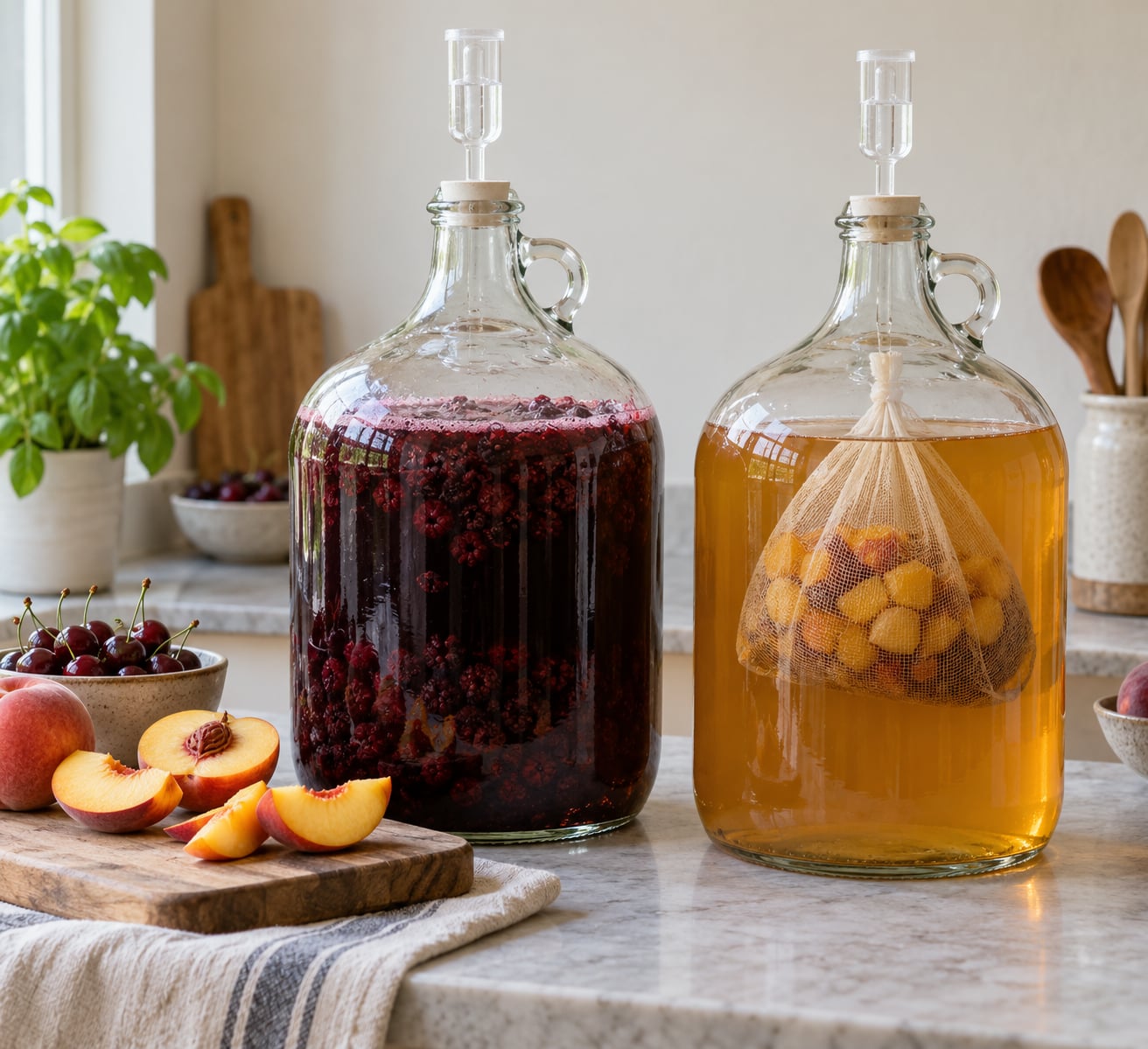
Do you have a secondary vessel? This is a practical question, not a brewing one. Fruit can go in a mesh bag or sanitized jar in the primary fermenter, so you do not need a second vessel to do the job. Most people who skip secondary use that setup, then drop the temperature for clarification instead, which gets clarity without a second transfer.
There is one more path worth naming. You can add fruit at the end of primary, once activity slows, rather than on day 3. You get most of the fermentation performance and most of the aroma, and it is a good middle ground when you cannot commit to either extreme.
When to Add Fruit to Homebrew Primary
Primary addition suits berries destined for a sour or wild beer, dried fruit that you want fully integrated, and any addition where the fruit is providing color and body more than aroma.
Timing inside primary matters more than the day number. Day 3 to 5, after the fermentation has passed its violent high krausen and the beer is still actively working, is the sweet spot. Adding on day 1 with the yeast is rough, because the yeast has no population and no established environment yet, and the fruit can sour the wort before fermentation has a chance to establish itself.
Prep the fruit before it goes in. Freezing and thawing breaks the cell walls and gives you far more extracted flavor from the same weight of fruit, which matters when you are counting pounds. Sanitize a mesh bag or a large straining bag, fill it, and submerge it completely so nothing floats above the beer, where it will mould instead of fermenting.
Watch for the signs of healthy fruit fermentation: renewed airlock activity within a day, a rising temperature for 24 to 48 hours, and a gravity reading that climbs and then falls. Blow-off is a real risk with a large primary addition, so leave headspace in the fermenter or use a blow-off bucket.
If you want to compare timing without a blow-off risk, splitting the addition works well. Half at day 4, half at the end of primary. You get integrated fruit from the first half and fresher notes from the second.
How to Add Fruit During Secondary Fermentation
Secondary addition is the right call for aroma, and it is the stage most fruit beer recipes assume by default.
Wait for two things before you rack: the airlock has been quiet for a few days, and your hydrometer has read the same number two or three readings in a row. A bubbling airlock with a falling gravity means you are moving the beer too early, and you will drag a lot of yeast and green apple character into the secondary.
Sanitize everything that touches the fruit or the beer: the secondary vessel, the siphon, the bag, the fruit knife and board. Racking is the single most common moment for oxygen to get into a beer, and fruit mixed with a little oxygen oxidizes faster than plain wort does. Purge a keg with carbon dioxide if you are going that route, and keep the transfer under the surface of the beer.
Fermentable fruit added to a finished beer will restart the fermentation, often within 12 to 24 hours. That is expected, and it is a good sign the fruit is contributing sugars rather than sitting there as decoration. Let the restarted fermentation run to its own stable gravity before you do anything else.
Plan on three to seven days of contact for berries, and up to two weeks for stone fruit, peaches, or anything where you want the pits and skins out of the finished beer. More contact extracts more tannin and more color, so the same fruit in the same beer has a different result on day 3 and day 14.
Pull the fruit before packaging. A mesh bag makes that a two-minute job, and removing it means the pectin and the solids go to the drain instead of into the bottle.
Which Fruit Works Best for Each Addition Stage?
| Fruit | Better stage | Flavor intensity | Aroma retention | Color | Main risk |
|---|---|---|---|---|---|
| Raspberries | Secondary | High | Excellent | Deep red | Seeds add bitterness |
| Strawberries | Secondary | Medium to high | Very good | Pink to red | Aroma fades fast once opened |
| Blueberries | Both, split addition | Medium | Moderate | Purple | Tannic skins, pectin haze |
| Blackberries | Both, split addition | High | Moderate | Dark purple | Harsh seeds, wild yeast risk |
| Sour cherries | Secondary | Medium | Good | Ruby | Pits, classic kriek needs 200 g per liter |
| Sweet cherries | Secondary | Medium | Good | Amber to red | Mild pits |
| Peaches | Secondary | Medium | Good | Light gold | Fuzzy skins add tannin |
| Apricots | Secondary | Medium | Good | Light gold | Stone bitterness if crushed |
| Plums | Secondary | Medium to high | Moderate | Red to dark | Sourness, skins |
| Mango | Secondary | High | Very good | Golden | Quick ferment, heats beer |
| Passionfruit | Secondary, short contact | Very high | Excellent | Golden | Seeds, extreme aroma loss in primary |
| Apples | Both | Low to medium | Moderate | Amber | Heavy pectin haze |
| Citrus peel | End of boil or secondary | Medium | Good | None | Bitter pith oils |
| Citrus juice | Secondary | Medium | Good | Pale | Sharp acidity, wild risk |
| Dried fruit | Primary | High and smooth | Low | Dark brown | Very little fresh aroma |
Read the table as a starting point rather than a rule. The pattern that holds across every forum thread I have read is that fresh, high-aroma fruit belongs late, and dried or fibrous fruit belongs early.
How Much Fruit Should You Add?
For a five gallon batch, the widely used starting points are one to two pounds of fruit per gallon. Strong, tart, or assertive fruit such as raspberries, sour cherries, and passionfruit sit at the low end, around one pound per gallon, because they will still taste like fruit after fermentation. Mild, sweet fruit such as peaches, apricots, and mango run higher, two to three pounds per gallon, because a lot of their character ferments out.
Dried fruit behaves differently by weight. Dried cherries or raisins carry a concentrated version of the same sugars and acids, so a half pound per gallon already reads as a full addition. Fresh frozen fruit is roughly a third water by weight, so a pound of thawed berries gives you noticeably less sugar than a pound of dried ones.
Puree and juice extract faster than whole fruit. A pound of puree often tastes like a pound and a half of whole berries, which is why brewers who move from whole fruit to puree usually scale back rather than keeping the same number.
Before you commit to a weight, check three things in the recipe. First, how much fermentable sugar the fruit adds, because it changes your target gravity. Second, how tart the finished beer already is, since fruit pushes tartness in the same direction. Third, how much pectin comes with it, since that decides whether you need pectinase at packaging.
A simple measurement checklist for each batch: weigh the fruit before prep, note the form you used, record the day you added it, and record the day you took it out. Four lines in a batch log is enough to stop you guessing next year.
How to Prepare Fruit for Homebrew
Start with fruit that is ripe but sound. Underripe fruit gives thin flavor and little color, and soft or bruised fruit brings mold and acetic bacteria straight into the fermenter. Leave anything questionable out of the batch entirely.
Wash it. Fruit from a market or a farm carries field debris and a wild microflora that a sanitizer will not remove, so rinse under cool running water and skip the soaking. Dry it well before it goes anywhere near your beer.
Cut or crush it. Whole fruit sits with only its skin touching the beer, which means slow extraction. Cutting increases the surface area several times over and is usually the difference between a fruit beer that tastes like fruit and one that tastes like a fruit-flavored beer.
Deal with the parts that cause trouble. Stone fruit gets pitted, or at least the pits come out after an hour in the secondary. Peach and apricot skins are fuzzy and tannic, so peel them or keep contact time short. Berry seeds get bitter, so straining raspberry puree through a fine mesh bag or a slotted spoon is worth the extra five minutes. Citrus peel carries bitter oils in the white pith, so take the colored zest only.
Freezing is the best prep for fresh fruit. Freeze the fruit flat on a tray, then bag it. When you are ready to brew, thaw it overnight in the fridge or in a sanitized bag in the fermenter, and the ruptured cell walls give you far more juice and flavor per pound. Frozen fruit also skips the botulism risk that comes with home canning, which is one reason many brewers freeze instead of canning their additions.
For dried fruit, rehydrate it in a small amount of hot wort or water for 30 minutes so it plumps up, then add it. Dried cherries dropped in dry will sit on the surface and stall, and they are a common cause of a beer that will not move.
On sanitizing: you do not need to sterilize fruit, and boiling it in wort cooks off exactly the aromatics you are trying to keep. Freezing or pasteurizing at around 80°C for 30 minutes reduces infection risk without wrecking the flavor, and a splash of vodka blended with the fruit works too. Anything more aggressive is usually a sign the fruit was not washed properly.
How to Tell Whether Fruit Addition Worked
A good primary addition looks like a fermentation that got busier. Bubbling increases within a day, the temperature climbs a degree or two for a couple of days, and the gravity rises then settles. A good secondary addition looks like the same thing, restarted, followed by a return to quiet and stable gravity once the fruit sugars are used up.
On the finished beer side, the signs are straightforward: the aroma matches the fruit you added rather than the yeast, the color is deeper than the same recipe without fruit, and the flavor is there in the swallow, not just in the nose.
Stuck fermentation after a fruit addition usually means the yeast ran out of tolerance for the extra sugar, the temperature climbed too high, or the yeast had attenuated too far down before you added the fruit. Warm it back toward its usual range, add an attenuative yeast, or add a small amount of honey or sugar to restart it.
Mold on floating fruit means the fruit stuck above the liquid line. That is why the bag goes in submerged, and why you keep a spare bag of the same fruit ready.
Vinegar-like or harsh acetic character comes from too much exposed surface area, usually a crushed and unpitted addition sitting for weeks. Dilute the batch, or blend it into a cleaner beer.
Excessive tannin comes from skins, seeds, or pits, and no amount of conditioning removes it. Add fruit with more time next time, and use a straining bag.
Standing pectin haze is a packaging problem rather than a fermentation problem. Pectinase at bottling clears it in a few weeks. If a beer tastes thin or strange and the only symptom is cloudiness, the yeast is often the actual cause, which is a different problem with a different fix.
If the aroma is off in a way you cannot place, work through how to fix off flavors in homebrew before changing your fruit plan, because the cause is often the transfer rather than the fruit.
Common Mistakes When Adding Fruit to Homebrew
Adding fruit on day one with the yeast. The culture is too small and the fruit can sour the wort. Fix: wait until day 3 or 4, or move the addition to secondary entirely.
Treating secondary fermentation as bottle conditioning. These are different things. A secondary is where living yeast finishes fermenting in a vessel you control; bottle conditioning is carbonation and maturation in the bottle with no chance to intervene. Fix: decide which one the batch needs, and if it is a secondary, transfer the beer and add the fruit there. If a beer seems flat or sweet after packaging, that is a separate problem, covered in why homebrew comes out flat.
Adding unmeasured fruit. Every extra pound changes gravity, acidity, color, and tannin at once. Fix: weigh it and write the number down.
Using dirty equipment. Unsanitized knives, boards, and bags are the most common source of infection. Fix: sanitize everything, and remember that a kitchen sponge is not a sanitizer.
Exposing the beer to oxygen during the racking. Fruit and oxygen together turn brown and lose aroma fast. Fix: purge the receiving vessel with carbon dioxide, keep the siphon tip submerged, and work quickly.
Assuming secondary-stage fruit is harmless. Three pounds of passionfruit in a finished beer is a fermentation restart and a temperature spike. Fix: split large additions, or add over several days.
Leaving fruit in too long. Contact time drives tannin and color as much as flavor. Fix: pull the bag out on schedule, and if you lose track, pull it early rather than late.
Chasing the wrong stage for the fruit. Some brewers use the same timing for every addition out of habit, and then wonder why their dried cherry beer tastes like a yeast ferment instead of a fruit beer. Fix: check the fruit table above and match the fruit to the stage.
One related technique worth knowing, since it does the same job as a late addition for a different reason, is what dry hopping is and when to do it. Hops added late do for bitterness and aroma what late fruit does for flavor and aroma, and the reasoning about protecting volatiles is nearly identical.
Frequently Asked Questions
Should fruit be added during primary or secondary fermentation?
Add fruit after primary fermentation is complete when aroma is the priority, and during primary on day 3 or 4 when you want the fruit to ferment out and blend into the beer. Most beginners do well with the after-primary approach using a mesh bag in the same fermenter. Choose primary for berries in wild or sour beers, dried fruit, and any addition meant to provide color and body. Choose secondary for raspberries, strawberries, peaches, mango, passionfruit, and citrus.
Can adding fruit in primary cause a stuck fermentation?
It can, though it is uncommon with a healthy yeast and a moderate amount. The usual causes are a temperature spike from a large sugary addition, a yeast strain already attenuated as far as it can go, or a beer that was stronger than the yeast could finish. Stalled fruit fermentation usually clears with a temperature correction or a small priming addition of sugar or honey. Adding a pound or two per gallon in the primary phase keeps the risk low for most ale yeasts.
Is frozen fruit better than fresh fruit for homebrewing?
For most brewers, yes. Freezing and thawing ruptures the cell walls, so the same pound of fruit gives you noticeably more juice, more color, and more extracted flavor. Frozen fruit also carries a much lower infection risk than fresh market fruit and avoids the danger of home canning. Thaw it in the refrigerator overnight or in a sanitized bag in the fermenter, and use it within a day or two. Out-of-season frozen fruit usually tastes more consistent than fresh anyway.
Should dried fruit be added during primary or secondary?
Primary is usually better for dried fruit, because drying has already removed most of the volatile top notes, so there is little aroma to protect. The sugars and acids integrate cleanly during active fermentation, which suits styles like porter, brown ale, and holiday ales. Rehydrate dried fruit in a little hot wort or water for about 30 minutes before adding it, otherwise it can sit on the surface and stall. Start near half a pound per gallon, since dried fruit is far more concentrated than fresh.
How long should fruit stay in beer during secondary fermentation?
Three to seven days suits most berries and soft fruit, and up to two weeks works for stone fruit, peaches, and larger additions. The contact time controls how much tannin and color you pull out along with the flavor, so the same fruit tastes different on day 3 and day 14. Watch the gravity rather than the calendar: once it stops moving and has held steady for two or three days, the fruit has given up what it is going to give. Then pull it out.
Do I need to strain fruit out before packaging the beer?
Yes, take the fruit out before you package. A mesh bag or straining bag makes this quick, and removing the solids keeps pectin, pulp, and seeds out of the finished beer. Fruit left in through packaging can also continue to shed material and make the beer hazy no matter what you do. If the beer is still very pectin-heavy, adding pectinase at bottling clears what remains over a few weeks. Pull the fruit, then package, then wait before judging the clarity.
Conclusion
For your first batch, wait until the gravity has been stable for two or three days, then add the fruit in a sanitized mesh bag and give it three to seven days before pulling it out. That route keeps the aroma, needs no second vessel, and is easy to undo if you add too much.
Move to a day 3 or 4 primary addition on your next batch if you want the fruit to ferment out into the beer or if you are chasing color and body in a sour or wild ale. Write the weight, the form, the day added, and the day removed into your batch log, and compare the two beers side by side before you pick a permanent method.