You can promote a beer event on a budget by selling tickets through channels you already own or can borrow for free: an email list, your partners’ audiences, the local paper, and community calendars. Most first-time organizers try to buy attention first and panic six days out. Reverse that order and a small room still fills.
The whole plan fits into a six-week runway and about six hours a week of work. It is not glamorous work. It is also the same work that turns one sold-out tap take-over into a quarterly event with a waiting list.
Table of Contents
- What You Need
- A ticketing page that already works
- A defined audience
- Venue details and permit basics
- A budget ceiling and a sales goal
- A partner list
- A simple tracking sheet
- Step-by-Step: How to Promote a Beer Event on a Budget
- Step 1: Set a Clear Budget and Promotion Goal
- Step 2: Build a Ticketing and Event Page That Converts
- Step 3: Use Free Channels Before Paid Ads
- Step 4: Partner With Breweries, Bars, and Beer Groups
- Step 5: Create a Simple Promotion Calendar
- Step 6: Track Sales and Adjust the Campaign
- Common Mistakes
- Vague messaging
- Starting too late
- Overposting
- Neglecting partners
- Failing to collect contact details
- Promoting without a next step
- Frequently Asked Questions
- What is the cheapest way to promote a beer event?
- How far in advance should I promote a beer event?
- Should a beer event use paid social media ads?
- How can local breweries and bars help promote an event?
- How do I know whether my beer event promotion is working?
- Do I need an email list to promote a small beer event?
What You Need
Six things, and four of them cost nothing. Skipping any of the first two is the most common reason a beer event promotion stalls.
A ticketing page that already works
A registration page with the date, time, venue or route, ticket price, sample size, and a working mobile checkout. Free platforms handle this fine. Most people who bounce off an event page never found the buy button, not because they disliked the beer.
A defined audience
Write down who actually shows up to beer nights in your area. Regulars, people who bought a ticket to your last event, followers who like craft beer content but have never attended. A short list beats a vague promise of “the local beer crowd.”
Venue details and permit basics
Confirm capacity, accessibility, transit or parking, and whether you need a temporary event permit, health department sign-off, or certificate of insurance. Your state alcohol control board and the Brewers Association both publish guidance. Permits have lead times, and a delayed permit can push your promotion start date.
A budget ceiling and a sales goal
Decide the total you can spend and the number of tickets you need to sell. Divide one by the other and you have your cost-per-ticket target, which is the single number that tells you whether a channel is working.
A partner list
Twenty local names: breweries, taprooms, bottle shops, distributors, beer clubs, food trucks, music acts, radio hosts, newsletter writers. You will use maybe eight of them. Having twenty means you are never scrambling for a favor in the final week.
A simple tracking sheet
A spreadsheet with columns for channel, date, link or code, tickets, and spend. Even a notebook works. Without it you are guessing, and guessing is how organizers end up doubling down on the channel that produced nothing.
Step-by-Step: How to Promote a Beer Event on a Budget
Six steps, in this order. Each one includes how to tell whether it worked.
Step 1: Set a Clear Budget and Promotion Goal
Start by fixing three numbers: your promotion budget, your ticket goal, and the date. Then split the budget into three tiers instead of guessing line by line.
- Lean tier: almost everything to time and relationships. Around 60% print and signage, 25% a small paid boost on the best organic post, 15% contingency for last-minute needs like extra ice or a replacement banner.
- Standard tier: roughly 40% signage and printed material, 25% a modest geo-targeted social boost aimed at a five-mile radius, 20% email tooling and list growth, 15% contingency.
- Ambitious tier: 30% paid social, 25% signage, 20% local press and radio, 15% talent or giveaways, 10% contingency.
Worked example: a neighborhood brewery plans a Saturday tap take-over for 90 people in a 70-capacity room with a 70% sell-through goal. That means 98 tickets. With a small promotion budget, the target cost per ticket lands around four to six dollars, so any channel above that gets cut.
Step 2: Build a Ticketing and Event Page That Converts
Your event page is the one piece of marketing that every channel points at, so it has to carry the weight. Most low-budget pages fail on missing details rather than bad design.
Include the date, start and end time, the full venue or crawl route, the ticket price and any early-bird tier, the exact number of beers in a flight, food options, transit or parking, and an accessibility note. Answer the two questions people always ask: is it all-you-can-drink or a fixed number of samples, and can you bring other people.
Put the call to action above the fold, repeat it after the beer details, and add it to the end of the page too. On mobile, the buy button should be reachable without scrolling through a photo gallery. Keep the page short enough that you can describe it in a single sentence when you pitch partners, because that sentence is what you will say out loud a hundred times.
Step 3: Use Free Channels Before Paid Ads
Free channels work best when you post a specific thing rather than “we’re having an event.” Give each post a reason to click.
- Announce the lineup with the brewer’s name and the specific beers, not the venue address.
- Cross-post the same content to Instagram, Facebook, and any local beer group that accepts outside links.
- Submit to free community calendars, event directories, and the brewery’s own Google Business Profile listing.
- Email everyone who bought a ticket to a past event, plus anyone who signed up at the door.
- Ask staff and volunteers to repost once, with the link and the date in the caption.
- Post a photo of the actual beer being poured. Beer photography outperforms flyer graphics almost everywhere.
Creative beer promotion ideas, short version: a one-ticket giveaway with a follow requirement, a two-ticket bundle with local food, a first-100 ticket perk, a charity tie-in, a tap-takeover sneak peek, and a post-event photo contest. Pick two, not all six.
How you know it worked: page visits and sign-ups per channel after 48 hours, and tickets sold against the code or link that carried the post.
Step 4: Partner With Breweries, Bars, and Beer Groups
Partners are the closest thing small organizers have to paid media, because their audience already trusts them. Approach them with a specific, low-effort ask.
What works: a QR card on their bar top, a spot in their newsletter, a post in their feed, a ticket they hand out at the door, or a beer from your event featured as a tap that night. What does not work: “would you like to help promote us.” Give them the artwork, the caption, the date, and the number of tickets in one message.
Make it a trade where possible. Offer them samples for their staff, a mention in your own newsletter, or a shared giveaway entry. Distributors and beverage suppliers are especially useful because they already visit accounts every week and can hand over a case of beer for the door prize.
How you know it worked: give every partner a distinct code or link. If a taproom sells six tickets through a QR card, you have a reason to ask them again in three months.
Step 5: Create a Simple Promotion Calendar
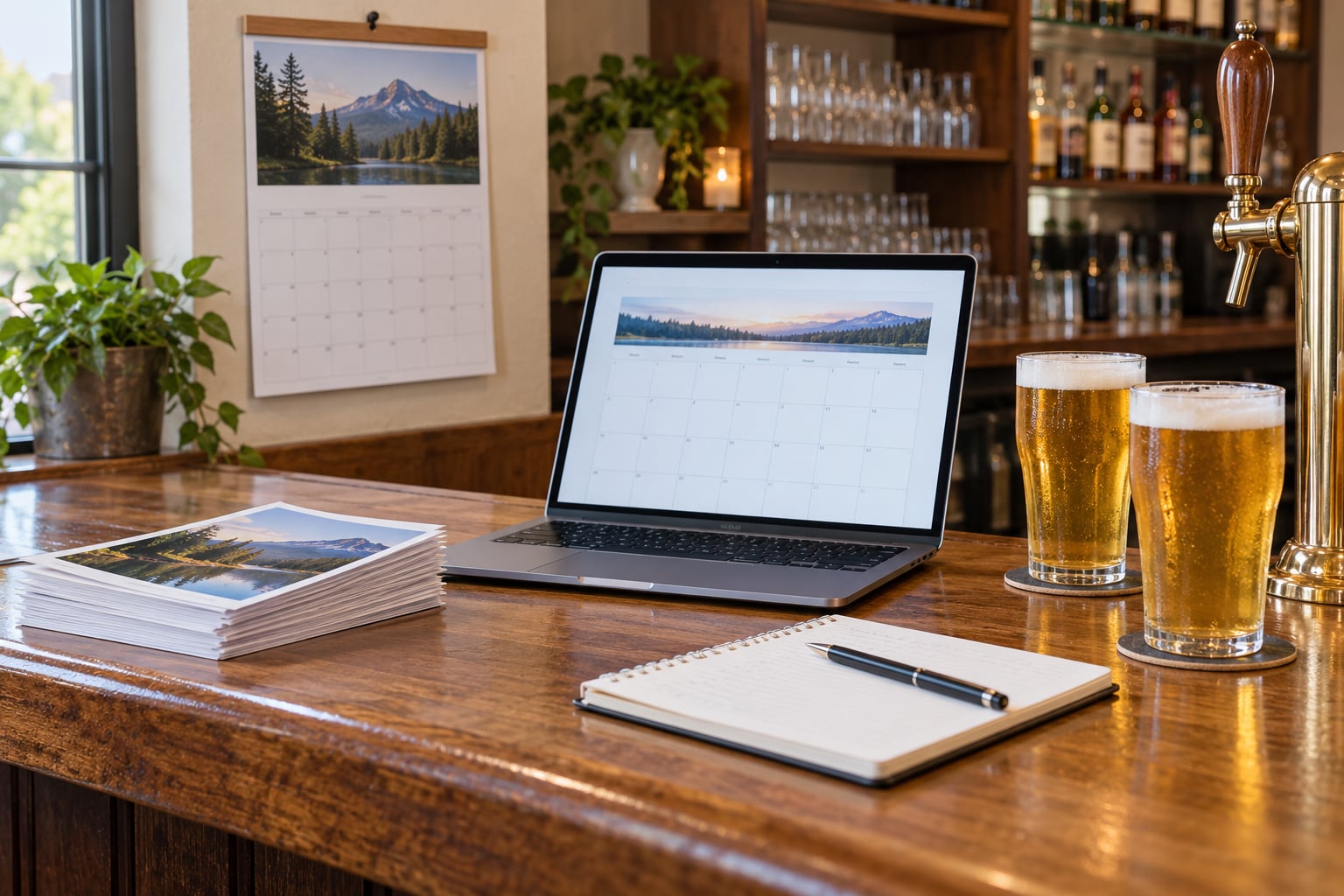
A six-week calendar beats a burst of posting in the last ten days. Here is the version I would run.
- Week 6: page live, partner outreach begins, email announcement, Google Business Profile event created.
- Week 5: announce the lineup, submit to free directories, follow up with partners who did not answer.
- Week 4: early-bird deadline, first press pitch, small paid boost on your best organic post if the numbers justify it.
- Week 3: giveaway opens, group of five or more gets a bundle price, second email to the list.
- Week 2: lineup detail posts, partner content goes live, reminder to anyone who started checkout and did not finish.
- Week 1: final details, transit and parking, last push, pay for signage and print pickup.
- Event day: on-site content, QR code sign-up sheet, photo consent sign at the door.
- After: thank-you email, photos, review request, next-date announcement.
Step 6: Track Sales and Adjust the Campaign
Tracking is what separates a promotion from a hope. Check the sheet twice a week, on fixed days, for about ten minutes.
Track ticket sales by day, sign-ups by channel, page visits with UTM parameters on your links, and revenue against spend. Then calculate cost per ticket for anything that cost money: spend divided by tickets from that source. Compare it to your target from step one. A channel running at double the target gets more money; a channel at triple the target gets switched off, however much you like the post.
Look for abandoned checkouts in the week before the event and send one reminder email. It is usually the cheapest tickets you will ever sell. If you are 70% sold three weeks out, release a general admission tier or a same-week bundle rather than cutting the price for everyone.
Common Mistakes
Most budget promotion fails on execution rather than ideas. These six come up repeatedly.
Vague messaging
“Join us for a fun evening” gets ignored. “Six beers from one neighborhood brewery, Saturday at 6pm” gets a calendar entry. Fix: write one sentence naming the beer, the day, and the time, and reuse it everywhere.
Starting too late
Organizers routinely begin promoting two weeks out and then buy ads out of panic. Ads need learning time. Relationships do not. Fix: start partner outreach in week 6 even if your public posts do not go live until week 4.
Overposting
Eighteen posts in a week trains people to scroll past you. Three good posts a week is enough. Fix: schedule them, then stop thinking about it.
Neglecting partners
Asking a taproom to promote you once, with no follow-up, wastes the only warm audience you have. Fix: send the artwork and caption ready to paste, check in the week of, and report results afterward so they know it worked.
Failing to collect contact details
A full room you cannot reach again is a one-time event. Put a tablet or a QR sign-up sheet at the door and add a ticket-holder bonus for joining the list. Fix: capture emails on every channel, including the day-of table.
Promoting without a next step
Every post needs one action: buy a ticket, RSVP, forward, or sign up. Giveaways without a clear entry rule generate entries and no ticket sales. Fix: one call to action per post, repeated three times on the page.
One last tip: run the whole plan again the next time, with the same codes and columns. The second event is cheaper to fill than the first, because you already know which three channels produced tickets.
Frequently Asked Questions
What is the cheapest way to promote a beer event?
Email, partner cross-promotion, and community calendars are the cheapest channels because you already own the audience. A brewery taproom with a 90-person mailing list can presale most of a room before spending anything. Add free directory listings, staff reshares, and a follower contest, and a small event can be promoted at almost no cash cost.
How far in advance should I promote a beer event?
Start six weeks out for a ticketed tasting or tap take-over, and eight weeks for anything that needs group bookings or travel. Begin with partner outreach, not public posts. Public announcements around week 4 leave room for reminders, a giveaway, and one small paid boost if organic reach falls short.
Should a beer event use paid social media ads?
Only after your free channels are live and you know which post performs organically. Spending small on your best-performing post usually beats buying cold traffic from the start. Set a cost-per-ticket ceiling before you click anything, and pause any ad that costs more per ticket than that number.
How can local breweries and bars help promote an event?
They can hand out tickets, place a QR card at the bar, feature you in their newsletter, or post you to an audience that already trusts them. Give each partner a distinct code or link so you can measure which ones produced sales. In return, offer samples, a mention, or a shared giveaway entry.
How do I know whether my beer event promotion is working?
Track tickets sold by day, sign-ups and page visits by channel, and use UTM links or partner codes so you know the source of each sale. Spend divided by tickets from a channel gives cost per ticket. Compare that to your target and move money toward the channels under the ceiling, away from the ones above it.
Do I need an email list to promote a small beer event?
An email list is the cheapest ticket source you own, and for a small event it can be the whole campaign. Start with everyone who came to a previous event, then add a sign-up sheet at the door and a ticket-holder bonus for joining. Three emails, spaced two weeks, one week, and three days out, do most of the work.
If you do one thing this week, build the ticket page, put your six-week dates next to it, and email everyone who came to your last event. That sequence alone outperforms most paid campaigns organizers run on a shoestring, and it is how you promote a beer event on a budget without cutting the quality of the night itself.