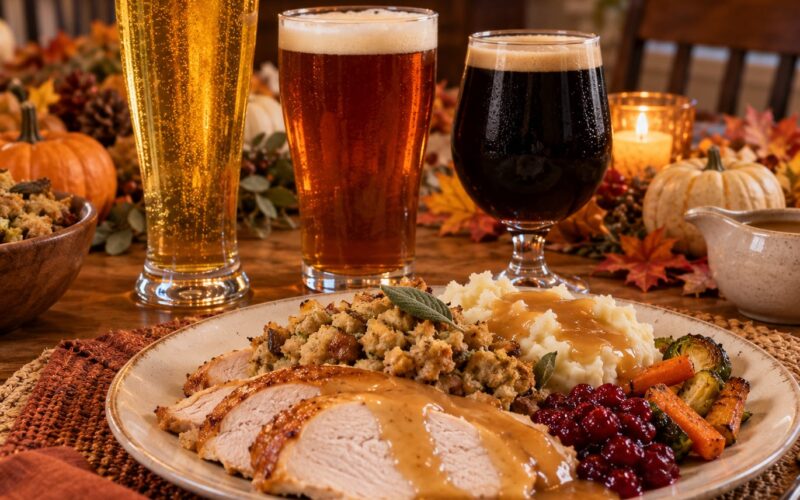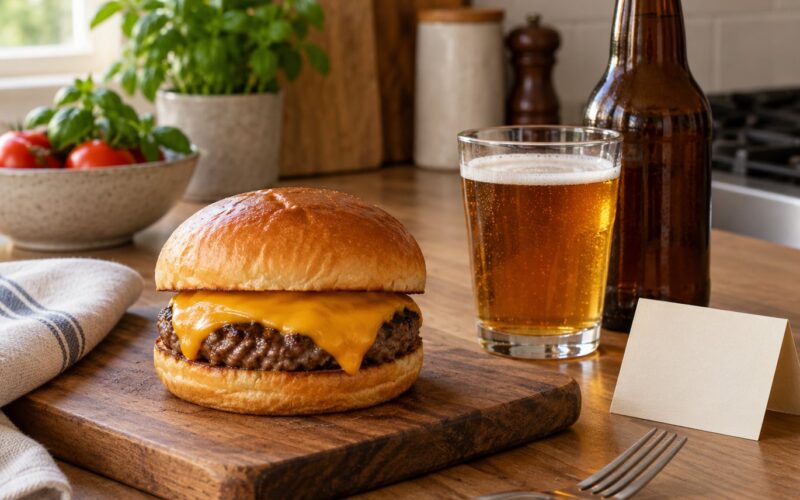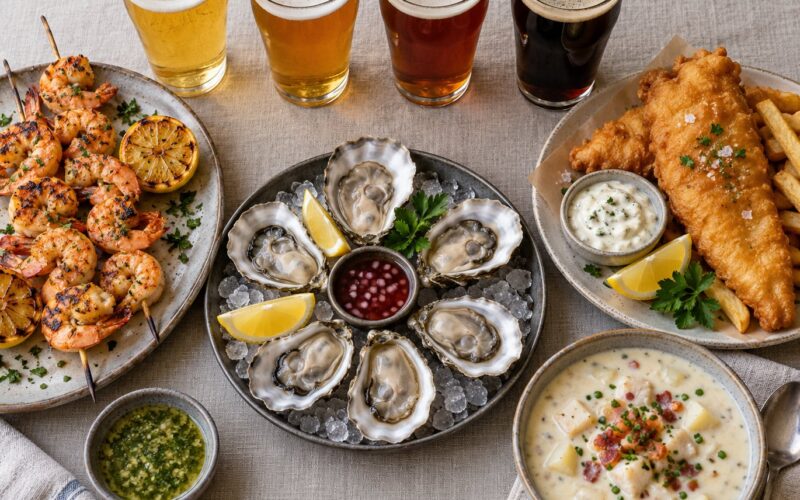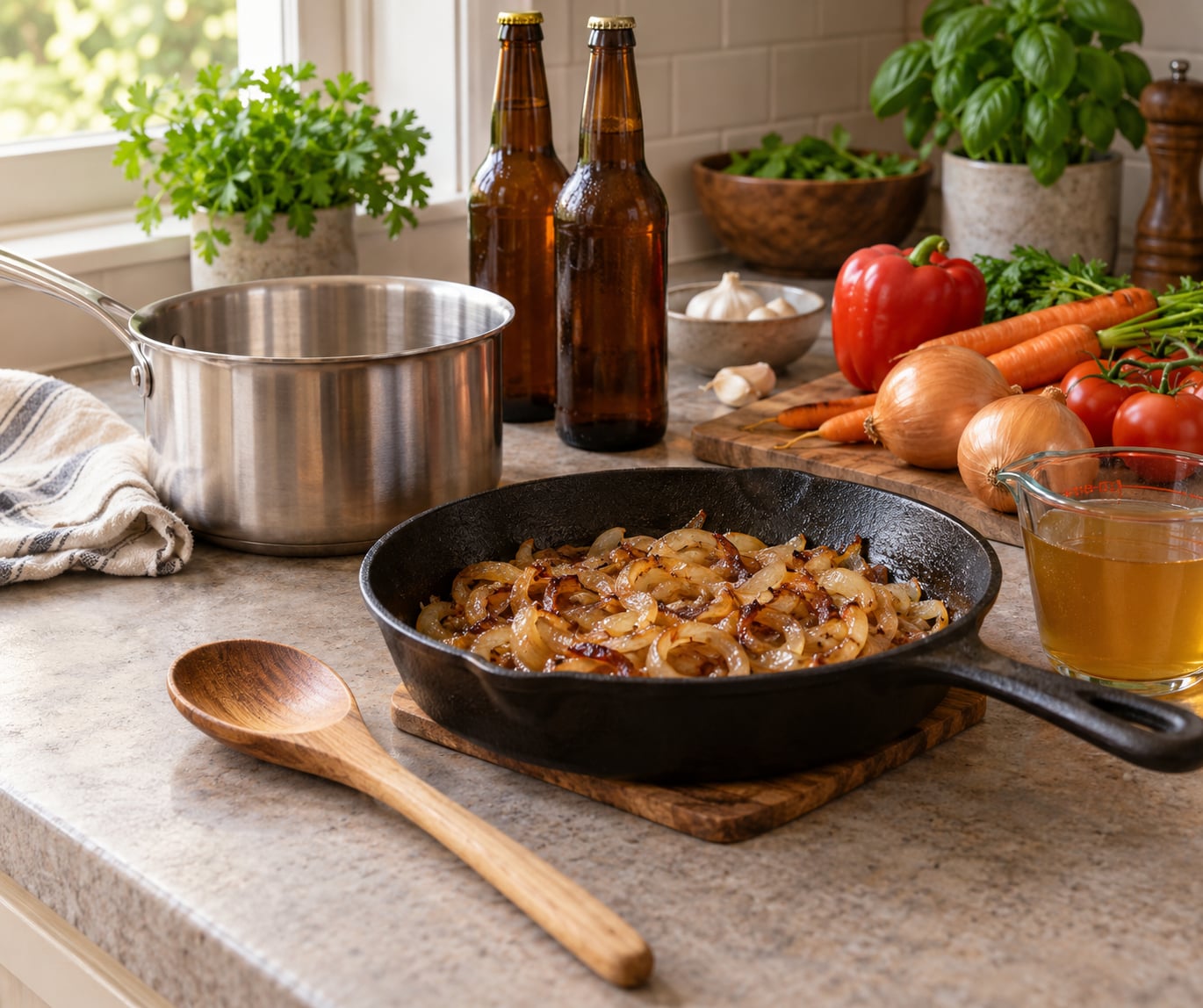
Cooking with beer is a flavour-building technique, not just a swap for water. Heat pulls the malt sugars and hop aromatics out of the beer, its acids and enzymes help break down tough meat, and its carbonation makes fried batters lighter and crisper. The whole thing takes about the same effort as a normal braise or pan sauce, and most of the work is choosing a beer that suits the dish.
A word on expectations: this is not beer-flavoured food. In a two-hour braise, a lager or amber ale mostly supplies body and a rounded savoury depth that reads as “cooked for hours.” The hop character fades with time, which is why slow dishes forgive bold beer far better than a five-minute sauce does.
If you have a leftover growler going flat in the fridge, a half-empty bottle from last weekend, or nothing but hoppy craft beer in the cupboard, this guide is written for that situation. Choose a recipe, pick the beer that matches it, add the liquid gradually, and taste as you go.
Table of Contents
- What You Need to Cook With Beer
- Step-by-Step: How to Cook With Beer
- Step 1: Choose the Right Beer for the Dish
- Step 2: Prepare the Beer and Ingredients
- Step 3: Cook the Dish Without Burning the Beer
- Step 4: Finish, Taste, and Adjust
- How to cook with beer without making it bitter
- Common Cooking Mistakes and Fixes
- The dish tastes bitter or harsh
- The beer flavour disappeared
- The sauce is too salty
- The batter is heavy and grey
- The bread or cake did not rise properly
- You are worried the dish will be boozy
- You have old, flat or oxidised beer
- Beer Cooking Ideas for Savory and Sweet Dishes
- Frequently Asked Questions
- Does cooking with beer remove the alcohol?
- What kind of beer is good to cook with?
- Which beer is best for marinating meat?
- What can I cook with leftover beer?
- What do you use beer for in cooking?
- Why do some people cook with beer?
- Conclusion
What You Need to Cook With Beer
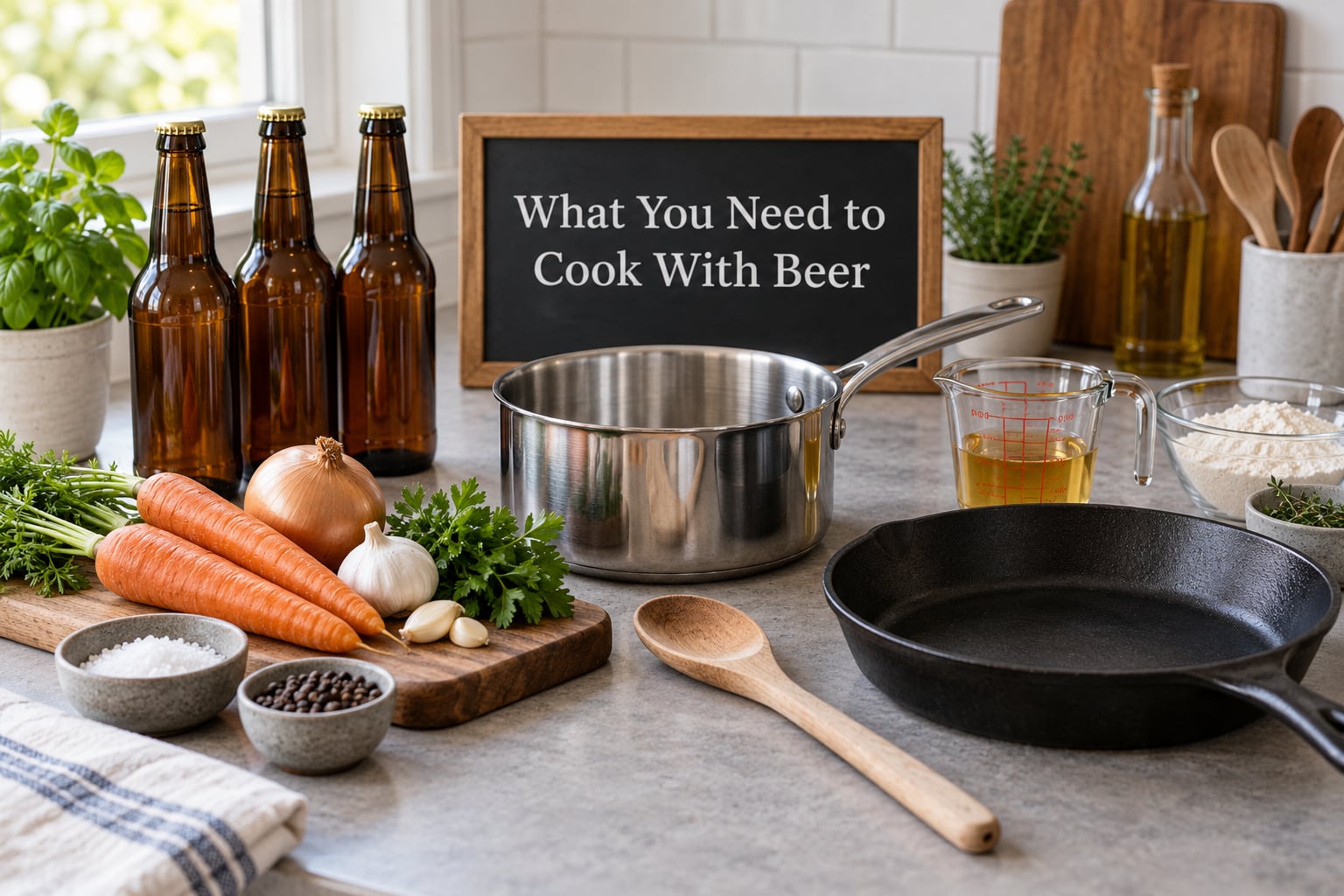
You need less than you would think. A saucepan or skillet with a lid, a wooden spoon or spatula for scraping, and an instant-read thermometer for anything involving meat. A wide pan matters more than an expensive one, because beer reduces faster in a wide surface and that is where flavour concentrates.
The only real decision is the beer. Here is how the styles a home cook actually meets line up with the dishes they suit.
| Beer style | Best for | Avoid for |
|---|---|---|
| Light lager or pilsner | Chicken, sausages, seafood, light soups, batters, marinades, quick pan sauces | Nothing in particular; it is the safe default |
| Wheat beer | Light fish, chicken, vegetable dishes, bright herb sauces | Heavy braises, where the yeast and banana notes can turn muddy |
| Pale ale | Poultry, pork, mild stews, a finishing drizzle in a sauce | Long reductions, where bitterness concentrates with the liquid |
| Amber or brown ale | Beef stew, braised short ribs, chili, caramelised onion sauces, corned beef | Delicate seafood, which it will drown |
| Porter | Rich beef dishes, mushroom sauces, gravies, chocolate desserts | Light batters, where it makes a heavy, dark crust |
| Stout | Pot roast, chili, mole-style sauces, brownies, chocolate cake, caramel sauce | Anything pale or delicate, and all batters |
| IPA | Breading and marinades used in small amounts, sauces finished at the end | Reducing it hard, and seafood |
The rule people on cooking forums keep repeating, and the one worth more than any table, is simple: cook with a beer you would happily drink yourself. A cheap, flat, warm bottle is not going to become good food through simmering.
On amount, the recurring advice is partial substitution. Replace somewhere between a third and half of the water or stock in a recipe, or use beer straight for the liquid in a dish where the liquid is the point, like a gumbo or a chowder. Going all-in on a delicate soup is how you end up with a dish that tastes like the beer rather than of the thing you put in it.
Step-by-Step: How to Cook With Beer
Step 1: Choose the Right Beer for the Dish
Match the beer to the cooking time, not to your favourite. A light lager is the workhorse for chicken, sausages, shellfish and anything battered. Amber or brown ale gives beef stew, chili and corned beef the body they need. Stout works in heavy pot roasts and chocolate desserts, where its roasted character reads as depth rather than as beer.
For marinating meat, keep it light and acidic. A lager or pale ale plus an acid such as lemon juice, vinegar or mustard plus oil is a marinade that seasons and tenderises. Skip the stout; its bitterness and roasted flavours stick to the surface of raw meat and survive the grill.
If the only beer in the house is a hoppy IPA, you have two workable options. Blend it one to one with a light lager, or add it late, in the last ten minutes of a sauce, so the hops are aromatic rather than bitter. Pouring a full bottle of IPA into a reduction and simmering it for twenty minutes is the fastest way to ruin a dish.
Step 2: Prepare the Beer and Ingredients
Open the beer just before you need it so it has not gone flat sitting out, and pour what the recipe calls for rather than the whole bottle unless the recipe wants a full bottle. Flat beer is acceptable for braises and stocks, where the carbonation has no job to do anyway.
Bring the meat or vegetables to their starting temperature first. Meat that goes into a cold braise spends its first minutes cooking unevenly instead of browning, and browning is where most of the flavour comes from. Salt the meat early if you can, pat the surface dry, then sear it hard in a hot pan until the edges are properly coloured.
Have everything else within reach before the heat goes on. Once beer hits a hot pan it starts reducing immediately, and there is no pause to chop an onion while the liquid goes from golden to gluey.
Step 3: Cook the Dish Without Burning the Beer
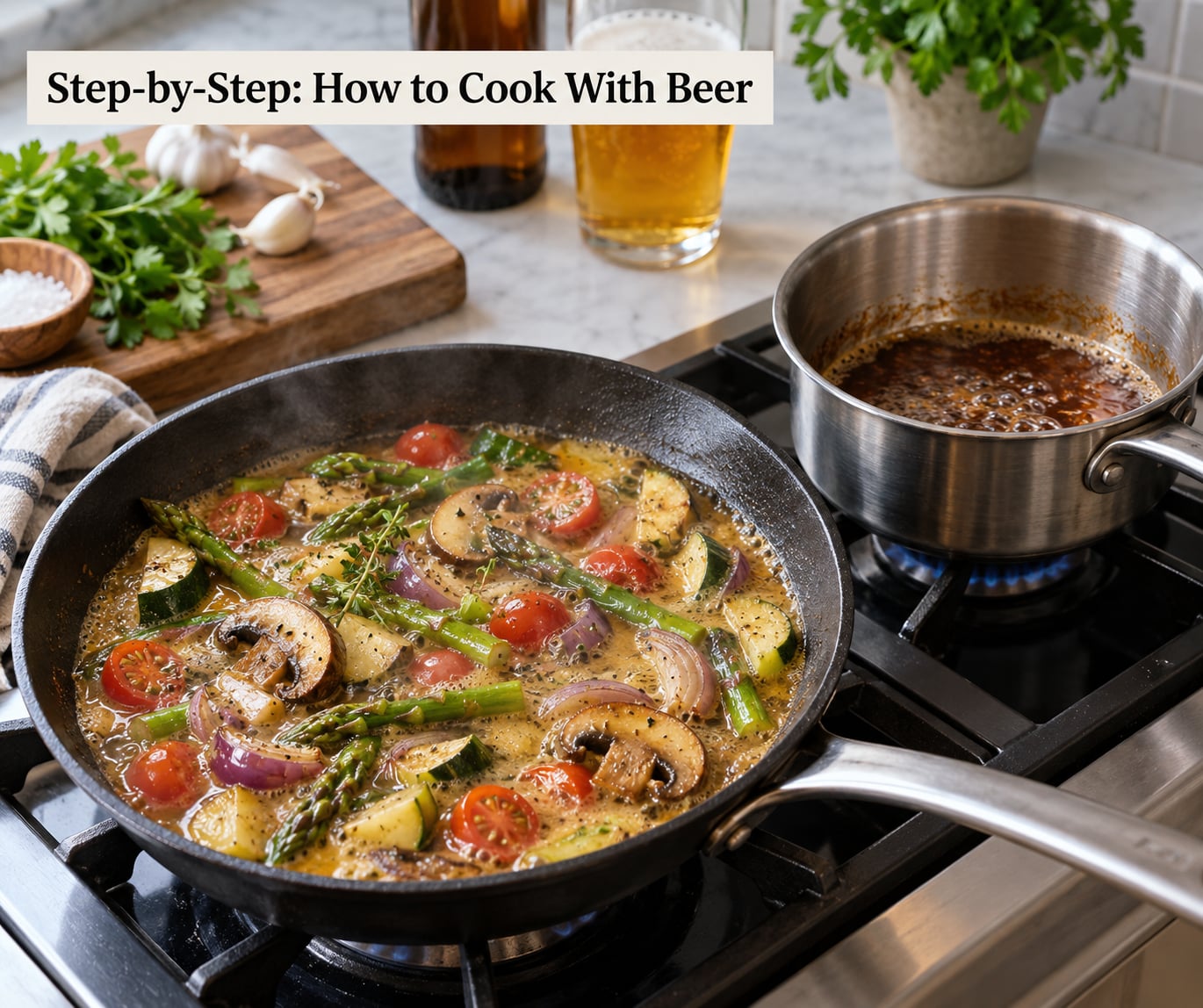
Pour the beer into the hot pan and scrape. That scraping is deglazing: the browned bits stuck to the bottom, called fond, are where the caramelised flavour lives, and the alcohol in the beer loosens them off the metal. Tilt the pan and work the wooden spoon into the corners until the fond lifts and the liquid runs clear of brown paste.
Control the heat from there. A braise should barely bubble, with a bubble or two breaking the surface every second or so, and a lid on. A hard boil for an hour flattens the dish, drives off too much liquid, and concentrates the hops along with everything else. Beer goes in after searing, never before, because searing wet meat does not produce fond worth deglazing.
The same heat discipline applies to a quick pan sauce. Deglaze, then let the beer reduce by about half over medium heat, stirring often, until it smells toasty rather than raw and coats the back of a spoon. For a batter, the technique is different in the opposite direction: use cold, well-chilled beer and fry at a steady temperature, since a batter that has gone warm and flat loses the lift that makes it crisp.
Step 4: Finish, Taste, and Adjust
Taste before the dish leaves the stove. A braise usually wants salt at the end, a little acid if the beer read flat, and a splash more beer or stock if the reduction tightened up too far. If it is bitter, add liquid and fat rather than sugar; a spoon of butter or cream and another half cup of stock will soften bitterness far better than anything sweet.
You can eat beer dishes with children or guests without concern. Alcohol does not all disappear in a quick sauce, but a long simmer, a roast or a bake boils off most of what was there, and what remains is a trace fraction of what the bottle started with. The longer and hotter the cooking, and the wider the pan so the vapour can escape, the less is left. Dishes that are barely warmed, or beer poured in at the end as a garnish, keep the most.
For doneness, use a thermometer rather than the clock. Poultry reaches 165°F (74°C) in the thickest part, ground meat 160°F (71°C), and whole cuts of beef, pork and lamb along with fish 145°F (63°C). Pull braised meat when the fork slides in with no resistance; it will carry over while it rests.
Store leftovers within two hours, in the fridge, in a sealed container, and eat within three to four days. Reheat gently on the stove with a splash of stock, because a beer-based sauce tightens as it cools.
How to cook with beer without making it bitter
Bitter comes from two places: hops and over-reduction. Add the beer after searing rather than before, keep the simmer gentle, and use a pale lager or amber ale for anything that reduces for more than a few minutes. If you are using IPA deliberately, add it off the heat in the last few minutes and use less than you think. Pulling a dish off the heat the moment the sauce smells cooked, rather than tasting it five minutes later, prevents most bitterness before it starts.
Common Cooking Mistakes and Fixes
The dish tastes bitter or harsh
You reduced the beer too far, used a hoppy style, or both. Loosen it with unsalted stock, water or a little cream, and add fat such as butter. Prevention is simpler: reduce only until the liquid smells toasty and coats a spoon, then stop.
The beer flavour disappeared
You overcooked it. A four-hour braise erases the beer and leaves you with a pleasant but generic stew. Add a splash of beer at the end, off the heat, for aroma. Short braises and pan sauces keep more character, so choose beer for dishes that finish in under an hour if you want to taste it.
The sauce is too salty
Beer adds salt on top of whatever seasoning the recipe already had, and stouts and brews with a mineral character contribute more. Season later and more lightly than usual, taste at every stage, and dilute rather than trying to correct it with sugar.
The batter is heavy and grey
You used a dark or strongly flavoured beer, or the batter sat too long. Beer batter wants a light lager or pilsner, kept cold, mixed right before frying. Stout and porter belong in brownies and cake, not in a crust.
The bread or cake did not rise properly
Cold beer can slow the yeast, particularly in an unbaked batter. Bring the beer to room temperature before it goes into the bowl, which is the single most useful baking tip in this whole guide. Beer also reduces the gluten structure in bread, so expect a tighter, more cakey crumb than a water dough gives you.
You are worried the dish will be boozy
Cooking time and surface area are what matter, not the alcohol percentage on the label. Long cooking in a wide, uncovered pan burns off nearly all of it. The real question is whether the dish was cooked long enough, and a thermometer is a better answer than a guess.
You have old, flat or oxidised beer
Flat beer is fine for braises, stocks, chili and pan sauces, where the carbonation has no work to do. What you want to avoid is flat beer in anything that needs to rise, including bread and cake. Beer that has turned sour or vinegary is a different problem: if it smells off, throw it out rather than cook with it.
Beer Cooking Ideas for Savory and Sweet Dishes
Batter and frying. Beer batter is the most familiar use, and the carbonation is doing the work: gas bubbles expand in the hot oil, leaving a lighter, crisper crust than a water-based batter. Beer-battered fish, cauliflower and onion rings all work, and all want the same light lager. Flat or open beer is the correct choice here, because carbonation you have already lost cannot make a crust.
Braises and stews. This is where beer earns its place. It contributes body, rounds out the acidity of tomato and wine-based stews, and gives a fond that water cannot. Beer-braised chicken thighs, beef and ale pie, a pot roast with stout, homemade corned beef, and chili all improve when a third to a half of the liquid is beer. Corned beef cooked in beer is a particularly forgiving starting project.
Pan sauces and deglazing. After roasting a chicken, or after searing beef or pork, pour half a cup of beer into the hot pan, scrape the fond loose, reduce by half and whisk in butter. You get a jus in the time it takes a sauce to reduce, and the beer makes the roasted flavour taste more like a gravy than a dressing.
Soups and chowders. Beer works as part of the liquid rather than as a flavour accent, in seafood chowder, corn chowder, French onion soup and potato soup. Keep the style light so the soup tastes of its main ingredient. Beer cheese sauce is the same idea in another form, and a pale ale or lager keeps the cheese from turning grainy and harsh.
Vegetables and sides. Deglaze a pan of roasted mushrooms, caramelised onions or brussels sprouts with a light beer, then reduce until the liquid clings. Caramelised onions cooked down in a stout become a genuinely sweet, deep condiment that works on everything from brats to roast beef.
Bread and baking. Beer bread is flour, sugar, yeast, butter and a cup of room-temperature beer, and it comes out of the oven in under an hour. In desserts, stout brings roasted coffee and chocolate notes to brownies and chocolate cake, darkens the crumb, and keeps it moist for days.
Sauces and sweets. A caramel sauce made with a stout, or any dark beer, deepens as it reduces and balances a dessert with a savoury edge. Beer caramel corn and beer-glazed apples turn a bottle into a treat, and both are more forgiving than the savoury dishes.
Frequently Asked Questions
Does cooking with beer remove the alcohol?
Most of it does, but not all of it. A long braise, roast or bake boils off nearly all the alcohol, especially in a wide uncovered pan where the vapour can escape. A quick sauce, or beer poured in at the very end, leaves more behind, though what remains is a small fraction of what was in the bottle. Cooking time, heat and surface area matter far more than the alcohol percentage on the label.
What kind of beer is good to cook with?
A light lager or pilsner for chicken, seafood, vegetables and batters. An amber or brown ale for beef stew, chili and braises, because it supplies body. A stout for heavy pot roasts, chili and chocolate desserts. The golden rule is to cook with a beer you would actually enjoy drinking, and to use less than the recipe calls for if you are unsure.
Which beer is best for marinating meat?
A light lager or pale ale. Marinades tenderise through acid, not through alcohol, so pair the beer with lemon juice, vinegar or mustard and some oil. Leave out porters and stouts, whose roasted and bitter notes cling to raw meat and survive the heat. Marinate in the fridge, and never reuse the marinade unless you boil it first.
What can I cook with leftover beer?
Flat or opened beer is fine for braises, stocks, chili, soups and pan sauces, where carbonation has no job to do. It is also good in cakes and brownies, and beer bread works with slightly flat beer as long as the yeast is active. Keep it out of anything that needs to rise properly, and discard beer that has turned sour or vinegary rather than cooking with it.
What do you use beer for in cooking?
Five techniques cover almost everything: braising and stewing, where it becomes the cooking liquid; deglazing a pan to lift the browned fond into a sauce; batters, where carbonation makes fried coatings lighter; marinades, paired with an acid; and baking, in bread and chocolate desserts. Beer also works for basting, steaming and caramelising onions.
Why do some people cook with beer?
Because it adds a malty depth that water cannot, and it does other jobs besides. Acids and enzymes help tenderise tough cuts during long cooking, the sugars in a dark beer caramelise into a fond worth deglazing, and carbonation gives fried batters a lighter, crisper crust. Water makes a dish; beer makes it taste like it took all day.
Conclusion
Start with the recipe you already want to cook, then pick the beer to match it. A light lager for anything pale, battered or quick; an amber or brown ale for beef and slow braises; a stout when you want a deep, roasty result. Add the beer after searing, keep the simmer gentle, and taste before the liquid reduces further than you intended.
That is the whole method. The beer is doing the flavour work, the heat is doing the rest, and you are in charge of both.