Glass shape does not add anything to your beer, and it does not take anything away. What it changes is delivery: where aromas collect, how much head survives the first minute, how fast carbonation hits your tongue, and how the liquid feels on the way down. Understanding what beer glassware shape does to flavor starts there, with the honest version rather than the marketing one.
Most of what people call taste is smell. When you drink the same IPA from a wide shaker pint and from a narrow tulip, the liquid is chemically identical. What changed is how much of the hop oil made it to your nose on the way up. Get that right and the argument about glassware stops being a sales pitch and starts being a technique.
Table of Contents
- What Beer Glassware Shape Does to Flavor?
- Why Glass Shape Changes Aroma, Texture, and Delivery
- How Shape Controls Aroma Release
- How Rim and Surface Area Change Mouthfeel
- Common Beer Glass Shapes and Their Best Uses
- How to Choose the Right Glass for Your Beer
- Does Glassware Change Flavor or Just Make Beer Taste Different?
- Frequently Asked Questions
- What beer glass shape is best for tasting aroma?
- Does a beer snifter make beer taste better?
- Why does the shape of a beer glass matter?
- Should an IPA be served in a tulip glass?
- How much headspace should a beer glass have?
- Can the wrong glass change the flavor of beer?
- Conclusion
What Beer Glassware Shape Does to Flavor?
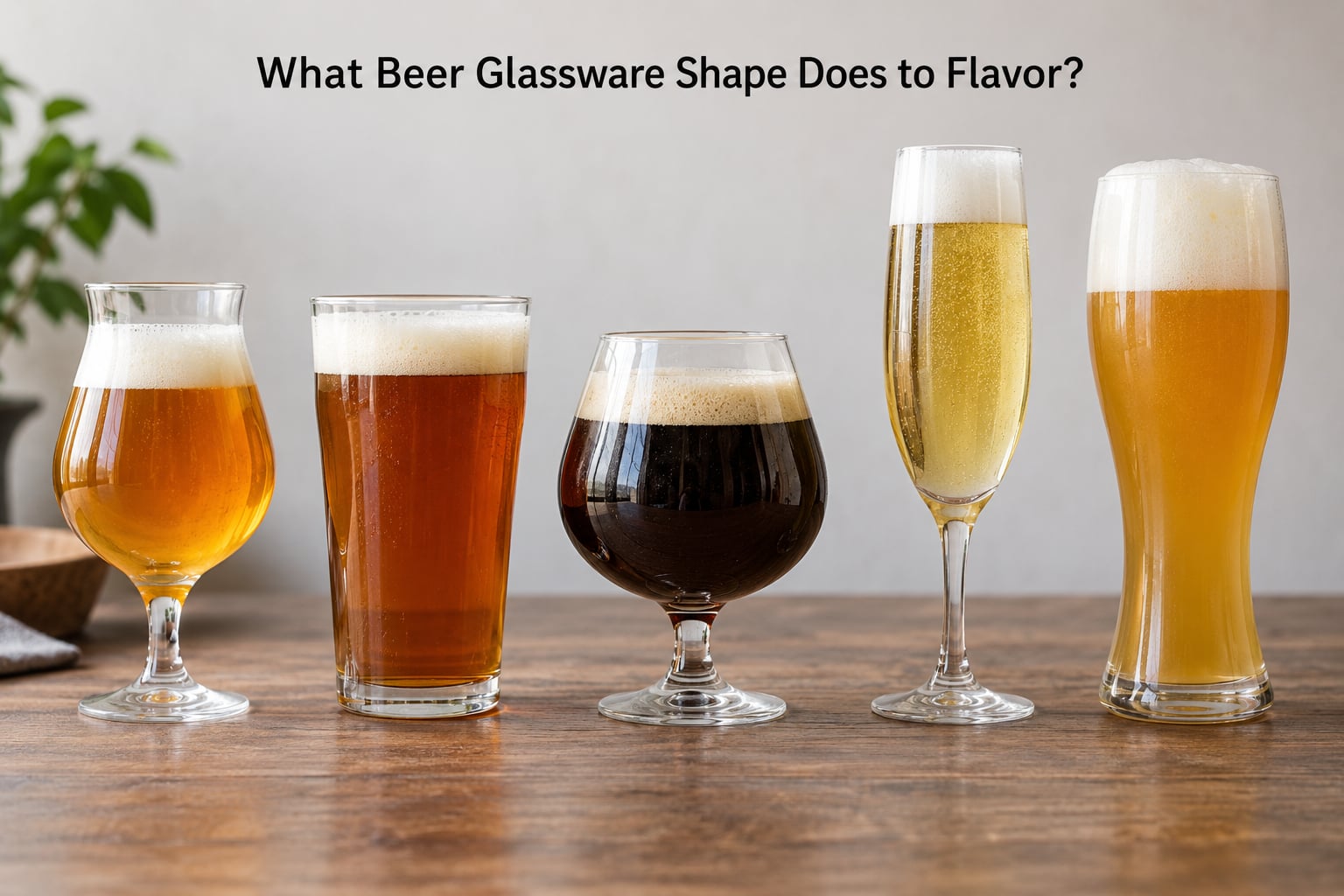
Beer glassware shape decides four things: how much aroma rises to your nose, how much foam the beer can hold, how sharply carbonation arrives, and how the beer feels against your lips. It changes perception, not chemistry. A badly shaped glass can make a good beer taste flat, but no glass will repair a beer that was poured warm, stored warm, or served dirty.
Glass size matters too, and it is a separate variable people constantly blur together with shape. A larger vessel slows your pace and warms the beer faster, which flattens carbonation and pushes esters toward a sweeter, heavier impression. You are not tasting more hops when you drink from a bigger glass. You are tasting the same beer a little warmer and a little slower.
Randy Mosher’s framework in The Beer Bible breaks beer quality into smell, head, color, carbonation, body, flavor, and alcohol. Of those seven, a glass directly controls three: smell, head, and the way carbonation presents. That is the honest size of the effect.
Why Glass Shape Changes Aroma, Texture, and Delivery
Five geometry variables do nearly all the work. Once you know which is which, you can look at any glass on the shelf and predict what it will do.
- Rim width decides how much aroma escapes into the room and how fast the beer leaves the glass.
- Rim thickness decides how the liquid lands on your lips and how crisp the beer feels going down.
- Bowl width decides how much liquid surface sits under the foam, which controls carbonation escape.
- Bowl taper decides whether aroma is funnelled back toward your nose or released upward.
- Foam surface area decides how long the head stays alive and how much CO2 the foam holds for you.
Two more matter at the margins. Wall thickness changes how quickly the beer warms in your hand, and surface texture decides where bubbles form. A glass with a rough, etched base gives CO2 microscopic sites to escape from, producing a steady stream of fine bubbles instead of a few large ones that burst on the surface and take the head with them.
| Physical feature | What it does to the beer |
|---|---|
| Wide rim | Aroma disperses quickly, carbonation escapes faster, beer warms faster |
| Narrow rim | Aroma funnelled back toward the nose, carbonation retained longer |
| Thick rim | Slower flow, more even warmth across the lips, softer bite |
| Thin rim | Sharper delivery, more immediate carbonation bite |
| Wide bowl | Large foam surface, good head retention, faster CO2 loss |
| Narrow base | Smaller foam surface, head clings in a ring, lively longer |
| Tapered bowl | Volatiles pushed up into the headspace above the beer |
| Etched or nucleated base | Continuous fine bubble stream, slower CO2 loss, better lacing |
| Thin wall | Beer warms from your hand quickly |
| Thick wall or stem | Serving temperature held steady for longer |
How Shape Controls Aroma Release
Volatile compounds, the esters and phenols and hop oils that carry a beer’s smell, rise from the liquid and drift upward in the headspace. A straight-sided pint gives them a wide, open exit and they are gone into the room before you finish the first swallow. A glass that narrows toward the rim blocks that escape route and channels the same compounds back down toward your nose as you tilt the glass.
Two effects combine in a tulip or a snifter. The tapered wall creates an upward current of air over the beer as you pour, which carries aroma into the headspace. The narrow rim then keeps it there. Swirling the glass before you smell it stirs those compounds up off the surface, which is why a glass that looks empty of beer still smells like a whole pour.
None of that changes if you cannot smell properly, though. A congested nose, a cold, or a pour served so warm that the volatiles have already boiled off will flatten the aroma in any glass. Temperature, freshness and technique still set the ceiling. The glass shape decides how much of what is there actually reaches you.
How Rim and Surface Area Change Mouthfeel
A sharp pilsner wants a thin rim and a wide opening. The beer arrives fast, cold and aggressively carbonated, and that bite is exactly what makes the style read as crisp. Pour the same pilsner into a heavy snifter and it arrives warm and soft, and the hop bitterness starts to dominate instead of the malt.
An aromatic IPA wants the opposite handling. In a tulip, the narrower opening slows the pour slightly and the thicker base keeps the beer cold, so the first impression is hops rather than carbonation. The foam has a wider surface to sit on, and more of the beer is in contact with air under that foam, which is where the aroma compounds come from.
A creamy stout behaves differently again. Head retention is doing the work here rather than aroma concentration. Nitrogenated stout wants a glass with enough surface for a dense, tight head to sit on top and stay put, because that head is where the perception of creaminess lives. Lose the head and the same stout reads thinner and more abrupt.
That is also the part glassware advice usually gets conflated with pouring. A brilliant head comes from pouring into a cold, clean glass at a steady angle down the side until the glass is about three-quarters full, then straight down the middle to build roughly an inch of foam. Change the glass and you may need to change the pour, and the pour usually does more for the head than the glass does.
Common Beer Glass Shapes and Their Best Uses
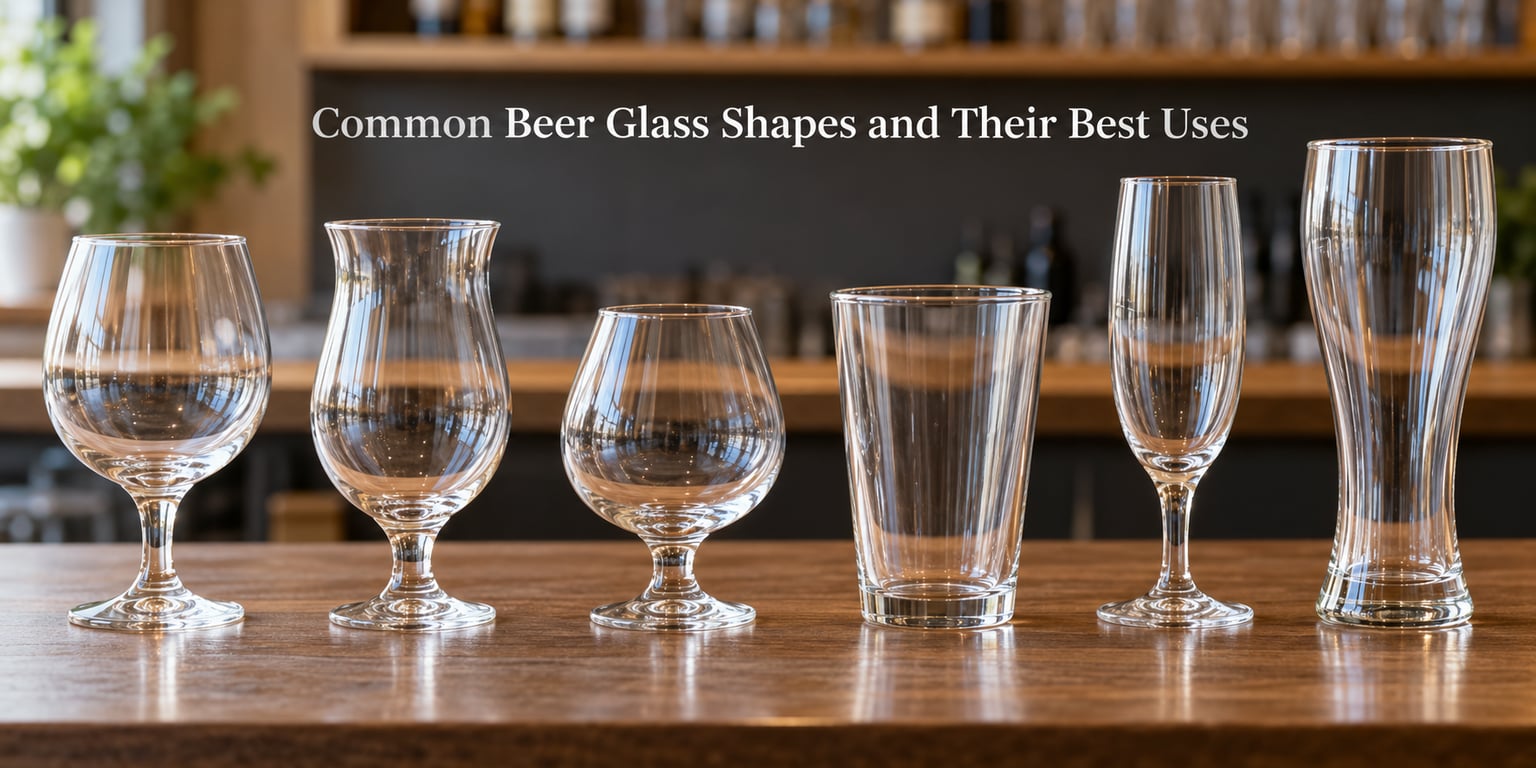
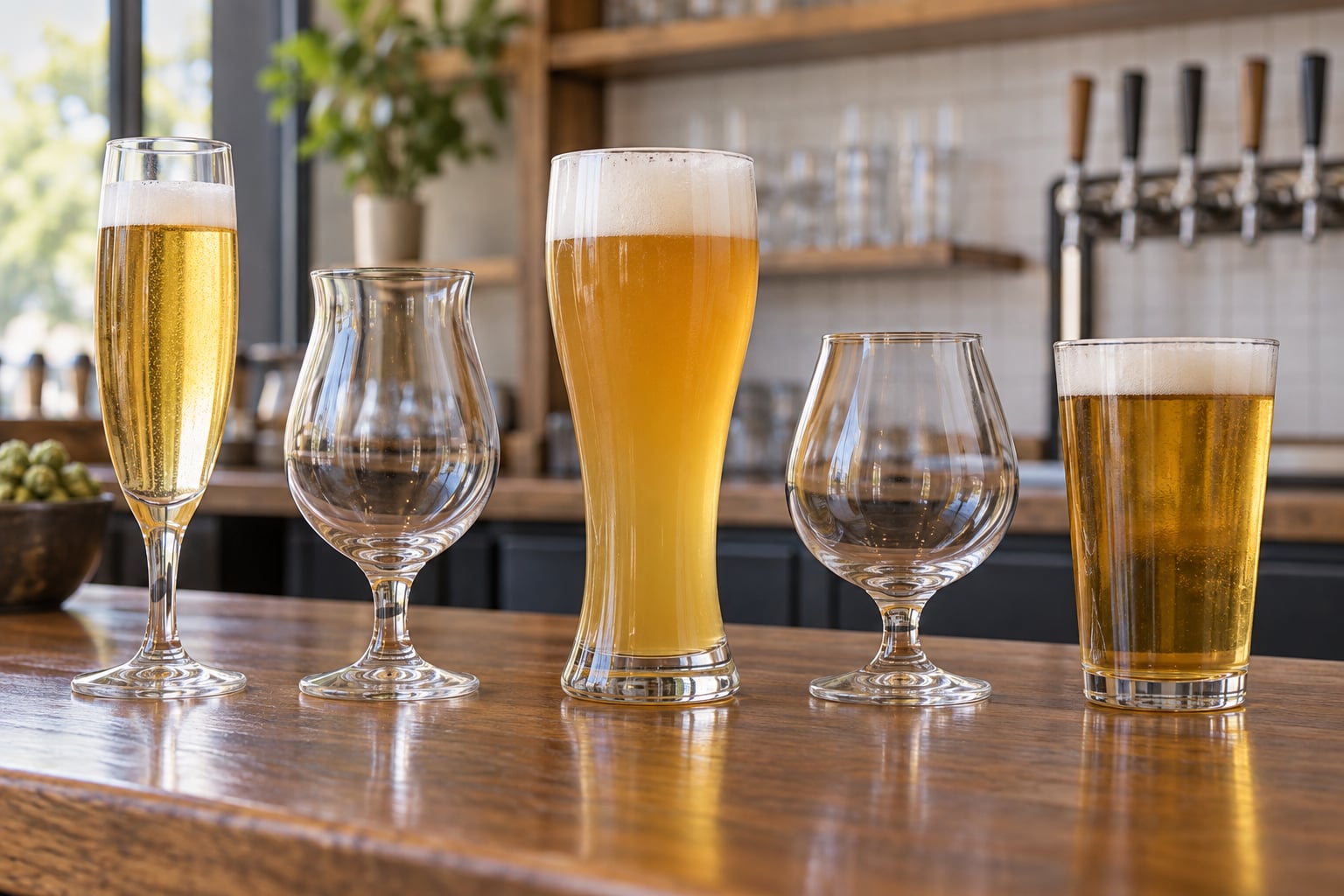
Every beer glass shape on this list exists because someone worked out which geometry suits a particular beer. The table below covers the eleven you will actually run into in a taproom, a bottle shop, or your own cabinet.
| Glass | Typical volume | Rim profile | Best for | What the shape does |
|---|---|---|---|---|
| Nonic pint | 16 oz | Wide, straight | Cask ales, ordinary lagers, general pub service | Easy to drink from and easy to pour, but releases aroma quickly |
| Shaker pint | 16 oz | Wide, straight | High-volume service, mixed drinks | Fastest carbonation loss of the common glasses, no head protection |
| Pint with nucleated base | 16 oz | Wide, straight | Lagers and pale ales where bubble persistence matters | Etched base feeds a continuous fine bubble stream, keeping the head alive |
| Tulip | 10 to 14 oz | Narrowing toward the rim | IPAs, pale ales, Belgian ales, anything hop-driven | Funnels hop and malt aromas back toward the nose and keeps them there |
| Goblet or chalice | 10 to 16 oz | Wide bowl, narrow rim | Saisons, farmhouse ales, Belgian tripels | Big foam surface for a thick head plus aroma concentration above it |
| Snifter | 6 to 10 oz | Narrow, often thick | Barrel-aged beer, strong ales, imperial stouts | Small volume slows drinking so warmth and aroma can be managed, big bowl holds a head |
| Pilsner | 12 to 16 oz | Thin, slightly flared | Pale lagers, pilsner, bock | Fast cold delivery that keeps a crisp beer crisp |
| Flute | 6 to 8 oz | Narrow and tall | Lambics, gueuze, sparkling-style ales | Holds carbonation and pushes delicate fruity esters toward the nose |
| Weizen | 20 oz | Very wide, curved | Hefeweizen, dunkel, weizenbock | Huge surface for the obligatory cloudy wheat head and clove aroma |
| Mug or stein | 16 to 24 oz | Wide, often with handle | Oktoberfest lagers, communal pours, high-volume drinking | Easy grip and easy pour, but your hand warms the glass fast |
| Stemmed tasting glass | 5 to 8 oz | Narrow, tulip-like | Tasting flights, sour beer, warm rooms | Stem keeps the beer at serving temperature and the small volume concentrates the aroma |
Two more shapes deserve a note. The flute is not a pilsner glass with a different name; the tall narrow column preserves carbonation in a way a pilsner glass does not, which matters for a lambic. And a stemmed tasting glass behaves like a small tulip, so if you only own one non-standard piece for flights and sour beer, that is the one.
How to Choose the Right Glass for Your Beer
The best shape for a beer is decided by aroma intensity first, then carbonation, then how warm you are serving it and how quickly you plan to drink. Work through those in that order and the choice makes itself. A heavily aromatic beer needs a narrowing bowl; a very cold, very fizzy beer needs a wide opening and a thin rim; a strong beer served warm needs a small bowl and a stem.
Then match the volume to your pace. A 10 oz tulip finished in ten minutes means a warmer, flatter beer by the last third than the same beer in a 6 oz glass. Big glasses encourage big pours and slow drinking, which is why a heavy barleywine in a 6 oz snifter still tastes controlled at the end of the bottle while the same beer in a 16 oz goblet does not.
Whichever glass you choose, four habits do more than the shape ever will:
- Rinse with cold water and dry the rim. Fat, detergent and rinse-aid residue collapse the head instantly. This is the single most common reason a great head fails at home.
- Pour cold beer into a cold glass. A room-temperature glass warms the first few ounces before you have taken a sip.
- Pour down the side first, then down the middle. Side pouring limits contact with the wall so the beer does not go flat; the middle pour at the end builds the inch of head that carries the aroma.
- Smell before you sip, then sip. Take the aroma first with the glass tilted, let it sit, then taste. You are calibrating your palate to notice the difference at all.
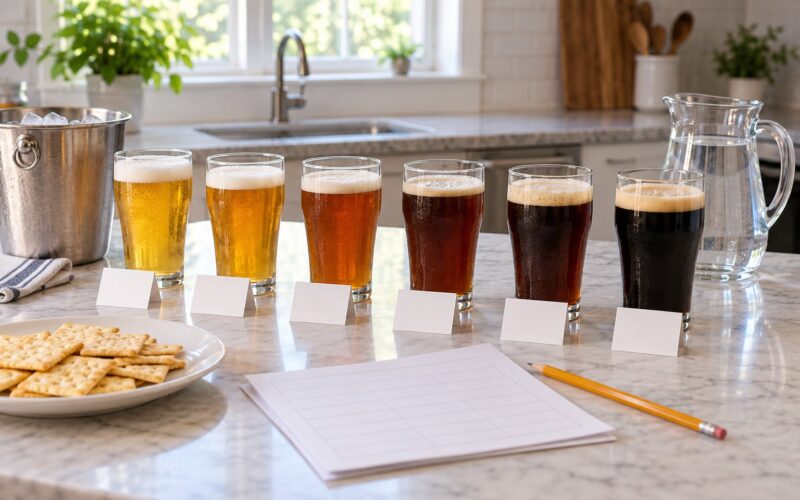
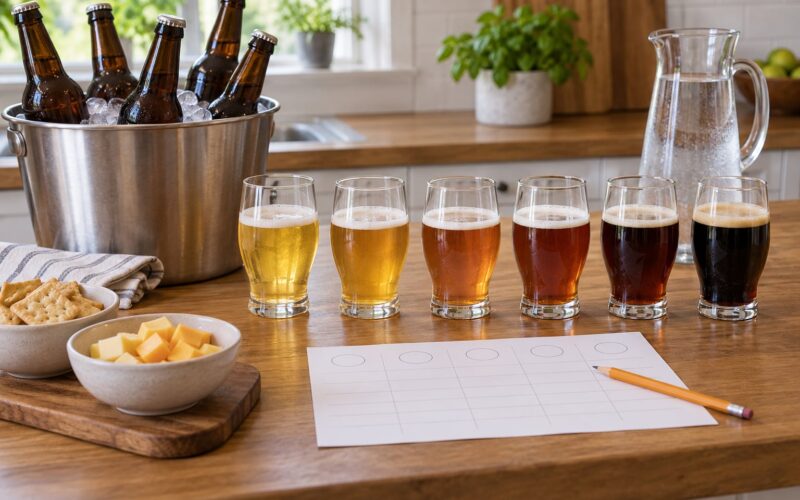
Then run the honest comparison. Pour the same beer into the glass you always use and into a glass matched to the style, smell both without knowing which is which, and see whether you can tell them apart. Most drinkers can, and the ones who cannot usually find out it is the head rather than the aroma doing the work.
Does Glassware Change Flavor or Just Make Beer Taste Different?
It changes how the beer is delivered and how you perceive it. It does not change what is in the liquid, and this is worth saying plainly because most glassware marketing blurs the line. Questions about how beer glass shape affects taste get answered with confident claims that a 12 oz tulip adds hop character to an IPA. It does not. It makes the hop character already there easier to smell.
The skeptical argument has real teeth. A stemless glass held in the hand warms faster than a stemmed one. A dimpled or faceted glass changes how light refracts through the beer, which changes how the color looks, which changes how sweet people expect it to taste. Part of what you feel with an expensive glass is expectation. Pretending otherwise would make this article as silly as the ones it is trying to beat.
Here is what is genuinely mechanical. Aroma concentration through a narrow rim, head retention across a wide foam surface, bubble behavior at a nucleation site, and rim thickness changing how the beer lands on your tongue are all physical facts. They do not depend on believing in the glass. What you cannot fix with glassware is a beer that was stored too warm, poured too warm, or served in a glass with grease on it, and those three causes account for most disappointing glasses of beer people blame on the wrong thing.
Temperature is also bigger than shape. A beer served eight degrees too warm reads as sweeter and softer, and a stemmed glass will not rescue it. Cleanliness outranks shape too, and a properly rinsed glass with no detergent film beats an expensive tulip every time. If your head is collapsing as you pour, fix the rinse before you go shopping.
So the honest verdict is that shape matters most for aromatic beers, matters less for simple lagers, and matters not at all for a beer that has already gone bad. Choose on aroma intensity, drink from a clean cold glass, pour properly, and the glass choice is the smallest of the four variables you are already controlling.
Frequently Asked Questions
What beer glass shape is best for tasting aroma?
A tulip is the best all-round answer. Its wide bowl gives the foam a large surface, and its narrowing rim traps volatile hop oils, esters and malt aromatics in the headspace and funnels them back toward your nose as you tilt. For very aromatic beers, a snifter works similarly at a smaller volume. Whatever you use, smell before you sip and keep the glass cold.
Does a beer snifter make beer taste better?
A snifter helps most with strong, warm, or barrel-aged beer. Its narrow opening concentrates the alcohol and oxidation aromas you actually want, and its small bowl keeps the volume low so you do not warm the whole pour. For a light lager or a pale ale served cold, a snifter makes things worse by handing the beer warmer and slower.
Why does the shape of a beer glass matter?
Shape decides where aroma goes, how much foam survives, and how the beer arrives on your lips. A wide straight pint releases carbonation and aroma quickly. A tapered tulip or snifter funnels volatile compounds back toward your nose and holds them there. Rim thickness and glass wall thickness then change the temperature curve and the feel of the liquid as you drink.
Should an IPA be served in a tulip glass?
Yes, a tulip is the standard choice for most IPAs. The broad base gives the hop-driven foam somewhere to sit, the narrow rim keeps citrus and pine aromas concentrated above the beer, and the smaller volume stops it warming before you finish. For a very hoppy double IPA served cold, a wider goblet also works, since foam quality matters more than aroma trapping.
How much headspace should a beer glass have?
Leave enough room for about an inch of foam above the beer, which usually means filling a standard glass to around three-quarters. Headspace is where aroma collects, so an almost-full tulip wastes the best part of the shape. A stemmed tasting glass should be filled closer to the widest point, since it is designed to be swirled rather than emptied quickly.
Can the wrong glass change the flavor of beer?
It can change how the flavor is delivered and how strongly you perceive it, mostly through aroma and head retention. It cannot change the beer itself. If a beer tastes off, check temperature, freshness, storage and whether the glass was properly rinsed before you go looking for a different shape to blame.
Conclusion
Start with one change this week: pick a glass whose opening and bowl match the beer, rinse it in cold water so the rim is squeaky, pour cold beer into it and stop about a quarter down, then smell before you drink. Pour the same beer into the glass you normally reach for, compare the two, and keep the one that made you notice something. That one glass is worth owning, and it is usually not the most expensive one on the shelf.