Bar crawl vs pub crawl is a question of geography, not meaning. Both describe an evening spent visiting several drinking venues in one night, usually walking between them. Americans say bar crawl, British and Irish speakers say pub crawl, and each word quietly tells you what kind of room you are walking into.
So what actually differs? A pub crawl implies local character, cask ale, beer gardens and bars where a regular might know the staff by name. A bar crawl implies cocktail lists, sports screens, DJs and a later finish.
Here is the short version before the details:
- They are the same activity: a handful of drinking venues, one night, on foot.
- The word is regional. Bar crawl in the US, Canada and Australia; pub crawl in the UK and Ireland.
- The real difference is atmosphere and expectations, not the rulebook.
- Both come in ticketed and pay-as-you-go versions, and drinking is never compulsory.
Table of Contents
- Bar Crawl vs Pub Crawl at a Glance
- What Is a Bar Crawl?
- Why is it called a crawl?
- How many stops make a crawl?
- Organized vs self-planned bar crawls
- What Is a Pub Crawl?
- What makes a venue a pub?
- What a pub crawl adds to the night
- How Do Bar Crawls and Pub Crawls Differ?
- Bar crawl vs pub crawl: the terminology map
- Route, check-in and who pays
- Ordering, food and atmosphere
- Are Bar Crawls and Pub Crawls the Same Thing?
- Which Should You Choose?
- Frequently Asked Questions
- Is a bar crawl the same as a pub crawl?
- Are pub crawls more common in the UK?
- Do bar crawls and pub crawls require reservations?
- What is usually included in a pub crawl ticket?
- Can I choose the beers on a bar crawl?
- How should I plan for alcohol and transportation on either crawl?
Bar Crawl vs Pub Crawl at a Glance
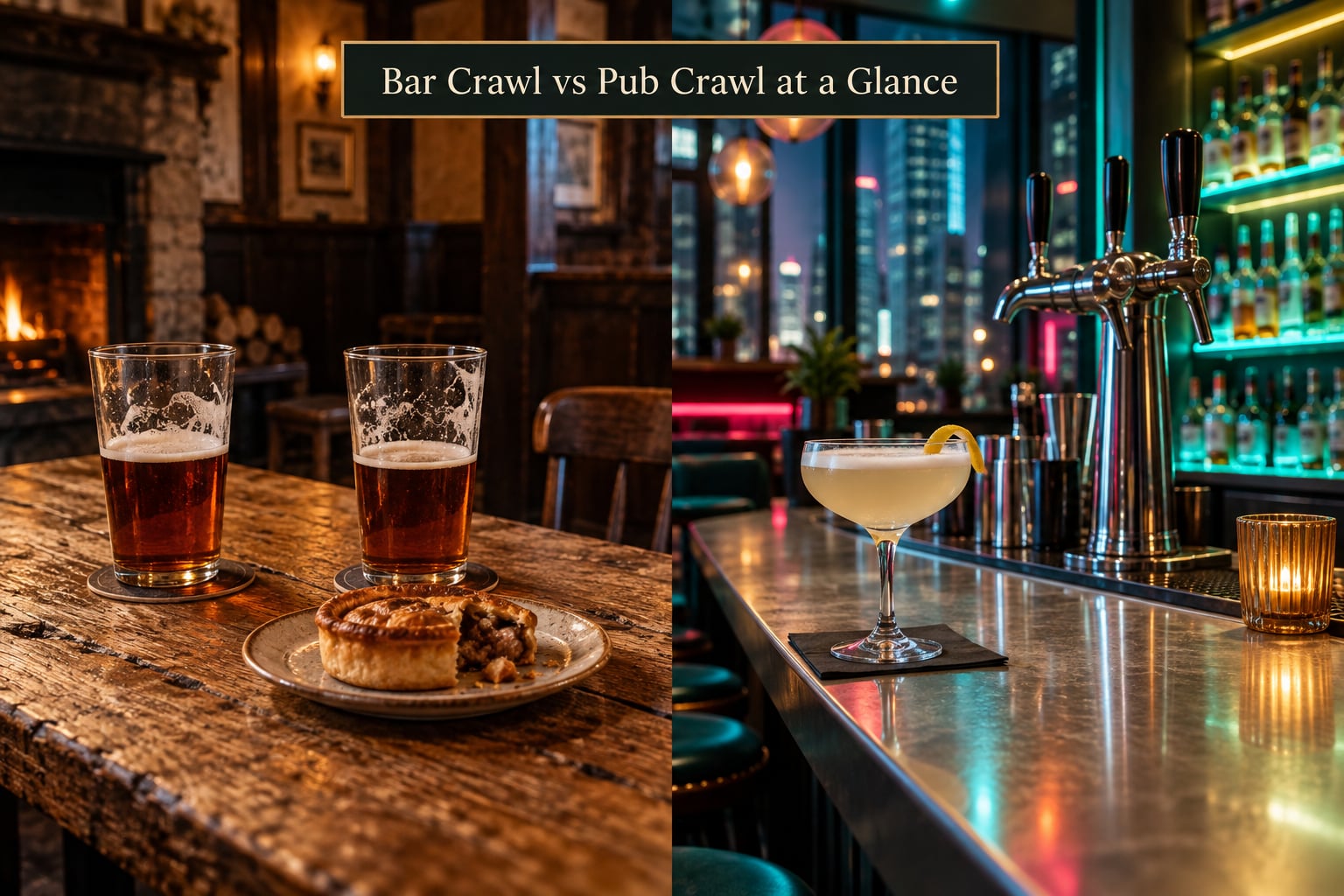
One row per criterion, because the difference between the two is entirely in the details. Nothing here is a rule, just what the words have come to mean in practice.
| Criterion | Bar crawl | Pub crawl |
|---|---|---|
| Where the word is used | United States, Canada, Australia, and most tourist nightlife districts | United Kingdom and Ireland, plus cities with British-style venues |
| Typical venues | Cocktail bars, breweries, taprooms, sports bars, wine bars, the odd nightclub finale | Traditional locals, taphouses, gastropubs, historic taverns, beer gardens |
| What gets ordered | Anything, from craft beer to a flight of shots | Cask ale, real ale, lagers, and usually a proper meal alongside |
| How it is organised | Self-planned or ticketed, with check-in, a wristband and drink specials | Same mechanics, but the route is often an ale trail or heritage list |
| Role of food | Optional, usually a standard bar menu | Built into the plan, from a pie and a pint to a Sunday roast stop |
| Shape of the night | Later start, louder rooms, energy builds toward the end | Earlier start, conversational pace, long tables and a sit-down stop |
| Rule of thumb | 3 to 6 stops, 30 to 60 minutes each | 3 to 6 stops, 30 to 60 minutes each |
| Best for | Groups chasing variety, cocktails and a late finish | Groups chasing local character, cask ale and history |
What Is a Bar Crawl?
Merriam-Webster defines a bar crawl as the visiting of various bars in succession, especially as a social activity. That is the whole concept: three, four, five venues in a row, a drink at each, and a short walk or ride between them before the night is over.
It is the default American term, and the US bar is a wide category. A bar crawl might move from a brewery taproom to a cocktail bar to a sports bar and finish somewhere with a dance floor, so the drink changes shape three times in one night.
Why is it called a crawl?
Two words doing the work. A pub is short for public house, a term dictionary histories trace to early print in Britain, with an early shortened usage credited to the Manchester Guardian around 1910. A crawl is the animal, used here in the older sense of moving slowly and close to the ground.
Together they describe what looks, from the outside, like a lot of people shuffling from door to door. The phrase progressive beer party shows up in older descriptions of exactly this: a round of venues where you take a little more at each stop than the last. The crawling image came long before the wristband.
How many stops make a crawl?
Three to six venues, which is the number most people land on without meaning to. Below three it is just going out. Above six you are not really enjoying the rooms, you are processing them.
Budget 30 to 60 minutes at each stop and 3 to 5 hours for the whole thing. That pace works because it leaves time to sit down, order food and actually look at the room you walked into.
Organized vs self-planned bar crawls
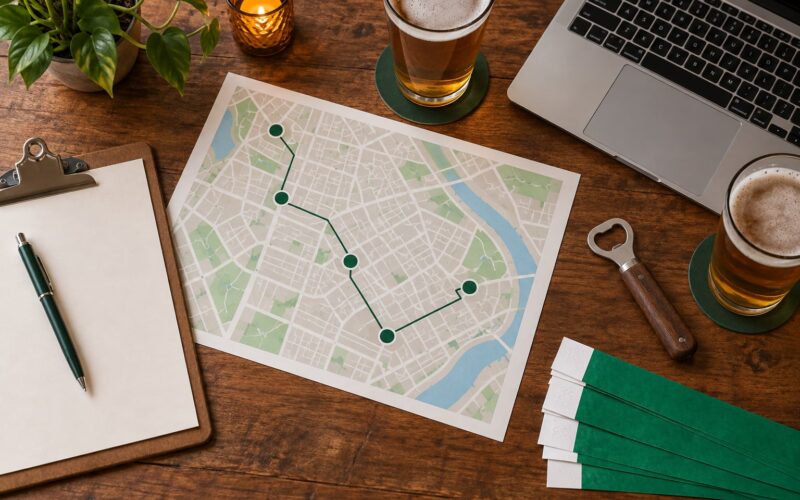
A ticketed crawl buys you a route someone else built. You usually check in at a starting venue, get a wristband or an app check-in, and each stop comes with a drink special, a welcome drink or waived entry.
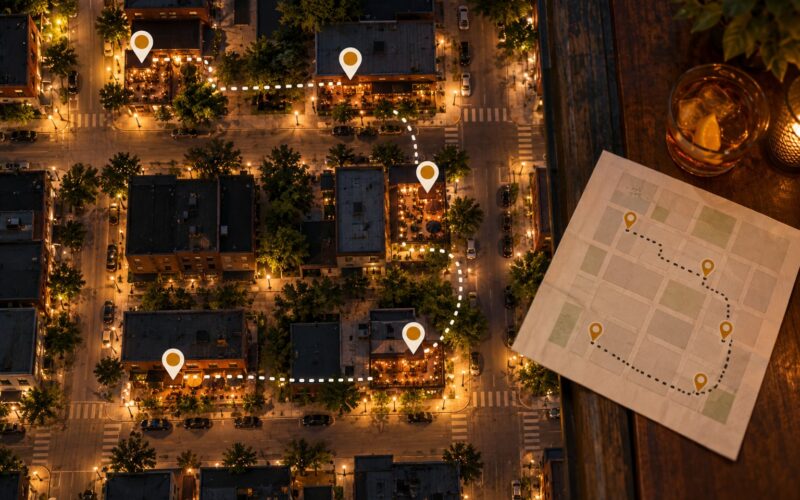
A self-planned crawl keeps every decision with you. You pick the neighbourhood, the opening hours and the walk between stops, and you pay as you go, which is also the better option for a mixed group where some people want one drink and not five.
What Is a Pub Crawl?
A pub crawl is the same night described with British or Irish words. The format has not changed: a set of pubs, usually on foot, usually in one small area, usually done in good order rather than fast.
What carries the meaning is the pub itself. A public house is a local drinking establishment built around beer on hand pumps, cask ale and real ale, simple food, and a room that regulars use as a living room. A pub crawl is a way of moving through a handful of them.
What makes a venue a pub?
- Beer served from hand pumps rather than a wall of taps, with cask ale a core part of the range.
- Simple hot food alongside, often with a set menu rather than an endless list.
- No table service in most cases. You order at the bar and take the tray back.
- Regulars who know the staff, and a landlord or landlady who knows them back.
- Short walkable routes, so you can do three or four before midnight.
A US bar is usually licensed for full liquor service, built around a longer drinks list, and shaped by television, a door policy or a cover charge. A gastropub blurs that line, serving real food and a craft list in a room that behaves like a pub.
What a pub crawl adds to the night
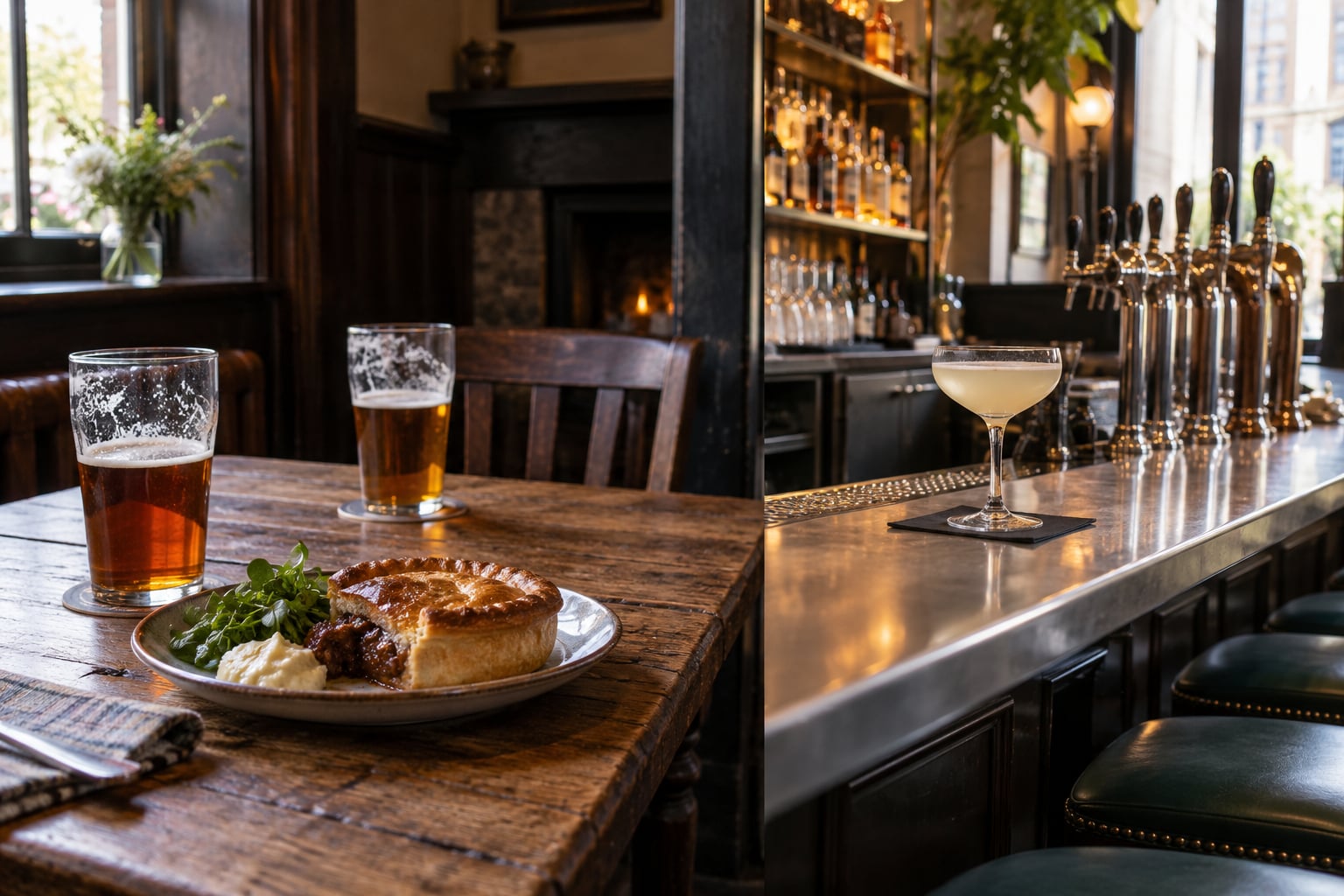
Food is part of the route, not an afterthought. A stop for pie and chips in the middle of a pub crawl is normal in Britain, and in Ireland the same night often includes a proper hot meal.
The pace is also different. Pubs tend to fill up earlier and settle down sooner, and a late licence, when a venue has permission to serve past normal closing, is often the sign that a crawl has a nightclub finale attached. US bar crawls lean on that final stop much more heavily.
How Do Bar Crawls and Pub Crawls Differ?
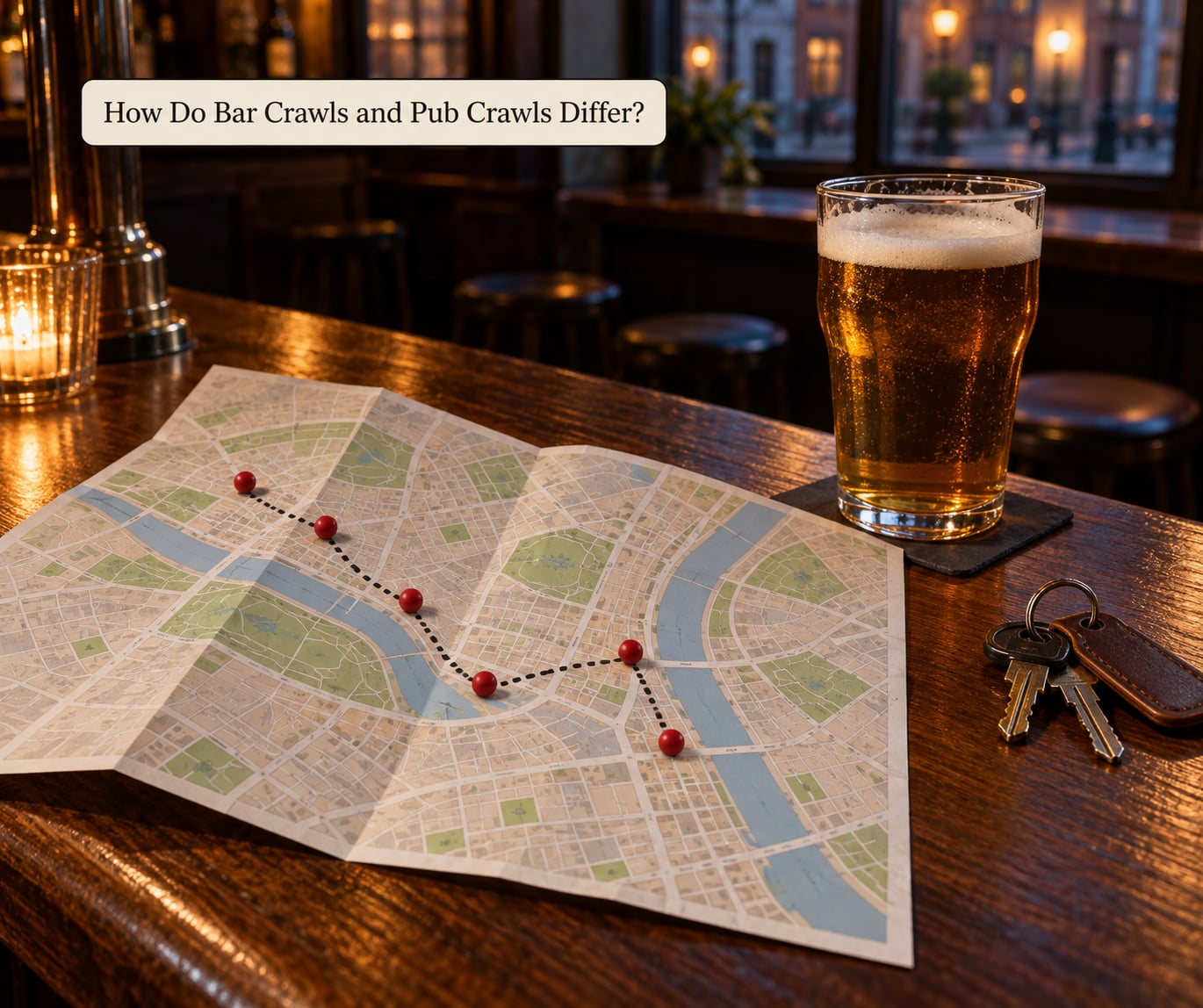
Bar crawl vs pub crawl: the terminology map
Usage is the first real split. Say bar crawl and you picture the US, Canada, Australia, or a tourist district anywhere in the world. Say pub crawl and you picture Britain, Ireland, or an American city with a British-style bar scene.
The same city can support both words. Someone in Chicago will call it a bar crawl; someone who booked a ticket for a route of British-style pubs will call it a pub crawl. Neither is wrong, and most venues use both in their own marketing.
Route, check-in and who pays
Mechanically the two are nearly identical, and this surprises people who assume a pub crawl is some formal British institution. Both can be self-planned or ticketed. Both can run on a check-in at the first venue, a wristband or an app, drink specials at each stop, and a group chat to stop anyone losing the plot.
The difference is in what the ticket buys. A pub crawl ticket tends to be weighted toward a fixed route, sometimes with a meal and an ale tasting included. An American bar crawl ticket more often leans on drink specials, priority entry at a busy venue, and transport back at the end.
Ordering, food and atmosphere
On a US bar crawl you may start on a pale ale, move to an Old Fashioned, and finish with a shot. On a pub crawl the order barely changes: a pint of cask ale, maybe a half of another one to compare.
Noise level is the other tell. Bar crawls in American cities tend to be loud, music-led and later. Pub crawls are conversational, with more time spent sitting and less time spent waiting for a table.
Are Bar Crawls and Pub Crawls the Same Thing?
Most of the time, yes. If someone invites you on a bar crawl or a pub crawl, the thing being described is a night out where you visit several drinking venues in a row, on foot, having a drink at each. The difference is vocabulary and what the word signals about the room, not the rules.
They separate in two situations. First, when an organiser uses the term to signal a style. A pub crawl tells a British audience to expect character, cask ale and heritage. A bar crawl tells an American audience to expect cocktails, DJs and a late finish. Both descriptions are promises about atmosphere.
Second, when a bar physically is a pub. Plenty of cities have British-style pubs, gastropubs and taphouses that run ticketed pub crawls, and plenty of American cities have organised bar crawls that stop at a working brewery taproom. Once the venues start to overlap, so do the labels.
One thing both words firmly do not mean is that you have to drink. Plenty of people join a crawl for the walk, the company and the food, and you should never be pressured into a drink you do not want.
Which Should You Choose?
Choose by the goal, not by the word. Here is the short version of how real groups pick.
- Craft beer exploration: pick the format with a brewery or taproom emphasis. An ale trail or a taproom-focused bar crawl gets you cask ale, real ale and brewery stops in the same night.
- Traditional pub atmosphere: a pub crawl, without question. You want rooms with regulars, hand pumps and food that arrives hot.
- A structured group outing: a ticketed crawl. Fixed stops, a host, check-in and a plan for getting everyone home take the coordination off your plate.
- A casual night out: a self-planned bar crawl. Pick three walkable venues and keep it loose. You control the pace, the spend and the finish time.
- A citywide night with mixed venues: a bar crawl. Cocktail bars, wine bars and a rooftop stop give you variety that a heritage route will not.
- Solo travellers: either works, and the choice is about the social structure. A ticketed crawl puts you in a room with thirty other people and a host, while a self-planned one leaves you arranging your own introductions, which is harder if you are new to the city.
- Mixed-age groups: plan fewer stops and include a sit-down stop. Three venues with a meal in the middle will hold more people together than six loud rooms.
- Groups with non-drinkers: tell the group in advance and build a route with a food stop, a coffee stop and an early exit. A clear plan removes the awkwardness later.
Whatever you pick, check the practical details before you go: the finish time, the last entry at each venue, whether a ticket includes drinks or only discounts, and how everyone gets home. Those four things decide whether a crawl works far more than the name on the flyer.
Frequently Asked Questions
Is a bar crawl the same as a pub crawl?
Almost always. Both mean visiting several drinking venues in one night, usually on foot, with a drink at each. The words differ mainly by region and by what they signal about atmosphere: a pub crawl promises local character and cask ale, a bar crawl promises cocktails, music and a later finish. Outside the UK and Ireland, the two are used interchangeably.
Are pub crawls more common in the UK?
Yes. Pub crawl is the everyday British and Irish term, and the culture behind it goes back centuries, with routes built around traditional locals, taphouses and cask ale. In the US, Canada and Australia, bar crawl is the default word, although British-style pubs and ticketed pub crawls do exist there. Tourist nightlife districts often use both on the same page.
Do bar crawls and pub crawls require reservations?
Not for a self-planned crawl, where you just show up at each venue. Ticketed or organized crawls do need a booking, usually through the organiser’s site, because venues are holding capacity for the group and check-in has to be counted. Groups of eight or more should ask venues in advance, particularly on a Saturday or during a festival, when a popular room will fill before nine.
What is usually included in a pub crawl ticket?
Usually a fixed route, check-in at the first venue, a welcome drink, drink specials or discounts at each stop, and sometimes a hosted finale bar. Some routes include a food stop or a tasting. Read the inclusions before paying, because a few operators sell the ticket as a package with prepaid drinks rather than as entry to a route, and clarify whether drinks are required.
Can I choose the beers on a bar crawl?
On a self-planned crawl, entirely. You are choosing the venue and paying as you go, so you can order whatever the room has. On a ticketed crawl you can usually order from the full bar list, but the drink specials are fixed, and some prepaid packages limit you to specific options. Tell the organiser about allergies or a preference for alcohol-free choices before the night.
How should I plan for alcohol and transportation on either crawl?
Eat before you start and treat one venue as your food stop, drink water between rounds, and set a finish time you can actually keep, especially in the UK and Ireland where licensed venues close early. Agree a meeting point at every stop in case the group splits. Leave one sober driver, use transit or a taxi, and book the ride before you order the first round, not after.
There is no rule that says a bar crawl is different from a pub crawl. Pick the word that matches the crowd and the country, then build the night yourself: three to six walkable stops, one of them somewhere you can sit down and eat, and a finish that gets everyone home comfortably.