Most bar crawls work best with 4 to 6 bars, roughly three to four hours from first drink to last call. Timed ticketed events can stretch to 8 or 10 stops, and themed traditions like the 12 Pubs of Christmas run the full dozen, but those are set formats rather than a target. The right number depends on how long you have, how far the venues sit from each other, and how much you actually plan to drink.
There is no rule that says a crawl must have a set number of stops. The number is just arithmetic wearing a party hat: time you have, minus travel time, minus buffers, divided by the time you want to spend in each room. Get that math right and the night flows. Get it wrong and you are the group standing on a sidewalk at 11:40 p.m. watching a venue finish its last pour without you.
This guide covers how to size a crawl, how to lay the route out so nobody gets left behind, and when to drop a stop. It works for a DIY neighbourhood crawl, a birthday crew, a bachelor party, or a solo traveller joining an organised event.
Table of Contents
- How Many Bars Should a Bar Crawl Include?
- What Determines the Right Number of Stops?
- How much time you actually have
- Walking distance between venues
- Pace and how much people drink
- Group size
- Venue requirements and closing times
- How everyone gets home
- Bar Count by Crawl Type
- How to Plan a Bar Crawl Around Your Time Limit
- A worked example for a three-and-a-half-hour window
- How many bars fit a three-hour crawl?
- How Many Bars Is Too Many?
- Tips for Choosing the Right Bar Count
- Frequently Asked Questions
- How many bars are usually in a bar crawl?
- How much money should I have for a bar crawl?
- What are the best rules for a pub crawl?
- How long should you stay at each bar on a bar crawl?
- How do I plan a successful bar crawl?
- Is a bar crawl the same as bar hopping?
- Conclusion
How Many Bars Should a Bar Crawl Include?
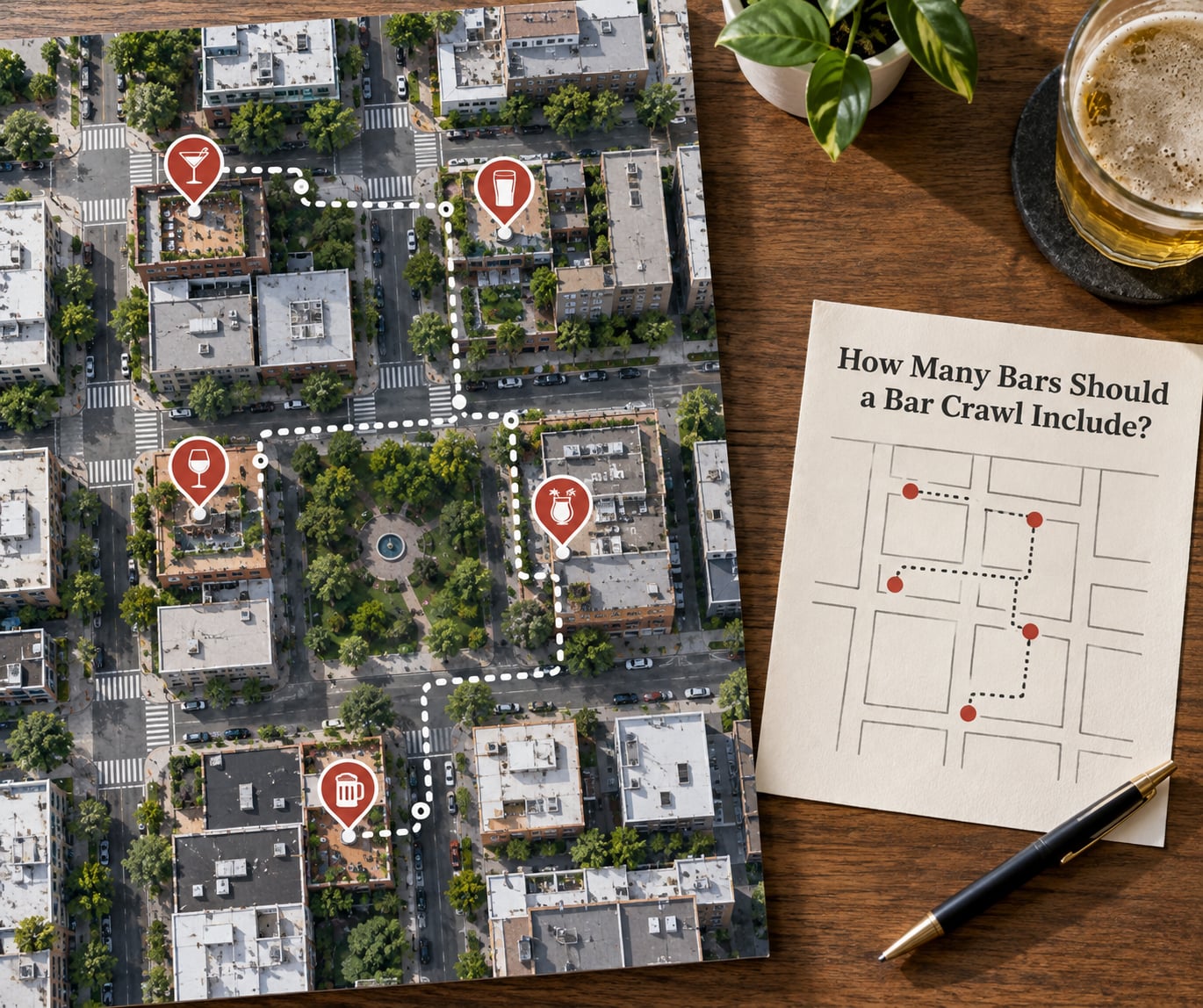
A bar crawl is a planned route through several drinking venues in one night, visited in order, usually with one drink at each stop before moving to the next. A stop is any venue the group actually enters and spends time in, which means a food stop counts even though nobody orders a drink there.
Bar hopping, by comparison, is looser: you leave when you feel like it and pick somewhere nearby. Pub golf adds a scoring layer, so you score a point at each venue with a drink, a card or a challenge, and the score carries the night rather than the route. The stop count stays similar, but the reason to keep moving is the game, not the itinerary.
On the numbers, most self-planned crawls land between 4 and 6 stops. CruiseCritic regulars planning ship-day crawls consistently describe five venues at 20 to 30 minutes each, which is about as clean a rule of thumb as you will find anywhere. BarCrawlLive, an organised crawl operator, puts the same 4 to 6 range on the average crawl. One answer on MetaFilter put it differently and helpfully: with six groups and six bars, each group starts at a different bar and rotates, so no venue gets swamped.
Our own planning default is simple. Four stops for an easy evening, five for a normal Friday, six for a group that wants a full night. Anything past eight needs a reason.
What Determines the Right Number of Stops?
How much time you actually have
This is the constraint that decides everything else. A three-hour window between dinner and a late finish gives you four or five bars at a comfortable pace. Two hours gives three. If your window is six hours and you are walking a wide spread of neighbourhoods, eight stops can work because the walking is longer and the evening stretches.
Walking distance between venues
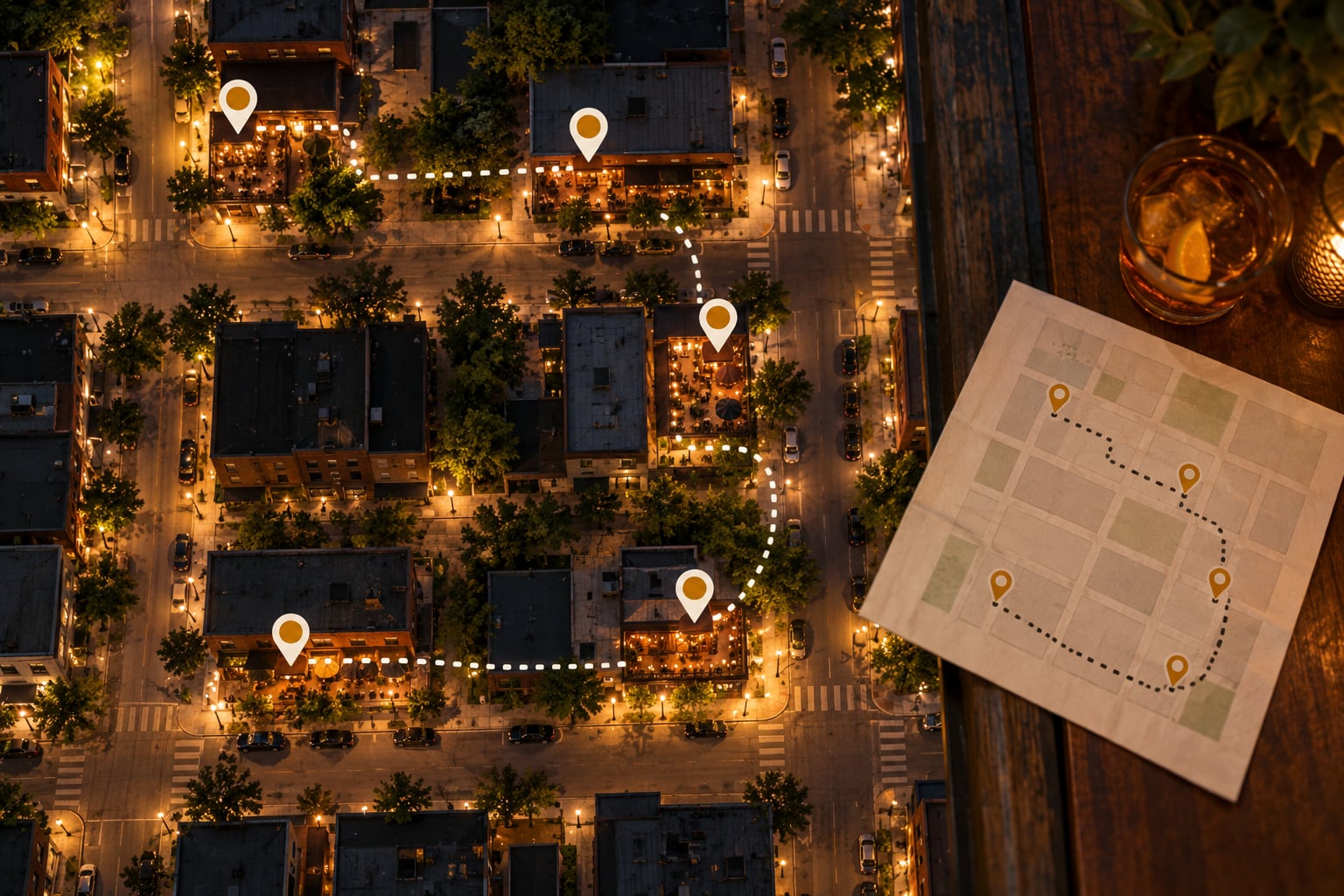
Budget 5 to 10 minutes of travel per hop, and add more if the route crosses a park, a bridge or a confusing street grid. Two stops fifteen minutes apart is a very different night from six stops a five-minute walk apart, even though the stop count is identical. Pick the neighbourhood first, then count the venues inside it, rather than the reverse.
Pace and how much people drink
Forum planning threads converge on one drink per bar, with something special at each venue rather than a round of five. Alcohol tolerance, meal timing and how long the night has been running all shrink the number of stops a group can handle. Crawlers describe two bars per sea day, which is a long afternoon and shows how quickly the count falls when venues are spread out.
Group size
Small groups move freely. Once you pass eight or ten people, split into two halves and run them as parallel groups meeting every other stop, or start staggered so you are not all arriving at the same door at once. Larger groups also need venues that will not refuse entry, and advance notice helps, as experienced crawlers recommend.
Venue requirements and closing times
Check opening hours before you commit to a stop count. A venue that closes at midnight cannot be the seventh bar of a crawl that starts at nine. Minimum spend rules, cover charges, kitchen closing times and dress codes all add friction, and one awkward venue can derail a tight route.
How everyone gets home
Settle the transport plan before you pick the last stop. If the group is relying on a train, the final venue has to sit near a station with service late enough. Never plan to drive. Have rideshares bookmarked and a sober driver identified at the start.
Bar Count by Crawl Type
The table below maps common crawl formats to a stop count, a realistic time at each venue, and the total running time including walking. Use it as a starting point and adjust for your own route.
| Crawl format | Bars | Time per stop | Total time | Best for |
|---|---|---|---|---|
| Quick after-work | 3 | 20 to 30 min | About 2 hours | Groups with an early finish or a train to catch |
| Standard neighbourhood crawl | 4 to 5 | 25 to 35 min | 3 to 4 hours | The default for a Friday or Saturday night |
| Extended crawl | 6 to 8 | 25 to 35 min | 4.5 to 6 hours | Big groups used to a long night out |
| Craft beer tasting crawl | 4 to 6 | 30 to 40 min | 3.5 to 5 hours | Paced sampling with small pours and notes |
| Timed ticketed event | 8 to 10 | 15 to 25 min | 4 to 5 hours | Organised crawls with wristbands and drink specials |
| Themed or pub golf marathon | 12 | 20 to 30 min | 5 to 7 hours | Holiday traditions and scored group games |
| Crawl with a food stop | 3 to 4 bars plus 1 | 30 to 45 min at the table | 3 to 4 hours | Groups starting hungry or planning an early finish |
Two things stand out. Fifteen-minute stops belong to organised events with drink specials and a schedule to keep, not to a DIY crawl where someone is ordering a second round. And the food stop is a full stop in the time math, even though it does not add a drink.
How to Plan a Bar Crawl Around Your Time Limit
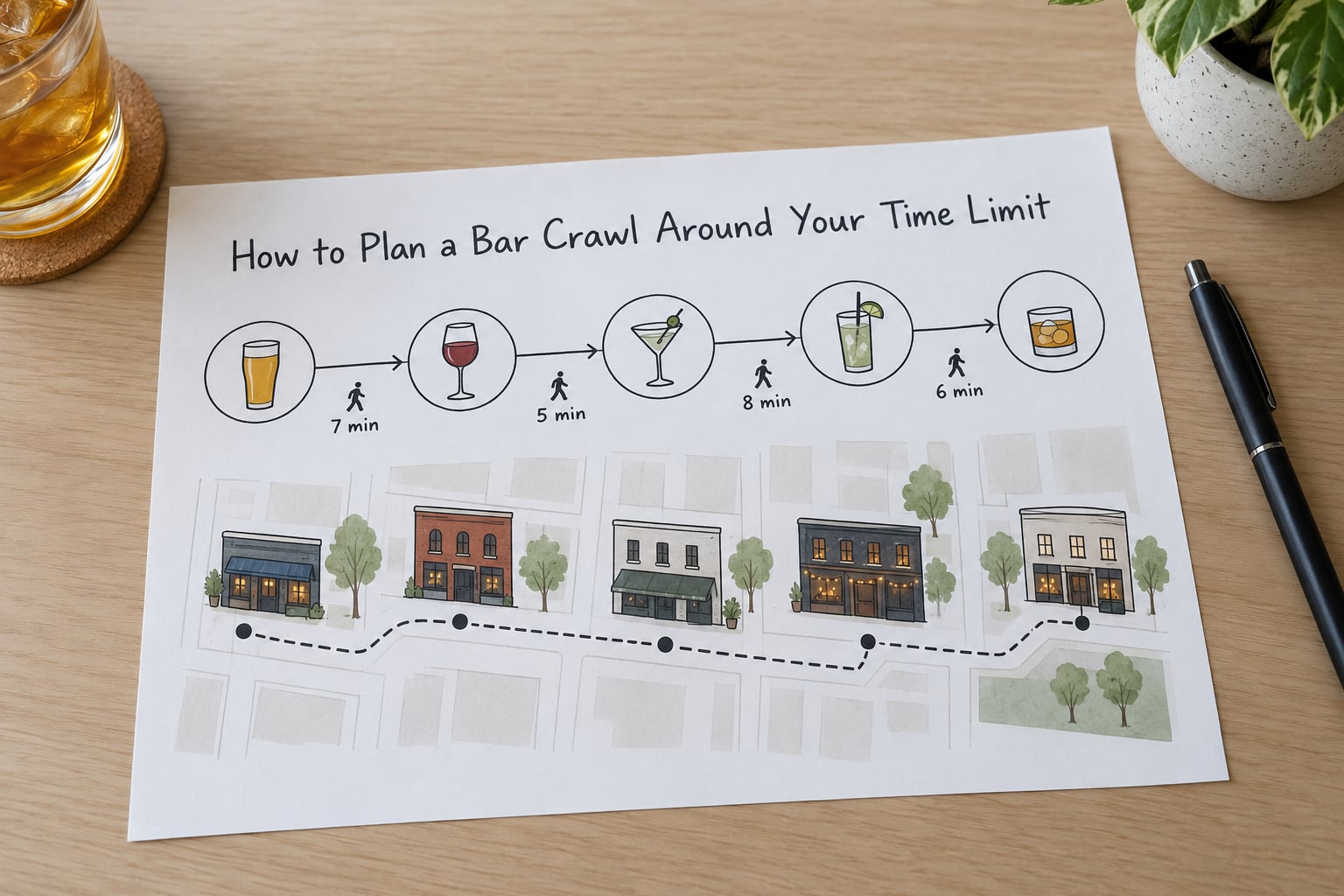
The formula is short enough to do in your head:
Number of bars = (available hours − 30 minutes for arrival and wrap-up) ÷ 45 minutes per stop
That 45 minutes covers roughly 25 to 30 minutes in the venue plus 10 to 15 minutes of walking, finding the door and getting settled. If your stops are close together, use 40. If they spread across town, use 55 and the number shrinks fast.
A worked example for a three-and-a-half-hour window
You finish dinner at 7:00 p.m., want to be home by 10:30, and your route is all within a ten-minute walk. That gives you three hours of crawl time. Take 30 minutes off for the first meet-up and the last call, leaving 2.5 hours. At 45 minutes per stop, that is 3.3 bars, so you pick four and plan to move early.
Here is how that four-stop night actually runs:
- 7:00 arrive at bar one, ordered drink by 7:10, out the door by 7:35
- 7:45 at bar two, out by 8:15
- 8:25 at bar three, with a 30-minute food stop folded in here rather than adding a fourth bar
- 9:10 at bar four, last orders by 9:45
- 9:50 group walks to the station or a rideshare point
Two hours fifty minutes of actual crawling, four venues, and everyone still home in time for work. A five-stop version of the same night works if you cut each visit to 20 minutes and every bar is a five-minute walk.
How many bars fit a three-hour crawl?
Three to four. Four is the comfortable ceiling, and five only if the venues are a short walk apart and nobody plans to linger. Longer windows scale in predictable steps: four bars at three hours, six bars at four and a half hours, eight bars at six hours with a generous walking allowance.
How Many Bars Is Too Many?
There is no fixed ceiling, but the warning signs are consistent. If your group is rushing the ordering process at every stop, the count is too high. If you keep walking the same stretch of pavement, your venues are spread too thin and you have added travel, not stops.
Other tells: people start disappearing between venues, the group splits, venues begin refusing entry because the arrival is too large and too late, and the last stop becomes a place where half the group sits down and never gets up. Complaints about organised crawls with 8 to 10 stops say exactly this. There is no time to enjoy a room when a wristband schedule is dragging you onward.
If the night is running long, cut from the end, not the middle. That preserves the route you have already walked and keeps the finish at a venue near transit. Tell the group the stop count at the start so nobody treats an early finish as a failure.
Another approach is the staggered start. Split six or eight people into two groups, send each to a different bar, and have them swap halfway through. Everyone sees more venues and the rooms stay comfortable. This is the same idea that came out of the MetaFilter thread with six groups and six bars, rotating through the route.
Tips for Choosing the Right Bar Count
- Pick the finish time first. Work the route backwards from the last call and the trip home, not forwards from the dinner table.
- Choose fewer bars, chosen well. Three venues you will enjoy beat seven you rush through. Mix types on the same street: a dive bar, a craft beer bar, a cocktail bar, a speakeasy, a live music venue.
- Eat before the first drink. A proper meal at the start, or a food stop in the middle, changes the stop math. That table row with 3 or 4 bars plus a meal is closer to reality than 6 bars and a bag of chips at midnight.
- Alternate with water and eat a snack at stop three. Pacing is the difference between a fun night and a rough one.
- Set the meeting point and the cut-off. Agree where anyone who falls behind will wait and at what time the group moves on without them. Decide how someone leaves early before the night starts, not during an argument at bar four.
- Warn big groups ahead. Venues appreciate advance notice for arrivals of 10 or more, and it keeps doors open for you.
- Budget before the first round. Drinks, entry fees, cover charges and food all scale with the stop count. A rough figure most people use is a set cash amount per person plus enough for one meal and rideshares home.
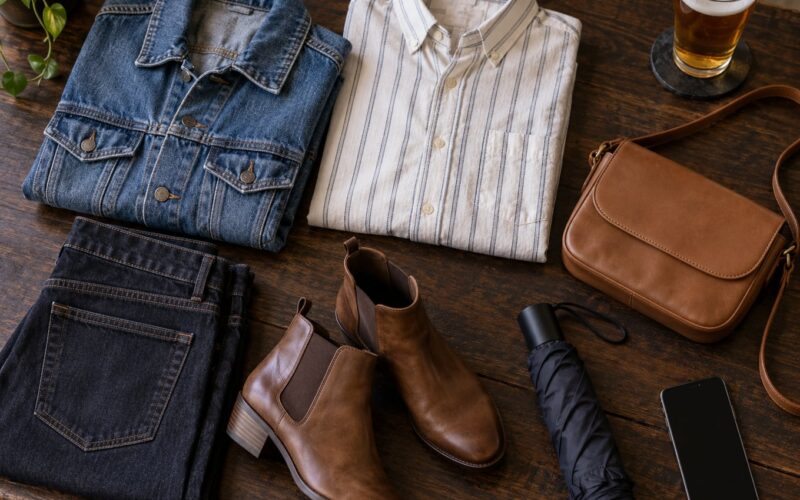
- Bring the basics. Photo ID, cash for the door, comfortable shoes, a portable charger and a layer for venues with strict dress codes.
- Plan the ride. No driving. Name a sober driver, or arrange rideshares and a transit option.
Frequently Asked Questions
How many bars are usually in a bar crawl?
Most bar crawls include four to six bars, which fills three to four hours with one drink per stop and a short walk between venues. Three stops make a good quick evening, while organised ticketed crawls often run eight to ten stops with fifteen to twenty-five minutes each. Themed traditions such as the 12 Pubs of Christmas use twelve by design.
How much money should I have for a bar crawl?
Set a cash figure per person before you start, then add enough for one meal and the ride home. The total scales with your stop count: drinks at each bar, plus any entry fee, cover charge or wristband minimum spend, plus food. Ask about entry costs when you pick venues so nothing surprising turns up at the door.
What are the best rules for a pub crawl?
The rules that work best are simple and agreed in advance: one drink per bar unless someone wants otherwise, a set time limit of 20 to 35 minutes per stop, eat before the first drink, alternate with water, stay with the group, and never drive. Also agree on the meeting point for anyone who falls behind and what happens when someone wants to head home early.
How long should you stay at each bar on a bar crawl?
Plan 20 to 30 minutes at a standard stop and up to 40 minutes when you are tasting. That covers ordering, one drink and finding somewhere to stand without rushing. Crawl planning threads consistently use 20 to 30 minutes per bar, which turns five venues into a comfortable three-hour night with walking included.
How do I plan a successful bar crawl?
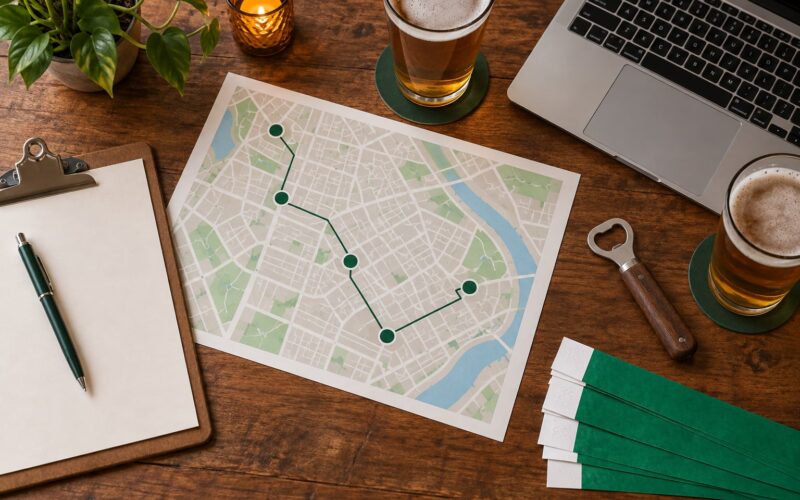
Pick a walkable neighbourhood, choose a start time and a firm finish time, then set the stop count from the time you have. Map the walking distance between venues, add a buffer for food and transit, and choose venues that will take a group of your size. Send a message with the meeting point, the first bar and the plan for anyone leaving early.
Is a bar crawl the same as bar hopping?
Not quite. Bar hopping is loose and reactive: you leave a bar and choose the next place based on mood and proximity. A bar crawl is planned in advance, with a set route, an agreed number of stops and a rough schedule for each. Pub golf adds a scoring system on top, so the game carries the night rather than the route.
Conclusion
Start with four to six bars for a casual crawl, then adjust for format, timing, transport and group size. Three stops fit a two-hour evening, eight or ten belong to timed ticketed events, and a food stop counts as time even when it never counts as a drink.
The reliable move is to choose your finish time first and build the route backwards from it. Pick the neighbourhood, count the venues inside it, check opening hours, and agree the meeting point before anyone leaves the house. Do that and the stop count takes care of itself.