To plan a bar crawl route for a large group, pick one walkable neighborhood, choose three to five venues with different personalities, and give each stop a 45 to 60 minute window plus a 10 minute walk buffer. Add a named end point near transit and share the whole thing as a one-page itinerary. Budget about four to eight hours of planning, most of it spent on phone calls to venues, and the actual crawl runs three to five hours.
Large groups almost never fail because the night was boring. They fail on logistics: someone books the wrong place, the group splits at the door, the first venue turns people away at the door, and half the crew ends up waiting outside a taco place two blocks away wondering where everyone went.
The fix is boring in the best way. Decide the number of stops before you look at a single menu, give every venue a job to do, and set a hard end time so the night has a shape.
Table of Contents
- What You Need
- Step-by-Step
- 1. Set the group size, budget, and boundaries
- 2. Choose a compact area and a realistic start time
- 3. Build a route around three to five stops
- 4. Check hours, reservations, and venue rules
- 5. Assign roles and create a shared itinerary
- 6. Build in food, water, and nonalcoholic stops
- 7. Test the route and prepare a backup plan
- 8. Confirm details and run the crawl
- Common Mistakes
- Frequently Asked Questions
- How many bars should a bar crawl have for a large group?
- Do you need a reservation for a bar crawl group?
- How do you keep a large group together on a bar crawl?
- What time should you start a bar crawl?
- How much money should I budget per person for a bar crawl?
- What do you do when guests arrive late or want to leave early?
- Conclusion
What You Need
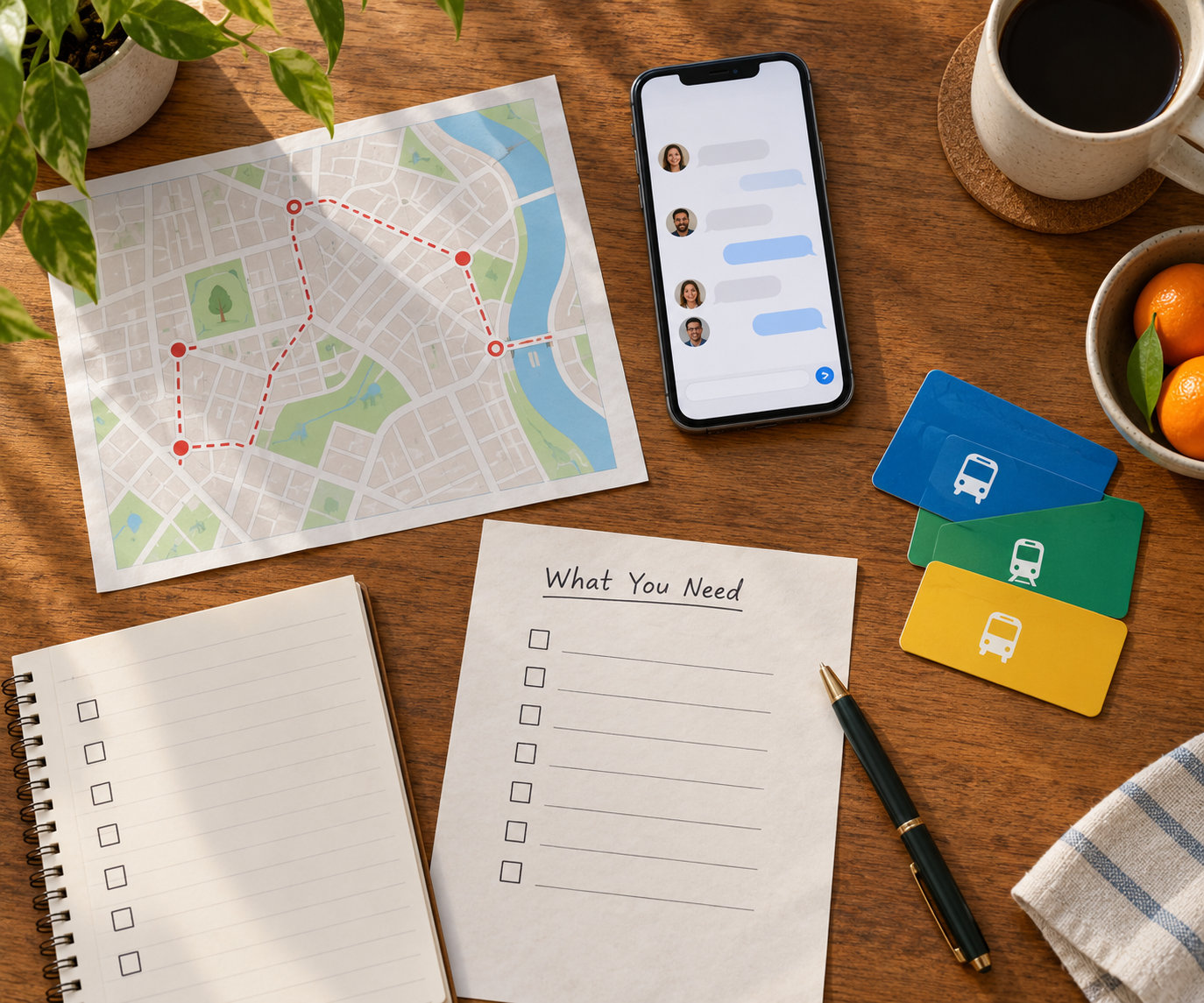
You need a firm headcount, a neighborhood, and a way to get the plan in front of everyone. Gather these before you start picking bars, because each one narrows the options.
- A headcount and a contact list. Everyone on it, with a phone number, including the people who tend to arrive late. Names on a group chat are not the same as a headcount you can rely on.
- A per-person spending range and who is paying for whom. Decide early whether the birthday person is being toasted, whether it is a cash round, or whether everyone pays their own way. Mixed arrangements get messy fast.
- A date, a start time, and a hard end time. Venues have closing times and last-call cutoffs, and a group that ignores them ends up stranded outside a locked door.
- A candidate neighborhood. Ideally one where the bars sit within a ten minute walk of each other.
- Venue policies and reservation details. Group minimums, whether a deposit is required, whether outside food or alcohol is allowed, and what the card minimum is for large parties.
- A transportation plan. Parking, rideshare pickup spots, or the sober drivers. Decide this before the night, not at 1 a.m.
- Dietary and accessibility notes. Who cannot eat gluten, who needs step-free access, who is not drinking alcohol, and who should not be left walking alone late.
- A shared itinerary. One document or message with the stop order, times, addresses, and the end point.
Step-by-Step
1. Set the group size, budget, and boundaries
Lock the headcount first, because it determines everything downstream. Twenty-five people need different venues than ten, and venues that comfortably take twelve will turn away a group of thirty at the door.
Set a per-person range and a pace. A crawl that includes food and four stops runs about three and a half to five hours, and asking twenty people to commit to that on a work night is a different ask than a Saturday afternoon.
Collect preferences without turning it into a survey marathon. A single group message works: reply with your name, whether you are driving, and any allergy or access need. Everything else, like favourite beer style, you can skip. People who care will tell you on the night.
Also decide the boundaries now. Set a last-call time, decide who is the sober person for the evening, and agree on what happens if someone wants to leave early. That last one matters more than it sounds, because a group of twenty-five always has one or two people who bail out at stop two.
2. Choose a compact area and a realistic start time
Compactness is the single biggest factor in whether a big group works. If every venue is within a ten minute walk on sidewalks, a group can absorb a lost member in minutes. If the stops are twenty minutes apart across a transit gap, the group splits permanently.
Start in the early evening. Most downtown bars are quietest from 6 to 8 p.m., which means shorter lines, faster service, and a real chance of seating twenty-five people together. Starting at 9 p.m. means fighting the peak crowd and the peak queue for the bathroom.
Add your real-world buffers before you commit. A transit delay, a slow-moving group, or a 9 p.m. rush will eat fifteen minutes you did not plan for. Put those minutes into the schedule rather than hoping they do not happen.
3. Build a route around three to five stops
Plan three to five stops for a large group, and never more. Past five, the group fragments, the tail end arrives tired, and the organizer spends the night counting heads instead of enjoying the night.
Use this as your sizing guide:
| Group size | Stops | Minutes per stop | Total time |
|---|---|---|---|
| Up to 10 | 4 to 5 | 45 to 60 | 3.5 to 5 hours |
| 11 to 20 | 3 to 4 | 50 to 60 | 3.5 to 4.5 hours |
| 21 to 30 | 3 to 4 | 55 to 75 | 4 to 5 hours |
| 31 to 50 | 2 to 3 | 60 to 90 | 3.5 to 5 hours |
| More than 50 | 2, or split into two waves | 60 to 90 | 3 to 4 hours |
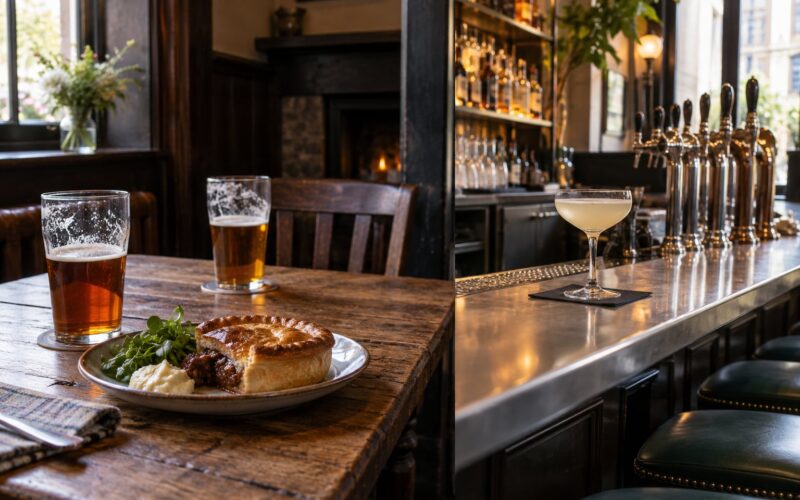
Give every bar a role. The first stop gathers everyone and gets the energy up, so pick somewhere with space, high ceilings, and a bar that can serve a crowd quickly. The second is where conversation happens, so pick somewhere with seating and a calmer room. The third can be the loud one. The last stop should be near a transit hub or a rideshare-friendly street so nobody has to walk far at the end.
Mix in at least one non-bar or food-focused stop. A taco place or a noodle shop in the middle of the crawl resets the group, absorbs the slow walkers, and gives the non-drinkers somewhere to actually spend time. Alternating a bar stop with a food stop is the simplest pacing trick there is.
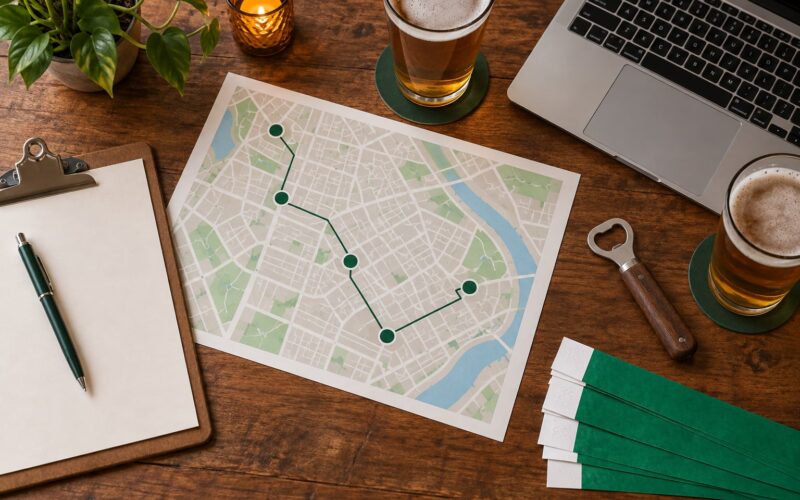
Shape the route so it comes back toward where it started. A loop or an out-and-back path means the last venue is close to the first, so people who left early or went home can rejoin the group without a twenty-minute detour. Avoid zigzagging back and forth across the same streets; it adds walking time with nothing to show for it.
Here is what a finished four-stop route looks like, for a 25-person crawl starting at 6:30 p.m.:
| Stop | Venue role | Arrive | Leave | Walk |
|---|---|---|---|---|
| 1 | Gather, first drinks | 6:30 p.m. | 7:30 p.m. | 8 min |
| 2 | Food and seating | 7:40 p.m. | 8:30 p.m. | 6 min |
| 3 | The loud one | 8:40 p.m. | 9:45 p.m. | 9 min |
| 4 | Late landing near transit | 9:55 p.m. | 11:00 p.m. | 7 min |
Notice the ten minute gaps. They look wasteful on paper and they are the reason the night stays on schedule.
4. Check hours, reservations, and venue rules
Call every venue before you publish the itinerary. This is the boring step that saves the night, and it takes about ten minutes per bar.
Ask what their largest seated group is, whether they take reservations for groups that size, and whether a deposit or minimum spend applies. Ask when the kitchen stops taking orders, because a group that arrives at 9 p.m. expecting food at a place that closed the kitchen at 8 will not be pleased. Confirm the minimum age requirement for entry, what payment methods they take, and whether outside food or alcohol is allowed.
Large groups sometimes cannot get in even with a reservation because the venue is at capacity on the floor. Bathroom and queue capacity are real constraints at scale, and a bar that handles 60 people comfortably on an ordinary night may not handle 60 crawl participants with backpacks. Ask about the floor plan, not just the legal limit.
If a venue cannot take your group, move it now, while you have options. Do not plan a route that depends on a maybe.
5. Assign roles and create a shared itinerary
You are not the only person doing work. Split it up so that the group does not depend on one organizer who is also trying to have fun.
- Reservation person: holds all venue confirmations and contact details.
- Route person: owns the map, the walk times, and the backup venue.
- Headcount person: counts at every stop, usually from a group photo or a show of hands at the door.
- Safety person: stays sober, watches the sober drivers, and handles rideshares.
- Money person (optional): tracks the shared tab and who paid in cash.
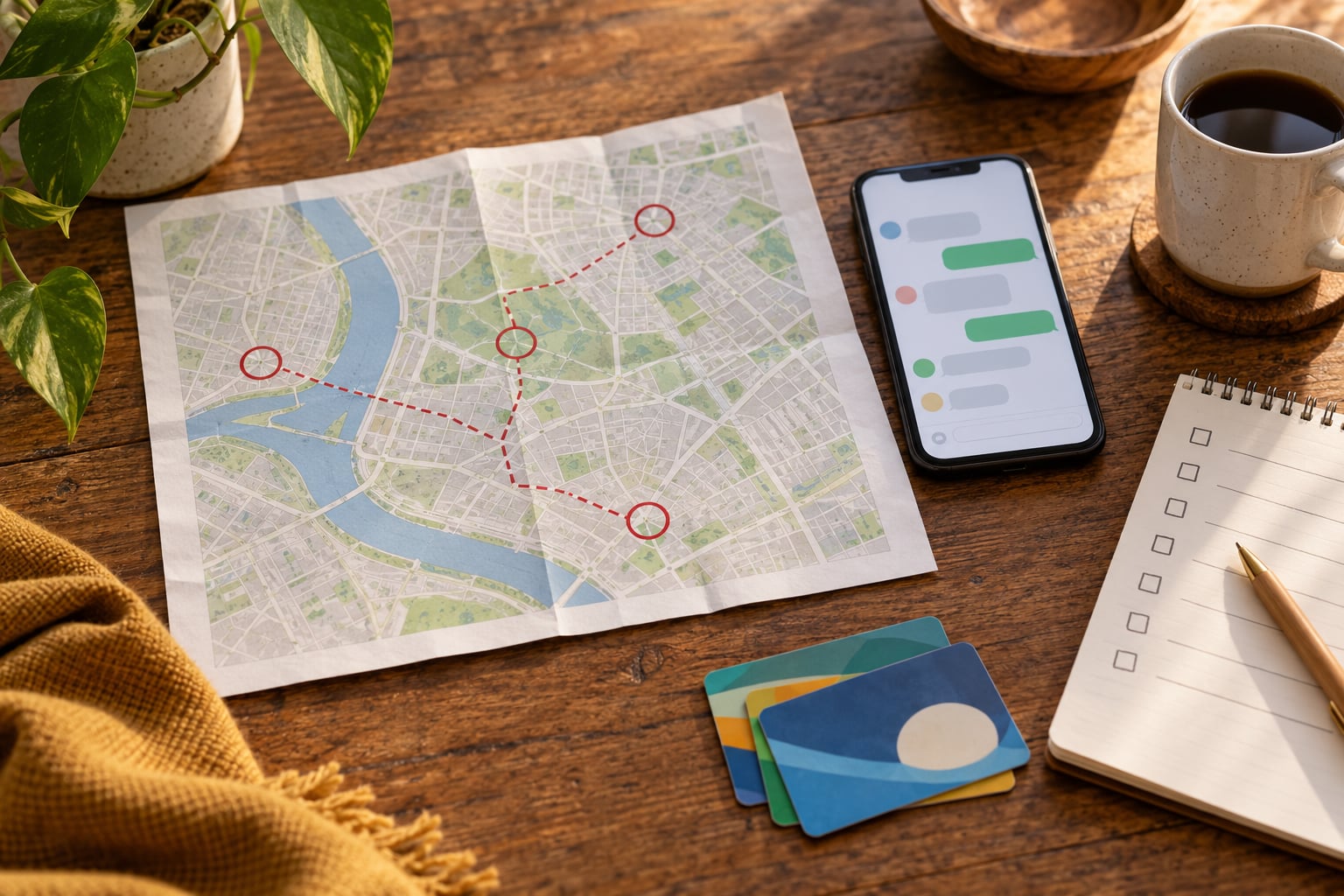
Then write one itinerary. It needs the start time and meeting point, the ordered stops with addresses, the planned arrival and departure times, the transit or walk notes, each venue’s group rules, and the end-of-night plan. One page, or one long message, is enough.
Send it twice: once a few days out so people can plan around it, and again on the day so nobody has to dig for it. That is the single most requested feature in bar crawl planning forums, where organizers keep asking for a way to show the group the ordered list and where the night has already got to. A pinned message with a map link does most of that job for free.
6. Build in food, water, and nonalcoholic stops
Plan real food. Nobody should reach stop three hungry, because a hungry group drinks faster, orders more, and falls apart by stop four. A mid-crawl food stop is the cheapest insurance in the entire plan.
Make water the default drink. Put a water station or a pitcher on each table and mention it in the itinerary, not just in a passing comment at stop one that nobody hears.
Offer something for the people who are not drinking or are drinking lightly. Zero-proof cocktails, NA beer, and low-ABV options are common now, and a mix-drinker group that is planned for will stay together the whole night. If a stop has nothing but spirits, assign it to the people who want it and give the others a better option.
7. Test the route and prepare a backup plan
Walk the route yourself, or at least map it end to end, before the night. Note real walk times, check the lighting on the side streets, and find the actual regroup point at each venue. A regroup point is a specific spot: the front door, the host stand, the big chalkboard sign. A vague “by the bar” does not work when three people arrive from different directions.
Choose one backup venue per stop. Somewhere with space, near the route, that has agreed to take your group on short notice. Paid crawls ask for a group rate or a wristband deal when they book; a friendly backup bar who expects you can do the same thing for free.
Have a rain plan that is not just a shorter version of the same route. Two indoor stops and a longer transit hop beats a wet walk between three bars, and it takes five minutes to write down.
8. Confirm details and run the crawl
Two days before, reconfirm every reservation by message, not by memory. Then run the night with light structure: a headcount at each stop, a five-minute warning before departure, and a firm closing time you announce out loud.
Do not force stragglers. Announce the next stop at every venue, post the next address in the group chat, and give the group a clear two-minute window before you walk. People catch up when the plan is visible. Groups splinter when it lives in the organizer’s head.
Close the night deliberately. Name the end venue in the itinerary, point everyone at the rideshare pickup spot, and confirm who is driving and who is not. The last stop of a bar crawl should end at a transit station or a well-lit corner, not a bar that has just stopped serving drinks.
Common Mistakes
Almost every failed large-group crawl traces back to one of these.
- Overloading the itinerary. Six stops sounds generous on paper and feels endless in practice. Fix: cut to four and let the group move at the speed of its slowest member.
- Venues that are too far apart. Fix: keep every stop inside a ten minute walk. If one bar does not fit the district, drop it.
- Relying on walkups. A group of 25 that arrives unannounced at a full bar will spend twenty minutes on the pavement. Fix: reserve every stop, or split into two waves.
- Skipping the food plan. Fix: put a substantial food stop in the middle and a late-night food option near the end.
- Leaving transportation to chance. Fix: name the sober drivers, name the rideshare pickup spot, and tell the group before the first drink, not after the fifth.
- Forgetting the final headcount. Someone leaves early in a group this size. Fix: count at every stop and agree on a cutoff time for calling stragglers.
- Ignoring closing times. Fix: check last call and kitchen cutoffs when you book, and set your own end time ten minutes earlier.
- Assuming everyone drinks the same way. Fix: plan food and nonalcoholic options into the route, not as an afterthought.
Frequently Asked Questions
How many bars should a bar crawl have for a large group?
Plan three to five stops, and fewer as the group grows. Groups of 20 to 30 do best with three or four stops at 55 to 75 minutes each, while groups above 30 should aim for two or three. Every extra stop costs ten minutes of walking and a new bathroom queue, and the tail of the group gets tired long before the schedule says the night is over.
Do you need a reservation for a bar crawl group?
Yes, for any group over about ten people. Call or message each venue with your headcount, arrival time, and how long you plan to stay, then ask about group minimums or deposits. Large bars can hit floor capacity, bathroom capacity, and bar throughput all at once, and a reservation is the only thing that protects your group from a queue at the door.
How do you keep a large group together on a bar crawl?
Give every venue a specific regroup point, count heads at each stop, and post the next stop’s name, address, and departure time in the group chat at every venue. Announce a firm two-minute window before walking. Groups that fragment usually did not agree on where to meet, and the fix costs nothing.
What time should you start a bar crawl?
Between 6 and 8 p.m. for most city bars. That window is quiet enough to seat a large group, get drinks quickly, and order food without waiting on a kitchen rush. Starting later means competing with peak crowds and longer queues for the bathroom, which is exactly where a big group stalls.
How much money should I budget per person for a bar crawl?
Work it out as drinks per stop multiplied by stops, plus one substantial meal. Four stops at two drinks each is around eight drinks across the night, so most groups land somewhere between the cost of that and a good dinner. Tell the group the rough number in advance so nobody is surprised at the end, and decide up front whether the tab is shared or individual.
What do you do when guests arrive late or want to leave early?
Name a rendezvous venue and a cutoff time in the itinerary. Anyone running late heads straight to the current or next stop, and anyone leaving early knows where the group ends up and by when. This is also the moment the sober organizer steps in, because a group of 25 and a person alone at midnight is the scenario worth planning for.
Conclusion
To plan a bar crawl route for a large group, start with three things: a confirmed headcount, one compact walkable neighborhood, and a first and last venue you have actually reserved. Everything after that is detail, and the detail is where the night gets good.
Pick three or four stops, give each one a job, add ten minutes of walking buffer, and end near transit. Then write the itinerary, send it twice, and let people know where the night ends. That is the whole method, and it works for a birthday crowd, a work send-off, or a reunion group that has not seen each other in ten years.