The most common bar crawl mistakes to avoid are starting too fast, going out on an empty stomach, and not arranging a ride home before the night begins. A bar crawl is a planned route of three to six bars visited in one night, with a drink or two at each stop and about 30 to 45 minutes spent in each place. Most ruined nights come down to a handful of avoidable habits rather than bad drinks or bad venues.
I’ve watched the same three things wreck otherwise good nights: a group that front-loads the first hour, skips food because the line is long, and assumes someone else planned the ride home. Fix those and a crawl becomes an easy four-hour evening instead of a story nobody enjoys retelling.
The list below covers the ten mistakes that come up most, what each one actually costs you, and the simple correction you can make before you leave the house.
Table of Contents
- Bar Crawl Mistakes to Avoid at a Glance
- 1. Not Checking the Venue List Beforehand
- 2. Choosing a Route With Nowhere to Sit or Recharge
- 3. Starting the Crawl Without Eating
- 4. Drinking Too Fast at the First Stop
- Bar crawl mistakes to avoid in the first hour
- 5. Losing Track of How Much You Have Drunk
- 6. Ignoring Heat, Dehydration, and Weather
- 7. Assuming Every Stop Is Required
- 8. Spending Without a Budget
- 9. Leaving Personal Belongings Behind or Unsecured
- 10. Making the Last Stop the Same as the First
- Frequently Asked Questions
- How long should I spend at each bar on a bar crawl?
- What are the rules of a bar crawl?
- How do I pace myself on a bar crawl?
- How do I say no to a round when my friends keep ordering?
- What should I do if a friend in my group is getting too drunk?
- What not to do at a bar on a pub crawl?
- A Better Bar Crawl Starts Before the First Drink
Bar Crawl Mistakes to Avoid at a Glance
| Mistake | Why it ruins the night | Quick fix |
|---|---|---|
| Not checking the venue list | Closed doors, sold-out specials, missed check-in | Confirm hours, ticket rules and the route map the day before |
| A route with nowhere to sit | Standing for three hours wrecks your feet and your mood | Build one seated or food-serving stop into every three venues |
| Starting on an empty stomach | Alcohol hits harder and faster, and hangovers are worse | Eat a real meal with protein and carbs two hours before |
| Drinking fast at the first stop | You are behind the curve before stop two begins | One drink, then a 20 to 30 minute wait before ordering again |
| Losing count of drinks | Delayed intoxication means you overshoot without noticing | Count stops, not drinks, and add one to the tally for the first hour |
| Ignoring heat and hydration | Dehydration piles onto the alcohol and drains you | A glass of water between every drink, and a break in the shade |
| Treating every stop as required | Forced drinks ruin the stop and sour the group | Skip a venue with a reason and a plan for the next one |
| No spending limit | Tasting pours and rounds add up quietly | Set a cap before you go and keep cash out of sight |
| Unsecured belongings | Lost phones and keys end the night early | Front pocket, zipped bag, and a check at every stop |
| Ending as hard as you started | The finale turns a good night into a bad morning | Make the last venue seated, with food, water and the ride booked |
1. Not Checking the Venue List Beforehand
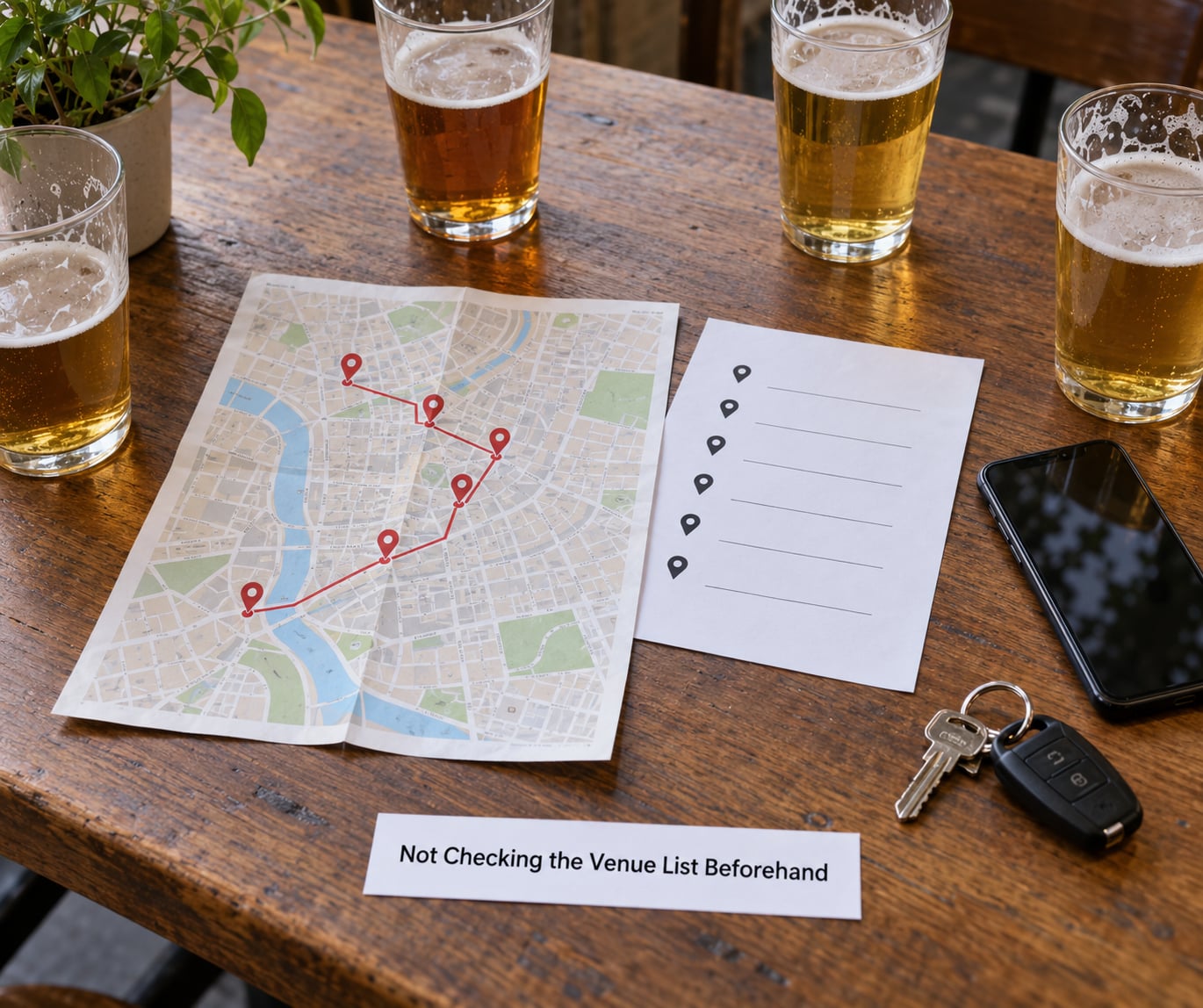
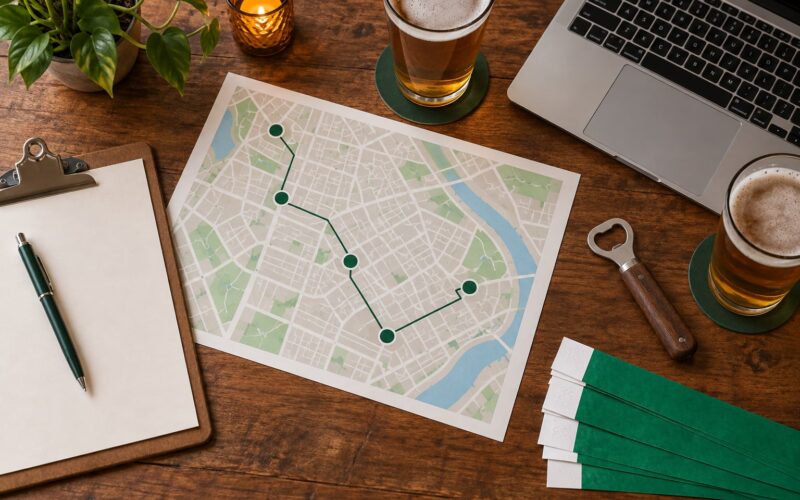
Confirm the venues, opening hours, and any ticket requirement before you leave. Organized crawls usually check you in once at the start, hand out a wristband, and sometimes give you a drink special or a food discount at each stop. A wristband that is lost or a special you never claimed is a waste of the fee you paid.
Ask three things: when is check-in, is there a cut-off for late arrivals, and can you re-enter a venue you left? The answer to that last one decides whether a forgotten jacket is a five-minute problem or the end of your night.
Route planning is cheap. A screenshot of the venue list in a group chat takes two minutes and saves twenty minutes of standing on a sidewalk wondering where everyone went.
2. Choosing a Route With Nowhere to Sit or Recharge
Most bar crawl mistakes to avoid start with geography. A route of four loud standing rooms in a row is fine for one hour, not for four. Without a place to sit down, your feet, your back and your attention all suffer, and the group turns in around stop three.
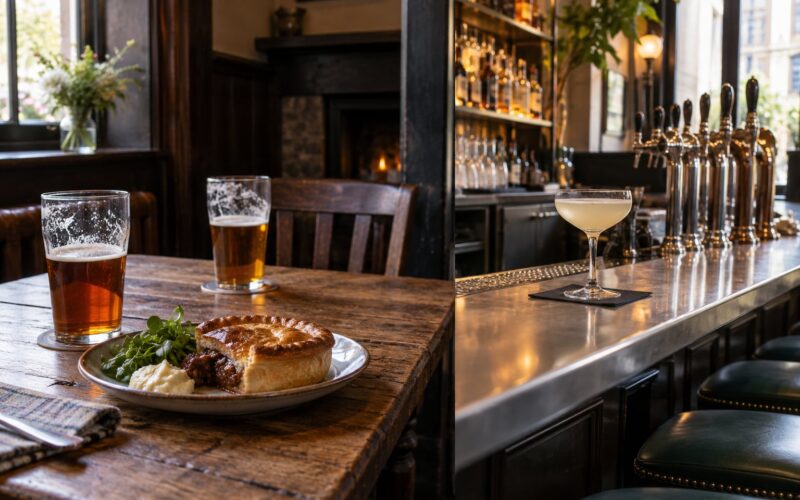
Balance the route. For every loud room, add one place with chairs, a food menu, or both. A restaurant-bar or a brewpub with tables usually handles the middle of the route, and a brewery taproom is a natural sit-down stop if the group is up for it.
Also check the walking distance between stops. Ten minutes on foot is a pleasant stroll. Thirty minutes of late-night sidewalk walking in whatever shoes you picked is how people lose their group and their footwear.
3. Starting the Crawl Without Eating
Eat before you go, not at the first venue. Alcohol is absorbed faster on an empty stomach, which is why a drink that felt fine at six turns unpleasant by nine. Food slows that process down and gives you something to do while the group decides what to order.
Build the meal around protein, carbohydrates and a little fat: a burrito, pasta, rice and chicken, or a sandwich with a side. Something fried and salty on its own is not enough. Give it an hour or two of lead time so you are not ordering food in a rush at the door.
Then eat again during the crawl. One substantial stop with real food, rather than bar fries at four venues, does more for the next morning than anything else you will do that night.
4. Drinking Too Fast at the First Stop
Bar crawl mistakes to avoid in the first hour
The first stop sets the pace for everything after it. Drink fast there and you are behind the curve for the rest of the night, and you will not even notice because the feeling of intoxication builds slowly.
A reasonable rule: one drink at the first venue, then wait 20 to 30 minutes before deciding whether you want another. Your liver clears roughly one standard drink per hour, so anything faster than that is a loan against how you will feel later. Waiting 30 minutes at the first stop also stops you from setting a pace the rest of the group has to match.
Order water alongside the beer, and alternate. You will still be drinking at the same rate; you just will not be stacking every standard drink on top of the last one.
5. Losing Track of How Much You Have Drunk
Count stops, not drinks. Most groups know they are on number four; almost none can say how many beers that adds up to once the shared rounds and the shots get folded in.
Keep a running tally in your phone notes, updated when you sit down at each venue. Add an extra mark for the first hour, because that is where the real number usually hides. Tasting pours count too. A shared taster at a craft beer stop is a full standard drink, not a sample.
Watch the honest signals, which arrive before the embarrassing ones: skipping food, needing the restroom constantly, losing track of the route, and getting loud. Any one of those means stop ordering alcohol and start ordering water.
6. Ignoring Heat, Dehydration, and Weather
Alcohol increases fluid loss, and a night of walking compounds it. By stop four you can feel tired, headachy and lightheaded, and most people blame the beer when the real cause is a combination of alcohol, heat and no water.
Keep a glass of water in front of you at every stop and finish it before the next round. Eat something salty at one venue. On warm nights, duck into air conditioning and air-conditioned transport rather than standing outside in a queue.
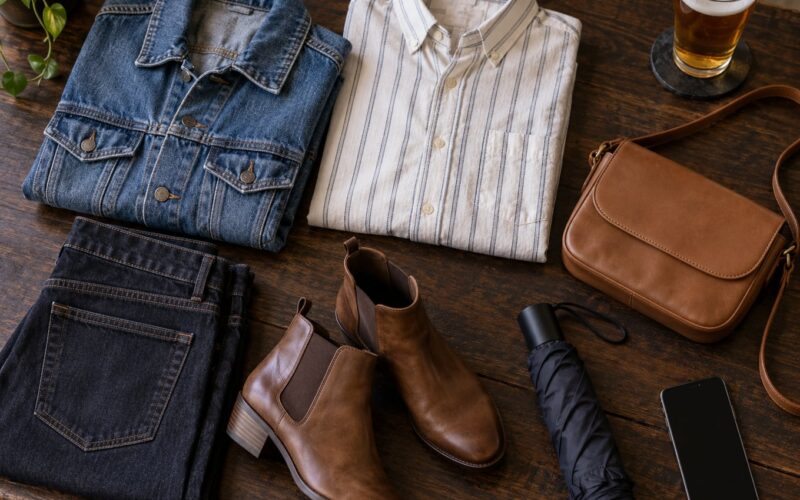
Check the forecast and dress for the walk, not for the photos. Comfortable shoes, a layer you can tie around your waist, and a light rain shell cover most of what a year of bar crawling throws at you. Skip anything white and fragile if the theme involves coloured drinks.
7. Assuming Every Stop Is Required
A ticket gets you into the venues. It does not order you a drink at each one. Treating every stop as mandatory is one of the fastest ways to push past a limit you set at the start.
Skipping is easy when you have a line ready. Something like “I’m done drinking for a bit, catching up with you at the next one” works, needs no explanation, and usually gets you a nod. Offer to take the group photo, order the food, or carry the jacket nobody wants.
The same rule applies to other people. Watch the group rather than only your own glass, and if someone is going down fast, get them water, food, a seat and a quieter corner instead of another round.
8. Spending Without a Budget
Crawls cost more than people expect because tasting pours and shared rounds do not feel like full drinks while you are ordering them. Set a number before the night, not after the tab.
Estimate rather than calculate live. If you expect five stops, decide what a normal stop costs you and what the evening ceiling is, then hold to it. For craft beer stops, a tasting flight of four small pours is one standard drink in total, not four drinks you skipped.
Two habits keep a tab in check. Keep your cash in one place so you can see what is gone, and skip drink specials that only pay off if you plan several rounds in a single venue. Buy a small amount of food at one stop; it costs less than the drinks it replaces.
9. Leaving Personal Belongings Behind or Unsecured
Phone, wallet, keys, jacket, ticket or wristband. On a four-venue night you move through four coat checks, four bathroom trips and four crowded exits, and anything left behind has a habit of staying behind.
Use one bag that stays on you and zips closed, with the phone in a front pocket. Leave valuables at home, at the hotel, or with a sober friend who is not drinking. A crossbody or money belt beats a loose jacket pocket every time.
Build a thirty-second departure habit: phone, wallet, keys, layer, wristband. Run it every single time you stand up. Losing keys at stop three ends the night, and a spare set at home is a small price for not walking home in the dark.
10. Making the Last Stop the Same as the First
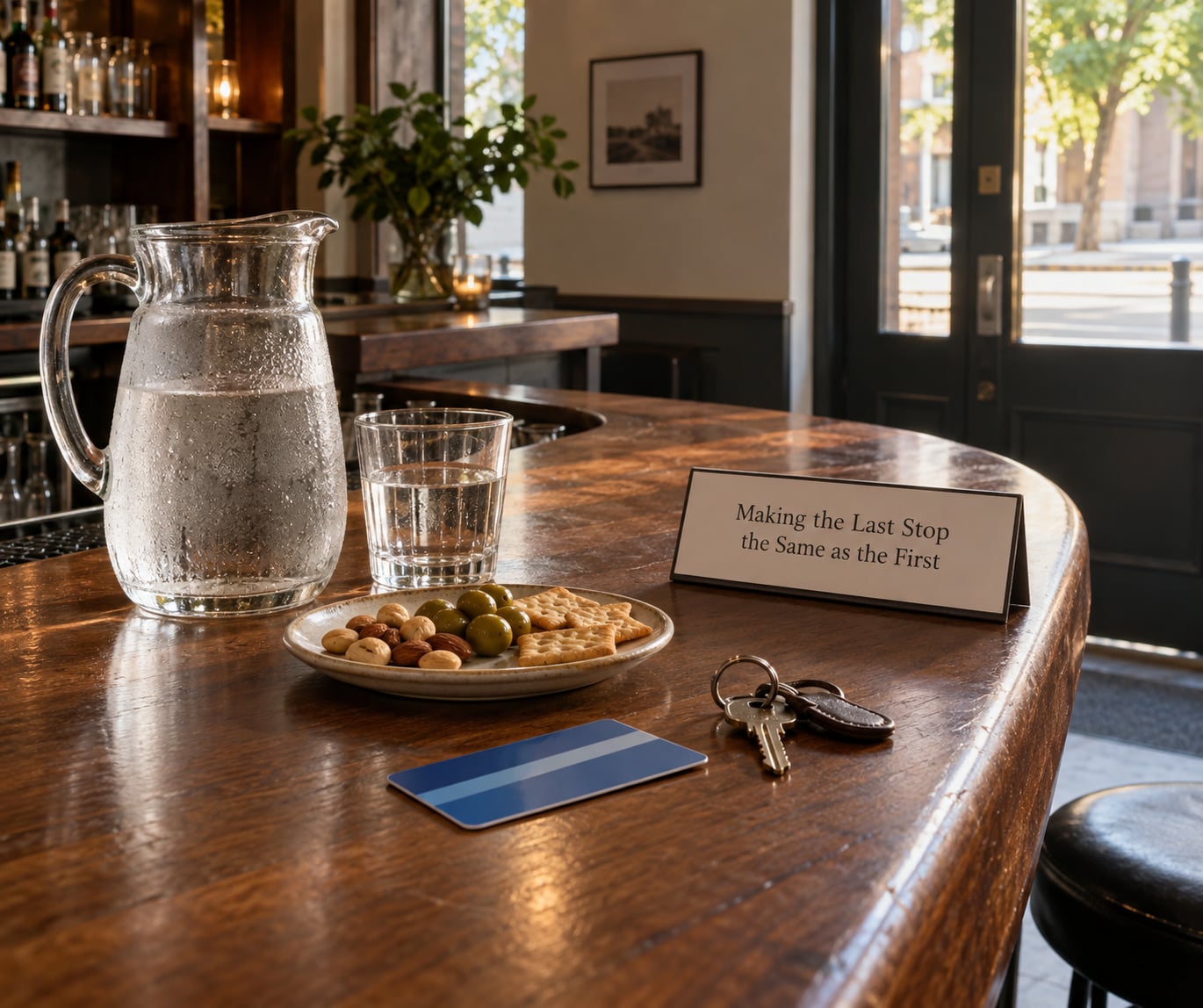
How you finish decides how you feel the next morning. Groups that treat the final venue like every other stop, ordering at full pace with no food, tend to overshoot right when their judgment is worst.
Pick a last stop that is seated, quiet, and serves food. Order water and something to eat as soon as you arrive rather than saving it for later, and skip anything on an empty stomach. Watch the clock against last call, and plan to arrive at the exit a little before the venue’s cutoff rather than at it.
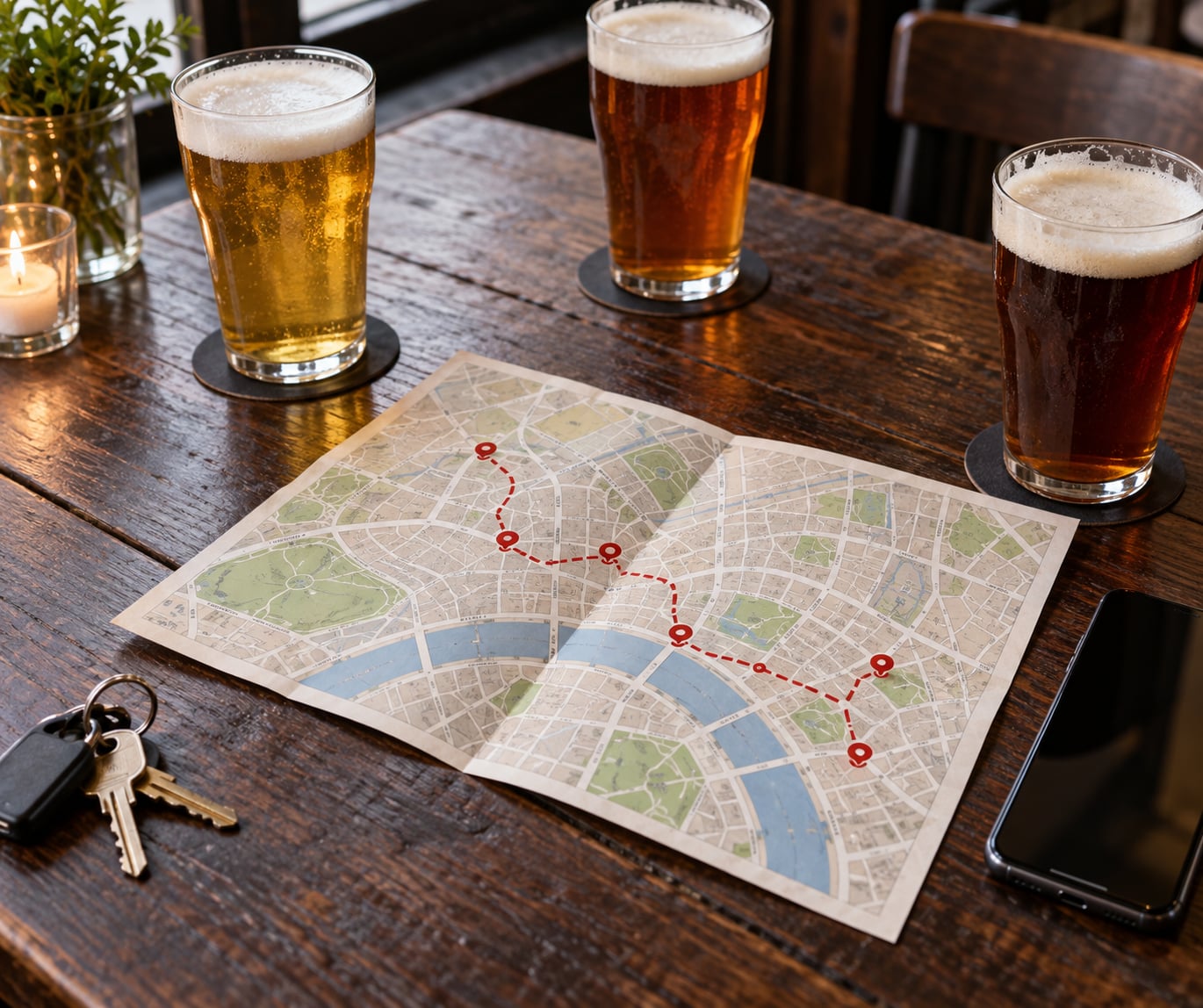
Book the ride before you order the last drink. A rideshare queued, a friend who did not drink, or a train you can still catch removes the temptation to walk it off, and walking a long way home at 2am is how otherwise good nights go wrong.
Frequently Asked Questions
How long should I spend at each bar on a bar crawl?
Aim for 30 to 45 minutes at each venue. That is long enough to order, eat something and sit down, and short enough that the group keeps moving and nobody piles up drinks at one stop. If a venue has live music or a long check-in line, shorten the time there and give the extra minutes to a quieter stop later in the route.
What are the rules of a bar crawl?
The practical rules are simple: check in on time, keep your wristband or ticket, stay with your group between venues, order at least one drink and one food item at each stop, respect the venue’s capacity and last-call time, and never walk the streets drinking an open container where local rules prohibit it. Arrive with ID, pay for your own rounds, and tip the way you normally would.
How do I pace myself on a bar crawl?
One drink at the first venue, then a 20 to 30 minute wait before the next order, since your body clears roughly one standard drink per hour. Alternate alcohol with water, keep one drink per venue through the first half of the route, and eat a real meal at one stop. Counting stops rather than drinks keeps the tally honest without turning the night into bookkeeping.
How do I say no to a round when my friends keep ordering?
Keep it short and move on: you are good, you am done for now, or you are pacing yourself tonight. Offering to order food, get the tab, or take a photo of the group gives you something to do with your hands while the round arrives without you. If two or three people in the group want to keep going, splitting off with one sober friend works better than arguing at the table.
What should I do if a friend in my group is getting too drunk?
Slow the group down early rather than calling for a ride at the end. Get them seated, with water and food, and stop ordering for them. Keep the crawl buddy idea in mind: one sober person tracks how that friend is doing at every stop. If they are disoriented, slurring badly, or cannot stand, stop the crawl and get them to a safe place and medical help.
What not to do at a bar on a pub crawl?
Skip the line-cutting, the arguing with staff, and the grabbing the last round without asking anyone what they are having. Do not keep a drink you have already tasted, do not fill a quiet friend’s glass without asking, and do not film other people without their permission. Tipping normally and keeping the noise down keeps venues happy to host the next one.
A Better Bar Crawl Starts Before the First Drink
Choose a route with a seated stop in it, confirm the venue list and check-in time, eat a proper meal beforehand, and set a drink count and a spending limit you are willing to hold. Then arrange the ride home before anyone orders the first round.
Those four decisions handle most of the bar crawl mistakes to avoid before the night even starts. Everything after that is just pacing, water, food and keeping your people together.