If someone has told you cask ale is served warm, they were half right. Cask ale is beer that finishes fermenting inside the cask it is poured from, and it reaches the glass at cellar temperature — cool, but well above fridge-cold. This guide explains what that means, and how the temperature changes what you taste.
The short version: the beer is alive, unfiltered and unpasteurised, so the temperature that serves it best is the one that lets its aroma and flavour actually reach your nose and tongue. Serve it too cold and it goes mute. Serve it too warm and it goes flat.
Table of Contents
- What Is Cask Ale and Why Is It Served Warm?
- How Is Cask Ale Made?
- The four-step journey from brewery to cellar
- How Does Cask Conditioning Change the Beer?
- Why Is Cask Ale Served at a Higher Temperature?
- Is Cask Ale Supposed to Be Warm?
- How Is Cask Ale Different From Draft Beer?
- What Flavor and Texture Should You Expect?
- How Should You Order and Drink Cask Ale?
- How Fresh Does Cask Ale Need to Be?
- Frequently Asked Questions
- Does cask ale contain live yeast?
- How strong is cask ale compared with bottled beer?
- Should I warm a cask ale before drinking it?
- What are the common signs of a bad cask ale pour?
- Can cask ale be the same as real ale or cask-conditioned ale?
- What to Remember About Cask Ale
What Is Cask Ale and Why Is It Served Warm?
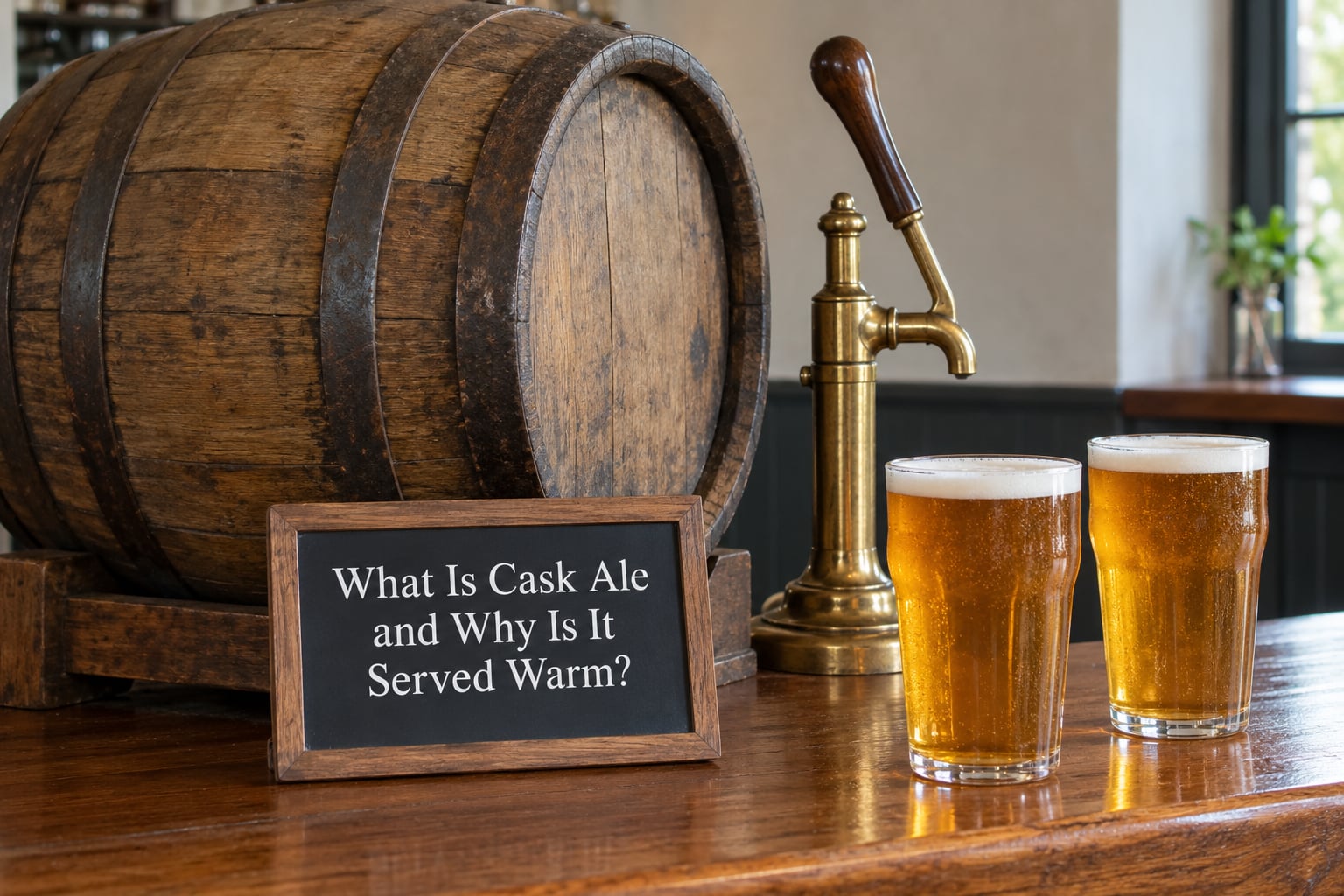
Cask ale, also called real ale, is unfiltered and unpasteurised beer that completes a second fermentation in the cask it is served from, gaining its carbonation naturally rather than from added gas. It is dispensed by hand pull or gravity at cellar temperature, roughly 10–13°C (50–55°F), which is cooler than a warm room but warmer than a refrigerator.
That last detail is where the confusion starts. When a pub says it is serving a beer at cellar temperature, nobody is handing you a lukewarm pint. The term means the cool end of room temperature — the sort of chill a cellar or a stone pub wall gives you for free.
If you have ever had a pint that genuinely tasted warm, that was a cellar that had lost control of its temperature, not the style working as intended.
How Is Cask Ale Made?
Every beer starts with a primary fermentation, where yeast turns wort into alcohol and the first round of carbon dioxide. Cask ale differs in what happens next.
The four-step journey from brewery to cellar
The brewery brews the beer as normal, then transfers it into the cask with enough yeast still in suspension to keep working. Priming sugar gives that yeast a little extra to eat. In the pub cellar, the yeast performs a secondary fermentation, producing real carbonation and dropping out of suspension as it flocculates, which leaves the beer clear rather than cloudy.
Meanwhile the cellar manager controls how fast that gas comes out. Hard and soft spiles regulate the pressure, the cask is left to settle, and when clarity, condition and carbonation all read right it gets tapped and put behind a beer engine or a gravity dispense line.
Not every cask ale is the same, though. A brewery built around cask may produce beer that is fresh, bright and heavily hopped, while a traditional brewery will often treat the cask as one stage in a longer maturation. Styles differ, and so do conditioning times.
How Does Cask Conditioning Change the Beer?
The point of the second fermentation is that it finishes the beer on its own terms rather than by filtration and force. The result is a softer carbonation — closer to sparkling wine than to a soda stream — and a body that can feel round and silky.
Yeast during conditioning also contributes its own character. It can add bread-like, nutty or spicy notes that no amount of hops or malt would give on their own, and hop aroma added late, often dry hopping, comes through as a soft floral or herbal layer rather than a sharp burst.
Here is the line worth holding: conditioning flavours are the yeast and the passage of time, while faults come from neglect. Sour, vinegar-like, papery or cardboard flavours mean the beer has been oxidised or contaminated, usually through a hand pump pulling air into the cask, and no correct serving temperature will rescue it.
Why Is Cask Ale Served at a Higher Temperature?
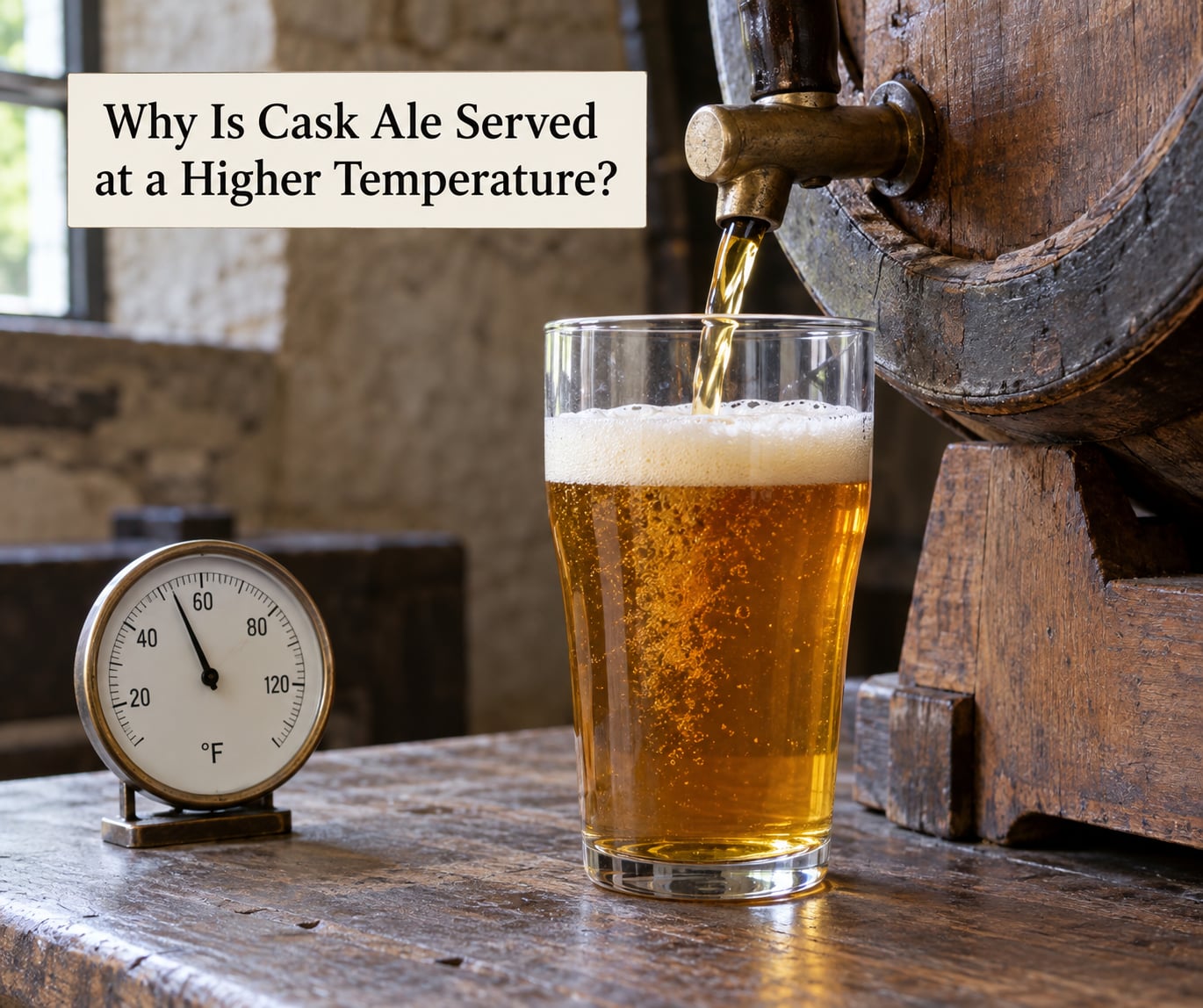
Aroma molecules are more active when they are warm. At around 4°C the esters and terpenes that give beer its fruit and floral character barely escape the glass, and cold also makes dissolved carbon dioxide bite sharper, so the beer tastes thinner and more aggressive than it is. Around 10–13°C those same molecules lift off far more readily and the carbonation reads as soft rather than sharp.
So the temperature is not a quirk of tradition. It is the point at which the beer can actually be tasted.
Published guidance disagrees on the exact figure, and it is worth knowing why. Cask Marque, the UK accreditation scheme, states 11–13°C (52–55°F). Some CAMRA branch material quotes 12–14°C (54–57°F). Homebrewers argue on forums that 11–13°C is too cold to drink and closer to 15°C suits them better. Treat these as a band rather than a rule, and remember the pub cellar is doing the serving, not you.
Here is roughly where different drinks sit, so you can see how narrow the cask window is:
| Beer type | Typical serving temperature | Why |
|---|---|---|
| Cask ale | 10–13°C (50–55°F) | Aroma needs warmth; natural carbonation stays soft |
| Cask lager | 9–12°C (48–54°F) | Cleaner profile, slightly cooler service |
| Keg lager | 3–7°C (37–45°F) | Filtered and force-carbonated, built for cold |
| Bottled or canned lager | 4–8°C (39–46°F) | Same reasoning as keg |
| Cask-conditioned bottle | 10–13°C (50–55°F) | Same logic as cask, minus the cask |
| Cellar-aged red wine | 12–18°C (54–64°F) | The comparison drinkers recognise instantly |
Too cold is the more common mistake and the more common complaint. Experienced drinkers describe ice-cold cask as thin and muted, close to flat, and a lot of people quietly assume that is what cask ale is supposed to be.
Is Cask Ale Supposed to Be Warm?
No. Cask ale is not served warm, and nobody is trying to serve it hot.
It helps to separate four phrases people use loosely:
- Ice cold — 3–5°C, straight from a fridge. Mutes the aroma and sharpens the carbonation.
- Cellar temperature — 10–13°C. The traditional target, and the reason this style exists.
- Room temperature — around 20°C. A little too warm for cask, and warm enough to hurry the cask along.
- Warm — 25°C and up. Wrong. At this point the beer is losing its life and picking up faults.
The framing that finally makes sense to most newcomers is red wine. Nobody pours a cellar-aged red at fridge temperature, and nobody serves it lukewarm either. Cask ale sits in the same window.
If a cask has genuinely warmed up, do not try to fix it by reheating or chilling it aggressively. Drink it as it is, or leave it. What matters is that the cellar was doing its job.
How Is Cask Ale Different From Draft Beer?
A useful correction first: draft describes how beer is dispensed, not what it is. Cask ale is a type of draft, and a hand pump does not make a beer cask-conditioned any more than a tap does.
Where they genuinely diverge is under the surface.
| Cask ale | Keg beer | Bottle or can | |
|---|---|---|---|
| Conditioning | Second fermentation in the vessel it is served from | Conditioned and carbonated in the brewery | Bottles may re-ferment; cans never do |
| Carbonation | Natural, from the yeast | Force-carbonated | Force-carbonated, except bottle-conditioned examples |
| Filtration | Unfiltered, with finings helping yeast drop out | Filtered bright | Filtered bright |
| Pasteurisation | None | Usually pasteurised or sterile filtered | Usually pasteurised or sterile filtered |
| Serving | Hand pull, beer engine or gravity line | Tap line | Bottle or can |
| Clarity | Clear when well kept, not by filtration | Bright | Bright |
| Life in the glass | Evolves over an hour or two | Static | Static |
| Freshness window | Days from the tap | Weeks to months | Months |
Guinness is the question people ask most often, and the honest answer is that it depends on the market and the venue. Draught stout in Ireland is famously served from a cask, using a nitrogen blend rather than a traditional cask, while the same beer in most other markets comes from a keg or nitro bottle. Ask the bar what the pump is running.
What Flavor and Texture Should You Expect?
Soft carbonation first. Not a hard fizz, more a gentle prickle that keeps changing as the glass sits. Body tends to be smooth or silky, and a well-kept pour has a creamy head that stays and leaves lacing on the glass.
Aromas run wider than people expect. Fruit and floral notes are common, and so are spicy, nutty and bread-like tones that come from the yeast and the malt. A dry-hopped cask can smell almost garden-like, which surprises people who assume ale is uniformly heavy.
None of this is fixed. Style, yeast, ingredients, how long it conditioned and how well the cellar is run all change the result, and that variability is the honest reason two cask ales can taste like different drinks.
How Should You Order and Drink Cask Ale?
At a pub or a festival, four questions tell you most of what you need. What is on cask right now. When was it poured on. What temperature is the cellar set to. And is that a full or a half pour, which tells you how confident the venue is in its turnover.
On the pour itself, a good cask ale arrives bright and clear with a creamy head. A cask that has gone wrong is dull, flat, or tastes sour, sharp or papery. Neither is a temperature problem you can solve at the table.
Then drink it fresh. Cask ale changes as you sit with it, which is half the point, so treat the first ten minutes as the best ten minutes rather than something to hurry past. Finish it within a reasonable sitting rather than leaving it to go warm while you talk, and let the glass tell you when the last sip is the last sip.
If you are served a cask that tastes wrong, say so and ask for the next one. Cellar staff would far rather replace a pour than have you walk out thinking all cask ale is like that.
How Fresh Does Cask Ale Need to Be?
More than people expect. Cask ale is best consumed soon after conditioning and tapping, and a well-run pub sells through a cask in a couple of days rather than letting it sit.
How long one actually stays acceptable depends on the beer, the cellar temperature and the handling. A cask is not a bottle with a printed expiry date, so there is no universal shelf life to quote. A well-conditioned, well-turned cask can hold up fine, while a slow, warm cellar is where things go wrong.
This is the honest reason behind the idea that cask ale is risky. It is not the style, it is turnover. A venue that sells cask ale quickly can serve it every day without a second thought.
Frequently Asked Questions
Does cask ale contain live yeast?
Usually, yes. A small amount of yeast is added or left in the cask so it can finish fermenting, and much of it drops out during conditioning. Some cask ales are served with a little yeast still in suspension, and cask-conditioned bottles do the same thing in glass. It is harmless in normal quantities, which is why unfiltered cask ale can look faintly hazy when it is young.
How strong is cask ale compared with bottled beer?
Strength comes from the recipe, not the vessel, so a cask bitter at around 3.5% is weaker than most bottled beers and stronger than a session lager. The range across the style is wide, from a mild near 3% to old ales and stouts well above 5%. Read the pump clip or ask the bar for the ABV rather than assuming either way.
Should I warm a cask ale before drinking it?
No, and you should not reheat one that has gone cold or warm at home. Reheating releases the carbonation, flattens the beer and drives off the aromatics you wanted in the first place. A cask that has sat at room temperature for an hour is usually better simply left alone. If a beer has been stored warm for a long time, treat it as past its best rather than trying to rescue it.
What are the common signs of a bad cask ale pour?
Look for a dull flat pour with almost no head, a beer that tastes sour, sharp or vinegary, and papery or cardboard notes that mean air has got in. Young cask ale can be slightly hazy, which is normal, but properly settled beer should pour clear. Astringent, thin beer served ice cold is often a temperature mistake rather than a fault in the cask itself.
Can cask ale be the same as real ale or cask-conditioned ale?
In practice the terms are used interchangeably, especially in the UK. Real ale is the traditional name, cask-conditioned ale is the more descriptive one, and cask ale is the plainest term of the three. All three describe beer that has finished fermenting in the cask it is served from, unfiltered and unpasteurised, with its carbonation coming from the yeast rather than added gas.
What to Remember About Cask Ale
Cask ale is beer conditioned in the cask it is poured from, and it is served cool rather than cold so that its aroma, flavour and soft natural carbonation can actually be tasted. The window is roughly 10–13°C (50–55°F), and “warm” in the name of the question is the one word that has caused all the trouble.
Ask for a fresh pour from a venue that turns its casks over, taste it at the temperature the cellar intends, and judge it on the first sip. That is the whole of it.