Every style name in beer has a story behind it. Milkshake IPA is the one named after something most people drink for dessert, and the surprise is that the beer genuinely earns the comparison in texture if not in flavor. It went from a Swedish brewery experiment in 2015 to a taproom staple almost overnight, then cooled off fast. Here’s what is actually in the glass, why it exists, and how to pick one worth your time.
Table of Contents
- What Is a Milkshake IPA?
- Key Characteristics
- Where the Name Came From
- What Does a Milkshake IPA Taste Like?
- What Makes It Different From a New England IPA?
- How Is a Milkshake IPA Brewed?
- What Is a Milkshake IPA Made Of?
- Why Is a Milkshake IPA Hazy?
- Is a Milkshake IPA Sweet?
- Which Milkshake IPAs Should You Try?
- How to Choose and Serve a Milkshake IPA
- Frequently Asked Questions
- Does a Milkshake IPA contain milk?
- Is a Milkshake IPA a New England IPA?
- Why is my Milkshake IPA so hazy?
- Is Milkshake IPA high in sugar?
- What is a good first Milkshake IPA to try?
- Should a Milkshake IPA be served cold?
- Conclusion
What Is a Milkshake IPA?
A milkshake IPA is a hazy, fruit-forward sub-style of India Pale Ale brewed with unfermentable milk sugar called lactose, usually alongside oats or wheat, real fruit, and often vanilla. Yeast cannot ferment lactose, so it stays dissolved in the beer and gives it a creamy, velvety body and a dessert-like sweetness instead of the sharp hop bitterness of a classic IPA.
Key Characteristics
- Lactose addition. Milk sugar the yeast cannot eat, which adds body and lingering sweetness rather than any literal dairy flavor.
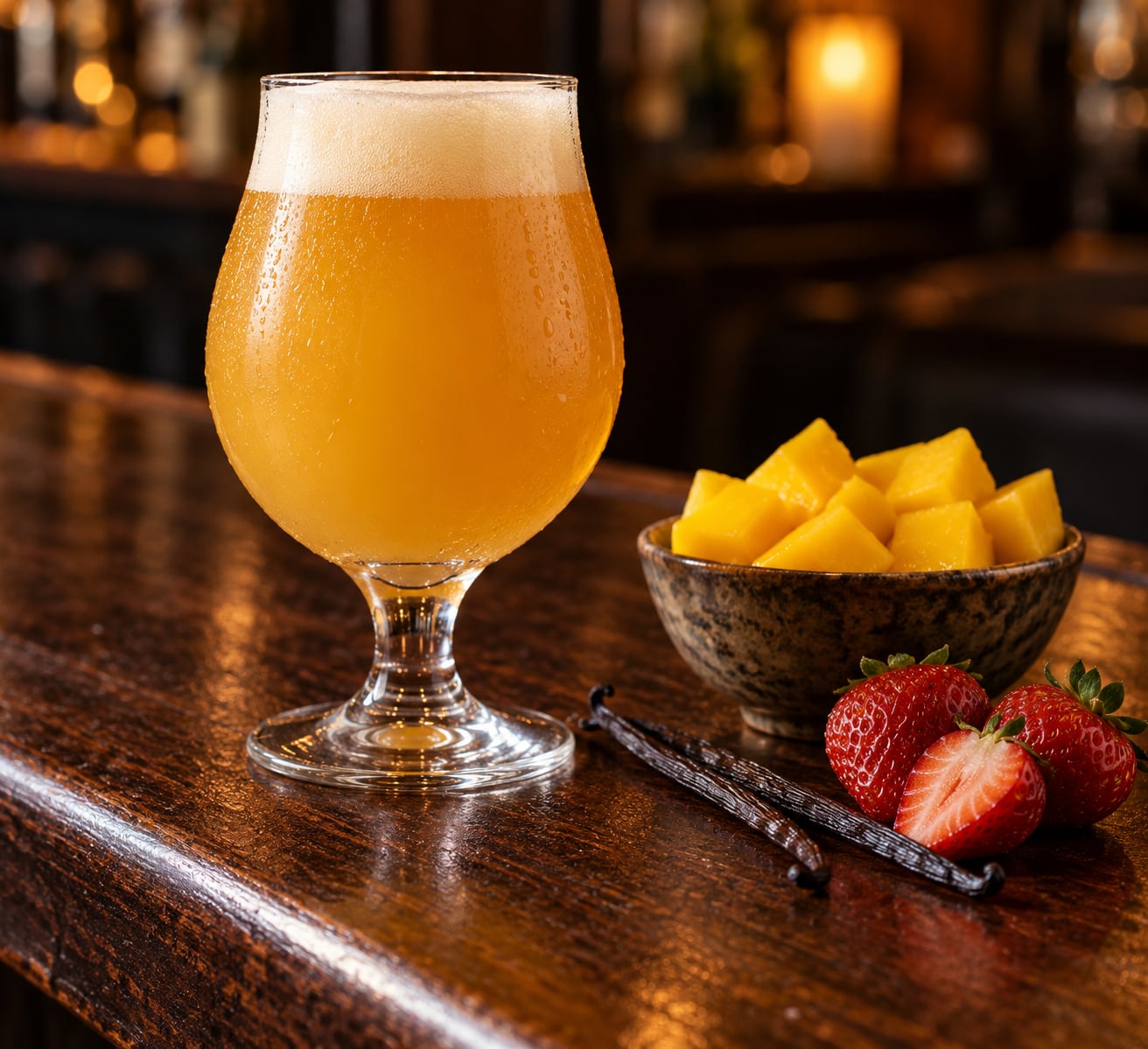
- Fruit and vanilla. Mango, strawberry, peach, pineapple, guava, or coconut, usually added as puree or steeped, plus vanilla beans on many versions.
- Appearance and haze. Opaque, often juice-like, with a thick creamy head that clings to the glass.
- Low bitterness. Roughly 15 to 40 IBU, with hops used almost entirely for aroma. Bitterness that reads as harsh is a fault in this style.
One thing worth knowing up front: milkshake IPA is not an official style category. There are no formal BJCP guidelines for it, which is part of why breweries keep stretching the definition.
Where the Name Came From
The style is generally traced to a 2015 collaboration between Omnipollo in Sweden and Tired Hands Brewing in Pennsylvania. Their India Pale Latte, an oat-and-wheat base dosed with lactose, strawberries, and vanilla, is the beer most style histories point at as the origin.
Tired Hands then pushed the idea further with Today Will Be a Good Day, brewed with spelt and oats, conditioned on coffee and Madagascar vanilla. Both breweries are Swedish and American respectively, and between them they turned a joke of a name into a real brewing movement.
What Does a Milkshake IPA Taste Like?
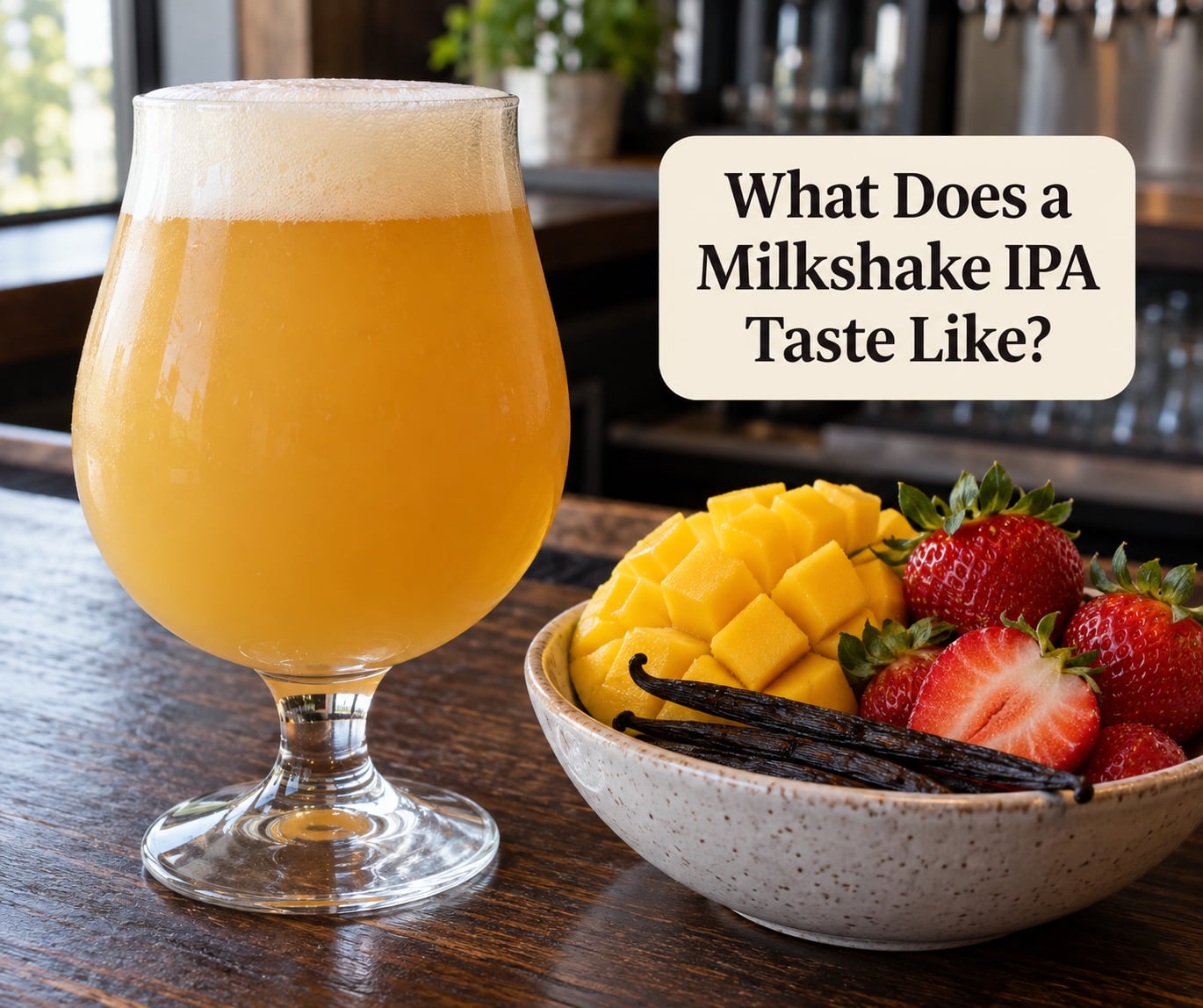
Start with the aroma, because it does most of the work. You get a blast of ripe tropical fruit, usually mango or pineapple, sometimes strawberry if the brewery went that direction, sitting on top of a soft vanilla note.
Then the sip. The texture is the surprise. It is genuinely creamy, closer to a drinkable smoothie than to beer, and that body carries a sweetness that lingers through the middle. Many versions finish dry, because the hops still add bitterness even at low rates.
That said, bitterness and lactose intensity vary a lot by brewery. Some are so soft they taste like flavored cream soda with a hoppy edge. Others are drier, more aromatic, and drink more like a New England IPA that happens to have a silkier body.
Serve it cold, around 38 to 45 degrees Fahrenheit. Any colder and the aromatics flatten out. Any warmer and the lactose starts reading as cloying rather than creamy.
What Makes It Different From a New England IPA?
A New England IPA already solves most of the bitterness problem with heavy dry hopping and soft water, so it is hazy and juicy too. The difference is that a milkshake IPA layers on a grist of oats, wheat, or spelt plus lactose, and that is where the creamy body comes from.
| Trait | Milkshake IPA | New England IPA | Classic West Coast IPA |
|---|---|---|---|
| Typical IBU | 15 to 40 | 25 to 50 | 50 to 70+ |
| Clarity | Opaque, deliberately hazy | Intentionally hazy | Clear |
| Perceived sweetness | Noticeable, dessert-adjacent | Mild to moderate | Minimal |
| Body | Creamy and full, sometimes slick | Soft and pillowy | Medium to thin |
| Adjuncts | Lactose, oats, wheat, spelt, fruit, vanilla | Oats and wheat common | Traditionally none |
| Typical ABV | 4.5% to 8% | 6% to 8.5% | 6.2% to 7.5% |
| Hop role | Aroma almost entirely | Aroma heavy, some flavor | Flavor and bitterness |
The blurred line matters when you are ordering. A smoothie IPA usually drops the lactose and adds more hops, so it drinks drier and more bitter. A pastry stout is the dessert-beer cousin from the other direction: a stout base with the same dessert logic, rather than an ale. If a beer is pale and opaque with fruit, it is this style. If it is dark and cocoa-forward, it is not.
How Is a Milkshake IPA Brewed?
What Is a Milkshake IPA Made Of?
Malted barley, hops, water, and yeast, plus whatever the brewery is layering in. The four ingredients outside the base beer rules are lactose, an oat or wheat or spelt component, fruit, and vanilla. Adjunct brewing is the whole point here.
The brewing run looks roughly like this:
- Grain bill. A pale malt base gets a protein-heavy addition, usually flaked oats, wheat malt, or spelt. Those extra proteins are what make the finished beer feel thick.
- Mash. A step mash or a higher-temperature mash keeps more of those proteins unconverted, which is the single biggest driver of mouthfeel in the style.
- Lactose addition. Milk sugar goes in during fermentation rather than the boil, because heating it can push it toward caramel and cooked-milk notes. Breweries that add it too early are the ones whose beer tastes like a milkshake powder rather than a smoothie.
- Adjuncts. Fruit puree goes in late or at the end of fermentation. Vanilla beans are usually steeped in contact with the finished beer for days before packaging.
- Dry hopping and packaging. Big additions of Citra, Mosaic, Simcoe, Amarillo, and Centennial go in the dry hop for aroma. Most versions are left unfiltered and unpasteurized, which is part of why the haze is so thick.
None of this is a recipe, and quantities change constantly. The point is the order of operations: protein for body, lactose for residual sweetness, hops for smell, fruit for flavor.
Why Is a Milkshake IPA Hazy?
Three things are suspended in the glass. The first is yeast. Hazy New England-style brewing uses a high-gravity wort and heavy protein content to keep a large yeast population in suspension during fermentation, and that yeast never fully drops out.
The second is hop material. Dry hopping at heavy rates leaves polyphenol and hop-derived particles that scatter light. The third is the grain bill itself, with the proteins from oats, wheat, or spelt staying in suspension to create that opaque, juice-like body.
Most of these beers are not filtered at all. That is deliberate, not sloppy, and haze on its own tells you nothing about quality. A bad hazy beer shows up as thin watery body, a solvent or nail-varnish aroma, or sweetness so heavy it never finishes.
Is a Milkshake IPA Sweet?
Sweeter tasting than a lager, yes. Higher in residual sugar than a classic IPA, not necessarily. Lactose survives fermentation completely, and malt also leaves unfermented sugars behind, so there is real sugar in the beer rather than just a sweet impression.
Part of the sweetness impression comes from the body itself. A thick, slick texture slows flavor delivery, so the same amount of malt sugar reads as sweeter than it would in a thin beer. Aroma compounds matter too, and vanilla specifically registers as a sweet note without adding sugar.
Too much lactose shows up clearly. The beer turns syrupy, the finish sticks to the palate, and the fruit gets buried. Forum homebrewers describe the same balancing act from the other side, and the versions people rate highest are the ones where you can still taste the hops underneath the sugar.
Which Milkshake IPAs Should You Try?
Match the beer to the flavor you already like. These directions are easier to shop for than any ranking.
- Mango and vanilla. The entry point for most people, and the closest thing to a vanilla shake. Tree House King Creamsicle and Tired Hands Strawberry Milkshake sit in this general neighborhood.
- Strawberry and cream. Sweeter and closer to a dessert than a beer. Tired Hands Strawberry Milkshake is the version most people name first.
- Tropical and punchy. Pineapple, guava, and passion fruit with more hop aroma. Phase Three Tropical District and Hoof Hearted Who Would Like to Hold My Clipboard lean this way.
- Citrus and vanilla. Triple dry-hopped, orange peel forward, and less sweet. Other Half Triple Citra Daydream and Hop Butcher For the World Blazed Orange fit.
- Double strength. Hoppier and usually drier, with the lactose dialled back. Windmill Memes And the Giant Peach is a good example of the heavier end.
Be realistic about how hard these are to track down. The style peaked somewhere around 2016 to 2018 and has since pulled back hard, so a brewery you loved may not brew it anymore. That frustration comes up constantly on craft beer forums, where drinkers say finding one now takes more work than it used to.
Sentiment on the style itself is sharply split. One r/CraftBeer user put it plainly: they were huge for a split second and never understood why, and they taste like trash. Another regular on r/beer liked a specific example and traced the creaminess straight to the lactose. Both reactions describe the same beer. The style sits at the far dessert end of IPA, and that is either the entire appeal or the entire problem depending on your palate.
How to Choose and Serve a Milkshake IPA
Read the tap menu and look for the adjuncts listed, not just the style name. A brewery that names its hops, its fruit, and whether lactose is present is one you can trust. If you are avoiding dairy, ask the bartender directly, because lactose content is rarely printed and drinkers on dairy-free forums describe the guesswork as the worst part.
Check the ABV before ordering a full glass. The style sits roughly in the 4.5% to 8% range, and the stronger versions with less lactose in them land heavier than the number suggests.
Use a tulip or IPA glass. The shape keeps the head and pushes the aroma to the nose, and you need both here, since the fruit is mostly a smell. Skip the pint glass, and skip the frozen mug.
Pairings that work: spicy Thai or Mexican food, a burger with a rich sauce, sharp cheddar and a fruit chutney, or a wood-fired pizza. The creaminess handles heat and fat better than a bitter beer would.
Two practical notes. This is still beer with real alcohol in it, so plan your ride home. And if you have a genuine dairy allergy rather than intolerance, check with the brewery, because many breweries use shared equipment and dairy-free versions exist but are not the default.
Frequently Asked Questions
Does a Milkshake IPA contain milk?
It depends on the brewery. Many examples use lactose, which is a real milk sugar and stays dissolved in the finished beer because yeast cannot ferment it. Others leave it out and get their creamy body from oats, wheat, or spelt alone. Since lactose content is rarely printed on the label or tap menu, ask the bartender or the brewery before ordering if dairy is a concern for you.
Is a Milkshake IPA a New England IPA?
No, though the two are close relatives. A New England IPA is hazy and low in bitterness because of the water, yeast, and heavy dry hopping. A milkshake IPA takes that base and adds lactose plus an oat, wheat, or spelt component for a distinctly thicker body, usually with fruit and vanilla on top. Some breweries blur the line deliberately, which is partly why the style has no formal definition.
Why is my Milkshake IPA so hazy?
The haze is intentional and usually unfiltered. High-protein worts from oats, wheat, or spelt, a large suspended yeast population, and heavy dry hopping all leave material floating in the beer that scatters light. A milkshake IPA is meant to look opaque and juice-like. Haze by itself is not a sign of a bad beer, so judge it on body and aroma instead.
Is Milkshake IPA high in sugar?
It is sweeter tasting than most beers, though the perception comes from more than sugar alone. Lactose survives fermentation entirely, and malt leaves residual sugars behind, so there is genuine unfermented sugar in the glass. The creamy body also slows flavor delivery, which makes the same sugar level read as sweeter. A well-made example still finishes dry and aromatic.
What is a good first Milkshake IPA to try?
Start with a mango or vanilla-forward example at around 5% to 6.5% ABV. Those are the least sweet of the flavor directions and the easiest entry point if hop bitterness normally puts you off. Tree House King Creamsicle and Tired Hands Strawberry Milkshake are widely recommended starting points, though availability has dropped since the style peaked around 2016 to 2018.
Should a Milkshake IPA be served cold?
Yes, but not ice cold. Around 38 to 45 degrees Fahrenheit is the range most brewers intend. Serve it much colder and the tropical fruit and vanilla aromas flatten out, which defeats the point of a beer built around aroma. Use a tulip or IPA glass so the thick head survives and the aromatics reach your nose.
Conclusion
A milkshake IPA is a hazy, heavily dry-hopped ale built on oats or wheat and dosed with unfermentable lactose, then layered with fruit and often vanilla. The lactose is what makes it creamy, and it is also why the style matters to anyone avoiding dairy.
If you have never had one, order a mango or vanilla-forward example in the 5% to 6.5% range and taste it before you commit to a full glass. That is the most forgiving corner of the style, and it will tell you quickly whether you are a convert or one of the people who thinks they taste like trash.