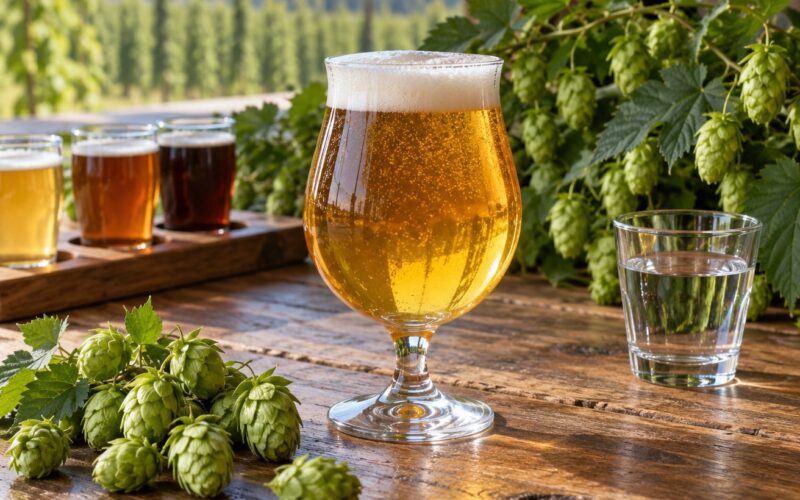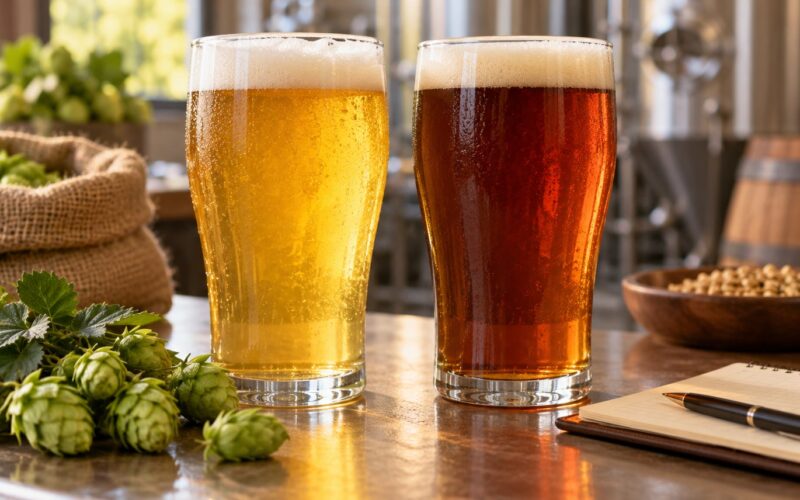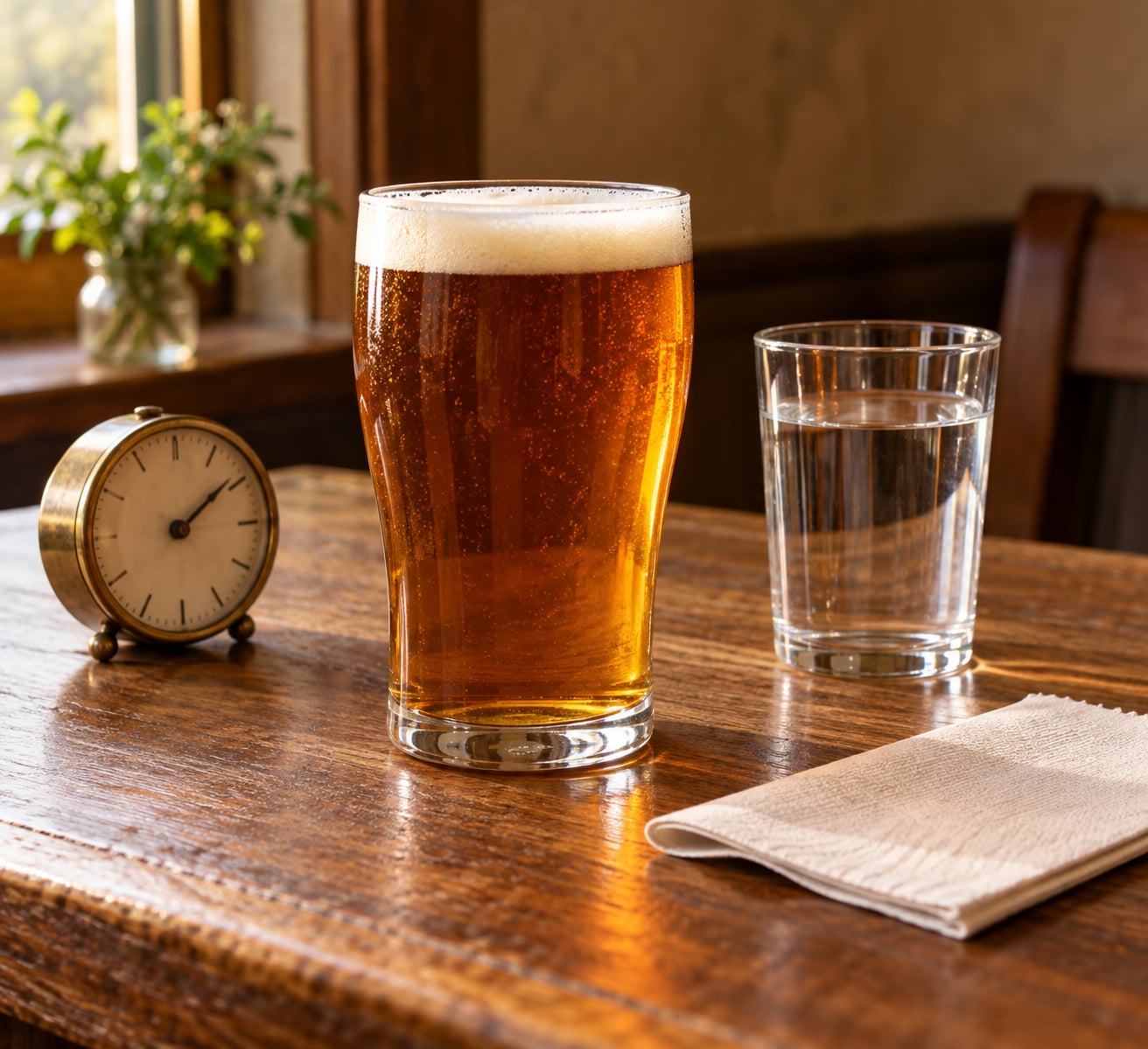
One 12-ounce beer at 5% ABV takes roughly one hour to clear your bloodstream, but its traces stay detectable far longer depending on the test: minutes to a few hours on a breathalyzer, most of a day in standard urine, and up to three or four days on an EtG urine screen. The single beer is only the start of the story, though, because a big craft pour can be two or three standard drinks, and no detection window tells you when it is safe to drive.
Table of Contents
- How Long Does One Beer Stay in Your System?
- What Does One Beer Mean in Alcohol Terms?
- How Alcohol Moves Through Your Body
- How Long Does Alcohol Stay in Your System?
- Why Other Articles Say 24 Hours, 48 Hours, 72 Hours, or 80 Hours
- What Factors Change How Long One Beer Takes to Clear?
- How Much Alcohol Is Generally Considered a Standard Drink?
- Can Food or Water Make You Sober Faster?
- When Is It Unsafe to Drink or Drive?
- How long after one beer can you drive?
- When Should You Seek Medical Help?
- Frequently Asked Questions
- How long does one beer stay in your system?
- Can a morning breathalyzer still detect one beer the night before?
- Does drinking beer instead of liquor keep alcohol in my system longer?
- How many beers make you legally drunk, and is there a safe number?
- Does exercise burn off alcohol faster?
- Can alcohol remain in your system for more than 24 hours?
- Conclusion
How Long Does One Beer Stay in Your System?
Here is the short version, assuming a 12 oz can of 5% beer and an average healthy adult.
- Absorption: alcohol starts entering your blood within about 5 to 10 minutes, and most of it is absorbed from the small intestine rather than the stomach.
- Peak blood alcohol concentration: roughly 30 to 60 minutes after your last sip.
- Cleared from blood: about one hour for one standard drink, working out to roughly 0.015% BAC cleared per hour.
- Breath detectable: usually within minutes of drinking, often under 24 hours for a single beer.
- Standard urine test: typically 12 to 24 hours, longer after a heavier night.
- EtG urine test: up to about 72 to 80 hours in sensitive lab screens.
No single number works for everyone. Body weight, how much you ate, how fast you drank, liver health and the strength of the beer all move the timeline, which is why the same beer can feel like nothing to one person and like the beginning of a long night to another.
One thing worth separating right away: how long until you feel sober and how long until alcohol leaves your system are different questions with different answers. Feeling fine is a mood, not a measurement.
What Does One Beer Mean in Alcohol Terms?
In the United States, a standard drink is any drink containing about 14 grams of pure alcohol. That works out to 12 oz of beer at 5% ABV, 5 oz of wine at 12% ABV, or 1.5 oz of spirits at 40% ABV.
That definition is doing a lot of work in every answer you will read about this topic, and beer is where it breaks down most often. A 16 oz IPA at 7% is not one beer. It is closer to 1.9 standard drinks, and it will behave like a beer plus most of a second one.
Beer and wine are typically served in larger volumes than the standard drink size assumes, and a restaurant pour is frequently larger than the glass is marked for. When a bar pours a 20 oz IPA at 6.5% into a glass that looks like a standard pint, you are looking at roughly 2.2 standard drinks.
How Alcohol Moves Through Your Body
Alcohol is a small molecule that does not need to be digested. It passes through the lining of the stomach and small intestine straight into the bloodstream, which is why you can feel its effects before you have finished the glass.
From there, the liver takes over. The enzyme alcohol dehydrogenase converts ethanol into acetaldehyde, a toxic intermediate that is the source of most of the hangover people blame on dehydration. A second enzyme, acetaldehyde dehydrogenase, converts acetaldehyde into acetate, which the body then breaks down into carbon dioxide and water.
Roughly 90 percent of alcohol is handled this way. The remaining 10 percent leaves the body completely unchanged, mainly through breath, urine and sweat, which is why a breathalyzer can pick it up at all.
How Long Does Alcohol Stay in Your System?
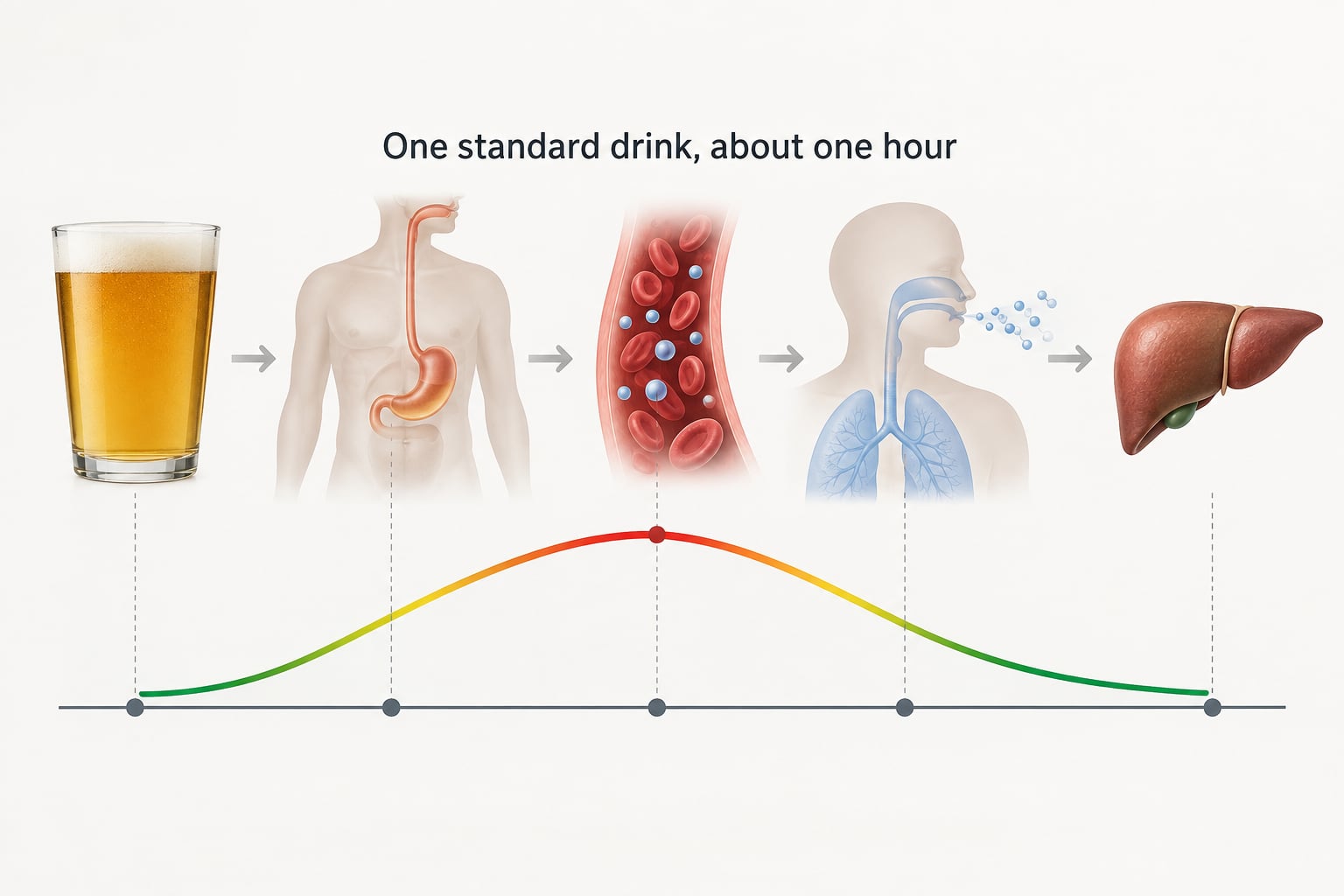
Detection windows depend on what is being measured. Blood shows the alcohol itself. Urine shows metabolites, mainly ethyl glucuronide (EtG) and ethyl sulfate (EtS), which keep being produced after the alcohol is gone. That is the whole reason urine windows run so much longer than blood windows.
| Test or sample | Typical detection window after one beer | Notes |
|---|---|---|
| Blood (blood alcohol concentration) | 8 to 12 hours | Measures ethanol directly, so it clears fastest of the blood-based tests |
| Breathalyzer | A few minutes to about 24 hours | Estimates BAC from alcohol in the exhaled air, not a direct blood reading |
| Saliva | About 12 to 24 hours | Often used as a roadside field test |
| Standard urine test | 12 to 24 hours | Wider range of 24 to 48 hours after heavier drinking |
| EtG urine test | Up to roughly 72 to 80 hours | Highly sensitive lab metabolite test, prone to false positives |
| Hair follicle test | Up to about 90 days | Reflects long-term drinking patterns, not a single night |
| Sweat patch | 24 to 48 hours | Sometimes used for workplace monitoring |
| Breast milk | About 3 hours | Alcohol concentration in milk roughly tracks blood level |
These are population averages for a moderate single-drink exposure, not guarantees. A heavier night stretches every one of them, sometimes considerably.
Why Other Articles Say 24 Hours, 48 Hours, 72 Hours, or 80 Hours
If you have read three answers to this question and got three numbers, you did not misread them. The disagreement is real, and it comes down to which test and which cutoff is being used.
A 12-to-24-hour urine figure almost always refers to a standard laboratory screen for ethanol in urine. A 72- or 80-hour figure almost always refers to EtG, a metabolite that stays detectable after the alcohol itself has been cleared. Both are correct about their own test, and neither is a promise about yours.
The same split shows up in blood figures. Sources quoting 8 to 12 hours are describing direct blood alcohol; sources quoting 12 to 24 hours tend to include the tail of slower clearance and a wider range of body types. Blood is the shortest window because blood is where the ethanol actually is.
One more caveat on EtG: it can be triggered by things other than drinking, including mouthwash containing alcohol, hand sanitizer, and some non-beverage exposure. If you test positive and are surprised, that possibility is worth raising with the lab or your employer or probation officer rather than arguing about.
What Factors Change How Long One Beer Takes to Clear?
The one-drink-per-hour rate is an average of an average, and several things push it around.
Body mass and composition. Alcohol distributes into body water. A larger person, and especially a larger person with a higher proportion of body water, dilutes the same drink further and peaks at a lower concentration.
Biological sex. On average, women have a higher proportion of body fat and less body water, so the same beer produces a higher peak concentration. This is a population average, and individual variation is substantial.
Age. Liver enzyme activity tends to change with age, and older adults generally clear alcohol more slowly.
Food. Fat and protein in a meal slow the rate alcohol leaves the stomach and enters the small intestine, which flattens the peak. Food does not speed up elimination itself. It just means you are not rising as fast while you keep drinking.
Drink strength. This is the big one for beer drinkers. A 12 oz can of 5% lager is one standard drink. A 12 oz imperial stout at 10% is about two.
Drinking speed and spacing. Two beers in one hour is not the same as two beers spread across an evening. Compressing the same total into a shorter window raises the peak.
Liver health and medications. Liver disease reduces processing capacity. Some medications interact badly with alcohol, and certain substances slow the elimination of alcohol itself, which is a genuine safety issue rather than a curiosity.
Genetics. Variants of the enzymes that metabolize alcohol affect how quickly acetaldehyde clears, which is part of why some people flush, feel ill quickly, or get a headache from one drink. Your genetics do not change, but they do change the answer.
Hydration. Water helps with a hangover by offsetting dehydration. It does not move the elimination rate.
How Much Alcohol Is Generally Considered a Standard Drink?
This is the table most useful to a beer drinker, because the pour you are handed is rarely the 12 oz of 5% that all the guidelines assume.
| Beer style | Serving | Standard drinks | Rough hours to clear |
|---|---|---|---|
| Light beer | 12 oz at 4% | About 0.8 | About 1 hour |
| Standard lager | 12 oz at 5% | 1 | About 1 hour |
| Typical IPA | 16 oz at 6.5% | About 1.7 | About 1.5 to 2 hours |
| Double IPA | 12 oz at 8% | About 1.6 | About 1.5 to 2 hours |
| Imperial stout | 12 oz at 10% | About 2 | About 2 hours |
| Oversize bar pour | 20 oz at 6.5% | About 2.2 | About 2 hours or more |
| Tasting flight | Four 4 oz samples at 7% | About 1.6 total | About 1.5 to 2 hours |
Add the hours, then add a safety margin. The rate is a floor, not a ceiling, and any factor above can stretch it.
Can Food or Water Make You Sober Faster?
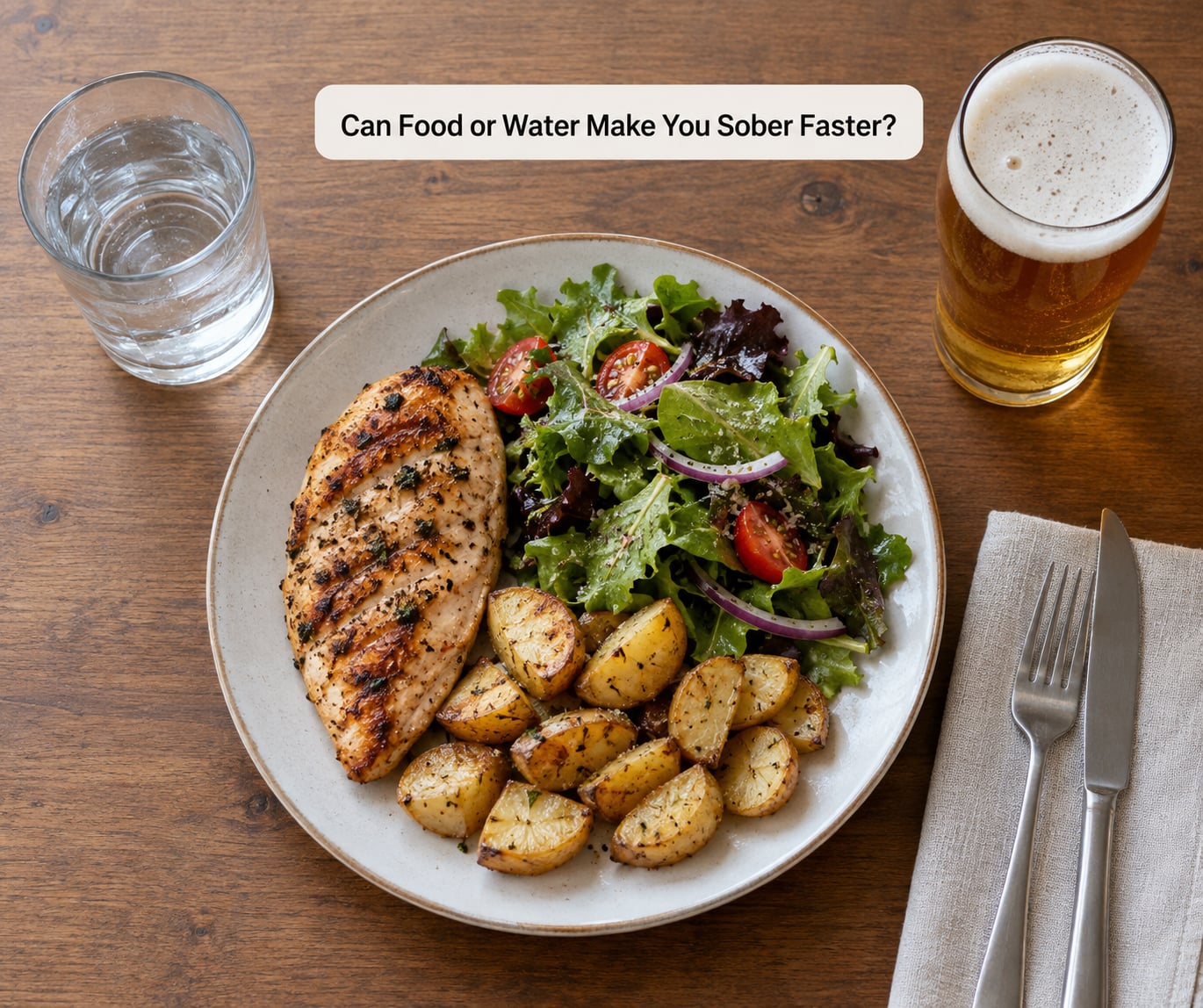
No. Nothing you do after drinking moves the elimination rate, which is set by liver enzymes and blood flow rather than by anything you can do from the outside. Food and water are still worth having, just for reasons that have nothing to do with speed.
| Common idea | What it actually does |
|---|---|
| Coffee | May make you feel more alert while BAC stays the same or still climbing |
| Cold shower | Constricts blood vessels and chills you; does not change the alcohol in your blood |
| Exercise | Burns calories and sweats, but elimination rate is unchanged |
| Drinking water | Eases dehydration and hangover symptoms, not the timeline |
| Eating a big meal | Slows absorption if eaten before or during drinking; does not speed elimination |
| Supplements or remedies | No supplement has been shown to meaningfully speed alcohol clearance |
Wait based on time, not on how you feel. Feeling alert, yawning, walking in cold air, or finishing a cup of coffee are all signs of a nervous system that is coping, not of a blood alcohol level that has dropped.
When Is It Unsafe to Drink or Drive?
Only time lowers blood alcohol concentration. This is the sentence to keep, because everything else in this article exists to make it easier to plan around.
Impairment begins well below 0.08%, the US legal driving limit. Drivers routinely show measurable impairment in reaction time and judgment at levels that would never trigger an arrest, which is why 0.08% is a legal threshold rather than a safe one.
Breathalyzer readings are estimates. They infer BAC from the alcohol in exhaled air using a conversion factor, they assume a standard body composition, and roadside devices have a known margin of error at the low end where a single beer sits. A reading of 0.00 on a personal device is not a clearance certificate.
How long after one beer can you drive?
Worked examples, using one hour per standard drink and then adding margin:
- One 12 oz can of 5% lager, finished at 8:00 pm. Peak around 8:30 to 9:00 pm, blood cleared roughly by 9:00 pm. A large meal before drinking can stretch that to 10:00 pm or later.
- One 16 oz IPA at 6.5%, finished at 9:00 pm. Close to 1.7 standard drinks, so roughly 10:30 pm at the earliest, and later than that if you drank on a full stomach.
- Two 12 oz beers in the first hour. About two hours minimum, from the end of the second one, not the start.
- Last drink at 1:00 am, driving at 7:00 am. Six hours is usually enough for one or two standard drinks. If the night involved four or more, or a strong craft pour, the morning commute is genuinely uncertain and the answer should be another way to get there.
When the math is close, treat it as too close. Rideshare, a taxi, public transit, a hotel shuttle, or a designated driver are all better decisions than a guess based on how you feel.
For anyone with court-ordered monitoring, a SCRAM device, or a scheduled workplace or probation test, the planning horizon is much longer than a single evening, and the cutoffs are set by the program rather than by biology. Confirm the required abstinence window with the testing agency before you drink, not after.
When Should You Seek Medical Help?
Alcohol poisoning is a medical emergency, and it can happen to people who did not think of themselves as having a problem. If you are checking on someone and any of the following are present, call emergency services or poison control right away rather than letting them sleep it off.
- Slowed or irregular breathing
- Inability to stay awake, or confusion about where they are
- Repeated vomiting
- Seizures
- Skin that is cool, pale, or bluish
- A heartbeat that seems too fast or too slow
Nothing on this page is individual medical advice. If you are wondering whether your own drinking pattern is a problem, that is a good question for a doctor or a registered dietitian rather than a search box, and it is one worth asking.
Frequently Asked Questions
How long does one beer stay in your system?
A 12-ounce beer at 5% ABV is one standard drink, and a healthy liver clears it at roughly one drink per hour, or about 0.015% BAC per hour. Expect a peak blood alcohol level 30 to 60 minutes after your last sip, breath detection for a few hours, standard urine detection for about 12 to 24 hours, and EtG urine detection for up to 72 to 80 hours.
Can a morning breathalyzer still detect one beer the night before?
Rarely for a single beer, but not impossible. A 12 oz beer at 5% is typically out of your blood within an hour or two, so a morning roadside test should read close to zero. If it does not, the night involved more than one standard drink, a stronger pour, or a slower clearance rate than average. Breath devices also carry a margin of error near zero.
Does drinking beer instead of liquor keep alcohol in my system longer?
No. The molecule is ethanol either way, and the liver does not care what it was mixed with. What changes the timeline is the total amount of pure alcohol, the strength of the drink, your body composition, whether you ate, and your liver health. A 16 oz craft IPA at 7% carries nearly twice the alcohol of a 12 oz lager, so it behaves like a longer night.
How many beers make you legally drunk, and is there a safe number?
In the United States, 0.08% BAC is the legal driving limit, which works out to roughly four 12 oz beers at 5% for many men and about two to three for many women, but the number varies with body weight and food. Legal is not the same as safe, since measurable impairment starts well below 0.08%, and there is no drink count that is risk-free.
Does exercise burn off alcohol faster?
No. Alcohol leaves the body through the liver at a fixed enzymatic rate, and exercise does not change it. A hard workout may speed up sweating, and sweat carries only a tiny fraction of total alcohol, so the effect on blood alcohol is negligible. The same goes for cold showers, coffee, and forcing yourself to stay awake.
Can alcohol remain in your system for more than 24 hours?
Yes, depending on the test. Ethanol itself is usually gone from the blood within 8 to 12 hours, but the metabolites ethyl glucuronide and ethyl sulfate can be detected in urine for up to roughly 72 to 80 hours. Hair tests can show alcohol exposure for weeks or months. Those long windows describe metabolites, not active intoxication.
Conclusion
One standard 12 oz beer is out of your blood in about an hour, may still be faintly detectable on a breath test for several hours, and can leave a measurable trace in urine for a day or up to three or four days on an EtG screen. A stronger craft pour stretches every one of those figures, and none of them is a promise that you are safe to drive.
So the first step is simple: do not drive if you have been drinking, and pick up the phone instead. For anything about your own body, your own numbers, or your own drinking pattern, a doctor can give you a real answer where a rule of thumb cannot.