People at a party notice whether you are holding a glass, not what is inside it. If you drink less at a party without anyone noticing, keep a full glass in your hand, sip slowly, alternate every alcoholic drink with water, order your first one before the group does, and be the last person to reorder. Nobody is checking the contents of your rocks glass.
That is the whole mental model. The tactics below all come back to it, and together they take about ten minutes of planning before you leave the house plus a bit of attention during the night. Nothing here requires willpower, and nothing requires you to tell anyone you are trying to cut back, which matters more than most people expect.
Here is the short version, and the rest of the article unpacks each one:
- Keep a full glass in your hand at all times.
- Order your first drink before anyone else does.
- Sip and set down, never gulp.
- Alternate every alcoholic drink with water or a mixer.
- Be the last to reorder, every round.
- Eat before you go and keep picking at food all night.
- Order the drink that looks like a drink: rocks glass, bottle, lime.
- Have one short line ready for the second and third time you are asked.
Table of Contents
- What You Need Before You Go
- How to Drink Less at a Party, Step by Step
- 1. Set a personal limit before you arrive
- 2. Eat before you leave and keep eating all night
- 3. Alternate alcoholic drinks with water or a mixer
- 4. Choose drinks whose pace you can manage
- 5. Slow the pace to one drink an hour
- 6. Make one drink last the whole social block
- 7. Have an exit plan you can use without announcing it
- The Situation Playbook
- What to Say When Someone Asks
- Common Mistakes
- Frequently Asked Questions
- Can I drink less at a party without people thinking I am avoiding alcohol?
- What is the safest pace for drinking alcoholic beverages at a party?
- How do I decline another drink when someone keeps offering?
- Does eating food help me drink less alcohol at a party?
- Should I mix alcoholic drinks with nonalcoholic drinks to control my intake?
- What signs mean I should stop drinking and leave the party?
What You Need Before You Go
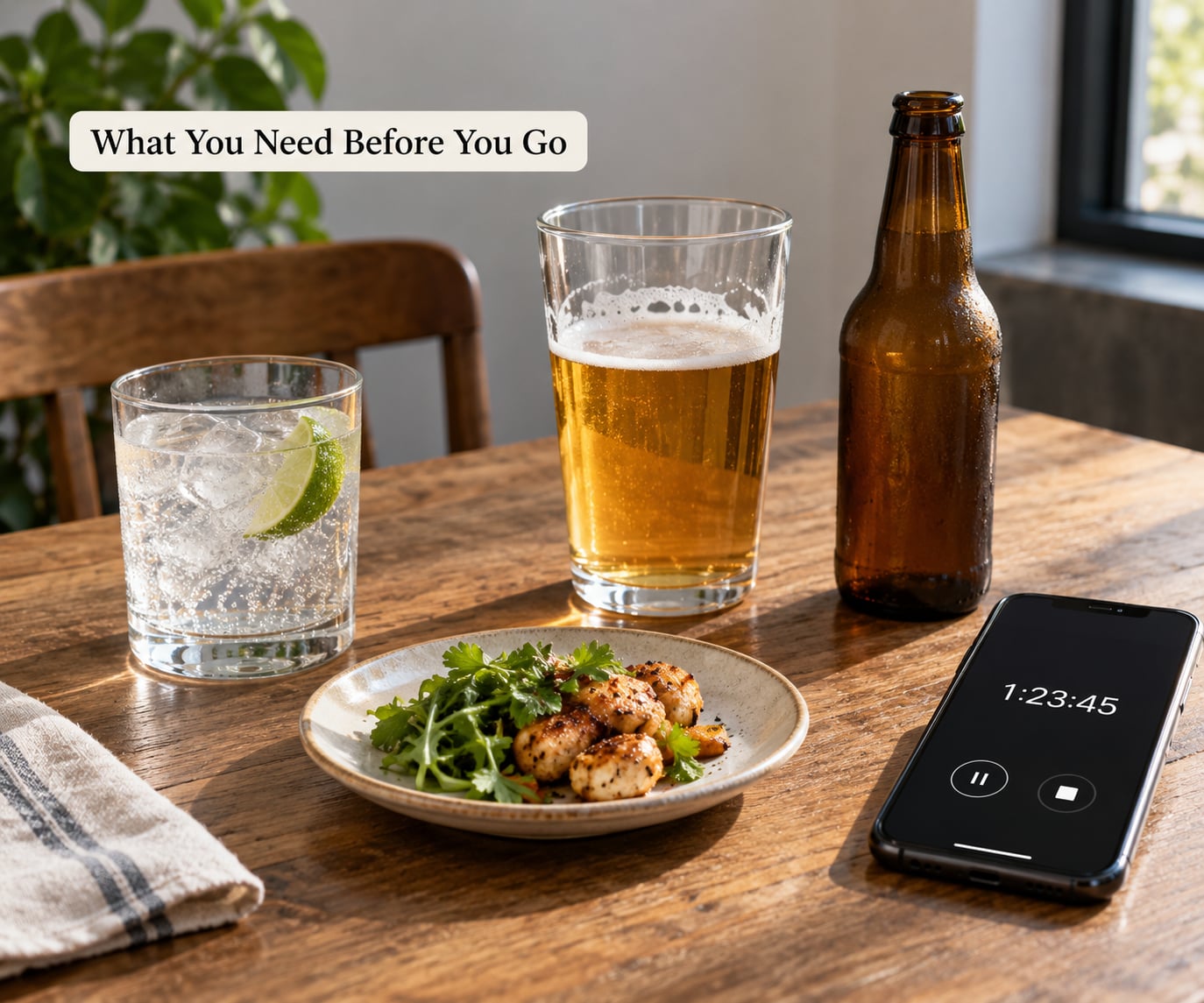
None of this is gear, which is the pleasant part. What you need is a decision, a drink that holds up in public, and a way to keep time without staring at your phone.
- A number. Decide your limit before you go, when nobody is watching and no one can talk you up. Two drinks is a limit, four across a whole evening is a limit, one is a limit. Write it in your phone notes so the calculation is already done when the second round arrives.
- Food in your stomach. Something substantial before you leave, not a few crisps in the taxi. Food slows how fast alcohol is absorbed, and it is the one tactic every harm-reduction body agrees on.
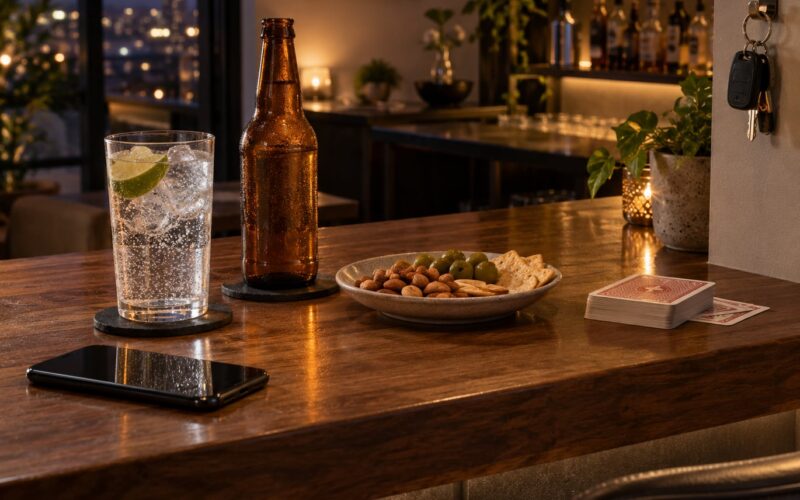
- A glass you can hold for hours. A rocks glass with ice and lime survives a warm room. A wine glass goes warm and conspicuous. A bottle sits on the table and nobody thinks about it at all.
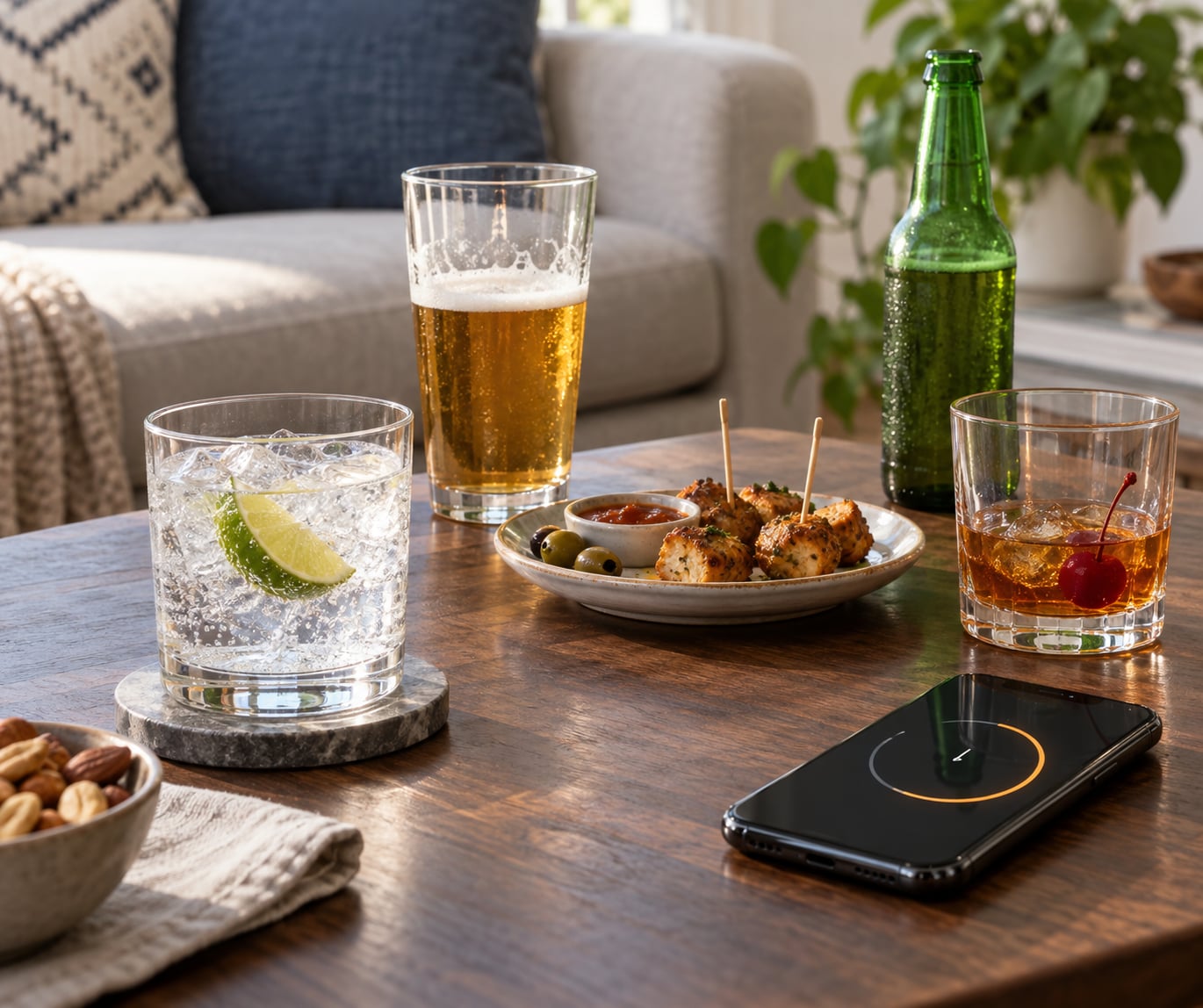
- A drink that looks the part. Club soda with lime, sparkling water with a wedge, a non-alcoholic beer poured into a bottle, or the zero-proof version of whatever the table is drinking. Same colour, same ice, same garnish.
- A way to track the night. A ten-minute timer on your phone is what the regulars in r/cutdowndrinking reach for, and it works better than trying to feel your own pace.
How to Drink Less at a Party, Step by Step
1. Set a personal limit before you arrive
Pick the number when you are sober and alone, then stop when you hit it, not when you feel like stopping. A limit you decided at home is much easier to hold than a feeling you have to keep re-checking at a loud table.
Tell one person who will not make a thing of it. A friend who knows your number and will mention leaving at a sensible hour is worth more than any amount of self-control, and nobody at the party needs to know that conversation happened.
You will know it is working when a round goes by and you feel completely fine, which is usually the surprise for people who assumed their limit was going to be hard to keep.
2. Eat before you leave and keep eating all night
Alcohol is absorbed through the stomach, and food in there slows that down. That is not permission to drink more, but it does mean the same two drinks hit you more gently, so the night feels more manageable.
At the venue, aim for something every hour or so: a sandwich, a handful of fries, a plate of nachos you can graze at, something with protein if it is on the table. Grazing beats eating because it fits the rhythm of the night.
Food does not cancel alcohol and it does not sober you up, which is worth being blunt about. It only slows the curve.
3. Alternate alcoholic drinks with water or a mixer
This is the tactic that comes up most often in forums, and the one people describe as the only thing that ever worked for them. Match every alcoholic drink with a full glass of something non-alcoholic, and match it one for one rather than whenever you remember.
Club soda with lime is the classic because it looks like a proper drink in a glass full of ice. Sparkling water, tonic, ginger beer and flavoured soda all work, and a zero-proof spirit with real bitters tastes closer to a cocktail than most mixers do.
It works when your glass is never empty and never obviously water. An empty glass gets topped up by someone who wants a reason to be nice to you.
4. Choose drinks whose pace you can manage
Spirits drunk quickly do more damage than a beer taken over two hours, mostly because there is nothing stopping you emptying the glass in four minutes. Slow formats buy you time for free.
A light lager at around 4% ABV, a session-strength IPA, a cider, or a glass of wine with a meal all pace themselves. If you do want spirits, a half shot with a mixer stretches the same pour across twenty minutes.
To make the maths real, a standard drink is roughly 12 oz of beer at 5% ABV, 5 oz of wine at 12%, or 1.5 oz of spirits at 40%. Two pints of a 4% lager is about one and a half standard drinks, which surprises people who count glasses rather than units.
5. Slow the pace to one drink an hour
Set a ten-minute timer, and when it goes off take a sip of water and a piece of food. That is the whole technique, and it is the single most repeated piece of advice across drinking communities.
Conversation does the work for you. Answering a question, walking to the bar, going to the bathroom, refilling a friend’s drink: each of these is a gap you did not have to invent.
There is an Australian rule of thumb called the 1/2/3 rule, which is roughly one standard drink in the first hour, two in the second and three in the third. Aimed at reducing total harm rather than staying sober, it still captures the useful idea that the first hour should be the slowest. The UK’s 2-2-2 rule is a different shape again: two alcohol-free days a week, no more than two units on a drinking day, with a drink-free gap between each unit. Both are frameworks, neither suits everyone, and both work better than winging it.
6. Make one drink last the whole social block
Nurse it. Take a sip, put the glass down on the bar or the table within reach, and pick it up again when the conversation comes back around. A glass that is never quite finished and never quite full is the easiest object in the room to explain.
Never hold an empty glass or an empty hand, because that is what actually draws attention. If you need to step away, set it down rather than carrying it with you.
At a party where guests pour their own drinks, keep a bottle in front of you. Nobody checks whose bottle is whose, and a full bottle in your hand reads as a slow drinker rather than a teetotal one.
7. Have an exit plan you can use without announcing it
Know before you go how you are getting home, and who is coming with you if you leave early. A designated driver, a lift arranged in advance, a taxi app already open on your phone. Deciding in the car is deciding too late.
You can leave without a speech. The coat, the bathroom, and a text saying you are heading home all cover the same exit, and so does simply being the one who says the night has been great but it is time.
Toasts are the moment that needs the most planning. Raise the glass, take a small sip, and hold the glass up. Nobody is measuring the sip, and the ritual is what people are actually watching.
The Situation Playbook
Most of the awkwardness is situational, and most situations have a move that nobody questions. This is the table I would keep open on a phone.
| Situation | What you do |
|---|---|
| Work happy hour | Order first, order something that takes time to serve, and stand rather than sit. Leaving after an hour reads as having evening plans. |
| Wedding reception | Hold a drink through the speeches, sip on the toast, and eat a lot of the meal. Nobody is counting glasses during a cake cutting. |
| Dinner party at a house | Bring your own NA beer or a bottle you can keep in the kitchen. Kitchen visibility is a legitimate reason to be away from the drinks table. |
| Bar with a group | Order a club soda with lime, be last to reorder, and ask the bartender for a recommendation so the next visit takes a while. |
| Birthday toast or speech | Raise your glass, take one small sip, keep drinking from it slowly afterwards. |
| Someone offers you a refill | Accept the glass, say nothing, and let it sit. Accepted drinks do not have to be finished. |
| Shots round | Take the shot glass, hold it, and set it down on a coaster. If pressed, take a sip and pass it back with a joke about pace. |
| Pre-drinks before going out | Skip them entirely or make one of them a mixer. Two drinks before a bar is the easiest number to lose track of. |
| Beer festival or tasting | Take a small taster pour, keep the sample glass, and slow down. A spitting taster is normal behaviour at a festival, not a trick. |
| Heading home solo | Announce nothing. Grab your things, say goodnight to two people, and go. |
What to Say When Someone Asks
You will be asked more than once, and the second ask is the one that unravels people. An excuse that gets a follow-up question is worse than a plain truth, so pick something short, true or dull enough, and repeat it identically every time. The script library below is grouped by how much energy each line needs.
- Casual: I am pacing myself tonight. I am good, just being careful.
- Soft excuse: Early start tomorrow. I will join you for the next round.
- Humour: Giving my liver a holiday. Actually, give it a night off.
- Quiet redirect: I am good, tell me about your week.
- Firm repeat: I already answered that one. Same answer, still no.
And if the real reason is one you would rather keep private, that is an entirely legitimate reason to keep it private. Pregnancy, recovery, a prescription that does not mix with alcohol, a parent or sibling who had a problem, a bad run of hangovers. You do not owe a room an explanation, and a bare I am not drinking tonight is a complete sentence.
One note on the psychology. There is a real tendency to match the drinking of the people around you, and a separate reaction where people push back harder once you set a limit, often because your cutback makes them look at their own. Neither is about you. Repeating the same line without defending it takes the whole thing off the table, because arguing invites a negotiation you do not need to have.
Common Mistakes
- Ordering faster so nobody can tell. The opposite of what works. Fast drinks plus a full night is how people lose count entirely.
- Mixing drinks without tracking them. A rum and coke, a shot, then a beer is three drinks that felt like one.
- Relying on willpower alone. Set the timer and put the phone on the table. A rule you can see beats a resolution you have to feel.
- Eating only after you start drinking. Food at the end of the night does nothing for the night. Eat before, and keep grazing.
- Thinking water cancels the alcohol. It does not. Water and food slow absorption, they do not remove what you have already drunk.
- Pushing past the signs. If you are spilling drinks, losing track of conversations, or getting loud, that is the point to stop, not to try harder to look fine.
Two smaller things people get wrong: the shot round, where people try to hide the shot by spitting it out, which nobody does well and which is unhygienic for everyone at the table; and the plain glass of water, which is the one drink people comment on more than any other. A plain water glass says something. A rocks glass with ice and a lime says nothing.
Frequently Asked Questions
Can I drink less at a party without people thinking I am avoiding alcohol?
Yes, and the difference is presentation rather than restraint. Hold a full glass the whole time, order something that looks like a drink, sip slowly and set the glass down between sips. People react to the signal of an empty hand or a plain glass of water, not to how much you have actually had.
What is the safest pace for drinking alcoholic beverages at a party?
Around one standard drink an hour is the common harm-reduction benchmark, and a standard drink is roughly 12 oz of beer at 5% ABV, 5 oz of wine, or 1.5 oz of spirits. Add a full glass of water between drinks, eat something each hour, and stop for the night before you feel the effects rather than at them.
How do I decline another drink when someone keeps offering?
Keep one short line and repeat it word for word every time: I am pacing myself, or I am good, I am sticking with this. Accepting a glass and quietly not finishing it also works, because a full glass in your hand stops the offers. If the pushing continues, say the same line again without explaining it further.
Does eating food help me drink less alcohol at a party?
It helps you manage the pace, not reduce the amount. Food in the stomach slows how quickly alcohol is absorbed, so the same drinks hit more gently and over a longer period. Eat something substantial before you go and pick at food every hour after that. Food never cancels out alcohol you have already drunk.
Should I mix alcoholic drinks with nonalcoholic drinks to control my intake?
Alternating is one of the most reliable methods people report using, and it works because the water or mixer gives you something to do with your hand and your mouth between sips. Club soda with lime, tonic, ginger beer and sparkling water all work. Keep the same glass, the same ice and the same garnish so the change is not visible.
What signs mean I should stop drinking and leave the party?
Stop and leave if you are spilling drinks, repeating yourself, losing track of what you said or when, or if you are the loudest person in the room when you normally are not. Feeling unwell, dizzy or unsteady matters as much as anything visible to other people. Arrange the ride before you decide you are fine, and get water and food on the way home.
Decide your number at home, eat before you leave, order first, and keep a club soda with lime in your hand for the next three hours. Nobody is going to check it, and by the end of the night you will have had less than you would have and enjoyed the same amount of conversation.
This is general information rather than medical advice. If you are cutting back because of a medication, a pregnancy, a health condition or a history with alcohol, talk to a doctor or pharmacist first, they can give you advice specific to you that a party guide cannot.