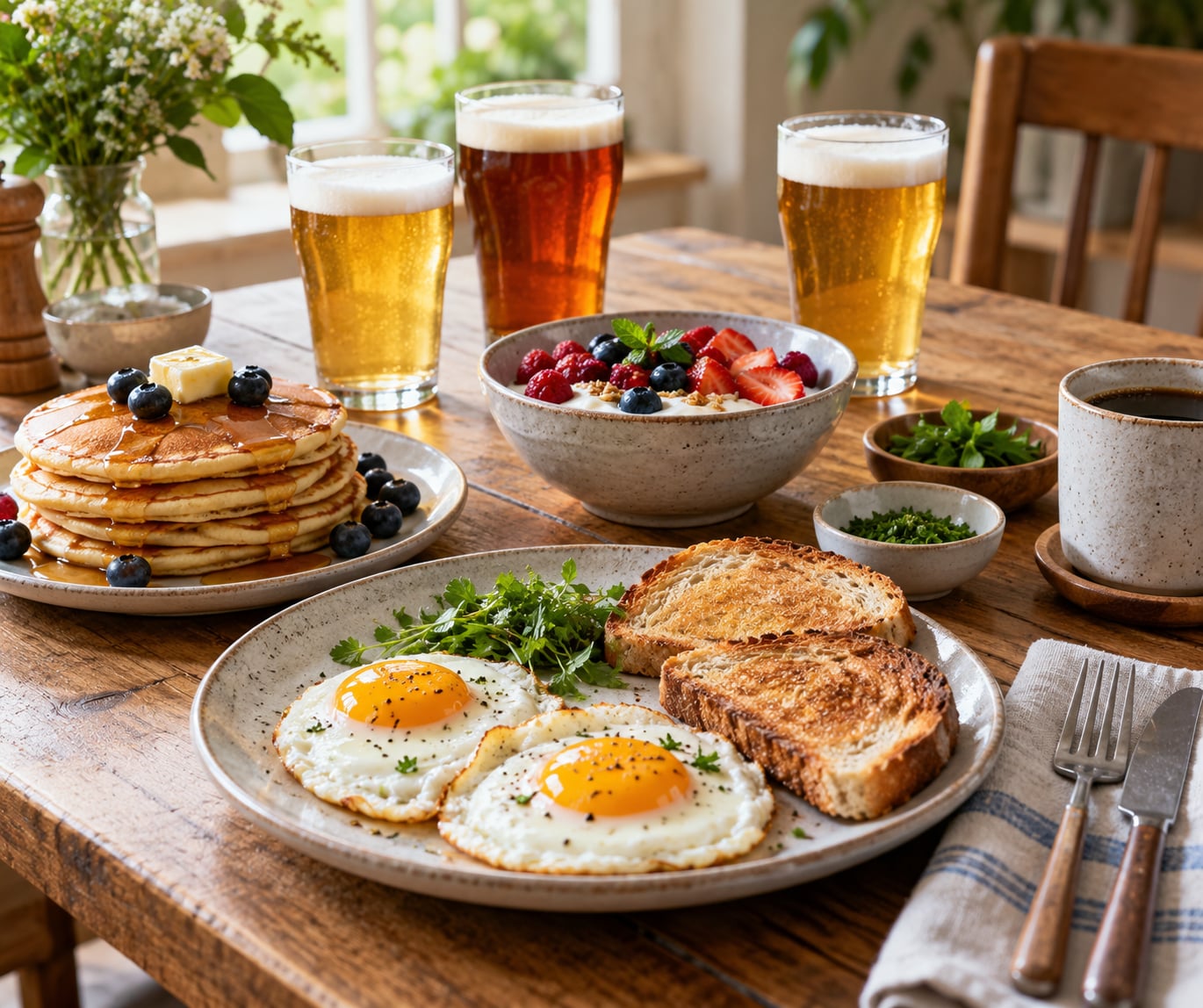
The best beer for breakfast depends on what is on the plate, not on some rule that beer belongs after sunset. Beer pairing for breakfast foods works exactly like dinner pairing: match the beer’s bitterness, sweetness, carbonation and body against the food’s dominant flavor, then let the bubbles reset your palate between bites. A crisp pilsner handles eggs and toast. A hefeweizen softens maple syrup. A dry farmhouse ale cuts through hollandaise.
Most breakfast plates fail with beer because the beer is too heavy, too bitter, or too sweet for what it lands on. The good news is that breakfast is unusually forgiving once you start with the food’s dominant flavor and work outward.
Table of Contents
- How to Pair Beer with Breakfast Foods
- Best Beer Styles for Common Breakfast Plates
- Eggs, prepared two different ways
- Bacon, sausage and smoke
- Sweet plates are the trap
- Modern brunch plates
- How Beer Style Changes the Pairing
- Lagers and pilsners
- Wheat beers and hefeweizens
- Pale ales and IPAs
- Stouts and porters
- Sour and farmhouse ales
- Belgian-style ales
- Practical Tips for Serving Beer with Breakfast
- Beer and Breakfast Pairing Mistakes to Avoid
- Frequently Asked Questions
- What beer goes well with breakfast?
- Do beer and eggs go together?
- Is it okay to drink beer in the morning?
- What beer do Germans drink for breakfast?
- What food not to mix with beer?
- What is a good non-alcoholic beer for breakfast pairing?
- What to Pour First Thing Tomorrow Morning
How to Pair Beer with Breakfast Foods
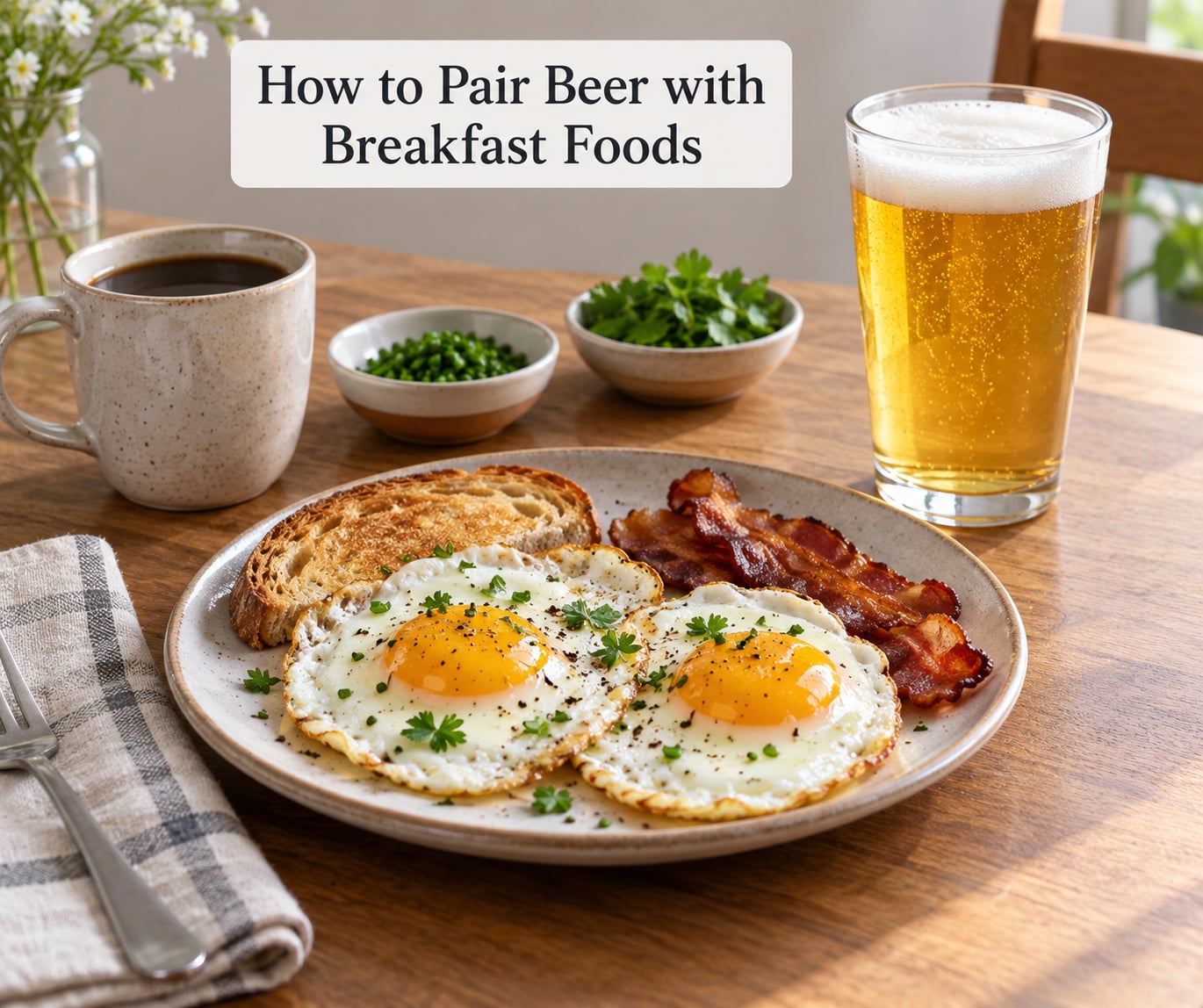
Start by naming the loudest thing on the plate. Is it the char on the bacon, the sweetness of the syrup, the tang of the yogurt, the heat of the chorizo? That single flavor decides the beer more reliably than any pairing chart.
Then compare five things:
- Bitterness fights sweet food and sits badly with soft, delicate flavors like a plain poached egg. It shines against something salty, fatty or charred.
- Sweetness from malt and from fermentation yeast will flatten a plate that already tastes sweet. Save malty, dessert-like beers for savory plates.
- Carbonation is the quiet hero. The bubbles scrub fat and cut through richness, which is why a highly carbonated beer is the natural answer to eggs with hollandaise or a buttery croissant.
- Body should roughly track the food’s weight. A light, delicate egg does not want a thick, oily imperial stout sitting next to it.
- Acidity and roast are your two contrast levers. A sour or a roasted-malt beer gives a plate something it does not have, and that contrast is what people remember.
A simple tasting method takes about two minutes. Eat a bite of food, take a sip of beer, wait, then eat a second bite of the same food. Ask yourself three things: did any flavor disappear, did any flavor get louder, and did I want the second bite more than the first.
If a flavor vanished, the beer is overpowering that part of the dish and you need something lighter or less bitter. If a flavor got louder, you have a match. This is the same intensity-matching approach cooks use at dinner, just applied to a plate most people think of as too delicate for alcohol.
Best Beer Styles for Common Breakfast Plates
The best beer pairing for breakfast foods follows the plate you are actually making, not the hour on the clock. Here is the short version for the plates people cook on a weekend morning.
| Breakfast plate | Beer style | Why it works |
|---|---|---|
| Fried eggs and toast | Pilsner or crisp lager | Clean malt and steady carbonation refresh the palate between rich bites of yolk |
| Eggs benedict with hollandaise | Saison or farmhouse ale | Dry, peppery finish cuts the buttery sauce and echoes the poached egg |
| Pancakes and waffles with maple syrup | Hefeweizen | Bread-like malt and banana clove esters mirror the browned batter |
| Bacon and sausage | Rauchbier or brown ale | Smoked or toasted malt repeats the char and the salt |
| Buttermilk biscuits and gravy | Porter or coffee stout | Roasted malt and a creamy body soak up the gravy |
| Breakfast tacos with salsa and chorizo | American pale ale or amber IPA | Moderate bitterness handles heat; malt stands up to the grease |
| Croissant with brie or butter | Belgian witbier | Lemon-coriander sparkle keeps the pastry from sitting heavy |
| Yogurt, granola and berries | Sour ale or fruit beer | Tang and fruit notes continue what the bowl already started |
| Avocado toast | Pilsner or light wheat beer | Delicate enough for avocado, dry enough for the sourdough crumb |
| Shakshuka or a skillet hash | Amber ale or saison | Tomato acidity and spice need a beer with body but no sweetness |
| Full English breakfast | Irish stout or porter | Roasted barley stands up to beans, black pudding and heavy bread |
| Smoked salmon bagel | Witbier or saison | Citrus and pepper cut the smoke and the cream cheese |
Eggs, prepared two different ways
Eggs are the most common breakfast question, and the honest answer is that preparation changes the beer. A fried egg with crisp edges wants a lager or pale ale, because the crispness is fat you need help cutting. A poached or softly scrambled egg is delicate and mild, so it wants a saison or a Belgian ale with character rather than something neutral.
Bacon, sausage and smoke
Sausage and bacon reward smoke. Rauchbier is the German smoked beer style built precisely for this job, and it turns up constantly in beer forum threads about breakfast pairings. Where you cannot find one, a brown ale or a roasty porter does a similar job at a gentler level.
Sweet plates are the trap
Maple syrup, honey, brown sugar and fruit all amplify the malt character in a beer, and a malty beer next to syrup tastes like nothing at all. Hefeweizen is the exception because its yeast character reads as fruit and spice on the palate while still cutting with carbonation.
Modern brunch plates
Avocado toast and grain bowls are mild, oily and vegetable-forward, so they want something dry and light. Shakshuka and breakfast tacos are acidic and spicy, so they can carry more bitterness than almost any other breakfast dish.
How Beer Style Changes the Pairing
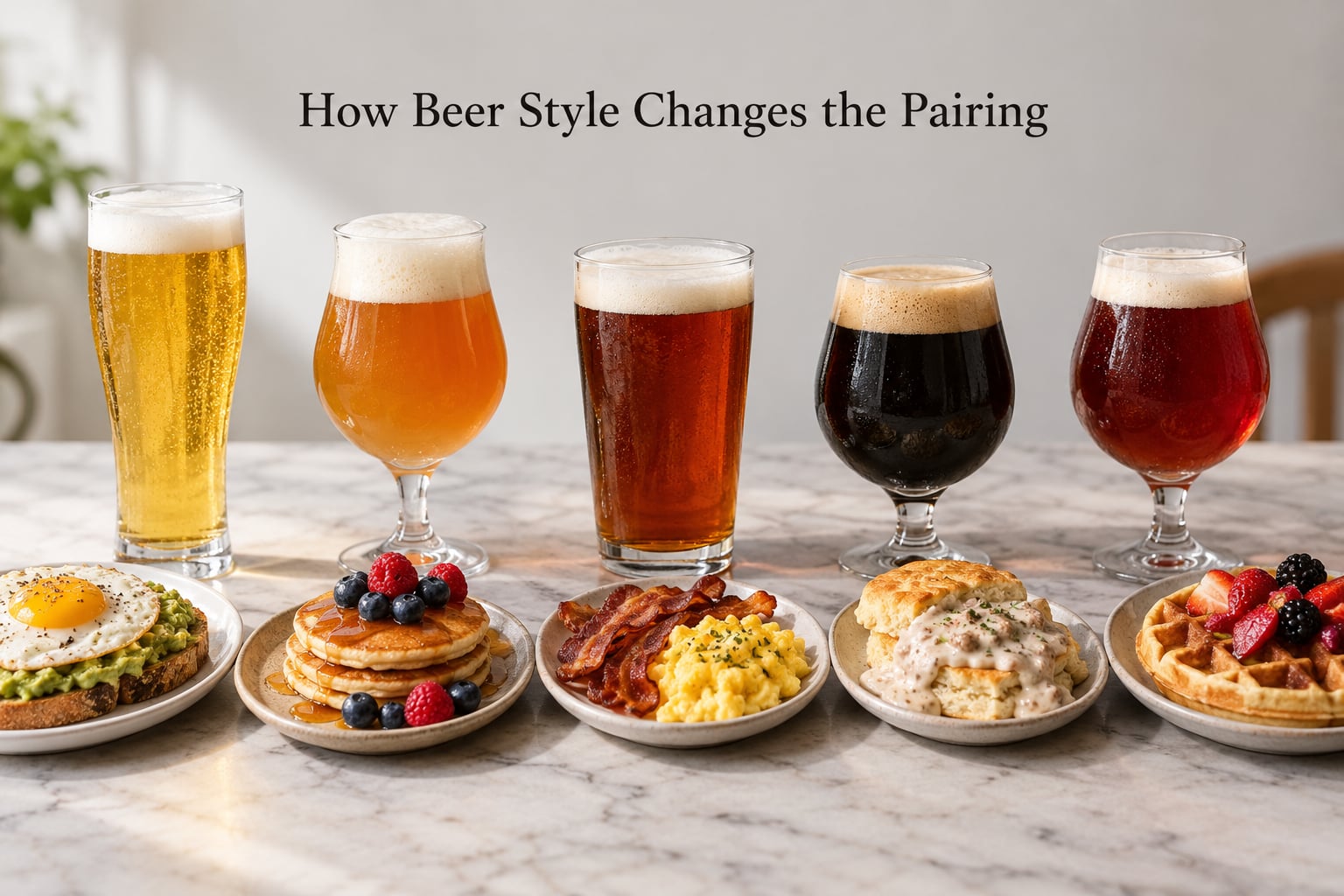
Most people choose a beer by color or by habit. Once you are pairing, choose by what the beer does to your mouth, because that is what you are trying to fix. Knowing how each style behaves is the fastest way to narrow down beer pairing for breakfast foods without standing in front of a wall of taps.
Lagers and pilsners
Crisp, light, highly carbonated and nearly flavorless in a distracting way. This is the safe default for eggs, toast, white bread, grilled cheese and any breakfast where the food is the point. Pilsner’s faint hop bitterness also handles bacon better than most people expect.
Wheat beers and hefeweizens
Soft, cloudy, cloudy-golden and full of banana and clove from the yeast. The malt is bread-like enough to feel related to pancakes and waffles, and the high carbonation keeps it from being heavy. Witbiers fall in the same family but lean citrus and coriander, which makes them the classic partner for smoked salmon, bagels and brie.
Pale ales and IPAs
Bitterness is the whole point. Against a plate of oily avocado, cured fish or chili heat, hop bitterness reads as refreshment rather than harshness. Against a sweet pancake, the same beer reads as sour and wrong. If you drink IPAs and are unsure where to start at brunch, the spicy and savory plates are your friend.
Stouts and porters
Roasted malt, coffee and chocolate notes, body that ranges from thin to nearly syrupy. Plain breakfast stouts and porters work well with biscuits and gravy, full English breakfasts, oatmeal and smoked meats. Imperial stouts above ten percent alcohol are sipping beers, not breakfast beers, even when the flavor profile seems right.
Sour and farmhouse ales
Sours bring acidity that cuts fat and cleans up hollandaise, cream cheese and rich sauces. Farmhouse ales and saisons are the workhorse of brunch pairing: dry, peppery, moderately bitter and sturdy enough for eggs benedict or a skillet hash without overwhelming either.
Belgian-style ales
Tripels and strong ales are high-alcohol, fruity and spicy, and they handle strong-flavored plates such as blue cheese, smoked meats and spiced sausage. They are a poor choice with an egg and a good choice with a proper brunch.
Beer style also changes with the season, though only slightly. In summer, people reach for lighter, more acidic styles on lighter plates, and saison and pilsner cover most of that ground. In colder months, roasted and malty styles sit more comfortably with the heavier plates people actually cook then.
Practical Tips for Serving Beer with Breakfast
- Temperature. Chill lagers and pilsners to about 40°F, serve wheat beers slightly warmer, and take stouts and Belgian ales out of the fridge 15 minutes early. Cold beer flattens flavor.
- Glassware. A stemmed or tulip glass keeps carbonation and directs the nose. A heavy mug works for stouts. Avoid pouring into a coffee mug you plan to drink from later.
- Pour order. Pour from lightest to heaviest so the stronger beer is not dulled by what came before it. If you are serving several styles at once, this order matters more than any wine-style rule.
- Portion size. A 4 percent lager over breakfast is a different proposition from a 9 percent imperial stout. Small pours of strong beer, or a lighter style alongside the heavy one, keep the meal a meal.
- Match intensity. The beer should never be more intense than the food unless you want it to be. Scale down when the dish is mild, scale up when it is a full English or a chorizo hash.
- Balance strong beers with acid. Pickles, kimchi, hot sauce, grapefruit, a squeeze of lemon or a tomato-based dish will cut a barrel-aged or imperial stout far better than a plain biscuit will.
- Non-alcoholic options work. Non-alcoholic pilsners, wheat beers and ginger ales follow exactly the same pairing logic, and a hop-forward non-alcoholic pale ale stands up to spicy eggs the same way a regular IPA does.
- Hydrate and pace. Alcohol in the morning hits faster on an empty stomach. Eat first, drink slowly, keep water within reach, and save the highest-alcohol beers for a plate substantial enough to sit under them.
Beer and Breakfast Pairing Mistakes to Avoid
Pairing a heavy stout with a sweet pastry. Both sides taste of sweetness and neither supports the other. Fix: move to a hefeweizen or a sour, or save the stout for the savory plate and the pastry for coffee.
Choosing a very bitter IPA for a plain egg. The egg has nothing to stand on and the bitterness just reads as sour. Fix: pick a pilsner, a saison or a Belgian witbier instead.
Serving a heavy-bodied beer cold and flat. A thick beer straight from the fridge tastes like nothing but alcohol and cold. Fix: let it warm up and use a glass that lets you smell it before you drink it.
Pouring the strongest beer first. It kills everything that comes after it. Fix: order by ascending body, lightest to heaviest.
Treating a seasonal release as the default. Breakfast stouts and coffee stouts are frequently limited releases that show up in a different month than the one you want them. Fix: build a year-round rotation of plain stout, porter, brown ale and farmhouse ale so the pairing never depends on a single bottle.
Ignoring what the beer does to you over the course of the plate. An imperial stout at ten percent alcohol is a slow, strong drink even in a small pour. Fix: keep the pour small, eat with it, and pour water between courses.
Frequently Asked Questions
What beer goes well with breakfast?
Lagers and pilsners are the easiest starting point because they are light, crisp and highly carbonated, which refreshes the palate between bites of egg and toast. Wheat beers work well with pancakes and waffles. Saison and farmhouse ales suit eggs benedict and savory hashes. Stouts and porters belong with biscuits and gravy, oatmeal and full English breakfasts.
Do beer and eggs go together?
Yes, and the method of cooking decides which beer. Fried eggs with crisp edges suit a pilsner or pale ale because the carbonation cuts the fat. Poached or softly scrambled eggs are mild and delicate, so they pair better with a saison or a Belgian witbier that has peppery and citrus character.
Is it okay to drink beer in the morning?
It is a personal choice, and the practical advice is the same as at any hour. Eat something first, pour smaller glasses than you would later in the day, alternate with water, and be aware that alcohol on an empty stomach is absorbed faster. Keep breakfast beers in the lower alcohol range if you plan to drink more than one.
What beer do Germans drink for breakfast?
In Germany, breakfast is a lighter meal than in many other countries, so beer is usually an accompaniment to it rather than the meal itself. Pilsner is the everyday choice, and weissbier, or wheat beer, is common with sweet breads and pretzels. Hefeweizen with a slice of cake or banana bread follows the same logic as pancakes and maple syrup.
What food not to mix with beer?
Very sweet and very delicate foods are the two common problems. Syrup, honey and pastries make a malty beer taste flat, and a plain soft egg or a delicate cream soup is overpowered by a strongly bitter or heavily roasted beer. Spicy and savory dishes, fatty plates and anything acidic are far easier to pair.
What is a good non-alcoholic beer for breakfast pairing?
Non-alcoholic pilsners and wheat beers behave like the alcoholic versions, so the same rules apply: a non-alcoholic pilsner with eggs and toast, or a wheat beer with pancakes. Hop-forward non-alcoholic pale ales handle spicy breakfast tacos and shakshuka especially well, and ginger beer or sparkling apple cider work when you want zero alcohol and zero bitterness.
What to Pour First Thing Tomorrow Morning
Make eggs this weekend and pour a cold pilsner next to them. That single pairing teaches you the whole method, because it shows you clearly what carbonation does to a rich bite. From there, move to a saison for hollandaise and a hefeweizen for syrup, and you will be doing beer pairing for breakfast foods without thinking about it.