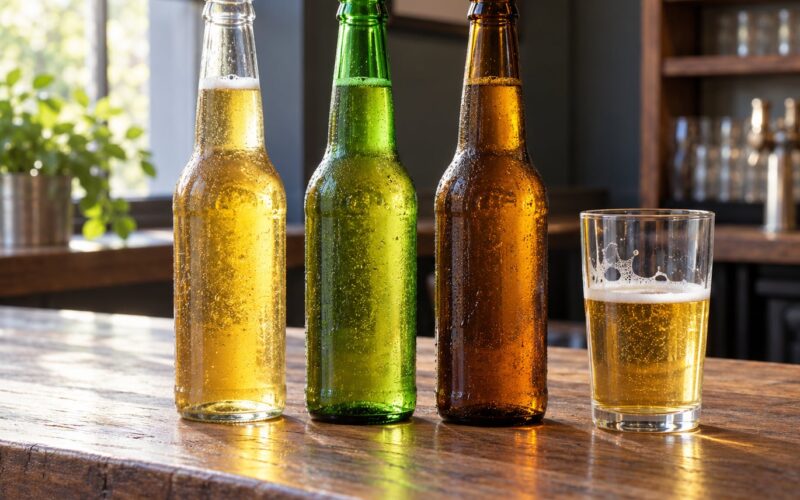
A cream ale is a light-bodied American beer style fermented with top-fermenting ale yeast, then cold-conditioned so it drinks as clean and refreshing as a pale lager. It is crisp, pale, lightly hopped, and well attenuated, with a dry finish that makes it easy to drink on a hot afternoon. Despite the name, there is no dairy in it.
The confusion around cream ale is real, and most of it comes from the name itself. People hear “cream” and picture a dark Irish stout, when the beer is closer to a light American lager in spirit. Below, I break down what the style actually is, how it tastes, how it gets brewed, and how to pick one worth your first pour.
Table of Contents
- What Is a Cream Ale?
- What Does a Cream Ale Taste Like?
- Is a Cream Ale an Ale or a Lager?
- What Makes a Cream Ale Different From Other Beer Styles?
- How Is a Cream Ale Brewed?
- What Makes a Cream Ale Smooth?
- How Strong Is a Cream Ale?
- How Should You Taste and Serve a Cream Ale?
- Frequently Asked Questions
- Is cream ale the same as a lager?
- What is the difference between cream ale and pale ale?
- Does cream ale contain dairy or milk?
- What ABV should I expect from a cream ale?
- How should I choose a cream ale at a brewery or bar?
- What to Look for in Your First Cream Ale
What Is a Cream Ale?
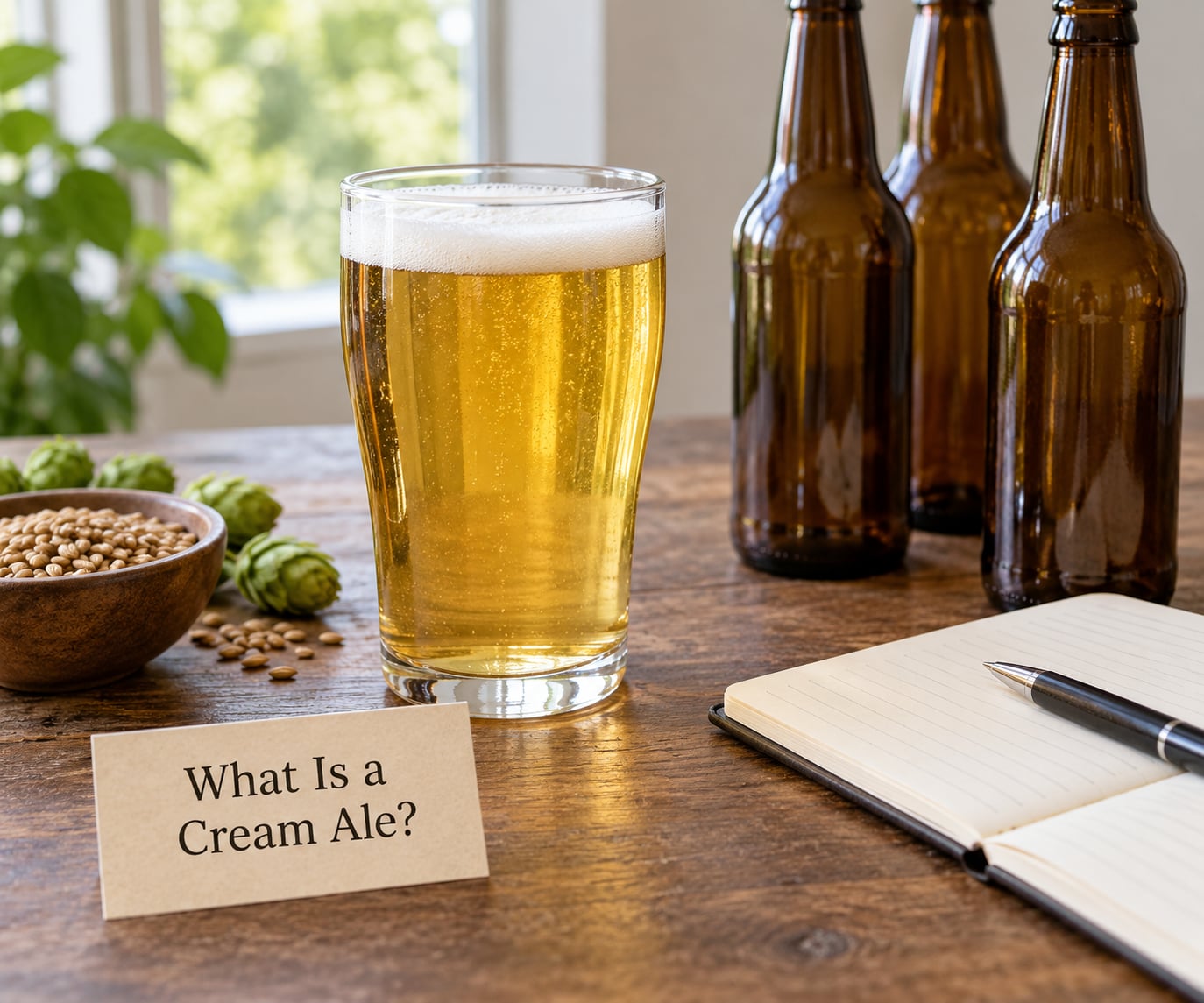
Cream ale is an American ale style built to imitate the imported pale lagers that arrived in the United States in the mid-1800s, using ale yeast instead of lager yeast to get there. It is pale, crisp, lightly hopped, and fermented clean, and it is the direct ancestor of the light-bodied American beer most people drink today.
Style guides classify it as BJCP style 6A, American Cream Ale. The numbers are narrow on purpose, because a cream ale that strays outside them starts tasting like something else.
| Specification | Typical range |
|---|---|
| Alcohol by volume | 4.2% to 5.6% |
| Bitterness (IBU) | 8 to 20 |
| Color (SRM) | 2.5 to 5 |
| Original gravity | 1.042 to 1.055 |
| Final gravity | 1.006 to 1.012 |
| Malt character | 60% to 100% of the grain bill |
| Appearance | Pale straw to light gold, brilliant clarity, thin white head |
One fact worth stating plainly, because it is the most repeated myth about the style: cream ale contains no milk, cream, lactose, or any other dairy product. The name describes color and body, not ingredients.
Historically, the style was refined by Canadian brewers who kept making it through Prohibition while American breweries closed up, and it picked up its familiar smoothness in that period. A pre-prohibition cream ale, by the way, is simply a version brewed to the older, maltier, less adjunct-heavy approach; it is a stylistic reference, not a separate style category.
What Does a Cream Ale Taste Like?
A well-made cream ale tastes clean, crisp, and malt-led, with sweetness that shows for a moment and then disappears. The finish is the tell: dry, snappy, and quick, with very little lingering bitterness or fruit.
On the nose, expect cracker, bready, and lightly sweet grain, sometimes with a faint hint of honey sweetness at the front. Breweries that push a bit harder on malt add a soft, round grain character rather than anything roasty or caramel-like. This is a style where malt flavor is present but never the star of a heavy, bready blowout.
Hop character is deliberately subdued. American brewers often use a small amount of a clean American hop for bitterness and a faint grassy or citrus aroma, but the hops should never compete with the grain. Homebrewers working on the style say the fun part is aroma: Galaxy, Cascade, and Voss show up often for a light floral or citrus note that leaves the malt base alone.
Carbonation runs high, body is medium-light, and the glass fills with a thin white head that fades fast. Mainstream versions, like the ones sold in coolers at ballparks, are the cleanest expression of the style. Craft versions tend to be more malt-forward, sometimes with a touch more hop aroma or a hint of grain sweetness. Barrel-aged or additive-heavy versions exist too, and those can taste more like a brown or amber ale than a classic cream ale.
Is a Cream Ale an Ale or a Lager?
Cream ale is an ale, because it is fermented with top-fermenting brewer’s yeast. What confuses people is that the finished beer is then cold-conditioned, the same treatment a lager gets, so it drinks clean and smooth rather than fruity.
That two-step process is the whole trick. A standard ale ferments warm and fast, producing fruity esters. A cream ale ferments with the same kind of yeast but slower and cooler, then sits cold in the tank for an extended conditioning period, sometimes with lager yeast added alongside to help strip out the fruitiness. The result is a beer with ale yeast in its pedigree and lager-like clarity and finish.
Some brewers run the primary fermentation cool enough, and condition long enough, that a pure ale strain handles the whole job. Others pitch a blend of ale and lager yeast, which homebrewers report can work if the temperatures are kept below roughly 70°F, though the cooler the better for a clean result.
What Makes a Cream Ale Different From Other Beer Styles?
The differences come down to yeast, strength, hop intensity, and color. Here is how cream ale lines up against the styles it is most often confused with.
| Style | Yeast | Strength | Hop intensity | Color and body | Best for |
|---|---|---|---|---|---|
| Cream ale | Top-fermenting, cold-conditioned | 4.2% to 5.6% ABV | Low, 8 to 20 IBU | Pale straw to gold, medium-light | Hot days, game days, an easy first craft beer |
| American lager | Bottom-fermenting | Around 4% to 5% ABV | Low, mild bitterness | Pale gold, very light | Maximum lightness and drinkability |
| American pale ale | Top-fermenting | Around 4.5% to 6.2% ABV | Medium-high, 30 to 50 IBU | Deep gold, medium | Hop flavor people actually want to notice |
| Blonde ale | Top-fermenting | Around 4% to 5% ABV | Low to moderate | Straw to gold, light | Anyone who finds pale ale too bitter |
| Wheat beer | Top-fermenting with wheat | Around 4% to 5.5% ABV | Low to moderate | Cloudy, hazy or unfiltered | Citrusy, bready, fuller aroma |
| Amber ale | Top-fermenting | Around 4.5% to 6% ABV | Low to moderate | Copper to amber, fuller | More malt sweetness than cream ale offers |
One naming trap deserves its own note, because it drives a lot of searches: an Irish cream beer is not a cream ale. Beers like Guinness, Kilkenny, and Export Stout are dry Irish stouts, dark as a pint of stout should be, and they are nothing like this style in yeast, color, or flavor. The words “cream” and “ale” do not travel together in beer the way people assume.
How Is a Cream Ale Brewed?
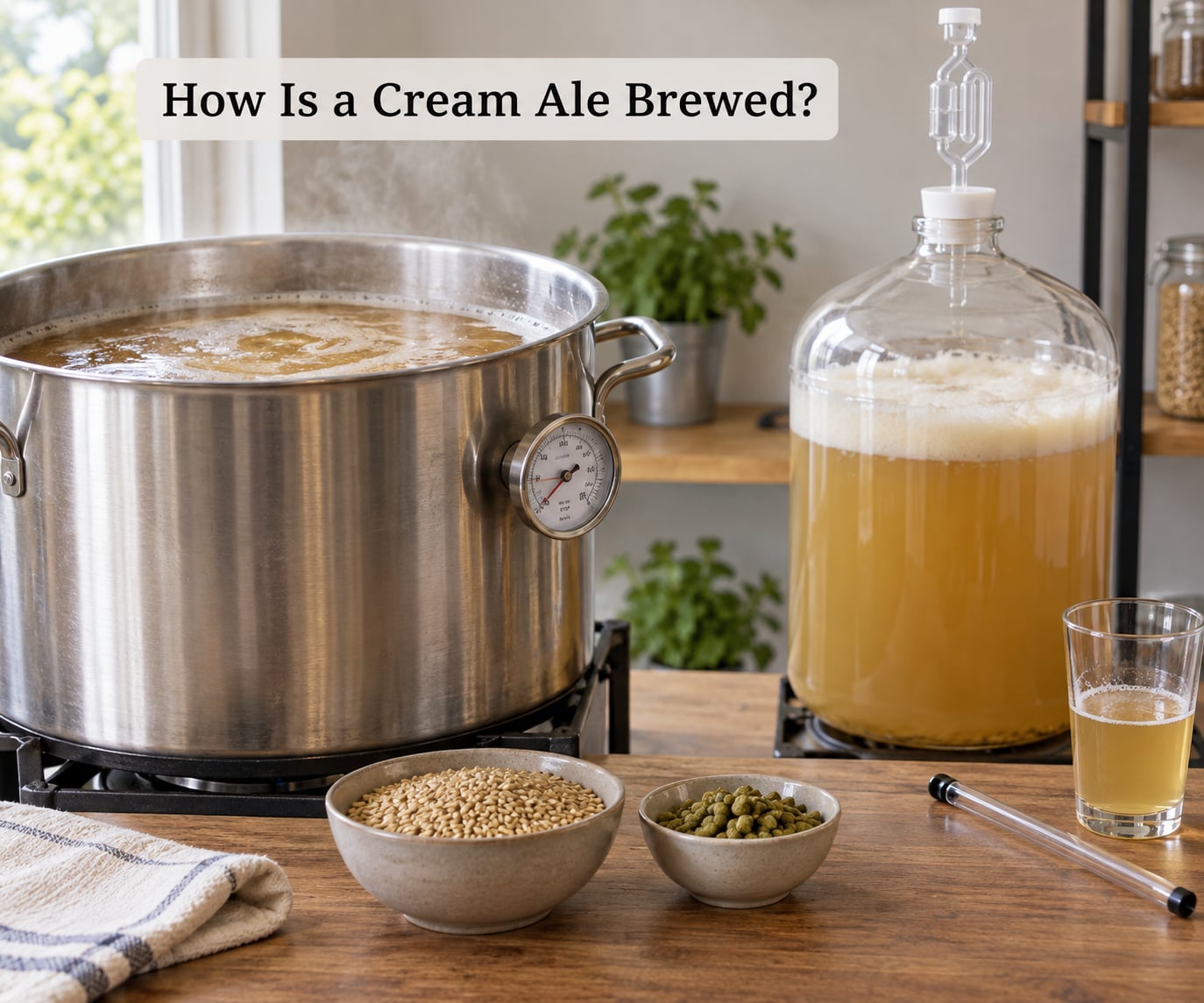
Brewing a cream ale is a short, fairly forgiving process if you keep two things in mind: the grain bill stays mostly malt, and the yeast stays cool. Here is the general shape of it.
Mashing is routine, with a pale base malt doing most of the work. Some recipes lighten the beer with adjuncts such as corn, rice, or a small amount of dextrose, which reduces body and makes the finish crisper. More adjunct is not automatically better. Homebrewers report that pushing it too far gives you a thin, corn-sweet beer instead of a light and clean one.
Fermentation is where the style is won or lost. Pitch ale yeast and run the fermentation cool, in the low 60s to upper 60s Fahrenheit, because heat brings out the fruity esters that a cream ale should not have. Ferment to dryness so the beer is well attenuated, then cold-condition it. That cold-conditioning step, often called lagering even though the yeast is ale yeast, is what produces the clean, lager-like finish.
Finally the beer is filtered bright, force-carbonated, and packaged. High carbonation and brilliant clarity are both part of the style, not finishing touches.
What Makes a Cream Ale Smooth?
Smoothness here is less a recipe choice than a temperature and restraint choice. Cool fermentation slows the yeast down and keeps esters low, long cold-conditioning finishes the job, and keeping the hopping restrained stops bitterness from hanging around.
If a homebrewed cream ale tastes fruity or spicy, temperature is the first thing to check. Keeping fermentation under about 70°F is the number experienced brewers keep repeating, and the ones who get a genuinely clean report controlling it rather than hoping. On the grain side, a higher proportion of malt to adjunct, restrained hopping, and a fully attenuated fermentation give the same result from the other direction.
How Strong Is a Cream Ale?
Style guidelines put a classic cream ale between 4.2% and 5.6% alcohol by volume, which is why the style is often called sessionable. That range is a guideline, not a ceiling: modern craft versions and barrel-aged takes run higher, sometimes into the 7% range or beyond.
On a tap list or bottle, read the alcohol statement and treat it as the better guide than the style name. Anything labeled session or sessionable usually sits near the bottom of the range. A cream ale that lists 6% or more is a stronger interpretation of the style, and a good one, but it will not feel like the lawnmower beer the style is famous for.
How Should You Taste and Serve a Cream Ale?
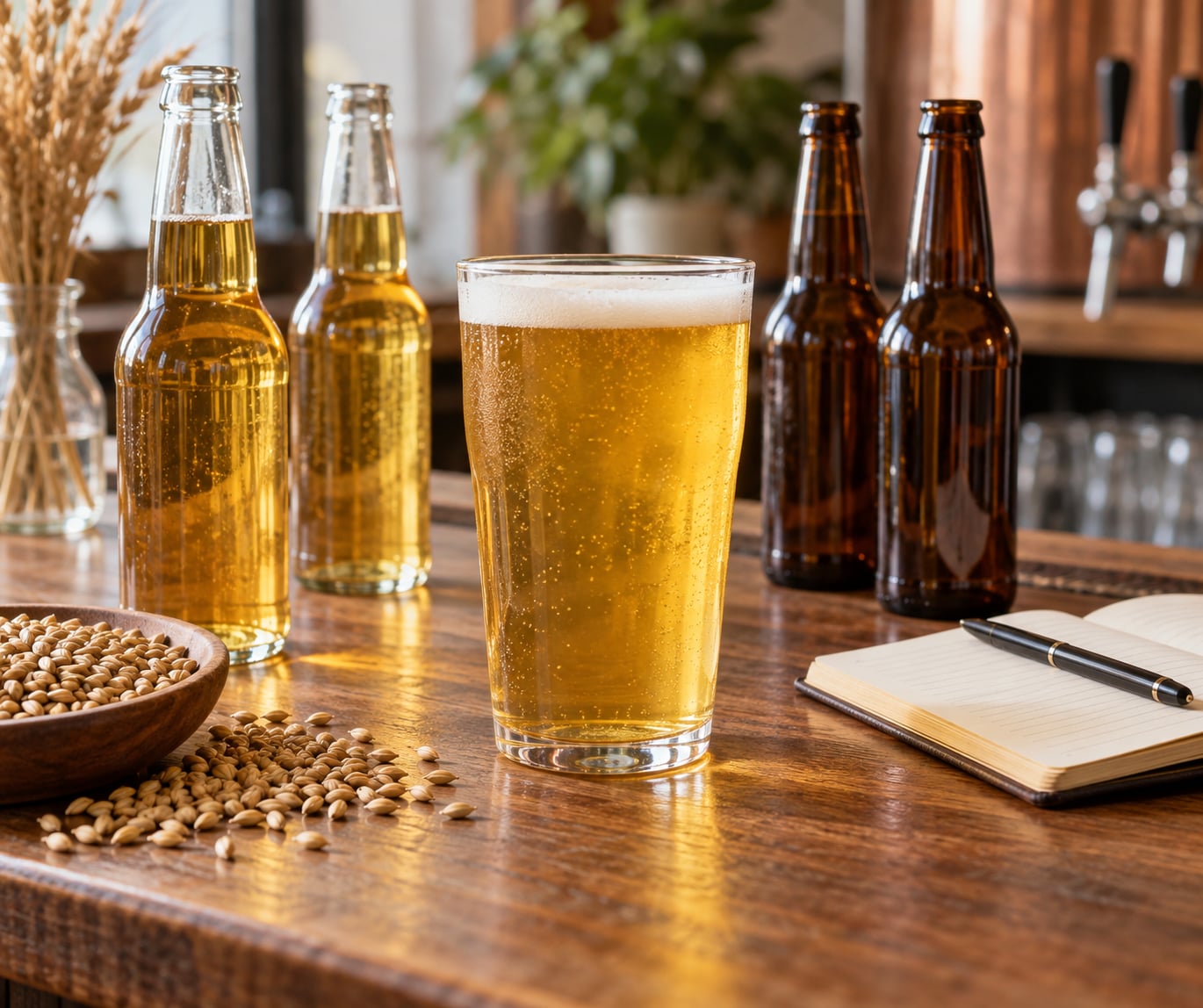
Taste it in the order a brewer would. Start with the appearance: pale straw to light gold, clear, with a thin white head. Then nose it, looking for cracker, bready, lightly sweet grain, and very little fruit. Taste next, and note how the initial sweetness resolves into a dry finish. Finish with mouthfeel, checking for high carbonation, light body, and a snappy close.
Serve it cold, around 38°F to 45°F. That is colder than an IPA and warmer than a straight-from-the-fridge lager, which lets you actually taste the malt instead of just coldness. A plain pint glass or a tulip works well. A heavy glass, like a snifter, buries the aroma and makes the beer taste thinner than it is.
For food, keep it simple and salty. Cream ale pairs well with burgers, grilled chicken, fried chicken, pizza, nachos, pretzels, and almost anything from a ballpark concession stand. The style is built for summer drinking, but it works year-round on a cold evening next to a barbecue.
If it is your first cream ale, start with the cleanest modern example you can find, one that lists its alcohol and hops plainly on the tap menu. Cream ale rarely appears on craft menus, so you may have to ask the bartender for it by name. It is often the closest thing on a beer list to a lager that people actually recommend to beginners, and that is a useful thing to know.
Frequently Asked Questions
Is cream ale the same as a lager?
No. Cream ale is brewed with top-fermenting ale yeast, which makes it an ale by definition. It is then cold-conditioned for an extended period, the same way a lager is, so the finished beer tastes clean and smooth instead of fruity. That conditioning step is why cream ale is often mistaken for a lager when you taste it blind.
What is the difference between cream ale and pale ale?
Strength of hop flavor is the big gap. Cream ale aims for 8 to 20 IBU with subdued hop character, while an American pale ale usually runs 30 to 50 IBU with a pronounced citrus or pine aroma. Cream ale is also lighter in body and finishes drier, so a pale ale tastes hoppier and cream ale tastes more like a clean, pale American lager.
Does cream ale contain dairy or milk?
No. Despite the name, cream ale contains no milk, cream, lactose, or any other dairy product. The name refers to its pale color, smooth body, and creamy head retention, not to its ingredients. Irish cream beers like Kilkenny are a separate category entirely: they are dry Irish stouts and do contain dairy.
What ABV should I expect from a cream ale?
Style guidelines place cream ale between 4.2% and 5.6% alcohol by volume, which is what makes it sessionable. Craft and barrel-aged versions often exceed that range, sometimes reaching 7% or higher. Read the alcohol statement on the bottle or tap list rather than assuming, since a strong cream ale will not drink as light as its name suggests.
How should I choose a cream ale at a brewery or bar?
Ask whether the tap list carries the style at all, since it rarely appears unprompted. Look for a beer described as American cream ale rather than a cream beer or a cream stout. When a brewery makes one, the modern versions tend to be the cleanest examples, so start there and compare it against the lager on the same list.
What to Look for in Your First Cream Ale
Find a beer actually labeled cream ale, and skip anything called a cream beer. Check the alcohol statement first, aiming near 4.2% to 5.6%, then check the hop level, which should be low enough that malt is doing the talking.
Start with a clean, modern example rather than something barrel-aged or heavily adjuncted. Pour it cold into a plain glass, taste it next to a pale ale or a lager, and the difference will be obvious: less bitterness, less aroma, more malt up front, and a much drier close. Once you have that baseline in your head, the older pre-prohibition and higher-alcohol versions make much more sense.