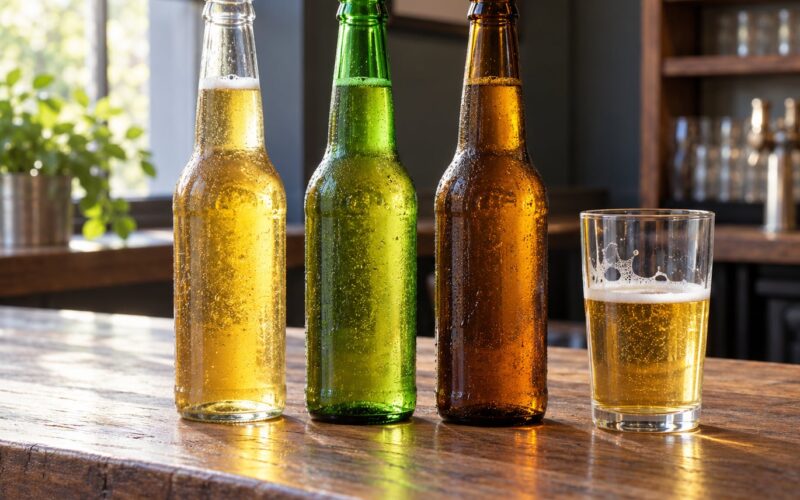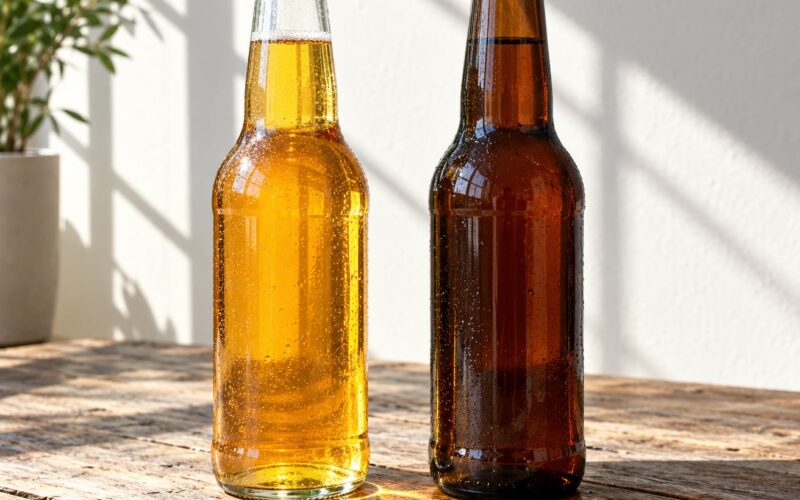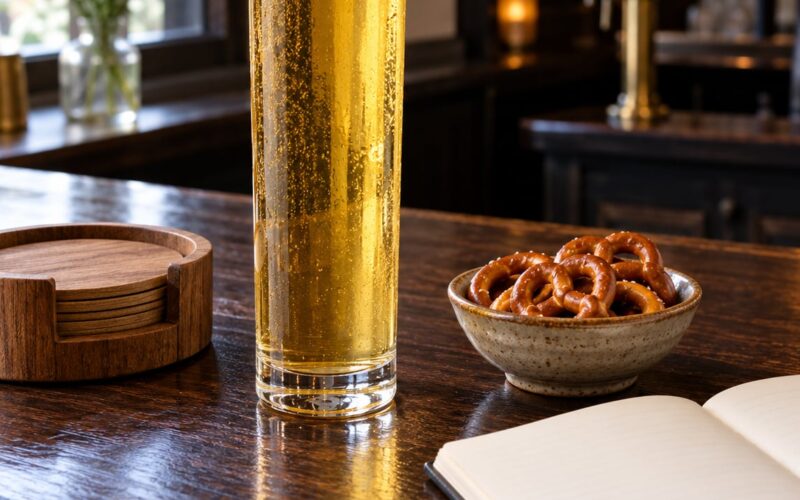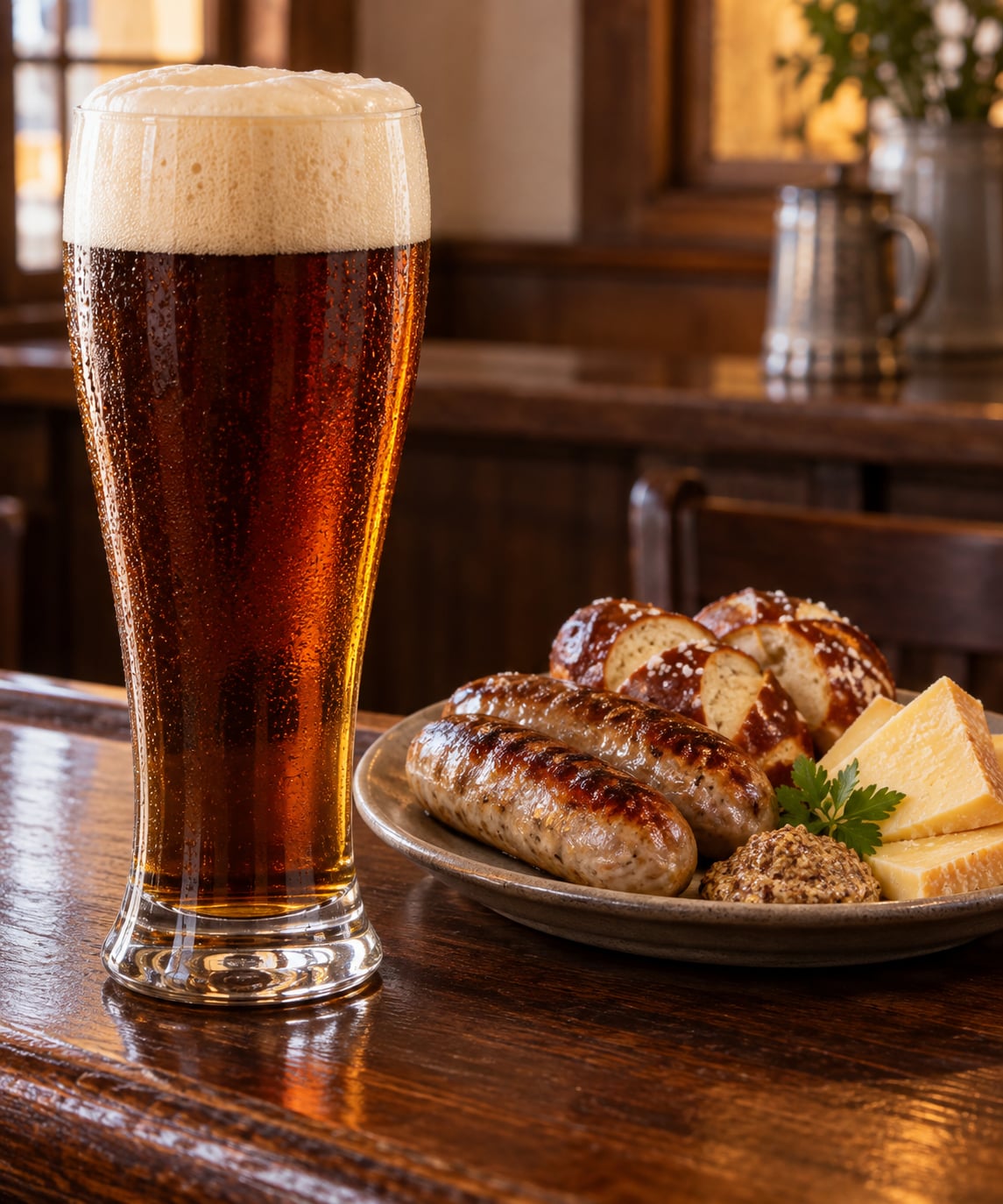
A dunkel is a dark German lager. The word means “dark” in German, and the beer is brewed with bottom-fermenting lager yeast and a heavy dose of Munich malt, so it carries a smooth, malty, bready flavor rather than the burnt or coffee-like bitterness of a stout.
That contrast surprises people. Most dark beer gets treated as heavy, and a lot of drinkers write the whole category off after one bad stout. A dunkel is a different animal: soft-bodied, malty-sweet up front, and clean on the finish.
- Color: deep amber to dark brown, often with ruby highlights when held to the light
- Flavor: toasted bread crust, caramel, toasted nuts, and a hint of chocolate
- Alcohol: typically 4.5% to 5.5% ABV
- Ingredients: Munich malt, noble hops, lager yeast, carbonate-rich water
Table of Contents
- What Is a Dunkel Beer?
- What Is a Dunkel Beer in Brewing Terms?
- How Does Dunkel Beer Taste?
- What Makes Dunkel Different From Other Dark Lagers?
- How Strong Is a Dunkel Beer?
- How Should You Serve Dunkel Beer?
- What Food Pairs Well With Dunkel Beer?
- How to Tell a Good Dunkel When Choosing One
- Frequently Asked Questions
- Is dunkel beer always sweet?
- Can you drink dunkel beer from a bottle?
- What type of glass is best for dunkel beer?
- How long does dunkel beer stay fresh after opening?
- Is dunkel beer the same as Schwarzbier?
- Can dunkel beer be gluten-free?
- The Bottom Line
What Is a Dunkel Beer?
Dunkel comes from Bavaria, where it grew into the standard dark lager of Munich beer halls. It is one of the older regulated beer styles in the world, tied to the Reinheitsgebot of 1516, the Bavarian purity law that set strict limits on what could go into beer. Dunkel is that idea in a glass: a dark beer defined by what it is made from rather than by what is added to it.
The style is a lager, which means the yeast ferments at the cool bottom of the tank and the beer is then cold-conditioned, or lagered, for weeks. That process keeps fruity esters at bay, so all the sweetness and complexity you taste comes from the malt instead of the yeast. It is the opposite of a weissbier, which is dark or cloudy and full of banana and clove from top-fermenting yeast.
What Is a Dunkel Beer in Brewing Terms?
What is a dunkel beer in practical brewing terms? It is a bottom-fermented, lagered dark lager built on Munich malt, fermented cool, conditioned cold for several weeks, and finished clean and dry. The four things that define it are the grain bill, the yeast temperature, the lagering time, and a restrained hop bill.
Munich malt is the backbone, and traditional recipes come close to using it exclusively. A small amount of roasted barley or chocolate malt may go in for color, but a brewer who pushes the roast too far gets a Schwarzbier or an astringent dark lager rather than a dunkel.
Traditional brewers use decoction mashing, and it is worth explaining because it is the step that creates the flavor. Instead of heating the grain all at once, the brewer pulls out a portion of the mash, heats it to a boil, and returns it to the main vessel to raise the temperature in stages. Those repeated heat cycles pull more sugars and flavor compounds out of the grain, which is where the dense, almost chewy malt character comes from. Modern breweries often skip it and get close with a well-designed single infusion mash.
The quick-reference version:
| Attribute | Typical Dunkel |
|---|---|
| Style | Dark German lager (Munich dunkel) |
| Origin | Bavaria, Germany |
| Color | Deep amber to dark brown, ruby highlights |
| ABV | 4.5% to 5.5% |
| Bitterness | About 20 to 30 IBU |
| Original gravity | 1.044 to 1.060 |
| Primary malt | Munich I and Munich II |
| Hops | Noble hops such as Hallertauer or Saaz, used for bitterness not aroma |
| Yeast | Bottom-fermenting lager yeast |
| Finish | Clean, dry, lightly sweet malt |
How Does Dunkel Beer Taste?
Dunkel tastes like toasted bread and caramel with a soft, creamy body and a clean, dry finish. The sweetness is present but restrained, and it does not linger as syrupy heaviness the way a sweet stout or a milk stout does.
The aroma leads with toasted bread crust, caramel, and toasted nuts. A well-made example often adds a touch of chocolate or a faint dark-fruit note such as cherry or cranberry, especially in the Franconian versions from northern Bavaria, and a very slight smoky edge is not unusual. None of those notes should be sharp or burnt.
Bitterness is the thing people get wrong. A good dunkel has enough bitterness to keep the malt in balance, but it reads as gentle herbal or earthy hop flavor rather than as roast. On the palate it is medium-bodied, smooth, and faintly creamy, with a finish that goes dry and clean within a few seconds. That clean finish is the tell. If a dark beer tastes heavy, oily, or ashy all the way down, it is not doing dunkel.
On a tap list or a bottle label, look for descriptors like toasted bread, caramel, biscuity, nutty, or clean malt. If the description says roasted, charred, coffee, or smoky-heavy, you are probably looking at a Schwarzbier or a porter instead. Dark color alone tells you very little.
What Makes Dunkel Different From Other Dark Lagers?
Dunkel is defined by a bready, caramel-forward malt character and a clean lager finish. Everything else in the dark beer world sits somewhere on a different line: more roast, more body, more yeast character, or a different fermentation.
Schwarzbier is the closest neighbor and the one that causes the most confusion. Put the two side by side and the split is simple: dunkels are bready malt bombs, while Schwarzbier is less malty and allows a slight roasted or chocolate flavor. Schwarzbier also tends to sit a touch darker and drier, and it comes from northern Germany rather than Munich. Köstritzer, which markets itself as the oldest dark beer in the world, is the Schwarzbier most people reach for first; Ayinger Dunkel, Hacker-Pschorr, and Warsteiner Dunkel are the easy door into the malty side of the divide.
There are regional variations worth knowing. Munich dunkel is the malty, toasty benchmark. Franconian dunkel, from northern Bavaria, leans darker and fruitier. Dunkel weizen applies the word to a wheat beer instead of a lager, so you get a cloudy, yeast-driven beer with banana and clove rather than pure malt. And in a casual American bar, “dunkel” sometimes just means whatever dark beer the house sells most of, so the description matters more than the label.
That also settles the Modelo Negra question that comes up a lot. It is a dark Mexican lager with a smooth, lightly roasted malt profile, and it is a perfectly drinkable beer, but it is not a German dunkel and is not brewed to the Reinheitsgebot. It is closer to a Vienna-style lager than to a Bavarian dunkel, so treat it as its own thing.
| Style | Yeast | Flavor Center | Roast | Typical ABV |
|---|---|---|---|---|
| Munich dunkel | Lager | Toasted bread, caramel, nuts | None to slight | 4.5% to 5.5% |
| Schwarzbier | Lager | Dark bread, mild roast, chocolate | Mild to moderate | 4.4% to 5.4% |
| Dunkel weizen | Weizen ale | Bread crust, banana, clove | None to slight | 5.0% to 5.8% |
| American dark lager | Lager | Mild corn sweetness, light malt | Minimal | 4.5% to 6.0% |
| Porter | Ale | Cocoa, coffee, toast | Noticeable | 4.5% to 6.5% |
| Stout | Ale | Coffee, charcoal, dried fruit | Heavy | 5.0% to 7.5%+ |
| Doppelbock | Lager | Dark fruit, caramel, warming spice | None to slight | 7.0% to 8.5% |
How Strong Is a Dunkel Beer?
A traditional dunkel runs 4.5% to 5.5% ABV, which puts it in roughly the same territory as a pale lager or a light ale. It is a session-strength beer, not a sipping beer, and that is one of the reasons it fits a long evening better than most dark beers.
Strength varies with the version. A bohemian-style dunkel or a bock-leaning dunkel will push higher, and a doppelbock is the same malt family turned up to 7% or more. Brewing water and yeast choice also nudge the final number. The practical takeaway is to read the label rather than assume, because the word dunkel on its own tells you the color and the flavor family, not the alcohol.
| German Style | Typical ABV | Sip or Session |
|---|---|---|
| Munich dunkel | 4.5% to 5.5% | Session |
| Schwarzbier | 4.4% to 5.4% | Session |
| Helles | 4.7% to 5.4% | Session |
| Dunkel weizen | 5.0% to 5.8% | Session |
| Doppelbock | 7.0% to 8.5% | Sip |
How Should You Serve Dunkel Beer?
Serve a dunkel cool but not ice-cold, around 45 to 50°F (7 to 10°C). Straight-from-the-fridge cold suppresses the aroma that the style is built on, and you lose the caramel and toast notes that make it worth drinking.
Glassware matters less than people think, but a pilsner glass or a mug works well. The shape gives you a tall, dense head that carries the aroma upward, and the wider base lets you see the ruby highlights in the color. A dimple mug is a perfectly good second choice.
Pour slowly and let the head form fully before you drink. A healthy, persistent tan head is a good freshness signal, since head retention drops quickly in an old or badly handled beer. Taste it cool, then let the glass sit for a few minutes and take another sip as it warms. Dunkel opens up noticeably as it moves toward cellar temperature, and the malt character gets sweeter and rounder in the last few sips.
If you are tasting several German styles side by side, go light to dark: helles first, then dunkel or Schwarzbier, then a doppelbock or weizenbock last. Your palate will stay honest and you will pick up more differences than drinking them out of order.
What Food Pairs Well With Dunkel Beer?
Dunkel pairs best with food that is savory, roasted, smoky, earthy, or rich, because the beer’s malty sweetness and low roast level cut through fat and salt without adding any bitterness of their own.
- Grilled and roasted meats: pork chops, roast pork, brisket, and anything with a browned crust. The caramel in the beer echoes the browning on the meat.
- Sausage and charcuterie: bratwurst, smoked sausage, knackwurst, and a fatty cured charcuterie. Smoke plus malt sweetness is the most natural combination in the German repertoire.
- Bavarian plates: roast chicken with skin, dumplings, pretzels with mustard, and potato salad. A dunkel is the standard beer for this table.
- Mushrooms and earthy vegetables: roasted mushrooms, red cabbage, caramelized onions, and grilled root vegetables. The earthy notes in the malt sit right next to the earthiness in the food.
- Aged cheese: aged gouda, alpine-style cheeses, and firm stinking cheeses. Salt and fat are exactly what a malty, medium-bodied lager handles well.
- Sweet finishes: dark chocolate cake, hazelnut desserts, and banana bread. The restrained sweetness extends the dessert rather than competing with it.
What to skip: very hoppy or bitter dishes, vinegary salads, and delicate raw seafood, because the malt will flatten the acidity and bury the finer flavors.
If you are smoking or grilling the meat yourself, cook to a safe internal temperature: 165°F (74°C) for poultry, 160°F (71°C) for ground meats, and 145°F (63°C) for whole cuts, then rest before serving.
How to Tell a Good Dunkel When Choosing One
Start with the aroma, because it tells you the most. You want toasted bread, caramel, nuts, and a little chocolate. If the first thing you smell is coffee, char, or smoke, keep looking.
Then check the appearance. A good dunkel is deep amber to dark brown with ruby highlights at the edge and a thick, persistent tan head. Murk without yeast character usually means a cloudy dunkel weizen rather than a lager, and a thin, short-lived head points to age or rough handling.
Look at the malt balance in the description rather than the word dunkel. Brewery and tap descriptions tell you far more than the style name alone, and “dark lager” on a US bottle is a marketing category rather than a protected German style, so it can be anything from sweet corn-heavy to genuinely malt-driven.
Finally, buy fresh and buy small. Dunkel is at its best young, and buying a single bottle before committing to a case is the cheapest way to find out whether you are a dunkel drinker at all. Common starting points include Ayinger, Augustiner, Hacker-Pschorr, Spaten, Franziskaner, Paulaner, Hofbräu, and Warsteiner, with Köstritzer as the Schwarzbier cross-check.
Frequently Asked Questions
Is dunkel beer always sweet?
No, though it is malty-sweet up front. A well-made dunkel finishes clean and dry within a few seconds, and the bitterness, while mild, keeps the malt in balance. If the sweetness clings and feels syrupy, the beer is either an over-pitched modern version or not a dunkel at all.
Can you drink dunkel beer from a bottle?
Yes, and most examples are packaged that way. Bottle conditioning can add a touch of extra carbonation and yeast character, which suits the style. Just pour it into a glass rather than drinking from the bottle, since the aroma is the whole point and a glass holds it.
What type of glass is best for dunkel beer?
A pilsner glass or a mug is the standard choice. The shape supports a tall, dense head and keeps the aroma moving upward so you can smell the toast and caramel. A dimple mug works too. What matters most is getting the head to form, not the exact glass shape.
How long does dunkel beer stay fresh after opening?
Treat it like any lager. Keep it cold, sealed, and out of sunlight, and drink it within a few days of opening. Exposure lets the carbonation escape and oxidizes the malt flavors, which flattens the caramel and toast notes. Small bottles are the easy answer to this problem.
Is dunkel beer the same as Schwarzbier?
Not exactly. Both are dark German lagers, but a Bavarian dunkel is bready and caramel-forward with no real roast, while a Schwarzbier is darker, drier, and allows a mild roasted or chocolate note. Brewers in northern Germany lean Schwarzbier; the Munich style is the malty one.
Can dunkel beer be gluten-free?
Traditional dunkel is brewed from barley malt, so it contains gluten and is not gluten-free. A few breweries sell gluten-free dark lagers or gluten-reduced versions, but those are not traditional dunkel and the flavor profile is thinner. Anyone with celiac disease should check the label carefully.
The Bottom Line
What is a dunkel beer? A dark German lager built on Munich malt, fermented cool with lager yeast, lagered for weeks, and named for the German word for dark. Malty, bready, lightly sweet, and clean on the finish, usually 4.5% to 5.5% ABV.
Start by ordering a Bavarian dunkel by brewery name rather than asking for “the dark beer.” Check the label for a 4.5% to 5.5% range, pour it into a pilsner glass, and drink it closer to cellar temperature than fridge temperature. If it reads too malty for you, the Schwarzbier next door is drier and has a touch more roast.