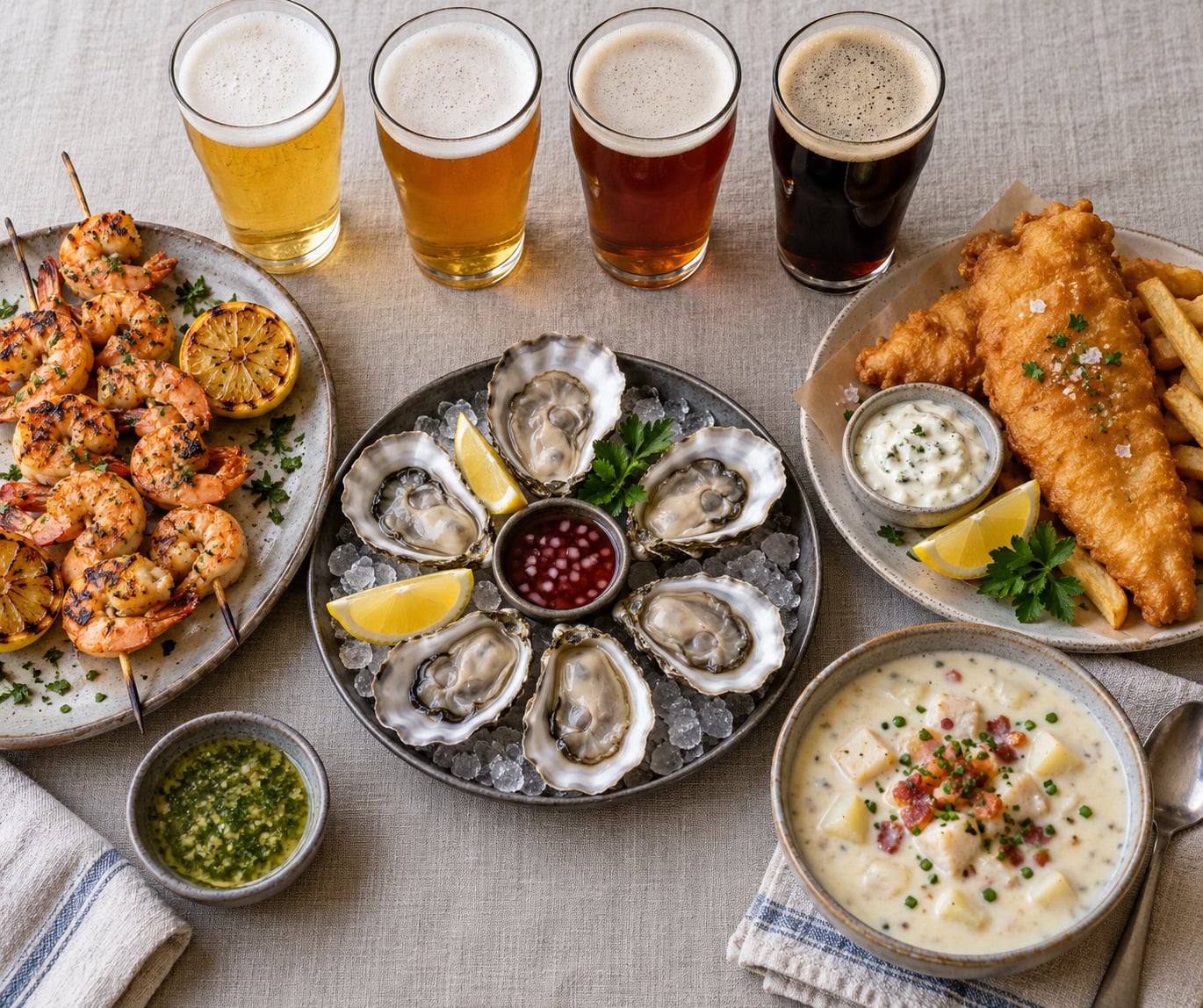
There is no single beer that works with every seafood dish. The honest answer to what beer goes with seafood starts with a crisp, highly carbonated pilsner or light lager, then shifts with the food: wheat beers for lemony shellfish, hoppy pale ales for fried fish, and malty dark beers for smoked or boldly seasoned plates.
Most pairing mistakes come down to intensity. Seafood is delicate and low in fat, so a heavy, overly bitter or overly sweet beer buries the flavor of the fish and leaves you tasting nothing but the beer. Match the weight of the beer to the weight of the dish and the match almost takes care of itself.
Table of Contents
- What Beer Goes With Seafood?
- How to Match Beer and Seafood by Flavor
- What each flavor does to seafood
- A quick style cheat sheet
- The Best Beer Pairings for Seafood
- What Beer Goes With Delicate Seafood: Light and Crisp Styles
- Hoppy, Bitter Beers for Fried and Rich Seafood
- Malty and Darker Beers for Smoked or Bold Seafood
- Which Beer Style Should You Choose for Common Seafood Dishes?
- How to Serve Beer with Seafood Without Overpowering It
- Food Safety When Serving Seafood and Beer
- Frequently Asked Questions
- What is the best beer for fish and chips?
- What beer goes with sushi and sashimi?
- What beer goes best with raw oysters?
- What kind of beer complements a seafood boil?
- What non-alcoholic beer works with seafood?
- Should beer with seafood be served ice cold?
- Conclusion
What Beer Goes With Seafood?
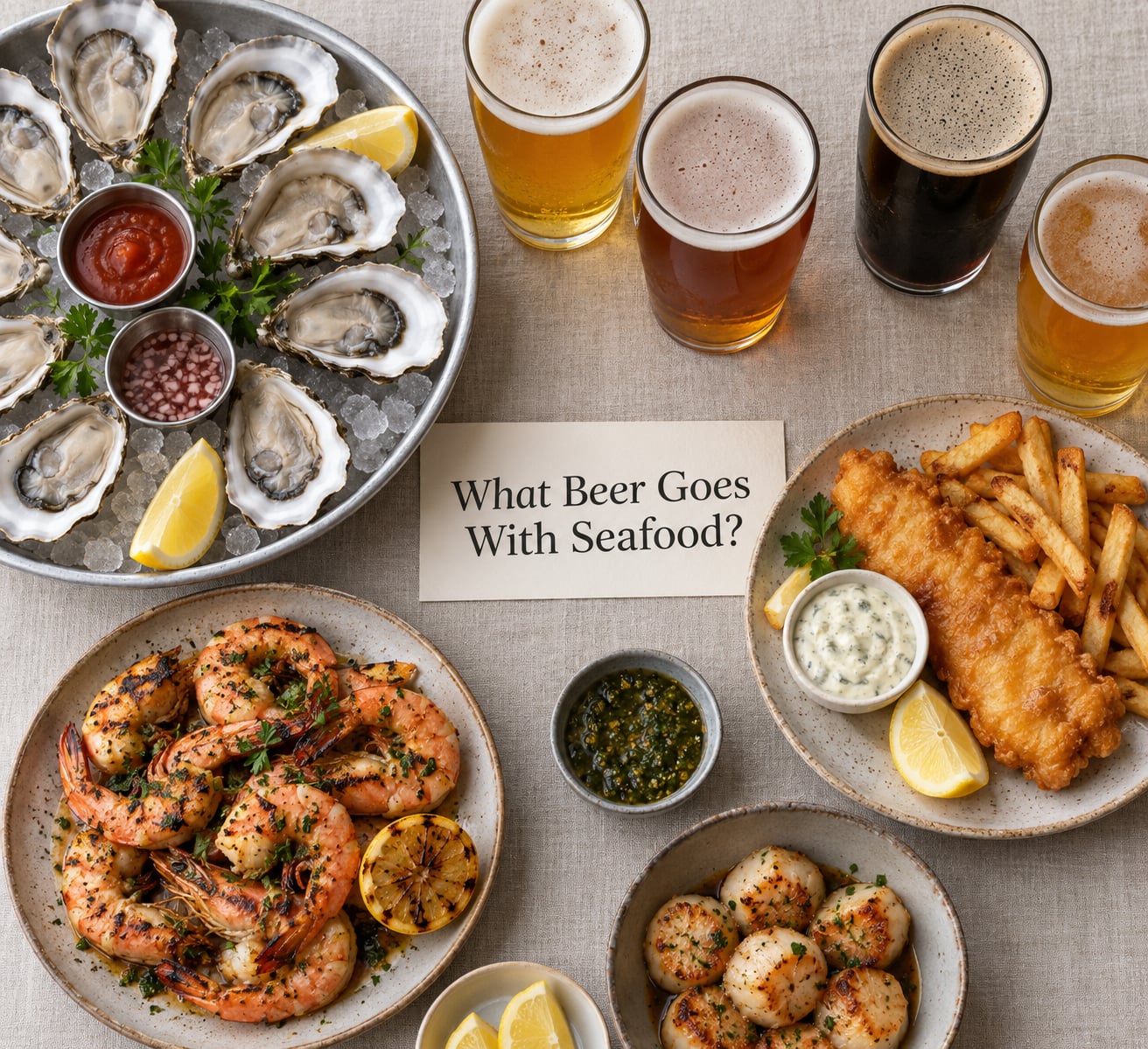
The short version: a clean, crisp, high-carbonation lager is the safest answer to what beer goes with seafood. Pilsner, helles, kolsch and Mexican-style lager all work across the widest range of dishes, from raw oysters to fried fish to a spice-heavy boil.
Everything past that is a deliberate move. A wheat beer brings citrus and spice notes that echo lemon and garlic. A pale ale has enough bitterness to scrub oil off your palate. A porter or dry stout brings roast and coffee notes that stand up to char and smoke. The guiding rule is contrast: the beer should reset your palate between bites instead of competing with the seafood for attention.
Ask two questions before you order. Is the seafood raw, fried, grilled or spiced? And is it mild or heavily seasoned? Those two answers narrow the field faster than any list of style names.
How to Match Beer and Seafood by Flavor
Seafood is a collection of very different foods. A raw oyster is briny, wet and delicate. A piece of fried cod is oily, salty and crunchy on the outside. Grilled salmon is fatty and smoky. A shrimp boil is coated in seasoning that is the loudest flavor in the room. One beer cannot serve all four, but a small set of mechanics can.
What each flavor does to seafood
Carbonation is the workhorse. The bubbles physically lift oil and salt off your tongue, which is why a fizzy lager tastes almost clean after a plate of fried calamari. Bitterness does something similar chemically: it interrupts fat, so a hoppy pale ale keeps tasting like beer through the third piece of battered fish. Acidity mimics the lemon you would otherwise squeeze on, and it is why sour styles work so well with oysters and ceviche. Malt sweetness softens heat rather than fighting it, which is why a touch of sweetness helps with a seafood boil.
What generally does not work: heavy imperial IPAs with raw shellfish, and sweet or roasty stouts with delicate white fish. In both cases the beer is louder than the food. There are exceptions, covered below.
| Pairing goal | What to reach for | Seafood it suits | Why it works |
|---|---|---|---|
| Clean and neutral | Pilsner, helles lager, kolsch | Oysters, sushi, ceviche, steamed mussels | High carbonation scrubs brine and butter |
| Cut through oil | Pale ale, session IPA, bitter lager | Fried fish, fish and chips, calamari | Bitterness interrupts fat and refreshes the palate |
| Match citrus and spice | Witbier, hefeweizen, wheat beer | Lemon-pepper shrimp, crab, scallops | Coriander, clove and citrus mirror the marinade |
| Handle heat | Saison, Mexican-style lager, session sour | Seafood boil, fish tacos, blackened fish | Dry finish and mild sweetness cool capsaicin |
| Stand up to fat and char | Amber ale, Vienna lager, porter | Grilled salmon, tuna, swordfish, chowder | Toasty malt absorbs richness and echoes smoke |
| Play the raw bar | Gueuze, lambic, dry stout, Berliner Weisse | Oysters, clams, raw prawns | Acidity and salt mirror brine; roast echoes mineral depth |
A quick style cheat sheet
If you have never ordered a craft style by name, this is the shortest useful primer. Pilsner is a pale, hoppy-adjacent lager, usually around 4.5 to 5.5% ABV. Kolsch is a light German lager fermented with ale yeast, drier and slightly fruitier. Witbier and hefeweizen are cloudy wheat beers with orange peel and clove. Saison is a dry, peppery Belgian ale. Gueuze and lambic are sour, acidic Belgian beers. Berliner Weisse is a tart, light German wheat beer. Porter and dry stout are dark, roast-forward beers with no sweetness in a dry stout.
| Style | Typical ABV | Bitterness | Tastes like | Best seafood match |
|---|---|---|---|---|
| Light lager / pilsner | 4.0-5.2% | Low | Cracker, hay, clean finish | Raw bar, sushi, fried fish, boil |
| Witbier / hefeweizen | 4.5-5.4% | Low | Lemon peel, coriander, clove | Shrimp, crab, scallops, mussels |
| Kolsch | 4.4-5.0% | Low | Light bread, faint fruit | Grilled white fish, oysters |
| Saison | 5.5-7.0% | Medium | Pepper, citrus, bone dry | Seafood boil, mussels, spicy shrimp |
| Pale ale / session IPA | 4.5-6.2% | Medium-high | Citrus, pine, cracker malt | Fish tacos, fried seafood, chowder |
| Gueuze / sour | 4.5-6.0% | Low | Sharp acidity, green apple, barnyard | Oysters, clams, ceviche |
| Amber ale / Vienna lager | 4.8-6.0% | Medium | Toast, caramel, light roast | Grilled salmon, tuna, chowder |
| Porter / dry stout | 4.5-7.0% | Medium | Cocoa, coffee, dry ash | Oysters, clams, smoked shellfish |
The Best Beer Pairings for Seafood
Here is the whole spectrum, organized by intensity. Move up as the food gets richer, smokier or more seasoned. If you only remember one line from this guide: the heavier the dish, the more malt and bitterness the beer can carry.
What Beer Goes With Delicate Seafood: Light and Crisp Styles
For mild fish, sushi, oysters and anything served with lemon and nothing else, keep the beer light, dry and highly carbonated. A pilsner with a plate of sushi is the cleanest example: cold, snappy, almost flavorless next to the fish, which is exactly the point. The carbonation cleanses your mouth between pieces and the low bitterness never argues with delicate flesh.
Wheat beer gets its turn with light shellfish. A hefeweizen beside lemon-pepper shrimp is a natural fit because the beer’s own citrus and clove notes repeat what the marinade already did. Serve it slightly frosty, around 40 to 45°F, so the yeast character reads as refreshing rather than heavy.
Session IPAs belong here too, but with a caveat people rarely hear. The bright, juicy modern style with a soft mouthfeel works nicely with sushi and ceviche. The older, drier, resin-heavy version with sharp edges does not: on a raw oyster, the hop bitterness registers as bitterness on the seafood rather than in the beer. Ask for something described as low bitterness, or fall back to a pilsner.
On the raw bar specifically, a dry sour is the more interesting order. Gueuze is sharp, acidic and faintly funky, and that acidity mirrors the briny liquor in the shell. It tastes like the ocean and the beer are on the same page.
Hoppy, Bitter Beers for Fried and Rich Seafood
Fried food is where bitterness earns its keep. A pale ale or session IPA next to fish and chips, fried shrimp or calamari works because the hop bitterness cuts through the oil, so bite ten tastes almost as good as bite one. This pairing is the most consistent in the whole guide.
The mistake is overshooting. A double IPA at 8% ABV with 60 IBU puts a wall of pine and resin between you and the fish. You are not tasting the coating, you are tasting hops. Aim for a beer with a firm but clean bitterness, usually 30 to 45 IBU, where you notice it on the finish but the flavor stays in the background. That is why session IPAs and classic American pale ales outperform hazy imperial versions here despite having less hop aroma.
Fish tacos and grilled street-style seafood sit in the same band. You are already eating lime, onion, chili and cilantro, so you want a beer that refreshes rather than adds. A Mexican-style lager with a touch of lime does it. A saison adds pepper that echoes a chipotle rub. A mildly bitter pilsner is the safe answer when the fish was fried in a very hot oil and the plate is heavy.
Bitterness also earns its keep with rich dishes that are not fried. A porter’s roasted bitterness handles a bowl of clam chowder, and a pale ale’s malt backbone carries a butter-drenched plate of crab legs. Fat and bitterness are the same kind of flavor problem, and hop bitterness is the lightest available solution.
Malty and Darker Beers for Smoked or Bold Seafood
Smoked and grilled seafood is where malt belongs. The toast and caramel in an amber ale or Vienna lager reads as the continuation of the char on the fish rather than a contradiction of it. That is why these styles work with grilled salmon, blackened fish, seafood paella and anything served with sausage on top.
Dark ales and porters go further. The roasted, earthy character of a porter handles strong seasoning and oily fish the way bread handles stew. A dry stout with oysters sounds like a gimmick, and it is not: the roast and mineral depth echo the shell, the dry finish cleans up the butter sauce, and the combination is far more interesting than the safe lager order it replaces.
What to avoid is sweetness without roast. A sweet stout with a raw shrimp cocktail is a clash, because nothing in that plate is sweet. And a heavy, roasty imperial stout with a delicate white fish works the same way as a heavy IPA does: the beer is louder than the food. Save the big ones for the boil or the brisket, not the sole meuniere.
Which Beer Style Should You Choose for Common Seafood Dishes?
Use this table as the decision tool. Find your dish, take the first style, and take the backup only if the kitchen is pouring something from the heavy end of the list.
| Dish | Order this | If that is not available | Reason |
|---|---|---|---|
| Raw oysters and clams | Dry stout or gueuze | Berliner Weisse, then pilsner | Acidity and roast mirror brine; no grain sweetness |
| Sushi and sashimi | Pilsner or session IPA | Kolsch, then dry sparkling lager | Neutral, cold, high carbonation resets the palate |
| Ceviche | Gueuze or saison | Witbier, then pilsner | Bright acidity echoes lime without adding heat |
| Grilled shrimp skewers | Witbier or hefeweizen | Wheat beer, then kolsch | Citrus and clove match garlic, lemon and char |
| Grilled white fish | Helles lager or kolsch | Pilsner, then wheat beer | Light malt, soft bitterness, no weight on delicate flesh |
| Grilled salmon or tuna | Amber ale or Vienna lager | Pale ale, then porter | Toasty malt stands up to fat and smoke |
| Fish and chips or fried calamari | Pale ale or session IPA | Bitter lager, then pilsner | Bitterness cuts the oil and reboots the palate |
| Fish tacos | Mexican-style lager | Saison, then pilsner | Refreshing and neutral beside lime and chili |
| Cajun or spicy seafood boil | Saison or Mexican-style lager | Wheat beer, then light lager | Dry finish and mild sweetness take the edge off heat |
| Clam chowder | Porter or amber ale | Pale ale, then stout | Roast and malt cut the cream and potatoes |
| Lobster roll or crab legs with butter | Saison or amber ale | Pale ale, then pilsner | Pepper and malt handle the butter; acidity adds lift |
| Seafood curry or paella | Amber ale | Porter, then pale ale | Caramel malt grounds warm spice and rice |
If you are not sure what the kitchen has, ask for their lightest lager and their most bitter pale ale. Between those two, you can cover almost any seafood plate on this list.
How to Serve Beer with Seafood Without Overpowering It
Temperature matters more than most people expect. Light lagers and pilsners taste flat and dull served warm, so give them real cold, straight from the fridge or on ice. Wheat beers are best a little warmer, around 40 to 45°F, because the cold flattens the yeast aromatics. Serve anything dark at cellar temperature, roughly 50 to 55°F, so the roast character is not locked behind the cold.
Order from light to strong as the meal goes on. Start with oysters or salad and a pilsner, move to grilled or fried courses with a pale ale, and finish a boil or a chowder with a porter. Going backwards tastes wrong, and it is the simplest habit that makes a seafood dinner feel deliberately paired.
Use clean glassware. A beer that has been sitting in a warm pint glass tastes yeasty and dull, and seafood deserves better than that. Pour into a chilled pint or a stemmed lager glass, and skip the rinse of yesterday’s porter.
The sauce is part of the pairing. Lemon and vinegar push you toward sour and wheat styles, since you want more acidity, not less. Garlic, cumin and chili push you toward a dry, peppery saison. Melted butter and cream push you toward bitter or dark styles that can cut through the fat. Bourbon-glazed seafood wants a porter; a ceviche swimming in lime wants a gueuze.
Finally, taste them together on purpose. Take one bite, then a sip, and ask whether the beer made the seafood taste better or simply different. If the beer disappears, you have gone too heavy.
Food Safety When Serving Seafood and Beer
Pairing advice is only useful if the plate is safe, so a few basics belong here. The USDA recommends a minimum internal temperature of 145°F (63°C) for fish, measured in the thickest part, with a three-minute rest. That covers whole fish, fillets and steaks, whether you are grilling, baking or pan-searing them.
Shellfish follow their own guidance. Cook shrimp, lobster and crab until the flesh is opaque and pearly rather than translucent. For clams, mussels and scallops, cook until the shells open, then discard any that stay closed, since they did not cook through and may have been dead when you bought them. Keep raw seafood chilled on ice from the moment you get it home, and use a separate board and knife for raw fish to avoid cross-contamination with the rest of the meal.
If you are hosting a boil, put the finished seafood on a platter and drain it well, and be careful with the seasoning and corn that often go in the pot alongside. The alcohol in a pairing beer does not help you detect an off smell, so if a piece tastes wrong, skip it.
Frequently Asked Questions
What is the best beer for fish and chips?
A pale ale or session IPA is the classic answer, and the reason is bitterness: hop bitterness interrupts fat, so the oil from the batter stops making bite ten taste like bite one. Keep it around 30 to 45 IBU so the beer refreshes without hiding the fish. If the tap list is all lager, a bitter pilsner or an amber lager still works better than you might expect.
What beer goes with sushi and sashimi?
A cold pilsner or a soft, low-bitterness session IPA is the safest order. You want a neutral, highly carbonated beer that cleanses your mouth between pieces and does not add flavor to raw fish. A heavily bitter West Coast IPA is the wrong call here; its resinous bitterness reads as bitterness on the fish itself. A dry, sparkling lager or a kolsch works well too.
What beer goes best with raw oysters?
A dry stout or a gueuze is the interesting answer, and both are more available than most people expect. Acidity in a sour mirrors the briny liquor in the shell, while the dry roast of a stout echoes the mineral, oyster-and-sea character of the meat. Avoid anything sweet or heavy in malt. If you want the safe order, a pilsner is a perfectly respectable fallback.
What kind of beer complements a seafood boil?
A dry, highly carbonated lager or a saison is the best fit for a boil, because the seasoning and heat are the loudest flavors on the table. The carbonation cuts through the butter and corn, and the dry finish gives you relief from the capsaicin. Session strength, under 5% ABV, matters more here than anywhere else, since a boil is a long meal with shells, corn and potatoes in it.
What non-alcoholic beer works with seafood?
Non-alcoholic pilsners and NA pale ales are the most useful options, because they keep the carbonation and light malt that actually do the work of pairing. Read the label and look for higher carbonation and low residual sweetness rather than a heavy body. Avoid non-alcoholic stouts and dark ales with delicate white fish for the same reason you would skip the alcoholic version.
Should beer with seafood be served ice cold?
Cold suits light lagers, pilsners and wheat beers, which is most seafood pairing advice you will read. Darker styles work better a little warmer, roughly cellar temperature, so their roast and caramel notes come through. With a raw bar or a boil, serve it as cold as you can stand. With grilled salmon or chowder, let a porter or amber ale warm up for a few minutes before pouring.
Conclusion
Start by naming the dish and how it was cooked. Raw and lemon, fried and oily, grilled and smoky, or spiced and heavily seasoned each point to a different part of the beer aisle, and the beer that works is the one that contrasts with the food rather than repeating it.
Order a pilsner you already like, then try one style you have never tasted, a wheat beer, a saison or a dry sour. That is the fastest way to find out what your own palate wants with fish, and it takes about two minutes of shelf browsing to find out.