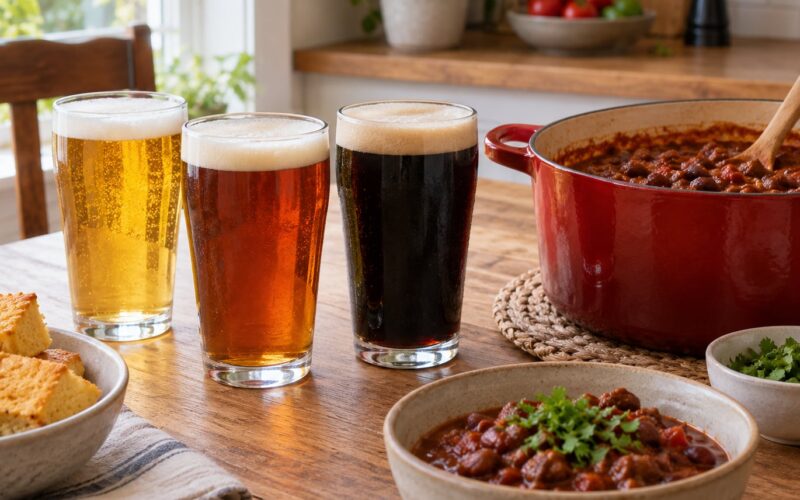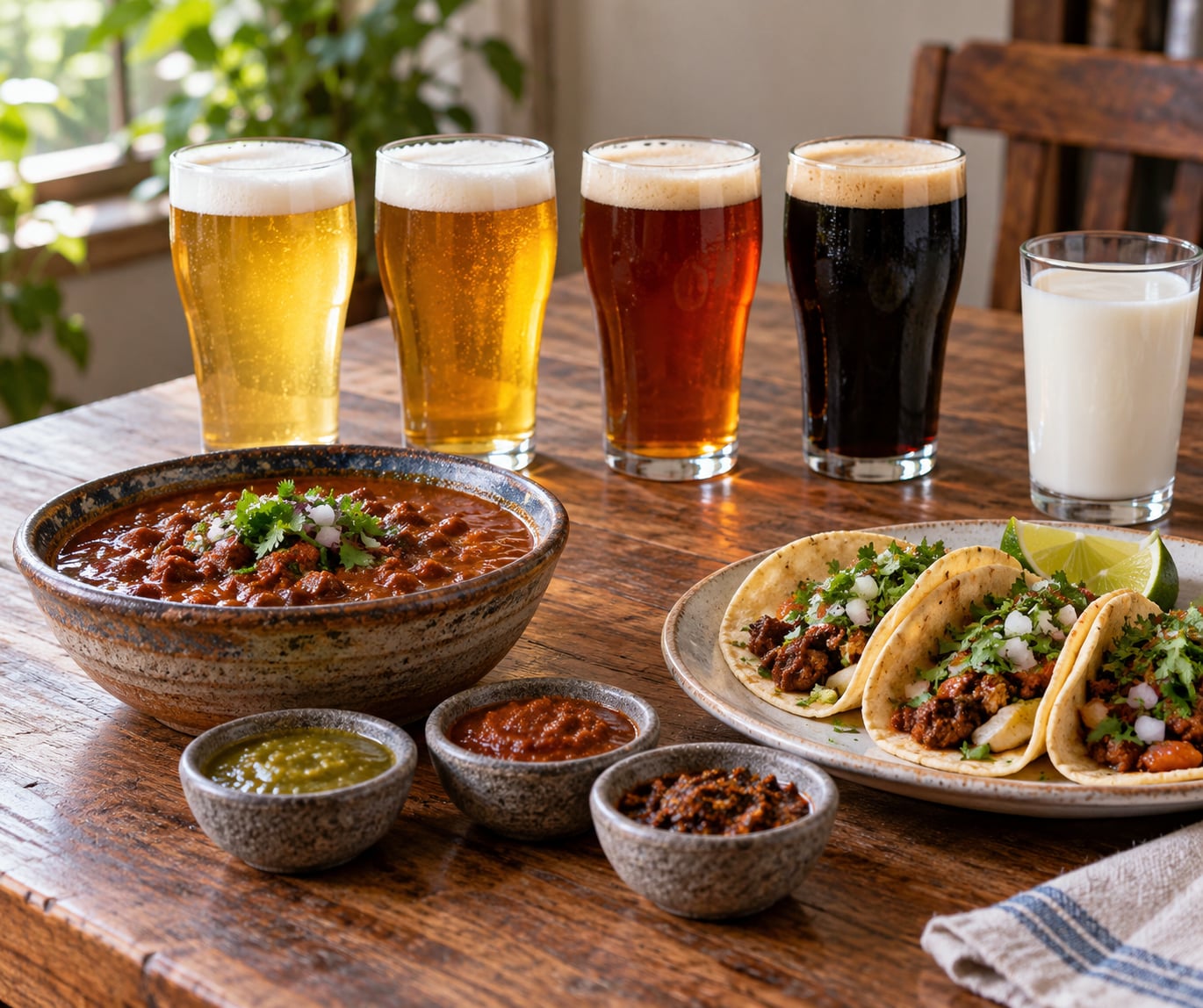
Pairing beer with spicy food comes down to matching intensity: hoppier, drier, more carbonated beers handle hotter dishes, while creamy or delicate plates want softer, maltier styles. Learning how to pair beer with spicy food means naming the heat first, then choosing a beer on four dials — bitterness, carbonation, malt sweetness and roast. One thing to get straight early: alcohol does not neutralize the burn. Fat and dairy do that, not the drink in your hand.
Table of Contents
- How to Pair Beer with Spicy Food by Heat Level
- How to Pair Beer with Spicy Food
- Best Beer Styles for Mild Spicy Foods
- Best Beer Styles for Medium and High Heat
- Pale-malt, dry-finishing IPA
- Amber and brown ales
- Porters, stouts and Rauchbier
- Barleywine for chili
- When a crisp lager still wins
- How Sweetness, Carbonation, and Acidity Change the Pairing
- Pairing Beer with Tacos, Curry, Wings, and Chili
- Tacos with salsa verde
- Chicken tikka masala and other curries
- Buffalo wings
- Texas-style chili
- Sichuan mapo tofu and hot pot
- Beer and Food Pairing Mistakes to Avoid
- Frequently Asked Questions
- What type of beer is best for very spicy food?
- Should I serve beer cold when pairing it with spicy dishes?
- Does a sweet beer pair well with hot curry and chili?
- Are IPAs good with spicy wings or tacos?
- What beer should I choose when serving several spicy dishes at once?
- Can non-alcoholic beer be paired with spicy food?
- Conclusion
How to Pair Beer with Spicy Food by Heat Level
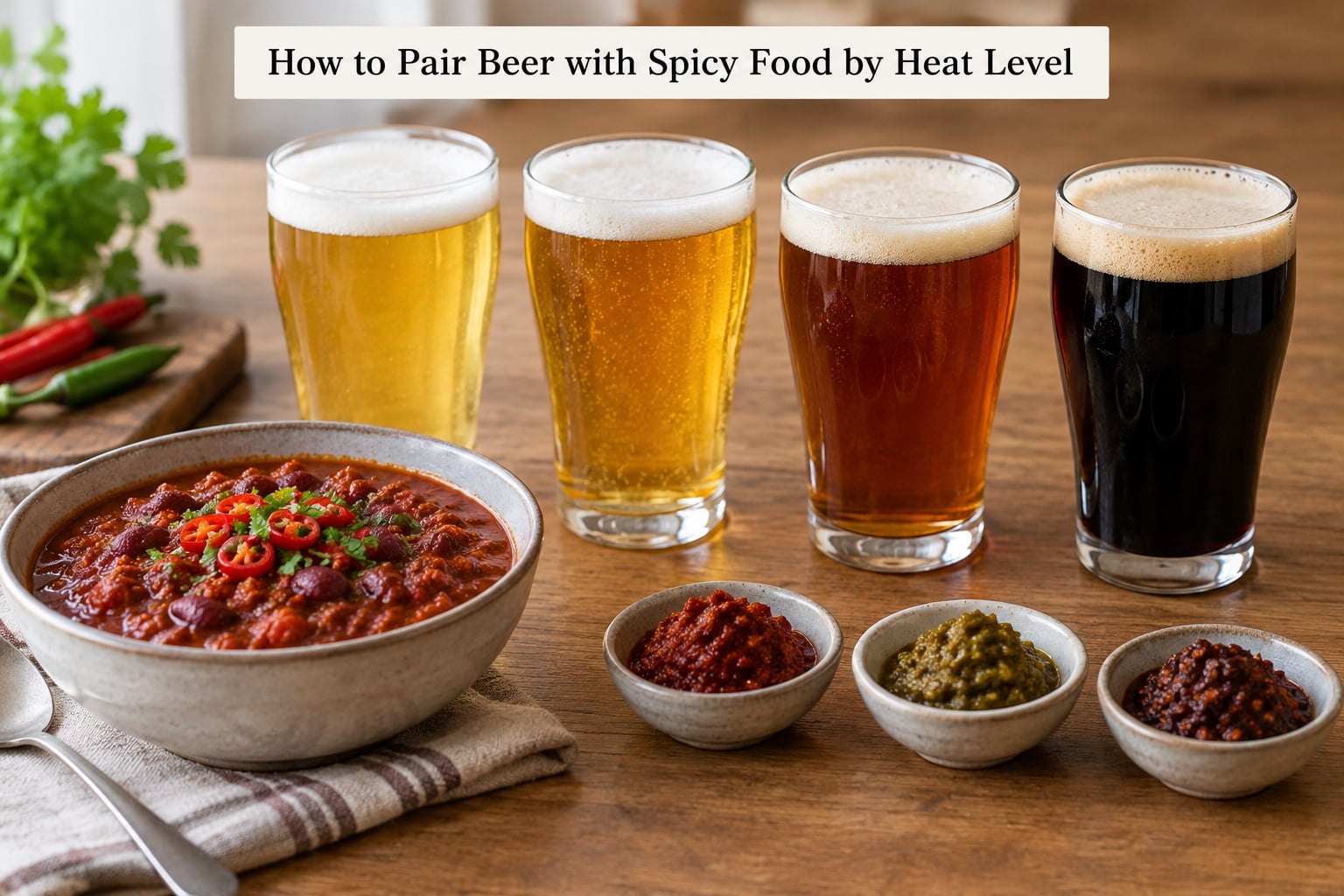
Every “spicy food” conversation collapses into four useful tiers. Jalapeño and poblano sit in the low thousands on the Scoville scale, which is mild heat you can taste but not really chase. Serrano and cayenne land in the tens of thousands. Bird’s eye, habanero and hotter chiles push past 100,000, and that is where most beer advice falls apart.
Match the beer to the tier, not to the word “spicy.” Here is the short version I use at the table:
| Heat level | What it feels like | Reach for | Why it works |
|---|---|---|---|
| Mild | Jalapeño, poblano, ancho, black pepper, warm curry spice | Pilsner, helles, light lager, witbier, saison | Crisp and clean, so the beer does not compete with delicate flavors |
| Medium | Serrano, cayenne, ancho, chipotle, Korean gochujang, Sichuan ma la | Pale ale, amber ale, brown ale, session IPA | Enough malt and hop to stand beside the chile without piling on |
| Hot | Bird’s eye, habanero, Thai prik kee, harissa | Dry pale-malt IPA, porter, dry stout, Rauchbier | Bitterness and roast reset the tongue between bites |
| Extra hot | Carolina Reaper, ghost pepper, habanero-scorpion sauces | Dry pale-malt IPA, porter, barleywine, plus dairy on the side | Nothing is subtle at this level, so go for a dry finish and expect dairy to do the real work |
How to Pair Beer with Spicy Food
Six steps, and you can run through them in under a minute once they are in your head.
- Name the dominant heat. Ignore the dish’s reputation and identify the actual chile. If the heat comes from a sauce rather than a fresh pepper, it is usually gentler and more caramelized, which shifts the pairing toward malt.
- Decide whether you want contrast or complement. Contrast means a beer that pushes against the dish, like a dry pilsner against rich curry. Complement means shared flavor families, like a coffee-heavy porter with smoky chipotle.
- Match intensity. A light lager disappears next to a heavy stew, and a heavy imperial stout flattens a delicate plate. Both mistakes are common.
- Check sweetness and acidity. A dry finish beats a sweet one against chile. Tart styles bring their own acidity, which can be a plus with fatty fried food and a problem with a dish that is already vinegar-forward.
- Guard against harsh bitterness. Very high bitterness on very hot food tends to amplify the burn rather than dull it. Session-strength IPAs in the 40 to 60 IBU range are the sweet spot; 100-plus IBU doubles and hazy imperial IPAs often overshoot.
- Taste them together, cold. Take a bite of the food, then a sip of the beer, in that order. Cold liquid and carbonation make a measurable difference to how the burn feels.
That last step is the one people skip. I have changed my mind about a beer mid-meal more than once by just eating a bite before the next sip instead of alternating perfectly.
Best Beer Styles for Mild Spicy Foods
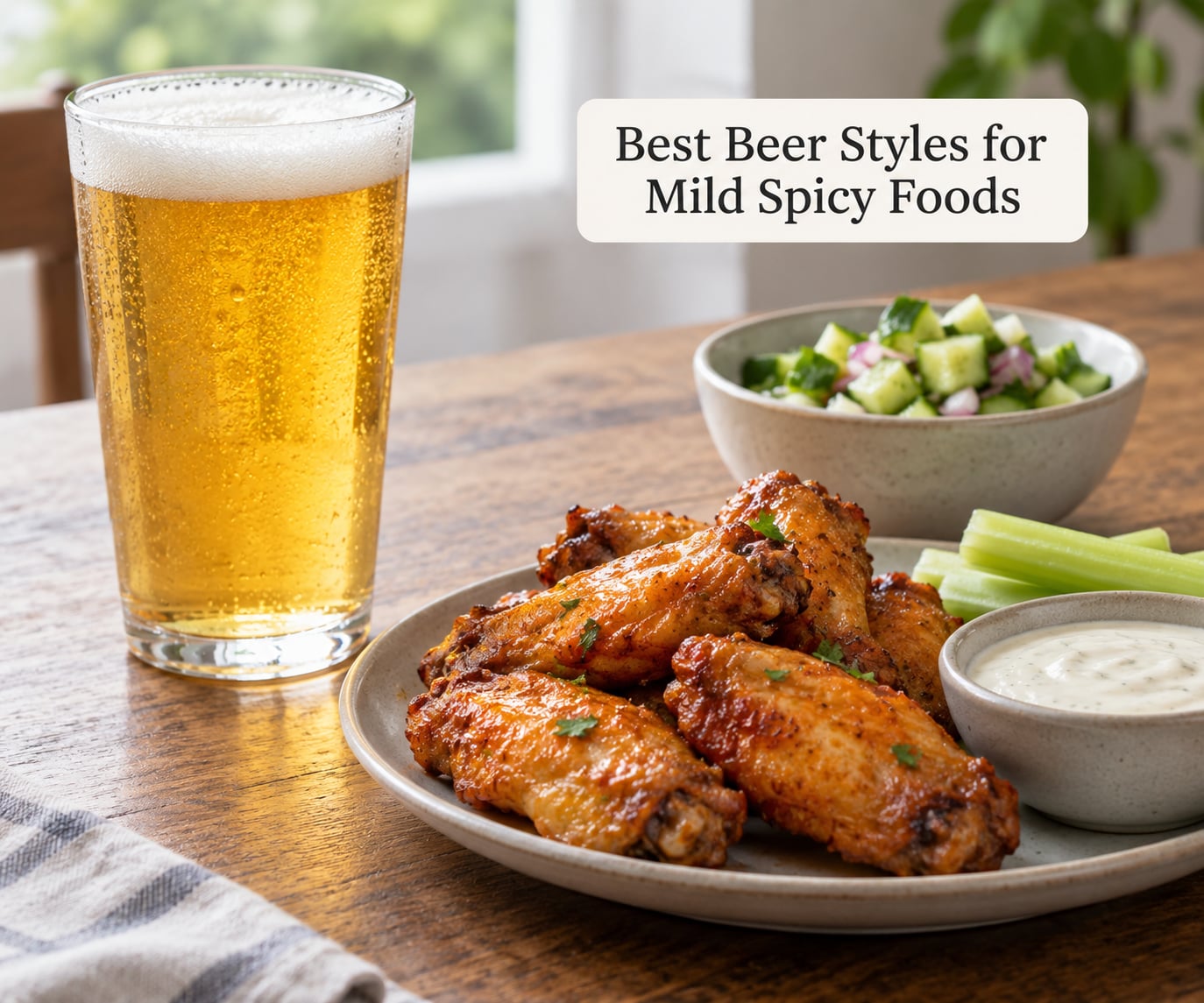
At the mild end, the goal is a beer that refreshes without adding a second flavor the food does not need. Anything crisp and dry works, and the choice is wide open.
- Pilsner and helles. Pale malt, low bitterness, tight carbonation. This is the default answer and it is a genuinely good one for a plate of chicken tikka, a mild curry, or wings with a hot sauce on the side rather than cooked into them.
- Light lager. Lower strength and very clean, which suits delicate fish dishes with a light chile rub.
- Witbier. Unfiltered, lightly tart, faintly citrusy. The mild acidity cuts fried coating nicely, and a slice of lemon in the glass is a close cousin.
- Saison. Dry, peppery and highly carbonated. The pepper note in the yeast reads as a second spice layer, which is either charming or distracting depending on the dish.
- Pale ale. Enough hop bite to keep up with a medium salsa without tipping into hop-dominant territory.
Mild food is also where a lager nobody would call interesting shines. Nothing is competing for your attention, so a clean, cold lager is exactly the right size.
Best Beer Styles for Medium and High Heat
Once the heat gets real, the beer needs more to say. Thin and delicate styles get overwhelmed, and the pairing starts to feel like a series of unrelated mouthfuls instead of one dish.
Pale-malt, dry-finishing IPA
This is the most-cited answer in the beer community and the most consistently right one. Pale-malt IPAs built on a clean, dry finish give you citrus and floral hop aroma, real bitterness, and no lingering sweetness. The malt choice is the whole game: a dark-malt IPA brings caramel and pine-sweet notes that read as more burn, which is the single most repeated complaint about IPA pairings in enthusiast threads on Reddit’s r/beer and on BeerAdvocate forums.
Amber and brown ales
Amber ales and southern English brown ales bring toasty malt, caramel-adjacent but not cloying character, and moderate bitterness. They handle medium heat and roasted or grilled spice beautifully, and homebrewers reach for them constantly when pairing with meat and potato dishes. On a plate of chipotle ribs or smoky sausage, they are hard to beat.
Porters, stouts and Rauchbier
Porters and dry stouts use roasted malt, coffee and dark chocolate notes to give the palate something substantial to grip. Rauchbier, the German smoked lager, adds a genuine smokiness that matches Texas-style or Tex-Mex smoke directly. Be careful with very sweet imperial stouts at extra-hot levels: heavy residual sweetness amplifies capsaicin perception, and this is another complaint that comes up constantly in homebrewing communities.
Barleywine for chili
This is the contrarian pick, and home brewers have recommended it for chili for years. A barleywine has enough alcohol, malt depth and hop bite to survive a pot of long-simmered beans and meat without being wiped out by it. If you like big bottles and slow evenings, this is the one to try.
When a crisp lager still wins
Style is not destiny. A very cold, very dry pilsner handles a hot curry better than most people expect, because the carbonation and coldness reset the mouth between bites. If a plate is spicy but not smoky and not rich, the simplest beer on the menu is often the right call.
How Sweetness, Carbonation, and Acidity Change the Pairing
Here is the part most beer-and-spice articles get wrong. Capsaicin, the compound that makes chile peppers burn, binds to TRPV1 receptors in your mouth. Those are the same receptors that respond to physical heat, which is why chile genuinely registers as burning rather than as flavor. The receptors stay partly activated for a while, and anything that cools or physically clears the mouth makes them fire less.
That is what beer is doing. Carbonation provides a physical scrubbing sensation, cold liquid lowers receptor activation, and hop bitterness is a bitter flavor competing for the same attention as the burn. Alcohol is not on that list. It does not dissolve capsaicin or block those receptors, and it can make you worse at judging how hot a dish is, which is how people quietly outpace themselves.
Fat and dairy are the real remedies. Milk fat and the casein in milk physically grab capsaicin and carry it away, which is why a dollop of cooling ranch, a spoon of yogurt, or a glass of milk beats another beer at extra-hot levels. Keep one on the table when you go there.
Sweetness is the dial to watch most closely. Residual sugar and dark caramel malt amplify perceived burn, so a sweet beer next to a hot dish makes the dish feel hotter, not cooler. A dry finish is your best friend. That said, a small amount of sweetness is a legitimate bridge when the dish is sweet-spiced, as with a glaze, a mango salsa or a coconut curry, because the beer echoes a flavor already in the bowl.
Acidity cuts from a different direction. Tart styles and styles dosed with lactic acid add a bright sourness that competes well against fried grease, so they suit spicy fried food especially well. Just avoid piling sourness onto a dish that already has vinegar or pickled onion in it.
Carbonation level matters more than most people realize. High carbonation feels more aggressive in the mouth, which is why highly fizzy styles can feel hotter alongside chile, not cooler. A moderately carbonated beer is usually the safer choice at the upper heat tiers.
Pairing Beer with Tacos, Curry, Wings, and Chili
Tacos with salsa verde
The green salsa case is about herbs and acid rather than raw heat, so you want something crisp that echoes the cilantro and lime. A cold pilsner is the classic move and it works. A session pale ale or a saison both do a bit better because they bring a little hop and pepper to meet the salsa’s own aromatics. Skip anything dark here; roasted malt reads as a completely different meal.
Chicken tikka masala and other curries
Curry is a heat-and-fat problem, and carbonation handles the fat while a little bitterness handles the chile. A dry pale-malt IPA is the most reliable choice, and r/IndianFood consensus lands in the same place: a cold, hoppy beer as the default for hot curries. A pilsner is the safer second option, and a brown ale is worth trying if the curry is gently spiced rather than fierce. A sour or lactic beer is a surprisingly good match with coconut-based curries, where the fat is heaviest.
Buffalo wings
Wings are fried, fatty and hot all at once, which is the hardest case on the menu. A dry, moderately bitter pale-malt IPA handles the heat and cuts through the fry. A crisp pilsner works because of coldness and carbonation. A stout or porter also works if the sauce is on the sweet side, since the roast stands up to buffalo’s vinegar. A hazy double IPA is the wrong choice: its sweetness and softness fight the vinegar and the fry.
Texas-style chili
Long-simmered chili is deep, dark and heavy, so the beer should be malty and substantial rather than sharp. An amber ale, a brown ale or a porter is the safe pick, and a barleywine if you want the full night’s pairing. A Rauchbier adds a smoked note that echoes the mesquite. A light lager will be gone after three bites.
Sichuan mapo tofu and hot pot
Ma la is numbing as much as it is hot, and the tingle comes from a compound other than capsaicin, so beer’s usual advantage is smaller here. That makes body the deciding factor: a doppelbock, a Märzen, an amber lager or a brown ale has the malt weight to keep pace with the oil and the pork. A heavily hopped IPA tends to make the tingle worse. Lactic sour styles work nicely with mapo tofu’s chile oil, cutting the grease.
Beer and Food Pairing Mistakes to Avoid
- Going too bitter. A 100-plus IBU double IPA on habanero-level food is the most common avoidable mistake. The bitterness does not fight the heat; it adds to it. Stay in the 40 to 60 IBU band.
- Choosing a sweet dark-malt IPA. Amber and dark malts bring caramel sweetness that amplifies the burn. Pale malt and a dry finish solve this.
- Pouring a heavy beer against a delicate plate. Imperial stouts and barleywines flatten lighter dishes. Save the big bottles for the chili pot and the smoked meat.
- Fighting a creamy sauce. Very bitter beer against a heavy coconut, peanut or cream sauce becomes the loudest thing on the table. Drop to a milder pilsner or a brown ale instead.
- Serving it warm. A warm beer loses its carbonation and its cooling effect, which is most of what it contributes. Keep ales around 50 to 55°F and lagers around 38 to 40°F.
- Forgetting the dairy. Skipping the milk, yogurt or cooling dip because you already have a beer in hand is how a fun night turns into a difficult one.
One more practical note that comes up more than you would think: beer plus a heavy, oily, spicy meal is a recipe for feeling bloated, and plenty of regulars would rather eat the chili and drink water or iced tea. Pairings are suggestions, not rules, and there is no prize for finishing a beer that is working against you.
Frequently Asked Questions
What type of beer is best for very spicy food?
Very hot dishes call for a dry, pale-malt IPA, an amber ale, a porter or a stout. Hop bitterness and carbonation scrub the tongue between bites so the heat resets instead of stacking, and enough malt body keeps the beer from being erased by the sauce. Skip heavily sweet dark-malt beers, because their caramel sweetness makes the capsaicin feel hotter. Keep a dairy side on the table at this level.
Should I serve beer cold when pairing it with spicy dishes?
Yes, and colder than you might normally serve it. Cold liquid lowers the activation of the TRPV1 receptors that capsaicin triggers, so temperature is doing real work rather than just feeling good. Aim for roughly 38 to 40°F for lagers and 50 to 55°F for ales. Warm beer loses its carbonation, and carbonation is a big part of why beer helps against heat at all.
Does a sweet beer pair well with hot curry and chili?
Sometimes, and it depends on where the sweetness is. When the dish is sweet-spiced, a malty beer with gentle caramel notes bridges the flavor nicely. But a heavily sweet beer next to pure chile heat amplifies the burn rather than cooling it, and that is the most common pairing complaint in beer enthusiast communities. Choose a dry finish, and treat sweetness as a bridge rather than the main flavor.
Are IPAs good with spicy wings or tacos?
Usually yes, as long as the IPA is pale-malt, dry-finishing and session-strength. Citrus and floral hop aroma pairs well with lime, cilantro and vinegar in buffalo sauce and salsa verde, while moderate bitterness keeps the palate clean between bites. The pairing falls apart with very hazy, very bitter imperial IPAs at high heat, where the sweetness and softness make the fire worse. Aim for 40 to 60 IBU.
What beer should I choose when serving several spicy dishes at once?
Pick for the hottest dish on the table and let the rest follow. A dry pale-malt session IPA or a crisp pilsner covers a typical Tex-Mex, wings or curry spread without fighting any single plate. Then put out a second option, usually a porter or stout, for the smoky barbecue or braised chili so people have a choice. Serving a very heavy beer as the only option alongside a light salsa is what makes a table lose the plot.
Can non-alcoholic beer be paired with spicy food?
Yes, and it is one of the better options for very hot food. Non-alcoholic beer delivers the same carbonation and hop bitterness that make any beer useful against chile heat, without the alcohol that can dull your judgment of how hot a dish is. Choose a hop-forward or malty non-alcoholic beer rather than a plain light lager, which can taste thin beside a heavy curry. Add dairy on the side for the worst of the heat.
Conclusion
Start with the heat, not the menu. Name the actual chile in the dish, decide whether the plate is spicy-and-fat, spicy-and-smoky or just spicy, then choose a beer with enough body or roast to stand beside it. Use sweetness, carbonation or acidity to refresh the palate between bites, and keep milk or a cooling dip within reach when the heat is genuinely fierce.
One last thing worth remembering. Beer makes hot food taste better, but it is not the thing that makes the burn go away, and the best spicy night is the one where you order the second round at the right speed rather than the fastest one available.