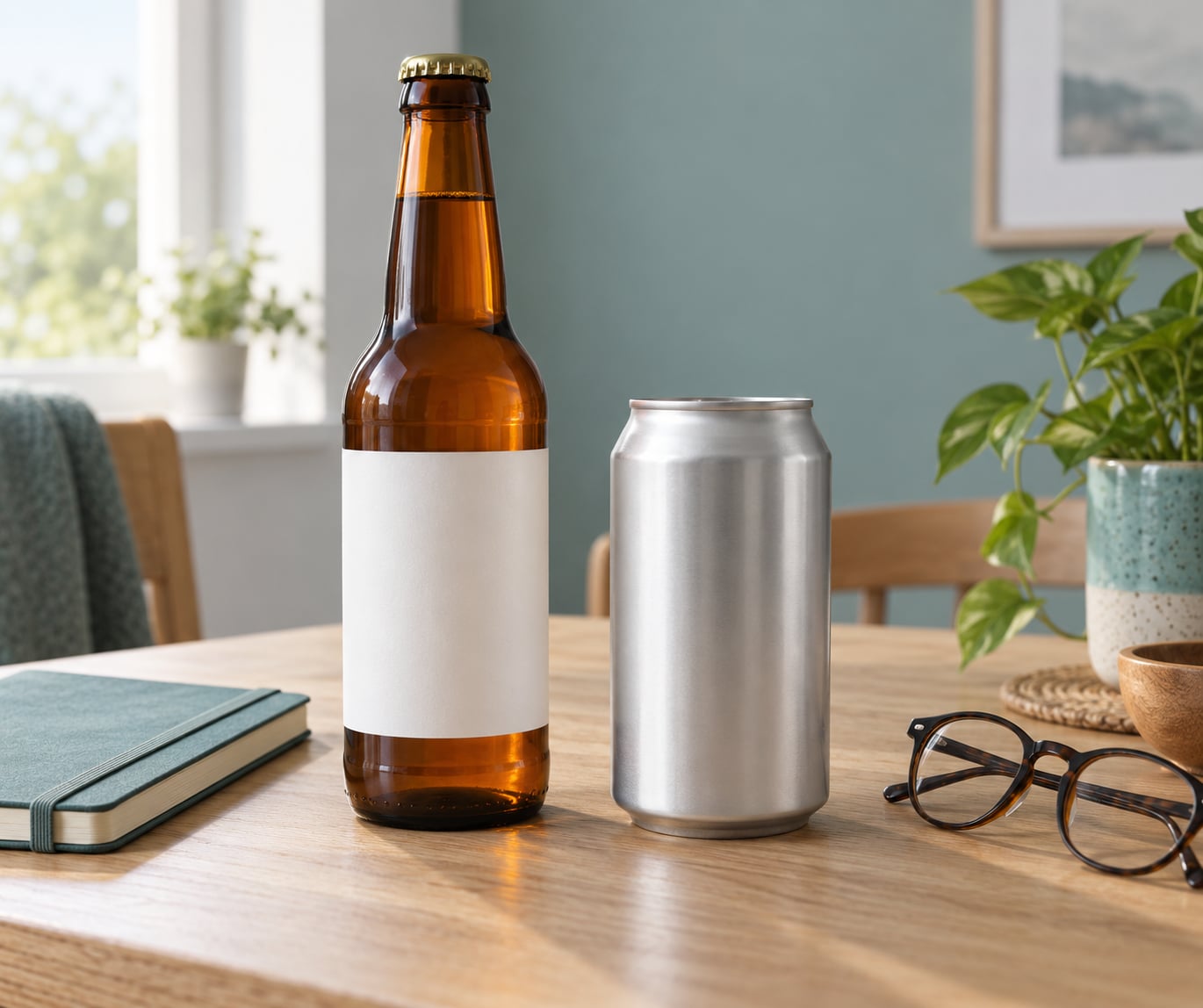
A beer label tells you what you are actually drinking: the beer style, the alcohol by volume, the volume, the brewery, often a bitterness figure, tasting notes, and a stamped date. Knowing how to read a beer label turns a wall of shelf choices into a decision you can make in about two minutes. No brewing degree required.
I have read more labels than I care to admit, mostly standing in front of a cooler deciding between two pale ales that looked identical from six inches away. The difference was almost always on the label: one said citrus and dry hopped, the other said malty and sessionable. That is the whole trick. Read the words, not the artwork.
Table of Contents
- What You Need
- How to Read a Beer Label Step by Step
- How to Read a Beer Label: Start with the Name and Style
- How to Read a Beer Label: Check the ABV and IBUs
- How to Read a Beer Label: Use the Flavor and Tasting Notes
- How to Read a Beer Label: Find Origin, Ingredients, and Serving Details
- Common Mistakes
- Tips for Choosing a Beer You Will Enjoy
- Frequently Asked Questions
- What is the most important thing to read on a beer label?
- Does a higher ABV mean a beer tastes stronger?
- What do IBUs mean on a beer label?
- Are beer tasting notes guaranteed to match the flavor?
- How can I choose a beer if I am a beginner?
- Does the label tell me how to store and serve the beer?
- Start with the Style and Tasting Notes
What You Need
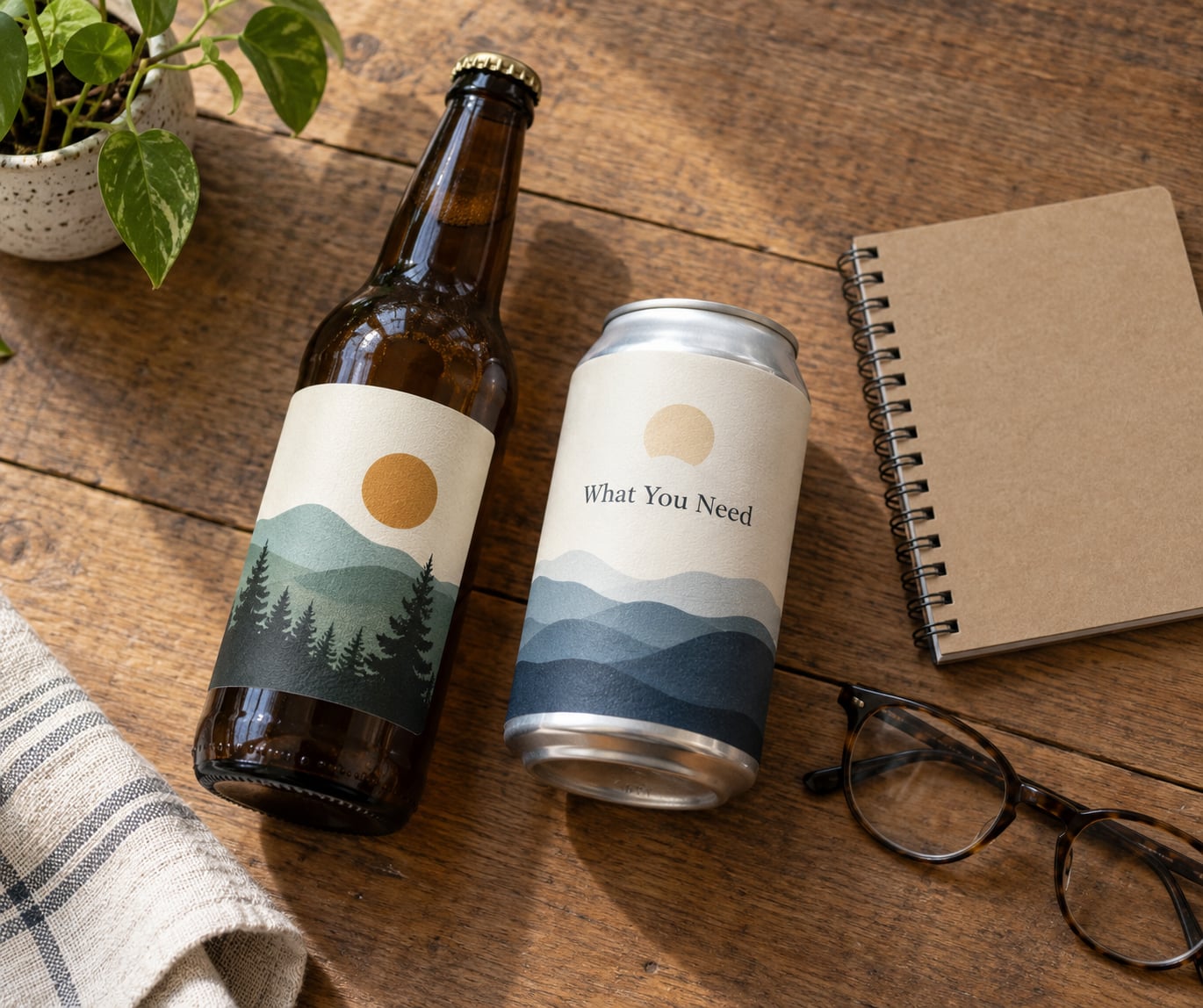
Nothing but the bottle in your hand. What you do need is an order of operations, because the eye jumps to the big font first and misses the small print that actually decides things. Here are the seven things to find, in the order I look for them.
- The beer style name
- The brewery name and location
- ABV, which is short for alcohol by volume
- IBUs, short for International Bitterness Units, when the label lists them
- Tasting notes
- Net contents or package size
- Any date code stamped on the neck or the body
Two things that are not on most labels but are worth remembering. Ingredients and allergen statements appear on a good share of modern US labels, and older cans and bottles often hide the deposit notice on the can rather than the label, so check the metal if you are recycling.
How to Read a Beer Label Step by Step
How to Read a Beer Label: Start with the Name and Style
The style name is the single most useful line on the label, because it tells you the family the beer belongs to. American beer labeling now leans on the Beer Judge Certification Program, or BJCP, style guidelines, so a name like India Pale Ale or Baltic Porter carries a fairly consistent set of expectations. Anything that does not fit a named style is labeled as a unique or experimental beer, and then the tasting notes do all the work.
Next to the style, find the brewery name and where it is based. That tells you whether you are looking at a large regional producer, a small independent brewery, or an import, and imports have to follow their home country’s rules on the label. A German import listing only water, malted barley and hops is applying Reinheitsgebot, the traditional German beer purity law. Nothing wrong with it, just a different set of rules than a US can.
Ale or lager is the fastest fork in the road. Ales ferment warm with top-fermenting yeast and lean toward fruit and spice. Lagers ferment cool with bottom-fermenting yeast and lean toward crispness and grain. Almost everything else on the label is refinement on that one choice.
How to Read a Beer Label: Check the ABV and IBUs
ABV stands for alcohol by volume, the percentage of the beer’s volume that is pure alcohol. It is a strength measure, nothing more. Under 4 percent is usually a sessionable beer, 4 to 6 percent is the middle of the shelf, and anything at 8 percent or higher is a sipper rather than a drinker.
IBU stands for International Bitterness Units, a measure of the hop-derived bitter compounds in the finished beer. A useful band scale looks like this.
| IBU range | What it feels like | Styles you will see here |
|---|---|---|
| 0 to 20 | Very little hop bite | Light lagers, pilsners, wheat beers, dark milds |
| 20 to 40 | Mild to moderate bitterness | Amber ales, English ales, cream ales, brown ales |
| 40 to 70 | Clearly bitter but balanced | Pale ales, most India Pale Ales, hop-heavy lagers |
| 70 and up | Resinous, sometimes abrasive | Double and imperial IPAs, aggressively hopped ales |
So is 20 IBU high? It is mild, sitting near the top of the smooth end. Light lagers like Coors Light and Miller Lite land in roughly that low band, which is exactly why they read as easy drinking to most people.
ABV and IBU get confused constantly, so here is the difference. They measure completely different things and neither one is a quality score.
| ABV | IBU | |
|---|---|---|
| Measures | Alcohol content | Hop bitterness |
| Roughly what it comes from | Sugar fermented into alcohol | Bitter compounds extracted from hops |
| A higher number means | More warmth and weight | More perceived bitterness |
| Where you see it | Almost every label, required | Often optional, common on craft cans |
Two things keep people guessing wrong. First, a high IBU number does not always taste that bitter, because malt sweetness, alcohol warmth, hop variety and timing during the boil all shape the result. Many flagship IPAs sit in the 50s to 60s and taste juicy rather than harsh. Second, human perception tops out. Past roughly the 60 to 80 IBU region, most drinkers cannot reliably tell a stronger beer from a slightly stronger one, which is exactly where the extreme hazy and imperial styles land.
How to Read a Beer Label: Use the Flavor and Tasting Notes
Tasting notes are the brewer’s honest guess at what you will taste, and they are far more useful than most newcomers realize. The vocabulary is narrow and repeats, so learning a dozen words gets you most of the way through a craft aisle.
- Citrusy means grapefruit, lemon or orange peel, usually from American hops.
- Tropical means mango, pineapple or passion fruit, the signature of New World hop varieties.
- Piney, resinous or grassy points toward pine, spruce and sticky hop resins.
- Malty means bread crust, caramel or toffee, the malt taking the lead.
- Roasty means coffee, cocoa and charred grain, usually in stouts and porters.
- Dry means the finish leaves little sweetness behind. Dry is a finish, not a flavor.
- Crisp or clean means light body, quick carbonation, nothing heavy on the tongue.
- Sessionable means low ABV and low enough strength to drink several over a couple of hours.
- Dry hopped means hops were added late or during fermentation for aroma rather than bitterness.
- Unfiltered means yeast and sediment were left in, which gives body and a cloudier pour.
- Bottle conditioned means the beer finished fermenting in the bottle and may be hazy or lively.
Treat these as clues rather than promises. The same word on two different labels can mean noticeably different things, and a brewery chasing a trend will happily print tropical on a beer that tastes more like a grapefruit spritz than fruit. If a note is specific enough that you can picture the flavor, it is usually worth the gamble.
How to Read a Beer Label: Find Origin, Ingredients, and Serving Details
The small print is where the practical information lives. Ingredients and allergen statements tell you whether wheat, barley or a particular additive is in the beer, and allergen lines are now printed on a large share of US packaged beer. Next to that you will find the government warning, a required statement about alcohol and health, and a deposit or redemption marking on cans. None of it changes how the beer tastes, but all of it tells you what you are holding.
Package size is worth decoding because the naming confuses people constantly.
| What the label says | Ounces | What it is |
|---|---|---|
| 12 FL OZ | 12 | The standard can or bottle |
| 22 FL OZ | 22 | A bomber, about two standard servings |
| 750 ML | 25.4 | A magnum, the standard wine bottle shape |
| 2 PINT | 32 | A tall 32 ounce can, drafted at home or split into two |
| 1 PT 6 FL OZ | 22 | How draft beer sizes get written on tap lists |
Some breweries also print a suggested serving temperature or a recommended glass shape. Those are genuinely useful hints. A heavily hopped IPA usually tastes cleaner and more aromatic slightly chilled, and a stout with a roasted character opens up closer to cellar temperature than it does ice cold.
Finally, the date. Is the date on beer an expiration date? No, and this is the thing worth getting right. A stamped date is a quality date, not a safety expiration date. Beers carry no legal requirement for an expiration stamp, so the wording varies by brewery and sometimes by market.
| Wording you will see | What it means |
|---|---|
| Born on | The date the beer was packaged. The label is telling you its age. |
| Best by or enjoy by | The brewery’s estimate of when flavor starts to fade. |
| Bottled on | Same as born on, older terminology. |
| Plain number like 24 118 | A year-day code. The first two digits are the year of packaging and the last three are the day of that year, so this one was bottled in the 118th day of 2024. |
| Unreadable ink jet code | Usually a lot and date code. Find the six digits, then assume the first two are the year. |
A beer that is a couple of years past its best-by date is usually fine to drink. Beer does not carry the pathogen risk that spoiled food does, and alcohol itself is preservative. The beers that genuinely fade fastest are hop-heavy IPAs, which lose their fresh hop aroma first, along with unpasteurized, high-ABV and heavily fruited beers.
Common Mistakes
Assuming a high ABV means a strong flavor. ABV is strength, not intensity. Many 9 percent barrel-aged stouts taste restrained and dessert-like, and plenty of 4 percent lagers taste aggressive.
Treating IBU as a quality score. Nobody is scoring your palate. Use it as a map of where bitterness sits, then let the tasting notes do the persuading.
Expecting a style name to nail the flavor. A label saying American Pale Ale predicts the neighborhood, not the exact house. Two breweries in the same style can taste nothing alike, and that is not a labeling failure.
Ignoring the date. A six-month-old IPA and a fresh one are different beers. Check the stamp before you buy, not after.
Letting the numbers override your own preference. Every guide has to hand you a starting point. The moment you know you prefer sweet over bitter, your own notes beat any table.
Tips for Choosing a Beer You Will Enjoy
The easiest way to get good results is to pick one style you already like and stay inside it while you build your vocabulary. If you know you enjoy crisp, light-bodied lagers, start there. The learning happens faster when you compare two versions of the same thing instead of six unrelated styles.
Pick one tasting word and let it drive. A shelf full of pale ales and one word on each label, citrusy versus malty versus dry, turns a hard choice into an easy one. Buy the one whose word sounds good to you.
Use ABV as a pacing tool rather than a quality filter. Three 8 percent imperial IPAs in an evening is a rough night, and those are exactly the beers where a misread number hurts. Check it, then decide how many you are opening.
At a bar, ask one question instead of reading the whole board. Tell the bartender what you liked last time and ask for something similar, and mention whether you want hoppy or malty. Bartenders would rather do that than watch someone agonize over a menu for two minutes.
Keep a note on your phone. Three beers in, write down the ones you would buy again and the word that made them work. That list beats every style chart, because it is measured against your own palate.
Frequently Asked Questions
What is the most important thing to read on a beer label?
Start with the beer style name, then the ABV. The style tells you the family of beer and gives you a set of expectations to drink against, and the ABV tells you how strong it is before you commit to a whole bottle or a whole evening of it. Tasting notes come third because they are the best predictor of whether you will personally enjoy the beer, and the date code comes fourth if you are buying by the bottle rather than drinking it fresh.
Does a higher ABV mean a beer tastes stronger?
Not necessarily. ABV measures alcohol by volume, so it tells you about strength, warmth and weight in the body, not about how intense or flavorful the beer is. A 9 percent barrel-aged stout can taste mellow and dessert-like, while a 4.5 percent lager can taste sharp and bracing. Use ABV to pace yourself and to know how long the beer will keep, not to guess its flavor.
What do IBUs mean on a beer label?
IBU stands for International Bitterness Units, a scale that estimates how bitter a beer will taste based on the hop-derived bitter compounds in it. Roughly 0 to 20 is very low, 20 to 40 is mild to moderate, 40 to 70 is clearly bitter, and 70 and up is resinous territory. IBU is optional on labels, it is not a quality rating, and human perception tops out somewhere around 60 to 80, so very high numbers often taste similar.
Are beer tasting notes guaranteed to match the flavor?
No. Tasting notes are the brewer’s best prediction, and they are usually accurate about the general character, such as citrusy, roasty or dry. They are far less reliable about intensity and about anything specific, so a beer described as tropical can taste like grapefruit and little else. Treat the notes as a hint about direction and use them to decide what is worth trying, not as a promise.
How can I choose a beer if I am a beginner?
Start with the styles most people find approachable, such as wheat beers, amber ales, cream ales, brown ales and light lagers, and pick something in the 4 to 5 percent ABV range so you can taste several without getting tired. Read the tasting notes and look for one word you recognize or like. Then stay inside that style for a few rounds before branching out, because it is far easier to learn what you enjoy by comparing two similar beers.
Does the label tell me how to store and serve the beer?
Usually not directly. Most labels omit storage and serving guidance, so the safe defaults apply: keep sealed beer cold, around 36 to 40 degrees Fahrenheit, and keep bottles away from direct sunlight, since light exposure skunks hop aroma in brown glass. Some breweries do print a suggested serving temperature or glassware, and those are worth following, especially for hoppy beers, which taste cleaner slightly chilled.
Start with the Style and Tasting Notes
If you only read two things next time, read the style and the tasting notes. The style sets your expectation so you know what you are drinking, and the tasting notes tell you whether that expectation lines up with what you actually enjoy. ABV, IBU, net contents and the date code matter, but they come after those two have told you whether the beer is worth the walk home.
That is genuinely all there is to learning how to read a beer label. Two details narrow a shelf of two hundred beers down to a handful worth trying, and everything else on the panel is there to reassure you about size, strength and freshness.