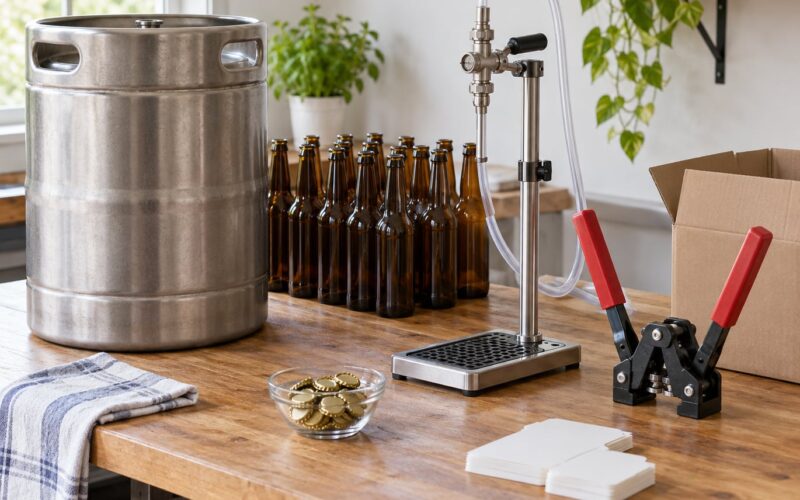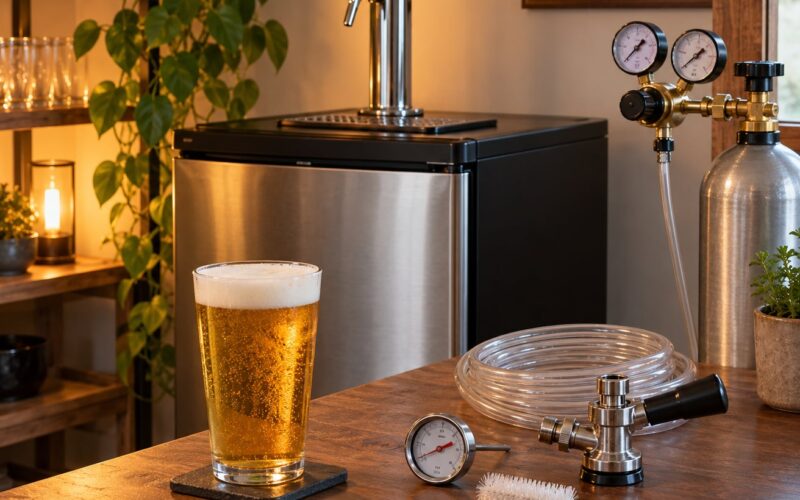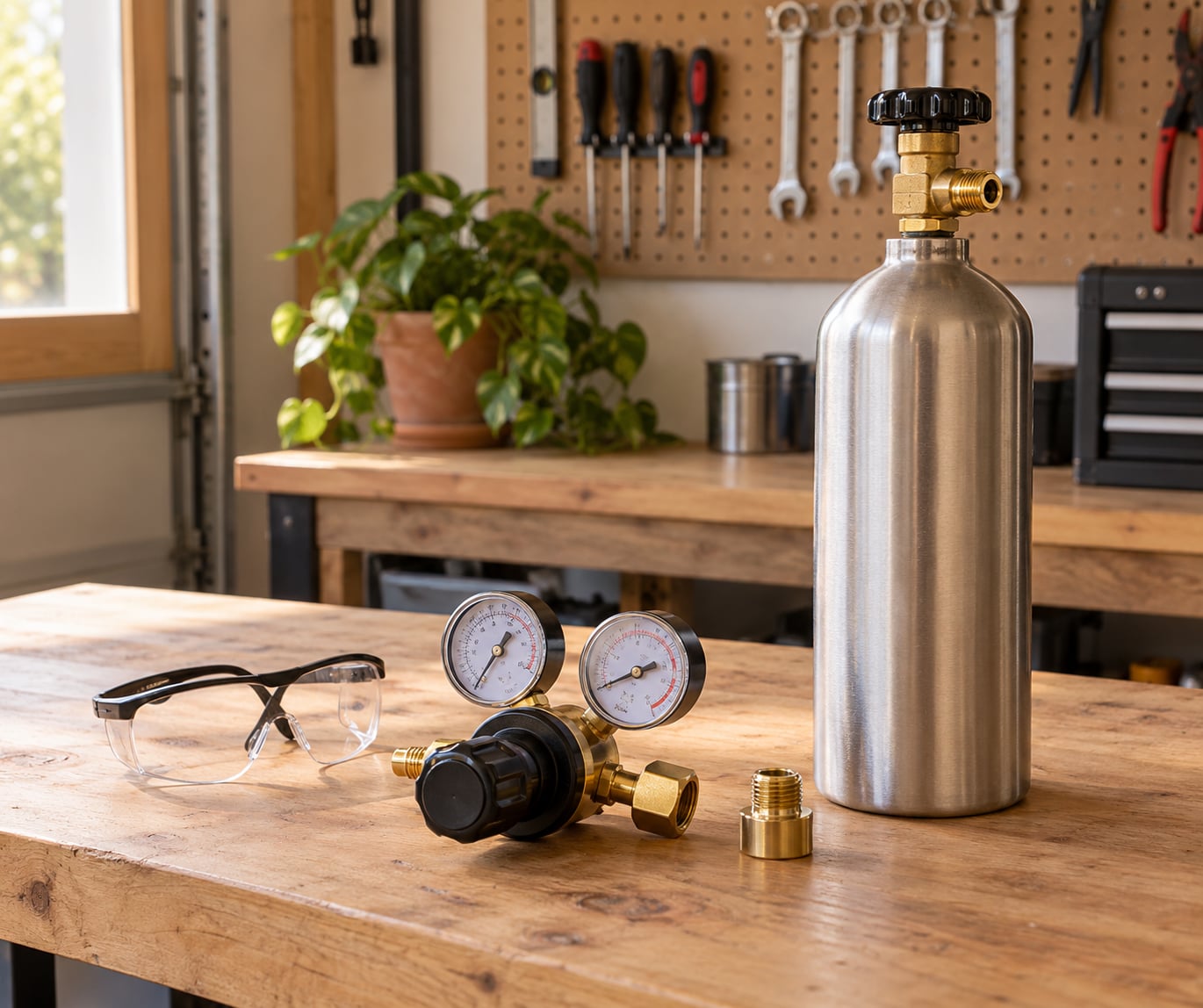
Where to refill CO2 tanks for a kegerator comes down to a short list of supplier types: homebrew shops, welding supply stores, fire extinguisher service companies, paintball shops, and industrial gas dealers. Most refill your own cylinder on site in about ten minutes, and the rest run a swap program where you trade your empty for a full one. The supplier you choose depends on your cylinder size, your valve style, and whether you care about keeping the tank you already own.
Cylinders cannot travel through the mail, so somebody local has to do it. That single fact drives everything below, including why a rural homebrewer might be driving a long way for a five-minute fill.
This guide covers the gear you need, the order of operations at the counter, the mistakes that get cylinders rejected, and how to tell a real food-grade fill from a label that only says so. Read the step section before you disconnect anything.
Table of Contents
- What You Need
- Where to Refill CO2 Tanks for a Kegerator, Step by Step
- 1. Find Where to Refill CO2 Tanks Near You
- 2. Confirm Your Cylinder and Adapter
- 3. Empty and Transport the Cylinder Safely
- 4. Ask for Inspection, Refill, and Sanity Checks
- 5. Reconnect the Cylinder and Test for Leaks
- Common Mistakes
- Frequently Asked Questions
- Where can I get a CO2 tank filled for a kegerator?
- Does Home Depot refill CO2 tanks?
- Does Ace Hardware refill CO2 tanks?
- Is there a difference between welding CO2 and food grade CO2?
- What PSI should I run on a kegerator?
- How long does a CO2 tank last on a kegerator?
- Conclusion
What You Need
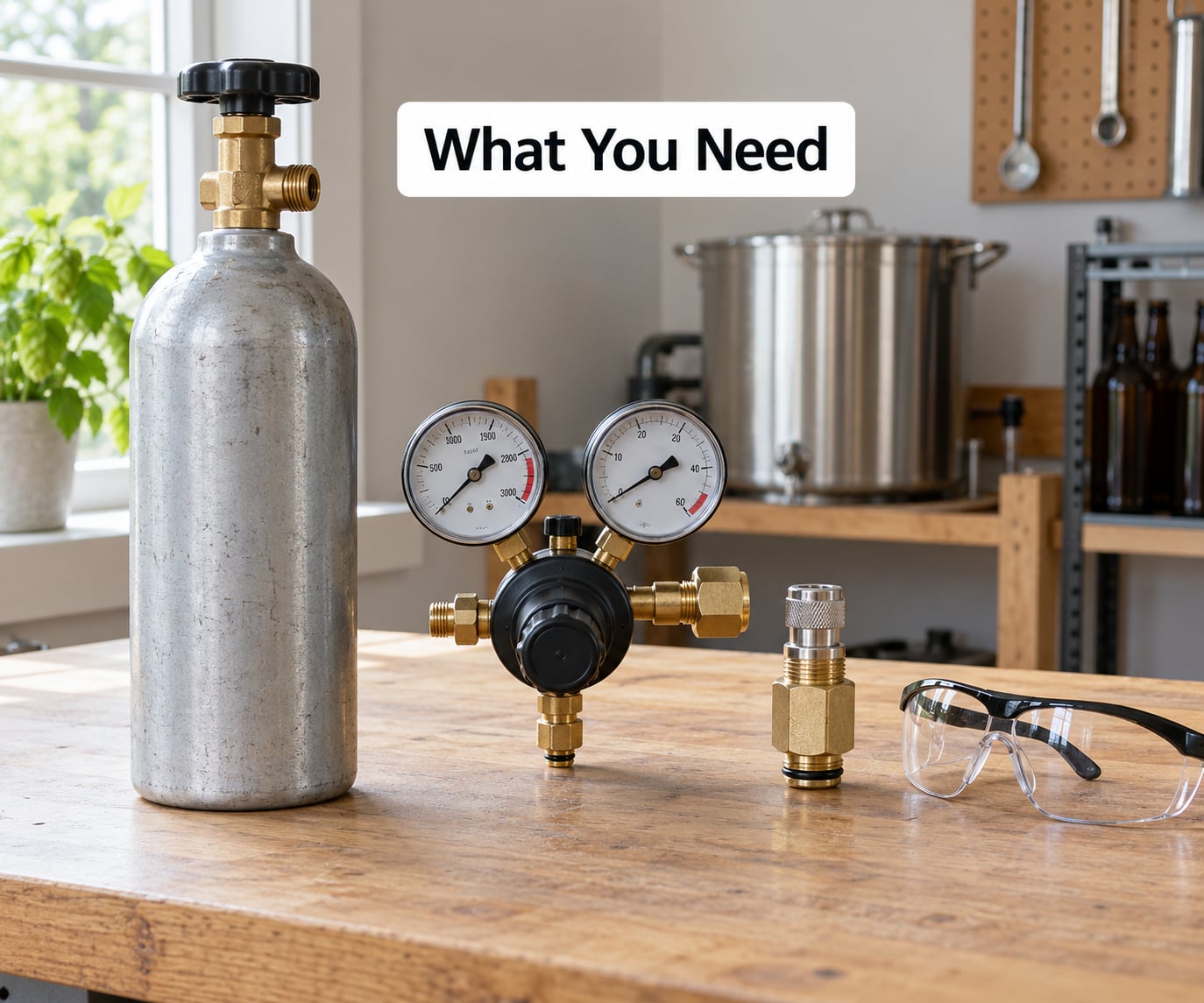
Start by identifying the cylinder, because that single fact decides which suppliers will touch it. Kegerator cylinders use a CGA-320 threaded valve outlet, which is the same thread used on most US fire extinguisher and soda-fountain cylinders. Some cheap imports use a proprietary thread, and those need an adapter that not every supplier stocks.
Bring these items with you, or confirm you have them at home before the trip:
- Your cylinder, valve protected. The plastic cap or rubber plug that came on it should be back on before it leaves your house.
- The thread adapter, if your valve is not CGA-320. Thread adapters are cheap, but only buy one after a supplier confirms the pattern they need.
- Your regulator. A two-gauge kegerator regulator with a high-pressure side and a low-pressure side is the standard setup. A mini regulator with a pin-lock or ball-lock coupler works for soda and seltzer lines.
- A 7/16 inch and a 5/8 inch wrench. Ball-lock disconnects usually want one size, pin-lock stems the other.
- Soapy water in a spray bottle. Plain dish soap and water in a squeeze bottle is the cheapest leak test there is.
- Safety glasses. A regulator can let go of a stored gas line with real force. Clear glasses are non-negotiable.
- Your account information, if you already have one. Some industrial gas suppliers push new accounts on walk-ins, and it is fine to say no.
Check the cylinder stamps before you load the car. The neck ring carries the tare weight and the water capacity in pounds, which tells you the cylinder size, and the date stamped into the shoulder is your hydrostatic test date. Suppliers check that date, and an overdue cylinder gets refused on the spot rather than at the filling equipment.
Where to Refill CO2 Tanks for a Kegerator, Step by Step
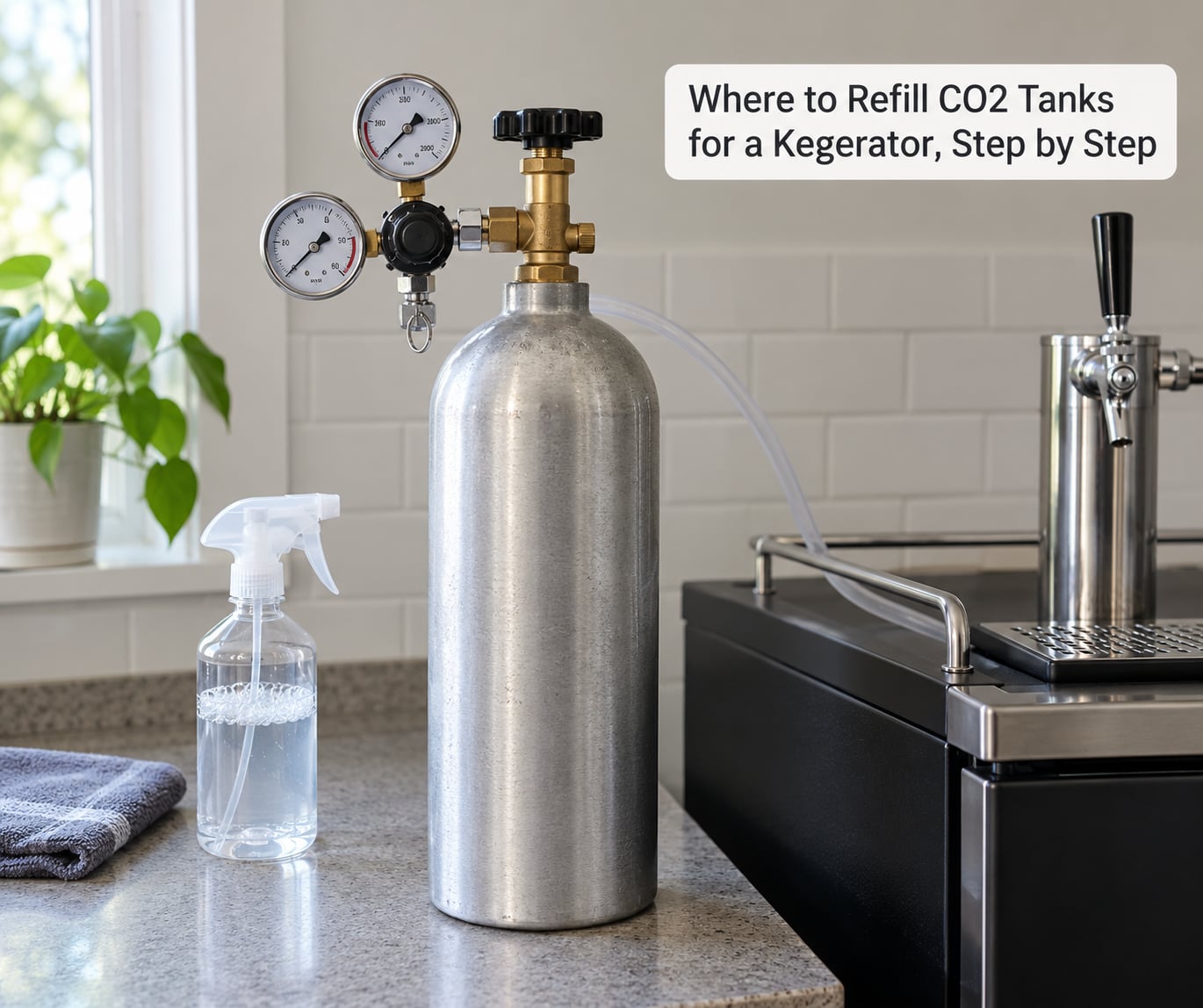
The order below matters more than it looks. Depressurizing a cylinder that is still connected to a full keg pulls gas and foam out of the beer line, and hand-carrying a cylinder with the valve open is how people hurt themselves in a car.
1. Find Where to Refill CO2 Tanks Near You
Search Google Maps for the supplier type, not for the service. Searching for a CO2 refill near me returns fire extinguisher companies and aquarium shops that do not handle cylinders. Searching for welding supply, fire extinguisher service, paintball supply, or industrial gas brings back shops that actually fill tanks on a daily basis.
Then check five things before you drive over:
- Do they fill or only swap? Most industrial suppliers have moved to full-for-empty exchange. The ones that still fill in place are usually independent welding shops, fire extinguisher service companies, and paintball stores.
- Will they take your cylinder brand and size? Give them the stamped tare weight and water capacity and ask directly. A supplier that will fill a 5 lb steel cylinder may not touch a 4 lb or 7 lb, and many refuse aluminum entirely.
- Do they do cylinder inspection? Some shops inspect on site. Larger dealers send the cylinder to an off-site hydro facility, which adds days.
- Do they require an account? National gas suppliers may serve businesses only or push you into opening an account. Independent shops rarely care.
- What is the turnaround? Small independents usually fill while you wait. Regional chains often quote a window of several days.
Homebrew shops are the friendliest option when one exists near you, and they tend to fill rather than swap because their whole business is your draft system. Welding supply and industrial gas dealers carry the widest selection of cylinders and are the fallback when nothing else is close. Fire extinguisher service companies are the sleeper option that experienced keggers mention most often, because they already own fill equipment and a hydro rig for their own cylinders.
One more search trick from the forums worth stealing: if you have no supplier within a reasonable drive, search the industrial gas brands by name instead. Airgas, Linde, Matheson, and regional dealers run store locators that show whether the specific branch fills cylinders or only exchanges them.
2. Confirm Your Cylinder and Adapter
Read the cylinder markings and match them to what the supplier accepts. A 5 lb steel cylinder is the most widely exchangeable size in the hobby and the one almost any supplier will handle. The 4 lb and 7 lb sizes are awkward: they are uncommon on exchange racks, so a shop may send you away rather than order one for you.
Aluminum cylinders are common on new kegerators because they are light, and they are also the ones that get turned down. Welding supply shops frequently swap steel for steel and refuse to fill aluminum, even when the valve is a standard CGA-320. If your cylinder is aluminum, call ahead and say so, because it is the single most common reason for a wasted trip.
Hydrostatic test dates are the other thing to check. Cylinders are requalified on a schedule set by the DOT, and a supplier is required to reject an overdue one. If the stamped date has passed, expect to pay for the test or to buy another cylinder, and do not argue with the person at the counter. Testing is the whole reason the rule exists.
On thread pattern: CGA-320 is the US standard for this application. Non-standard valves exist on some imported cylinders and on a few soda-fountain style tanks, and those need a specific adapter. Guessing at the pattern and forcing a fitting is how threads get stripped.
3. Empty and Transport the Cylinder Safely
Shut the cylinder off at the tank first, then bleed the line down at the keg. Disconnect the gas outlet and the beverage line at the keg coupler, and expect a burst of gas and foam from the tap when the gas side opens. Do it over a sink or a drain, and expect cleanup.
Depressurize the cylinder completely. A cylinder that still holds pressure gets treated as a live cylinder by every supplier, and some will hand it back unrefilled because they cannot confirm it is safe to fill. Open the valve slowly with the outlet pointed away from your face and away from anything you care about.
Put the valve protection back on before the cylinder leaves the kegerator, and transport it upright and secured. In a car, a loose cylinder in the footwell is a projectile in a hard stop. Upright in the back seat with the seat belt cinched around it, or in a crate in the truck bed, is the pattern that works.
Follow whatever handling instructions the supplier gave you when you called. Some want the cylinder dry, some want the cap off so they can vent residual pressure, and a couple of paintball shops ask you to arrive early so the fill tech can do a visual inspection before you get in line.
4. Ask for Inspection, Refill, and Sanity Checks
Any reputable supplier should look at the cylinder before filling it. They are checking the hydro date on the shoulder stamp, the condition of the valve and the neck ring, and whether there is corrosion, a bulge, or a damaged foot. A cylinder with a compromised valve or a deep ding around the base should not be filled, and if someone offers to fill it anyway, that is your cue to find another shop.
Ask for a food-grade fill, and ask them to say it out loud so you know the right valve came off the right truck. Then ask what else they will do while the tank is open: a leak test on the valve, a new washer or seal at the outlet, a hydro test if the date is near expiry. Those small services are where an independent shop adds real value over a swap counter.
Tell them what you are running the cylinder on. A kegerator wants a standard beverage fill, while nitro stouts and cold brew want a nitrogen blend, commonly called beer gas, and those come from a different truck. Asking for the wrong gas is an easy mistake and an expensive one to fix after the fact.
If the cylinder is overdue for inspection, get the test done at the same shop if they offer it. Otherwise you will be making a second trip somewhere else, and the scheduling on those is usually slower than the fill itself.
5. Reconnect the Cylinder and Test for Leaks
Back at the kegerator, confirm the valve is off before you attach anything. Screw the high-pressure inlet of the regulator into the CGA-320 outlet by hand first until it is snug, then tighten with a wrench. Snug is the target. Over-tightening a CGA-320 connection is the classic beginner move and it strips the seat on the cylinder valve.
Connect the gas line to the ball-lock or pin-lock coupler and pull the locking lugs closed. Plug the regulator into power if it has one, and set the high-pressure gauge to whatever the gauge says. Then open the cylinder valve slowly, all the way, and watch the needle climb.
Leak test every connection before you trust it. Soapy water on the regulator inlet, the nut where the line meets the regulator, and both coupler fittings: bubbles mean a leak. Shut everything down, dry the fitting, check the washer seating, and retest. A thread sealant tape on a CGA-320 inlet is not a fix for a leak at that joint, and it is not where the problem usually is.
Now set serving pressure on the low side. Most ales and lagers serve best in the 8 to 12 psi range at typical cellar temperature, lagers and cold beer sit a little higher, and nitro runs far higher to push a widget. Set it, give it fifteen minutes to settle, and pull a test pour. Watch the foam: fast foaming that clears quickly means you are under, and beer that pours flat and foamy means you are over.
You know the job worked when the gauge holds steady for half an hour with the cylinder valve open and the taps pulling, and the first pour comes out at the carbonation level you poured it at. Do that test before you walk away from the kegerator, not the next time you notice something is off.
Common Mistakes
Most of the bad experiences people report come down to five or six specific errors. None of them are hard to avoid once you know they exist.
Forcing the wrong thread adapter. A non-CGA-320 valve needs a specific adapter, and forcing a near-match rounds the threads on both parts. Confirm the valve pattern with the supplier before you buy anything, and hand-tighten the adapter first to check the engagement before you use a wrench.
Handing over a cylinder with a damaged valve or an overdue hydro date. This is the mistake that costs the most, because you drive home and come back later. Photograph the shoulder stamp before you leave and point the date out at the counter yourself, so the conversation happens before the refusal.
Transporting a cylinder loose or on its side. A cylinder rolling around a footwell in a sudden stop is a serious hazard, and a cylinder with an open valve in an enclosed car is worse. Cap it, stand it upright, strap it down.
Over-tightening the regulator fitting. The inlet is a straight thread and does not need much more than snug plus a touch. If you hear the seat protest while you tighten, stop and replace the seal rather than leaning on it harder.
Assuming every station takes every cylinder. Size, material, valve pattern, and hydro date all get checked, and policies vary by location even inside the same chain. A quick phone call saves the trip, and the call is the fastest way to find out whether they fill or only swap.
Skipping the leak test. The regulator looks fine while it is disconnected and drips gas quietly for a week. Thirty seconds with a soapy-water bottle catches it before it becomes a problem in a sealed cabinet.
Two smaller habits are worth adding. Fill your cylinders outdoors or in a well-ventilated room, because a leak in a small space reaches an uncomfortable concentration fast. And when you swap, read the receipt and note the cylinder number, because swap programs make the supplier the owner of that tank and being explicit about which tank you handed over is the difference between replacing it and arguing about it.
Frequently Asked Questions
Where can I get a CO2 tank filled for a kegerator?
Homebrew shops, welding supply stores, fire extinguisher service companies, paintball shops, and industrial gas dealers all handle kegerator cylinders. The shops that refill your own cylinder while you wait are usually independent welding shops, fire extinguisher companies, and paintball stores. National gas chains mostly exchange full for empty. Search Maps for the supplier type rather than for CO2 refill, then call to confirm they take your cylinder size and material.
Does Home Depot refill CO2 tanks?
Sometimes, and it depends on the store. Most locations will exchange an empty cylinder for a full one through their service desk or outdoor department, and some will fill on site if the department has fill equipment. Very few will fill a cylinder you bring from home on demand. Call the specific store before you go, ask whether they fill or only swap, and mention whether your cylinder is aluminum or steel, because that gets a different answer.
Does Ace Hardware refill CO2 tanks?
Ace Hardware follows the same split as other big-box hardware stores. Cylinder exchange is the standard service, and in-store filling depends entirely on the individual location having fill equipment and a trained employee on shift. Policies change without notice, so the only reliable answer comes from the phone. Ask the store whether they refill a customer-owned cylinder, whether aluminum is accepted, and what they charge for a hydro test before you load the cylinder in the car.
Is there a difference between welding CO2 and food grade CO2?
The gas is the same compound, and the real distinction is how the cylinder was prepared and what it was last used for. Food-grade CO2 is defined under FDA 21 CFR 184.1246 and is what you want for draft beer, cold brew, and seltzer. Welding grade is intended for shielding gas, not ingestion. The honest caveat is that many suppliers draw from shared supply lines, so ask whether food-grade CO2 can be verified at the time of the fill.
What PSI should I run on a kegerator?
Most ales and lagers serve well between 8 and 12 psi at normal cellar temperature. Colder beer and lagers sit a little higher, generally 10 to 14 psi, and nitro and widget beers run far higher, often 25 to 35 psi, to push gas through the widget. Pressure setting and serving temperature are two dials on the same job, so if the beer tastes flat or pours foamy, check both before changing the gas itself.
How long does a CO2 tank last on a kegerator?
It depends mostly on how cold the line runs and how much you pour. A small cylinder on a single-tap kegerator in a warm room can run dry in a couple of weeks, while a larger cylinder on a cold, well-insulated line serving one or two people can go a couple of months. Cold liquid holds carbonation better, so a line kept near serving temperature uses noticeably less gas than a warm one pulling the same pour.
Conclusion
Do one thing before anything else: look at your cylinder, note the water capacity stamped on the neck ring and the date on the shoulder, and check whether the valve is CGA-320 or something else. Then call the two closest welding supply, fire extinguisher service, or paintball shops and ask two things: do you fill a customer-owned cylinder, and do you take my size and material.
Knowing where to refill CO2 tanks for a kegerator is less about finding a magic supplier and more about asking the right question before you drive. Suppliers vary by location, not by brand, and the phone call takes two minutes and saves a wasted trip with a cylinder in the back seat.