If you have never drunk a sour beer, lambic is a strange place to start and a great one. Lambic is a Belgian specialty beer from the Senne River valley west of Brussels, fermented spontaneously with the microorganisms floating in the local air, aged for years in wooden barrels, and usually blended from several vintages. The result is dry, acidic, funky, and endlessly interesting, and it is the parent style behind gueuze, kriek, and every fruit lambic in the world.
That last part surprises people. Lambic is not one beer. It is a base beer, and a whole family grows out of it, from dry unblended lambic to fizzy cherry kriek and heavy sweetened fruit beers that many drinkers are happy to skip entirely.
I have spent a lot of happy hours drinking through this style, and the single most useful thing I can tell a newcomer is this: lambic is not spoiled beer. It is deliberately, carefully made beer. Once you expect the sourness, you can start enjoying everything else in the glass.
Table of Contents
- What Is a Lambic Beer?
- What Is a Lambic Beer Made Of?
- How Does Traditional Lambic Beer Taste?
- How Is a Lambic Beer Made?
- What Are the Main Types of Lambic Beer?
- What’s the Difference Between Lambic and Other Belgian Sour Ales?
- Lambic vs Oud Bruin
- Lambic vs Flemish Red or Brown Ale
- Lambic vs Berliner Weisse
- Lambic vs American Sour Ale
- How Should You Choose and Serve a Lambic Beer?
- Frequently Asked Questions
- Is lambic beer always sour?
- How long does lambic beer need to age?
- Why does lambic beer taste funky?
- Is lambic beer the same as gueuze?
- What is the best lambic beer for a beginner?
- Should lambic beer be refrigerated?
- What to Try First
What Is a Lambic Beer?
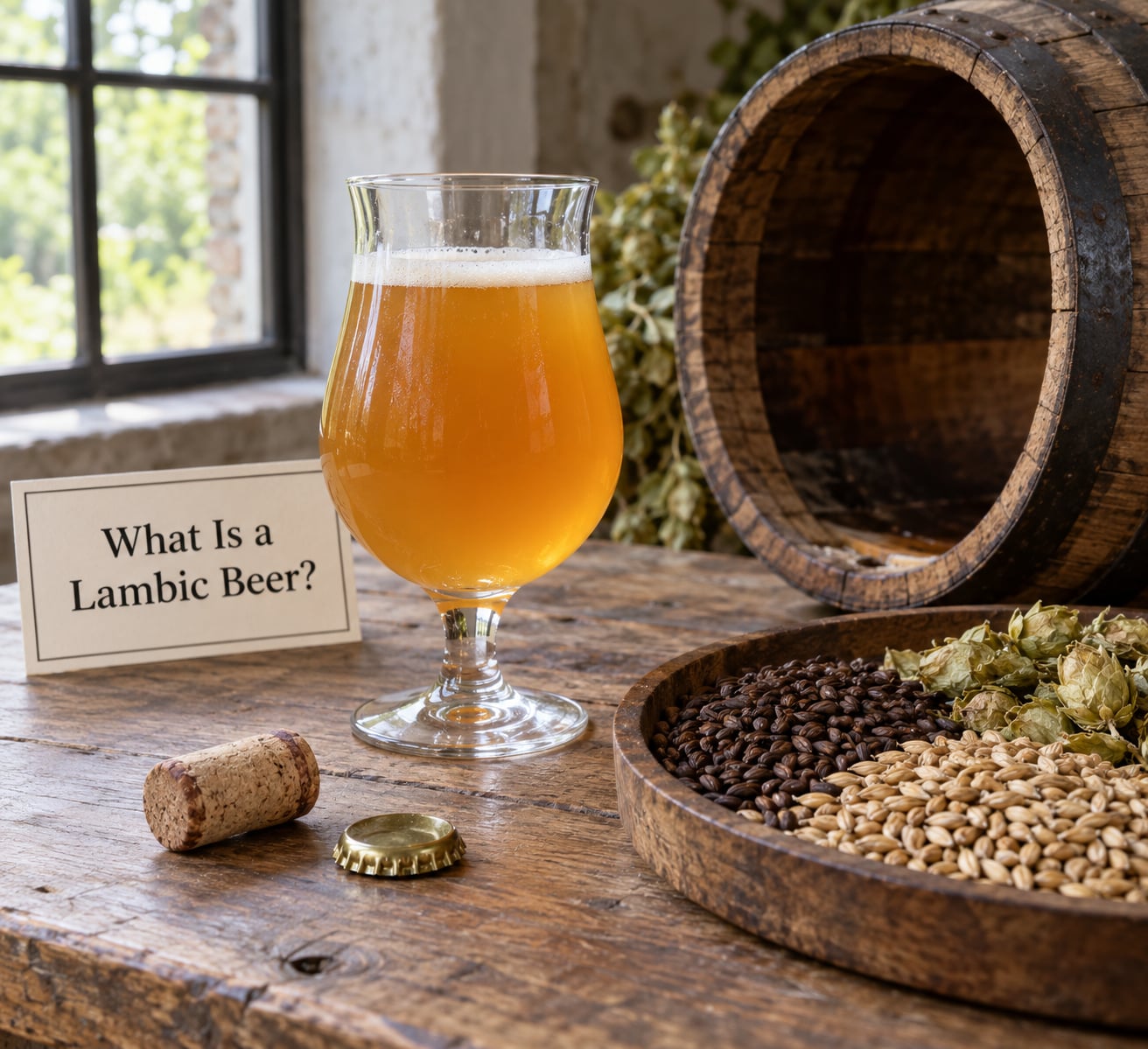
A lambic beer is a Belgian specialty beer brewed in the Pajottenland and Senne River valley regions west of Brussels, fermented spontaneously with airborne wild yeasts and bacteria rather than with a single cultured strain, aged for one to several years in wooden barrels, and finished with bottle or cask refermentation. Its signature traits are sharp acidity, dryness, rustic funk, and complexity that keeps shifting in the glass as it sits.
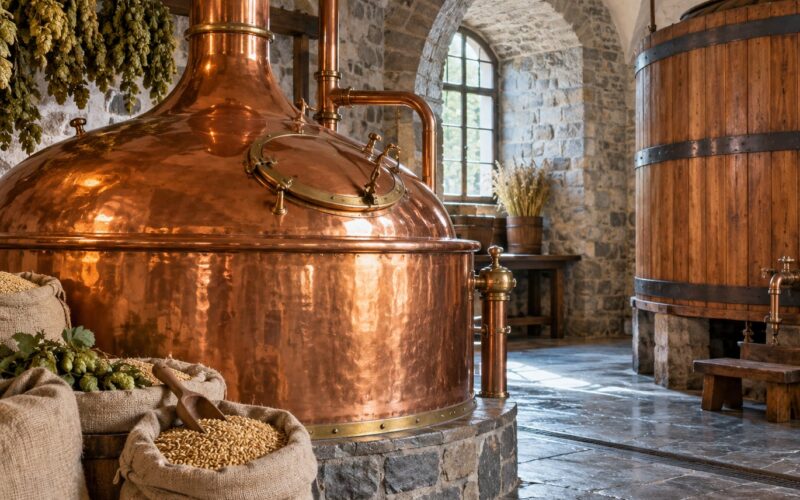
The cooling step that catches the wild organisms happens in a coolship, a shallow open pan traditionally called a koelschip. Wort cools in it overnight, and whatever lives in the air of the room gets a chance to fall into the beer.
Two consequences follow from that. First, lambic is close to geographically locked. Breweries outside the region can brew something lambic-like, but the exact microflora of a Senne valley brewery and its barrels is not something you can reproduce on demand, which is why lambic from a genuine Belgian producer tastes different from most New England-style spontaneous attempts.
Second, lambic is a low-volume, high-aging style. Beer that spends two or three years in oak ties up money and barrel capacity the whole time, so the style is scarce by economics as much as by tradition.
What Is a Lambic Beer Made Of?
The traditional recipe is short, which makes it easy to overstate how complicated the process really is.
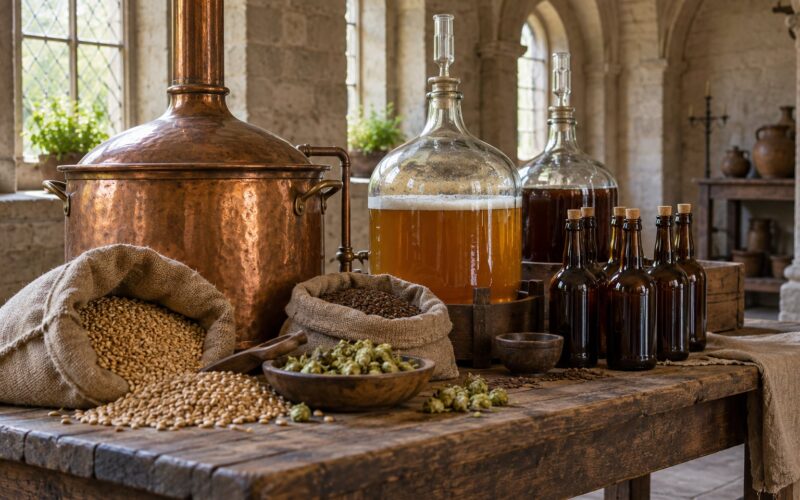
- Malted barley and unmalted wheat. Typically somewhere around 60-70 percent malted barley with the balance raw wheat. The unmalted wheat is there partly for flavor and body, and it also contributes fermentable sugars that bacteria work on.
- Aged hops, in large quantity. Traditional lambic uses old hops that have been stored so long they have lost essentially all bitterness. They are added more as a preservative than as a bittering agent.
- Local microorganisms. Yeast and bacteria from the air, the brewery, the barrels, and the wooden coolship. Brettanomyces, Saccharomyces, Lactobacillus, and Pediococcus all show up, and they are not added on purpose.
- Water from the region. The soft local water shapes the finished beer more than most drinkers expect.
- Wood. Large oak barrels or foeders, large neutral wooden vessels that hold beer for years without the heavy oak flavor a wine barrel would leave behind.
- Time. One to three years in wood for most, considerably longer for the oldest blends.
Anything beyond that is an addition rather than an ingredient of the base style. Cherries for kriek, raspberries for framboise, peaches, blackcurrant, even honey or syrup in sweetened versions. Fruit is what most people picture when they hear lambic, but fruit came later. The original beer was unblended and unfruited, and for a lot of drinkers that is still the most interesting version.
How Does Traditional Lambic Beer Taste?
Start with the acidity, because it dominates everything else. It is sharp and clean rather than milky, closer to lemon or green apple than to yogurt. Lambic is also astonishingly dry. There is almost no residual sweetness to soften the sourness, which is why a lambic can feel more refreshing than a heavier sour ale while tasting much sharper.
Then there is the funk, and this is where descriptors get ugly. Drinkers reach for wet horse blanket, barnyard, hay, earthy coffee, damp cellar, and old cheese. Some notice something Band-Aid-like in the finish, which comes from a compound yeast produces and which makes people wince.
Funk is not a flaw and it is not always strong. A young lambic can taste closer to a hefeweizen with a lemon squeeze than to a farmyard. A three-year-old blend leans much harder into leather, earth, and dried fruit. Age is the single biggest variable, and it is the reason two bottles from the same brewery can taste like different styles.
There is usually a savory, almost meaty or umami note underneath, especially in older beer. It reads as complexity rather than dirtiness, and drinkers who like miso, soy, mushrooms, or aged cheese tend to enjoy it.
Carbonation varies by style. Unblended lambic is famously flat and uncarbonated, which trips up newcomers who assume the bottle has died. Fruit lambics and gueuze get a second fermentation in the bottle, so they can be lively or gushing. Nothing about a flat lambic means it went wrong.
How Is a Lambic Beer Made?
The process runs on a schedule the weather controls, and the cooling step is the one everything else exists to serve.
| Stage | What happens | Typical timeframe |
|---|---|---|
| Mashing and boiling | A turbid mash of malted barley and unmalted wheat is boiled with a heavy charge of aged hops | One brewing day |
| Coolship cooling | Wort cools overnight in a shallow open pan, collecting airborne microbes | One night, October to May |
| Inoculation and primary fermentation | Yeast and bacteria from the air and the coolship take over the wort | Several months |
| Barrel or foeder aging | Beer matures in oak, developing acidity and funk as it oxidizes slowly | One to three years or more |
| Blending | Young, bright, acidic beer is cut with older, softer, funky beer | At bottling |
| Bottle refermentation | A priming dose gives fruit lambic and gueuze a second life in the bottle | Months in the bottle |
The winter brewing window matters more than any other detail. Historically brewers brewed lambic between early October and May, because cold nights are when the right balance of microbes is present and because warm summer weather makes barrel aging go badly. Too much heat in a barrel and you get vinegar rather than the gentle oxidation lambic wants. Older sources use the Flemish word bezomerd, roughly, too much summer.
Blending is where the style gets its balance. Young lambic is aggressively acidic and thin. Old lambic is soft, low in carbonation, and full of earthy character. A gueuze cuts one with the other, and the proportion changes from batch to batch and vintage to vintage, so no two are the same.
What Are the Main Types of Lambic Beer?
| Type | What it is | Fruit | Carbonation | Sweetness | Typical ABV |
|---|---|---|---|---|---|
| Unblended lambic | Single-vintage, straight from the barrel, nothing added | None | Flat | Dry | 3-5% |
| Gueuze | Blend of young and old lambic | None | Refermented, lively | Dry | 4-6% |
| Traditional gueuze (oude) | Gueuze aged in oak for at least a year before release | None | Refermented | Dry | 4-6% |
| Kriek | Lambic refermented with cherries | Sour cherries | Refermented, pop | Dry | 4-6% |
| Fruit lambic | Lambic refermented with added fruit | Raspberry, peach, blackcurrant, others | Refermented | Dry | 4-6% |
| Faro | Blend of young and aged lambic sweetened with caramelized sugar | None | Refermented | Sweet | 4-6% |
| Mars / meertsbier | Historical weak, pale style aged in the last winter months | None | Flat | Dry | 3-4% |
The word oude on a bottle is a quality claim rather than a style: it means the beer was aged on wood before release and contains no added sugar. Jonge means young, brewed to be drunk fresh. If you are checking anything on a label, that word is the fastest signal.
Named producers worth starting from include Cantillon, Brouwerij Boon, 3 Fonteinen, Timmermans, and De Cam. Cantillon brews and ages its own beer. Boon does too. 3 Fonteinen, De Cam, Tilquin, and Hanssens buy young lambic from brewers and blend it, which is a perfectly legitimate way to make the style, just a different job.
What’s the Difference Between Lambic and Other Belgian Sour Ales?
The distinction that matters most is not sour versus not sour. It is how the beer got its character.
Lambic vs Oud Bruin
An oud bruin is inoculated with a mixed culture in the brewery and aged in wood, so it gets a controlled version of the same earthy, acidic character. It tastes rounder and more uniformly tart than lambic, with far less of the sharp young-and-old contrast that defines a gueuze.
Lambic vs Flemish Red or Brown Ale
Flemish red ale is the same family of aged mixed-culture beer, often darker, malty, and lower in acid than lambic. Lambic is wheat-forward, dry, and much more aggressive on the sourness. If you want malt and oxidation rather than acid, that is the style you want.
Lambic vs Berliner Weisse
A Berliner Weisse gets its sourness from Brettanomyces and Lactobacillus inside the brewery, with no coolship and no years of barrel time. It arrives tart in weeks instead of years, is far lighter in funk, and is usually more approachable as a first sour.
Lambic vs American Sour Ale
American wild and sour brewing tends toward cleaner, sharper acidity from cultured Brettanomyces and acidophilic bacteria, often with added fruit or hops, and little of the hay-and-damp-cellar profile that lambic has. Some American brewers work coolship-adjacent methods and come much closer; read the brewer, not the flag.
How Should You Choose and Serve a Lambic Beer?
A few practical notes make the first bottle much easier to enjoy.
- Start with a gueuze. It is the balanced expression of the style, with enough acidity to be interesting and enough body to be drinkable.
- Check for oude. It signals wood aging and no added sugar, which rules out the syrupy fruit beers that drive people away from the category.
- Read the carbonation. A flat unblended lambic is correct. Fruit lambics may need two minutes upright before opening.
- Know your ABV. Most lambic sits between 4 and 6 percent, but because it is dry it can feel stronger than it is. Start with smaller bottles.
- Serve around 50-55°F. Ice cold numbs the aromatics, room warm makes the funk loud and the acidity aggressive.
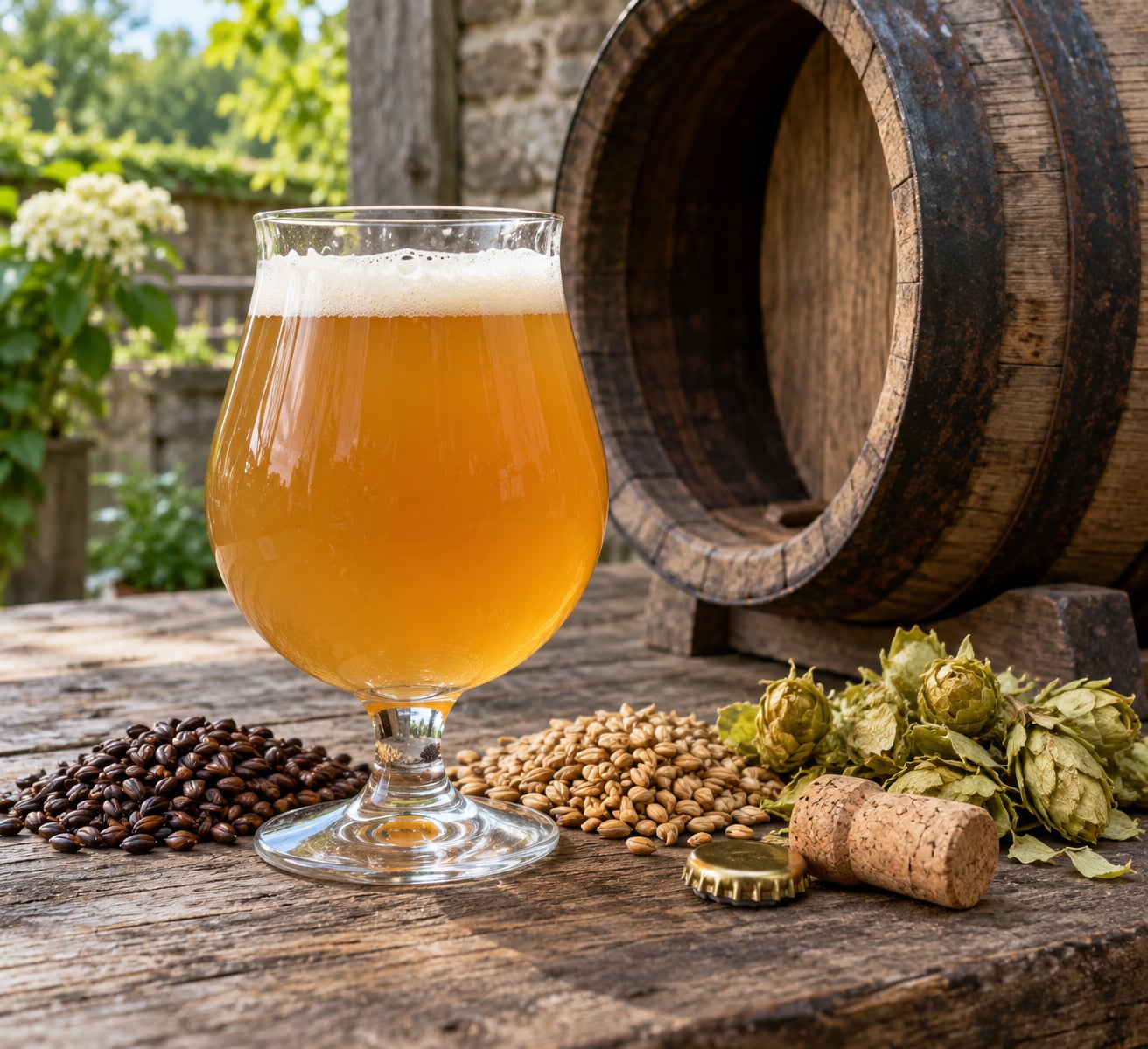
- Use a tulip or wine glass. The shape keeps the funk in the nose, which is where much of the interest lives.
- Open cork-and-cap bottles slowly. Fruit versions are refermented and can foam over.
- Pour gently. Leave a finger of beer in the glass so you can swirl and smell.
- Pair it with food. Aged goat cheese, smoked mussels, rabbit, herring, and almond cake are all classic matches.
- Cellar it if you can. Fruit lambic is at its best within a year or two of the bottle date, while dry gueuze keeps improving for a decade or more.
One caution on bottles past their prime: a truly spoiled lambic smells of nail polish remover, vinegar, or rotten eggs. Funk is earthy and barnyard-like, not aggressively acidic or sulphurous. That distinction is worth learning on your first bottle.
Frequently Asked Questions
Is lambic beer always sour?
Not always. Young lambic can be only gently tart, and unblended lambic aged for years softens considerably. Sweetened faro is deliberately mild, and commercial fruit beers are often barely acidic. Sourness is most pronounced in young, unblended lambic and in gueuze blends cut heavily with young beer.
How long does lambic beer need to age?
Traditional lambic spends at least one to three years in oak barrels or foeders before it is ever blended or bottled. Fruit lambic and gueuze usually get a further six months or so of refermentation in the bottle. A label reading oude guarantees at least some extended wood aging before release.
Why does lambic beer taste funky?
Brettanomyces and related wild microbes produce the earthy, barnyard, hay, and horse-blanket aromas that define the style. Oxidation during long barrel aging adds leather and dried-fruit notes on top. The funk intensifies with age and is a hallmark of well-made lambic rather than a fault.
Is lambic beer the same as gueuze?
No. Lambic is the base beer, unblended and unfruited. Gueuze is what most people drink: a blend of young and aged lambic, bottled with a priming dose for refermentation. When you see a bottle labeled lambic and it is dry, tart, and lightly carbonated, it is probably straight barrel beer.
What is the best lambic beer for a beginner?
A dry, oude-labeled gueuze from a known Belgian producer is the safest starting point, because the blend is balanced rather than sharply acidic or heavily funky. Cantillon, Boon, 3 Fonteinen, Timmermans, and De Cam all make approachable examples. Avoid sweetened fruit lambic on a first outing.
Should lambic beer be refrigerated?
Serve it cool, around 50 to 55 degrees Fahrenheit, and refrigerate it if you are keeping it for more than a few weeks. Very cold beer suppresses the aromatics you are paying for. Let a bottle sit out for fifteen minutes before opening so the funk comes through.
What to Try First
Buy one bottle of oude gueuze from a Belgian producer and drink it slightly cool in a tulip glass, with something salty and aged nearby. Then buy a traditional kriek or dry fruit lambic from the same region and compare the two side by side.
If the sourness was too much, go younger and fruitier. If you wanted more funk, move toward older unblended lambic or a blend with a heavier woody character. Either way, give the style two bottles before deciding. One bottle is not a fair test of a beer that took three years to make.