Brewery taproom laws are set by each state, not by the federal government, and they differ on six things: license class, who may sell alcohol, take-home package sizes, per-customer volume caps, food service, and direct-to-consumer shipping. Federal rules from the TTB apply identically everywhere. Almost nothing else does, so the same brewery can sell you cans in one state and nothing to-go in the next.
That mismatch is the thing beer drinkers notice first. You finish a flight at a taproom, ask for a four-pack to take home, and the server says this state only allows growlers up to 64 ounces, or that the brewery cannot sell anything to-go at all. Nothing is wrong with the beer. The permission structure just changed at the state line.
This guide walks through what the rules actually are, groups all 50 states and D.C. into the patterns that describe them, and shows how to check the current law before you drive somewhere or start planning a taproom. Laws here change often, so treat everything as a starting point and confirm with the state agency. Last reviewed October 2026.
Table of Contents
- How Brewery Taproom Laws Differ by State at a Glance
- Northeast
- Mid-Atlantic and South
- Midwest
- Plains and Mountain
- Pacific and non-contiguous
- What Counts as a Brewery Taproom?
- Which Taproom Rules Are Common Across States?
- How Brewery Taproom Laws Differ by State in Practice
- Why Do Some States Treat Taprooms More Like Breweries?
- Why Do Some States Treat Taprooms More Like Bars?
- Can Minors Enter or Buy at a Taproom?
- How Do Local Rules Change the Answer?
- How to Check the Law Before Visiting a Taproom
- Why Taproom Law Can Change
- Frequently Asked Questions
- Can a brewery sell alcohol directly to visitors in every state?
- Do all brewery taprooms have to serve food?
- Can a minor enter a brewery taproom in any state?
- Why do some taprooms sell growlers while others do not?
- Can an out-of-state visitor buy beer directly from a brewery?
- Are taproom hours set by the state or by local governments?
- Conclusion: What to Do First
How Brewery Taproom Laws Differ by State at a Glance
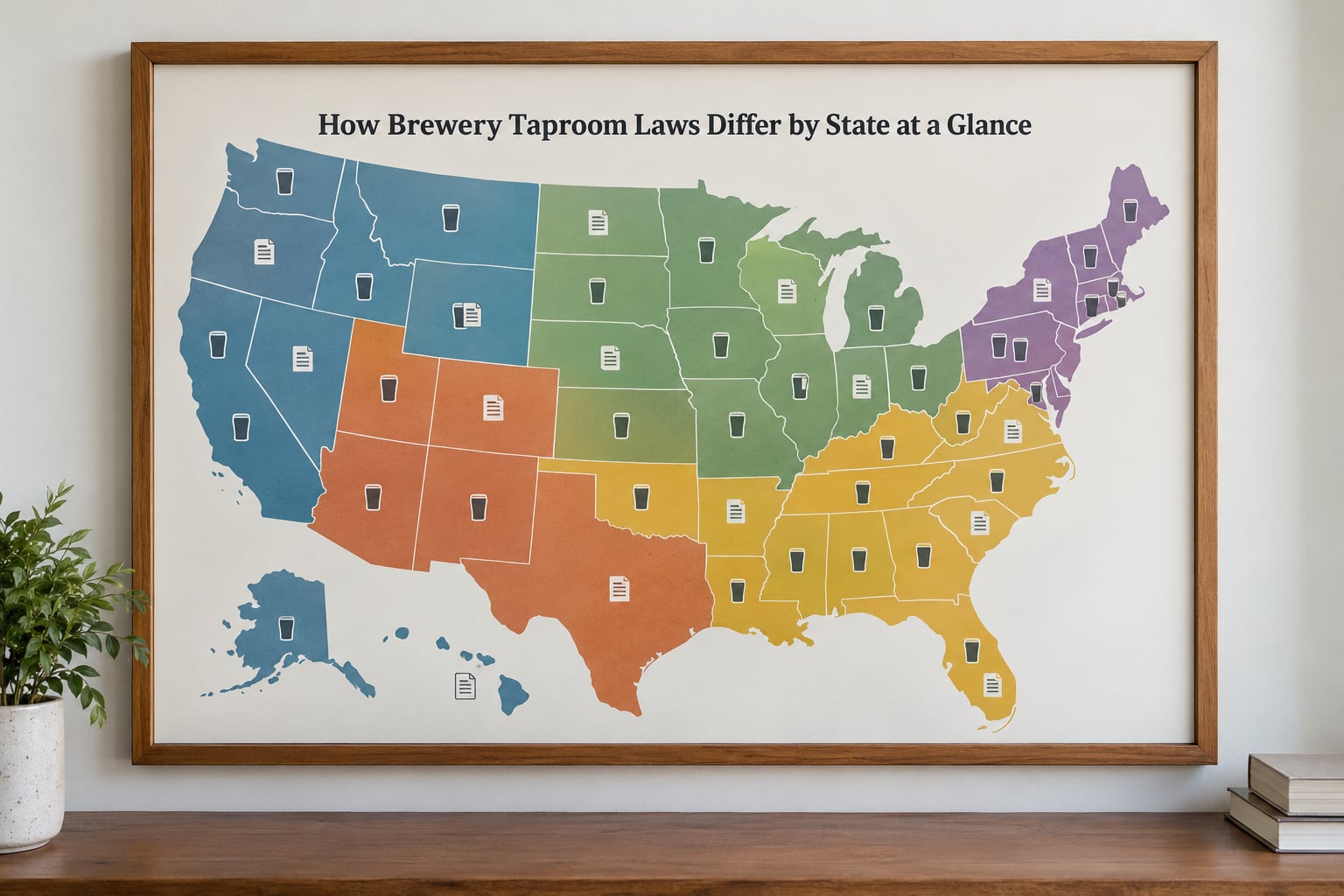
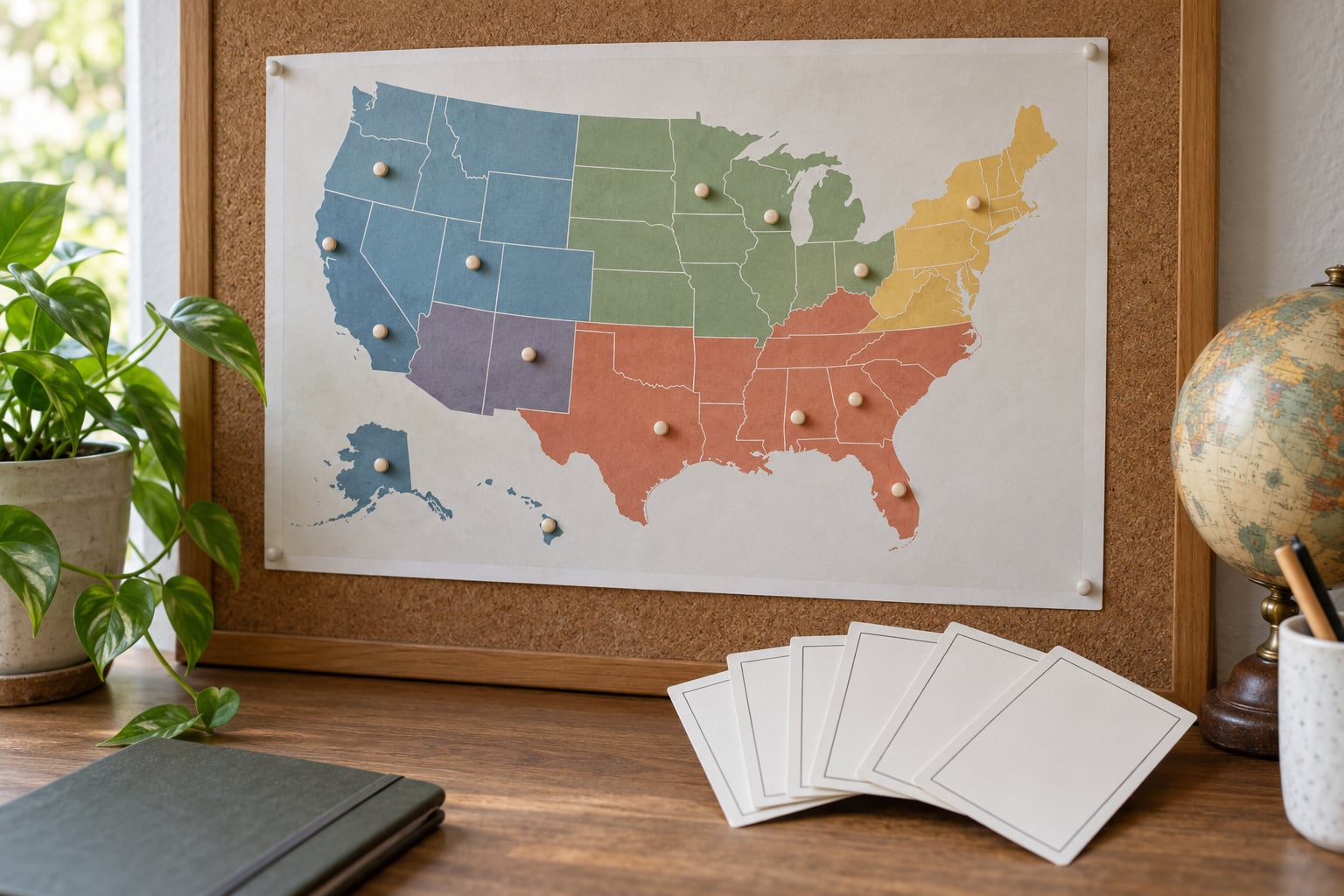
Below is a short, plain-language entry for every state. These are summaries of the general model in force, not the text of the statute. Statutory details, caps and exemptions move, and only your state alcohol control agency can give you the current version.
Northeast
Connecticut: Taprooms operate under a manufacturer permit that allows on-site sales of the producer’s own beer, with food expected as part of the license.
Delaware: Recent legislation expanded what brewpubs may do, including retail sales, reflecting a broader move to loosen three-tier constraints.
Maine: One of the more open systems; small brewers get direct sales rights and a state tasting designation that grants additional privileges.
Maryland: A small manufacturer licence class lets a qualifying brewery sell its own beer on-site without a separate restaurant licence, subject to volume limits.
Massachusetts: Breweries can offer tastings and, in many cases, on-site consumption; a licence amendment process exists for existing venues.
New Hampshire: Permits breweries to sell their own beer directly at the brewery with no per-customer cap of the Pint Law kind.
New Jersey: Breweries hold a limited brewery licence for on-site sales; selling other producers’ beer or any wine or spirits needs a different licence.
New York: An operating brewery may sell its own beer to visitors on-site and, since 2020, offer takeout beer under temporary and then permanent authority.
Pennsylvania: An in-state production brewery may sell its own beer on-site with a permit, and package sales through a self-distribution licence or an approved pathway.
Rhode Island: In-state brewers may operate a taproom and sell to-go, a state that has leaned toward simpler producer access.
Vermont: Small brewers can qualify for reduced fees and direct sales, one of several states that make an explicit pitch to craft-scale producers.
Mid-Atlantic and South
District of Columbia: A manufacturer that makes beer on site may sell its own product on-premise without a separate retail licence, a structure local brewers rely on heavily.
Alabama: The oldest state ABC system still operates, with a statutory cap tied to barrels produced and a separate brewpub licence that lifts the cap for qualifying operations.
Arkansas: A manufacturer may sell its own beer on the premises of the brewing facility, and package sales to retailers need a distributor.
Florida: Breweries selling to consumers need a licence that lets them sell their own beer, and they are permitted to sell six-packs and growlers to-go.
Georgia: Brewpubs and taprooms are licensed separately; production breweries have to work within a three-tier structure that limits direct volume.
Kentucky: A taproom attached to a production brewery may serve and sell the brewery’s own beer, with volume tied to production and a licence for anything beyond it.
Louisiana: The state operates a relatively open model in which a brewery may sell its own beer on-site and package it for sale.
Mississippi: Historically the most restrictive alcohol jurisdiction, now with taproom sales permitted and a brewpub licence that allows retail sales of other producers’ beer.
North Carolina: Tied to a pilot project for in-state breweries, which have broader direct sales rights and a cap tied to barrels produced.
Oklahoma: Consumer sales for a small brewery are treated as part of the permit, with volume tied to production.
South Carolina: The clearest example of the Pint Law versus Stone Law split. A brewery without food service is limited to 48 ounces per person on-premise; one that serves food is not. Off-premises purchase is commonly expressed as a case limit rather than free-for-all.
Tennessee: A manufacturer licence permits a brewery to serve its own beer on-site, and a high-end manufacturer licence opens broader direct sales rights.
Texas: A Type T permit allows a brewery to sell beer on-site, and brewers may apply for more than one taproom location under a single permit.
Utah: Beer is sold through a model that keeps alcohol sales under state control, and taprooms operate under that structure rather than as ordinary bars.
Virginia: Tasting rooms are common, and a manufacturer or taproom licence grants defined on-site and to-go privileges for its own production.
West Virginia: Permits for both taprooms and brewpubs, with a distinction between serving your own beer and serving other producers’.
Midwest
Illinois: A manufacturer licence lets a qualifying brewery tap its own beer and fill growlers in permitted sizes under sanitation and labelling rules.
Indiana: An interest in opening a taproom requires a separate licence from the basic brewing licence, and each additional location needs approval.
Iowa: Five-dollar licences for small brewers and a separate taproom licence that allows on-site sales of the producer’s own beer.
Michigan: A manufacturer licence includes taproom privileges for the producer’s own beer, and brewers selling to other retailers need a separate licence.
Minnesota: The brewpub system is legally codified, with a retail classification that lets brewpubs sell wine and spirits, plus a continuing debate about consolidating licences.
Missouri: Any person may hold a manufacturer’s licence, and the state gives some producers direct sales rights, with a separate craft brewpub licence that allows broader retail sales.
Nebraska: Microbreweries tap and serve their own beer on-site; anything involving other producers’ beer requires additional licensure.
North Dakota: A small brewery licence permits on-site taproom sales, with volume thresholds that determine licence class.
Ohio: A manufacturing permit for craft brewers can include a taproom area, and the state took steps to ease some direct sales limits.
Wisconsin: The state that gave brewpubs their name; a brewpub licence lets a brewery serve its own beer with other beverages under a food-service framework.
Plains and Mountain
Kansas: A brewery licence allows sales of the manufacturer’s own product on-site, and microbrewery provisions are available to small producers.
Colorado: An authorised brewery licence with a taproom endorsement allows on-site sales of its own beer, one of the more consumer-friendly state systems.
Idaho: A beer licence lets a brewery sell its own product on-site, and the state has a long record of direct sales access.
Montana: A taproom licence allows a brewery to sell its own beer on-site, with a sampling rule that limits what may be poured to beer brewed at that location.
Nevada: A brewery that owns its production equipment may obtain a restricted liquor licence to sell its own beer on-site to the public.
New Mexico: Growler and on-site sales are permitted for brewers who qualify as small, with limits on volume.
South Dakota: One of the more producer-friendly states, with a statute that allows breweries to sell directly and allows tastings.
Wyoming: Small brewers tap and serve on-site under a licence that has loosened in recent years, with to-go sales permitted.
Pacific and non-contiguous
Alaska: The state’s single alcohol control board is the deciding authority, and local option votes can restrict or allow sales in particular communities.
Arizona: A brewery licence allows sales of the manufacturer’s own beer on-site, with additional rights for full-size brewers.
California: A beer and wine licence lets a production brewery sell its own beer on-site; spirits and wine sales at a taproom come from a separate licence type.
Hawaii: A manufacturer licence permits taproom sales on-site, and the state has relatively few producers operating under it.
Oregon: Taproom privileges are broad for small breweries, with direct sales and tastings available, though the state’s alcohol control model is unusual.
Washington: An endorsed brewery certificate carries the oldest continuing brewery licence in the country and covers both production and taproom sales.
Those entries are summaries, and several states have layered exceptions I could not fit in a line. Before you rely on any of them, the state agency page is the only authoritative answer.
What Counts as a Brewery Taproom?
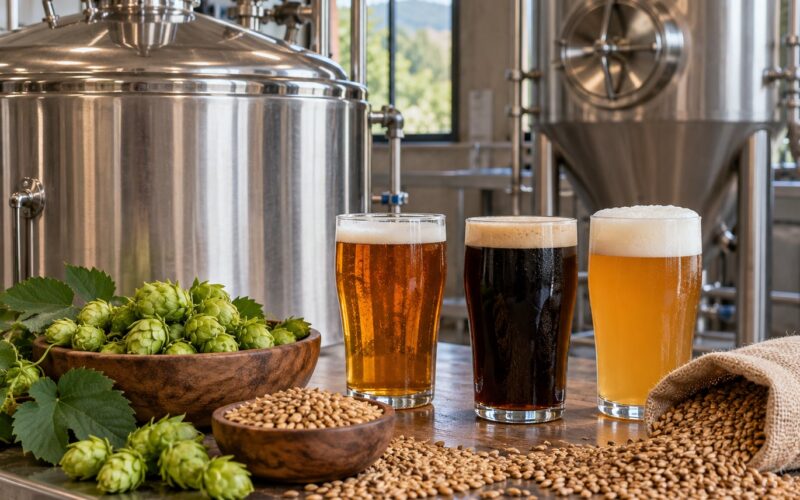
A taproom is the customer-facing part of a brewery: a room, or a section of a brewery building, where the public sits, drinks beer the brewery produced, and often buys something to take home.
What makes it legally interesting is that a taproom can be a manufacturer operation, a retailer operation, or both, depending on the state. A production brewery running a tasting counter is usually still a manufacturer, selling what it made. A brewpub that also pours other breweries’ beer is doing retail work and needs retail authority.
Three distinct approvals can be involved, and conflating them is a common source of confusion. The federal TTB permits a person to brew and establishes what counts as beer. The state licence decides what that brewer may sell and to whom. Local approval, usually through zoning, building and occupancy rules, decides whether the door can open at all.
Selling a growler, running a tasting flight, and hosting a festival can each require separate sign-off depending on the state. A brewery that holds one authority is not automatically covered everywhere else.
Which Taproom Rules Are Common Across States?
Across all 50 states and D.C., a handful of things stay the same. Knowing them first makes the differences easier to read.
One regulator per state. Every state has a single alcohol control body with a slightly different name: a Department of Revenue, a Liquor Control Commission, a Liquor Authority, an Alcoholic Beverages Control board. It issues the licences, sets the hours and caps, and does the enforcement.
No alcohol service to anyone under 21. That age floor is federal and universal. How a state handles a minor standing in the room is not.
The three-tier system. The traditional model runs manufacturer to wholesaler to retailer. Most brewery taproom rules exist to adjust, narrow or partially bypass that chain for the brewer’s own product.
Tied house law. A producer generally cannot hold a financial interest in a retail licence, which is one reason a brewery cannot simply own a bar down the road.
Excise tax. Beer is taxed per barrel or per barrel equivalent, with different rates for small brewers in many states. The rate changes by state and by producer size.
Local say. Municipalities can add hour limits, noise ordinances, outdoor service rules and event permits on top of what the state allows.
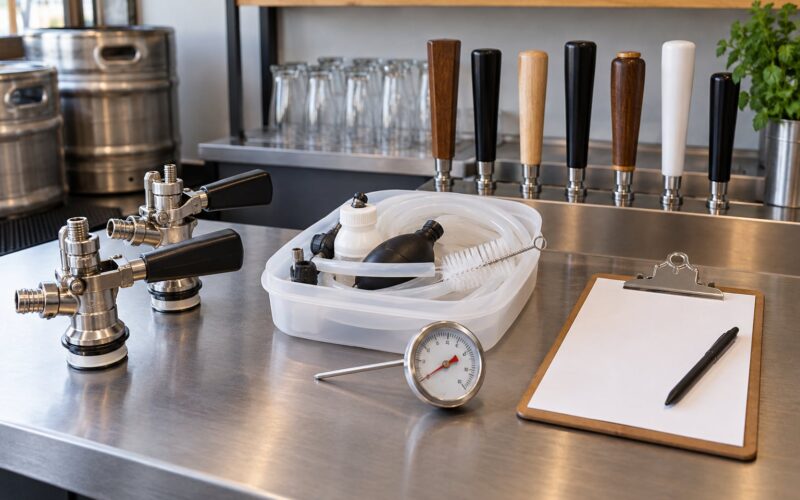
Sanitation requirements for take-home containers. Where growlers or crowlers are allowed, states usually require sealed sanitary containers, labelling, and filling at the time of sale by someone of legal drinking age.
How Brewery Taproom Laws Differ by State in Practice
Those shared rules set the floor. The differences show up in about ten places, and this is where the state-by-state variation becomes real.
Manufacturer status versus retailer status. Some states let a brewery sell only its own beer, while brewpubs get a retail licence that covers other producers’ beer and, in some cases, wine and spirits. A brewery holding manufacturer status alone cannot pour a guest brewery’s beer.
Tastings. A state may allow free samples of production, paid flight service, or nothing but a purchased pint. For a travelling brewer that matters, because a collaboration beer brewed elsewhere may not be pourable in the taproom at all.
Growler and package sizes. Common permitted container sizes are 32, 64 and 128 ounces, and 64 is the ceiling most often cited. Kegs to consumers are restricted or unavailable in many states, which is a recurring complaint among brewers.
Ounces per customer. Some states cap how much one person may buy on-premise. Others express the same idea as a case limit for take-home purchases, so a taproom that allows unlimited drafts may still limit how much you can carry out.
Food service. A food-service operation can expand what a taproom may do in several states at once, including volume and what else may be sold. Where it is required, the brewery is effectively a restaurant as well as a brewery.
Hours. Standard bar hours are common, but some taprooms face earlier closing times or tighter last-call rules, and local ordinances can reduce them further.
Minors on premises. Purchase age is fixed at 21. Entry, seating after a cutoff time, and access to the production floor are decided separately.
Direct-to-consumer shipping. A number of states let a brewery ship to an in-state consumer directly; others require the beer to move through a licensed retailer or wholesaler first. This is the fastest-moving area of taproom law.
Satellite taprooms. Some states let a brewery operate a taproom away from the production site under one licence. Others require each additional location to have its own approval.
Operator qualifications. States differ on whether a manager needs a specific alcohol training or licence, and whether servers must be certified.
The practical effect of all this is that two taprooms in neighbouring states can pour identical beer and offer completely different take-home options. That is not a quirk of the businesses. It is the licensing model.
Why Do Some States Treat Taprooms More Like Breweries?
Because a taproom selling the brewer’s own product is treated as an extension of manufacturing, not a retail bar, and a manufacturer-to-consumer sale is easier to justify than a wholesaler bypass.
These states issue a licence that authorises on-site sales of the brewery’s own production, often paired with tastings, growler sales and limited package sales. The conditions usually attach to volume. A brewery can sell directly up to a threshold of barrels produced, and beyond that it works through distributors.
Direct-to-consumer shipping follows the same logic in the states that allow it. If a brewery is already permitted to sell to a resident directly, shipping is a distance question rather than a licensing one, and states that allow it have clarified licence, labelling and tax-reporting requirements for shipped orders.
The rationale is economic as much as legal. Taproom sales carry the highest margin of any beer channel, and a jurisdiction that taxes breweries per barrel is happy to let the producer collect the margin locally instead of handing it to a wholesaler. Whether the local wholesaler agrees is a separate matter, and that lobbying is a recurring feature of the legislative process.
Why Do Some States Treat Taprooms More Like Bars?
In other states the taproom sits much closer to a bar in the code. The brewer may need a separate retail or on-premises licence, be required to serve food, serve through approved wholesalers rather than direct channels, and accept per-customer volume limits.
The clearest example sits in South Carolina, where the Pint Law limits a brewery without food service to 48 ounces per person on-premise, while a brewery that serves food, often called Stone Law, faces no such on-premise cap. Take-home purchases there are commonly expressed as a case limit, so a large single purchase is capped by volume even when the draft limit is gone. Alabama and Mississippi have used comparable structures, and Georgia and Virginia have their own approaches.
Control states add another layer. In Utah the state itself controls the sale of spirits, and beer sales sit inside a state-run framework where a taproom does not simply operate like a private bar. Mississippi, historically among the strictest alcohol jurisdictions, has moved toward permitting brewpubs and taprooms while retaining structure around who may sell and where.
Restrictive states also tend to layer on requirements the permissive ones do not: background checks, mandatory server training, tighter closing hours, limits on how much a person may purchase per day, and a narrower definition of who counts as the manufacturer.
What all of these approaches share is that a visitor notices the difference immediately. You get a receipt, a limit is mentioned, or the server tells you the taproom cannot fill a container at all.
Can Minors Enter or Buy at a Taproom?
No one under 21 may purchase or be served alcohol anywhere in the United States. Entry rules are the part that varies.
Many states permit a minor to enter a brewery or taproom when accompanied by a parent or guardian, particularly in the seating area away from the bar. Some taprooms hold a time cutoff after which unaccompanied minors must leave, often in the late evening. Others restrict minors from the production area, the cooler, or any space where alcohol is being poured or stored, regardless of who they came with.
A handful of states take the tight approach and keep minors out of the taproom area altogether, or require a licensed premises to be adults-only after a certain hour. Local rules can add to this, and a venue that allows a minor to wait at the bar for ten minutes is very different from one that does not.
The pattern to expect: buying is never allowed, entry is usually conditional on supervision, and after dark the rules get stricter rather than looser. If you are planning a family visit, call ahead rather than finding out at the door.
How Do Local Rules Change the Answer?
State law sets the ceiling. City and county rules frequently cut into what a taproom can do on any given night, and they are the layer visitors are least likely to know about.
Zoning and occupancy come first, since a taproom needs a use permit and a certificate of occupancy for the space. Noise ordinances limit outdoor service and amplified music, and several cities have specific rules about sound spilling into residential zones. Outdoor service can need its own approval with limits on service hours and whether alcohol may be consumed beyond a marked patio. Public consumption outside the premises, for a street festival or a brewery run, usually needs an event permit.
License limits are the other one. Where a state caps the number of licences a county may issue, a new applicant can be eligible and still be told the quota is full, which is a filing problem rather than a legal one. Entertainment rules, food-service inspection requirements and fire capacity all come into the same file.
These local rules change far more often than state law and with much less notice. A city council can vote on a patio rule on a Tuesday and change a brewery’s summer business overnight.
How to Check the Law Before Visiting a Taproom
Order matters. Start with the state agency, because a city clerk cannot tell you what the state permits, and a brewery cannot reliably tell you the current code.
1. Find your state alcohol control agency and open its licence or manufacturer page. Look for the statute name and the licence class that covers taprooms or brewpubs.
2. Read the section on on-premises consumption and the section on to-go or package sales. They are often in different parts of the code with different caps.
3. Check the production cap attached to direct sales, since that is what determines whether a taproom can sell you a case or only a glass.
4. Search the agency’s news or rulemaking page for recent amendments. Rules described as proposed are not in force yet, and that distinction is what brewers themselves track.
5. Check the taproom’s own website for hours, food and to-go policy, then check the city’s licensing or zoning office for local requirements on outdoor service and events.
6. If you still cannot tell, call the agency directly. A one-paragraph question about to-go package size for a customer of an on-site brewery will get a specific answer.
Ask the venue these questions in writing so you have the answer: may I buy sealed cans or bottles of this brewery’s own beer to-go, what is the largest container you can fill, is there a per-customer limit, can I bring my own container, can an unaccompanied minor wait inside, and do you hold a licence to sell wine or spirits.
The last two are where visitors get surprises, and both are answered faster in an email than at the bar.
Why Taproom Law Can Change
Taproom rules are not stable, and a guide that never gets updated would be worse than none at all. Four things move them.
Legislation. State legislatures revise alcohol codes, often at the request of brewers, and the typical change is expansion: more package sizes, more locations, higher thresholds, or a clearer path to direct sales. Some bills go the other way, and one or two states have debated changes that would have restricted taproom privileges outright, prompting strong public reaction from brewers and their customers.
Regulation. Agencies issue guidance, approve licence amendments and publish forms that determine what a brewery can actually do. A statute may allow something that the application process quietly makes impractical.
Litigation. Three-tier and tied-house challenges have produced court decisions that force state agencies to redraw the line between producing and selling. These cases can change the meaning of a statutory term that looked settled for a decade.
Local enforcement. County and city decisions on patios, hours, noise and events can reverse a state permission in practice without changing a single statute.
Economic pressure runs underneath all of it. Taproom margins have carried breweries through thin patches, and that both makes brewers loud advocates for their own direct sales rights and makes wholesalers and retailers equally loud against them.
This is general information about a fast-moving area of law, not legal advice. If you are opening, expanding or challenging a taproom, talk to an attorney and to the state agency directly.
Frequently Asked Questions
Can a brewery sell alcohol directly to visitors in every state?
No. Every state has a manufacturer or on-premises licence that lets a brewery sell its own beer to visitors on-site, but the scope changes. Some states limit a taproom to its own production. Others require a separate retail or brewpub licence to pour other breweries’ beer, wine or spirits. Volume thresholds tied to barrels produced often decide how much direct selling is allowed before a distributor is required.
Do all brewery taprooms have to serve food?
Not all of them, and this is one of the most consequential differences between states. In South Carolina, a brewery without food service is limited to 48 ounces per person on-premise, while one that serves food faces no such cap. Pennsylvania and Minnesota link food service to expanded taproom privileges, while New Jersey’s limited brewery licence does not require it at all. States that never condition sales on food simply list it as an option, which is why two taprooms in neighbouring states can behave very differently.
Can a minor enter a brewery taproom in any state?
A minor can never buy or be served alcohol, since federal law sets that age at 21. Entry is a state and local question. Many states let a supervised minor enter the taproom seating area, some set a cutoff time after which unaccompanied minors must leave, and a few restrict minors from the production area or the premises entirely. Rules often tighten in the evening, so calling the venue before a visit is the reliable option.
Why do some taprooms sell growlers while others do not?
The difference usually comes from whether the brewery holds manufacturer privileges that include take-home sales, and whether state law allows that format at all. Where growlers are permitted, common sizes are 32, 64 and 128 ounces, with 64 the most frequent ceiling, and states typically require a sealed sanitary container, a label and filling at the time of sale. Some taprooms can only serve on-premise, which is why to-go options vary so much between states.
Can an out-of-state visitor buy beer directly from a brewery?
A visitor can buy what the taproom is licensed to sell, which usually means the brewery’s own beer, on-site and, where allowed, in permitted take-home containers. What a visitor cannot usually do is arrange a direct shipment to a home address, since direct-to-consumer shipping generally requires the recipient to live in the state where the brewery ships from. Buying at the counter is governed by the taproom’s licence; shipping is governed by a separate state shipping law.
Are taproom hours set by the state or by local governments?
Both, and the state usually sets the outer limit while local rules can cut into it. State alcohol agencies define standard service hours for on-premises licence holders, and some states impose earlier closing times or specific last-call limits on taprooms. City and county ordinances can then restrict outdoor service, set noise limits, and require event permits for public consumption. A brewery also follows its own posted hours, which are sometimes shorter than what the law allows.
Conclusion: What to Do First
If you remember one thing, make it this: taproom law is state law written by a state agency, and the state line is the whole explanation for most of the odd rules you run into. The federal layer is thin and identical everywhere.
Before you travel, check your state alcohol control agency for the taproom licence class, the to-go package rules and any per-customer limit. If you are opening or expanding a taproom, do the same research and then talk to a lawyer and the agency, because a statute’s meaning is rarely obvious from the text alone. And when the server says the taproom cannot fill your growler, that is a licensing boundary, not a personal one.