Hosting a tailgate with beer comes down to four moving parts: beer and ice sized to your actual headcount, a cooler packed in the right order, a grill menu that travels and holds its temperature, and a spot in the lot early enough that nobody is hauling gear across three rows of parked cars after kickoff. Plan most of it on a Sunday afternoon and game day itself comes down to about an hour of setup before your friends arrive. The vibe is the real draw, and the vibe survives or dies on cold beer and no bottlenecks at the cooler.
Last updated: October 2026
Table of Contents
- What You Need
- Step-by-Step: How to Host a Tailgate With Beer
- Step 1: Choose the Location and Guest List
- Step 2: Build a Simple Menu
- Step 3: Plan the Beer and Drink Station
- Step 4: Set Up Food, Drinks, and Waste Stations
- Step 5: Serve Safely and Keep Guests Comfortable
- Common Mistakes
- Buying too much beer
- Under-buying ice
- Losing track of food temperature
- Creating a bottleneck at the cooler
- Forgetting water and the zero-proof option
- Leaving cleanup to the end
- Frequently Asked Questions
- What is the 3:30-300 rule for beer?
- How much beer do I need for a 20-person tailgate?
- What is the best beer to have at a tailgate?
- How long will beer stay cold in a cooler?
- How do I serve guests who do not drink alcohol?
- Should you tailgate before or after the game?
- Your Tailgate Game Plan
What You Need
The short list is a hard-sided cooler, more ice than you think, cups, a grill, food that does not need timing, and enough bags to carry it all. Everything below exists to solve one of four problems: keeping beer cold, serving it without a line, keeping food safe in the heat, or getting everything back into the car at the end.
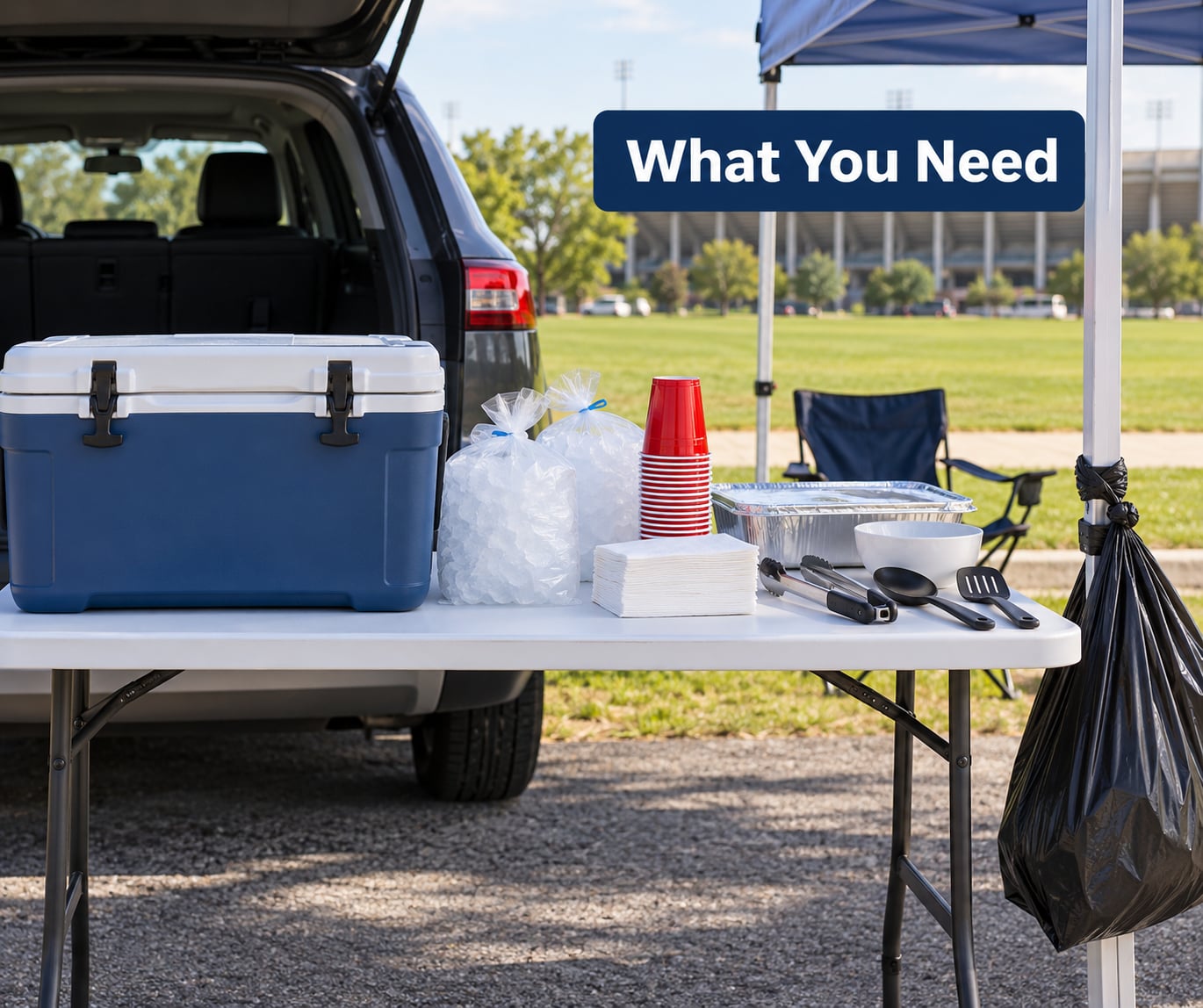
- Coolers. One 48- to 60-quart hard-sided cooler handles about 12 to 15 guests. Past 20 people you want two, because a cooler packed solid with food has no room for ice and that is the classic over-packing mistake.
- Ice. Budget one pound per person per hour. A four-hour tailgate for 20 people is 80 pounds, which is five 20-pound bags. More if you are in a hot climate or the game runs long.
- Drink containers. A case of 12oz cans per 5 to 6 guests, bottled water, and a mix of hard seltzers, sodas and lemonade for the people not drinking beer. Cups come in two kinds: sturdy plastic for beer, and paper for the non-alcoholic pour so nobody has to ask.
- Food supplies. A cooler or insulated bag for raw meat kept separate from anything cooked, a cutting board that is not also your serving board, tongs for each tray, a slow cooker if you own one, and a bottle opener or can grabber so guests stop prying lids with keys.
- Cleanup gear. Trash bags, a small container for bottles and cans to keep the recycling honest, wet wipes, hand sanitizer, paper towels and at least as many napkins as you think. Napkins are the supply that always runs out first.
- Setup equipment. A folding table, a canopy or umbrella for shade, a wagon or hand truck if you are more than a short walk from the car, and a flashlight or two for a night game. An extension cord only if you need one for a blender, and taped down if you do.
- Safety and comfort items. Sunscreen, a first-aid kit with cold packs, a charged phone, a jug of drinking water that lives next to the beer, and a cooler you can sit on. Also check your stadium’s rules on alcohol in the lot before you load the car.
Step-by-Step: How to Host a Tailgate With Beer
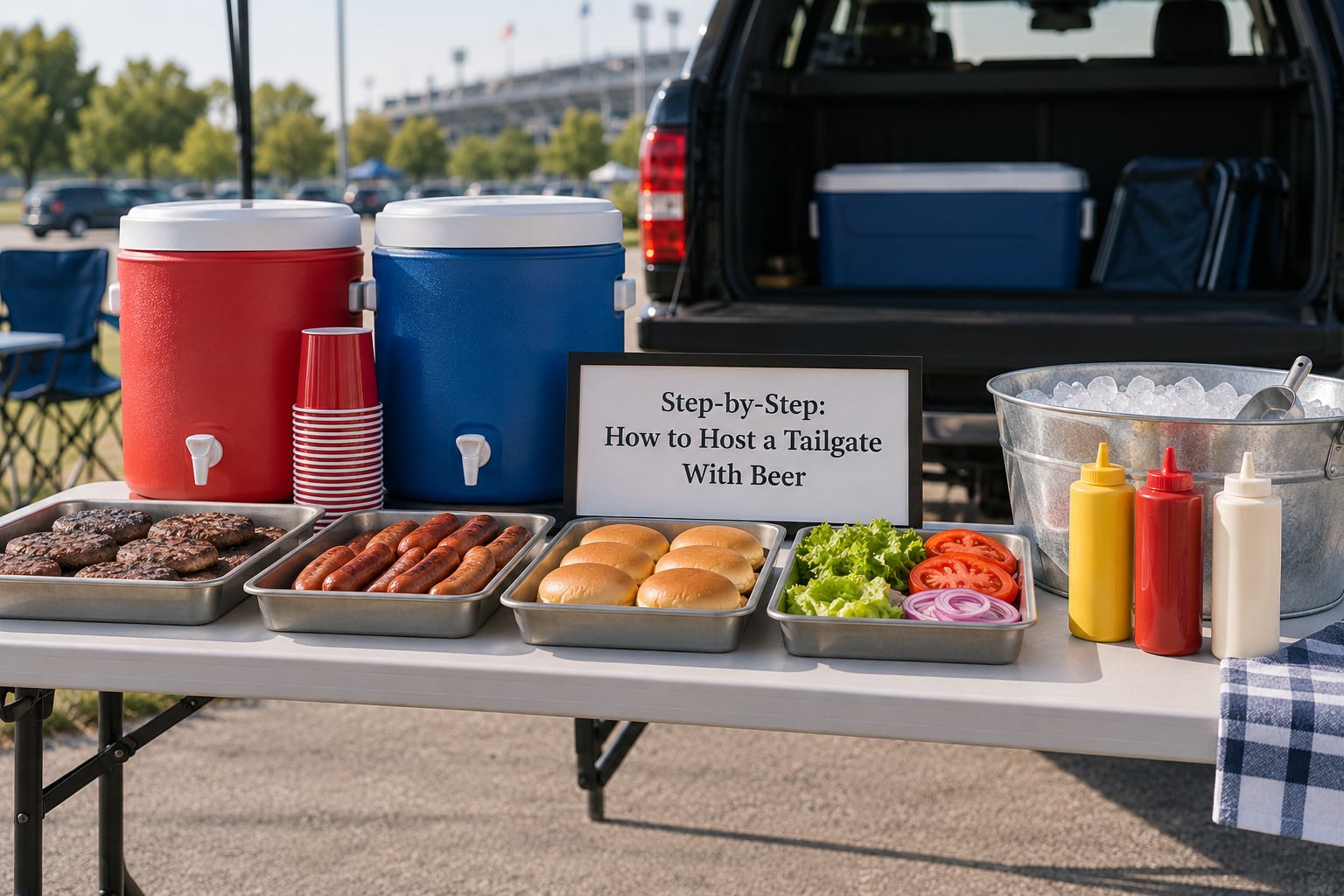
There are five stages, in this order: pick the spot and the number, build a menu you can cook without a clock, plan the beer and ice, lay out the stations so nothing crosses, then serve while watching temperature and pace. Do them in that sequence and the whole thing runs itself on game day.
Step 1: Choose the Location and Guest List
Pick the lot, the arrival time and the headcount before you buy a single thing, because the number drives everything downstream. Most professional stadium lots open several hours before kickoff and the good rows go first, so arriving 2.5 to 3 hours ahead is normal rather than eager. College fields are smaller and fill faster than most people expect.
Confirm your parking rules and your venue’s rules on alcohol in the lot while you are at your kitchen table, not on the asphalt. Open-container laws, the legal limit for driving and the age to buy are state and city rules, and a lot can close you out for any of them. If you are hosting in a private lot or your own yard, you decide the rules and your guests will follow them.
Send one message with the address, the lot or row, what to bring and what you are covering. Ask for dietary needs, allergies and who is not drinking at the same time, while people can still think about it. Then count heads at two numbers: your committed guests, and a realistic number of walk-ups. Forum regulars on r/buffalobills and r/eagles will tell you the neighboring lots are welcoming if you arrive with a case of beer or a dish to share, but that is a bonus, not something to plan your headcount around.
You will know this step worked when the only question left in the group chat is what time to leave, not where to park.
Step 2: Build a Simple Menu
Pick two or three dishes, not six, and make at least one of them a make-ahead dish that is fine warm or cold. The best tailgate foods are not temperature-dependent: chili, jambalaya, gumbo, potato salad, coleslaw and slow-cooker pulled pork all hold their quality across a three-hour sitting in the sun. Burgers and brats are the exceptions, and they are worth grilling if you have the gear and a second person to man it.
Keep raw and cooked food apart the whole day. Poultry must reach 165F internally, ground meat 160F, and whole cuts of beef or fish 145F. Cooked food that is sitting out belongs in a cooler below 40F or in the slow cooker on warm, not on the table. Anything perishable that has been in the danger zone between 40F and 140F for more than two hours gets tossed, and on a hot day that window is closer to one hour.
A few people on r/houston plan an entire tailgate around a dish tied to the visiting team, which is a fun idea with a real cost: you will be chopping all morning. Pick that dish or pick a cookout, not both.
| What you are grilling or serving | Beer style that works | Why it works |
|---|---|---|
| Burgers and brats | Pilsner, amber lager, amber ale | Malt and toast cut through the char and fat |
| Wings | Crisp lager, pale ale, wheat beer | Carbonation and mild bitterness handle the heat |
| Chili | Amber ale, brown ale, stout | Roast and malt stand up to heavy seasoning |
| Jambalaya or gumbo | Pilsner, cream ale | Light body and high carbonation reset the palate |
| Sausage balls | Amber lager, amber ale | Neutral enough to split a room, good cold |
| Quesadillas or nachos | Lager, pale ale | Forgiving food that suits an easy-drinking beer |
| Dessert, pie or cobbler | Stout, porter | Dark roast plays with fruit and spice |
Pack the food in a separate cooler or insulated bag from the drinks. A drink cooler with 80 pounds of ice in it will hold your dessert at a temperature that is technically safe and socially unacceptable.
Step 3: Plan the Beer and Drink Station
How much beer to buy is the number most hosts get wrong, and the answer is a straight ratio. Plan four 12oz cans per drinking guest for a pre-game tailgate, which is about two drinks over three hours, and round up to whole cases. Ice follows the same logic at one pound per person per hour. Guests on r/eagles and r/nashville consistently recommend the extra case over the exact number, because the case of beer is also the ticket into a neighbouring lot.
| Guests | 12oz cans (4 each) | Cases to buy (24 per case) | Ice for 3 hours | Cooler plan |
|---|---|---|---|---|
| 8 | 32 | 2 | 25 lb | 1 x 48-quart |
| 12 | 48 | 2 | 40 lb | 1 x 60-quart |
| 16 | 64 | 3 | 50 lb | 1 x 60-quart |
| 20 | 80 | 4 | 60 lb | 2 coolers, split drinks and food |
| 25 | 100 | 5 | 75 lb | 2 coolers plus a rolling ice bin |
| 30 | 120 | 5 | 90 lb | 3 coolers |
Cans beat bottles in a parking lot, and it is not close. They stack in rows, they do not shatter, they are lighter, and one hand opens them. Bottles stay cold slightly longer in a salty ice bath, but the breakage risk on asphalt is not worth it. If you do bring bottles, keep them in a separate bin so a cracked one never takes out a tray of food.
The best beer for a tailgate is a clean, medium-bodied lager or amber ale at about 4 to 5 percent ABV, which is what a mixed group reaches for without thinking. Bring one of those as the main pour and put a single mixed case of something more interesting alongside it, one six-pack at a time, so the adventurous choice is a treat rather than a test. Avoid heavy imperial stouts, anything over 8 percent ABV and aggressively bitter IPAs for the general supply; they are excellent and they divide a crowd.
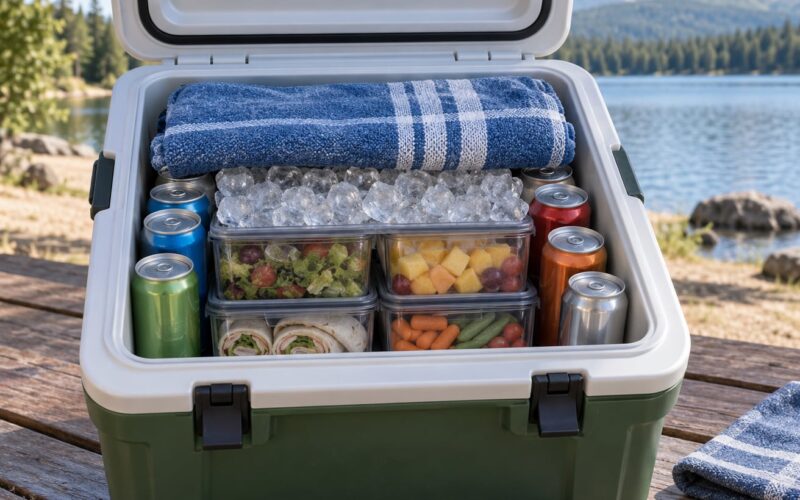
Pack the cooler cold in this order. Ice on the bottom, then cans laid on their sides in rows, then ice between the rows and around the edges, then a thin layer on top, then the food in a separate sealed bag on top of that. Cans stored on their side hold more surface area against the ice than cans standing up. Put a handful of cans in the fridge the night before so they arrive already cold, and leave the cooler in the coldest room in the house overnight rather than loading it warm in a car.
Water belongs in the same cooler, or in a second cooler people can reach without opening the beer. The 3:30-300 rule is a useful drinking guideline: about 300 ml of water every 30 minutes, and a food break every three hours. It is a guideline, not a medical standard, but it works well in the sun because dehydration is what makes a first hour of drinking feel like four. Alcohol warms a can faster than sun does, so do not leave a spare case in the car while you haul everything else.
You will know this step worked when a guest can pour their own beer, grab a cup, fill a bottle for later and dispose of it without crossing anybody’s path.
Step 4: Set Up Food, Drinks, and Waste Stations
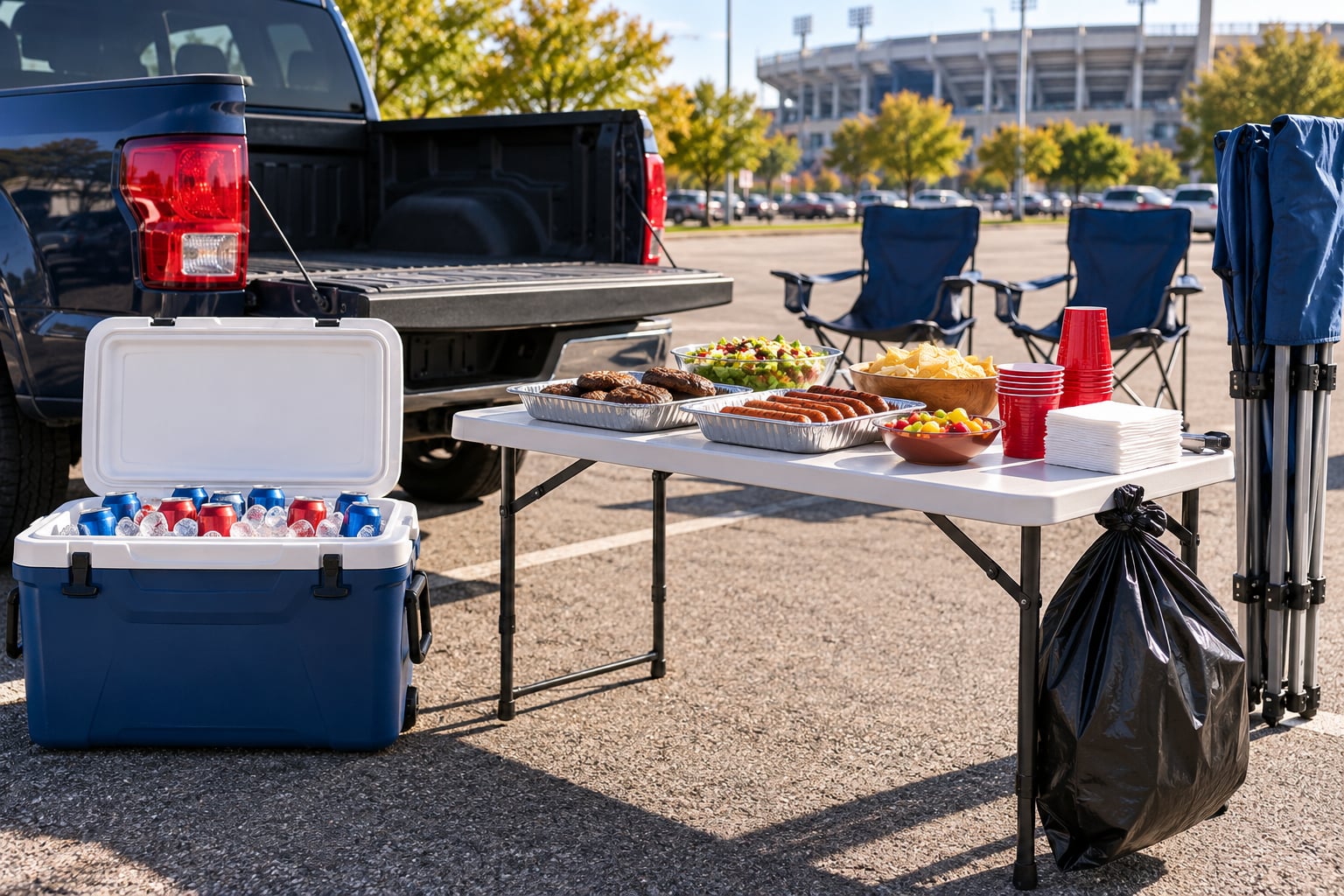
Lay the setup out in a line so the flow is one direction. Cooler and ice at the far end, food in the middle, trash and recycling at the other end, with the grill off to the side and away from the walkway. Two coolers beat one: one holds cans and ice, the other holds food and opened bottles. The moment you put a tray of sandwiches in the drink cooler, the ice stops working and the beer warms.
Put the trash and recycling where someone can reach them without walking past your cooler, and give the bottles a separate container so you are not sorting glass out of a wet bag in the dark after the game. Keep walkways between your rows clear so people from the next lot can pass, and tape down any cord. A tipped cooler on a slope is how cans end up on the ground, which is the failure mode people describe over and over in the tailgate threads: put the cooler on level ground or on a folded blanket, and use a flat crate or a folding chair seat as a table for a can you are not holding.
Set the cans in the cooler so the first pour is the easiest one to reach. Nobody enjoys digging through ice for the can two rows down, and the person who does that four times stops helping and starts sitting.
Step 5: Serve Safely and Keep Guests Comfortable
Watch three things once people arrive: how fast the ice is going, how warm the food is getting, and how fast the beer is going. A full cooler lid opened and closed all afternoon loses more cold than the ice count suggests, so rotate cans from the top down into the ice and stop topping up the pile where people can see it. Put the food thermometer in the slow cooker and check it on the same cycle as the ice, not whenever you remember.
Shade matters more than most hosts plan for. A canopy over the table, a sheet if you must improvise, and somewhere out of the direct sun to sit. Sunscreen in the cooler for anyone who forgot, and a water jug that never runs out. Anyone driving stays sober, no discussion, and if the group is large, agree on who the sober drivers are before the first pour so nobody has to volunteer at hour four.
Plan for the people not drinking beer as if they are part of the group, because they are. Hard seltzers in the same cooler, lemonade in a jug, sparkling water in cans, and a plate of food made for everyone. On food, think about a vegetarian or vegan dish that is not a side dish, because one of those at a tailgate means somebody eats a plate of buns and chips.
Weather is the last thing to plan and the easiest to get wrong. For heat: shade, ice, water and a plan to eat early. For rain: a canopy rated for wind, food moved under cover, and a decision about how long you are staying, made before the sky opens. For cold: a slow cooker running, layers, and hot spiced cider in a dispenser that is not a beer cooler so the zero-proof drink also gets a warm option.
Finish by taking the trash with you, sweeping the ground for bottles and caps, and draining your cooler rather than leaving a puddle of meltwater in someone else’s space. The lot is somebody’s backyard all week.
Common Mistakes
Almost every bad tailgate traces back to one of six things, and all of them are fixable in the hour before you leave.
Buying too much beer
Hosts overbuy because they count the whole group’s drinking, not the first three hours of it. Four 12oz cans per drinking guest is the working number for a pre-game tailgate, and you add a case, not four, for walk-ups. If the game runs long or your group is heavy on 12oz bottles rather than cans, add a half case and stop.
Under-buying ice
One pound per person per hour is the number people quote in the forums, and it is right more often than not. The failure is buying it on the way to the lot. Ice bought the morning of is loose, wet and half-melted by the time you are parked, so buy it the day before, bag it, and keep it in the freezer.
Losing track of food temperature
The slow cooker on warm and the tray on the table are not the same thing. Keep cooked perishables under 40F in a cooler or on warm above 140F, check with a thermometer rather than a guess, and throw out anything perishable that sat in the sun past two hours, or one hour on a hot day. Set a phone alarm for the check instead of trusting the group chat.
Creating a bottleneck at the cooler
One cooler lid, one opener and twenty people is a queue. Split the supply across two coolers in different spots, pre-stage cups on the table instead of inside the cooler, hand out cans rather than letting everyone fish, and assign one person as the unofficial fill-the-cups runner. Nothing improves a tailgate faster than removing the line.
Forgetting water and the zero-proof option
Hydration is a safety issue in the sun and it is also the thing non-drinkers notice. Put water in the cooler that is easiest to reach, keep seltzers and lemonade in the same rotation as the beer, and if you are hosting, pour for people who are not holding a can. It reads as hospitality rather than an afterthought.
Leaving cleanup to the end
Two bags at the setup, one for trash and one for bottles, solve a problem that becomes genuinely unpleasant when a full day of plastic is loose in the grass. Pack a spare bag, take your cooler when you leave the area rather than at the end of the night, and pick up anything from other rows that blows your way. That habit is worth more than any party trick.
A few hosting tips that cost nothing. Put the good beer somewhere visible but not central, so it gets appreciated instead of drained. Have one dish ready to eat in the first ten minutes, before the grill is even lit, because people arrive hungry and hungry guests drink faster. And plan the halftime: it is the loudest, hottest part of the day and the reason most coolers are opened most often right when you least want them to be.
Frequently Asked Questions
What is the 3:30-300 rule for beer?
The 3:30-300 rule is a drinking guideline, not a medical standard: drink about 300 ml of water, roughly a large glass, every 30 minutes, and take a food break every three hours. It matters most at a tailgate because alcohol dehydrates you, dehydration makes you feel drunk faster, and sitting in direct sun makes both worse. Eat a real meal before your first drink rather than grazing chips all afternoon.
How much beer do I need for a 20-person tailgate?
For 20 people, plan about four 12oz cans per drinking guest, which is 80 cans, or four cases once you round up. If several of your guests are not drinking, drop to three cans each and let people refill. Add a case of hard seltzer or a light lager so the non-beer crowd is covered by the same number, and buy one extra case rather than two if you expect walk-ups.
What is the best beer to have at a tailgate?
A clean, medium-bodied lager or amber ale at roughly 4 to 5 percent ABV is the safest main pour for a mixed crowd. It drinks easily warm, goes with nearly every grilled food, and has none of the roast or hop intensity that ends a tailgate early. Make that your bulk buy, then add one mixed six-pack at a time for the people who enjoy comparing notes.
How long will beer stay cold in a cooler?
With one pound of ice per person per hour and a properly packed cooler, beer stays cold through a three to four hour tailgate. Pre-chill the cans overnight, lay them on their sides, put ice underneath and around the sides rather than only on top, and keep the lid closed. Once the cooler has been opened all afternoon, the top row warms first, so rotate cans down into the ice and refill from below.
How do I serve guests who do not drink alcohol?
Put the zero-proof drinks in the same cooler as the beer and pour them first, not in a separate bin off to the side. Canned hard seltzers, a jug of lemonade and sparkling water read as part of the plan rather than an afterthought. Ask about dietary needs when you confirm the headcount, and pick your sober drivers before the first pour rather than at the end of the day.
Should you tailgate before or after the game?
Tailgate before if you want the full atmosphere: the best spots and the best food go first, and most lots are largely full a few hours before kickoff. Tailgate after if your group is mostly older guests or families with small children, or if you would rather cook without a clock running and dodge the post-game traffic. Tell your group which one you picked so nobody arrives three hours early or three hours late.
Your Tailgate Game Plan
If you only do five things, do these, in this order. Choose the lot and check its rules on alcohol, then confirm your guest count and add a few for walk-ups. Buy beer and ice on the same trip using the four-cans-per-guest and one-pound-of-ice-per-guest-per-hour numbers. Cook one make-ahead dish the day before and pack the rest cold, separate from the drinks. Load the car so the cooler goes in last and goes out first, and set up with the coolers at one end, food in the middle, and the trash bags at the other.
The rest is timing and manners. Be parked early, have something to eat within ten minutes of arrival, keep an eye on the ice and the thermometer, and leave the lot cleaner than you found it. That is genuinely the whole job of hosting a tailgate with beer.