What to wear on a bar crawl comes down to five things: one going-out top, dark bottoms, shoes already broken in, a layer you can tie around your waist, and a small hands-free bag. Dress up only when a bar on your route has posted a dress code. The same advice works for a UK pub crawl.
A typical crawl is three to five stops over four or five hours, with one to three miles of walking between them. You are standing more than you are sitting, climbing stairs, and crossing whatever the sidewalk is doing that night. That is why the outfit that wins is the one you forget about by bar two.
D.C. makes this a little more specific. A Georgetown route can mean cobblestone, a summer crawl means humid air until midnight, and a December one means freezing at the first stop and stuffy inside the fourth. The taproom, the dive, the rooftop, and the cocktail bar all want different things, and a single outfit has to survive all four.
Table of Contents
- What to Wear on a Bar Crawl: What You Need
- Step-by-Step
- 1. Choose a Comfortable Base Layer
- 2. Pick Bottoms That Survive the Route
- 3. Add One Easy Layer
- 4. Select Footwear for Walking and Standing
- 5. Finish with a Bar Crawl Outfit Bag
- Common Mistakes
- Frequently Asked Questions
- Do I need to dress up for a bar crawl?
- What kind of shoes are best for a bar crawl?
- Should I wear a jacket on a bar crawl in Washington, D.C.?
- Is a dress or outfit change necessary between bar-crawl stops?
- What should I bring in a small bag on a bar crawl?
- Can I wear sneakers to a bar crawl?
- Conclusion
What to Wear on a Bar Crawl: What You Need
Before you pick a single garment, know which seven categories you are filling. Most first-timers buy the top first, then find out at bar three that they cannot unlace their shoes.
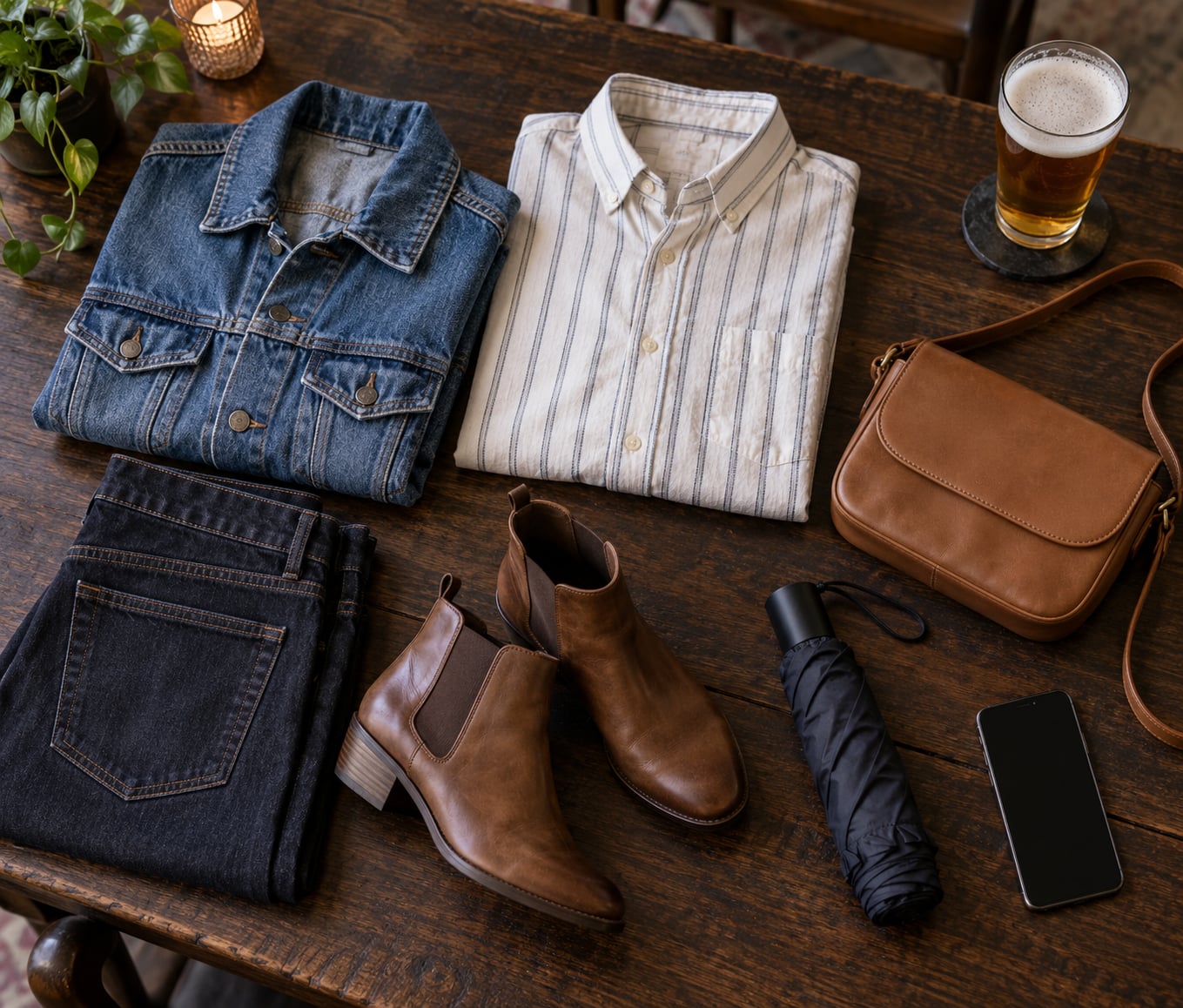
- Base layer. The first thing on your skin: a tee, tank, or thin undershirt that wicks sweat and does not cling when it gets wet.
- Top. One going-out piece. A button-down with the sleeves pushed up, a knit top, a fitted tee under an open shirt, or a slip-style dress over a tee.
- Bottoms. Dark jeans, chinos, or stretchy trousers in a color that hides a spill. Shorts work in summer if the route is short.
- Outer layer. One removable piece that ties, folds, or stuffs into your bag: denim jacket, overshirt, cardigan, or a light jacket.
- Footwear. Broken-in shoes with a grippy rubber sole. This is the item that decides whether the night is fun.
- Bag. Small and hands-free. A crossbody, a belt bag, or a small backpack. Not a tote.
- Weather protection. A compact umbrella in spring, and a packable hat or gloves in January. D.C. weather changes inside a four-hour window.
Two numbers decide most of these. Searchers on r/femalefashionadvice planning a cold-weather crawl keep coming back to warmth plus one going-out piece, not a full dress, and on r/mensfashion the repeated answer for men is jeans, a jacket, and boots. Both threads land in the same place: one nice thing, everything else comfortable.
Step-by-Step
1. Choose a Comfortable Base Layer
Start with what touches your skin. A crawl moves between a cold doorway and a packed room with forty other people, so your base layer decides whether you feel the swing or barely notice it. A mid-weight cotton tee or a breathable button-down works for most of the year; a moisture-wicking top makes more sense in July.
Two details matter more than the fabric label. Skip anything with a scratchy collar or a stiff waistband, because you will be sitting on a rail for forty minutes and then standing again. And skip anything you would describe as fussy. You will tug at it all night.
How you will know it worked: at the second bar you have stopped thinking about what you are wearing. That is the whole test.
2. Pick Bottoms That Survive the Route
Dark jeans are the default for a reason. They take a splash of something spilled, they work at a taproom and at a cocktail bar, and they are fine with a dress shoe or a boot. Chinos read slightly smarter, which helps at a nicer last stop.
Shorts are the seasonal option, but check the route length first. Two miles of sidewalk in shorts after three beers is a different night than a two-block hop. Stretchy or relaxed-fit trousers are the underrated answer for a long route, because they let you sit in any posture a bar offers without fighting the fabric.
Skip anything light-colored, anything with a structured waistband, and anything you would mourn losing in a crowded room. How you will know it worked: the walk between stops feels unremarkable.
3. Add One Easy Layer
The layer is the piece people overthink. You are not trying to look overdressed, you are trying to survive a forty-degree evening that turns mild the second you walk inside.
A denim jacket or an overshirt is the most useful thing most people own. It ties around your waist, slings over a shoulder, or folds into a bag. A cardigan does the same job and reads softer. A lightweight rain shell covers spring, when the D.C. sky opens without warning, and does nothing about style. Pick one and leave it on all night, or you will end up carrying it.
In winter, layer a thin overshirt under a roomier jacket so you can unzip as you walk. How you will know it worked: you never had to choose between being cold and being overdressed.
4. Select Footwear for Walking and Standing
This is the section people should read twice. The usual complaint across crawl threads is not a bad outfit, it is feet. Walking two to four miles and standing four to five hours in shoes you did not test does what no amount of styling saves.
So: broken-in boots, a block heel around two inches, or a dressy sneaker with a flat rubber sole. All three survive a route. Stilettos and brand-new leather do not, especially on the uneven stone around Georgetown, Adams Morgan, and the Wharf. Cushioned insoles matter more than the height of the heel, and a darker sole hides scuffs.
Do the three-mile test: wear the shoes for an hour around your neighborhood before the crawl. Anything that leaves a mark on your foot or your heel is not coming.
5. Finish with a Bar Crawl Outfit Bag
A small hands-free bag solves the last problem. A bulky tote is the reason people set a phone down on a table and forget it, and a backpack you cannot dance in is worse. A crossbody that sits at the front, or a belt bag, keeps everything on your body and out of trouble.
Pack seven things: your ID in a zipped pocket, a transit card and a little cash, a foldable pair of flats, blister plasters, a portable charger, a spare pair of socks, and a small stain wipe. The flats go in at bar two when the heels start arguing, and stay on until the last stop if the last stop is a walk.
How you will know it worked: you never had to hold a coat, a bag, and a phone at the same time.
Common Mistakes
Wearing brand-new shoes. Everyone does it, everyone regrets it. Wear the new boots first for a long walk a week before, or pick a pair you have already logged miles in.
Choosing smooth or hard soles. Wet sidewalks, stairs, and stone are slick. A textured rubber outsole is the detail to check when you are buying.
Packing a full tote. You will put it down somewhere and lose it. A hands-free bag plus the seven items above replaces the tote entirely.
Dressing formally for every stop. A cocktail bar at the end of the route does not mean a cocktail outfit at the beginning. Most crawls have no dress code at all, and one venue’s door policy is not the night’s dress code. Look up each bar’s own stated policy the week before, and dress for the strictest one if there is one.
Ignoring the forecast. The D.C. evening usually starts ten degrees colder than the afternoon and finishes twenty degrees warmer than the street. Carry a layer that ties, and check the hourly forecast the day of.
Overdressing an unthemed crawl. Plenty of groups tell friends to dress up, and plenty of people turn up in costume for a night that has no theme. Searchers planning a casual 30th-birthday crawl specifically asked for something other than bachelorette-style costumes. Ask whether the crawl is themed. If nobody answers, go with the formula and add one fun piece.
Wearing something fragile. Silk that catches a spilled drink, a bag that opens itself, and jewelry long enough to snag on a door handle all turn a good night into a lost one. Dressy is fine. Delicate is not.
Frequently Asked Questions
Do I need to dress up for a bar crawl?
Usually no. Most bar crawls have no dress code at all, and a simple going-out top with dark bottoms and clean shoes is the same outfit people wear to three or four stops. Dress up only when a specific bar on your route has posted a dress code, or when the organizer announces a theme. If you are unsure, message the organizer the week before and ask which stop is the strictest.
What kind of shoes are best for a bar crawl?
Broken-in shoes with a flat, grippy rubber sole. That covers ankle boots, block heels around two inches, and dressy sneakers. Plan on one to three miles of walking plus four or five hours of standing, so cushioning beats height. Avoid stilettos, brand-new leather, and anything with a smooth sole, especially on stone sidewalks. Test any new pair with a long walk before the night.
Should I wear a jacket on a bar crawl in Washington, D.C.?
Yes, and make it one you can take off. Evenings in D.C. often sit near fifty degrees in spring and fall, and a crawl moves from cold air into packed rooms. A denim jacket, overshirt, or cardigan that ties around your waist solves it without making you carry anything. In winter, layer a thin shirt under a roomier jacket so you can unzip as you walk.
Is a dress or outfit change necessary between bar-crawl stops?
Not for a standard crawl. Pick one outfit that works from the first stop to the last and save the changing for travel-heavy weekends or a birthday trip. If your route includes one strict venue, wear the outfit that fits that one stop first and reverse the order, since the dressy venue tends to be the last stop on most routes.
What should I bring in a small bag on a bar crawl?
Keep it to seven things in a crossbody or belt bag: your ID in a zipped pocket, a transit card and some cash, foldable flats, blister plasters, a portable charger, a spare pair of socks, and a small stain wipe. Flats go on around bar two and come off at the end if the last stop involves walking. A bulky tote is what gets set down and forgotten.
Can I wear sneakers to a bar crawl?
Yes, as long as they are clean and flat-soled. Dressy sneakers in a solid color work at almost any bar on a D.C. route, from a taproom to a rooftop. The ones that get bounced are athletic shoes with visible branding, flip-flops, and anything that looks like gym wear. Check the strictest venue’s policy if your route includes a dress-code bar.
Conclusion
If you only do one thing, wear shoes you have already walked in. After that, the rest of what to wear on a bar crawl falls into place: a breathable top, dark flexible bottoms, one layer that ties off, and a small hands-free bag holding flats and blister plasters.
Before the night starts, check whether the crawl has a theme and whether any stop on your route has a stated dress code. Nine times out of ten the answer is no, and the outfit above will carry you from the first taproom to the last rooftop without a single adjustment.