Short version: what does hoppy actually taste like? Hoppy beer tastes and smells like hops are running the show, and depending on the variety that reads as grapefruit peel, mango, pine sap, flowers, herbs, or pepper, usually with a drying, gently bitter finish underneath. One note before we start: search results for this phrase are polluted by a Japanese beverage brand called Hoppy, which has nothing to do with brewing.
That collision is worth a sentence because it explains why so much of what sits on the search page for this question is forum chatter instead of a clean definition. What follows is the definition, then the vocabulary to make sense of it.
Table of Contents
- What Does Hoppy Actually Taste Like?
- What Is Hoppy Beer?
- Common Hop Flavors and How They Taste
- How to Describe Hoppy Taste: Eight Families
- Why Does Hoppy Beer Taste Different From One Beer to Another?
- How to Taste Hoppy Beer
- Hoppy Beers to Try as a Beginner
- Hoppy vs Bitter: What Is the Difference?
- How Hop Freshness and Storage Change the Flavor
- How to Tell If You Like Hoppy Beer
- Frequently Asked Questions
- Is hoppy beer supposed to taste bitter?
- Why can a beer smell very hoppy but taste only mildly bitter?
- What do citrus and pine tasting notes mean in hoppy beer?
- Is hoppy beer better than non-hoppy beer?
- How do I know whether I like hops?
- Does hoppy beer taste better cold or warm?
- Conclusion
What Does Hoppy Actually Taste Like?
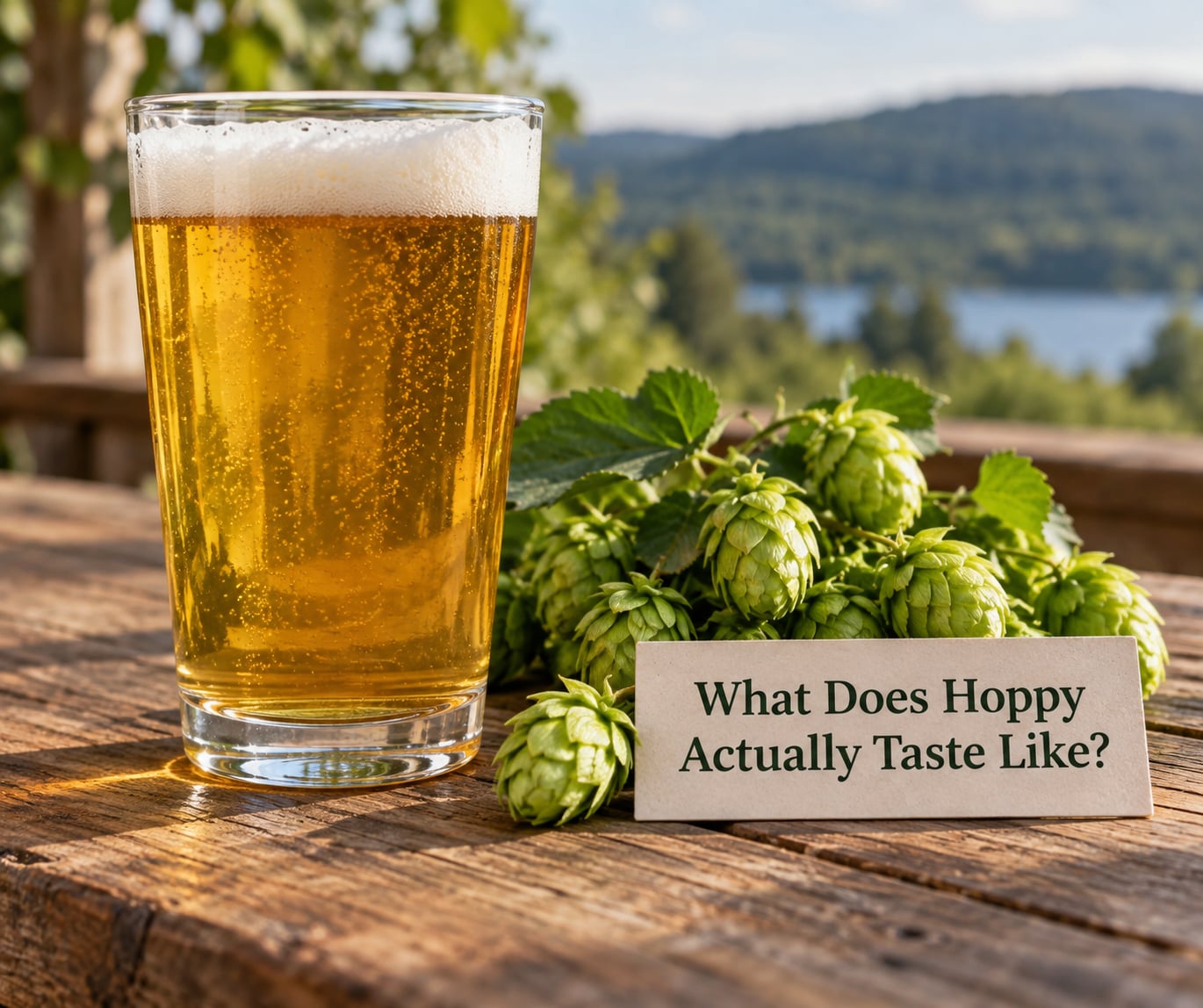
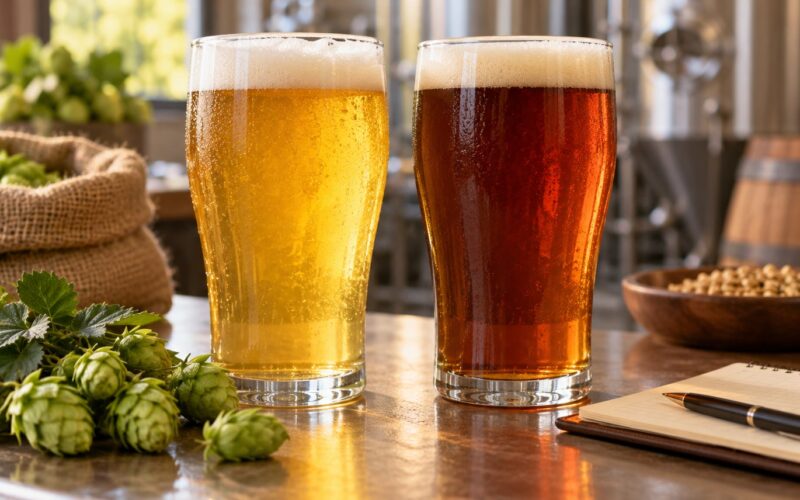
The first thing you notice is usually the smell, and it arrives before the beer touches your lips. Citrus is the most common read, especially grapefruit peel and lime, but tangerine, orange zest, and lemon peel are close behind. From there it can go tropical, with mango, pineapple, papaya, or passionfruit, or it can turn woody, with pine needles, sticky sap, or cedar.
Some hops lean floral or herbal instead, like jasmine, elderflower, rose, basil, or mint. A few go spicy, with pepper, clove, or coriander. None of these notes is required. A hoppy beer only has to make hops obvious.
What hops do not automatically mean is bitter. Plenty of beers are intensely aromatic and only moderately bitter, and a hazy, juicy beer can be far more hop-forward than a sharply bitter pilsner. Hoppy describes aroma and flavor intensity. Bitter describes one sensation on the palate. They often travel together, but they are not the same thing.
A useful anchor, borrowed from how drinkers describe it for years: some hops make beer taste like pine, others make it taste like grapefruit. Once you know which side you lean toward, shopping gets much easier.
What Is Hoppy Beer?
Hops do two separate jobs in a brew, and a hoppy beer is one where both are loud.
The first job is bitterness. Hop cones contain alpha acids, mostly inside the lupulin glands that look like tiny yellow sticky grains. During the boil those acids are isomerized into iso-alpha acids, which is a slower, gentler form of bitterness. Breweries measure the potential result in IBUs, or international bitterness units, on a scale running from about 0 to 100-plus. A beer labeled 60 IBU is not automatically punishing, because perceived bitterness depends on body, sweetness, carbonation, and finish as much as the number.
The second job is aroma and flavor. The essential oils inside those same lupulin glands are volatile, and many of them boil away if you leave them in hot wort too long. That is why brewers add hops late, at flameout, in a whirlpool, or after fermentation entirely in a process called dry hopping. Dry-hopped hops contribute aroma and flavor with very little added bitterness.
That split explains why two beers can both be honestly described as hoppy and taste nothing alike. One leans bitter and piney, the other leans juicy and tropical. Same word, different chemistry.
One more thing worth clearing up: hoppy is a tasting descriptor, not a regulated beer style. Nobody in the industry certifies a beer as hoppy, which is exactly why people expect one specific taste when the word can describe half a dozen very different experiences.
Common Hop Flavors and How They Taste
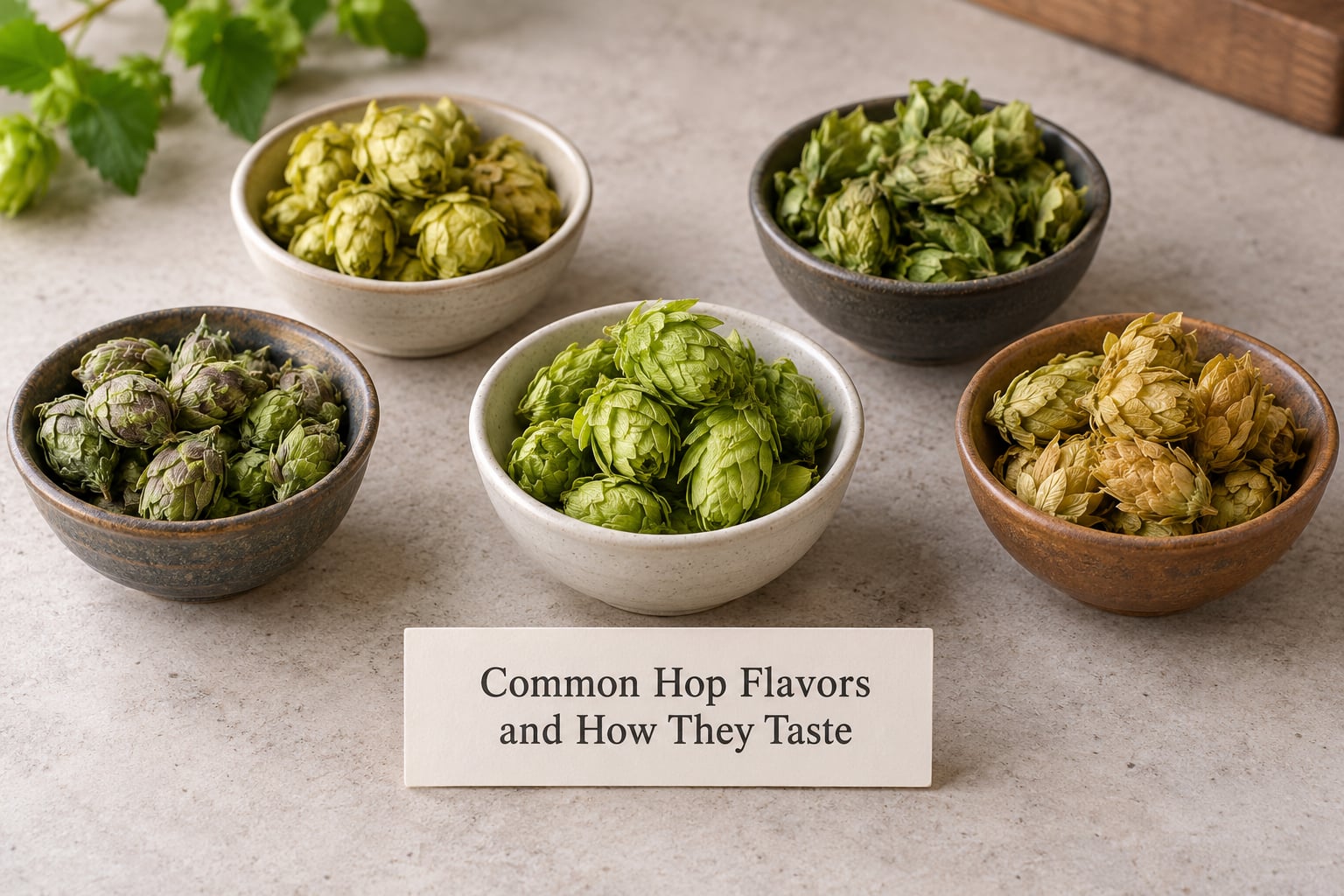
Here are the flavor families you will actually run into, with the concrete version of each so you have something to compare against.
How to Describe Hoppy Taste: Eight Families
- Citrus — grapefruit peel, lime, tangerine, orange zest, lemon peel. Sharp, clean, and usually the first note a beginner recognizes.
- Tropical fruit — mango, pineapple, papaya, passionfruit. Rounder and sweeter than citrus, often with a juicy or almost jam-like quality.
- Stone fruit — peach, apricot, nectarine. Soft and sweet, more like a ripe summer fruit than anything sharp.
- Floral — jasmine, elderflower, rose. Perfumed and light, closer to a tea than to a fruit.
- Herbal — basil, mint, sage, sometimes a faint cilantro note. This is the family people call green.
- Pine and resin — pine needles, sap, cedar, sticky. Often arrives late, in the finish, and leaves a tacky or oily mouthfeel.
- Spice — black pepper, clove, nutmeg, coriander. Warm and peppery, more common in European hops than in modern American ones.
- Grass and earth — fresh-cut grass, forest floor, skunk. The least flattering family, and the one most often mistaken for a fault.
Every beer lands somewhere on that list, but almost no beer hits all eight. If a tasting note says a beer is citrus and pine, trust that it means both are present in roughly that order.
Variety is the other half of the flavor picture. Different cultivars carry different oil profiles, so the same style brewed two miles apart can taste different.
| Hop variety | What it usually tastes like | Where you will meet it |
|---|---|---|
| Cascade | Floral with a grapefruit bite | Pale ales, standard IPAs |
| Centennial | Citrus, pine, a little resin | American pale ales, West Coast IPAs |
| Citra | Lime, tangerine, passionfruit | Hazy and New England IPAs |
| Mosaic | Mango, blueberry, tropical fruit | Hazy IPAs, session IPAs |
| Amarillo | Sweet tangerine and orange, low bitterness | Pale ales, session IPAs |
| Simcoe | Pine, earth, heavy resin | West Coast and double IPAs |
| Chinook | Resin, pine, wood, heavy spice | Double IPAs, stouts |
| Saaz | Earthy, spicy, herbal | Bohemian pilsners, Czech pale lagers |
| Fuggles | Woody, mild, gently floral | English ales, porters |
| Galaxy | Peach, passionfruit, tropical | Australian IPAs |
| Nelson Sauvin | White peach, lime, bright and spicy | Australian and New Zealand IPAs |
| Magnum | Clean bitterness, neutral aroma | Bittering hops across most styles |
Read that table as a starting map, not a guarantee. Harvest year, form, storage, and what the brewer did with the hops all change the result, so two beers listed under the same variety can still diverge.
Why Does Hoppy Beer Taste Different From One Beer to Another?
Variety is only one input. Six others do most of the work.
Origin and harvest. The same cultivar grown in a different region picks up different soil, daylight, and ripening conditions, which shifts the oil profile. Harvest year matters just as much: hops lose their most volatile oils within months of being picked, so old crop tastes flatter and more herby.
Timing during the boil. Hops added early spend their aroma as the water boils and contribute mostly bitterness. Hops added in the last few minutes of the boil, at flameout, or in a whirlpool keep their oils. Hops added after fermentation, dry hopping, contribute aroma with almost no bitterness.
Beer style. Style sets the framework. A pilsner is built for a firm but gentle bitterness with floral noble hops. A West Coast IPA is built around resinous, high-bitterness hops. A New England IPA trades bitterness for a soft, pillowy mouthfeel and a huge tropical aroma.
Malt and water. The malt underneath changes how the bitterness reads. A pale, crisp malt lets hop flavor sit on top of the palate. A dark roasted malt pushes bitter and resinous notes to the back of the throat, which is why hop-heavy imperial stouts can taste aggressive despite their sweetness.
Fermentation and condition. Yeast produces esters that can read as fruit, and those fruit notes sometimes get mistaken for hop fruit. High-alcohol beers also warm the palate, which amplifies aroma and makes everything feel bigger.
Serving temperature. A beer served too cold mutes aroma and tightens the mouthfeel. Served too warm, the alcohol dominates. Hop-forward ales sit best in the range brewers and tasters keep pointing at, roughly 45 to 55 degrees Fahrenheit, which is colder than a cellar red and warmer than a fridge lager.
How to Taste Hoppy Beer
You do not need a sensory wheel or a notebook. You need a clean glass, an hour, and a way of paying attention to one thing at a time.
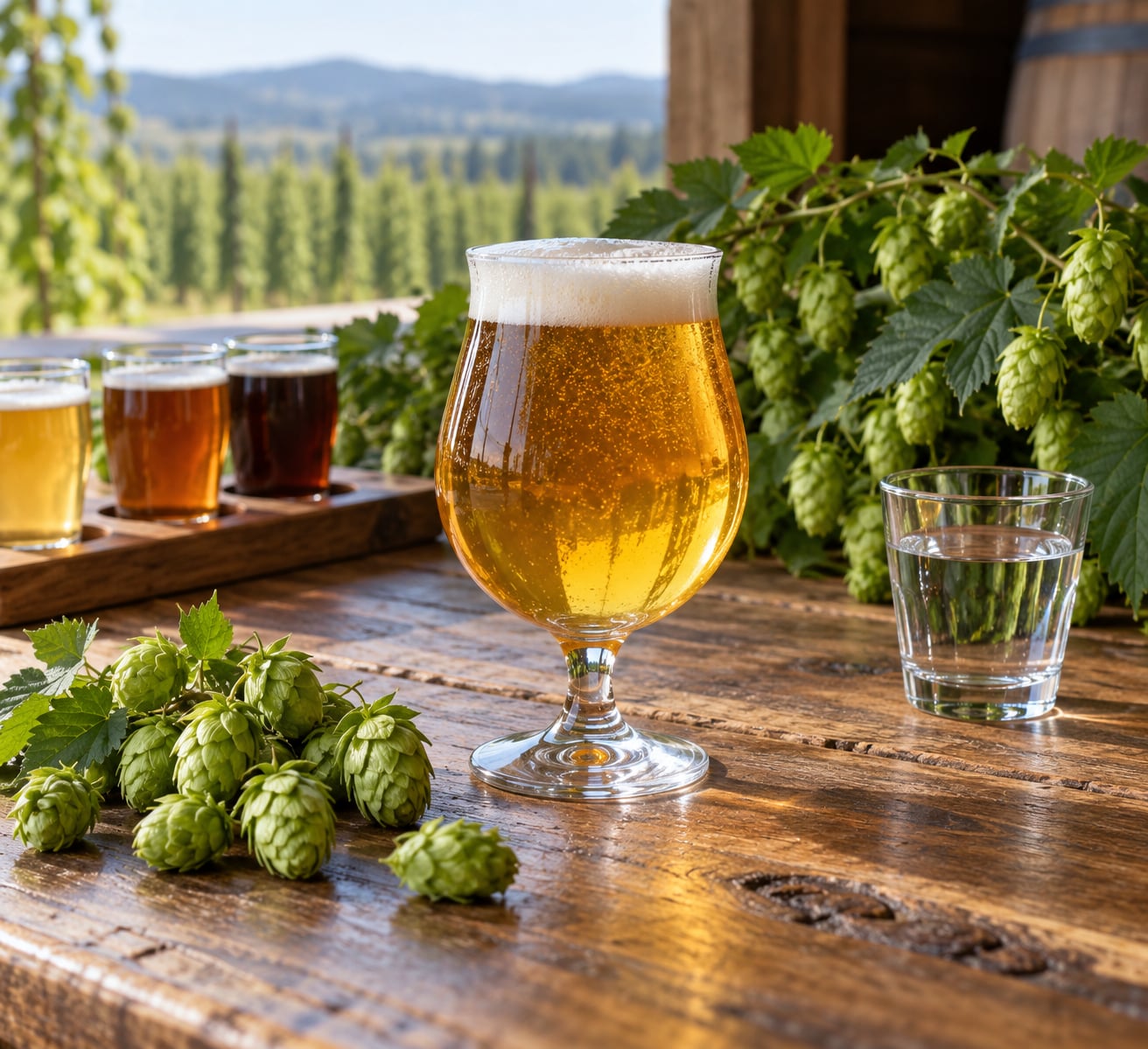
1. Pick the right glass. A tulip or snifter shape collects aroma at the narrowing top. A straight pint works fine, but you will catch less. Skip the metal cup, and skip pouring a delicate pilsner into a heavy stein that has been sitting warm under a tap.
2. Get the temperature right. Take it out of the fridge a few minutes early. You want cool, not cold.
3. Pour and look. Notice color and clarity. A hazy beer is usually unfiltered and packed with protein and yeast, which is why hazy IPAs feel so soft. Clarity tells you little about hops either way.
4. Smell before you sip. Sniff without drinking, then sniff again with your mouth slightly open, which routes more toward the nose. Try to name one specific thing rather than saying fruity. Peach, tangerine, pine sap, fresh-cut grass. Specific beats vague every time.
5. Sip across the palate. Take a small sip and move it around, letting it hit the front, middle, and back. Aromatic hops mostly express on the back of the palate, so a sip you swallow too fast will understate the hops.
6. Swallow and wait. The finish is where resin, dryness, and lingering bitterness show up. That last half-second often tells you more about a beer than the first sip.
Then do the one thing most people skip: taste the same beer again a few minutes later as it warms. Aroma opens up as it does, and a beer that seemed flat can turn citrusy within a few degrees.
If you are tasting several beers in one sitting, keep the session short and put something plain between pours. A saltine cracker or a sip of water resets the palate better than another beer.
Hoppy Beers to Try as a Beginner
Style tells you roughly what to expect, not exactly what you will get. Two American pale ales can differ more from each other than either does from a pilsner. Use these as a ladder and adjust as you go.
| Style | Typical IBU range | What to expect |
|---|---|---|
| Hefeweizen | 8 to 15 | Very light hop touch, banana and clove in the way |
| Pilsner | 20 to 40 | Floral and spicy noble hops, firm crisp bitterness |
| Session IPA | 20 to 40 | Real hop aroma at a drinkable strength, often the best first step |
| American pale ale | 30 to 50 | Citrus and floral, balanced malt underneath |
| American IPA | 40 to 70 | Clear hop flavor, noticeable bitterness, some resin |
| New England / hazy IPA | 25 to 45 | Huge tropical aroma, soft juicy mouthfeel, low bitterness |
| Belgian IPA | 30 to 50 | Hop aroma over peppery, fruity yeast character |
| Double or imperial IPA | 60 to 100+ | Dense hop flavor, drying finish, high alcohol |
| Imperial stout | 40 to 60 | Coffee, cocoa, and roasted bitterness, resinous hop edges |
If you have never enjoyed bitter beer, a session IPA or an American pale ale is the shortest distance to a hop flavor you will probably like. If you love sweet, fruit-forward flavors, start with a hazy IPA instead. Both are legitimate first steps.
Hoppy vs Bitter: What Is the Difference?
Hoppy describes intensity and character of hop aroma and flavor. Bitter describes a single taste sensation on the tongue, and hops are only one source of it, even though they are the dominant one in most ales.
That separation is where the big beginner misconception lives. People hear hoppy and assume aggressively bitter, then meet a juice-bright, low-bitterness hazy IPA and assume something is wrong with it. Nothing is wrong. That beer is loaded with hop aroma and only lightly bitter, which is a completely legitimate combination.
The reverse happens too. A brown ale or a stout can taste distinctly bitter without being hop-forward, because roasted malt contributes its own kind of bitter.
The table above gives you the reference frame. Read the IBU number as an estimate of intensity, not a verdict on drinkability. A 60 IBU beer with a sweet, bready malt backbone and a soft carbonation can feel gentler than a 30 IBU beer that finishes bone dry.
How Hop Freshness and Storage Change the Flavor
Fresh hops give you the vivid version of everything in the flavor list: bright citrus, clean floral, tropical fruit, crisp resin. They smell like cut grass and green pine when fresh off the pellet bag.
As hops age, the most volatile oils break down first. The aroma flattens, the bright fruit fades, and what is left skews toward papery, cardboard-like, dusty, or earthy. That is not a brewing fault. It is simply what an old hop smells like.
Old hop aroma also tends to merge with the malt, so a beer that was pure grapefruit on release can taste bready, vinous, or sherry-like months later. People who enjoy hoppy beer often notice this and describe the aged version as more complex, which is a fair read. It is a different beer, not a spoiled one.
Practical advice: keep beer cold and out of light, buy from a shop that rotates stock, and favor the freshest date you can find if aroma is the point. Do not expect one freshness window to cover every package, since nitrogen packaging and can format both affect how long a beer holds its hop character.
If a beer smells papery, dull, or like wet cardboard, that is old hops. If it smells sour, vinegary, or skunky like sunlight hit a bottle, that is lightstruck and not drinkable.
How to Tell If You Like Hoppy Beer
Most people are not answering a single question. You are answering several at once, and separating them is how you find your way in.
Aroma intensity. Do you want a beer that announces itself from across the table, or something more restrained? This is preference, not experience. Big aroma is not a mark of quality.
Bitterness. Can you handle a drying, papery finish, or do you want the bitterness rounded off by caramel malt? Both are valid positions.
Flavor family. Citrus and tropical drinkers usually gravitate toward Citra, Mosaic, Amarillo, and Centennial flavors. Pine and woody drinkers lean toward Simcoe, Chinook, and Magnum, which tend toward resin. You will know which camp you are in after two or three beers.
Body and dryness. Hazy IPAs are soft and pillowy. West Coast IPAs are drier and sharper. If you hate a foamy, oily texture, that is a body preference, and it is a common one.
Some people also perceive hop bitterness far more intensely than average. It is a heritable trait, and it is why the same beer can feel pleasantly bitter to one person and harsh and drying to another. Forum threads about high-IBU beer settling in the stomach are mostly about this, not about weak brewing. If that sounds like you, session IPAs, low-IBU pilsners, and hefeweizens will be far more comfortable territory than double IPAs.
Start balanced and move along the ladder. Drink a pale ale, then a session IPA, then an American IPA, then decide whether you want the West Coast or the hazy branch. That order works because each step changes one variable at a time instead of throwing everything at you at once.
Frequently Asked Questions
Is hoppy beer supposed to taste bitter?
Usually somewhat, but not always. Hops contribute bitterness through alpha acids converted during the boil, and that bitterness is measured in IBUs. Plenty of hop-forward beers are highly aromatic and only lightly bitter, such as most hazy New England IPAs. Judge aroma and bitterness separately, since high IBU does not automatically mean harsh.
Why can a beer smell very hoppy but taste only mildly bitter?
Because aroma and bitterness come from different hop compounds. Essential oils give the aroma and most of the flavor, and alpha acids give the bitterness. Hops added late in the boil, in a whirlpool, or after fermentation as dry hops deliver big aroma with very little bitterness, which is exactly how a juicy, low-bitterness IPA is built.
What do citrus and pine tasting notes mean in hoppy beer?
They are aroma and flavor families, not literal flavors added to the beer. Citrus covers grapefruit peel, lime, tangerine, and orange zest. Pine covers pine needles, sap, and cedar, usually with a resinous, sticky mouthfeel and a drying finish. Varieties like Citra and Amarillo lean citrus, while Simcoe and Chinook lean pine and resin.
Is hoppy beer better than non-hoppy beer?
Neither is better. Hoppy describes hop aroma and flavor intensity, and plenty of excellent beer sits at the other end, including pilsners, hefeweizens, and Belgian ales. It is a matter of preference, and the same beer that tastes electric to one person reads as harsh and drying to another. Try a few styles and keep the ones you finish.
How do I know whether I like hops?
Taste across the flavor families rather than styles. Try a citrus-forward American pale ale, a tropical hazy IPA, and a pine-heavy West Coast IPA back to back, then notice which family you reach for first. If bitter or drying finishes bother you, stay with lighter beers. Aroma fans often tolerate more bitterness than they expect.
Does hoppy beer taste better cold or warm?
Cooler than you think. Hop-forward ales show their aroma best around 45 to 55 degrees Fahrenheit, cooler than a cellar red but warmer than a fridge lager. Straight from a very cold pour, the aroma is muted and the mouthfeel feels tight. Let the glass warm in your hand for a few minutes and taste it again.
Conclusion
Hoppy means hops are the loudest thing in the glass, and what that actually tastes like depends on the variety: citrus, tropical fruit, stone fruit, floral, herbal, pine and resin, spice, or grass. Smell first, name one specific note rather than saying fruity, then judge the bitterness separately from the aroma.
If you are starting out, buy an American pale ale or a session IPA, serve it around 50 degrees Fahrenheit in a tulip glass, and give it three sips before deciding. Move toward more bitterness or more tropical aroma from there, one variable at a time.