To stay hydrated while drinking beer, match every beer with at least one full glass of water, eat something before you start and between drinks, and pace yourself so your body never gets behind. This guide takes about ten minutes to read and needs nothing more than a water bottle and a bit of attention. Last checked for 2026.
The honest version is that no beer hydrates you the way water does, not even the lowest-alcohol one. But plenty of people drink beer for a full evening and feel fine the next morning, and the difference is almost never the beer. It is whether they gave their body water and food while the alcohol was going in.
I have watched this play out at brewery taprooms and long nights at home, and the people who feel best the next day are rarely the ones who drank the least. They are the ones who never let themselves get thirsty in the first place.
Table of Contents
- What You Need
- Step-by-Step: How to Stay Hydrated While Drinking Beer
- 1. Start With Water Before Your First Beer
- 2. Decide on a Pacing Plan
- 3. Alternate Beer With Water or Another Alcohol-Free Drink
- 4. Eat Before and During the Drinking Session
- 5. Use Electrolytes Only When They Fit the Situation
- 6. Check Your Condition Instead of Relying on Urine Color Alone
- 7. Know When to Stop and Ask for Help
- Common Mistakes
- Drinking water only at the end of the night
- Treating coffee or an energy drink as a fix
- Using salty snacks as the hydration strategy
- Using hydration as permission
- Ignoring the venue logistics
- Ignoring heat and altitude
- Assuming lower alcohol means no effect
- Frequently Asked Questions
- Does alternating beer with water prevent dehydration?
- Are electrolyte drinks necessary for staying hydrated while drinking beer?
- Is water better than beer for rehydrating after drinking?
- What are the signs that I may be dehydrated while drinking?
- Can I take an electrolyte supplement after drinking alcohol?
- How much water should I drink between beers?
- Bottom Line
What You Need
You do not need a shopping list for this. You need five things, and four of them are probably already in your kitchen.
- Water. A bottle you can carry, or a glass you can refill. Cold is nicer but irrelevant.
- One alcohol-free drink for alternating: sparkling water, club soda, a soft drink, or a non-alcoholic beer.
- A balanced snack with protein, some carbohydrate and a little fat. That is the food half of the plan.
- An electrolyte source, only if your situation calls for it. Most ordinary evenings do not need one.
- Some way to keep track, even if it is just the number of drinks in your phone notes and the time on the wall.
If you are heading out, add one more thing: a plan for what you are doing between beers. A snack, a walk around the block, a conversation with a friend. Boredom is the most common reason people drink faster than they intended to.
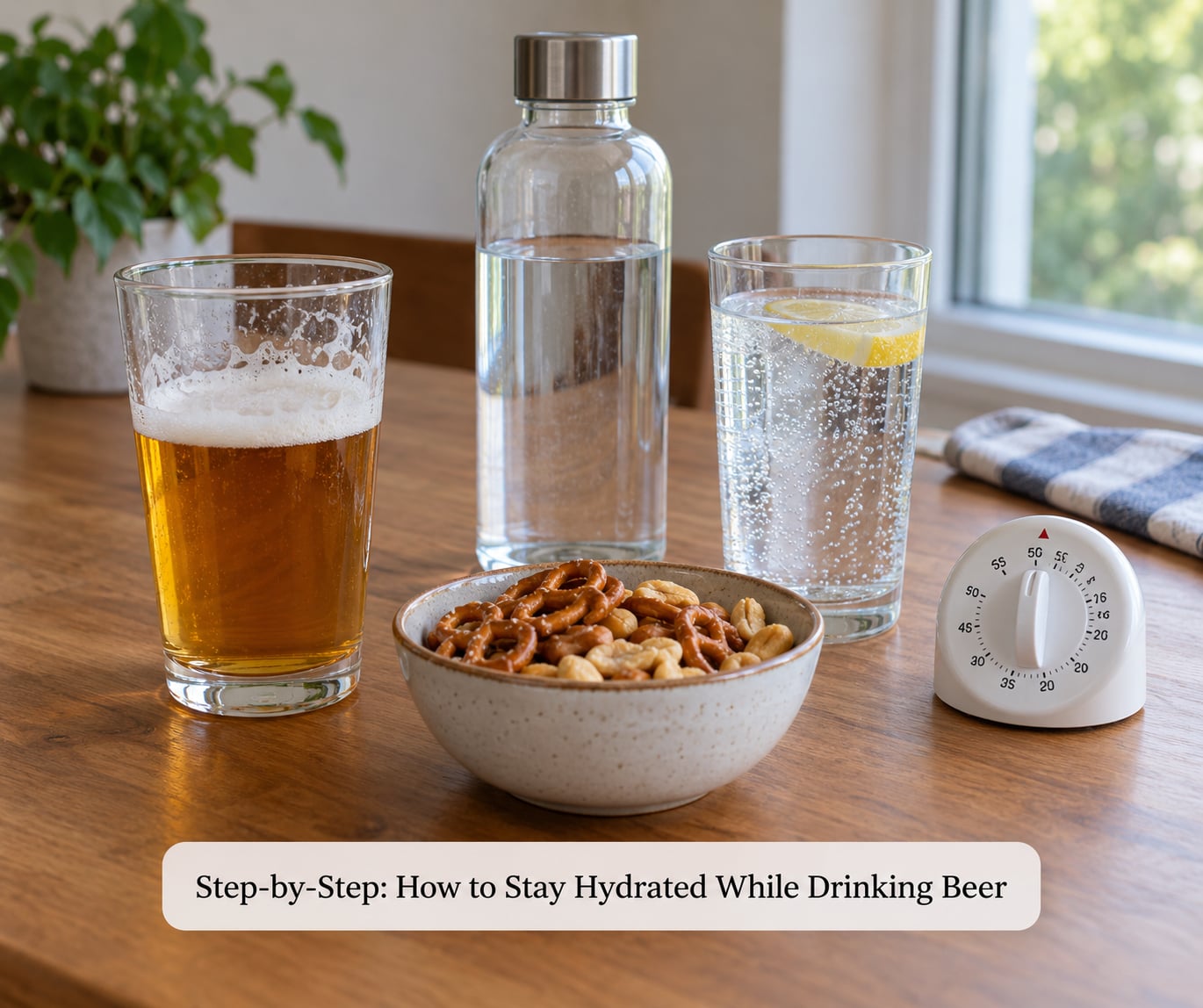
Step-by-Step: How to Stay Hydrated While Drinking Beer
1. Start With Water Before Your First Beer
Arrive hydrated. Before your first beer, drink a glass or two of water, and take ten minutes doing it rather than ordering on the spot.
People often ask for an exact number. A reasonable starting point for a healthy adult is roughly 16 to 20 ounces of water over the hour or so before you start, spread out rather than gulped. That is a starting point, not a rule that applies to everyone. If it is 95 degrees outside, if you spent the afternoon hiking, if you are sick, or if the event runs long, your starting need is larger.
Starting hydrated also does something practical: it slows how fast you feel the effects of alcohol, which usually means you slow down without deciding to. You drink less because you notice sooner.
2. Decide on a Pacing Plan
Pick a pace before the first round, not during the fourth. Most people who wake up regretting a night out did nothing unusual. They just kept the same pace from 6 pm to 1 am.
Set a number of drinks in advance and treat it as the plan rather than the ambition. Then space them out. One beer roughly every hour or hour and a half, taken slowly, gives your body time to process and lets you notice how you feel.
The mistake to avoid is saving every beer for the end of the night. Five drinks in one hour and nothing for three hours afterward is a very different experience from one drink every hour or so, even at the same total.
3. Alternate Beer With Water or Another Alcohol-Free Drink
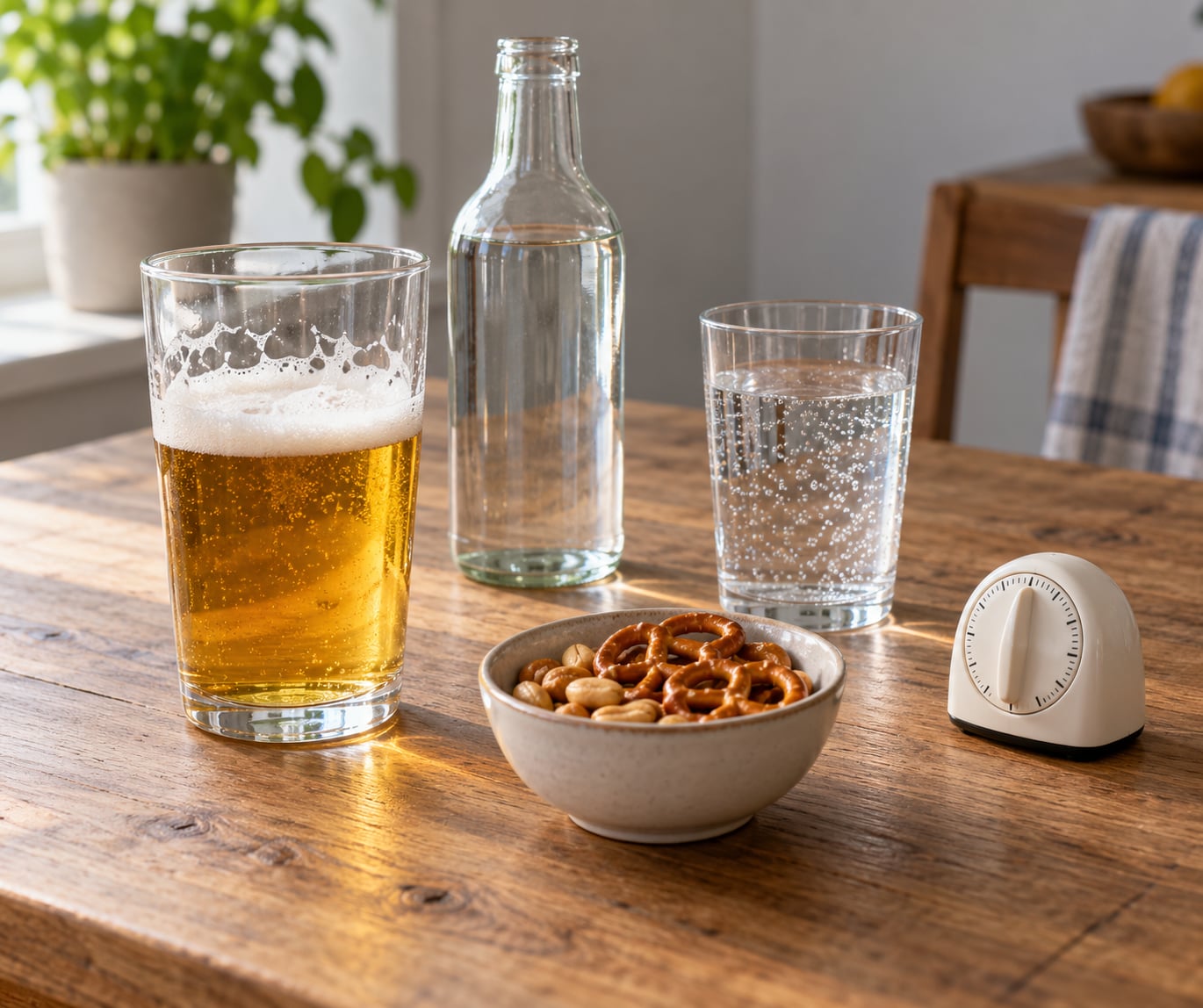
This is the simple part, and it is the one most people skip. Match every beer with one full 8-ounce glass of water or one alcohol-free drink.
For a typical 12-ounce can or a standard pint, one glass of water is a reasonable match. For a big 16-ounce can or a large craft pour, or for anything at 8 percent ABV or above, two glasses is a better match. Strength matters here more than most people expect, because a 4 percent session lager and a 9 percent imperial IPA are not the same drink even though they arrive in a similar glass.
Sparkling water, club soda and non-alcoholic beer all work for this. Club soda and tonic water have a small amount of sodium, which helps if you are sweating, though that is a bonus rather than the point. They do not make you safer to drive and they do not sober anyone up.
4. Eat Before and During the Drinking Session
Food slows how quickly alcohol is absorbed, which means a smaller spike, a gentler night, and usually fewer drinks. It also gives your body something to work with the morning after.
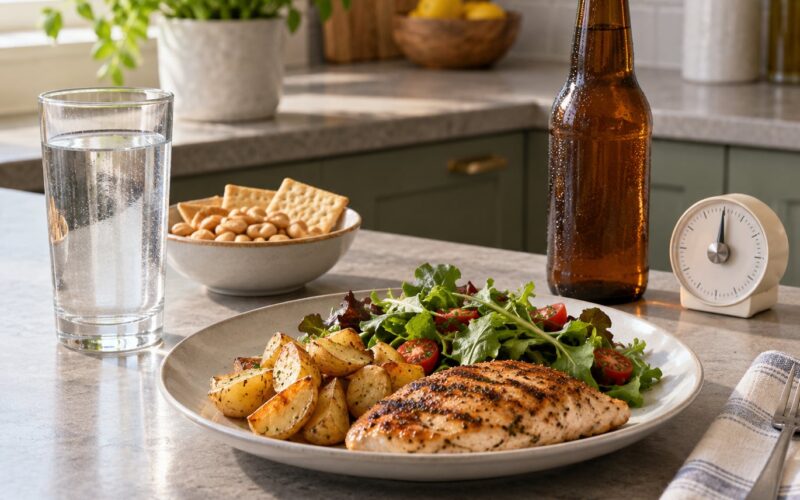
Aim for protein, carbohydrate and a bit of fat. Grilled chicken and fries, a burger, sushi, a sandwich, eggs with toast, or a burrito before a brewery visit. If you are going out for one, eat first. Arriving at a bar hungry is the single most reliable way to end up drinking faster than you planned.
Then keep eating lightly during. A shared appetizer order is plenty. Food does not cancel alcohol, and eating a full meal at 11 pm does not undo six drinks by 9 pm, but steady small amounts of food are better than nothing.
5. Use Electrolytes Only When They Fit the Situation
Most nights of a few beers do not require an electrolyte product. Alcohol does make you lose sodium, potassium and some magnesium, and food plus water usually covers that.
Where it becomes more relevant is a genuinely hot day, heavy sweating, a long outdoor festival, high altitude, or a stretch of drinking over many hours with almost no food. Then a sports drink, an oral rehydration solution, or an electrolyte tablet can be a reasonable choice.
Two cautions. Electrolyte powders are often very high in sodium, and more is not better, especially if you have high blood pressure or kidney disease. And some commercial hydration products are heavily sweetened or caffeinated, which is a poor combination after alcohol. If you take any prescription medication, or you have a heart or kidney condition, ask a doctor or pharmacist before adding a supplement. In a thread on r/AFIB about hydrating while having a few drinks, most commenters were arguing about medication interactions rather than the drinks themselves. That is the right order of priority.
6. Check Your Condition Instead of Relying on Urine Color Alone
Thirst arrives late. By the time you are thirsty, you are already behind, which is why knowing how to stay hydrated while drinking beer starts with noticing the early signals instead of waiting for them. Common early signals include thirst, dry mouth, a headache that starts behind the eyes, and needing to get up to use the bathroom more often than usual.
Moderate signs are more obvious: dizziness when standing, nausea, fatigue, muscle cramps, and pale or dark urine. Dark amber urine in the morning after drinking is normal and expected.
Urine color is a rough check, not a diagnosis. The old folk rule from r/HydroHomies is roughly right: slightly yellow is fine, completely clear often means you are drinking more water than you need, and dark amber is a signal to drink something. But urine color is affected by vitamins, food and medication, so treat it as one data point alongside how you feel rather than as the whole answer.
7. Know When to Stop and Ask for Help
Stop drinking and get medical help if you notice confusion, fainting, repeated vomiting, severe weakness, a racing heartbeat, seizures, or if you cannot keep fluids down at all. These are signs of alcohol poisoning, and they are an emergency. Someone who is hard to wake needs help now, not in the morning.
Seizures, irregular breathing, and a body temperature that feels very cold or very hot all belong in that same category. Do not leave the person alone, do not let them sleep it off, and call emergency services.
If you have a condition that affects fluid balance, are on a diuretic, or have been told to limit fluids, ordinary hydration rules may not apply to you. Ask your clinician what your plan should be before the next brewery trip, not after a bad night.
Common Mistakes
Drinking water only at the end of the night
The mistake: downing a big bottle before bed and calling it done.
The fix: alternate throughout. Water at the end helps with the morning, but the night itself is already lost by then.
Treating coffee or an energy drink as a fix
The mistake: an espresso or an energy drink to shake off a bad feeling.
The fix: caffeine adds to dehydration and to the jitters, and pre-drinking coffee before a night out works against everything above. Water, or nothing.
Using salty snacks as the hydration strategy
The mistake: a tall order of pretzels, chips and wings as the answer to dehydration.
The fix: salt makes you thirsty in the moment, which people often read as a good sign. A moderate amount alongside food is fine. A diet built around salty snacks on a drinking night is not.
Using hydration as permission
The mistake: drinking six beers instead of four because four were easy with water alongside them.
The fix: decide how much you are having before you start. The one-for-one rule exists to make a chosen amount easier on your body, not to extend the evening. That worry comes up constantly in drinking forums and it deserves a straight answer.
Ignoring the venue logistics
The mistake: water at one bar, nothing at the next four hours, and a fast ride at the end.
The fix: carry something with you, drink some water before you leave each venue rather than after you arrive, and set a limit per venue instead of a limit for the whole night. Per-venue limits are easier to hold because they restart.
Ignoring heat and altitude
The mistake: the same number of beers in July in direct sun as in February at home.
The fix: add water before you arrive, more often between drinks, and consider an electrolyte drink. If you have a heart condition, be careful with heat and alcohol together, and check with your doctor.
Assuming lower alcohol means no effect
The mistake: switching to a 4 percent beer and drinking the same number.
The fix: lower alcohol is better per drink, not free. Several people on r/LifeProTips said their worst hangovers came from low-ABV beer, usually because volume plus caffeine-free bulk drinking still loaded them up. People on r/beer described the opposite fix: electrolytes first, plenty of water, then greasy carbohydrate-heavy food. Both are describing the same underlying fix, which is fluids and food, not the beer.
Frequently Asked Questions
Does alternating beer with water prevent dehydration?
It reduces it, but it does not prevent it. Alternating means the water you drink offsets some of the fluid and electrolyte loss alcohol causes, so you end the night less behind than you would have. Alcohol still suppresses antidiuretic hormone and still raises your urine output, so the goal is staying ahead of the loss rather than escaping it.
Are electrolyte drinks necessary for staying hydrated while drinking beer?
For a normal evening of a few beers with food, no. Water plus a balanced meal covers sodium and potassium needs fine. Electrolytes earn their place in hot weather, heavy sweating, long outdoor events, high altitude, or extended drinking with little food. Check the label, since many powders are extremely high in sodium and some are heavily caffeinated.
Is water better than beer for rehydrating after drinking?
Yes. Beer is mostly water, but the alcohol in it triggers more urine output and is not a recovery drink. A non-alcoholic beer is a close second and a fine social alternative. For rehydration after drinking, water, an oral rehydration solution, broth or a normal meal with fluids all do more for you than any alcoholic drink.
What are the signs that I may be dehydrated while drinking?
Early signs are thirst, dry mouth, a headache behind the eyes, and more frequent urination. Moderate signs include dizziness on standing, nausea, fatigue, cramps, and pale or dark urine. None of these is a diagnosis on its own, and urine color is affected by vitamins, food and medication, so check them together rather than trusting any single one.
Can I take an electrolyte supplement after drinking alcohol?
Usually yes, in normal food-level amounts, but check with a doctor or pharmacist first if you take prescription medications or have a heart, blood pressure or kidney condition. Electrolyte powders can be very high in sodium, and more is not better. Read the serving size and serving frequency on the label rather than doubling up because you feel tired.
How much water should I drink between beers?
One 8-ounce glass per standard can or pint is a solid baseline, and two glasses makes more sense for a large pour or anything at 8 percent ABV or above. Start with 16 to 20 ounces of water in the hour before your first beer, and adjust upward in heat or after exercise. Drink in small sips across the hour rather than all at once.
Bottom Line
The first thing to do is drink a glass of water now, before you go anywhere. That is how to stay hydrated while drinking beer in one sentence: start ahead, eat, pace, alternate, and stop if something feels wrong.
None of this makes beer healthier or makes a bigger night a good idea. It is simply the difference between enjoying the beers you planned for and apologizing the next morning. And if confusion, fainting or repeated vomiting show up at any point, stop and call for help straight away.
This is general information, not medical advice. If you are on medication or managing a heart, blood pressure or kidney condition, ask your doctor or pharmacist what your own hydration plan should look like.