Clean beer glasses by hand in hot water with an odorless, non-fat dish soap, scrub them with a brush kept for glassware only, then double rinse and air dry upside down. Skip the dishwasher for real glass: its heat and detergent etch the surface, leave a film that traps CO2, and it is the single most common reason a good pour collapses in seconds. Five minutes per glass, done before the beer has dried, is all it takes.
Order matters more than most people expect. Beer glasses should be the first thing you wash, before greasy plates and milk glasses, because one pass of oily water through your sink is enough to give the next glass an invisible grease film. A homebrewer on r/Homebrewing described the classic version of this: glasses washed after the greasy plates produced foam that fell within minutes, every time, and no amount of pour technique ever fixed it.
Table of Contents
- What You Need
- Step-by-Step
- How to clean beer glasses step by step
- How to remove beer residue and stuck-on labels
- How to sanitize beer glasses after washing
- How to dry beer glasses without water spots
- The professional beer-clean standard
- Common Mistakes
- Frequently Asked Questions
- Can I use a dishwasher to clean beer glasses?
- What is the best way to remove beer smells from glasses?
- How do I prevent water spots on beer glasses?
- Do beer glasses need to be sanitized after washing?
- How often should beer glasses be washed?
- Can I use bleach to sanitize beer glasses?
What You Need
The kit is small and most of it is already in your sink. What matters is which bottle you reach for and which sponge you pick up.
- Mild, odorless, non-fat dish soap. Unscented liquid dish soap is genuinely enough. Specialty beer-glass cleaners are a marketing line, not a chemistry requirement.
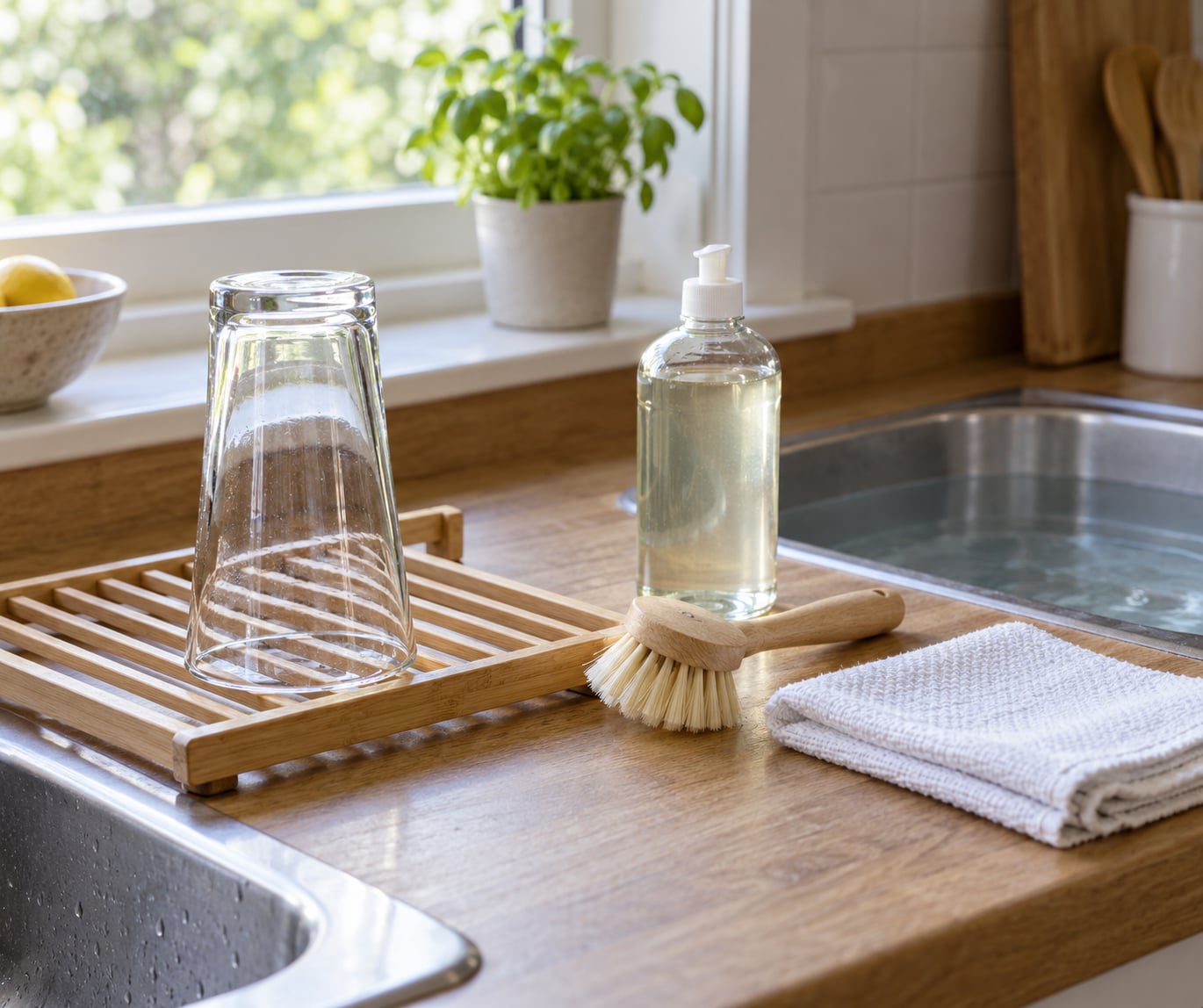
- A dedicated soft brush or non-abrasive pad. A bottle brush with fine bristles, or the soft yellow side of a sponge that has never touched a frying pan.
- Two bowls or basins. One holds wash water, one holds rinse water. You cannot double rinse from a single basin of dirty water.
- Food-safe sanitiser, if you share glassware, run a small venue, or wash up after other people. Follow the dilution and contact time printed on the label, and keep the bottle on hand.
- A drying rack, glass mat or clean pegs. Something that holds a glass inverted with air moving through the bowl.
- A lint-free glass towel, for the outside only. Useful for fingerprints on the base. It never touches the inside.
Two things to keep out of the sink area entirely: scouring powders and green abrasive pads, which scratch the glass and leave micro-roughness that is worse than the dirt you removed, and household cleaners such as bleach, ammonia or oven sprays. Those are not food-contact products, and the residue they leave survives a rinse.
Step-by-Step
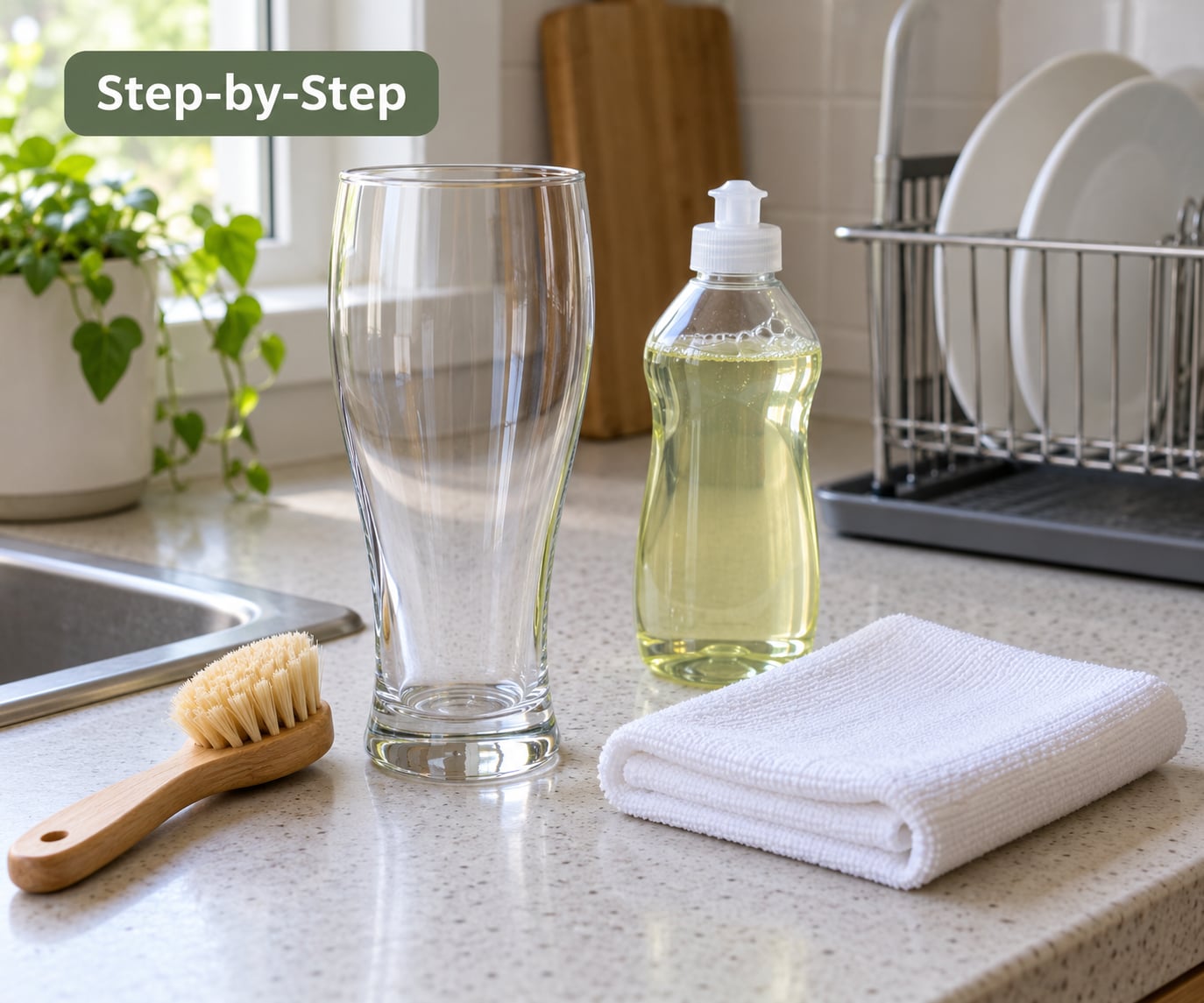
Work through the five stages below while the glass is still wet. Beer that has dried on the glass needs chemical soaking rather than a quick scrub, which is where hard water spots and hop rings start.
| Stage | Water | Tool | Time | Common mistake |
|---|---|---|---|---|
| Rinse | Lukewarm, straight after pouring | None, just your hand | 30 seconds | Letting the beer dry overnight |
| Wash | Hot tap water, roughly 60-70°C | Odorless non-fat soap | 1 minute | Washing after the greasy plates |
| Scrub | Same basin | Dedicated brush or soft pad | 30-60 seconds | Skipping the base and the rim |
| Rinse twice | Cold, clean, bottom-up | None | 20 seconds each | Rinsing once, in the wash water |
| Dry | Air, inverted | Drying rack or glass mat | Until completely dry | Towelling the inside of the bowl |
How to clean beer glasses step by step
1. Rinse immediately. Tip the glass under lukewarm water and swirl out the beer while the foam is still there. This single habit prevents most of the work in stages two and three.
2. Wash first, in hot water. Fill a basin with hot tap water and a small squeeze of odorless, non-fat soap. Submerge the glass and work the liquid around the bowl with your hand. Hot tap water at around 60-70°C loosens dried sugars and hop resins quickly without the thermal shock you risk by pouring boiling water into a cold glass.
3. Scrub with a dedicated tool. Thirty seconds with a fine-bristled brush, concentrating on two places people skip: the inside of the rim, where fingerprint oils and foam cling, and the thick base of the bowl, where sediment settles into the punt. The base is the most common place for a head to fail.
4. Double rinse, cold and bottom-up. Fill the glass completely with cold clean water, look through the base for cloudiness, then tip it out and rinse the outside as well. Do it twice, in fresh water. Rinsing bottom-up washes the heavy residue out through the narrow neck instead of redistributing it.
5. Air dry upside down. Set the glass inverted on a raised rack, a glass mat or clean pegs so air moves through the whole bowl. Skip the tea towel inside the glass: it deposits lint and reintroduces the oil film you just removed.
A frequent home setup adds a soak: a teaspoon of PBW (powdered brewery wash) in hot water, fifteen minutes, then a brush pass and a double rinse. Homebrewers use it heavily, and it works, but for daily glasses at home plain dish soap and a brush do the same job in less time.
How to remove beer residue and stuck-on labels
Dried beer, mineral deposits and adhesive labels each need a different approach, and mixing them up is how glasses get scratched.
- Dried beer and hop rings: fill the glass with hot water and a drop of soap and leave it for ten to fifteen minutes. The sugars and resins re-dissolve; then a brush pass lifts what remains. For stubborn hop build-up on a weizen or IPA glass, an overnight soak in warm PBW solution works well.
- Water spots and hard water film: these are mineral deposits, not dirt. White vinegar diluted roughly one part vinegar to three parts water, left for twenty minutes or so, dissolves them. Rinse thoroughly afterwards, because the last thing you want is a sour glass.
- Stuck labels and tape: warm water and a cloth first. If the adhesive stays, a small dab of alcohol on a cloth lifts it from the rim area. Keep alcohol away painted or printed designs and never soak a decorated glass for hours, which is covered below.
- Never mix tools. Never take a glass that has been through the sink with greasy pan water in it straight to a brush you will reuse on clean glassware.
How to sanitize beer glasses after washing
Washing removes soil; sanitising reduces the microbes left on a clean surface. For your own glasses at home that you rinse and dry before putting away, a thorough wash is usually the whole job. It becomes a real step when glassware is shared: a taproom, a home bar serving guests, a festival volunteer station, or a restaurant.
- Use a product labelled for food-contact surfaces and dilute it exactly as the label states. Concentrations and contact times differ between products and there is no sensible generic number.
- Give it the full contact time. Wiping a glass and dropping it straight into a rack does almost nothing. Immerse it, start the clock, and let it run.
- Rinse if the label says to. Some sanitising solutions are no-rinse food-contact concentrates, others are rinse-required dilutions. Follow the bottle, not your memory of it.
- Never combine chemicals. Bleach plus vinegar, or any sanitiser plus an acidic descaler, produces gas and leaves residue on the glass. Sanitise and descale in separate washes with a full rinse between them.
In a commercial setting the workflow is a three-compartment sink: wash, plain-water rinse, then sanitise, with an air gap between the drain and the compartments so nothing wicked back up. Bars with a glasswasher push wash water through a glass rinser and then into a chemical sanitiser before drying. Bar staff on r/bartenders treat mineral staining as a daily operational headache precisely because glasses there get far more use than home glassware.
How to dry beer glasses without water spots
Drying is the stage people rush, and it is where lint, fingerprints and water spots come from.
- Air drying is the default. Inverted on a rack, a glass mat, or clean pegs, with space between each one so air circulates. In a humid room, expect a few hours; in a conditioned kitchen, less.
- Use hot water for the final rinse if your water is hard. Hot water holds less dissolved mineral, so less of it deposits as the glass dries. Cold rinses are better for rinsing residue; hot is better for spot-free drying. A glass that has been through the dishwasher proves this point every time.
- Distilled water for the last rinse eliminates spots almost entirely, and for a glass you keep ice-cold in a fridge or a kegerator it doubles as storage.
- Towel only the outside. If you must, use a clean lint-free glass cloth on the body and the foot. The inside gets air, nothing else.
- Store with air moving, not glass-on-glass. Keep glasses in an upright or inverted rack, away from the stove, the bin bay and anywhere smoke or strong cooking smells can reach them. Glass absorbs nearby odours faster than people expect, and a glass that smells faintly of last night’s dinner will put that in your beer.
The professional beer-clean standard
Certified beer servers work to a stricter protocol than most home routines, and it is worth knowing because it explains several of the habits above.
A Pilsen-trained brewer described the Czech method on HomebrewTalk as four stages: manual scrubbing to remove every trace of oil residue, never a dishwasher; rinse, drain, then rinse again; storage in distilled water at serving temperature for at least thirty minutes; and a sparkler rinse immediately before filling, which breaks the surface tension so the beer runs clean instead of tearing itself apart on the way down. A glass rinser, the simple two-nozzle device that shoots sanitised water up through the glass and blows the excess out of the top, does the same job in a pub. The Cicerone Certification Program teaches the same discipline to anyone who wants it.
The quality gate is visible and takes one second: the foam should be fine, tight and even, and any bubble clinging to the glass below the foam line means the glass was not clean. Homebrewers on the same thread make the practical point that a properly cleaned glass gets you most of the way to what an expensive side-lever faucet delivers. Net, you do not need an expensive tap, just a clean glass.
Common Mistakes
Almost every collapsed head traces back to one of these. Each has a simple correction.
- Washing beer glasses after greasy dishes. The most-reported cause of a collapsing head, and it fixes itself the moment glasses go into the sink first.
- Using a sponge that has handled a frying pan. Oil loads onto the sponge and redeposits on the glass. Keep one brush, or one sponge, permanently assigned to glassware.
- Scouring powder or a green abrasive pad. It cuts micro-scratches into the glass that trap CO2 and dull the shine. Non-abrasive only.
- Boiling water into a cold glass. The temperature shock can crack thin pint glass outright. Hot tap water cleans just as well.
- Rinsing once. A single rinse leaves detergent film that tastes soapy and holds bubbles. Rinse twice, in fresh cold water.
- Skipping sanitising on shared glassware. Home glassware for one household does not need it. Glassware served to strangers does.
- Towel-drying the inside of the bowl. It puts lint and skin oils straight back onto a clean surface. Air dry instead.
- Long vinegar soaks on printed or decorated glass. One homebrewer soaked thrifted wheat beer glasses in vinegar overnight; they looked perfect, then snapped in half inside the dishwasher drawer at the first nudge. If you use vinegar, use a dilute solution, a short contact time and a full rinse, and hand wash the glass afterwards.
- Storing glasses in a warm cupboard near the kitchen. Odour sticks to glass quickly. A cool, closed shelf away from smoke and spices keeps them neutral.
- Confusing etching with dirt. Cloudiness that wipes off is mineral film. Cloudiness that does not is etching from the dishwasher, and it is permanent.
One last check is worth doing in front of guests. Fill the washed glass with water and pour it out; if the water sheets evenly, the glass is clean, and if it breaks into patches and trails, something is still on the surface.
Frequently Asked Questions
Can I use a dishwasher to clean beer glasses?
Not for real glass if you care about the head. Dishwasher detergent is alkaline and leaves a film that traps carbon dioxide, the heat etches the surface over time, and decorated or thick glasses can crack in the rack. Hand washing in hot water with odorless, non-fat soap and a dedicated brush takes minutes and keeps the glass usable for years. Plastic pints are the exception.
What is the best way to remove beer smells from glasses?
Baking soda is the usual home answer: a tablespoon in warm water, an hour of soaking, then a brush pass and a cold double rinse. Vinegar also neutralises lingering sour and hop odours, used dilute and rinsed well. Persistent smells are usually storage, not cleaning, so store glasses away from the stove and smoke. Drying with a scented towel is a common cause people never suspect.
How do I prevent water spots on beer glasses?
Water spots are dissolved minerals left behind as water evaporates, so the fix is temperature and filtration. Finish with a rinse in hot water, which holds less mineral than cold, and use distilled water for the final pass if your taps are hard. Air dry inverted on a rack with space between glasses rather than stacking them, and avoid the dishwasher entirely. Wiping with a tea towel spreads the deposits instead of removing them.
Do beer glasses need to be sanitized after washing?
For a single household, a hot soapy wash, scrub and double rinse is enough. Sanitising earns its place when glassware is shared, handled by staff or volunteers, or served to the public. Use a food-contact sanitiser at the dilution and contact time on its label, rinse only if the label requires it, and never mix it with vinegar or acidic descalers. Keeping the chemicals separate protects both the glass and whoever is holding it.
How often should beer glasses be washed?
After every use, the same day. Beer left sitting overnight dries into the glass as a gummy layer of sugars and hop resins, and dried residue needs soaking rather than scrubbing, which is where scratches and missed patches come from. Beer glasses also deserve a full wash whenever the glassware is used for something other than beer, since oils from food or a scented soap leave a film that kills the head.
Can I use bleach to sanitize beer glasses?
A bleach solution labelled for food-contact sanitising works, at the dilution and contact time on the label, followed by a rinse if the label calls for one. Household splash bleach and scented bleach products are not the same thing and can leave odour and residue in the glass. Never mix bleach with vinegar or with an acidic descaler, and rinse between a bleach wash and a vinegar treatment.
Start with two changes and leave the rest alone. Wash the beer glasses before anything greasy, and give them a second cold rinse before they go on the rack. Do the sheeting test on one glass to see whether your current method actually works, and once it sheets clean, the head will take care of itself.