The short answer: plan on two beers for every drinking guest in the first hour, then one beer per person for each hour after that. For a three-hour party that works out to four beers per drinker, and for most home gatherings you add a 10 to 20 percent buffer so nobody watches the last case get emptied out early.
That single rate answers most of the questions I get asked about how much beer per person, but it is a starting point, not a law. Duration matters more than any other variable, and a July cookout in direct sun drinks a lot differently from a December birthday dinner.
Table of Contents
- How Much Beer Per Person for a Party at a Glance
- What Is the Standard Amount of Beer Per Person?
- How to Calculate Beer for Your Guest List
- 1. Count drinkers, not guests
- 2. Multiply by the party length rate
- 3. Add your buffer
- 4. Round up to whatever you can actually buy and pour
- Worked example: 25 guests over three hours
- Worked example: 100 guests over four hours
- How Much Beer to Plan by Party Length
- How Much Beer for Light, Moderate, and Heavy Drinkers
- Does Beer Strength Change the Amount You Need?
- Bottles, Cans, Draft Beer, and Growlers
- What Else Should You Plan Besides Beer?
- Frequently Asked Questions
- How many beers for a 20-person party?
- How many beers do I need for 100 guests?
- How many bottles do I need for 100 guests?
- What counts as a standard drink?
- How much should I over-buy?
- Should I buy cases or a keg?
- Conclusion
How Much Beer Per Person for a Party at a Glance
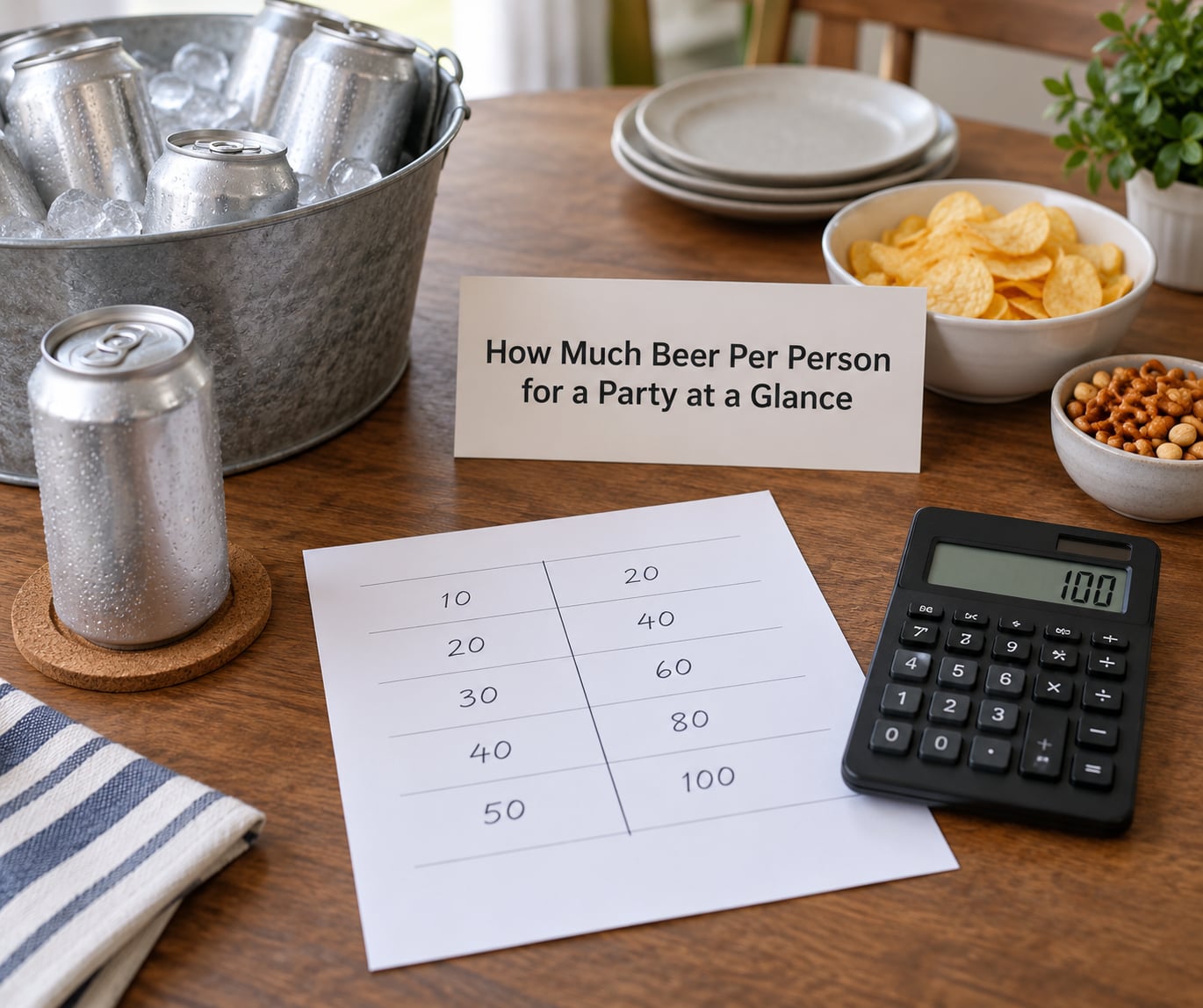
Here is the quick reference. The number in the second column is per drinking guest, not per person on the invite list.
| Party length | Beers per drinker | 10 drinkers | 20 drinkers | 50 drinkers |
|---|---|---|---|---|
| 1 hour | 2 | 20 | 40 | 100 |
| 2 hours | 3 | 30 | 60 | 150 |
| 3 hours | 4 | 40 | 80 | 200 |
| 4 hours | 5 | 50 | 100 | 250 |
| 5 hours | 6 | 60 | 120 | 300 |
Then add 10 to 20 percent on top for a casual home party, and closer to 20 percent when RSVPs are soft or the weather is hot. A 10 percent buffer on 80 beers gets you to 88, so most hosts end up rounding up to the next full case rather than splitting a case.
What Is the Standard Amount of Beer Per Person?
Two to three twelve-ounce beers is the usual planning range for a moderate event, and that is the number most event planners use as a baseline. It assumes an ordinary American lager or light lager at around 5 percent alcohol by volume, a mixed adult crowd, and a party that runs a few hours.
One US standard drink is defined as 14 grams of pure alcohol. A 12-ounce beer at 5 percent ABV delivers about 14 grams, which is why a 12 oz beer is the planning unit almost every calculator on the internet uses. If you are pouring from a keg, the serving that lands in the glass is usually bigger than 12 ounces, and home pours run noticeably over the nominal line.
So treat three beers per person as a floor for a long evening, not a ceiling. Guests who show up early and stay late will drink more, and the people who arrived hungry will drink more once the food comes out.
How to Calculate Beer for Your Guest List
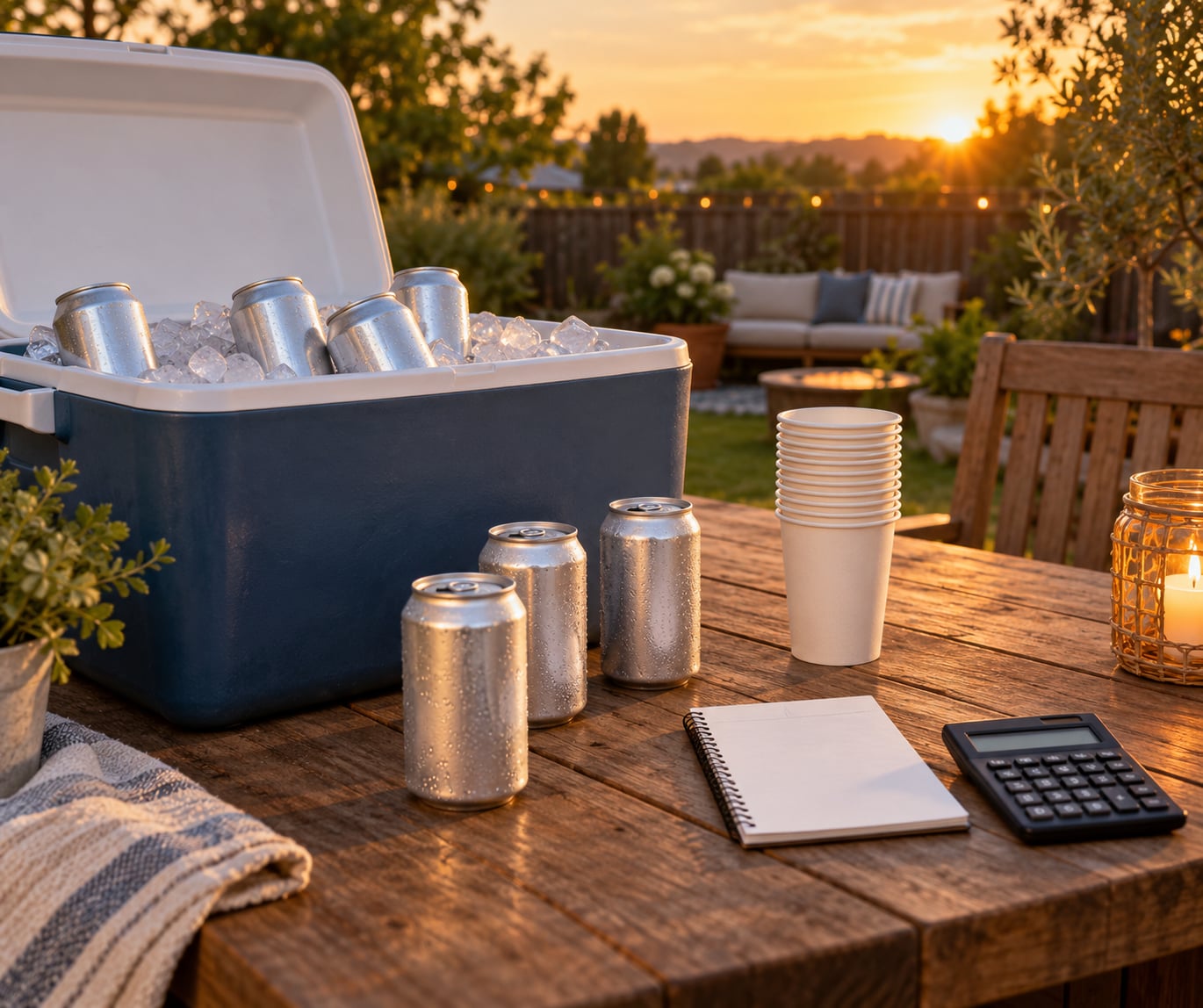
The formula is simple enough to do on a napkin, but four steps keep it honest.
1. Count drinkers, not guests
Multiply your guest list by the share you expect to actually drink beer. For a casual adult party, 70 to 80 percent is a reasonable assumption. Family events with kids and daytime corporate gatherings run lower.
2. Multiply by the party length rate
Two beers for the first hour, plus one beer for every hour after. A three-hour event is 4 beers per drinker, a four-hour event is 5, a five-hour event is 6.
3. Add your buffer
Multiply the total by 1.10 for a tight indoor gathering, 1.15 for a normal home party, or 1.20 for an outdoor summer event or a crowd where invitations went out to people who may not show.
4. Round up to whatever you can actually buy and pour
Partial cases are a pain to store and freeze leftovers of, so rounding up to the next case usually costs less than the hassle. This is also where the canned, bottled and keg decision comes in.
Worked example: 25 guests over three hours
Assume 20 of them drink beer. Twenty drinkers times 4 beers is 80. Add a 15 percent buffer and you get 92, so four 24-packs covering 96 cans. Five six-packs is 30 cans short, which is exactly the kind of gap that shows up at 9 p.m.
Worked example: 100 guests over four hours
Assume 80 drinkers. Eighty times 5 beers is 400, plus 20 percent is 480. That is 20 cases of 24, or six half barrels, or eight sixtels with a couple of cases on the side for guests who want something lighter than whatever is on tap.
| Guests | Drinkers at 80 percent | Beers, 3 hours with 15 percent buffer | 24-packs to buy |
|---|---|---|---|
| 10 | 8 | 37 | 2 |
| 20 | 16 | 74 | 4 |
| 25 | 20 | 92 | 4 |
| 50 | 40 | 184 | 8 |
| 75 | 60 | 276 | 12 |
| 100 | 80 | 368 | 16 |
| 150 | 120 | 552 | 23 |
| 200 | 160 | 736 | 31 |
How Much Beer to Plan by Party Length
Party type sets the pace of drinking as much as the clock does. A two-hour open house is not a two-hour dinner party with fewer snacks, and treating them the same is how hosts end up with a pile of unopened cans.
Short social, one to two hours. Two to three beers per drinker. A birthday toast, a casual drop-in, a pre-dinner gathering at someone’s house. Guests arrive, drink for a while and leave without settling in.
Standard dinner party, three hours. Four beers per drinker. Dinner slows the middle hour down, so the food-and-drink adjustment below usually applies here.
Afternoon events and festivals, four to six hours. Five to seven beers per drinker, and the day-drinking curve means the first hour is quieter and hours two through four are heavier. Attendance is the wildcard at a public event, so plan from expected peak attendance rather than the number of tickets you handed out.
Graduation open houses and drop-in parties. Use 75 to 80 percent of the invitation list as your planning number. Even a reliable RSVP list overstates who will actually arrive in the first two hours, which are the heaviest.
Bar-crawl-length evenings, six hours or more. Six to eight beers per drinker if beer is the main thing flowing. Realistically you are also chasing guests as they leave and reappear, so a 20 percent buffer earns its keep here more than anywhere else.
How Much Beer for Light, Moderate, and Heavy Drinkers
Hosts usually try to plan for three separate people: the one who sips, the one who has a few, and the one who is genuinely heavy. Trying to serve three separate rates in one cooler is a mistake, because the light drinker’s cans sit unopened while the heavy drinker empties a case an hour.
Plan from the group, not the individual. The rate already assumes an average, and a room where a few people drink heavily and most drink lightly lands close to the same total as a room of moderate drinkers.
| Event | Share expected to drink beer | Buffer |
|---|---|---|
| Casual adult birthday or cookout | 80 percent | 15 percent |
| Graduation open house | 90 percent | 15 percent |
| Holiday office party | 70 percent | 15 percent |
| Wedding reception | 85 percent | 20 percent |
| Family gathering with kids | 50 percent | 10 percent |
| Baby shower or daytime brunch | 40 percent | 10 percent |
The other half of this section is the part people skip. Put out water and food before the beer goes out, announce last call 30 minutes before the end rather than letting it drift, and make sure anyone who has been drinking has a ride or a sofa. A host who has a plan for the ride is usually the one whose party gets remembered well.
Does Beer Strength Change the Amount You Need?
Yes, and this is where most general party guides get vague. A 12-ounce serving is only a standard drink at around 5 percent ABV. Stronger beer carries more alcohol per can, so a crowd drinking 8 percent IPAs reaches the same level on fewer servings and fewer total cans.
Hard seltzer usually lands near standard lager strength, so it counts roughly as one beer per serving. Non-alcoholic beer contains little or no alcohol, and guests who switch to it partway through the night often drink more of it, so it pays to count it as its own line item rather than assuming it will soak up the drinkers you did not plan for.
| Beer style | ABV | Standard servings in a 12 oz pour |
|---|---|---|
| Light lager or session beer | 3 to 4.2 percent | About 0.8 |
| Standard American lager or ale | Around 5 percent | 1 |
| Amber or pale ale | 5 to 6.5 percent | 1 to 1.3 |
| Double or imperial IPA | 8 to 10 percent | 1.5 to 2 |
| Barrel-aged or strong stout | 10 to 14 percent | 2 to 2.5 |
| Hard seltzer | Around 5 percent | 1 |
| Non-alcoholic beer | 0 to 0.5 percent | 0 |
The practical version: if you are pouring craft beer with no lager in the mix, plan on 3 to 3.5 servings per drinker for three hours rather than 4. If you pour one easy-drinking lager and one craft option on the same night, the lager carries the count and the craft is a second choice, which is the mix hosts on r/weddingplanning tend to recommend.
Bottles, Cans, Draft Beer, and Growlers
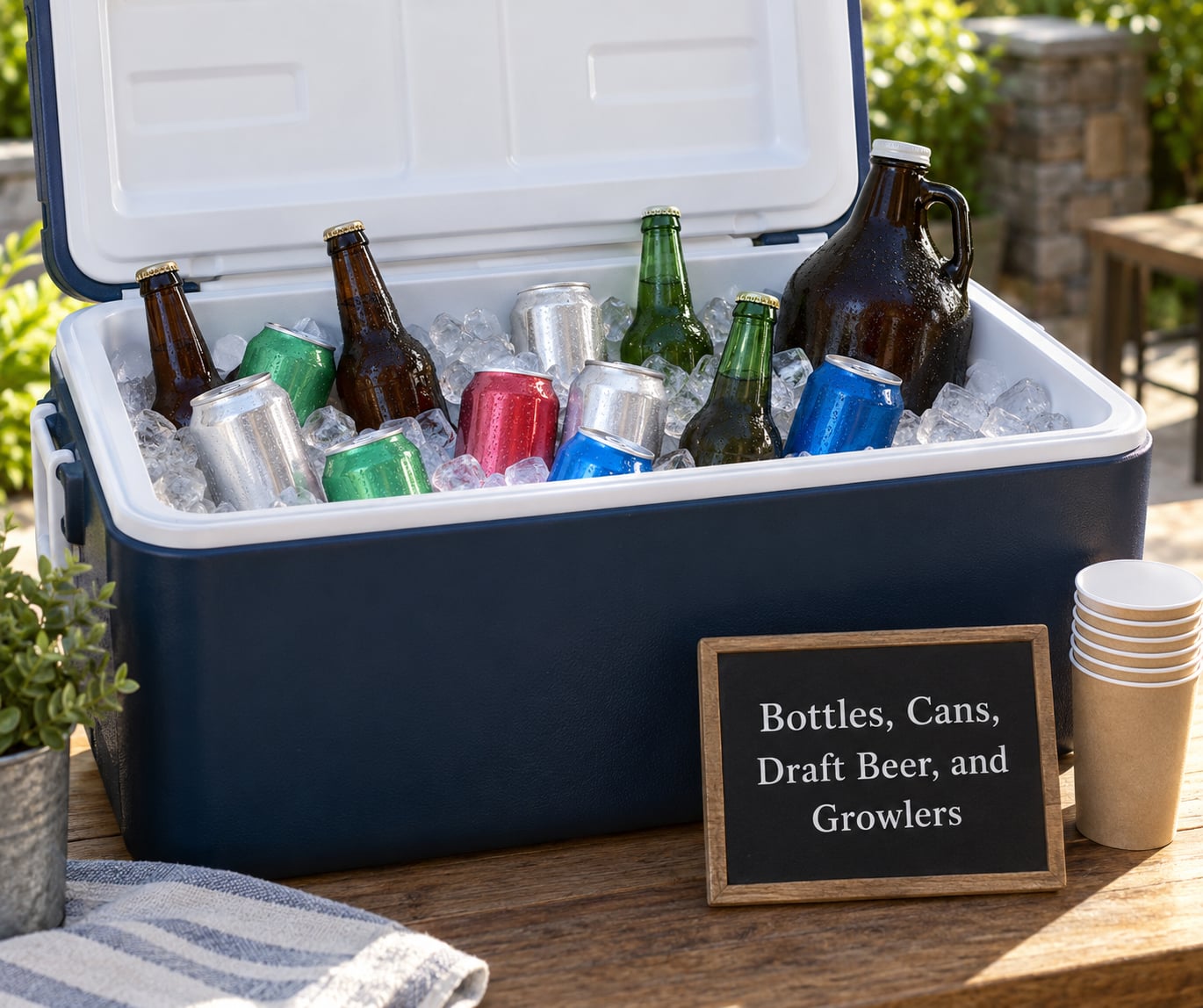
Once you have a beer count, the rest is conversion. These are standard US package sizes and their practical pour yields.
| Format | Volume | Approximate 12 oz servings |
|---|---|---|
| Six-pack | 6 x 12 oz | 6 |
| 12-pack | 12 x 12 oz | 12 |
| 24-pack (case) | 24 x 12 oz | 24 |
| Sixtel (sixth barrel) | 5.16 gallons | About 55 |
| Quarter barrel (pony) | 7.5 gallons | About 80 |
| Half barrel | 15.5 gallons | About 165 |
| Full keg | 15.5 gallons | About 310 |
| 64 oz growler | 0.5 gallon | About 5 |
| 32 oz growler | 0.25 gallon | About 2.5 |
Cans win for a casual party. They chill fast, stack, do not break and disappear into a cooler. They also do not come back from most stores once the case is open, so buy in multiples of 12 and keep the extra sealed.
Bottles suit sit-down events. They are heavier to haul and slower to chill, but a 22 oz bomber counts as roughly two servings, which is convenient when a guest wants one beer rather than two small ones.
Draft is a commitment, not just a discount. A keg locks you into a single beer style, and it needs a tap, a tub, ice and somewhere to put all of it. That setup is real work for a one-night gathering, and hosts weighing it in r/partyplanning threads generally point to the same trade: kegs make sense when most of your beer is one style and the servings outrun roughly a dozen cases, otherwise cases win on flexibility.
Growlers are for the day-of. A 64 oz growler covers about five servings and is best filled the morning of the party, since it is already poured and starts losing carbonation the moment it is filled. Unopened cans and bottles that never got opened are the real casualty of over-buying. Keep the case boxes, and if your local food bank or community fridge takes unopened beer, that is a better outcome than a corner of the garage. Hosts on forums.theknot.com bring this up constantly, usually after the party rather than before it.
What Else Should You Plan Besides Beer?
A drink station with nothing but beer is a drink station nobody stays at past an hour. Fill in the gaps and you will usually find your beer count is closer to the low end of the range.
- Water. One gallon of drinking water per 10 guests is a common starting point, and a second cooler filled with ice and water keeps people away from the beer cooler.
- Seltzer and non-alcoholic beer. Plan two servings per guest who is not drinking alcohol, plus a few extra. They move on their own once they are there.
- Soft drinks and mixers. A two-liter per 10 guests covers most rooms, and juice matters more at daytime events than at night.
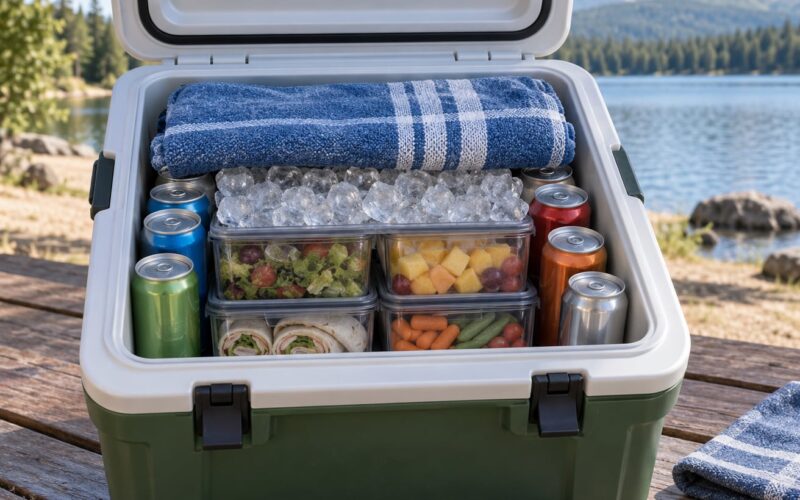
- Ice. One to two pounds per person, and more if the beer is going in the cooler instead of a tub.
- Cups and glasses. Two cups per drinker, plus a separate stack for water so nobody refills a beer cup with ice water by accident.
- Food. A real meal before or during the party reduces consumption noticeably, which is why a dinner party and a cookout land on different numbers.
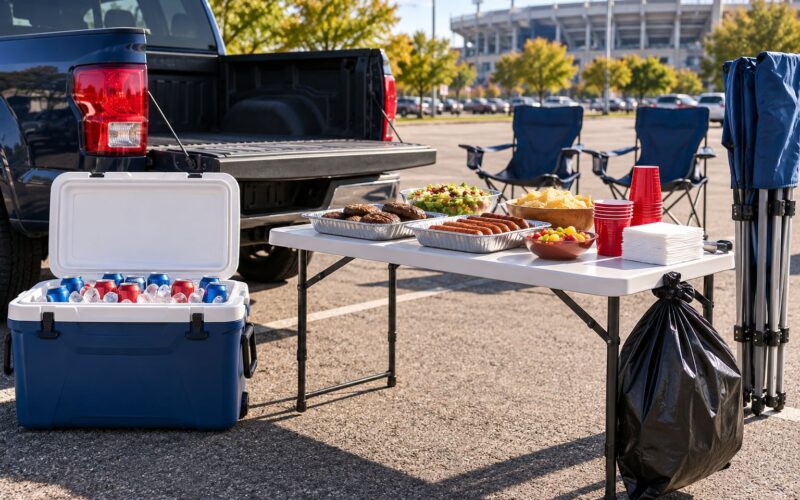
One last practical note. If you are past about 50 guests, one bartender per 50 guests keeps the line moving and gives you someone watching the room, even if that person is a friend who volunteered. Below that, a self-serve station on a table with a sign, an ice tub and a trash can does the job fine.
Frequently Asked Questions
How many beers for a 20-person party?
For a three-hour party, expect about 16 of your 20 guests to drink beer, at roughly 4 servings each. That comes to about 64 beers, and with a 15 percent buffer you land near 74, so four 24-packs is the clean buy. For a two-hour get-together, three cases covers it comfortably.
How many beers do I need for 100 guests?
At 100 guests for a four-hour party, assume 80 drink beer. Five servings each gives 400 beers, and a 20 percent buffer brings that to 480. That works out to 20 cases of 24, or six half barrels on tap. For a three-hour version of the same party, 16 cases is enough.
How many bottles do I need for 100 guests?
It depends on package. A 24-pack case holds 24 twelve-ounce cans or bottles, so 100 guests for three hours needs about 16 cases. A quarter barrel holds roughly 80 servings and a half barrel roughly 165, so six half barrels replace those 16 cases if you are serving from tap.
What counts as a standard drink?
A US standard drink is 14 grams of pure alcohol. That works out to a 12-ounce beer at about 5 percent ABV, a 5-ounce glass of wine at 12 percent, or a 1.5-ounce shot of 40 percent spirit. A 12-ounce IPA at 8 percent is closer to 1.5 standard drinks, which is why craft-heavy crowds need fewer total servings.
How much should I over-buy?
Add 10 percent for a tight indoor event with a reliable guest list, 15 percent for a normal home party, and 20 percent for an outdoor summer gathering or soft RSVPs. Going over is far less costly than running dry at 10 p.m., since sealed cans keep and you can use them at the next gathering.
Should I buy cases or a keg?
Cases are simpler and more flexible: you can mix styles and nothing needs a tap, tub or ice. A keg commits you to one beer and needs about 5 pounds of ice and a cooler setup, but it serves around 165 servings per half barrel. Kegs pay off past roughly a dozen cases of a single style.
Conclusion
That is the whole answer to how much beer per person for a party, and it takes about ten minutes to run. Count how many of your guests actually drink beer, pick your party length from the table at the top, multiply drinkers by the rate, and add 15 percent. Then convert that number into whole cases or kegs, because the last half case is where hosts get stuck.
Everything after that is adjustment. Heat, a craft-heavy menu, a four-hour-plus evening and soft RSVPs all push the number up, and a full meal, a daytime start and a reliable guest list pull it down. Order with that number, set out water and food before the first pour, and you will not be the host digging through cabinets at midnight.