Hosting a beer and board game night comes down to four decisions: how many people are coming, three beer styles, two to four short games, and a start time and end time you put in the invite. Get those right and the rest is setup. Budget about two hours of prep for three hours of play, and the whole thing is far less fussy than most people expect.
What makes it work is pacing. Beer and games compete for the same attention, so the beer gets poured in rounds at a drinkable strength and the games stay short enough that nobody checks the time and groans. Everything below is built around that.
Table of Contents
- What You Need
- Step-by-Step: How to Host a Beer and Board Game Night
- 1. Fix the date and the end time before you send the invite
- 2. Count the table and check the room
- 3. Pick two or three games and learn them before Friday
- 4. Buy three beer styles and two alcohol-free options
- 5. Buy food that can be eaten one-handed
- 6. Set the table so nothing has to leave the room
- 7. Pour in rounds instead of opening a cooler
- 8. Close it out: how to host a beer and board game night that ends on time
- Common Mistakes
- Frequently Asked Questions
- What kind of beer should I serve at a board game night?
- How many board games should I prepare for a beer and game night?
- What food pairs well with craft beer at a game night?
- How can I make a beer and board game night fun for non-drinkers?
- How late should a beer and board game night go?
- Conclusion
What You Need
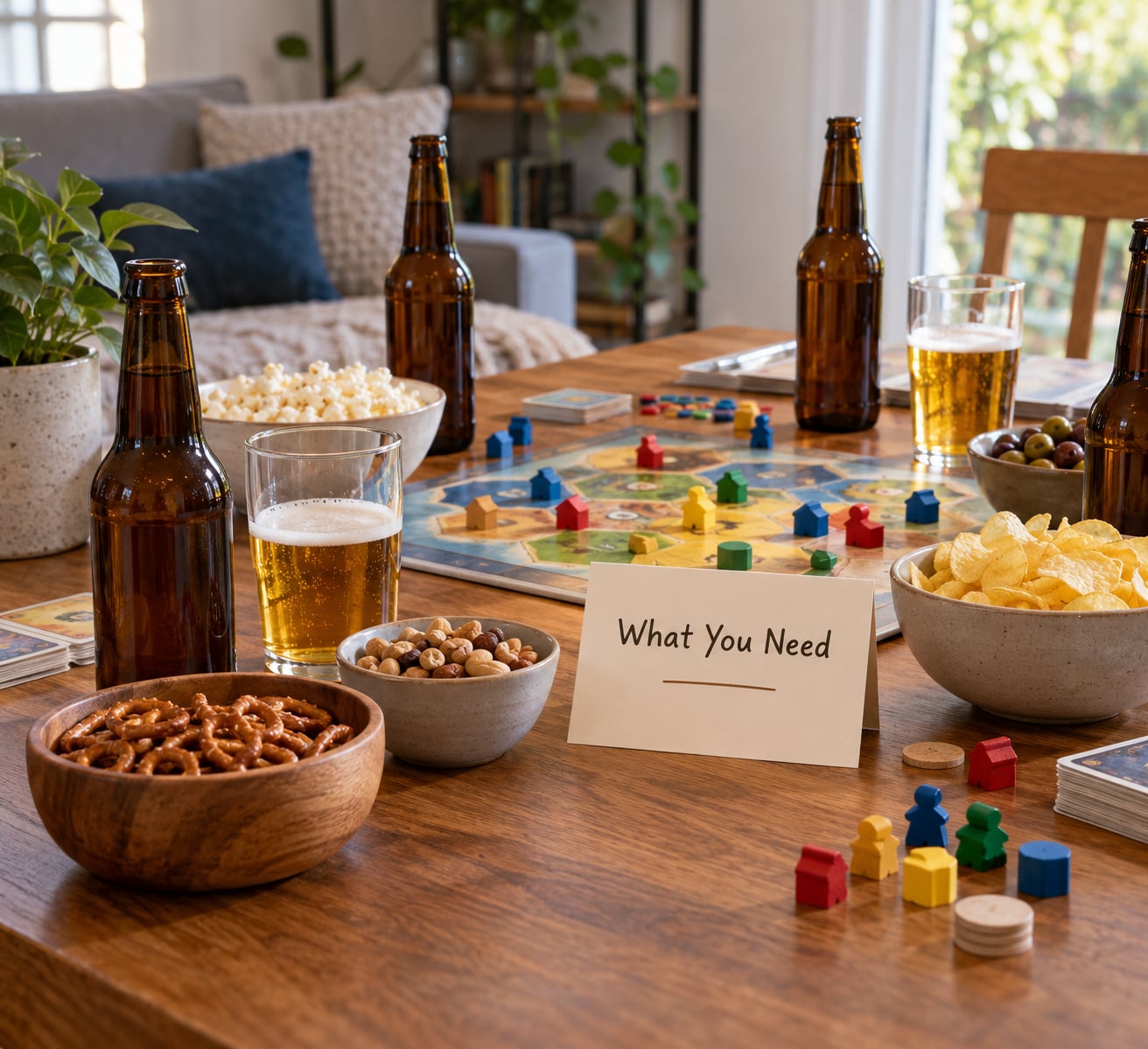
The list is shorter than it sounds. Grab these before anyone shows up and you will not need to leave the room once the first game starts.
- A firm guest count. Four to six people is the sweet spot at one table. Eight works, but only with two tables or a game built for eight.
- Three beer styles. One light session option, one hoppy, one darker. Four to five and a half percent ABV is the range for a night that runs three hours.
- Two alcohol-free options. At least one alcohol-free beer, plus coffee, sparkling water or a mocktail batch. Buy them the same week, not the night before.
- Two or three games with different play times. A 15-minute game, a 30-minute game and a longer one if the group wants it. Add a fourth in a drawer as the backup.
- Snacks that can be eaten one-handed. Pretzels, salted nuts, cheese and crackers, chips, sliced fruit. Plan six to eight bites per person after dinner, ten to fourteen if the food replaces it.
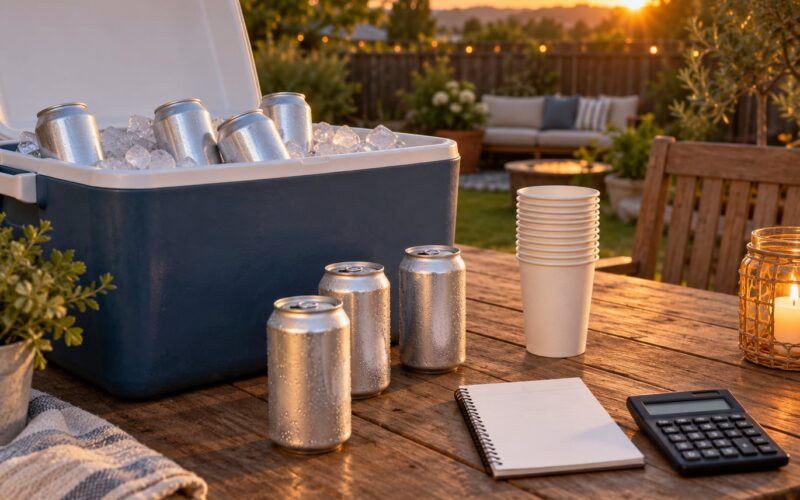
- Serving tools. Enough glasses for a refill at every seat, two bottles open at a time, an ice bucket, a water pitcher, a bottle opener per two people and a stack of napkins.
- Paper and pens, coasters, a towel. Scratch paper and pens for notekeepers, a coaster per seat, and a kitchen towel within reach of the table. These three prevent most ruined evenings.
- A game tracker. A score sheet on a clipboard or a phone note. It settles arguments in under five seconds.
- A ride plan. Decide in advance who is driving sober, who is calling a car service, and where guests who need it are staying. Say it out loud at the start of the night.
Step-by-Step: How to Host a Beer and Board Game Night
Here is the order I use. Each step has a clear finish line, so you know when to move on.
1. Fix the date and the end time before you send the invite
The invite is where a game night is won or lost. Pick a start time and a hard end time, and put both in the message, along with the address and whether guests should bring a game.
It worked if, when the night winds down, nobody is surprised by the time. Ten or half past ten for a seven o’clock start is realistic for most people.
2. Count the table and check the room
Decide your final number before buying anything. Seat count, glass count and game player counts all follow from it. If you land on seven, cook for eight, because someone will bring a plus-one.
It worked if you can seat everyone around one table with elbow room. Two tables kill conversation; one round or rectangular table keeps everyone in the same conversation. Most people who know how to host a beer and board game night cap the list before it goes out, not after the replies arrive.
3. Pick two or three games and learn them before Friday
Learning the rules is the whole job. Read each rulebook twice, set up a practice round on your own, and plan to teach each game in under five minutes.
A 20-minute reference game is a good way to teach a heavier one: play the short game first, let the table settle, then teach the long one with the same vocabulary.
Match the lineup to the room. For a group where most people have played one or two modern games, stick to wide player-count ranges and short play times.
| Group you have | What to put on the table | Player range | Typical play time |
|---|---|---|---|
| Mostly newcomers, 4 to 6 people | Codenames, Sushi Go!, Just One, Exploding Kittens | 2 to 8 | 10 to 25 minutes |
| Mixed experience, 5 to 8 people | Skull, Telestrations, Ticket to Ride, One Night Ultimate Werewolf | 3 to 8 | 10 to 45 minutes |
| Experienced players, 3 to 4 people | Pandemic, Forbidden Island, Catan, Dixit | 2 to 4 | 45 to 90 minutes |
| Two to five couples or a big group of 8+ | Wavelength, charades, Pictionary, a trivia deck | 4 to 10 | 15 to 40 minutes |
| Anyone, any size | Filler: a card deck with a scoring system, or Skull | 3 to 8 | 10 to 15 minutes |
4. Buy three beer styles and two alcohol-free options
One six-pack of each style covers a group of six over three hours, more if your drinkers are heavy. Keep the lineup balanced rather than interesting: one light and drinkable, one hoppy, one dark.
The alcohol-free pour is not a consolation prize. Buy the same number as your beer six-packs, and put it in the same spot on the table. Well-made alcohol-free beer works fine in a tasting flight.
Pairing helps more than anyone expects. A hoppy IPA suits a deduction game where people are leaning in and arguing. A light lager or cream ale suits loud party games. A stout suits a long strategic game that needs three hours of table time.
5. Buy food that can be eaten one-handed
Greasy fingers and paper components do not mix, and nobody wants to stop a game to wash hands. Everything should be bite-size, low-mess and reachable from a seat.
| Item | Per person | Group of 6 | Group of 8 |
|---|---|---|---|
| Snack bites | 6 to 8 after dinner, 10 to 14 if it replaces dinner | 50 to 60 bites | 65 to 80 bites |
| 12 oz beer servings, three hours | 3 to 4, spaced over the evening | 18 to 24 servings | 24 to 32 servings |
| Alcohol-free servings | 3 to 4 | 18 to 24 | 24 to 32 |
| Water, refilled freely | 2 to 3 bottles or a pitcher share | 1 gallon | 1 to 1.5 gallons |
| Ice | 1 to 1.5 lb | 8 to 10 lb | 10 to 12 lb |
| Glasses | 2 per drinker, so refills need no washing | 12 to 14 | 16 to 18 |
| Coasters | 2 per drinker | 12 | 16 |
| Napkins | 6 to 8 per person | 1 full box | 1 to 2 boxes |
A charcuterie board works if you build it for grabs rather than pictures: cut the cheese and meat into single bites, keep crackers separate from the board, and put a small plate out for discarded stems and rind.
6. Set the table so nothing has to leave the room
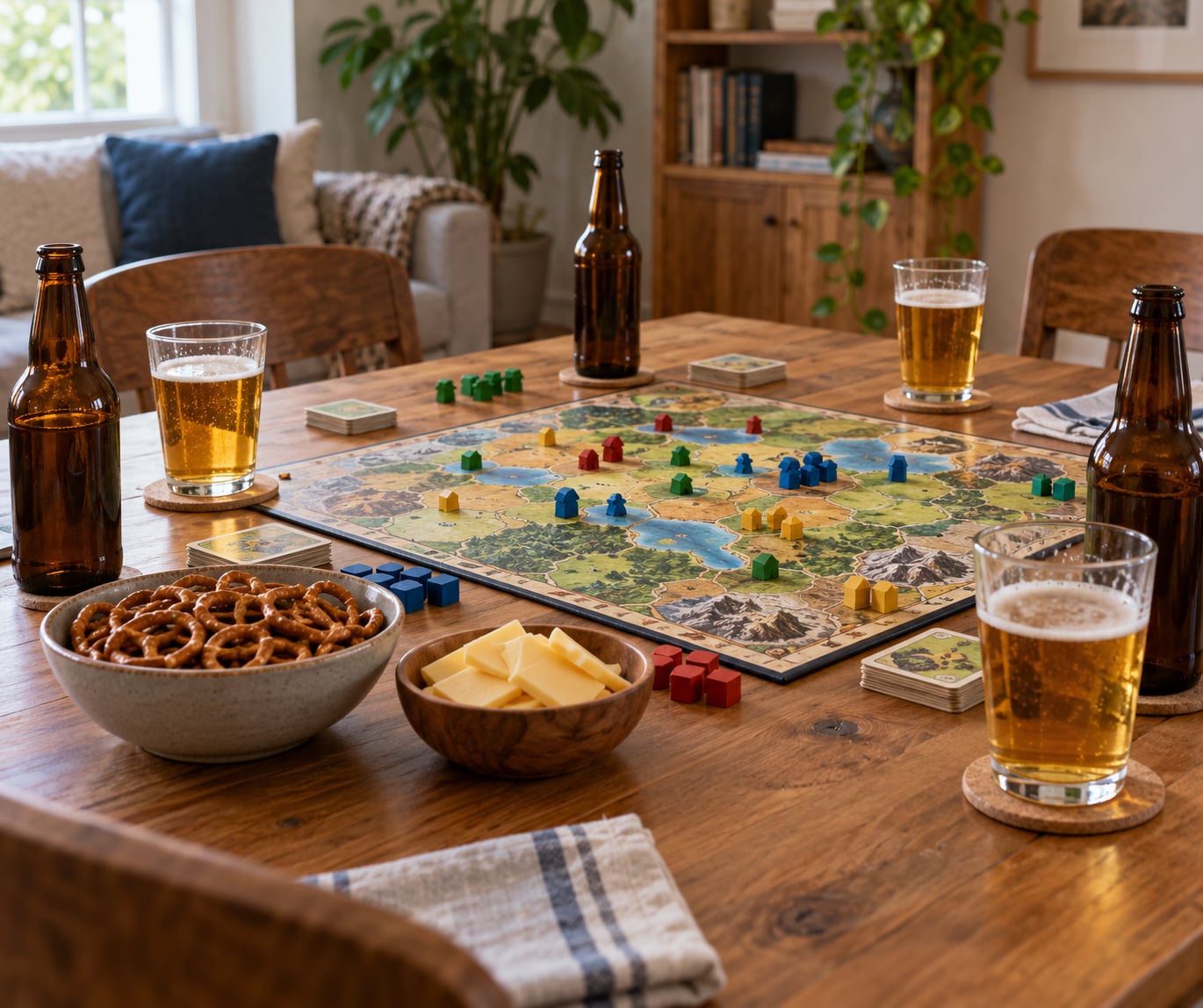
Put the drinks station on one end, the food in the middle, and the game space clear. Light the room warmly and dimly rather than brightly, so the table feels different from a work day.
It worked if you can play a full game without anyone standing up. If you need a bottle opener, a napkin or a coaster, it is too far away.
7. Pour in rounds instead of opening a cooler
Self-service pours are where game nights get sloppy. Offer a round when the table finishes a game or hits a natural break, not every twenty minutes on a timer. This one habit separates someone who knows how to host a beer and board game night from someone who just cracks the cooler and walks away.
Water goes out in the same round as the beer, every time. If a guest misses a round, they get whatever is pouring, so nothing is tracked and nobody has to ask.
Ninety minutes in, shift to water and the alcohol-free options with any remaining beer served only to those who want it. Say that out loud so nobody has to be the first to stop.
8. Close it out: how to host a beer and board game night that ends on time
When the final game starts, tell the table how long it will run and when the last pour is. Announcing it early is what keeps the night from dragging.
Have a small prize ready for the winner. It costs almost nothing and gives a reason to finish a game that has gone long.
| Time | What happens | What the host does |
|---|---|---|
| First 20 minutes | Arrival, coats, first pour, no game yet | Pour the first round, point out the food and the alcohol-free options, keep it loose |
| 20 to 40 minutes | Short opener game, 15 to 20 minutes | Teach it in under five minutes, then stay out of the way |
| 40 to 60 minutes | Snack refuel, second round | Refill water, put food out, take the trash nobody will take |
| 60 to 100 minutes | Main game, 30 to 45 minutes | Watch the clock, call the halfway point, keep a filler ready |
| 100 to 120 minutes | Third round, more relaxed | Pour, refills, hand out the prize for the finished game |
| 120 to 150 minutes | Final short game or a filler | Announce the end time, remind people about rides |
| Last 15 minutes | Wrap, bin the empties, nobody rides alone | Hand out a bin bag, confirm every driver and every car service |
Common Mistakes
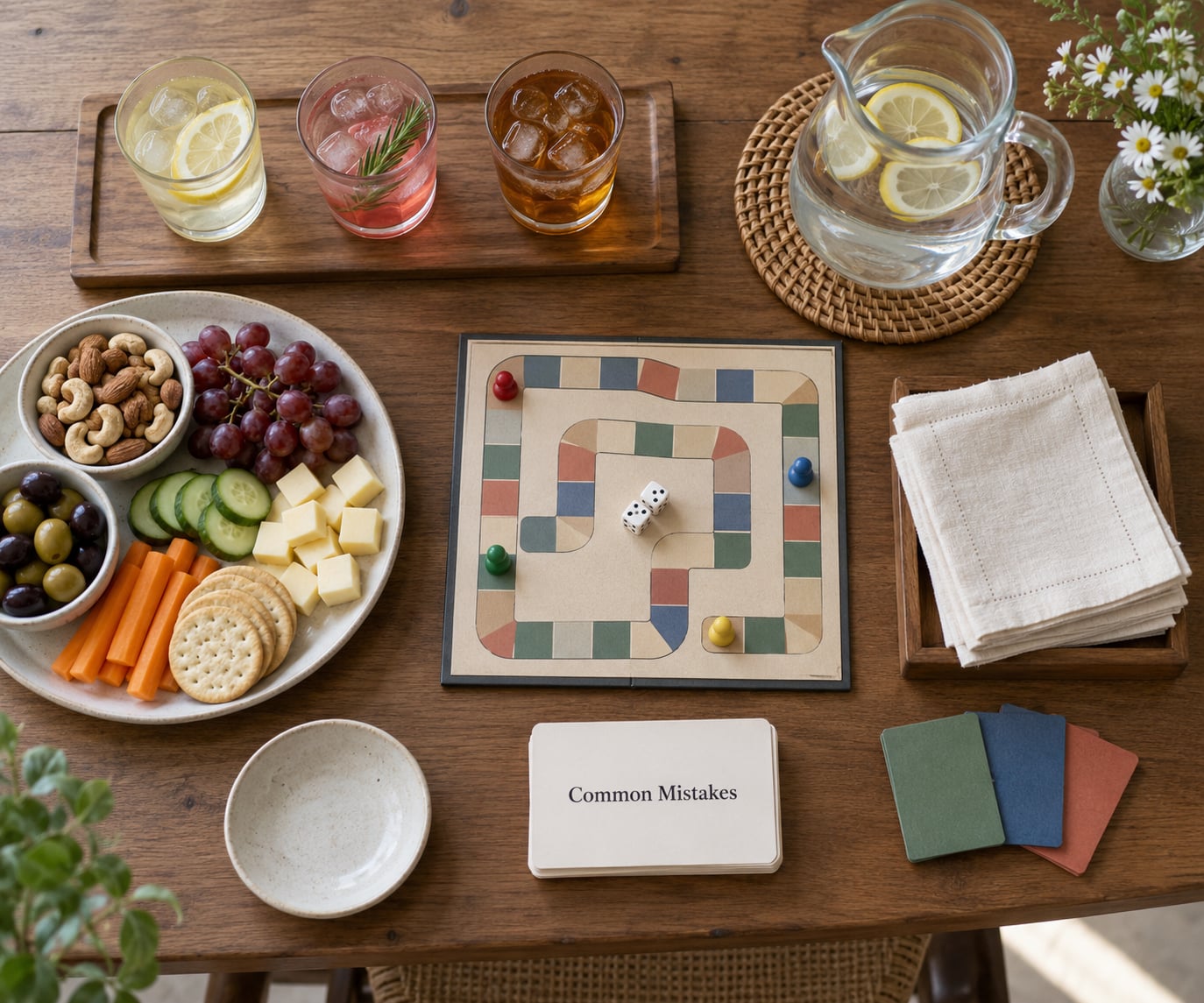
Most bad game nights trace back to one of these seven things. Each one has a fix you can apply before the night, not during it.
- Too much beer, too little water. The fix is three styles at session strength, poured in rounds, with water going out at the same time as every round.
- Games that do not match the group. A 90-minute strategy game with six people who have never played it kills the evening before it starts. Fix it by picking wide player-count ranges and short play times for a mixed group.
- Forgetting the alcohol-free option. A beer-themed night that leaves the one non-drinker to stand in the kitchen with sparkling water tells the table they were not planned for. Buy the same number of alcohol-free servings as beer servings.
- Greasy or wet snacks. One spilled drink ruins a card, a board and someone’s evening. Use one-handed food, keep drinks on coasters, and keep the towel close.
- Not learning the rules first. Reading a rulebook out loud to six people takes the first half hour and loses them. Learn it beforehand and teach it in under five minutes; nominate one rules master per game so explanations come from one voice.
- One player explaining everything. It happens with confident regulars and it flattens the table fast. Give the rulebook to someone new and let them call the turns.
- No end, and no ride plan. A night with no endpoint runs until people leave one by one, and someone always assumes someone else sorted a sober driver. Set the end in the invite, then repeat it when the last game starts, and confirm rides before the first round.
Two more worth naming. Refills that nobody makes, because the table is absorbed and the kitchen is across the room, are the most common interruption. Bring drinks to the table instead. And keep one filler game in a drawer, something ten to fifteen minutes long, because it rescues a game that stalls.
Frequently Asked Questions
What kind of beer should I serve at a board game night?
Three styles is the sweet spot: a light session option around 4% for people who want to sip through several hours, a hoppy pale ale or IPA at 5 to 5.5%, and one darker beer like a stout or Irish red for the guests who like it. Buy one six-pack of each and keep everything between 4 and 5.5% ABV. Add two alcohol-free options so nobody has to improvise.
How many board games should I prepare for a beer and game night?
Two to four, each one different in length from the last. A 15-minute party game gets the table talking, a 30-minute card game settles the group, and a 60-minute strategy game rewards anyone who wants depth. Learn all of them yourself beforehand, then hide a fifth in a drawer as the backup for when a popular choice turns into a three-hour slog.
What food pairs well with craft beer at a game night?
Finger foods that need one hand and leave no grease: soft pretzels with mustard, salted nuts, cheese and crackers, chips, sliced apples, and a charcuterie board cut into bite-size pieces. Plan six to eight bites per person after dinner, or ten to fourteen if the food replaces dinner. Keep plenty of water going so nobody is drinking on an empty stomach.
How can I make a beer and board game night fun for non-drinkers?
Make the alcohol-free pour a real part of the lineup instead of an afterthought. Buy two different alcohol-free beers, stock coffee, sparkling water and one simple mocktail, and pour them into the same glassware as everyone else. Include them in any tasting flight. A blind aroma round works exactly as well with a grapefruit soda as it does with a pilsner.
How late should a beer and board game night go?
Set the end in the invite and pick something sane, like 10 or 10:30 pm for a seven o’clock start. Three hours is plenty: half an hour of arrival and the first pour, then two and a half hours of games. Announce the last game when you start it rather than when you want to finish, and get rides sorted before anyone has had much.
Conclusion
If you only remember five things, remember these. Get the guest count right, because four to six at one table is the difference between a game and a spectator sport. Offer three beer styles at session strength and pour them in rounds rather than opening a cooler. Choose two to three games with genuinely different play times and learn them all before the doorbell rings. Serve food people can eat one-handed, in quantities you can actually count. Then put the end time in the invite and sort the rides before the first round goes out.