To make big batch drinks for a crowd, pick one drink you already like, build it on the classic one part sour, two parts sweet, three parts strong, four parts weak formula, and multiply every ingredient by your serving count. The step most people skip is adding about 20 to 25 percent cold water to replace the dilution that ice normally contributes during shaking. Chill the batch, keep carbonation out until the last second, and serve it over a large block of ice.
The whole job takes about an hour of active work and two hours of fridge time. Once the pitcher is full, you are a host again instead of a bartender.
Table of Contents
- What You Need
- Step-by-Step
- Step 1: Calculate How Much Drink You Need
- Step 2: Choose a Batch-Friendly Drink
- Step 3: Make a Small Test Batch First
- Step 4: Scale the Ingredients Accurately
- Step 5: Chill Without Diluting the Batch
- Step 6: Finish, Garnish, and Serve
- Common Mistakes
- Practical Tips for Hosting a Crowd
- Frequently Asked Questions
- How much drink should I make per person?
- Can I make a big batch drink the day before?
- What is the best container for a large batch punch?
- How do I keep a large batch from getting too diluted?
- Can I make a nonalcoholic version of a batch cocktail?
- How strong should a party punch be?
- Conclusion
What You Need
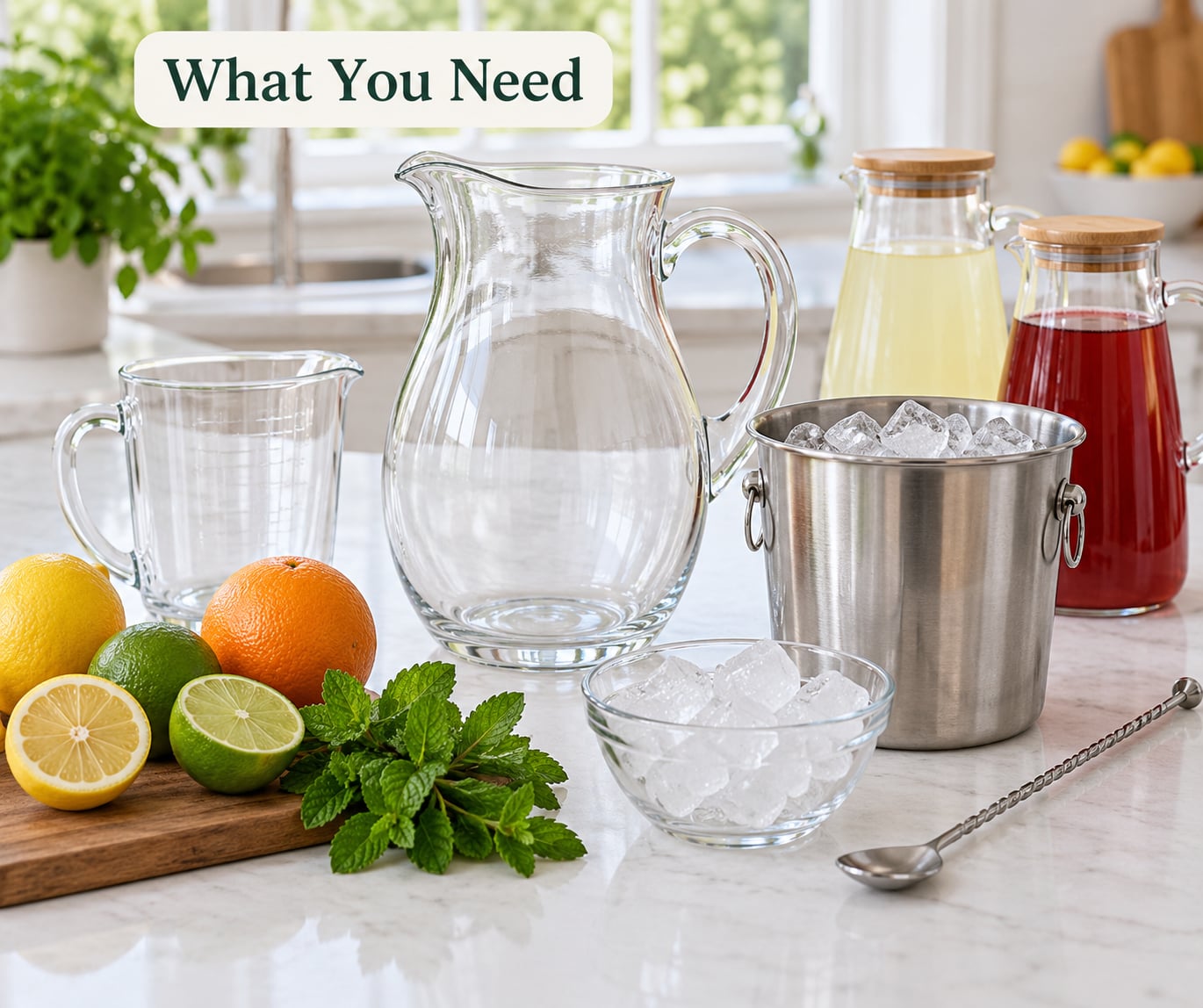
Start with the number, because everything else hangs off it. A punch serving is 10 to 12 ounces. Plan two servings per guest for the first two hours of a party, then one more serving per guest per hour after that, and round up.
Then subtract what else is on the table. If wine is being poured with dinner, cut punch to one serving per guest for the meal and let wine cover the rest of the evening. Beer changes the math the same way, and a self-serve beer-and-grill afternoon usually needs punch at the welcome table only.
The equipment list is short. You need one vessel with real headroom, a long spoon or a whisk, a measuring jug for the water, a sharp knife and a cutting board, and a covered container that fits in your refrigerator or in a cooler. A spigot dispenser earns its keep past about 60 guests, because a ladle means a line forms every time somebody refills a cup.
Two things make the batch work better. A colander or fine strainer catches pulp and seeds, which otherwise clog a spigot. And a set of small labels or a roll of masking tape on a pen is worth more than it looks, because you have to mark the alcoholic batch and the nonalcoholic one separately.
Always reserve a nonalcoholic batch. Plan it at roughly one third of your total volume and build it as a real drink rather than a consolation prize: tea, citrus, ginger, and sparkling water work well, and the same sour and sweet formula applies with zero strong and more weak.
Step-by-Step
Step 1: Calculate How Much Drink You Need
Multiply guests, servings, and ounces. Thirty guests over three hours at two servings plus one extra hour works out to about 30 times 2 times 12 ounces, or roughly 90 ounces per drink, which is close to three quarts. Once you are past 50 people, do the arithmetic in gallons because jugs stop being useful units.
| Guests | Total servings | Total volume at 12 oz | Quarts | Gallons |
|---|---|---|---|---|
| 10 | 20 | 4 pints | 1.25 qt | 0.2 gal |
| 20 | 40 | 7.5 pints | 2.5 qt | 0.4 gal |
| 30 | 60 | 11 pints | 3.75 qt | 0.6 gal |
| 50 | 100 | 18.75 pints | 9.4 qt | 1.5 gal |
| 100 | 200 | 37.5 pints | 18.75 qt | 2.9 gal |
| 150 | 300 | 56 pints | 28 qt | 4.4 gal |
| 200 | 400 | 75 pints | 37.5 qt | 5.9 gal |
Sixteen ounces make a quart and 128 ounces make a gallon, so a single punch serving is about three quarters of a cup and a gallon covers roughly ten servings.
Add a modest buffer, not a safety margin for chaos. Five to ten percent extra covers spills, refills, and the guest who was still eating when everyone else got their first drink. Beyond that you are buying ice you will still have next week. If a drink is cheap to remake, such as a beer-based punch or a spritz, a smaller buffer with a plan to top up beats a huge batch that sits in a cooler until Sunday.
Hosts planning a 200-person event at a park shelter with no kitchen hit exactly this problem. There is no fridge and no ice machine, so the batch has to be built cold, carried cold, and served in one pass rather than restocked.
Step 2: Choose a Batch-Friendly Drink
Batch what scales without losing its character. Beer-based punch, a hard seltzer-style citrus spritz, sangria, vinegar shrubs, and a spiced rum punch all hold up, because their backbone is water, fruit, and acid rather than a delicate aromatic top note.
Each carries a tradeoff. Beer-based punch is cheap and crowd-pleasing, but it goes flat within an hour of sitting on ice, so pour it in small waves rather than one deep jug. Sangria gets better in bulk because fruit and time do the work, though a thin one tastes like flavored punch. A spritz built on sparkling water needs its bubbles at the moment of service. Shrubs are the most forgiving choice of all, since acidity hides a mediocre spirit.
Stay away from anything with egg white or a foam, anything that depends on a hard shake for texture, and anything where one divisive ingredient is present in every cup. Absinthe and heavily botanical liqueurs are the usual offenders: a guest who dislikes them cannot pick them out of a pitcher, they just drink around your punch and have a worse time. A host on a cocktail forum made the same point about a tiki batch, where anise and clove read as medicinal to people outside the category.
For a mixed group, two drinks is the ceiling. One alcoholic batch and one zero-proof batch covers everybody without turning the kitchen into a bar.
Step 3: Make a Small Test Batch First
Mix one full serving in a glass first, with exact measurements, and taste it diluted the way a guest will taste it, with a few ice cubes in. That last part matters, because the ice is doing about a fifth of the flavor work by the time the cup is half empty.
Adjust in order. Too sharp means more sweet, and too sweet means more acid before you reach for water, since you cannot unsweeten a batch. Weak or flat means the strong element is too light, not that the batch needs more liquid.
Batches skew boozier than individual drinks more often than hosts expect, because nobody measures the second pour. A user on a cocktail forum who mixes 2:1:0.5 for himself recommends 2:1:1 for guests, precisely because a shared pitcher skews strong when the host is also drinking. If the test serve feels heavy at the first sip, add sweet or weak before service, not more of your judgment at the table.
Once the serve tastes right, write it as a ratio rather than a volume. That is the whole point of Step 4.
Step 4: Scale the Ingredients Accurately
Turn the approved serve into parts. A whiskey sour at 2 ounces whiskey, 1 ounce lemon, and 1 ounce syrup becomes 2:1:1, and a 12-ounce finished drink becomes 6 parts whiskey, 3 parts lemon, 3 parts syrup. Multiply each part by your serving count.
The traditional four-part formula is one part sour, two parts sweet, three parts strong, four parts weak, which is the ancestor of most ratio shortcuts you will meet. The 3:2:1 rule is the same idea compressed: three strong, two weak, one sweet, with the sour built into the citrus. Neither is a law, but naming your ratio is what makes scaling safe, because a ratio can be multiplied and a list of improvised amounts cannot.
Build in a deliberate order. Measure the base liquids first, then the syrup, then the spirits, then the citrus, then anything carbonated. Dissolve syrup in the warm base rather than stirring it into a cold batch, and let bitters go in early enough to integrate. Add fruit last so it stays intact and looks like food rather than pulp.
Two labor notes for large events. Juice your own citrus only if you own a decent squeezer and a second pair of hands; 200 servings of fresh juice is a two-hour project and a strained wrist, and nobody at a wedding notices the difference between it and bottled. And buy the spirits and mixers in the largest containers you can find, because 25 servings of a recipe means buying five separate bottles otherwise.
Step 5: Chill Without Diluting the Batch
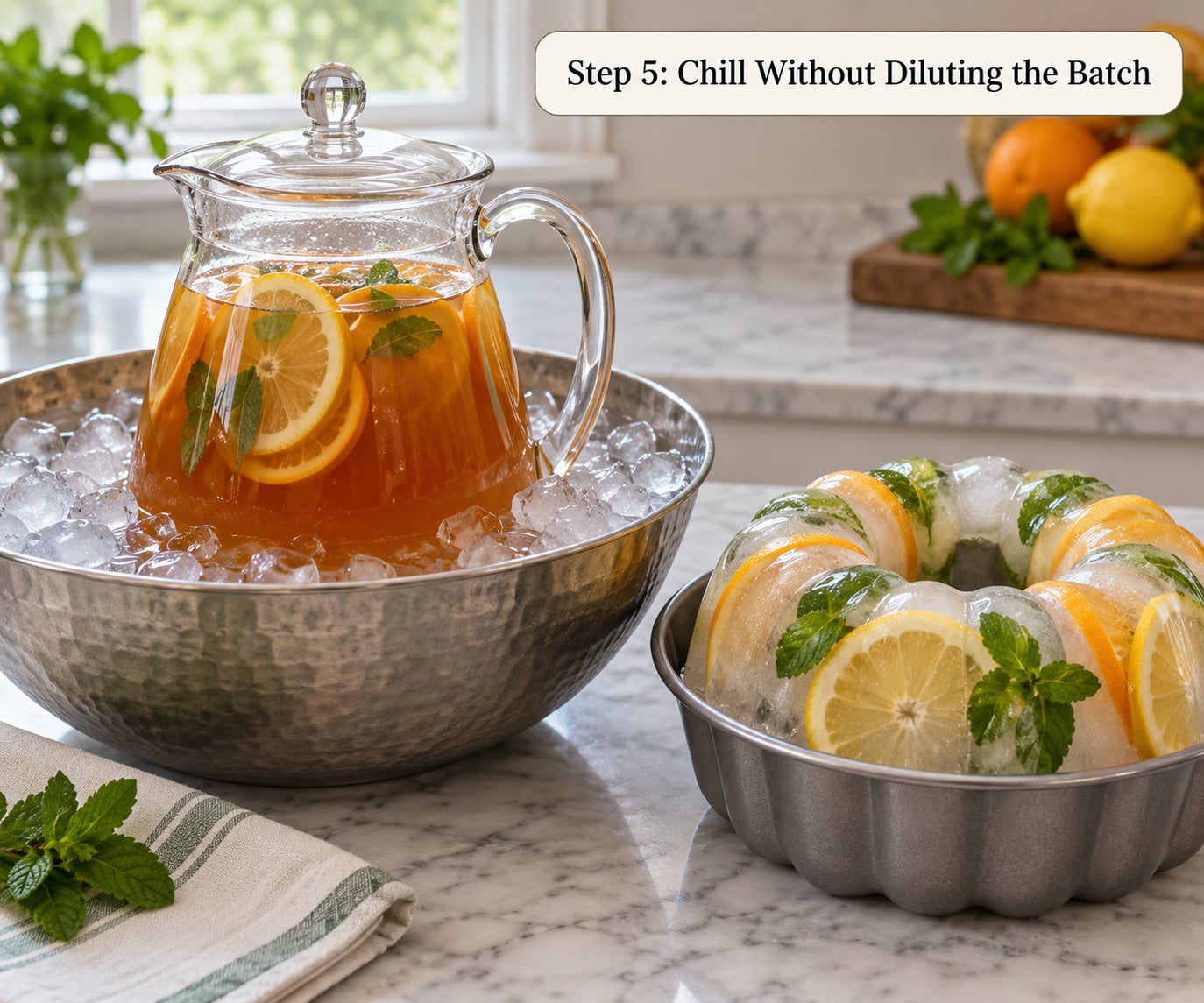
Chill the liquid itself, not just the vessel. Two hours in the refrigerator is the floor for a full batch, and four is better if your fruit is fresh. Chill the pitcher in advance if you can, because a room-temperature glass holding a cold drink warms it in about twenty minutes.
Never put loose ice in the batch. Every cube is water that ends up in the punch, and after two hours the drink tastes like someone poured juice into a sink. Serve over a large block instead, which chills at the surface and leaves the body of the drink alone.
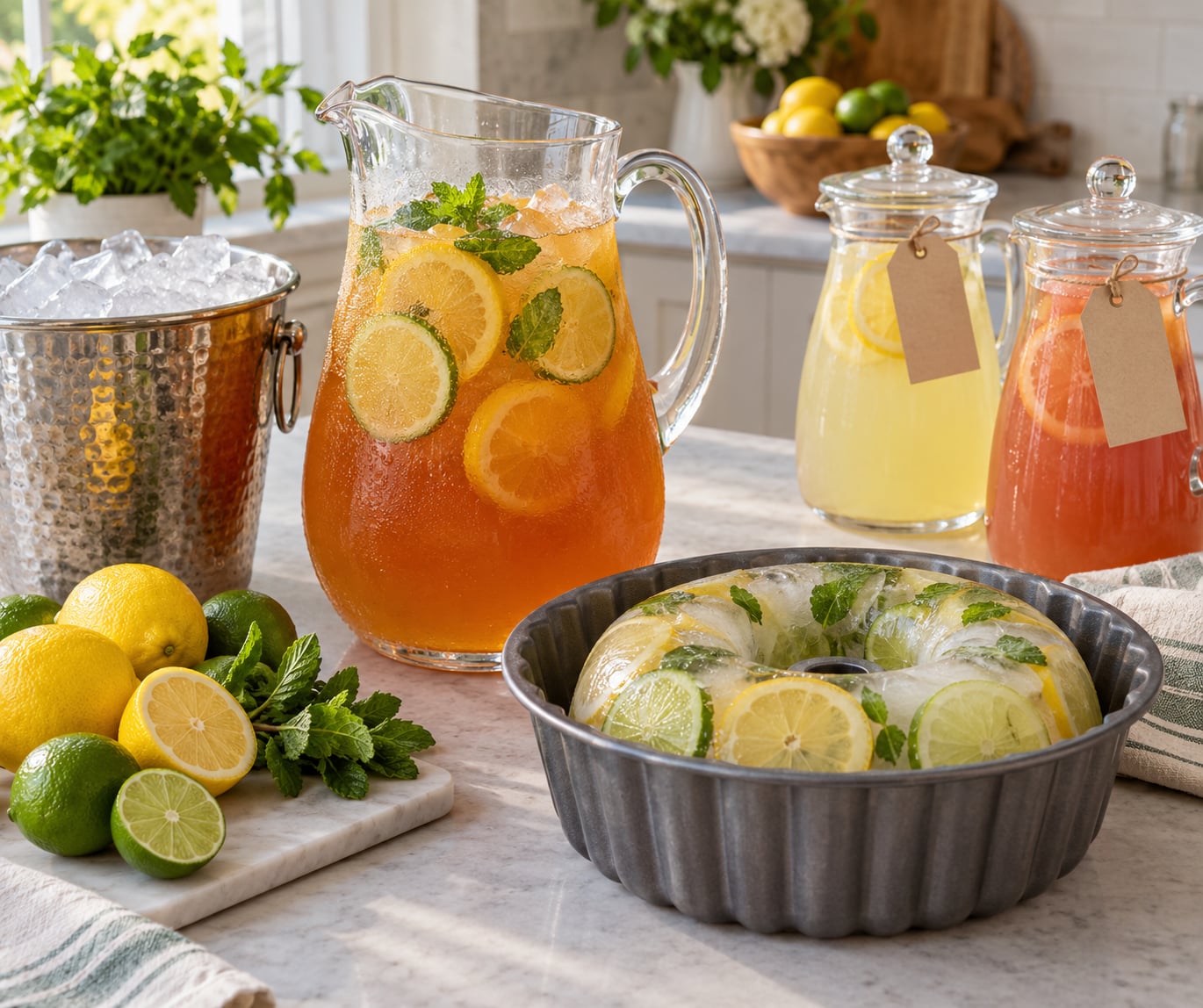
You can make that block yourself. Fill a bundt pan or a loaf pan with water, drop in citrus slices and a few herb sprigs, freeze overnight, and release the block by floating the pan in warm water for about a minute. A loaf pan gives you two blocks, which is enough to keep a spigot dispenser cold and a punch bowl cold at the same time.
Freezing your juice into cubes is the other half of the trick. It chills the drink and replaces the volume with more of the same flavor instead of water. The same idea works with coffee for an afternoon event, where cold brew cubes keep an iced drink from watering down for a full afternoon.
Keep anything fizzy out of the batch. Soda, ginger beer, tonic, and sparkling wine go in per glass or get poured in at the refill point, never into the pitcher at the start. If you have no refrigerator at the venue, the standard workaround is a salt bath: fill a bucket or cooler with ice, add a good layer of salt, put the sealed batch container in, and stir the bath. That pulls the temperature down in 20 minutes and holds it for hours.
How far ahead you can go depends on what is in it.
| Component | How far ahead | Note |
|---|---|---|
| Simple syrup | 2 weeks | Fridge, sealed bottle |
| Spirits and bitters | Weeks | Batch with spirit only and add the rest later |
| Beer or cider | Do not pre-mix | Carbonation dies in the pitcher |
| Fresh citrus juice | 6 to 12 hours | Bitterness creeps in with time |
| Cut fruit | 6 to 12 hours | Toss anything left above the liquid line |
| Sparkling or soda | At service | Never earlier than the last refill |
Step 6: Finish, Garnish, and Serve
The finishing order is the mirror image of the build order. Add citrus slices, cucumber ribbons, or herb sprigs in the last hour so they look fresh, and keep anything green out of the sun, because a few hours of direct light turns mint into a brown fuzz and the whole bowl looks tired.
Stir once every 30 minutes or so, gently. With a spigot, a small pump or a ladle at the base of the vessel keeps the bottom from going flat. With a ladle, do not leave it sitting in the drink; the handle sits in the liquid and warms the whole batch.
For transport, seal the batch and carry it cold in an insulated cooler with ice packs around the container, and carry the ice block separately so it does not start diluting things on the drive. Load the vehicle last and unload first.
Label clearly. One sign for the alcoholic batch, one for the zero-proof batch, placed at the vessel itself and not just at the station entrance, and say what is in them, such as rum, citrus, and spices. It takes ten seconds and it is the difference between a thoughtful gesture and an apology.
Common Mistakes
- Too weak. Usually a missing strong element, not too much water. Fix the ratio in Step 3 before scaling.
- Too sweet. Scale back the syrup in the test serve rather than diluting the finished batch, which only makes it thinner and sweeter-tasting.
- Watered down. Loose ice in the pitcher, or a second pour topped up from a nearly empty jug with cold water. Add the 20 to 25 percent water up front, and use a block.
- Flat. Carbonation added early. Hold soda, ginger beer, tonic, and sparkling wine until service.
- Warm. Two hours is the minimum chill, and a warm vessel undoes it. Chill the pitcher too, and use a cooler or salt bath when there is no fridge.
- Too strong. Batches skew boozier than single serves. Move toward 2:1:1, add sweet or weak, and pour generously into smaller glasses.
- Hard to serve. One deep vessel with a ladle. Above about 60 guests, use two dispensers so the line does not block the room.
- Unbalanced garnish. Fruit added hours early, or herbs left in direct sun. Finish in the last hour and keep it shaded.
- No nonalcoholic option. The single most common complaint from hosts. Build the zero-proof batch at a third of the volume, in its own labeled vessel, with the same care.
Practical Tips for Hosting a Crowd
Set up the station so guests can serve themselves and you can keep talking. Two dispensers side by side, a bucket of ice, cups in a stack, and a trash can for citrus peels within arm’s reach of each other beats a table with everything spread out across six feet.
Put water and something nonalcoholic and noncarbonated in view, such as a cold pot of tea or sparkling water, not tucked behind the punch. The single most useful thing you can do for a guest who is not drinking is make the easy choice the easy one.
Designate a sober host, and keep the batch slightly weaker than the test serve rather than relying on your guests to pace themselves. Do not let one person stand behind the dispenser as a bouncer, and do not count anybody’s drinks. Keep food in the room, keep the seating away from the drink table, and make sure somebody knows how to reach a car service or a taxi number.
Plan a smaller backup batch for the last hour rather than making everything up front. A second, smaller pitcher mixed during the party is cheaper than a full second batch and covers the crowd that shows up late.
For leftovers, dilute a drink that is too strong with sparkling water and fruit rather than throwing it out, and refrigerate anything with fresh fruit within a day. A spirit-forward batch keeps for a few days sealed in the fridge; anything cut with fruit or fresh juice goes the next morning.
Frequently Asked Questions
How much drink should I make per person?
Plan two servings per guest for the first two hours of a party, then one more serving per hour after that, at 10 to 12 ounces per serving. For a three-hour party, that is roughly 36 ounces per guest, or about three quarts. If wine or beer is being served, cut punch to one serving per guest for the meal. Add 5 to 10 percent extra for spills and late arrivals.
Can I make a big batch drink the day before?
Yes, as long as you leave out the parts that do not survive. Build the batch with spirits, syrup, and juices up to 24 hours ahead and refrigerate it sealed. Add fresh cut fruit and any bubbles at the party, because soda, ginger beer, and sparkling wine go flat in a pitcher overnight. Fresh citrus juice also turns slightly bitter over that long.
What is the best container for a large batch punch?
A glass or sturdy plastic dispenser with a lid and a spigot once you pass about 60 guests, because it holds temperature, it takes a cover, and guests can pour without a queue. Below that, a pitcher or punch bowl works fine. Skip anything that is mostly decorative, and leave 20 percent headroom so the drink does not foam over the spigot.
How do I keep a large batch from getting too diluted?
Add 20 to 25 percent cold water to the finished batch up front, which replaces the dilution that ice normally adds during shaking, and then keep all loose ice out of the pitcher entirely. Serve over a large block or frozen juice cubes instead. A block chills the surface while leaving the body of the drink at full strength for hours.
Can I make a nonalcoholic version of a batch cocktail?
Yes, and plan it at roughly one third of your total volume so it is a real option rather than a leftover. Use the same ratio logic with zero strong parts: replace the spirit with tea, sparkling cider, ginger beer held back for service, or extra citrus and water. Label it separately from the alcoholic batch so guests can serve themselves confidently.
How strong should a party punch be?
Aim for a finished drink around 8 to 12 percent alcohol by volume, which usually lands at three parts strong to four parts weak in the classic formula. Batches skew stronger than individual cocktails because nobody measures the second pour, so if the test serve feels heavy at first sip, add sweet or weak rather than trusting guests to notice. Never go stronger to impress a room.
Conclusion
Count your guests, pick one drink, and mix a single serve until it tastes right. Write that serve down as a ratio, multiply it by the number of servings from the table above, add the 20 to 25 percent of cold water, and chill for at least two hours.
On the day, keep the bubbles back, drop in an ice block, garnish in the last hour, and label both vessels. A host who does that ends up with two identical pitchers and a party they actually got to attend.