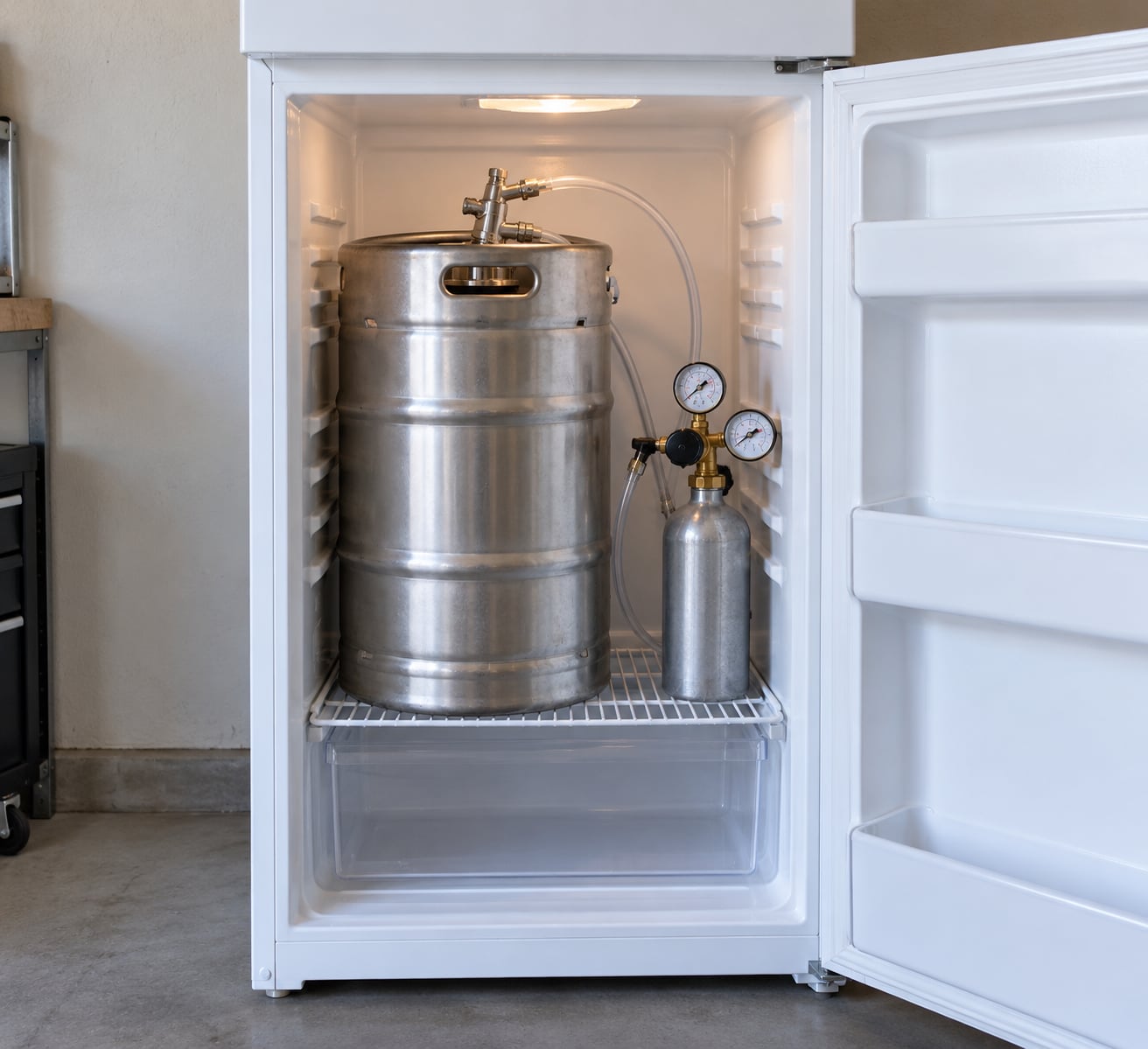
To store a keg at home, keep it cold, sealed and steady: 35-40°F (2-4°C), out of direct light, in a kegerator, keezer or roomy fridge, and leave it untapped until you actually need it. The whole job takes about half an hour on the day the keg arrives, plus a five-minute check every week or two.
Where that gets tricky is the part most guides skip. A keg you bought three weeks before a party, a homebrew batch waiting on force carbonation and a half-finished keg on your tap are three different storage problems, and each one has its own rules.
Temperature is the piece everybody agrees on, and the range is well established. PerfectDraft, one of the specialist storage pages that ranks for this query, puts ideal keg storage at 3°C to 8°C, and their warning about sudden temperature swings is the part worth remembering. A garage that goes from 40°F to 85°F over a weekend does more damage than a cellar that sits warm and steady.
Table of Contents
- What You Need
- Step-by-Step: How to Store a Full Keg
- How Long Can You Store Beer in a Keg?
- Do You Need to Keep a Keg Refrigerated?
- How to Store an Untapped Keg
- How to Store a Tapped Keg at Home
- How to Prevent Keg Contamination
- Common Mistakes
- Frequently Asked Questions
- Can I store a keg in a regular home refrigerator?
- Do I need to put CO2 on an untapped keg?
- How long can an untapped keg stay fresh?
- What temperature should a home kegerator be set to?
- How do I know if a keg has gone bad?
- Should I refrigerate a keg before tapping it?
What You Need
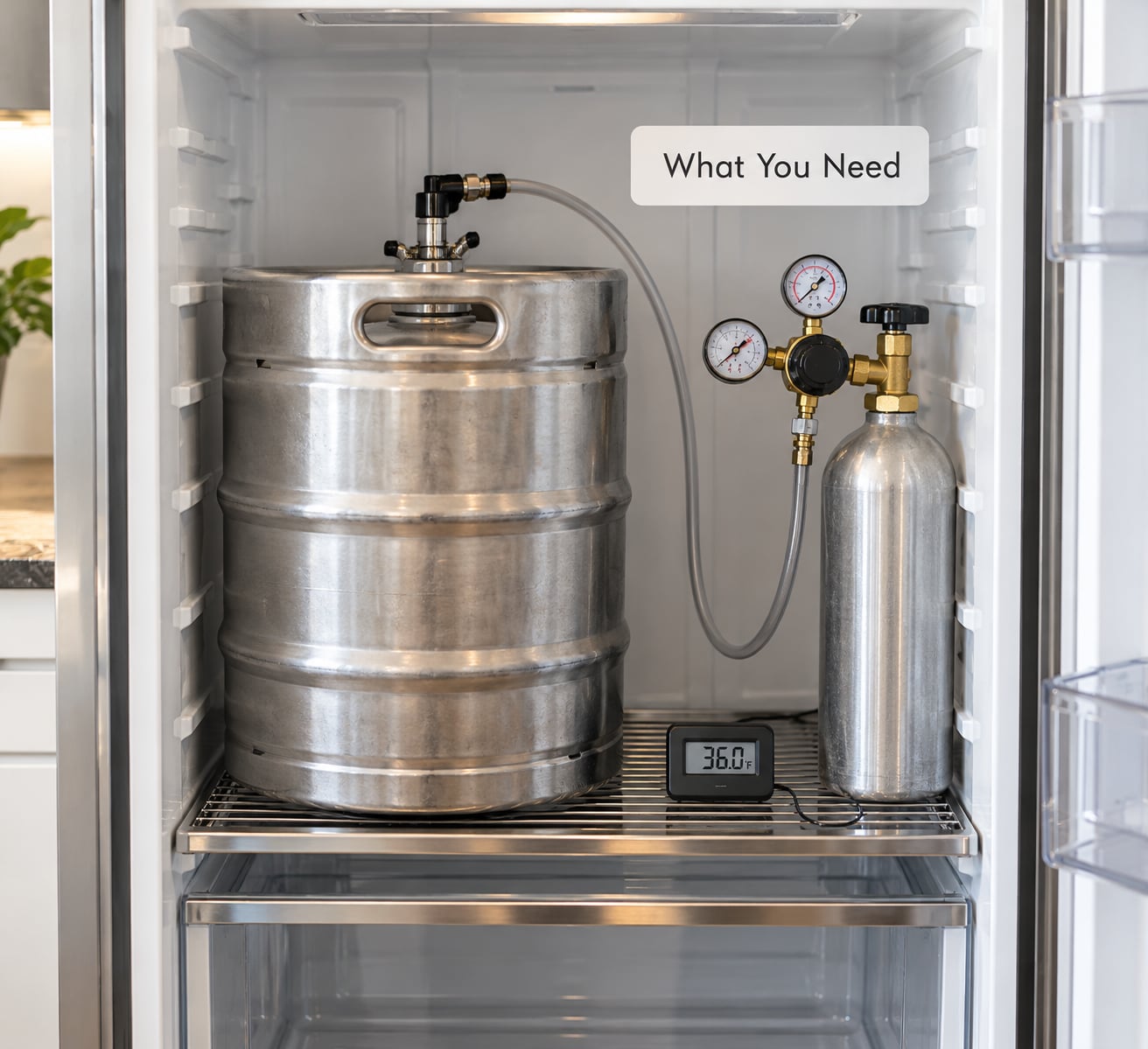
Start with the vessel, because that decides your options. A standard 5-gallon corny keg is roughly 8.5 inches across and 26 inches tall, which rules out most domestic kitchen fridges. A 5L minikeg fits almost anything, and slim 4.9-gallon torpedo kegs stack where full-size corny kegs will not — forum users report fitting six torpedoes or four standard corny kegs into a large dedicated fridge.
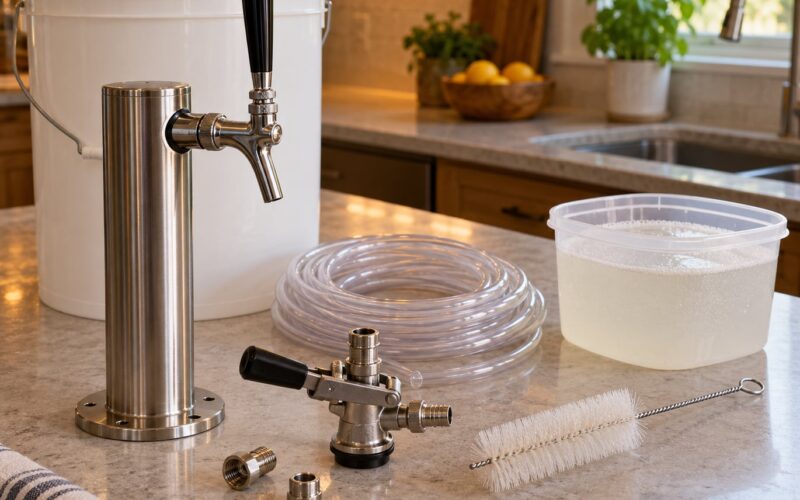
Beyond the keg itself you want five things:
- A thermometer you can read without opening the door. A cheap dial unit in a glass of ice water tells you whether your fridge is actually holding 38°F.
- A CO2 tank and regulator if the keg will be tapped or force carbonated, with a regulator you can dial down low enough for cold beer.
- Cleaning supplies: PBW for scrubbing, plus Star San or iodophor for sanitizing. Both are no-rinse products.
- Food-safe hose or a draft line for draining a keg before it goes into storage.
- A clear, level spot with the fridge door opening away from you, and enough clearance that the fridge can pull cold air around the keg.
Your three storage situations are different enough to be worth separating before you start:
| Situation | Temperature | CO2 | Realistic life |
|---|---|---|---|
| Unopened bought keg | 35-40°F (2-4°C) | None needed | Months, if sealed and within best-before |
| Tapped keg on the fridge | 33-38°F (1-3°C) | Regulator left connected | Days to a few weeks |
| Homebrew awaiting carbonation | Cold room, 33-40°F (1-4°C) | Force to style, then release | Stable indefinitely once set |
Step-by-Step: How to Store a Full Keg
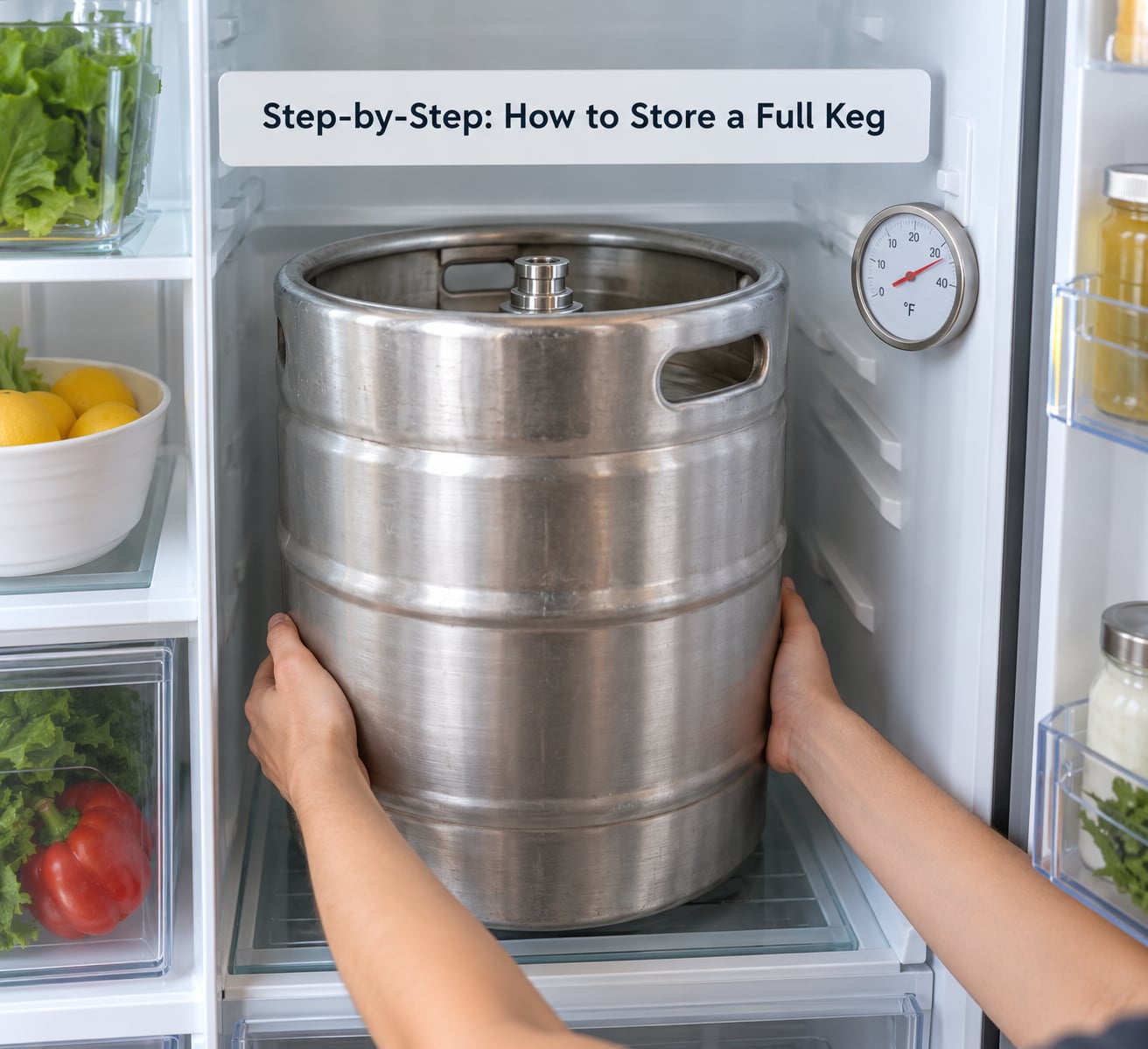
- Inspect the seal before anything else. Run a finger around the lid’s o-ring and check the poppet valve gasket. If the rubber feels hard, cracked or flattened, replace it — that seal is the only thing between your beer and the air in the room. You will know it worked if the o-ring sits in its groove without being stretched.
- Drain and clean any residue. If the keg has been tapped before, empty it through a food-safe line, then run a PBW soak through the dip tube and let it drain fully. Any trapped liquid is a breeding ground later on.
- Pre-chill gradually, at least 12 hours. PerfectDraft recommends slow pre-cooling for a day before tapping, and for good reason: a keg dropped from room temperature into a 35°F fridge can sweat heavily and can foam when you pull it. Put it in the fridge, close the door, and leave it.
- Position it level and leave clearance. Set the keg on a flat shelf or floor with air able to move around it, and never lay it on its side. You will know it is seated correctly if the keg does not rock when you push the top of it firmly.
- Keep the headspace sealed. For a commercial keg, leave the valve closed and the coupler off. For homebrew, close the lid and leave the spunding valve venting. Do not apply pressure here — pressurization comes later, deliberately.
- Check for leaks once it has settled. After an hour or two in position, run your hand along the lid seal and around the valve stem, then smell the top of the keg. A hiss, a faint spray, or a sharp CO2 smell means a wet seal or a loose fitting.
- Set a weekly five-minute check. Read the thermometer, look at the seal, and confirm nothing warm has crept into the fridge — a drink shelf, leftovers or a weekend haul can quietly raise the temperature by ten degrees.
How Long Can You Store Beer in a Keg?
Sealed and cold, a keg of commercial beer is good for months rather than weeks, but the honest answer varies by style and by how it was filled. A session lager or a pale ale filled and sealed by a brewery has the longest life. Fresh-hop beer, green-hop beer and anything from a can- or bottle-conditioned package lose their best feature within weeks, because the aroma was never built to last.
Where the “45 to 60 days” figure comes from is the best-before date, and that date assumes you tap straight away. It is not a hard expiry. Homebrewers regularly report sealed homebrew tasting fine far past the date, and Homebrew Finds ran a seven-month test on a sealed, unpressurized keg in a temperature-controlled basement that stayed sound, though condensation still formed inside.
Three things shorten the life, and they stack: oxygen getting past the seal, heat, and a damaged gasket. Tapped kegs are the opposite case. Once the coupler is on and gas is pushing, you are looking at days to a few weeks depending on style, pressure, and how warm the fridge runs.
Do You Need to Keep a Keg Refrigerated?
For beer you are going to serve, yes — 35-40°F (2-4°C) is the target, with 3-8°C described as the acceptable storage band by PerfectDraft. Cold slows oxidation, keeps hop aroma intact, holds carbonation in solution and buys you head retention. Warm beer also means higher serving pressure, so you end up fighting foamy pours.
For beer you are not serving, refrigeration is a quality decision rather than a safety one. A few days to a couple of weeks in an unheated space is not a crisis for most styles. A warm summer garage is a different matter, because heat and daily swings are what actually strip aroma and drive oxidation.
A domestic fridge can hold a minikeg or, on a very good day, half a corny keg with the door closed properly. If the door will not shut or the coil is tight against the keg, it is not storage, it is a slow leak of cold air and a warm keg.
How to Store an Untapped Keg
Check the seal, keep it cold, keep it in the dark, and keep it still. That is the whole job. Leave the coupler off, the valve closed, and the headspace as sealed as the lid allows.
Attach CO2 only when you are ready to serve the keg or you are deliberately force carbonating it. Pressurizing an untapped keg that is simply sitting there adds no protection — you are using gas, and depending on the seal you may also be pushing oxygen-friendly headspace around. Homebrew Finds frames the same choice for homebrew as three states: closed under pressure, closed with no pressure, and open with no pressure, and leans toward no pressure for anything you are not actively serving.
How to Store a Tapped Keg at Home
Once a keg is on the regulator, the main job is keeping the gas and the seals steady. Leave the regulator connected, set a pressure that suits the beer and the temperature, and resist the urge to keep raising it when pours foam. Foam on a warm keg is temperature, not a pressure setting.
The oxygen risk lives in the coupler and the lines, not the keg. A coupler that has been off and on picks up air, and that air sits in the headspace until you draw down the keg. If the beer will not be served for more than a few days, disconnect the gas, bleed down the lines, and cap or clean the coupler rather than leaving a half-connected system running.
How to Prevent Keg Contamination
Cleaning and sanitizing are different jobs, and the gap between them is where stored kegs go wrong. Cleaning removes residue; sanitizing reduces what is left. Neither makes anything sterile, and that distinction is the point Brew Your Own’s Mr. Wizard column turns on when he explains a keg that went sour and pungent after months of pressurized storage: no-rinse sanitizers leave no residual activity, so anything that grows on a sanitized surface keeps growing.
So sanitize the keg, the lines, the couplers and the quick disconnects right before use, not weeks ahead. For empty kegs going into storage, clean them immediately after use, let them drain completely, and store them dry. Mr. Wizard’s advice is to keep dust off them too — household dust carries yeasts, moulds and bacteria that a rinse will not remove.
Watch for the small signs rather than waiting for a bad pour. A seal that weeps, a coupler that hisses, or a keg that gushes and fizzes down the side when you pull it are all fixable problems, caught early.
Common Mistakes
Storing beer warm is the big one, and the usual cause is a fridge used for everything else. Fix: dedicate a shelf, keep the probe in the beer, and check it weekly. Nothing else on this list matters as much.
Shaking or tipping the keg ruins headspace clarity and, on a tapped keg, means a foaming mess on the next pour. Fix: lift from the bottom, set it down level, and give it an hour to settle before serving.
Over-pressurizing an untapped keg is pointless at best and unsafe at worst. Fix: no gas until you serve it or force carbonate it, and always vent through a relief valve rather than cracking a fitting under pressure.
Using a refrigerator without enough clearance warms the beer and taxes the compressor. Fix: measure the keg against the shelf before the keg arrives, not after.
Neglecting seals is how a six-month storage plan turns into a flat, oxidised keg. Fix: swap the o-ring and poppet gasket at the start of every storage spell, not after you notice a problem.
Assuming every style needs the same treatment wastes a lot of good lager. Fix: cold and sealed for a pale ale to hold for weeks, room-temperature stability is genuinely fine for a clean lager over a short stretch, and a fresh-hop beer should be drunk as soon as it is possible.
As a maintenance routine, keep it small: thermometer check, seal look, gasket inspection every few months, and a full clean-and-sanitize pass the week before the keg goes back on tap.
Frequently Asked Questions
Can I store a keg in a regular home refrigerator?
Yes, if the keg actually fits with the door closed and air can circulate around it. A 5L minikeg works in most fridges, and a slim torpedo keg often will, but a standard 5-gallon corny keg is roughly 8.5 inches wide and 26 inches tall, which rules out most kitchen units. Check the shelf depth and the door seal before you buy. If the door will not shut, the keg will drift above 40F and you are better off with a dedicated kegerator.
Do I need to put CO2 on an untapped keg?
No, not for storage. Leave the coupler off, the valve closed and the lid sealed. CO2 is only needed when you are serving the keg or deliberately force carbonating homebrew, where gas sets the carbonation level. Pressurizing a keg that is just sitting there uses gas without protecting the beer any further, and it is the step most often skipped. If you are force carbonating, apply pressure gradually and always release it through a relief valve.
How long can an untapped keg stay fresh?
Sealed, cold and undamaged, a commercial keg is good for months rather than weeks. A session lager or pale ale holds longest; fresh-hop and green-hop beer lose their aroma within weeks no matter how it is stored. The best-before date assumes you tap straight away, so it is a guide, not an expiry. One homebrewer tested a sealed, unpressurized keg for seven months in a temperature-controlled basement and it stayed sound.
What temperature should a home kegerator be set to?
Set it to 35-40F (2-4C) for serving, and 33-38F (1-3C) if you want denser pours and better head retention. PerfectDraft describes 3-8C as the acceptable storage band, so anything inside that range is fine for storage. Avoid swings rather than chasing a single number: a fridge that drifts between 35F and 50F over a week is harder on beer than one that holds a steady 38F. An independent thermometer is worth more than the dial on the door.
How do I know if a keg has gone bad?
Smell it first. A clean beer should smell clean; sharp vinegar, nail-polish remover or sweaty-horseshoe notes point to acetic or propionic acid contamination. Pour a small glass: gushing and heavy foam suggest either a warm keg or a damaged seal, flatness means lost carbonation, and a cloudy or stringy pour with heavy sediment means sanitation failed somewhere. Remember that sanitized equipment is not sterile and no-rinse sanitizer leaves no residual activity.
Should I refrigerate a keg before tapping it?
Yes, and give it at least 12 hours. A keg moved straight from a warm room into a 35F fridge sweats, warms the surrounding air and foams badly when you pull it. PerfectDraft recommends gradual pre-cooling for a day ahead of serving for that reason. A cold keg also needs less serving pressure, so you get a cleaner pour at a lower setting. If you cannot chill it slowly, at least let it sit afterwards before connecting the coupler.
Three rules cover almost every case: cold, sealed and steady. Get the temperature right first, because it costs nothing and protects the beer longest, then check the seal and leave the rest alone. Updated for 2026.