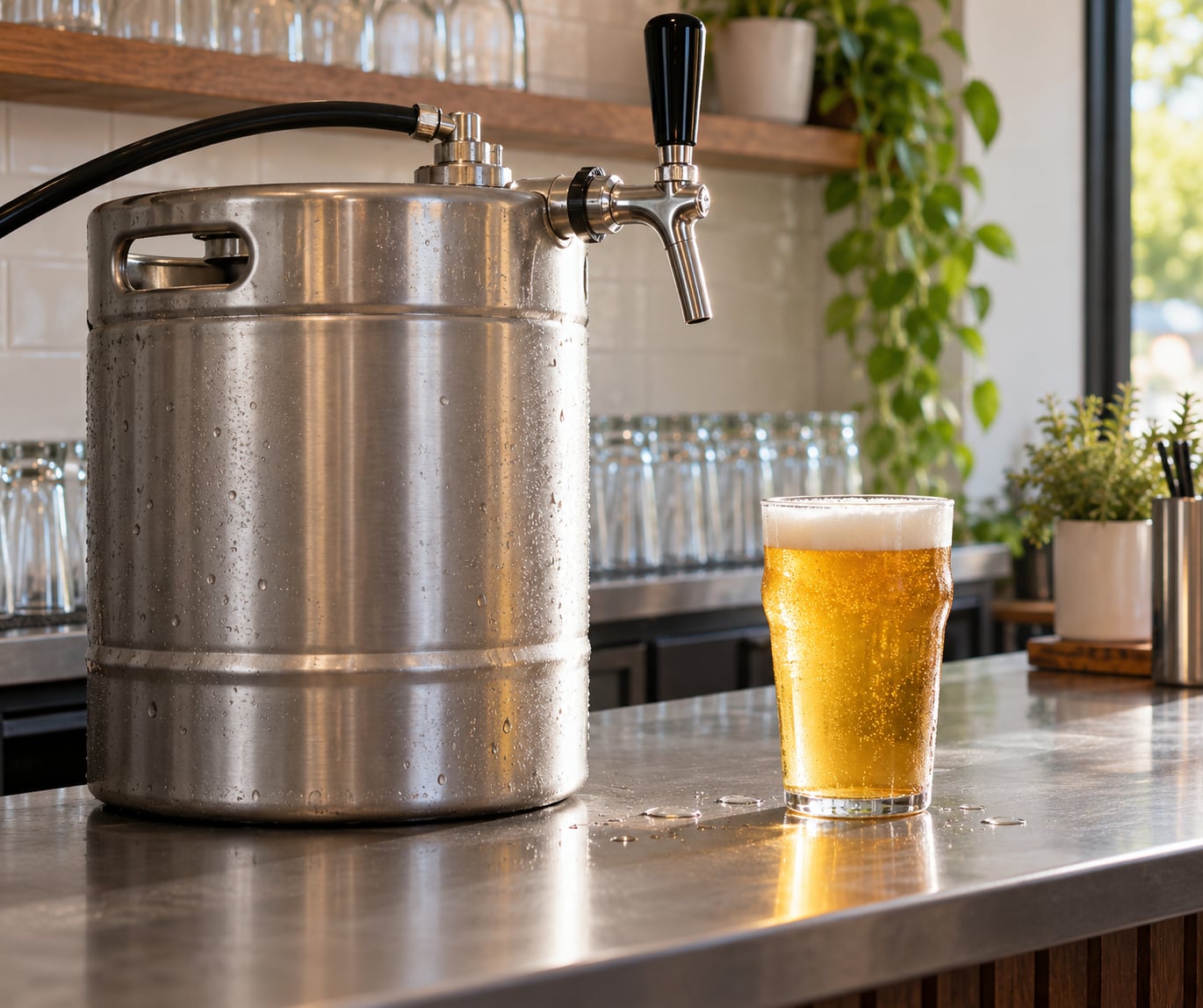
A keg on a CO2 or nitrogen system stays good for roughly 4 to 8 weeks after tapping. A keg on a hand or party pump is at its best for 8 to 12 hours and should be finished the same day. An untapped commercial keg keeps its quality for about 3 to 6 months when it sits cold and upright.
That is the short version, and it is the version most guides bury under caveats. The real answer depends on what replaces the beer you pour out, how full the keg is, how cold it is, and how old the beer already was when the brewery filled it. Get those four right and the timeline is predictable.
Updated for 2026, and the numbers below come from how breweries and homebrewers actually store draft beer rather than from a single convenient rule of thumb.
Table of Contents
- How Long Does a Tapped Keg Last?
- Tapped Keg Lifespan at a Glance
- What Determines How Long a Tapped Keg Stays Fresh?
- What enters the keg when beer comes out
- Serving temperature
- Fill level, pressure and hardware
- How Keg Size and Remaining Volume Change the Timeline
- Keg size and serving math
- How to Tell When a Tapped Keg Has Gone Bad
- How to Store and Serve a Tapped Keg Safely
- Frequently Asked Questions
- Does CO2 make beer last longer in a tapped keg?
- Should an opened keg be finished within two weeks?
- Is beer from a high-pressure keg safer or fresher?
- Is oxidized or stale beer dangerous to drink?
- Can I make a flat or oxidized keg taste good again?
- Conclusion: Plan Around a Keg’s First Four Weeks
How Long Does a Tapped Keg Last?
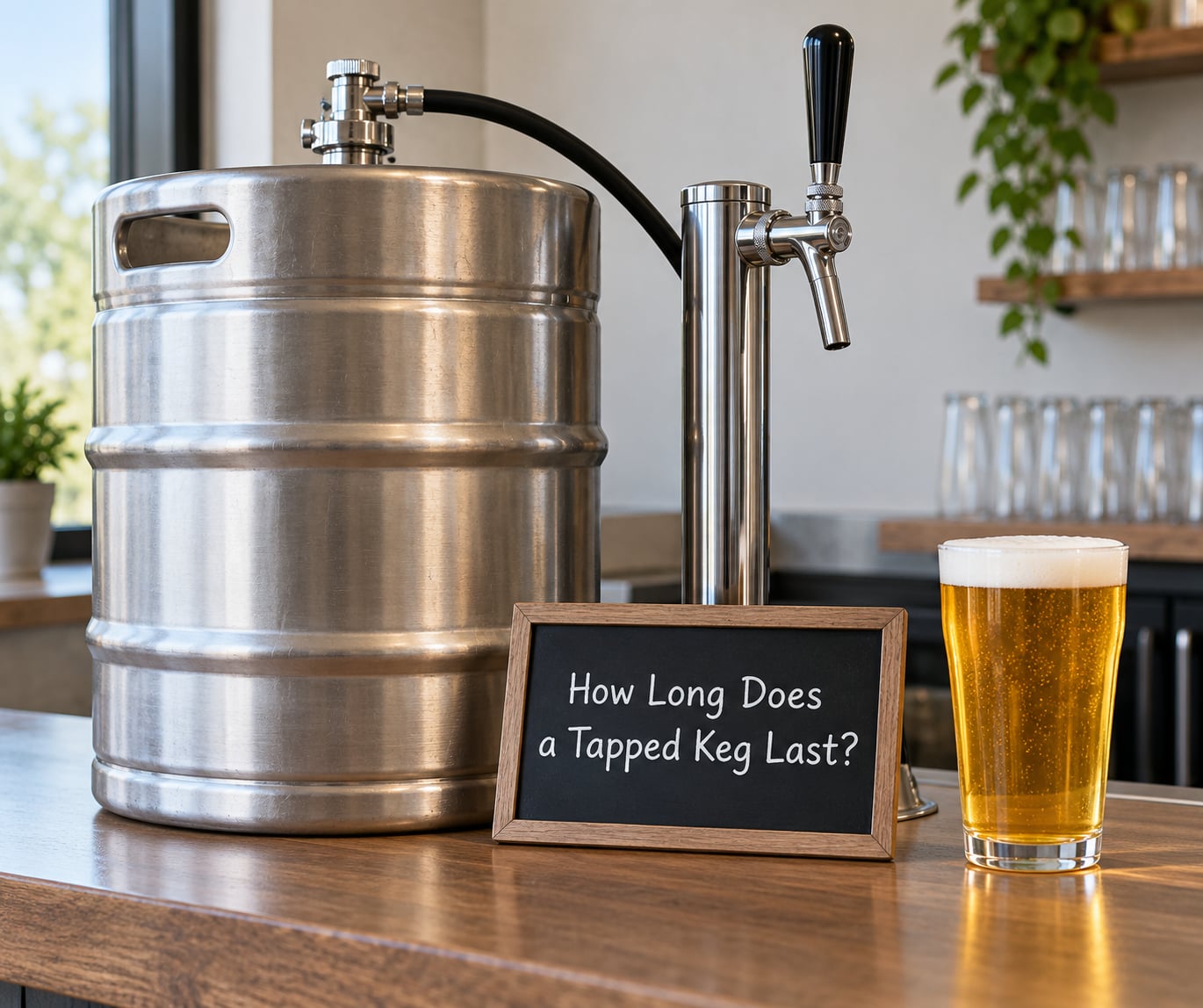
How long does a tapped keg last? Between 8 and 24 hours on an air pump and 4 to 8 weeks on a CO2 or nitrogen system, with the real clock starting at the brewery fill date rather than the moment you crack the coupler. The exact window depends on remaining volume, serving temperature, gas pressure, tap hardware, and beer style.
Homebrewers on HomebrewTalk regularly report homebrew still drinkable at six months or more in a corny keg, and that is not a contradiction of the commercial figure. It comes down to sanitation, head pressure, and whether the beer was pasteurized.
Tapped Keg Lifespan at a Glance
Style matters more than most people expect. Hop aroma fades first, malt and roasted flavors hold far longer, and anything acidic is already living on borrowed time.
| Beer style | Peak quality on a CO2 system | Usable but past peak | Why |
|---|---|---|---|
| Light lager or pilsner | 4 to 8 weeks | 2 to 3 months | Delicate hop and yeast character fades, but the base malt holds |
| Pale ale | 3 to 5 weeks | 6 to 8 weeks | Moderate hop load, moderate oxidation tolerance |
| IPA or hoppy ale | 2 to 4 weeks | 4 to 6 weeks | Volatile hop oils disappear first, then paper-like flavors take over |
| Hazy IPA | 1 to 3 weeks | 3 to 4 weeks | Very high hop load, so oxidation shows up quickly |
| Wheat beer | 2 to 4 weeks | 4 to 6 weeks | Light body, low hop load, so it turns flat before it turns sour |
| Stout or porter | 6 to 8 weeks | 3 to 4 months | Roasted malt masks oxidation and has enough body to hold up |
| Nitro stout or cold-filtered keg | 3 to 4 weeks | 5 to 6 weeks | Nitrogen pours are creamy but the beer underneath ages normally |
| Sour or farmhouse beer | 3 to 6 weeks | 2 to 3 months | Acidity already reads as intentional, so staling hides longer |
| Barrel-aged or high-ABV | 3 to 6 months | Longer, if kept cold | Alcohol and oxidation resistance slow staling dramatically |
Notice how a partly filled keg shifts every row on that table toward the earlier end. A half-empty sixtel has proportionally twice the headspace of a full one, and that much extra oxygen exposure matters more than the keg’s nominal capacity.
What Determines How Long a Tapped Keg Stays Fresh?
Four variables do almost all the work, and they matter in this order.
What enters the keg when beer comes out
This is the big one. When you pull a pint, something has to fill the space. A hand pump, picnic pump, or electronic air tap pushes in ordinary air, which is about 21% oxygen. That oxygen reacts with beer compounds and produces acetaldehyde, the papery, bruised-apple note people describe as stale or cardboard-like. It also strips carbonation, because air is not a gas the beer can hold much of.
Oxidation damage is permanent. You can chill beer back up and re-carbonate it, but you cannot un-oxidize it.
A CO2 or nitrogen system pushes an inert gas that does not react with the beer, so the liquid stays in roughly the environment it left the brewery in. That single hardware difference is the gap between a keg that tastes good next month and one you empty before the sun goes down.
Serving temperature
The standard serving and storage temperature is 38°F, roughly 3°C. Cold beer holds carbonation better, and warm beer foams and goes flat in a glass within minutes even when the keg is under pressure.
Warmth also moves the safety line. Above about 50°F, or 10°C, you are no longer just aging beer slowly. You are creating conditions where bacteria can multiply, and a warm keg should be treated as perishable food, not saved for later.
Too cold has its own failure mode. Beer that freezes and thaws loses carbonation permanently, and a keg that freezes also risks damaging the coupler and the gas connection.
Fill level, pressure and hardware
Headspace is unpreserved air sitting directly above the liquid, and the more of it there is relative to the beer, the faster quality falls apart. Keep the regulator at the pressure the faucet and tubing were balanced for, and set it by style: lighter ales and lagers need less, wheat beers and high-carbonation styles need more.
Tap configuration matters too. Long, restrictive lines balance a faucet that pours hard, while a mixed line and faucet can gush and aerate the pour. Dirty lines with beer stone buildup strip carbonation and inject off-flavors no keg care can fix.
Homebrew poured into a corny keg can run far longer than a commercial unpasteurized keg because the brewer cleaned everything before filling it and can force carbonate it properly. The Brewers Association’s Draught Beer Quality Manual is the reference point most bars work from, and it treats typical unfilled window of 45 to 60 days for unpasteurized beer and 90 to 120 days for pasteurized product, counted from packaging. Those two numbers get quoted backwards constantly, so to be clear: pasteurization kills the live yeast, which is why the pasteurized figure is the longer one.
How Keg Size and Remaining Volume Change the Timeline
Keg size decides how long you have, and how much you pour per day decides whether you finish it. Liquid volume and beer type count for more than the capacity stamped on the side.
Keg size and serving math
A full half-barrel holds roughly 165 twelve-ounce pours, a quarter-barrel about 82, and a sixtel about 58. A 5-liter mini keg is near 55 pours but tastes noticeably flatter faster, because a small container has a higher surface-area-to-volume ratio against the beer inside it.
That is the answer to the question behind the question. A 5-gallon corny keg at two or three beers a day is gone in about two weeks, which is a detail r/Homebrewing regulars raised when they worked out their own brew schedule. A half-barrel at the same pace runs for a couple of months.
| Keg size | Approx. 12 oz pours | At 10 beers a day | At 20 beers a day | At 40 beers a day |
|---|---|---|---|---|
| Half-barrel (15.5 gal) | 165 | about 16 days | about 8 days | about 4 days |
| Quarter-barrel (7.75 gal) | 82 | about 8 days | about 4 days | about 2 days |
| Sixtel (5.16 gal) | 58 | about 6 days | about 3 days | under 2 days |
| 5L mini keg | 55 | about 5 days | about 3 days | under 2 days |
Now add the fill level on top of those numbers.
| How full the keg is | Oxygen exposure | Drinkable window on a CO2 system, kept cold |
|---|---|---|
| Full | Minimal headspace | Longest, roughly 8 to 12 weeks for most ales |
| Three-quarter full | Moderate headspace | Roughly 6 to 8 weeks |
| Half full | High headspace | Roughly 4 to 6 weeks, and flat sooner if the regulator drifts down |
| Nearly empty | Almost all headspace | A few days to two weeks, and it will taste thin |
If you are hosting an event, size the keg to the guest count and the day, not to the total beer you imagine people will drink. A tailgate with a party pump needs a keg you can empty in an afternoon, and no amount of chilling will make the leftovers last.
How to Tell When a Tapped Keg Has Gone Bad
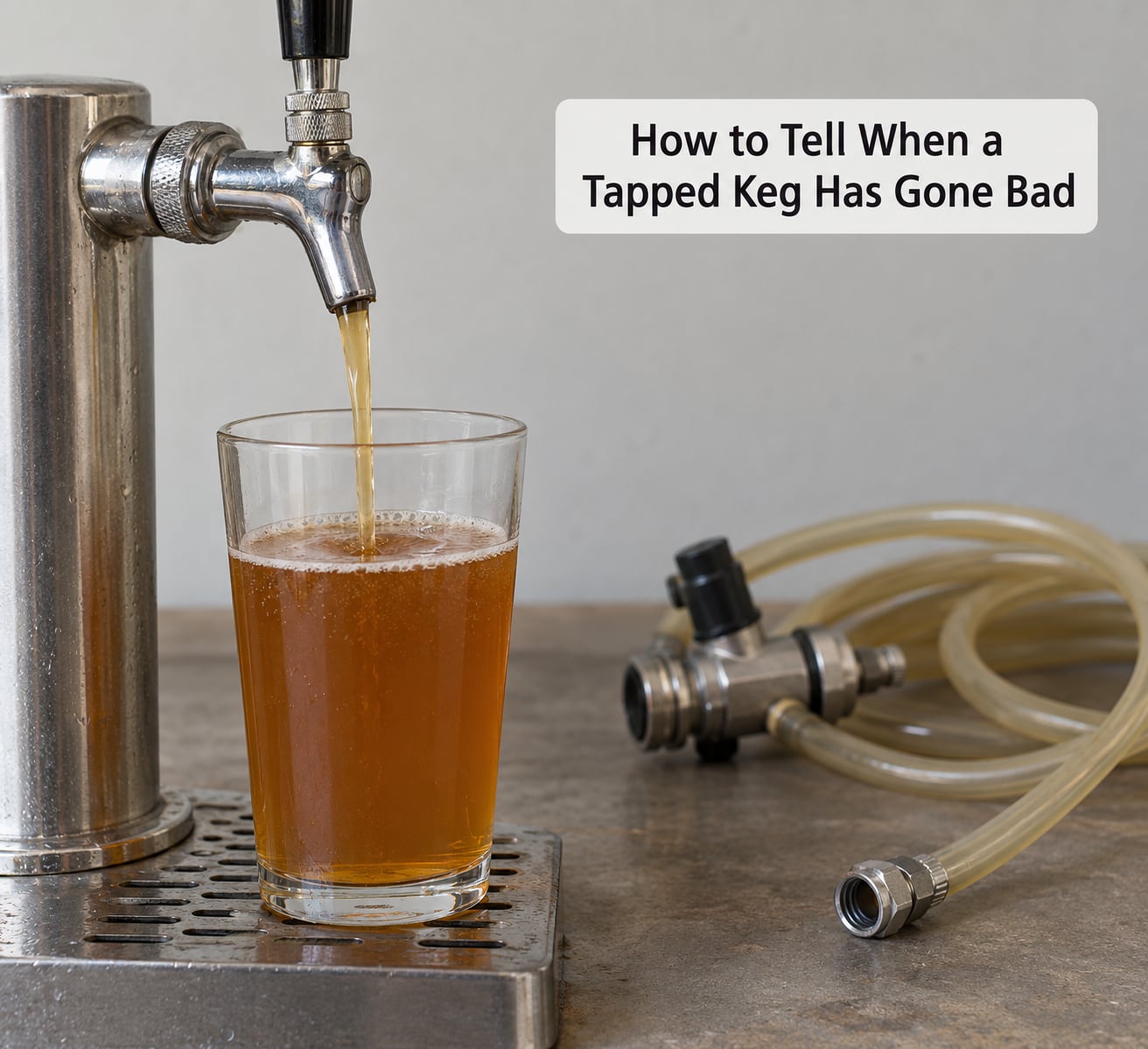
Flat and bad are two different problems with two different fixes, and confusing them leads people to throw away perfectly drinkable beer.
Flat means the carbonation is gone. The beer pours without a head, feels thin, and tastes watery, but it is still beer. Very cold, sealed, and re-pressurized with CO2, it can partly recover.
Oxidized means air has been at the beer. Watch for papery, cardboard, wet-hay, or bruised-apple notes, a flatness that stays flat even when cold, and a dull, tired finish. That does not reverse.
Sour beer that was not supposed to be sour is the one signal that matters most. In a sealed, cold keg the beer is acidic and low in oxygen, so homebrewers generally agree it stays safe far longer than it stays tasty. Once you see cloudy strands, surface film, or a smell like nail polish remover or raw meat, dump the beer and sanitize the line, coupler, and keg before reusing them.
A sour smell in the beer line, failed couplers, and a coupler that will not seat are equipment faults. Fix or replace the hardware first, otherwise the next keg picks up whatever is growing in the hose.
How to Store and Serve a Tapped Keg Safely
Keep the beer continuously cold from fill date to glass. Once it warms, the clock stops being a freshness window and becomes a food-safety question, and the threshold people watch is about 50°F. If a kegerator loses power, get ice or move the keg into a cooler with ice and water rather than leaving it to drift up in temperature for hours.
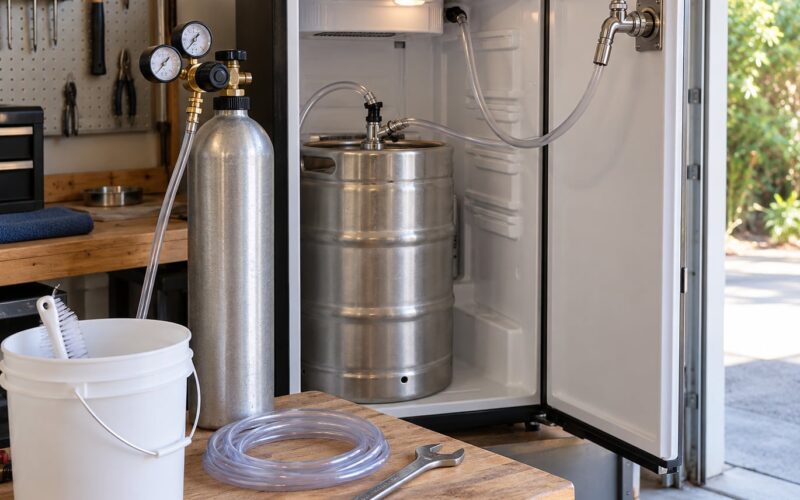
Minimize venting. Every time the coupler comes off, headspace gas escapes and fresh air takes its place. If you need to disconnect a CO2 keg, pull the gas line first, then the coupler, and reconnect in reverse.
To store a part-tapped keg, leave the coupler off, put a lockable ball lock or a soda-style cap on the post, keep the keg cold and upright, and put it back under the same pressure it was serving at. That head pressure is what keeps the beer clean; without it, the empty space above the beer fills with the air that ruins it. Homebrewers who report six-month kegs all describe the same two things, a good seal and CO2 on top.
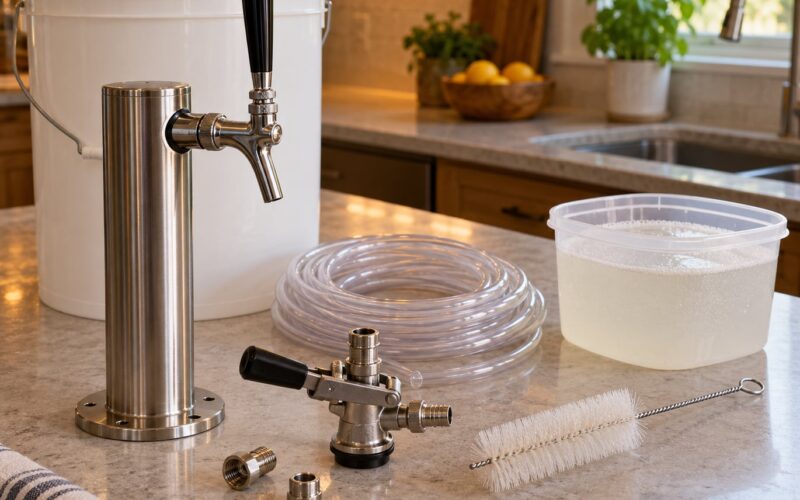
Clean the beer line every couple of weeks, sooner in warm conditions, using a cleaning solution rather than a ball that never gets the valve. Maintain the manufacturer-recommended pressure, and adjust it as temperature changes. Cold beer needs more pressure, warm beer needs less, and a keg sitting at 42°F that is still regulated for 36°F will foam out of the faucet.
A tap you can re-tap is not a problem on a CO2 system. A hand-pumped keg is already damaged the moment air goes in, so re-tapping it will not make it fresh again.
Frequently Asked Questions
Does CO2 make beer last longer in a tapped keg?
Yes, and it is the single biggest factor. CO2 is chemically inert, so it replaces the volume of beer you pour without reacting with it, keeping the liquid in the same protected state it left the brewery in. Ordinary air is about 21% oxygen, and that oxygen produces acetaldehyde and the papery, cardboard-like off-flavors people call stale. A CO2 keg held cold gives you roughly 4 to 8 weeks; the same keg on an air pump gives you a single day.
Should an opened keg be finished within two weeks?
It depends entirely on the dispensing method. A keg on a hand or party pump should be finished the same day, because air has already been pumped in. A keg on a CO2 or nitrogen system, kept cold and sealed, is generally at its best for the first 2 to 4 weeks and usually good for 4 to 8 weeks, counted from the brewery fill date rather than the tap date. Homebrew under CO2 pressure with good sanitation often runs well beyond that.
Is beer from a high-pressure keg safer or fresher?
High pressure is about carbonation, not safety. Gas pressure keeps beer from going flat and limits the oxygen that reaches the liquid, so a properly pressurized CO2 keg stays fresher for longer. It does not make warm beer safe, and it does not add time beyond the brewery freshness window printed on the keg. If the keg is warm, the pressure is doing nothing useful. Keep it cold and the pressure is what preserves it.
Is oxidized or stale beer dangerous to drink?
Usually not. A sealed keg is acidic and low in oxygen, so homebrewers generally agree it stays safe for far longer than it stays tasty. Oxidized beer tastes like cardboard, wet hay, or bruised apple and is unpleasant rather than hazardous. The exceptions are contamination signs: visible strands or film, a sour smell in a beer that was not meant to be sour, or a nose-draining chemical smell. If you see those, discard the beer and sanitize the whole system.
Can I make a flat or oxidized keg taste good again?
Flat beer, yes. Oxidized beer, no. If the problem is lost carbonation, chill the keg properly, set the regulator to the pressure your faucet was balanced for, and let it sit under pressure for several days. A stubborn keg can be force-carbonated by chilling it and shaking it, then letting it settle. If the beer tastes papery, thin, and bruised-apple even when cold and carbonated, the damage is chemical and permanent. You can only mix it with other beer or repurpose it for cooking.
Conclusion: Plan Around a Keg’s First Four Weeks
Assume a tapped keg tastes its best for the first 2 to 4 weeks, treat 4 to 8 weeks as the practical ceiling for most ales on a CO2 system, and keep the beer cold the entire time. Tighten that window for hazy IPAs and other hop-heavy styles, widen it for stouts, sours, and high-ABV beer.
Check the fill date before you tap, not after. Watch the fill level as the keg drains, because a part-full keg ages faster than a full one, and if you take a coupler off, seal the post and put the pressure back on. That is how long a tapped keg lasts in practice, and how long a tapped keg lasts is decided by your setup, not by the calendar.